TagDNL65(15)
-
 2025-09-25 12:45
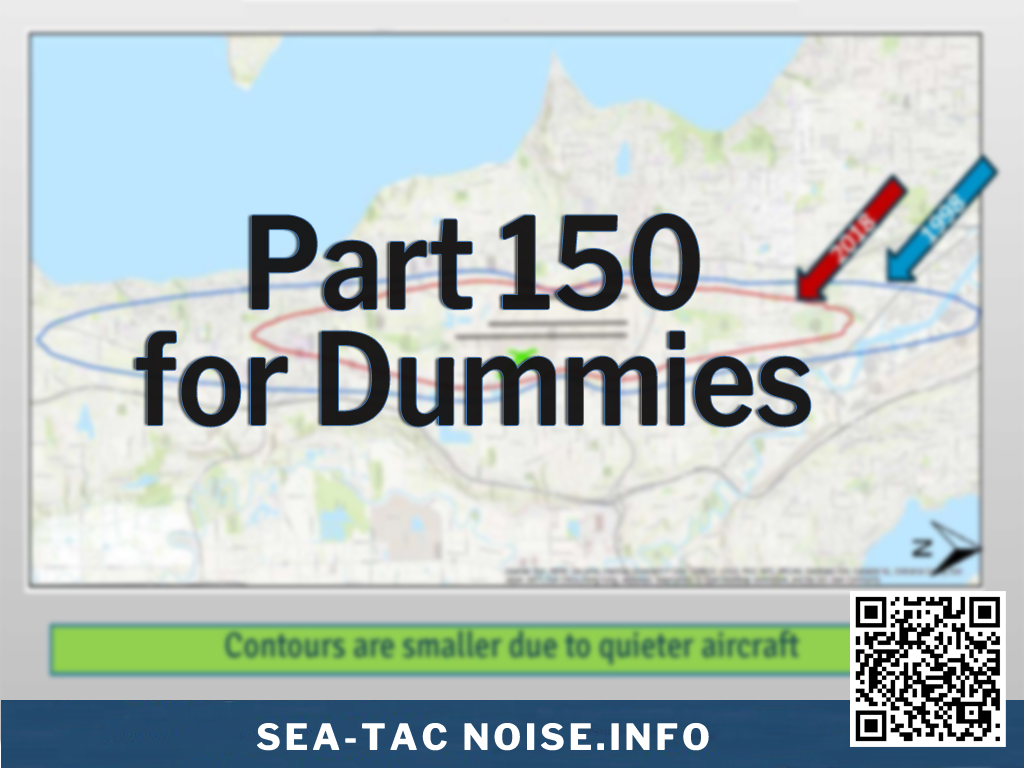
Part 150 for Dummies
Read this, including the recent update, and then attend the upcoming Port of Seattle Part 150 workshops. -
 2025-09-23 20:11
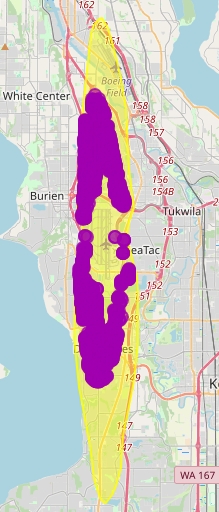
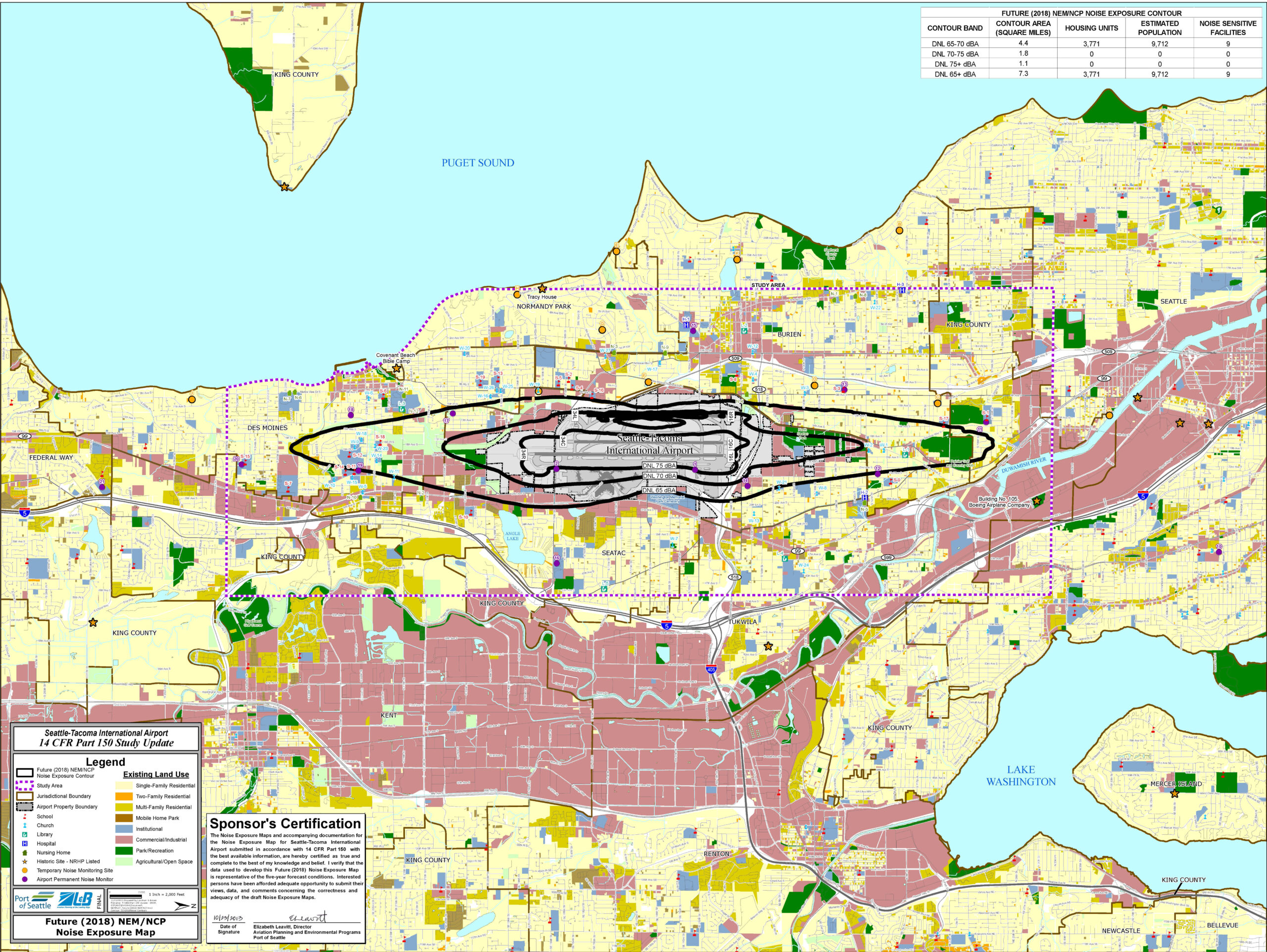
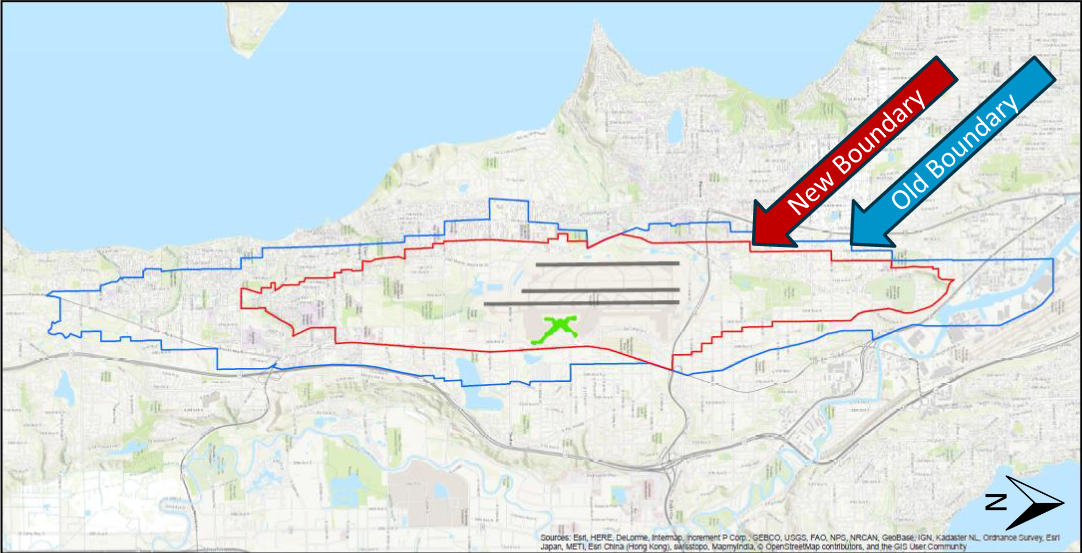
Sea-Tac Airport Noise Contour Map
Map of Seattle/Burien/SeaTac/Des Moines area showing DNL aircraft noise contour footprint around Sea-Tac. -
 2023-04-24 15:11
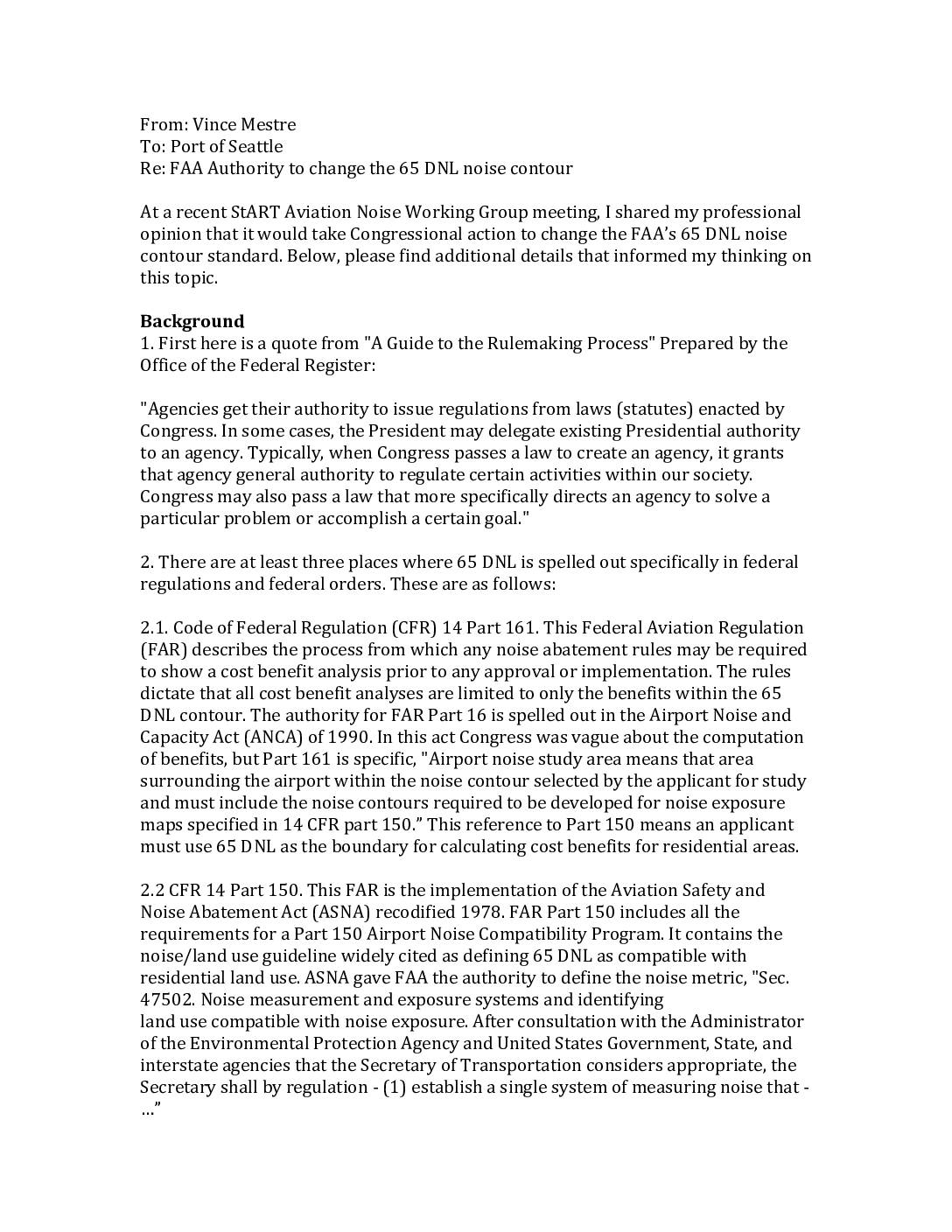
StART – Memo: FAA Authority to Change the 65 DNL
Re: FAA Authority to change the 65 DNL noise contour At a recent StART Aviation Noise Working Group meeting, I shared my professional opinion that it would take Congressional action to change the FAA’s 65 DNL noise contour standard. Below, please find additional details that informed my thinking on this topic. Background 1. First here is a quote from "A Guide to the Rulemaking Process" Prepared by the Office of the Federal Register: "Agencies get their authority to issue regulations from laws (statutes) enacted by Congress. In some cases, the President may delegate existing Presidential authority to an agency. Typically, when Congress passes a law to create an agency, it grants that agency general authority to regulate certain activities within our society. Congress may also pass a law that more specifically directs an agency to solve a particular problem or accomplish a certain goal." 2. There are at least three places where 65 DNL is spelled out specifically in federal regulations and federal orders. These are as follows: 2.1. Code of Federal Regulation (CFR) 14 Part 161. This Federal Aviation Regulation (FAR) describes the process from which any noise abatement rules may be required to show a cost benefit analysis prior to any approval or implementation. The rules dictate that all cost benefit analyses are limited to only the benefits within the 65 DNL contour. The authority for FAR Part 16 is spelled out in the Airport Noise and Capacity Act (ANCA) of 1990. In this act Congress was vague… -
 2022-12-05 00:00
The FAA’s 65 dBA DNL is not a safe noise exposure level for the American public
Academic paper presented at the 183rd Meeting of the Acoustical Society of America arguing that the FAA’s 65 dBA day-night average sound level standard is not safe for public health. The paper discusses how the EPA calculated safer levels at 55 dB for outdoor activities and 45 dB for indoor activities, and examines the non-auditory -
 2022-11-28 21:46
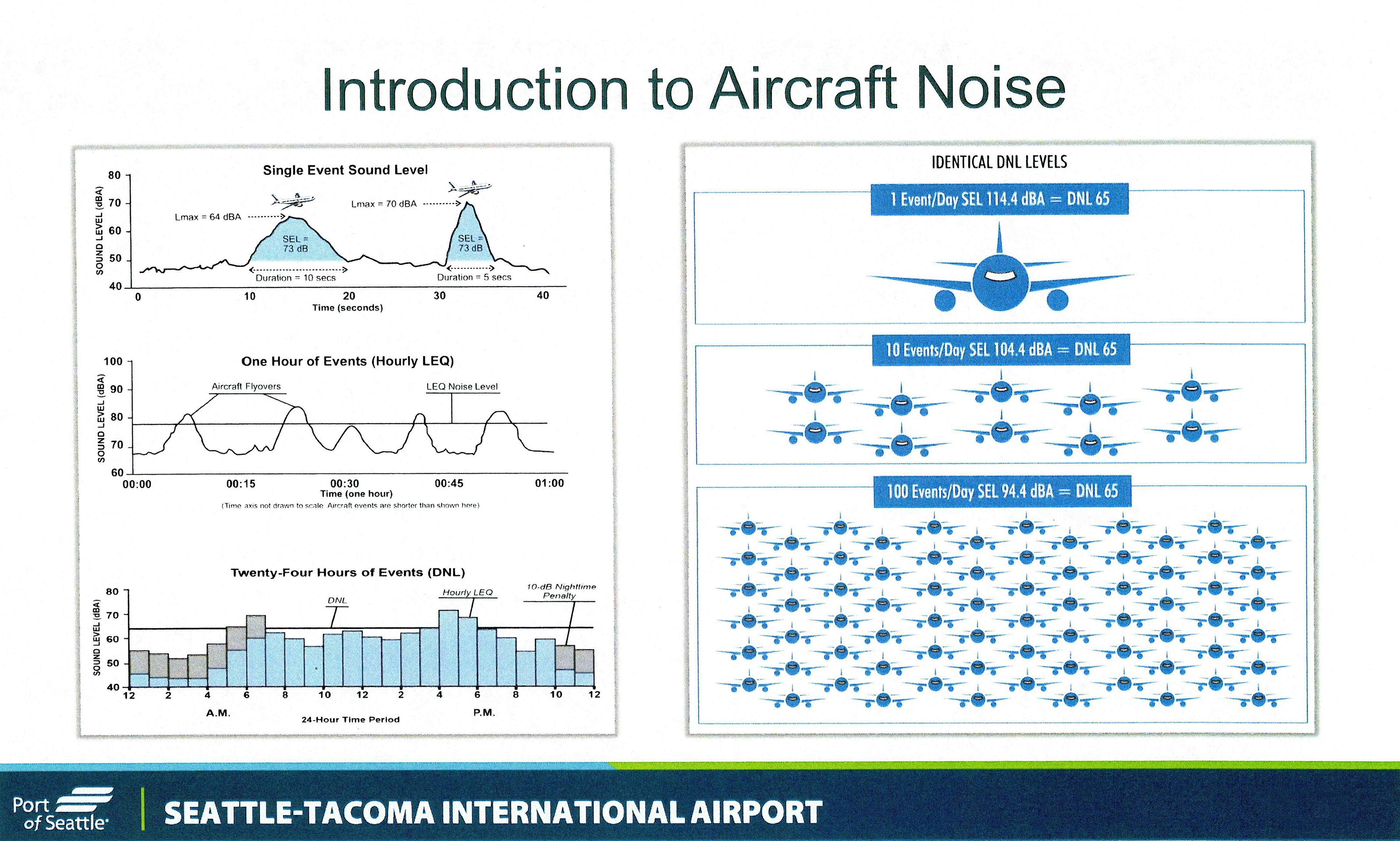
Calculating DNL65
We’ve often made the claim that DNL65 is not really a unit of measure. And when we say that it comes off as both condescending and patronizing. Okeedokee… If you want to understand DNL65, you should probably start by going to the regulations governing Airport Noise Compatibility and Planning aka Part 150. Got it? Great. -
 2022-10-23 00:48
X 2 – Nem Plot Future (2018) Nem Ncp
-
-
 2020-09-23 00:00
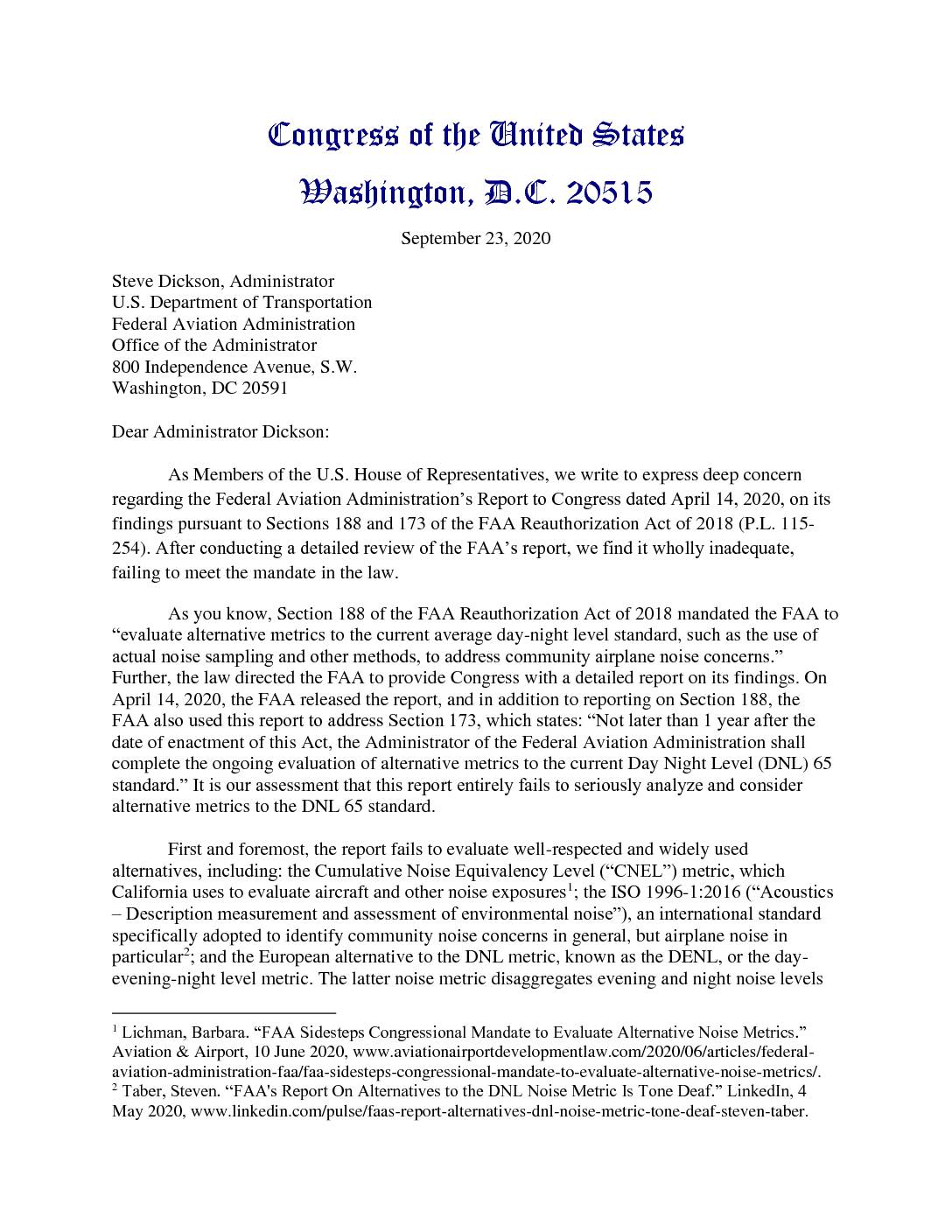
Congressional Quiet Skies Caucus Letter To FAA Administrator Steve Dickson re DNL65
Currently, FAA law has extremely complicated rules for establishing a noise boundary around airports. (A noise boundary is a geographic area inside which there is a certain acceptable noise level.) This is referred to as the DNL65. and it has several major flaws. The FAA Reauthorization Act Of 2018 attempted to address these flaws in several ways. This letter, from a caucus of Congressmen engaged on airport community issues complains to the Administrator that the spirit of the law is not being adhered to and demands that he make attempts to put his agency into compliance. The language is fairly technical, however there are a couple of basic points they raise: First, that the noise boundary be determined by actual noise measurements (currently the noise boundaries are 'modeled' and those calculations often do not reflect in any way the lived experience for residents.) Second, that the 'acceptable' noise level of sixty five decibels (hence DNL65) has been determined to be far too high to conform with current understandings of healthy living. -
2020-02-12 21:16
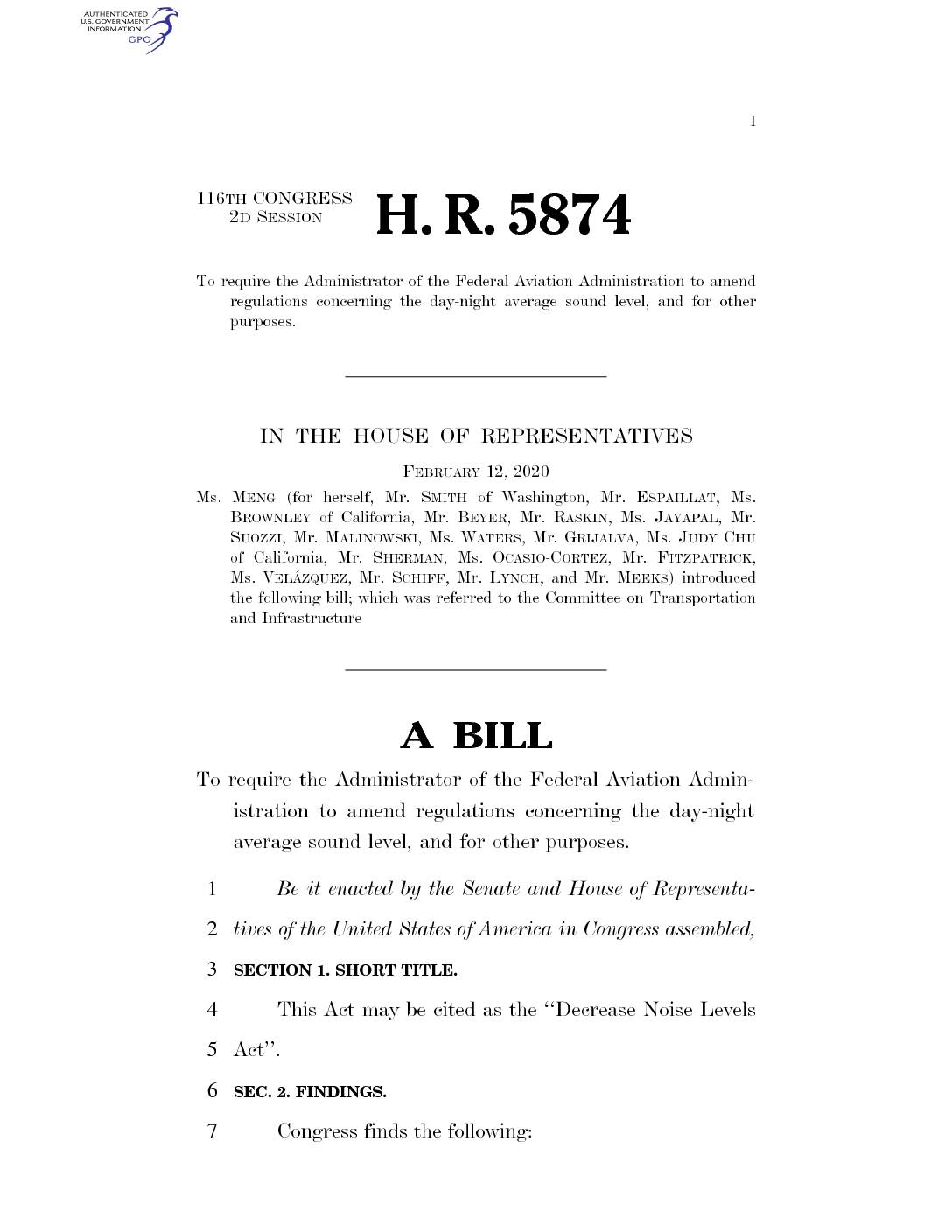
HR 5874 – Decrease Noise Levels Act
116th CONGRESS 2d Session H. R. 5874 To require the Administrator of the Federal Aviation Administration to amend regulations concerning the day-night average sound level, and for other purposes. IN THE HOUSE OF REPRESENTATIVES February 12, 2020 Ms. Meng (for herself, Mr. Smith of Washington, Mr. Espaillat, Ms. Brownley of California, Mr. Beyer, Mr. -
 2020-02-12 00:00
HR 5874 – Decrease Noise Levels Act
To require the Administrator of the Federal Aviation Administration to amend regulations concerning the day-night average sound level, and for other purposes. IN THE HOUSE OF REPRESENTATIVES FEBRUARY 12, 2020 Ms. MENG (for herself, Mr. SMITH of Washington, Mr. ESPAILLAT, Ms. BROWNLEY of California, Mr. BEYER, Mr. RASKIN, Ms. JAYAPAL, Mr. SUOZZI, Mr. MALINOWSKI, Ms. WATERS, Mr. GRIJALVA, Ms. JUDY CHU of California, Mr. SHERMAN, Ms. OCASIO-CORTEZ, Mr. FITZPATRICK, Ms. VELÁZQUEZ, Mr. SCHIFF, Mr. LYNCH, and Mr. MEEKS) introduced the following bill; which was referred to the Committee on Transportation and Infrastructure A BILL To require the Administrator of the Federal Aviation Admin- istration to amend regulations concerning the day-night average sound level, and for other purposes. Be it enacted by the Senate and House of Representa-1 tives of the United States of America in Congress assembled, 2 SECTION 1. SHORT TITLE. 3 This Act may be cited as the ‘‘Decrease Noise Levels 4 Act’’. 5 SEC. 2. FINDINGS. 6 Congress finds the following: 7 VerDate Sep 11 2014 22:50 Feb 19, 2020 Jkt 099200 PO 00000 Frm 00001 Fmt 6652 Sfmt 6201 E:BILLSH5874.IH H5874kjo hn so n on D S K L0 C P R D w ith B IL LS •HR 5874 IH (1) The day-night average sound level rep-1 resents the total accumulation of all sound energy 2 averaged over a 24-hour period. 3 (2) The current Federal Aviation Administra-4 tion guidelines for the day-night average sound level 5 are 65. 6 (3) Excessive airplane noise has…