Category : History(256)
-
 1981-05-13
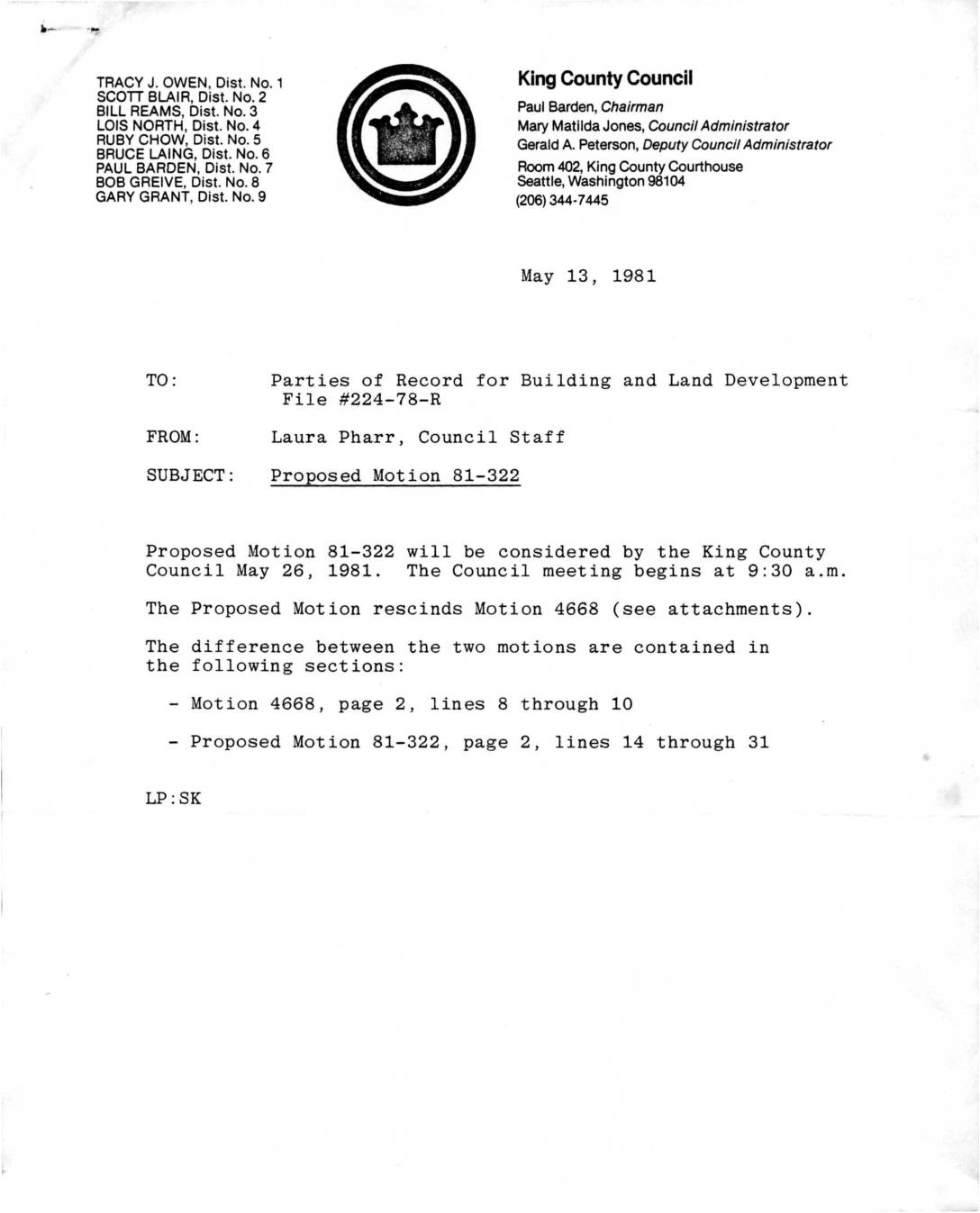
King County Council Notice: Proposed Motion 81-322 Rescinding Motion 4668, Building and Land Development File 224-78-R (Port Of Seattle Reclassification)
★Memo dated May 13, 1981 from Laura Pharr, King County Council Staff, to Parties of Record for Building and Land Development File 224-78-R, notifying them that Proposed Motion 81-322 will be considered by the King County Council on May 26, 1981 at 9:30 a.m. The motion rescinds Motion 4668, which concurred with the Zoning and -
 1980-11-19
Regional Airport System Plan, 1980-2000, Central Puget Sound region
★ 32This 1980 draft report, produced by the Puget Sound Council of Governments, outlines a Regional Airport System Plan for the Central Puget Sound area covering the years 1980 to 2000. Funded by the Port of Seattle, the Washington State Department of Transportation, and the Federal Aviation Administration, the plan was developed to guide regional aviation policy and infrastructure decisions across King, Pierce, Snohomish, and Kitsap counties. It was prepared for review by the Standing Committee on Transportation and represents an early framework for managing air travel demand and airport development in the greater Seattle region. -
 1980-01-01
Highline Community Plan: Proposed Area Zoning
★This January 1980 King County Division of Planning report proposes new zoning maps for the Highline community, located south of Seattle between I-5 and Puget Sound, to implement the Highline Communities Plan adopted in December 1977. The plan translates land use policies into specific zoning classifications covering topics such as mixed-use development, mobile home development, an Airport Open Use Zone, and landscaping guidelines. It applies only to unincorporated King County areas and was subject to public community meetings and hearings before adoption by the County Council. -
 1976-06-08
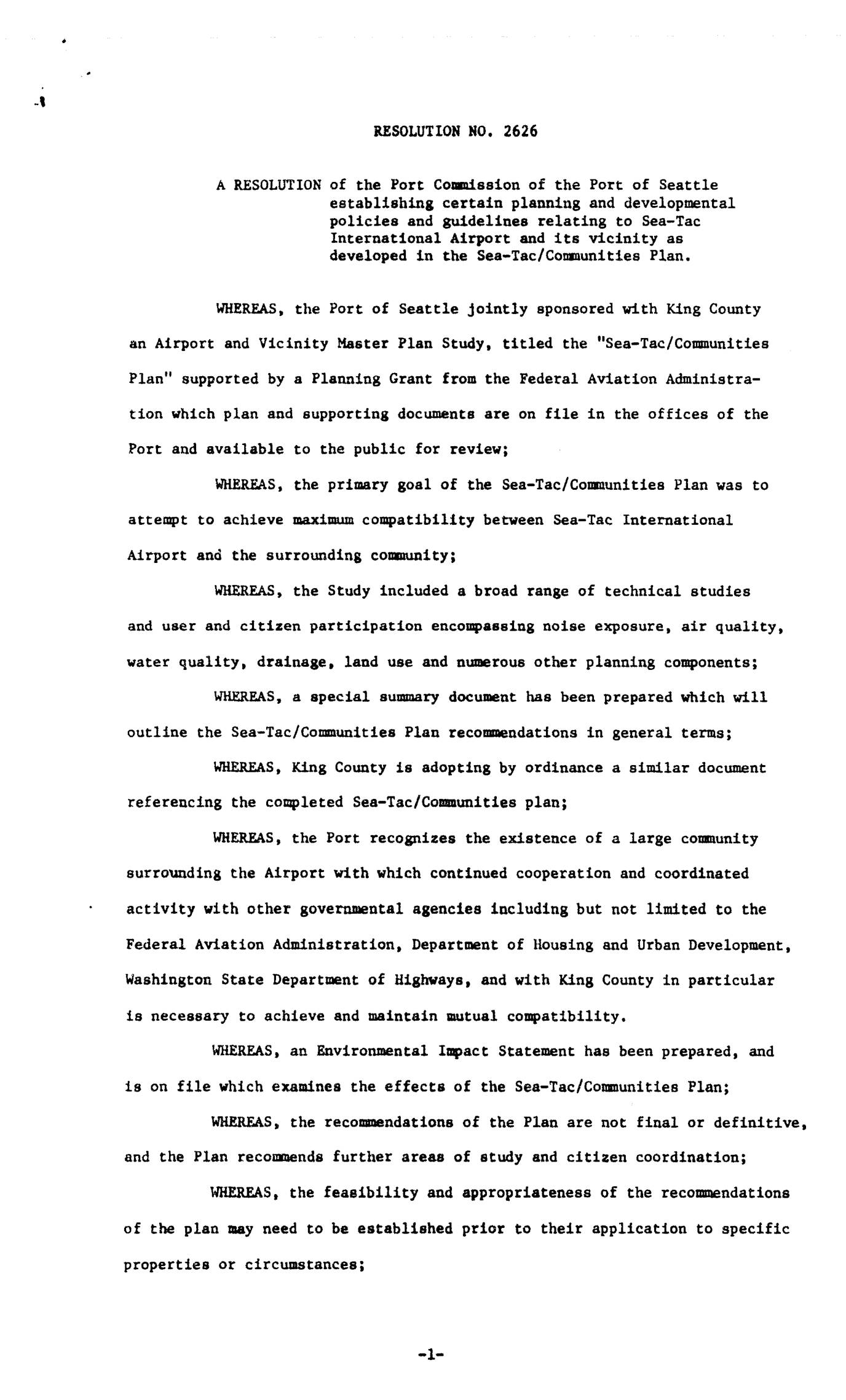
Resolution No. 2626: A resolution establishing planning and developmental policies relating to Sea-Tac International Airport and its vicinity
★Resolution No. 2626, adopted by the Port of Seattle Commission on June 8, 1976, formally accepted the Sea-Tac/Communities Plan as a guide for developing Sea-Tac International Airport in a way that maximizes compatibility with surrounding neighborhoods. The resolution directed Port staff to pursue federal funding for land acquisition in flight path zones, establish an aircraft noise monitoring system, and launch a pilot acoustic insulation program for nearby homes. Total noise abatement efforts were estimated to cost approximately $50 million over a ten-year period, with funding expected from airport revenues and federal assistance. -
City of Burbank v. Lockheed Air Terminal
★ 32In one of the most maddening examples of airport law, the United States argued for reversal (ie. allowing for local airport control) of curfews. The FAA, which had previously supported the ban, adopted a neutral position when the The Department of Transportation, filed a Friend of the Court brief arguing for reversal. Summary Holding that -
 1968-07-01
Building the Seattle-Tacoma Air Gateway
★ 31A 1968 report analyzing the development of Seattle-Tacoma International Airport as an air transportation hub. The document examines air traffic growth patterns, airline service routes, and the evolution of commercial aviation at Sea-Tac from 1958-1967, showing dramatic increases in passengers, cargo, and aircraft movements. -
Auburn Wetlands
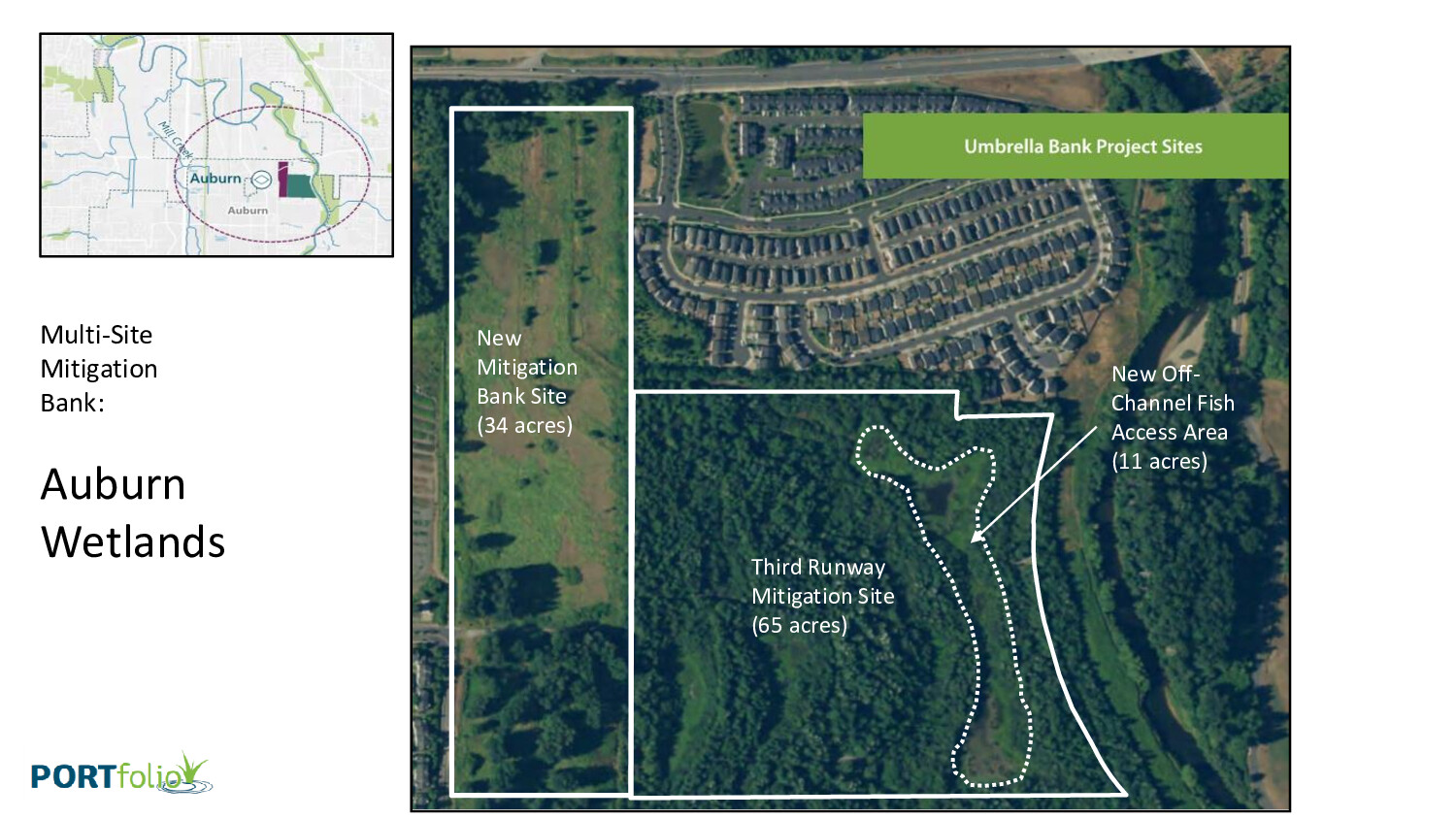
Environmental mitigation at its best and worst To build the Third Runway, the Port of Seattle proposed to fill all or parts of some 12 separate wetlands across the Miller Creek, Walker Creek, and Des Moines Creek watersheds–every one of them a class AA water, the highest protection provided by the state. FAA grants are -
Third Runway Decision Process (PSRC)
You can’t follow the game without a program Financing the Third Runway was unlike any other airport expansion–including the SAMP. In order to obtain federal funding, the Port was required to obtain an elaborate set of approvals from a regional agency most people are unfamiliar with–the Puget Sound Regional Council. In the broadest possible strokes, -
 2026-07-15
Sea-Tac Communities Plan: Plan Summary Brochure
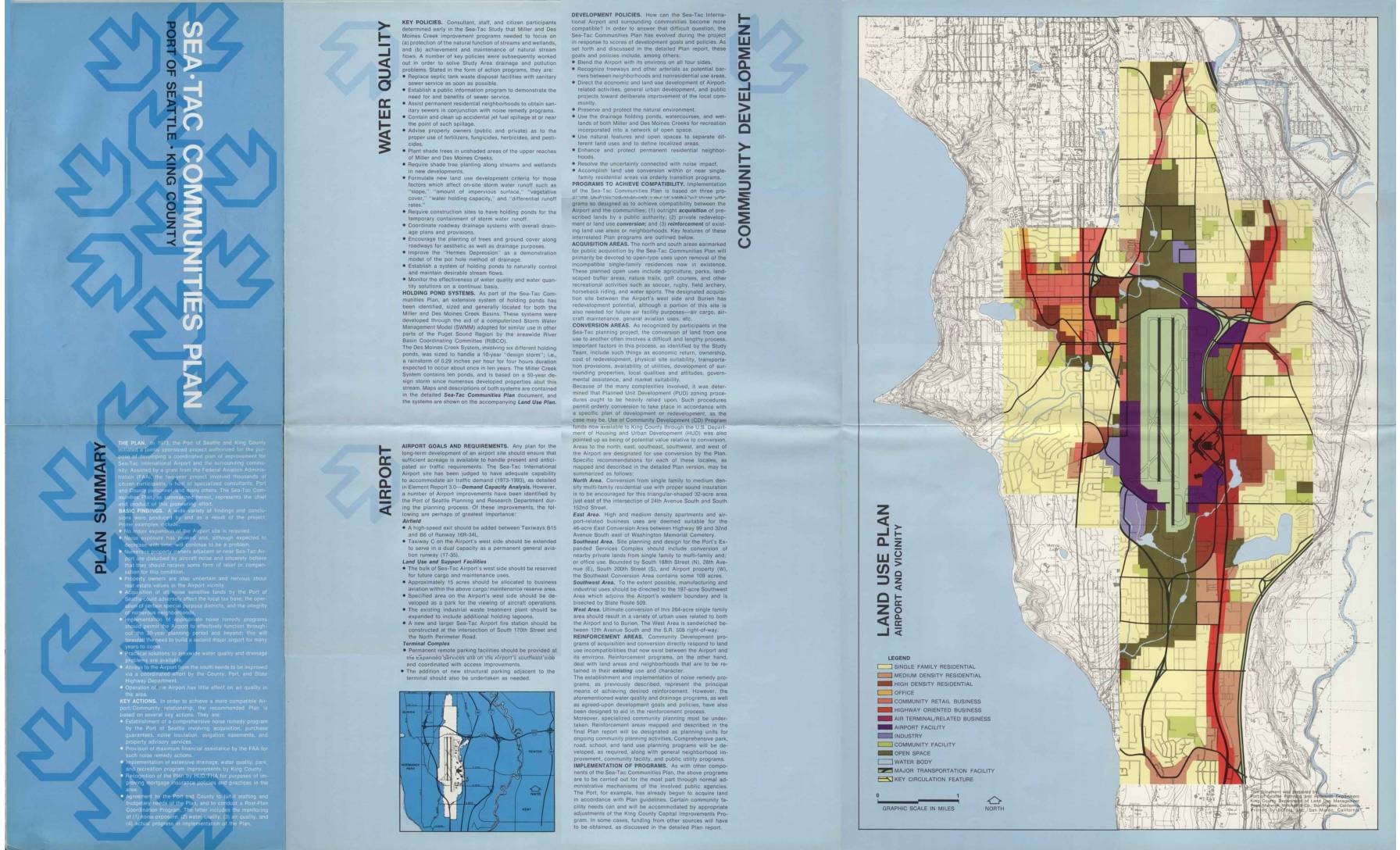
The Sea-Tac Communities Plan, jointly developed by the Port of Seattle and King County beginning in 1973, outlines strategies to improve compatibility between Sea-Tac International Airport and surrounding neighborhoods, with a focus on aircraft noise remedies, water quality improvements, and land use conversion. The plan identifies specific areas for outright property acquisition, purchase guarantees, and noise insulation programs affecting thousands of homes north and south of the airport. It also establishes policies for drainage management, community development, and long-term airport facility improvements to accommodate projected air traffic growth through 1993. -
2026-07-15
Sea-Tac Communities Plan: Plan Summary Brochure
Plan Summary brochure for the Sea-Tac Communities Plan (STCP), a joint Port Of Seattle and King County Council initiative begun March 1973 to achieve compatibility between Sea-Tac Airport and surrounding communities. Covers water quality programs for Miller Creek and Des Moines Creek basins including holding pond systems sized via Storm Water Management Model (SWMM); airport