TagWater Quality(10)
-
-
2024-08-12 23:32
Des Moines Creek Water Quality Monitoring Program, King County – DNRP
The Des Moines Creek benthos sampling is part of a larger Des Moines Creek Water Quality Monitoring Program that began in 2012. This program is designed to monitor and assess water quality in Des Moines Creek and will follow three broad goals: • Understand the status and trends of water quality and ecological health of -
 2023-10-01 23:23
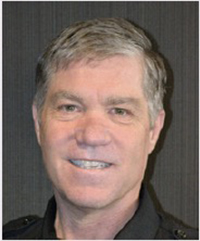
Our Transition to Fluorine-Free Foam
Randy Krause October 2023 The Port of Seattle Fire Department continues on a five-year journey to find the safest, most efficient aircraft firefighting foam (AFFF) replacement and make Seattle-Tacoma International (SEA) one of the first U.S. airports to complete the steps for the transition after federal approval. In 2018, it was obvious the FAA would -
 2023-08-03 19:13
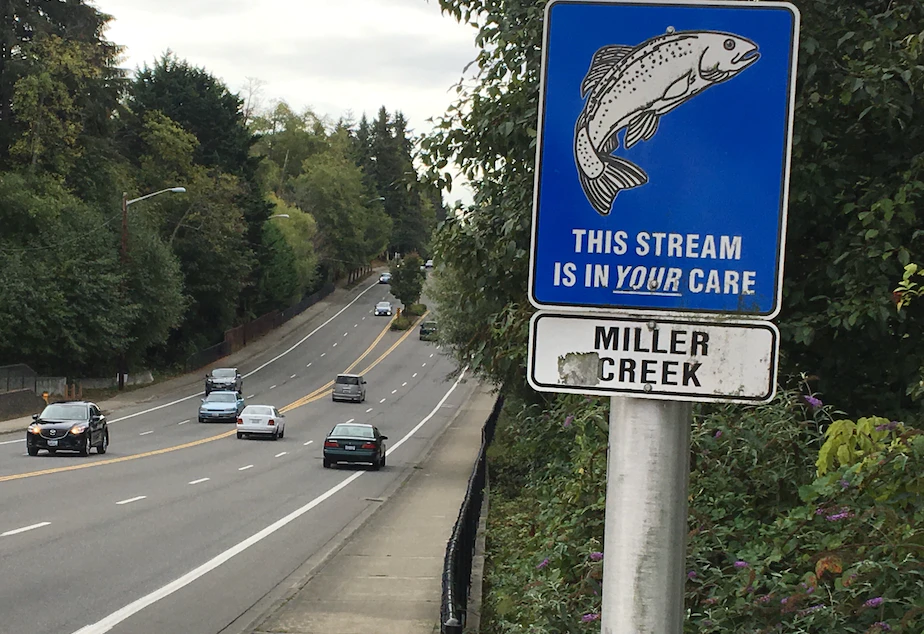
Tribes call for national ban on salmon-killing chemical in car tires
by John Ryan Three Northwest tribes have petitioned the federal government to ban a salmon-killing chemical found in tires and urban streams worldwide. As car and truck tires wear and leave behind skid marks and tire dust, the rubber stabilizer known as 6PPD turns into 6PPD-quinone (also called 6PPD-q), one of the most toxic substances -
2022-08-19 22:33
Fecal bacteria pollution is a problem for Poverty Bay’s shellfish
A mix of dog droppings, septic leakage and other pollutants have become a nuisance for wildlife and geoduck harvesting at Poverty Bay over the last few years. By Alex Bruell • August 19, 2022 5:30 am Divers, walkers and other beachgoers enjoy Poverty Bay in Des Moines on a Saturday morning, Aug. 13. Photo by Alex Bruell/Sound -
 2014-10-13 00:00
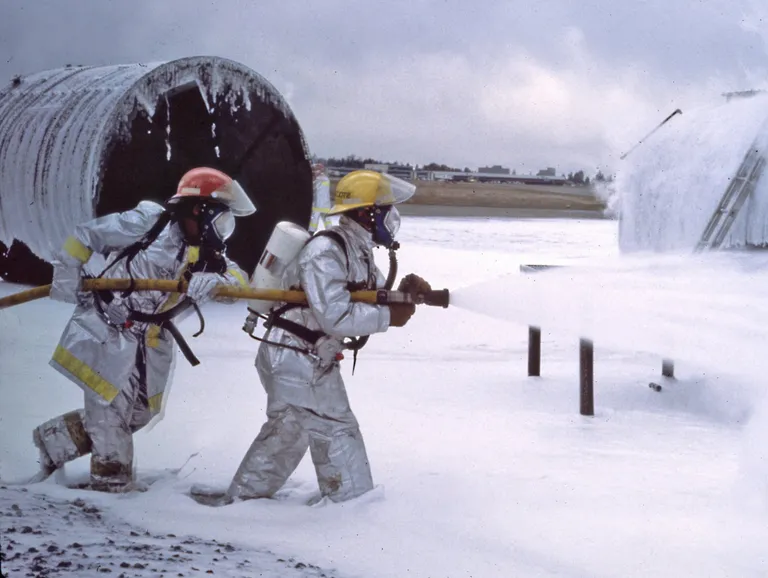
PFAS Training Exercise, October 13, 2014
-
 2001-08-30 20:46
RCAA Flyer Conveyor 2001
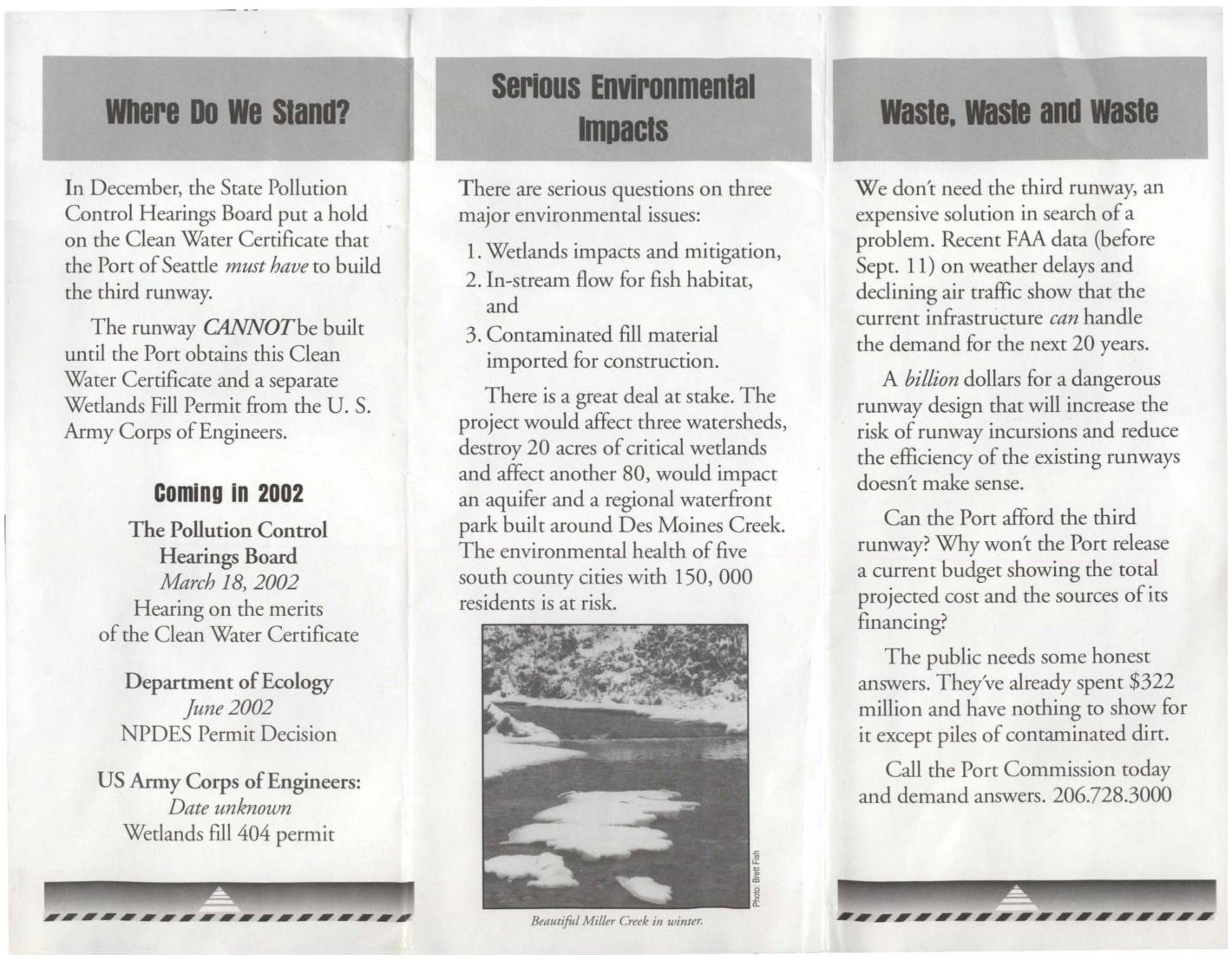
the Port of Seattle must have to build the third runway. The runway CANNOTbe built until the Port obtains this Clean Water Certificate and a separate Wetlands Fill Permit from the U.S. Army Corps of Engineers. coming in 2002 The Pollution Control Hearings Board March 18, 2002 Hearing on the merits of the Clean Water Certificate Department of Ecology June2002 NPDES Permit Decision US Army Corps of Engineers: Date unknown Wetlands fill404 permit il : Serious Environmental -CIS There are serious questions on three major environmental issues: 1. Wetlands impacts and mitigation, 2. In-stream flow for fish habitat, and 3. Contaminated fill material imported for construction. There is a great deal at stake. The project would affect three watersheds, destroy 20 acres of critical wetlands and affect another 80, would impact an aquifer and a regional waterfront park built around Des Moines Creek The environmental health of five south county cities with 150, 000 residents is at risk Beautifi<L MilLer Creek in winter. wasta, ··-· We don't need the third runway, an expensive solution in search of a problem. Recent FAA data (before Sept. 11) on weather delays and declining air traffic show that the current infrastructure can handle the demand for the next 20 years. A billion dollars for a dangerous runway design that will increase the risk of runway incursions and reduce the efficiency of the existing runways doesn't make sense. Can the Port afford the third runway? Why won't the Port release a current budget showing the… -
 1997-11-01 00:00
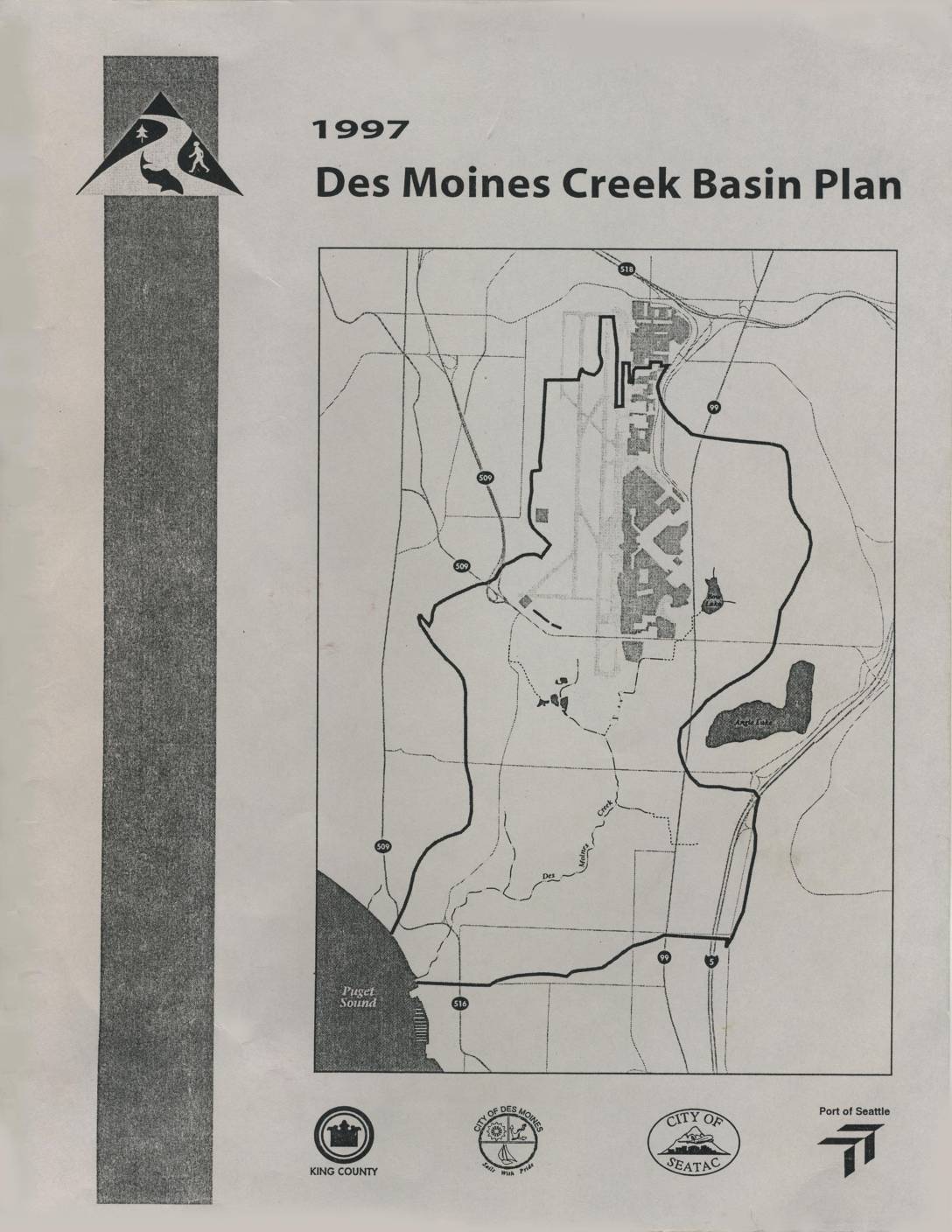
Des Moines Creek Basin Plan November 1997
King County Department of Natural Resources, Water and Land Resources Division: David Masters, M.U.R.P. - Project Management, Land Use Planning David Hartley, Ph.D., P.E. - Hydrology, Modeling Alan Johnson, M.S. - Fisheries, Stream Ecology Aquatic Resources Consultants Clint Loper, P.E. - Engineering Derek Booth, Ph.D. - Geology Susan Kaufman-Una, M.S. - Water Quality Kenneth Ludwa, M.S. - Water Quality, Field Sampling Katie Morrill - Editing, Report Preparation Wendy Gable - Graphics PROJECT MANAGEMENT TEAM: Don Monaghan - City of SeaTac Tim Heydon - City of Des Moines Loren Reinhold - City of Des Moines Tom Hubbard, - Port of Seattle Gary Minton - Port of Seattle COOPERATING AGENCIES: Ken Kase - Midway Sewer District Roy Moore - Tyee Golf Course ADDITIONAL SUPPORT: Phil Schnieder - Washington Department of Fish and Wildlife Rod Malcom - Muckleshoot Indian Tribe -
 1993-12-22 00:00
Letter to Barbara Stuhring re Deicing Ethylene Glycol water treatment
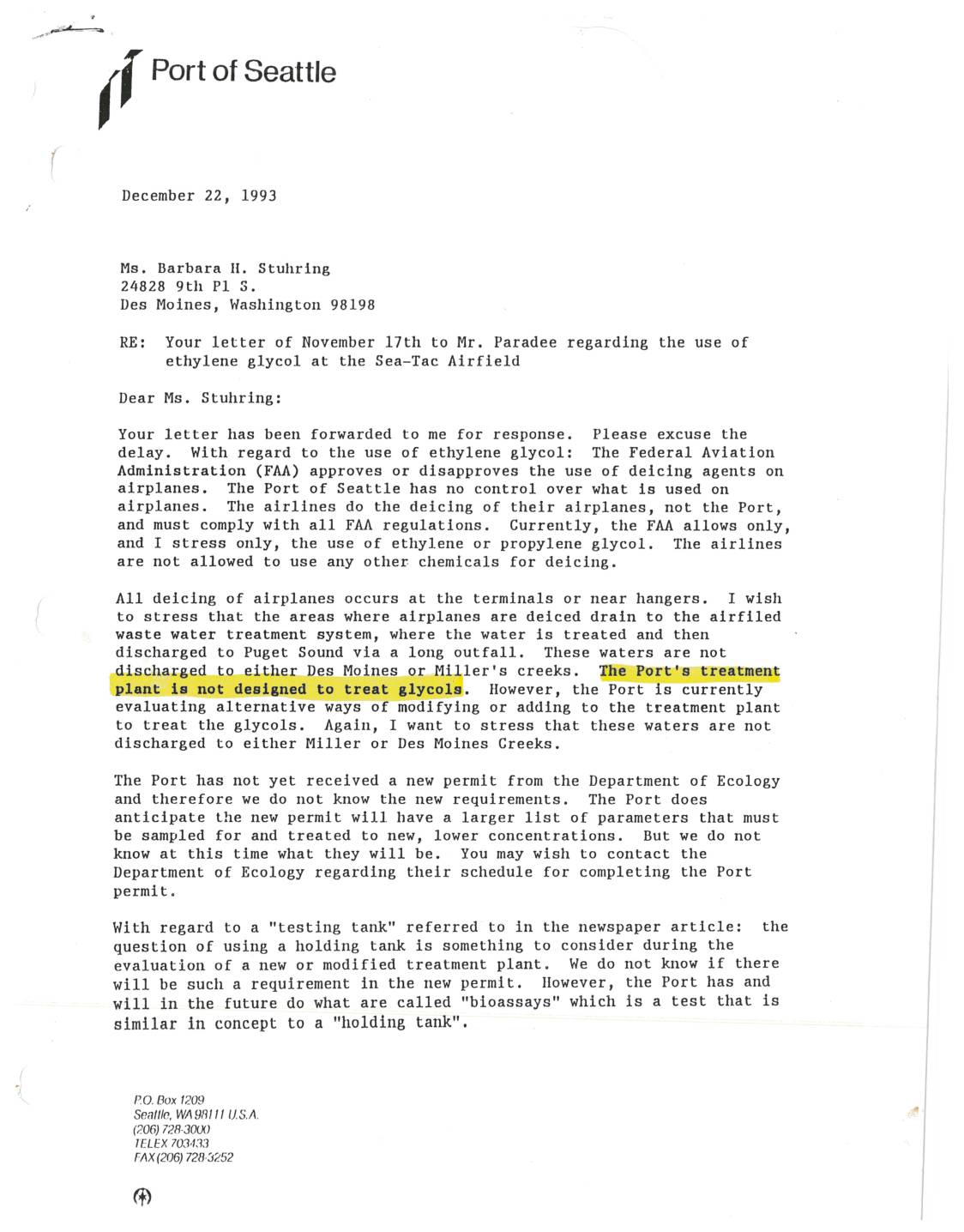
RE: Your letter of November 17th to Mr. Paradee regarding the use of ethylene glycol at the Sea-Tac Airfield Dear Ms. Stuhring: Your letter has been forwarded to me for response. Please excuse the delay. With regard to the use of ethylene glycol: The Federal Aviation Administration (FAA) approves or disapproves the use of deicing agents on airplanes. The Port of Seattle has no control over what is used on airplanes. The airlines do the deicing of their airplanes, not the Port, and must comply with all FAA regulations. Currently, the FAA allows only, and I stress only, the use of ethylene or propylene glycol. The airlines are not allowed to use any other chemicals for deicing. All deicing of airplanes occurs at the terminals or near hangers. I wish to stress that the areas where airplanes are deiced drain to the airfiled waste water treatment system, where the water is treated and then discharged to Puget Sound via a long outfall. These waters are not discharged to either Des Moines or Miller's creeks. The Port's rea~ment plant is not designed to treat glycols. However, the Port is currently evaluating alternative ways of modifying or adding to the treatment plant to treat the glycols. Again, I want to stress that these waters are not discharged to either Miller or Des Moines Greeks. The Port has not yet received a new permit from the Department of Ecology and therefore we do not know the new requirements. The Port does anticipate the… -
 1993-12-22 00:00
Barbara Hinkle to Barbara Stuhring re De-icer Ethylene Glycol
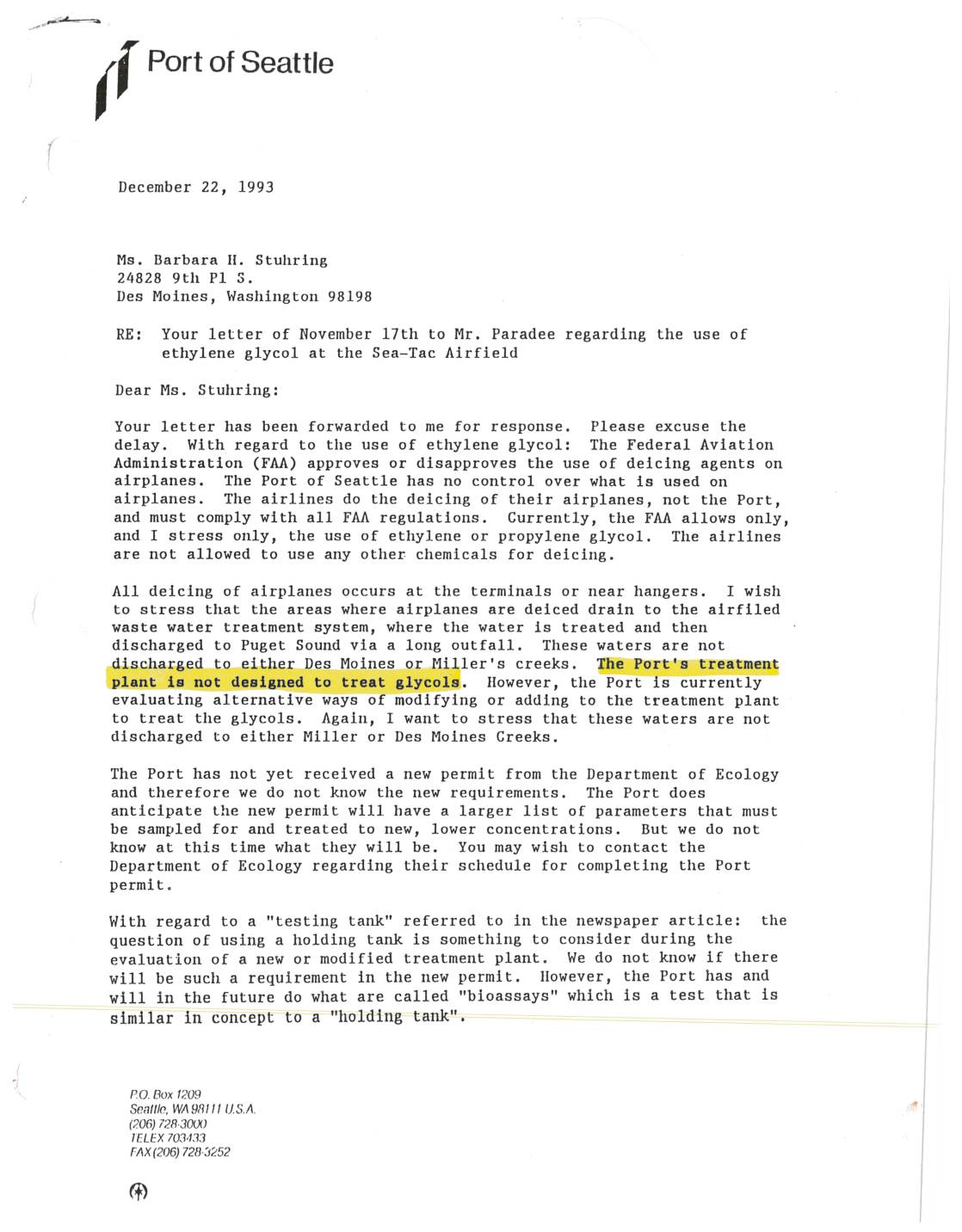
RE: Your letter of November 17th to Mr. Paradee regarding the use of ethylene glycol at the Sea-Tac Airfield Dear Ms. Stuhring: Your letter has been forwarded to me for response. Please excuse the delay. With regard to the use of ethylene glycol: The Federal Aviation Administration (FAA) approves or disapproves the use of deicing agents on airplanes. The Port of Seattle has no control over what is used on airplanes. The airlines do the deicing of their airplanes, not the Port, and must comply with all FAA regulations. Currently, the FAA allows only, and I stress only, the use of ethylene or propylene glycol. The airlines are not allowed to use any other chemicals for deicing. All deicing of airplanes occurs at the terminals or near hangers. I wish to stress tltat the areas where airplanes are deiced drain to the airfiled waste water treatment system, where the water is treated and then discharged to Puget Sound via a long outfall. These waters are not discharged to either Des Moines or Miller's creeks. The Port's treatment plant is not designed to treat glycols. However, the Port is currently evaluating alternative ways of modifying or adding to the treatment plant to treat the glycols. Again, I want to stress that these waters are not discharged to either Miller or Des Moines Greeks. The Port has not yet received a new permit from the Department of Ecology and therefore we do not know the new requirements. The Port does anticipate the…