2023-12-31 01:12
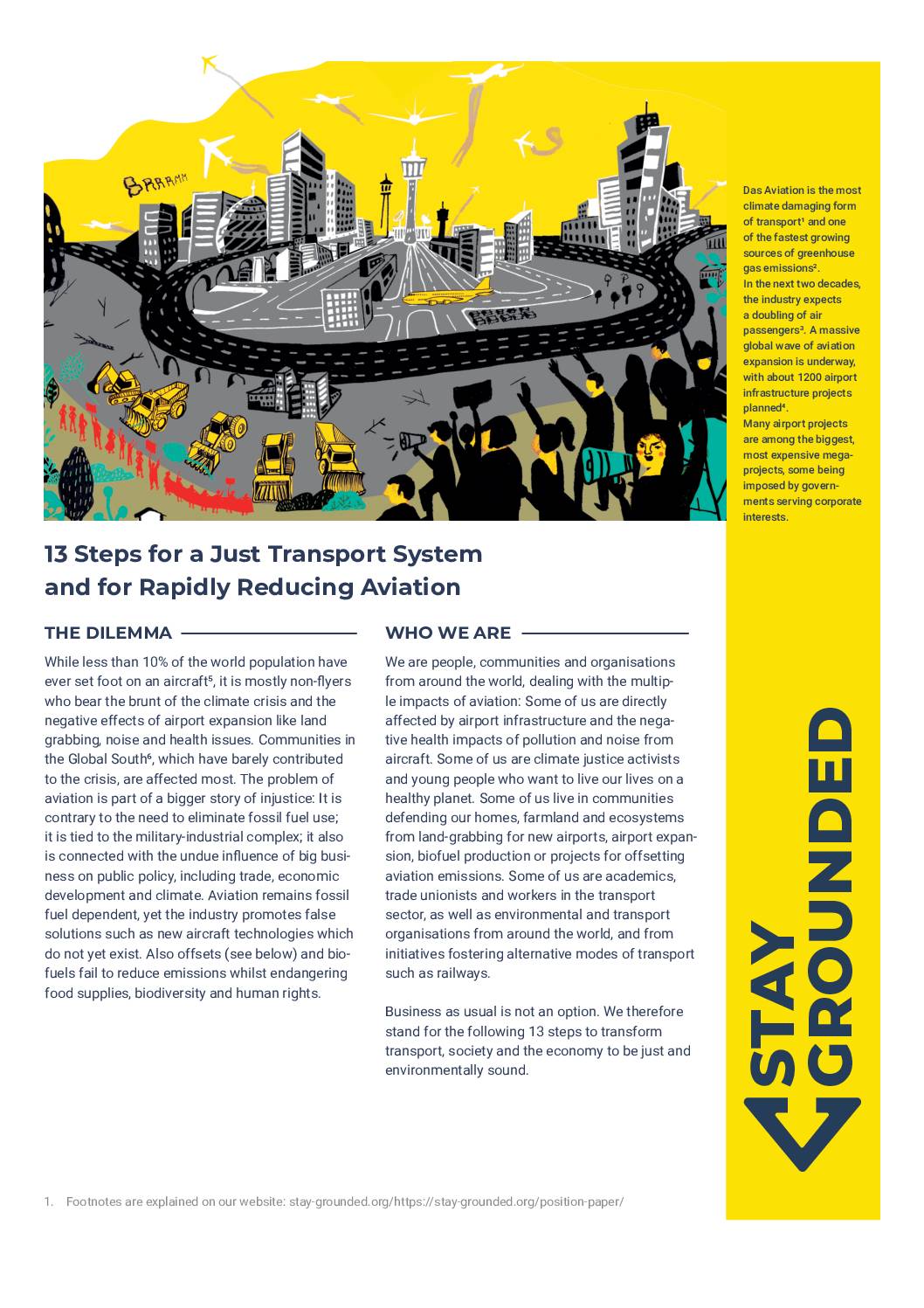
While less than 10% of the world population have ever set foot on an aircraft5, it is mostly non-flyers who bear the brunt of the climate crisis and the negative effects of airport expansion like land grabbing, noise and health issues. Communities in the Global South6, which have barely contributed to the crisis, are affected most. The problem of aviation is part of a bigger story of injustice: It is contrary to the need to eliminate fossil fuel use; it is tied to the military-industrial complex; it also is connected with the undue influence of big busi- ness on public policy, including trade, economic development and climate. Aviation remains fossil fuel dependent, yet the industry promotes false solutions such as new aircraft technologies which do not yet exist. Also offsets (see below) and bio- fuels fail to reduce emissions whilst endangering food supplies, biodiversity and human rights. We are people, communities and organisations from around the world, dealing with the multip- le impacts of aviation: Some of us are directly affected by airport infrastructure and the nega- tive health impacts of pollution and noise from aircraft. Some of us are climate justice activists and young people who want to live our lives on a healthy planet. Some of us live in communities defending our homes, farmland and ecosystems from land-grabbing for new airports, airport expan- sion, biofuel production or projects for offsetting aviation emissions. Some of us are academics, trade unionists and workers in the transport sector, as well as…
 2024-03-21 12:58
 2023-12-31 01:12