2022-06-30 00:00
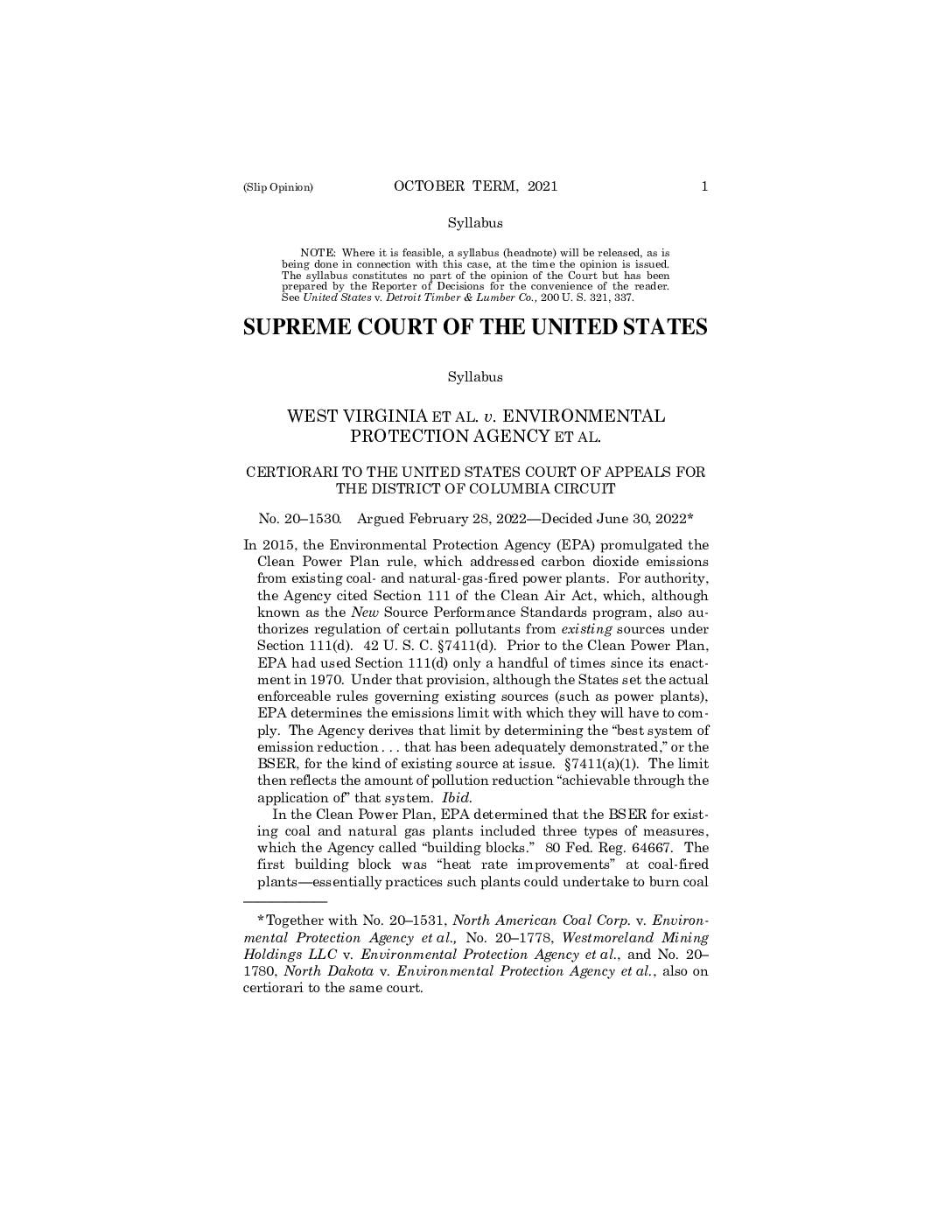
NOTE: Where it is feasible, a syllabus (headnote) will be released, as is being done in connection with this case, at the time the opinion is issued. The syllabus constitutes no part of the opinion of the Court but has been prepared by the Reporter of Decisions for the convenience of the reader. See United States v. Detroit Timber & Lumber Co., 200 U. S. 321, 337. SUPREME COURT OF THE UNITED STATES Syllabus WEST VIRGINIA ET AL. v. ENVIRONMENTAL PROTECTION AGENCY ET AL. CERTIORARI TO THE UNITED STATES COURT OF APPEALS FOR THE DISTRICT OF COLUMBIA CIRCUIT No. 20–1530. Argued February 28, 2022—Decided June 30, 2022* In 2015, the Environmental Protection Agency (EPA) promulgated the Clean Power Plan rule, which addressed carbon dioxide emissions from existing coal- and natural-gas-fired power plants. For authority, the Agency cited Section 111 of the Clean Air Act, which, although known as the New Source Performance Standards program, also au- thorizes regulation of certain pollutants from existing sources under Section 111(d). 42 U. S. C. §7411(d). Prior to the Clean Power Plan, EPA had used Section 111(d) only a handful of times since its enact- ment in 1970. Under that provision, although the States set the actual enforceable rules governing existing sources (such as power plants), EPA determines the emissions limit with which they will have to com- ply. The Agency derives that limit by determining the “best system of emission reduction . . . that has been adequately demonstrated,” or the BSER, for…
 2024-06-28 18:48
 2022-06-30 00:00