Category : Explainers(53)
Almost everything about every airport is complicated. And Sea-Tac Airport is more challenging than most. These short-form articles try to make things as simple as possible. Use them to branch off into deeper dives.
-
 2024-09-22
The Factory: An STNI explainer on the Sustainable Airport Master Plan
This explainer from Sea-Tac Noise.Info describes Seattle-Tacoma International Airport as a large-scale assembly line with three interconnected sections: air (airspace and runways), terminal (gates, passengers, and baggage), and road (cars, trucks, pedestrians, and light rail). The airport processes people, cargo, and vehicles across roughly 450,000 flights per year—more than 1,230 per day—with the goal of moving everything smoothly between sections and no delays. A bottleneck in any one section can ripple through the entire system, making capacity planning central to the airport's Sustainable Airport Master Plan (SAMP). -
 2024-07-29
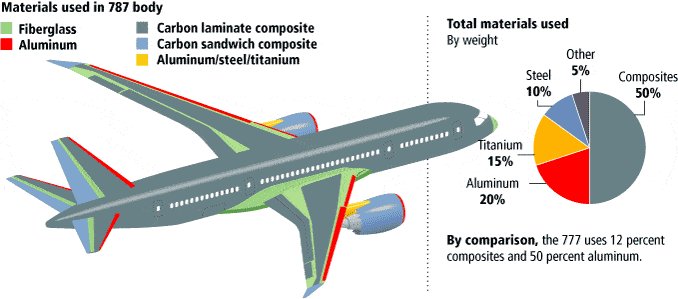
Materials used in 787 body
Infographic showing materials used in the Boeing 787 body, including fiberglass, aluminum, carbon laminate composite, carbon sandwich composite, and aluminum/steel/titanium. A pie chart shows total materials by weight: composites 50%, aluminum 20%, titanium 15%, steel 10%, other 5%; noting the 777 uses 12% composites and 50% aluminum by comparison. -
 2024-07-29
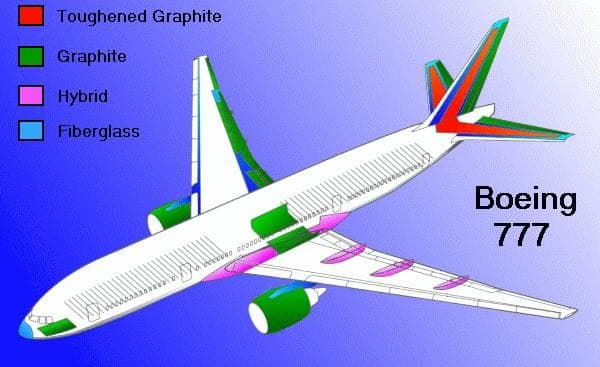
Boeing 777 Aircraft Materials Diagram
A labeled diagram of the Boeing 777 aircraft illustrating the distribution of composite materials used in its construction, including toughened graphite, graphite, hybrid, and fiberglass components. The diagram uses color-coding to identify where each material type is applied across the airframe, including the tail, wings, engine nacelles, and fuselage sections. -
 2024-07-03
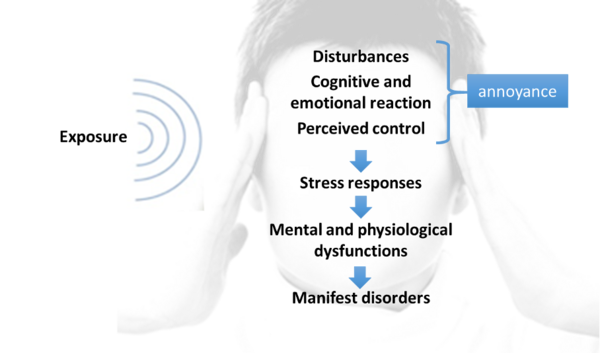
Stop acting so annoyed!
Changing the noise discussion from personal opinion to public health Annoyance, is the term of art describing a level of unwanted and/or harmful sound that is not damaging to hearing. That is how it was first used in research literature. We think it’s time to come up with a new term because ‘annoyance’ is dismissive -
Port Package Site Visit Follow-Up
What to do next? Thank you for allowing us to inspect your Port Package! You are now one of over 350 homeowners that helped create the Port of Seattle’s updated sound insulation program. If you would like more background information on how we got here, please read The Port Package Explainer. But for now, you -
One typical street. Thirteen Port Packages
The changing demography of homes under the flight path Homes mitigated by sound insulation systems represent a large portion of the scarce and highly desirable middle-housing market in the three cities within the DNL65 (Burien, Des Moines, Seatac). This street of thirteen homes is typical of almost every street where people signed Avigation Easements and -
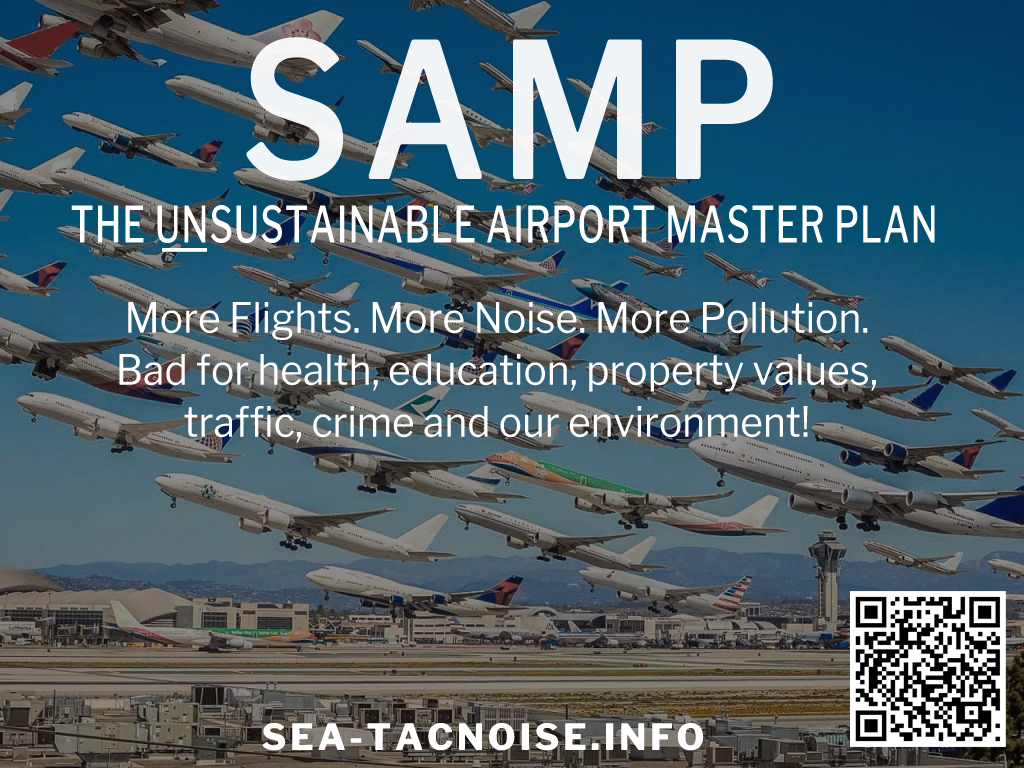
The UnSustainable Airport Master Plan
Sea-Tac Airport is currently undergoing the largest and longest expansion in its history, collectively known as the Sustainable Airport Master Plan (SAMP). Some of it you can already <em>hear</em>, but you’re probably not aware of what it all means. Here’s what you need to know. -
Why did the City of Des Moines rescind its sound code in 2012?
At their April 26, 2012 meeting, the Des Moines City Council voted to remove any sound reduction requirements from its building code via (Ordinance #1539). This is exceptional given the fact that the two other cities in the area which had similar building code did not follow suit. At the time, the City Council would -
 2024-01-25
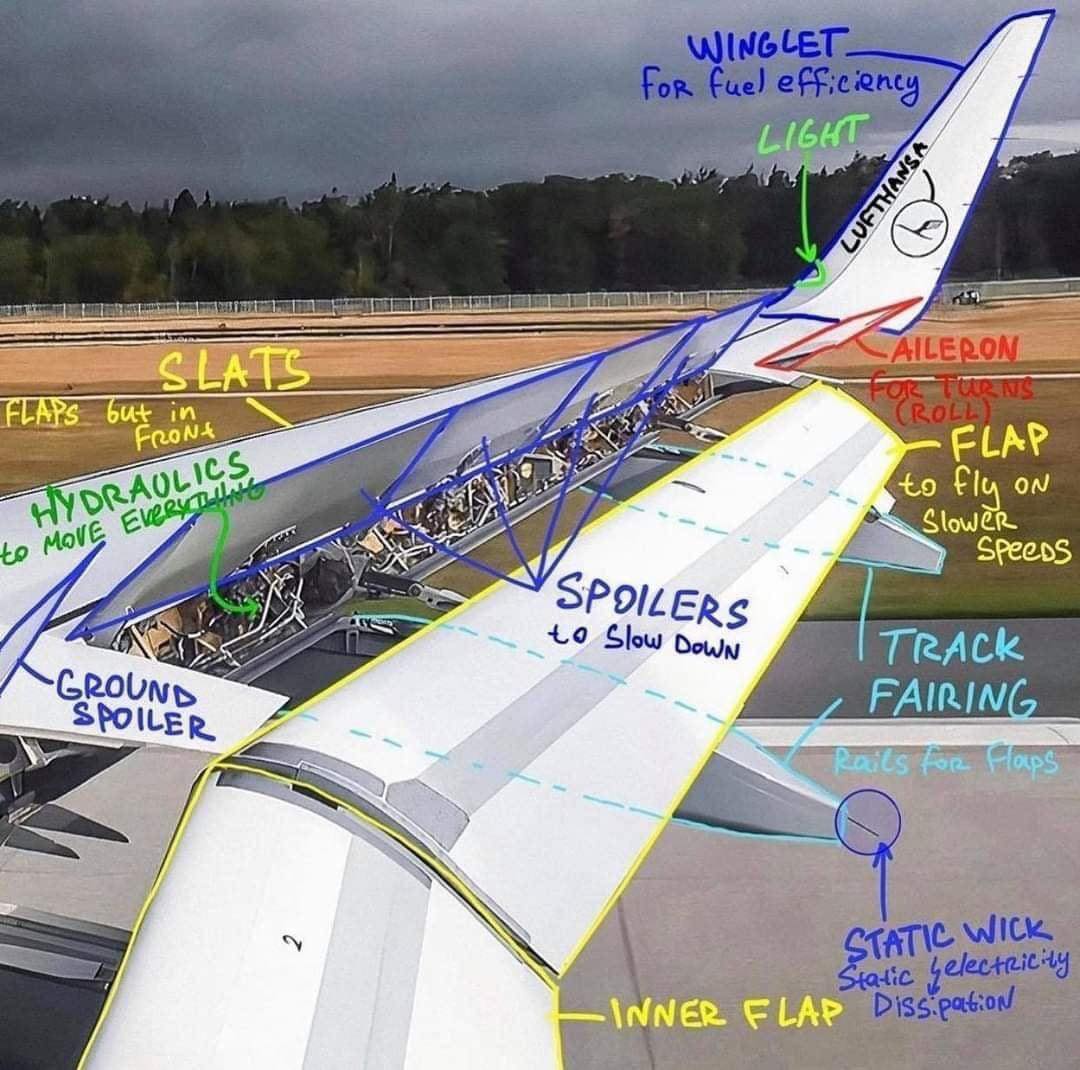
Airplane Wing Components and Aerodynamics Diagram
Annotated photograph of a Lufthansa airline aircraft wing taken from a passenger window seat, with handwritten labels identifying key aerodynamic and mechanical components including winglet, slats, ailerons, flaps, spoilers, hydraulics, track fairing, static wick, and ground spoiler. The wing is shown in a deployed/extended configuration, likely during taxi, takeoff, or landing. -
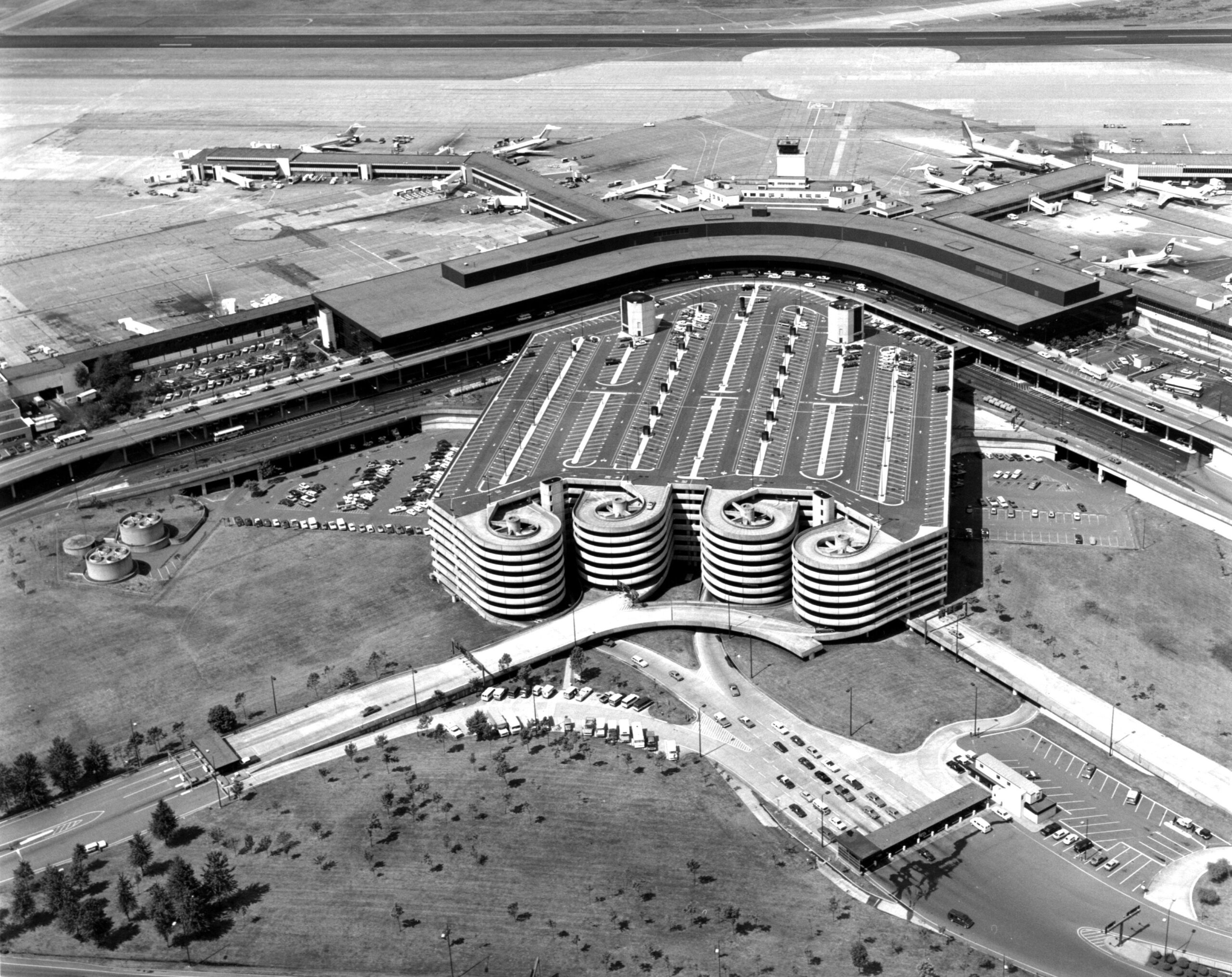
Parking
Parking is a huge part of Sea-Tac Airport, both in terms of revenue and operations. By one measure, the main garage is the largest enclosed parking structure in the United States. It also plays a significant role for the City of SeaTac as part of its Inter-Local Agreement with the Port of Seattle.