The most requested documents–and all related-content
This page is an attempt to solve a problem we’ve had since the beginning: how to get visitors to study documents and all the related content which often provides the necessary context. For example, most studies are meant to be read by specialists. If you are a layperson, you may only be interested in the ‘one-pager’. This page shows you both.
-
 1999-12-13
1998/1999 SeaTac oxides of nitrogen and particulate monitoring study
This 1998/1999 study by the Washington State Department of Ecology monitored levels of oxides of nitrogen and particulate matter in the SeaTac area, likely in relation to emissions from Seattle-Tacoma International Airport and surrounding traffic. Prepared by Jim Frost and Doug Knowlton of Ecology's Air Program, the report assessed local air quality conditions during that period. It serves as a technical reference for understanding pollution levels near the airport in the late 1990s. -
 2002-09-01
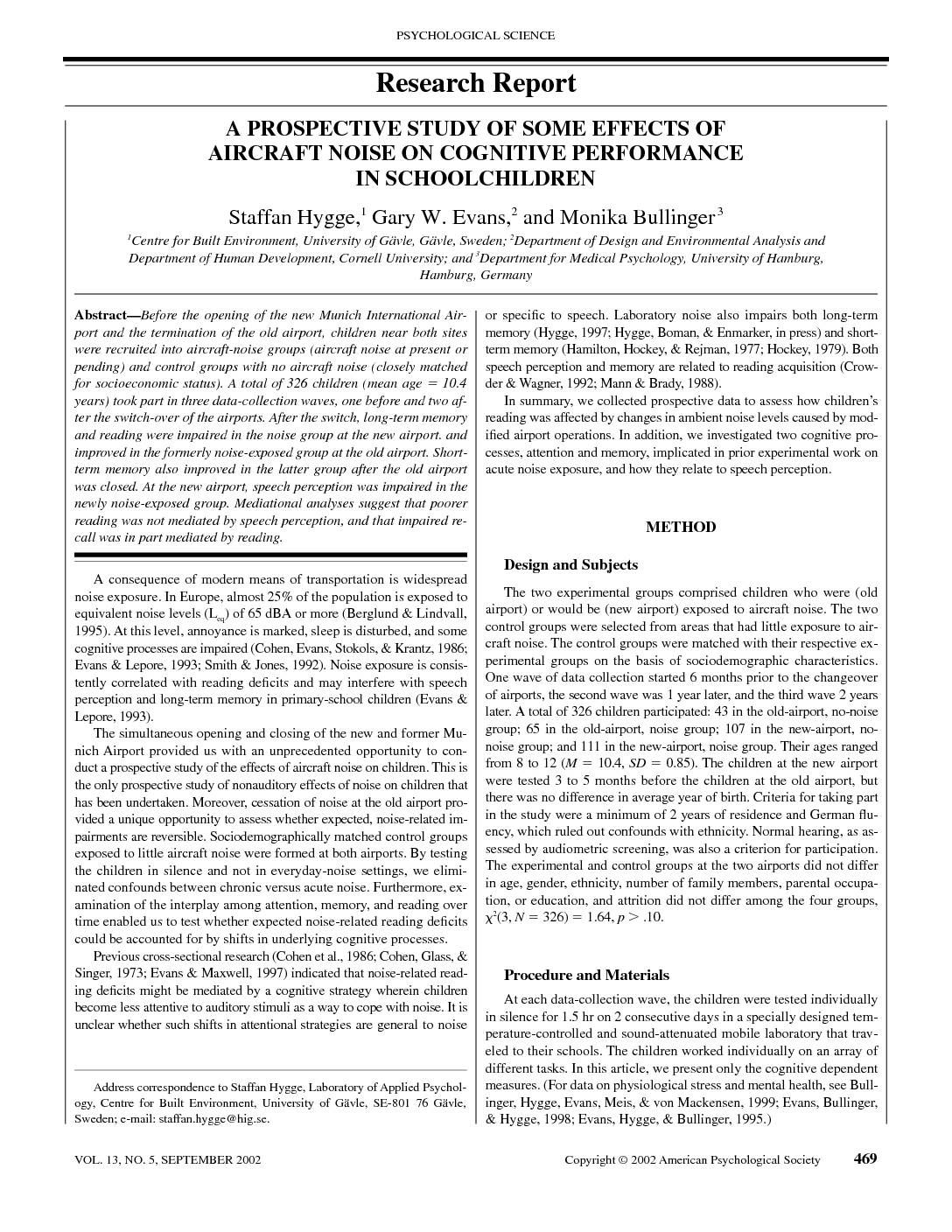
A prospective study of some effects of aircraft noise on cognitive performance in schoolchildren
A study tracking 326 schoolchildren around Munich's old and new airports found that exposure to aircraft noise impaired children's reading and long-term memory, while children who were relieved of noise when the old airport closed showed improvements in those same areas. Researchers tested the children before and after the airports switched operations, carefully matching noise-exposed and non-exposed groups by socioeconomic background. The findings suggest that aircraft noise has measurable, but potentially reversible, effects on key cognitive skills in school-age children. -
 2018-06-01
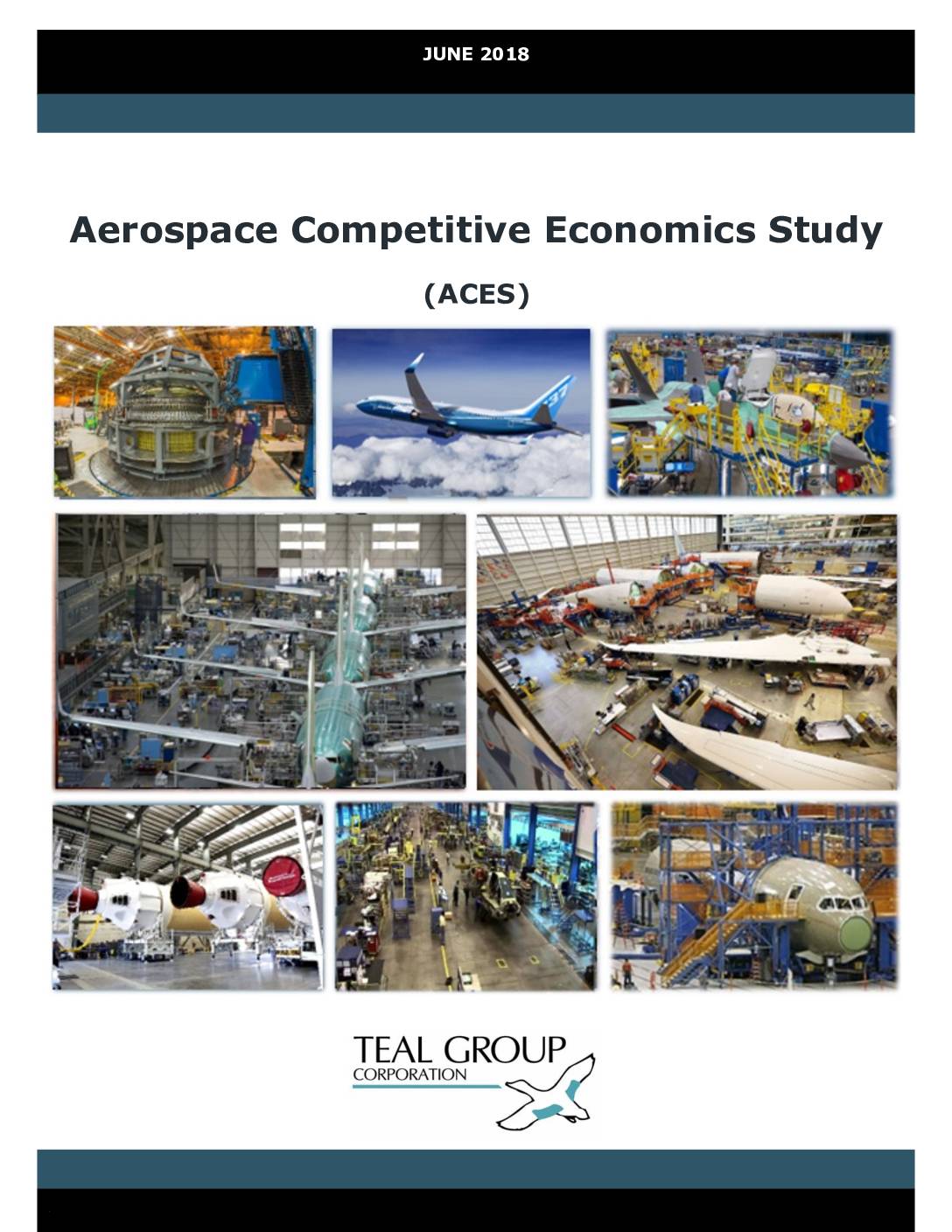
Aerospace Competitive Economics Study (ACES)
The Aerospace Competitive Economics Study (ACES), published in June 2018 by Teal Group Corporation, ranks U.S. states by their competitiveness for aerospace manufacturing, with Washington State coming in first overall. The study was prepared for the International Association of Machinists (IAM) District 751 and the Society of Professional Engineering Employees in Aerospace (SPEEA) to support the case for locating Boeing's proposed New Mid-Market Airplane (NMA) in Washington. It examines factors such as aircraft market trends, jetliner demand, and production site conditions across ten leading aerospace states. -
 2025-06-19
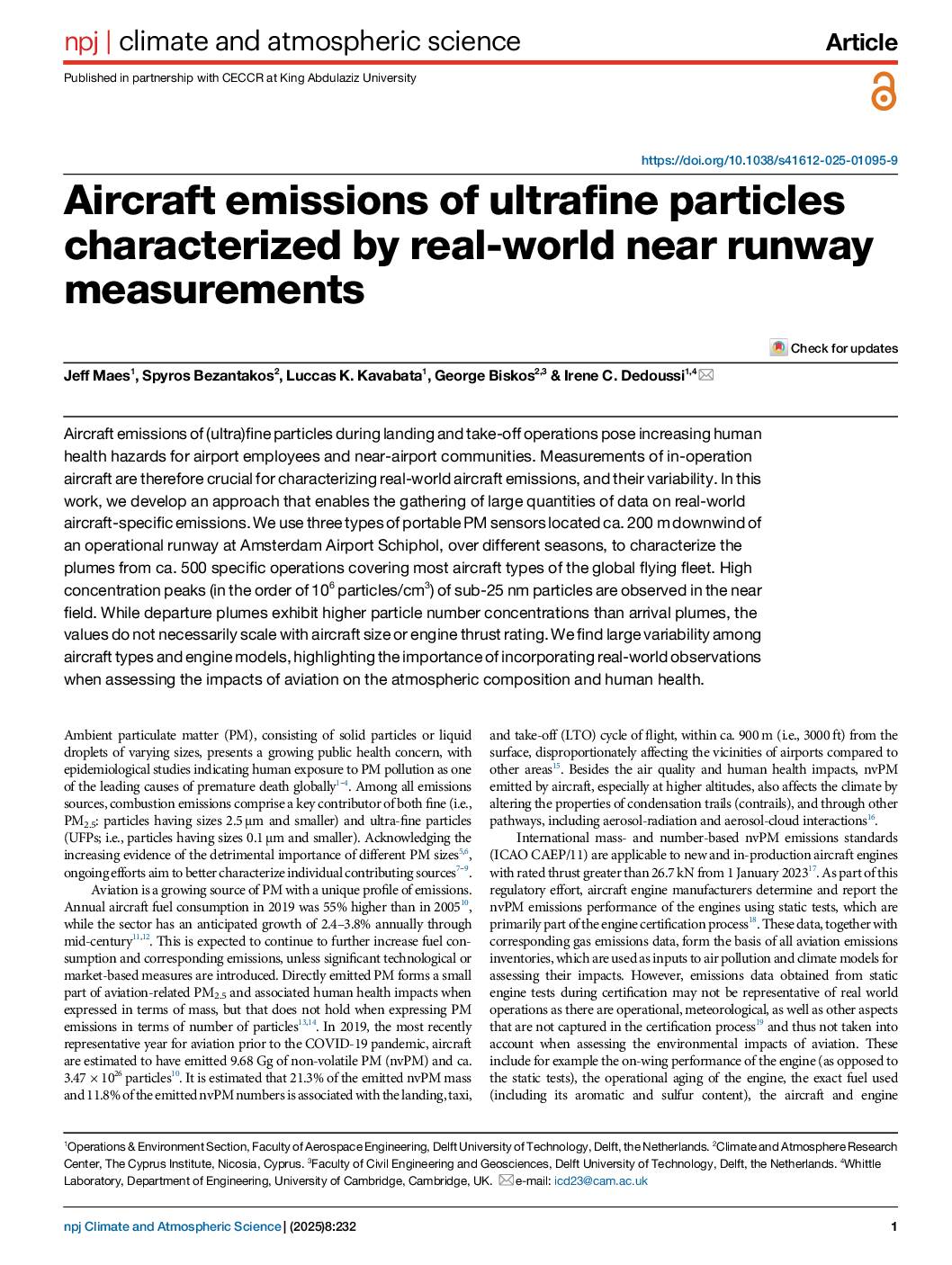
Aircraft emissions of ultrafine particles characterized by real-world near runway measurements
Researchers measured ultrafine particle emissions from approximately 500 individual aircraft operations at Amsterdam Airport Schiphol using portable sensors placed about 200 meters from an active runway. The study found that departing aircraft produce higher particle concentrations than arriving ones, with peaks reaching one million particles per cubic centimeter for particles smaller than 25 nanometers, and that emission levels do not simply scale with aircraft size or engine power. The findings highlight significant variability in real-world emissions across different aircraft and engine types, suggesting that current certification-based data may not fully capture the air quality impacts experienced by airport workers and nearby communities. -
 2025-09-01
Appendix K: Children’s Environmental Health and Safety Risks, Socioeconomics, and Environmental Justice (NEPA Final EA and SEPA)
Appendix K of this environmental review examines socioeconomic conditions, environmental justice, and children's health and safety risks in the area surrounding the proposed project. It finds that 23.3% of the population in the study area is under 18—higher than both King County and statewide averages—and identifies two schools within the project boundary that could expose children to environmental health risks. The appendix also includes an economic impact analysis for the Northwest Seaport Alliance and a separate environmental justice memorandum prepared under Washington State's environmental review process. -
 2022-10-05
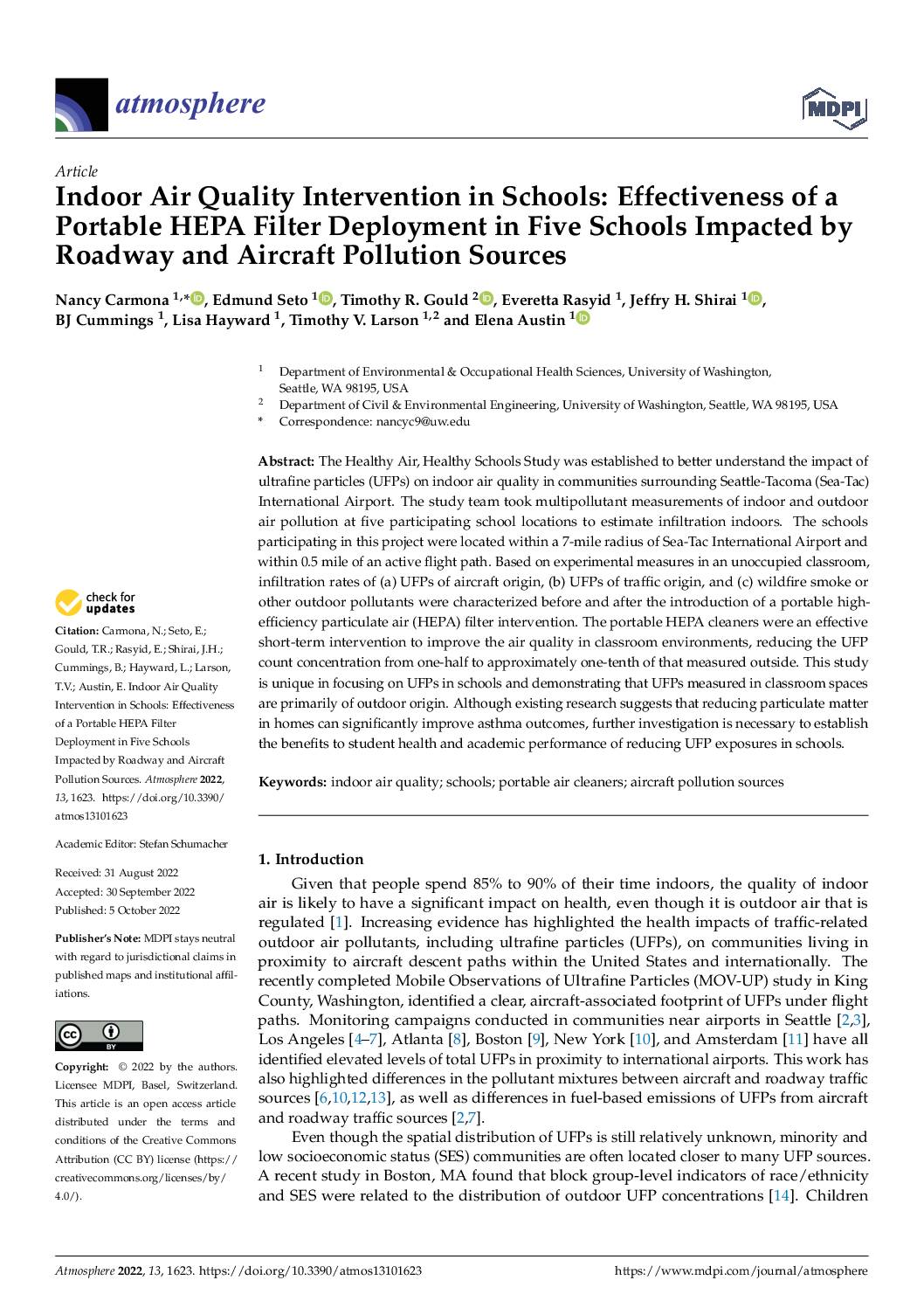
Atmosphere 2022: UWDEOHS Healthy Air, Healthy Schools
A study examining the effectiveness of portable HEPA filters in reducing ultrafine particles (UFPs) from aircraft and traffic sources in five schools near Sea-Tac International Airport. The research found that HEPA cleaners significantly reduced indoor UFP concentrations to one-half to one-tenth of outdoor levels. Atmosphere 2022: https://www.mdpi.com/2073-4433/13/10/1623 -
 2025-10-14
Barriers to Implementing SAF in MA Institute for Policy Studies
A report examining the barriers to implementing sustainable aviation fuel (SAF) in Massachusetts, authored by Neil Rasmussen and Chuck Collins from the Institute for Policy Studies. The report analyzes challenges and obstacles facing SAF adoption in the state. -
 2025-07-02
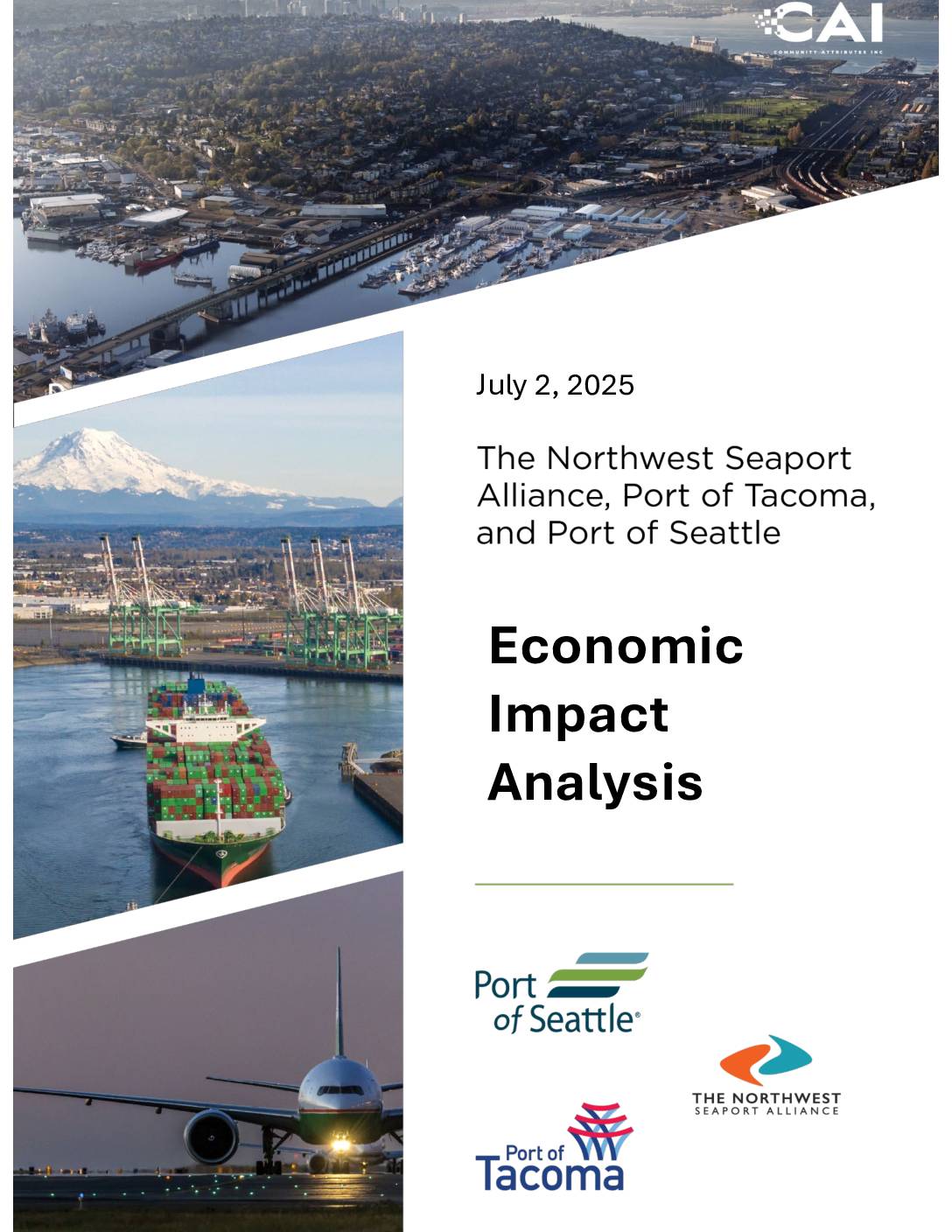
CAI Economic Impact Analysis: The Northwest Seaport Alliance, Port of Tacoma, and Port Of Seattle
A July 2025 economic impact analysis by Community Attributes Inc. examines the economic contributions of the Northwest Seaport Alliance, Port of Tacoma, and Port of Seattle to Washington State. In 2023, NWSA operations alone supported an estimated 52,100 jobs, $4.4 billion in total compensation, and nearly $14 billion in total business output across Washington. The report also highlights more than $130 million in state fiscal impacts generated by NWSA activities that year. -
 2020-12-01
Community health and airport operations related noise and air pollution: Report to the legislature in response to Washington State House Bill 1109
This December 2020 report, prepared by Public Health Seattle & King County in response to Washington State House Bill 1109, examines how noise and air pollution from airport operations affect the health of communities near Sea-Tac Airport compared to the rest of King County. It reviews evidence on pollutants such as ultrafine particulates, their links to conditions like asthma, heart disease, and reduced life expectancy, and includes findings from a University of Washington study on air quality. The report concludes with recommendations for addressing these public health impacts. -
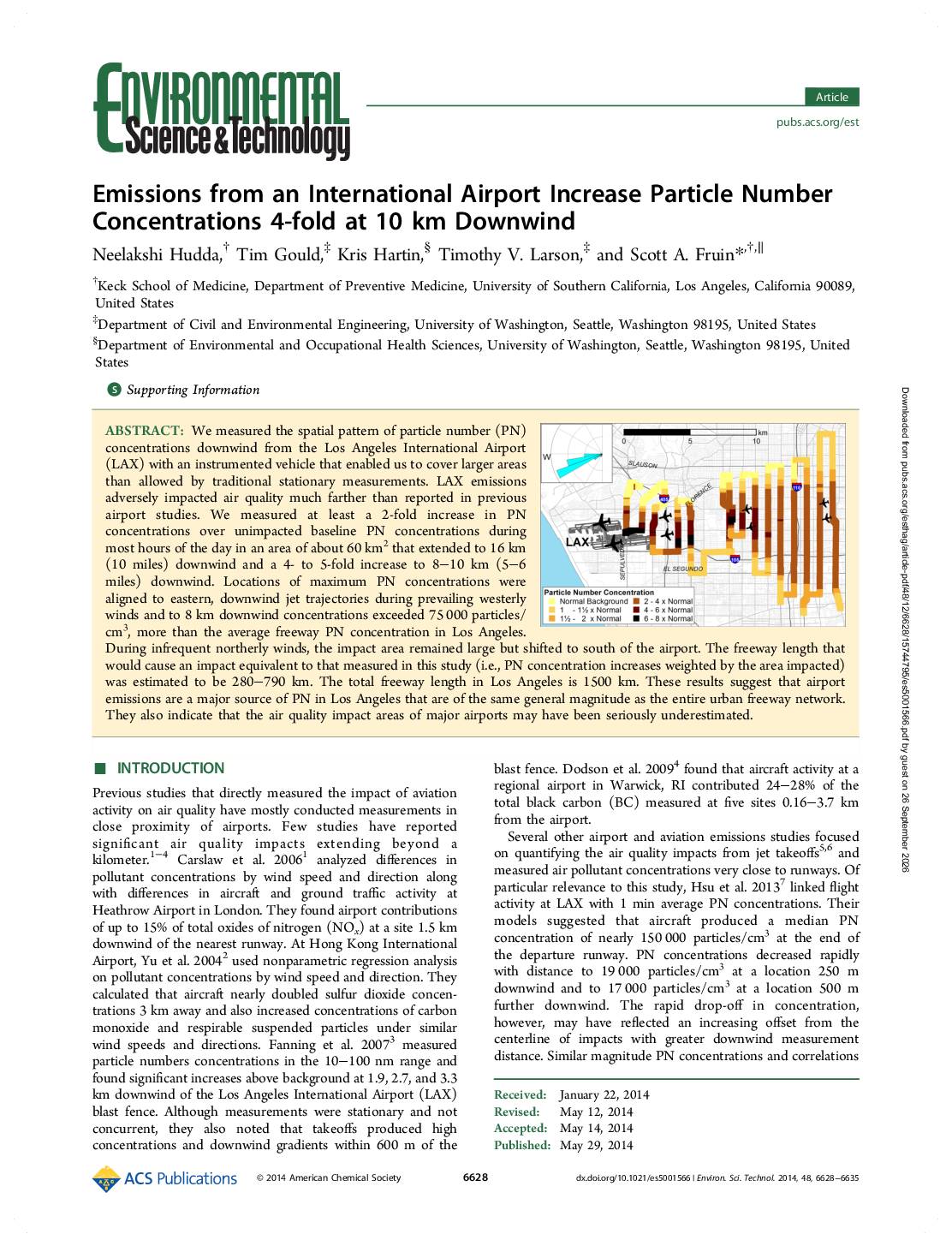 2014-05-29
Emissions from an International Airport Increase Particle Number Concentrations 4-fold at 10 km Downwind
Peer-reviewed study published in Environmental Science & Technology (American Chemical Society, 2014) by Neelakshi Hudda, Tim Gould, Kris Hartin, Timothy V. Larson, and Scott A. Fruin measuring spatial patterns of particle number (PN) concentrations downwind of Los Angeles International Airport (LAX) using mobile monitoring platforms (MMP) from USC and University of Washington. Study found at -
 2022-01-01
Environmental noise: compendium of WHO and other UN guidance on health and environment, 2022 update
★ 32A 2022 World Health Organization report on environmental noise outlines the health risks posed by traffic, aircraft, and leisure noise, including increased risk of heart disease, sleep disturbance, and hearing impairment. The report recommends that aircraft noise levels stay below 45 dB for average exposure and below 40 dB at night to protect public health. It also defines mitigation strategies ranging from reducing noise at the source to behavior change and community education. -
 1993-04-01
Estimation and Evaluation of Cancer Risks Attributed to Air Pollution in Southwest Chicago: Final Summary Report
Final Summary Report submitted to U.S. EPA Region 5 Air and Radiation Division by ViGYAN Inc., April 1993, estimating and evaluating cancer risks attributed to air pollution in southwest Chicago. The report assesses cancer risk from air pollutants in the southwest Chicago area, prepared under EPA contract for regional air quality and public health assessment. -
 1996-02-01
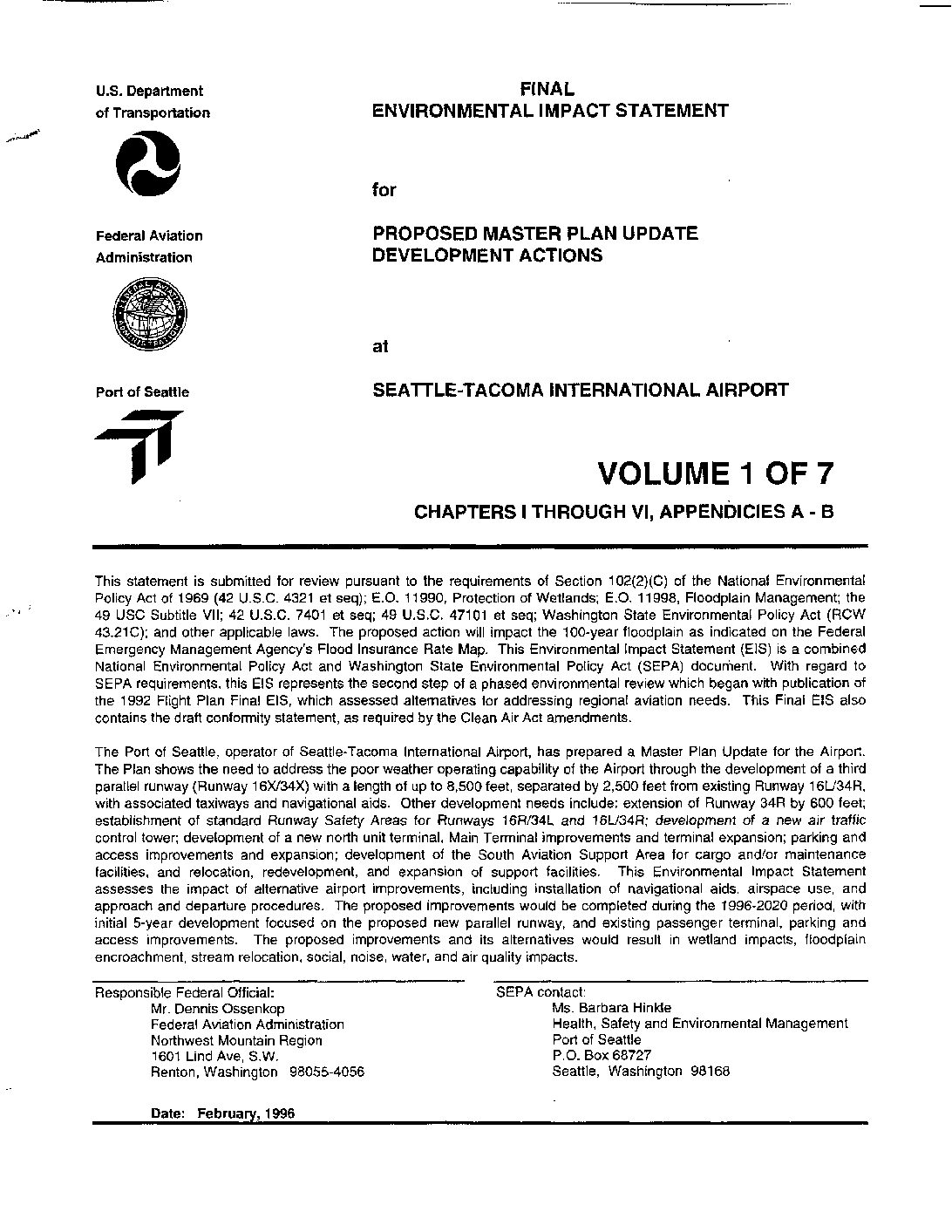
Final Environmental Impact Statement for proposed Master Plan Update development actions at Seattle-Tacoma International Airport
This 1996 Final Environmental Impact Statement, prepared jointly by the FAA and the Port of Seattle, evaluates proposed expansion plans at Seattle-Tacoma International Airport through the year 2020, including the construction of a third parallel runway up to 8,500 feet long, a new north terminal, and various landside improvements. The document assesses environmental consequences across 24 categories—including noise, air quality, water quality, and human health—for a range of alternatives, from building a new regional airport to a no-build option. Ultimately, the Port of Seattle selected Alternative 3 as the preferred option, concluding that Sea-Tac was the only feasible site to address the region's growing air transportation needs. -
 1997-05-13
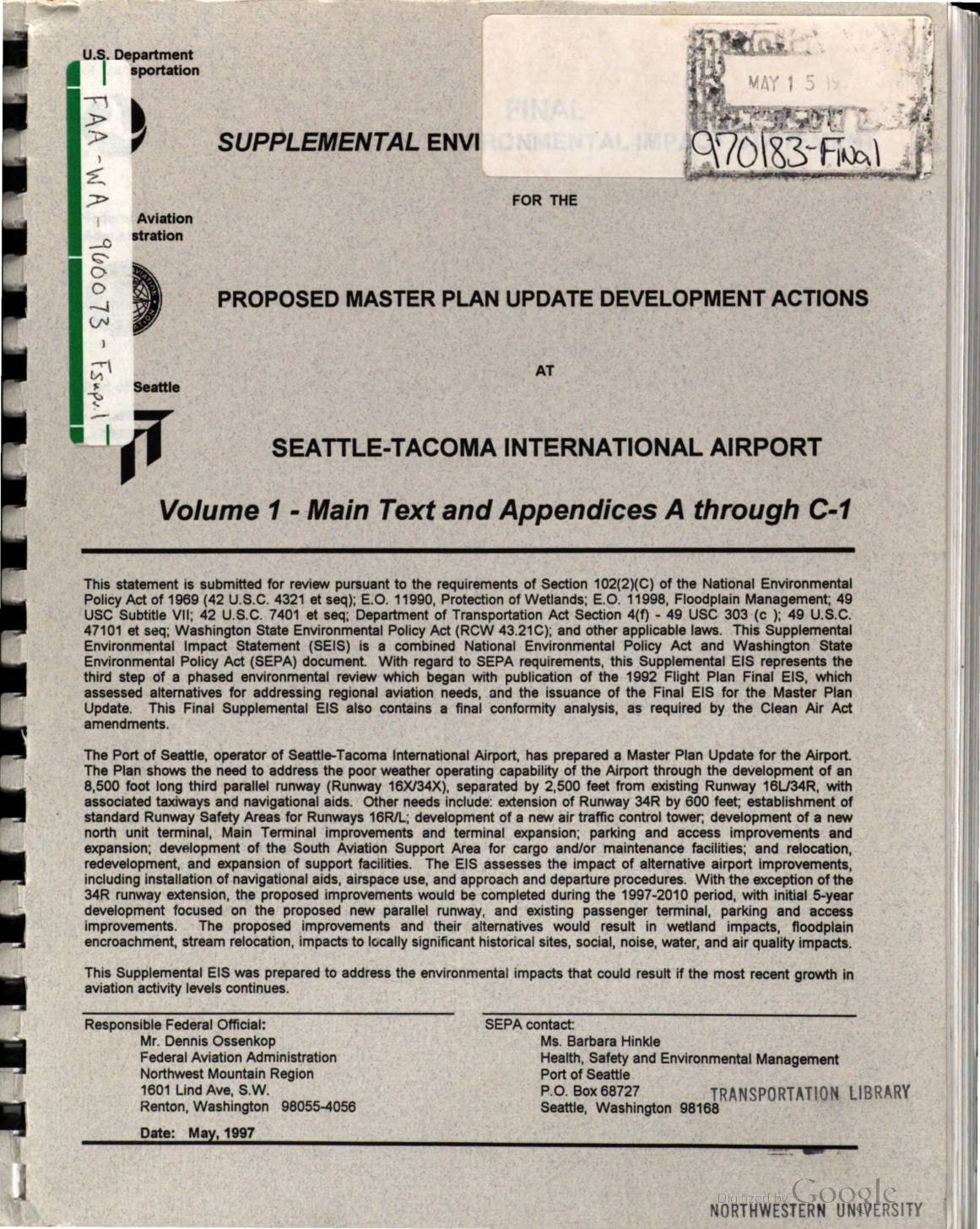
Final Supplemental Environmental Impact Statement for the Proposed Master Plan Update Development Actions at Seattle-Tacoma International Airport, Volume 1: Main Text and Appendices A through C-1
This 1997 Final Supplemental Environmental Impact Statement (SEIS) examines the environmental effects of proposed expansion plans at Seattle-Tacoma International Airport, including construction of a new third parallel runway, terminal improvements, and parking upgrades. The study was prompted by faster-than-expected growth in air travel demand during the mid-1990s, which exceeded earlier forecasts and required updated analysis of noise, air quality, wetland, and community impacts. The document was jointly prepared by the FAA and the Port of Seattle to ensure the proposed developments met federal and Washington State environmental policy requirements. -
2015-03-12
Harbor Communities Monitoring Study
This page last reviewed March 12, 2015 This website contains information pertaining to the Harbor Communities Monitoring Study (HCMS), conducted to characterize air quality in the communities of the greater Wilmington area. The air pollution measurement phase occurred during 2007. The primary goal of this study is to characterize the spatial variations in air -
 2025-10-01
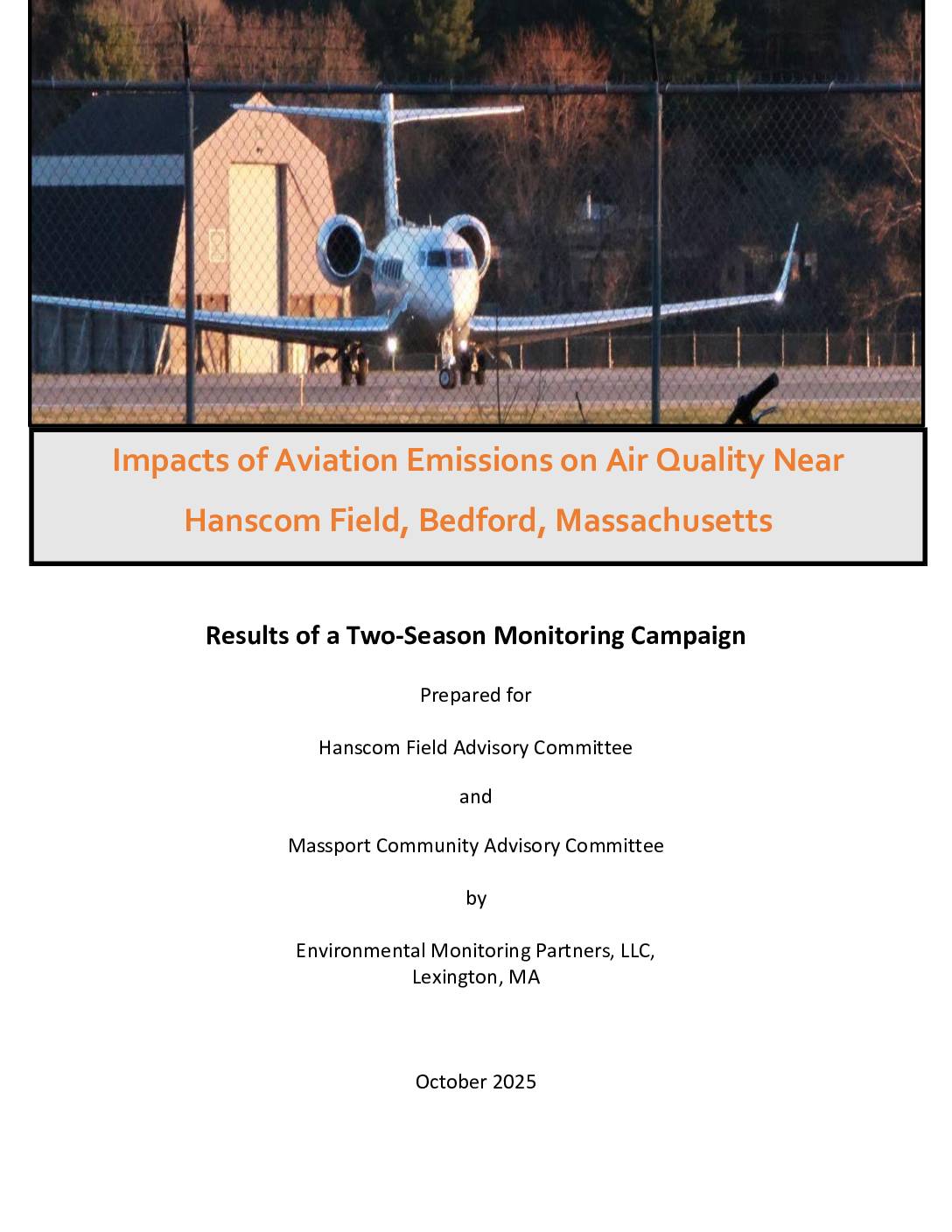
Impacts of Aviation Emissions on Air Quality Near Hanscom Field, Bedford, Massachusetts – Results of a Two-Season Monitoring Campaign
A comprehensive study measuring ultrafine particles, lead, and other air pollutants from aviation emissions at Hanscom Field across four surrounding Massachusetts towns. The study found that UFP concentrations were up to two-fold higher at downwind sites and often exceeded WHO guidelines, with the highest impacts in Bedford and Lexington. -
 2019-12-01
Mobile ObserVations of Ultrafine Particles: The MOV-UP study report
★ 32The MOV-UP (Mobile ObserVations of Ultrafine Particles) study was a two-year University of Washington research project, funded by the State of Washington, that measured air quality impacts from aircraft traffic on communities living near and beneath the flight paths of Seattle-Tacoma International Airport. Researchers used mobile monitoring methods to collect ultrafine particle data across the affected neighborhoods, working alongside local governments, community members, and an advisory group of agency and city representatives. The findings are intended to inform policymakers and the public about the air pollution risks associated with airport operations in the Seattle-Tacoma region. -
 2025-10-01
NBER: How airplane noise impacts home values, October 2025
NBER Working Paper No. 34431 by Florian Allroggen, R. John Hansman, Christopher R. Knittel, Jing Li, Xibo Wan, and Juju Wang (MIT, Tufts, University of Connecticut), October 2025. Estimates causal effect of aviation noise on U.S. housing prices using quasi-experimental variation from FAA performance-based navigation (PBN) procedures and runway reconfigurations at three major U.S. airports. -
 1999-02-01
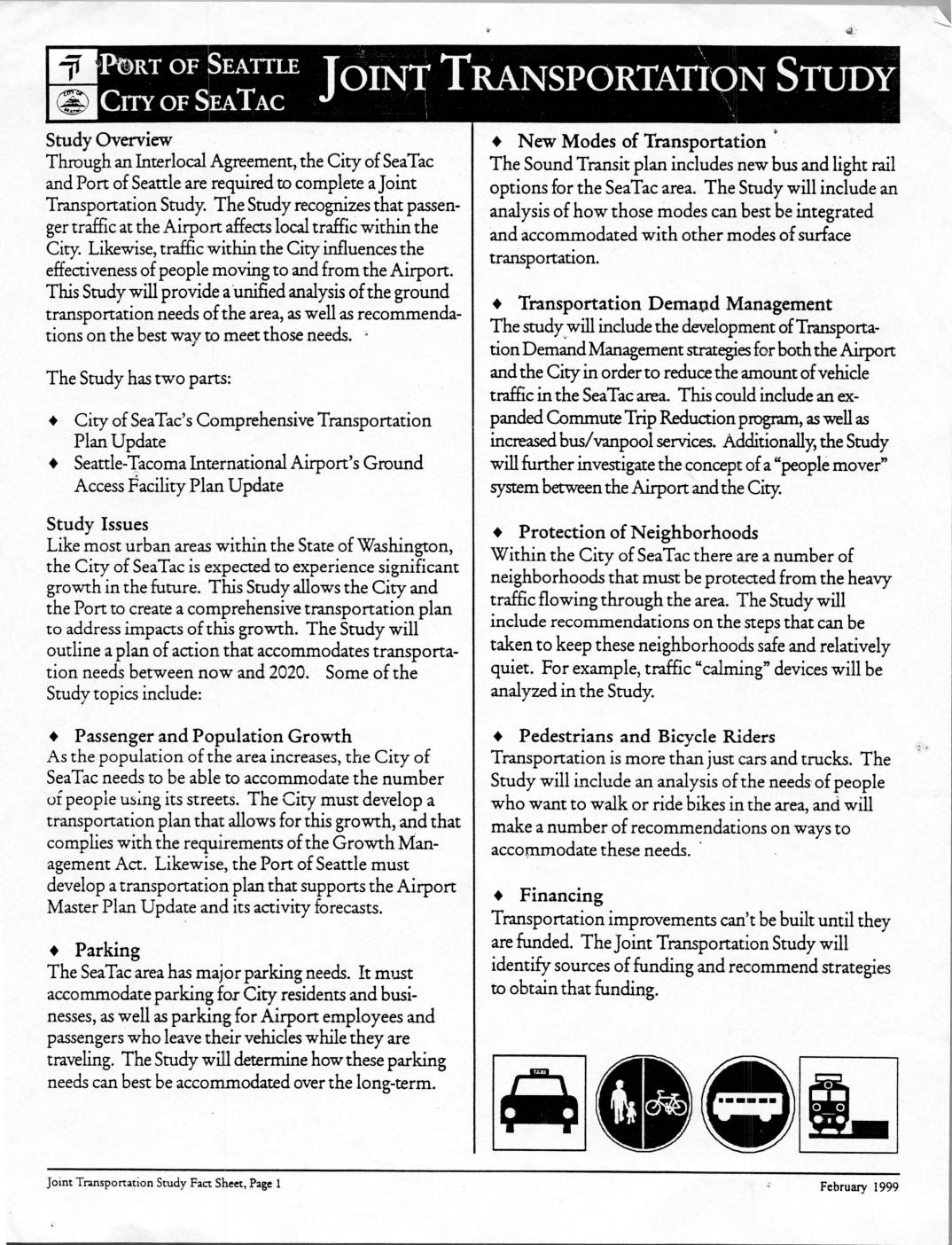
Port Of Seattle and City of SeaTac joint transportation study fact sheet
A February 1999 fact sheet outlining the Joint Transportation Study jointly undertaken by the City of SeaTac and the Port of Seattle under an Interlocal Agreement. The study aims to address ground transportation needs through 2020, covering topics such as population and passenger growth, parking, new transit modes including light rail, neighborhood protection, and pedestrian and bicycle access. It also examines Transportation Demand Management strategies to reduce vehicle traffic around Seattle-Tacoma International Airport. -
 1982-04-01
Preliminary Assessment of Airspace Interactions: Seattle-Tacoma International Airport and King County International Airport
A 1982 draft working paper prepared by Peat, Marwick, Mitchell & Co. for the Port of Seattle assessed airspace interactions between Seattle-Tacoma International Airport (Sea-Tac) and King County International Airport (Boeing Field). The study analyzed existing and projected airfield capacities, aircraft delays, and the effects of overlapping airspace on both airports, taking into account factors such as air traffic demand, aircraft mix, weather conditions, and runway procedures. Its findings were intended to help the Port of Seattle determine whether more detailed investigation and mitigation measures were needed in a subsequent phase of the study.