The most requested documents–and all related-content
This page is an attempt to solve a problem we’ve had since the beginning: how to get visitors to study documents and all the related content which often provides the necessary context. For example, most studies are meant to be read by specialists. If you are a layperson, you may only be interested in the ‘one-pager’. This page shows you both.
-
 2025-06-19
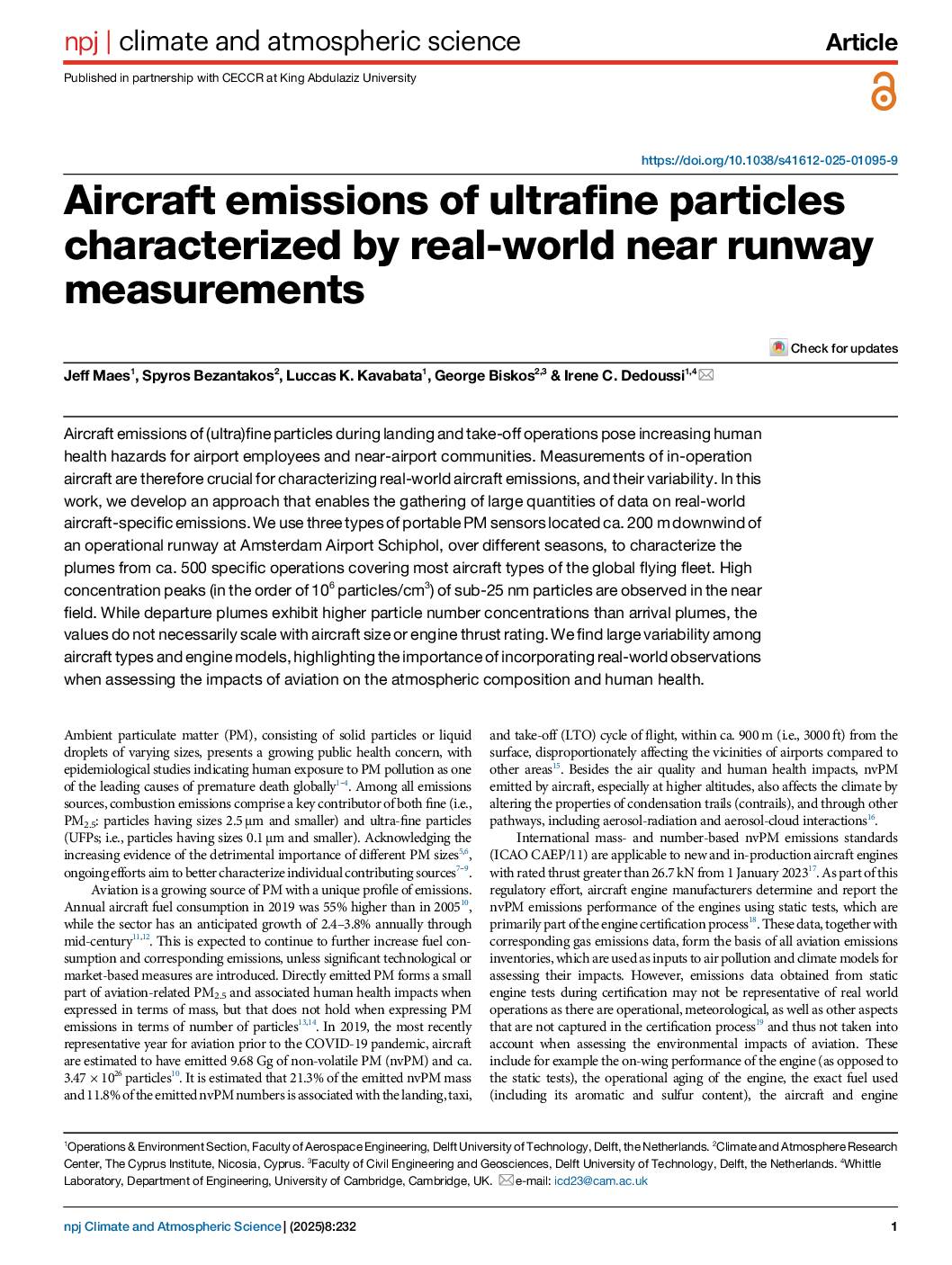
Aircraft emissions of ultrafine particles characterized by real-world near runway measurements
Researchers measured ultrafine particle emissions from approximately 500 individual aircraft operations at Amsterdam Airport Schiphol using portable sensors placed about 200 meters from an active runway. The study found that departing aircraft produce higher particle concentrations than arriving ones, with peaks reaching one million particles per cubic centimeter for particles smaller than 25 nanometers, and that emission levels do not simply scale with aircraft size or engine power. The findings highlight significant variability in real-world emissions across different aircraft and engine types, suggesting that current certification-based data may not fully capture the air quality impacts experienced by airport workers and nearby communities. -
2015-03-12
Harbor Communities Monitoring Study
This page last reviewed March 12, 2015 This website contains information pertaining to the Harbor Communities Monitoring Study (HCMS), conducted to characterize air quality in the communities of the greater Wilmington area. The air pollution measurement phase occurred during 2007. The primary goal of this study is to characterize the spatial variations in air -
 2025-10-01
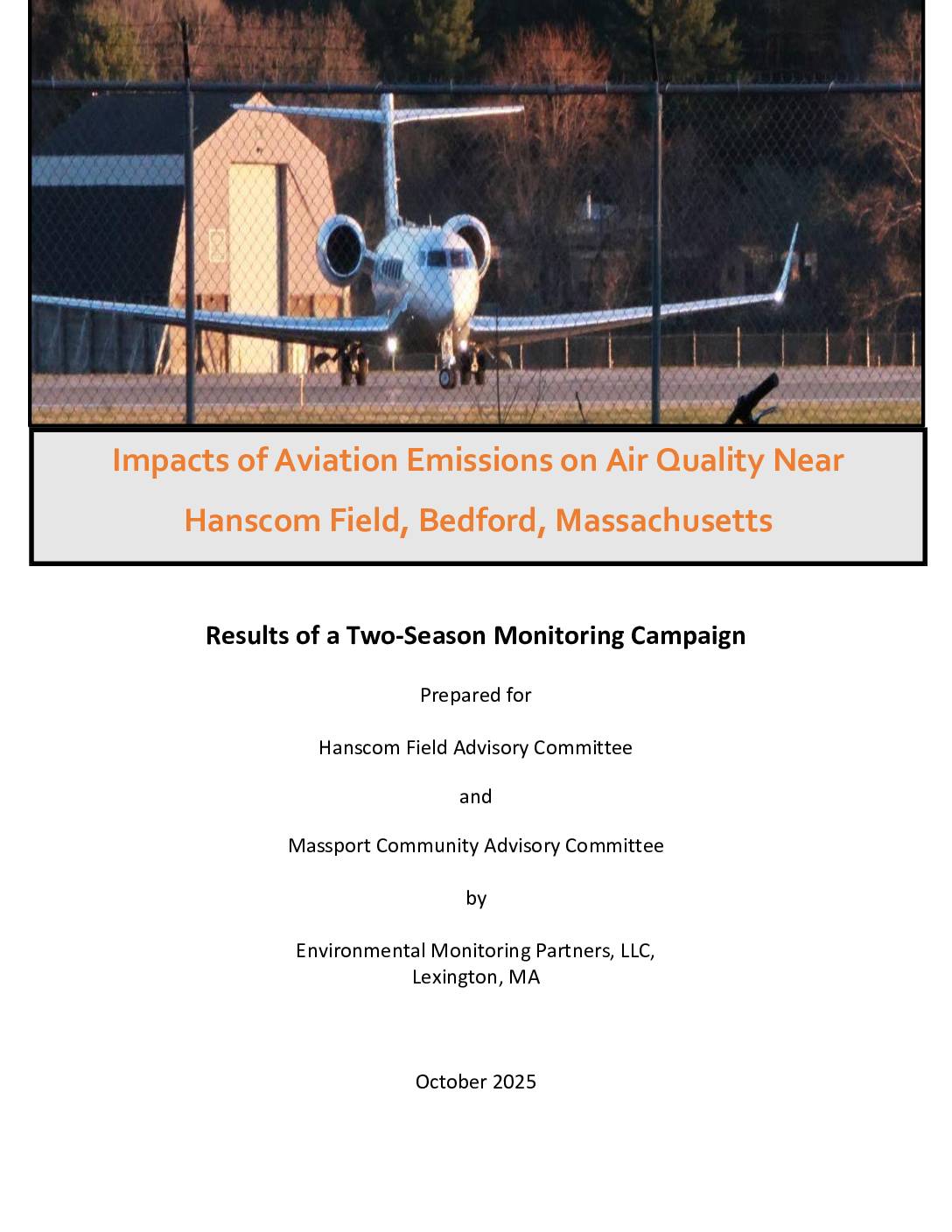
Impacts of Aviation Emissions on Air Quality Near Hanscom Field, Bedford, Massachusetts – Results of a Two-Season Monitoring Campaign
A comprehensive study measuring ultrafine particles, lead, and other air pollutants from aviation emissions at Hanscom Field across four surrounding Massachusetts towns. The study found that UFP concentrations were up to two-fold higher at downwind sites and often exceeded WHO guidelines, with the highest impacts in Bedford and Lexington. -
 2019-12-01
Mobile ObserVations of Ultrafine Particles: The MOV-UP study report
★ 32The MOV-UP (Mobile ObserVations of Ultrafine Particles) study was a two-year University of Washington research project, funded by the State of Washington, that measured air quality impacts from aircraft traffic on communities living near and beneath the flight paths of Seattle-Tacoma International Airport. Researchers used mobile monitoring methods to collect ultrafine particle data across the affected neighborhoods, working alongside local governments, community members, and an advisory group of agency and city representatives. The findings are intended to inform policymakers and the public about the air pollution risks associated with airport operations in the Seattle-Tacoma region. -
 2020-01-01
The health effects of ultrafine particles
Review article by Dean E. Schraufnagel published in Experimental & Molecular Medicine (2020) 52:311–317, DOI 10.1038/s12276-020-0403-3, examining the health effects of ultrafine particles (PM0.1, also called nanoparticles). Covers PM0.1 sources (traffic exhaust, welding, forest fires, cooking, tobacco smoke), absorption and retention in the lung, translocation to distal organs, pulmonary inflammation, metal fume fever, cardiovascular disease, -
Ultrafine particles: unique physicochemical properties relevant to health and disease
Hyouk-Soo Kwon, Min Hyung Ryu & Christopher Carlsten Experimental & Molecular Medicine volume 52, pages318–328 (2020)Cite this article 15k Accesses 98 Citations 82 Altmetric Metricsdetails Abstract Ultrafine particles (UFPs) are aerosols with an aerodynamic diameter of 0.1 µm (100 nm) or less. There is a growing concern in the public health community about the contribution of UFPs to human health. Despite their modest mass