TagSea-Tac Airport(1855)
-
 1961-01-01
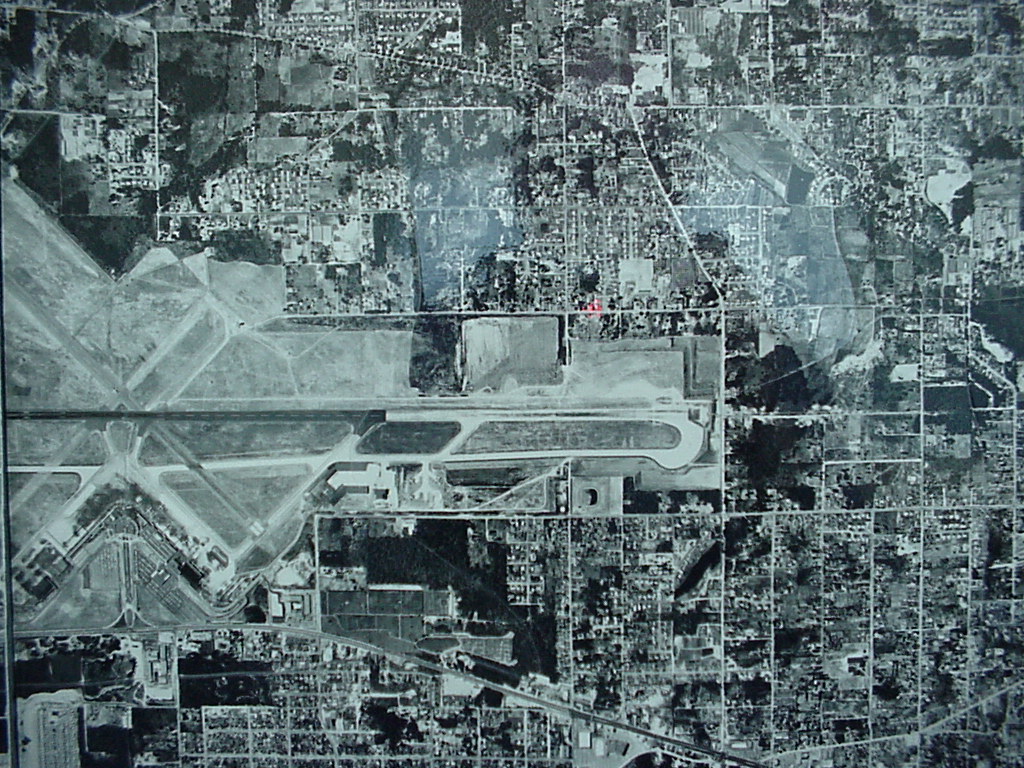
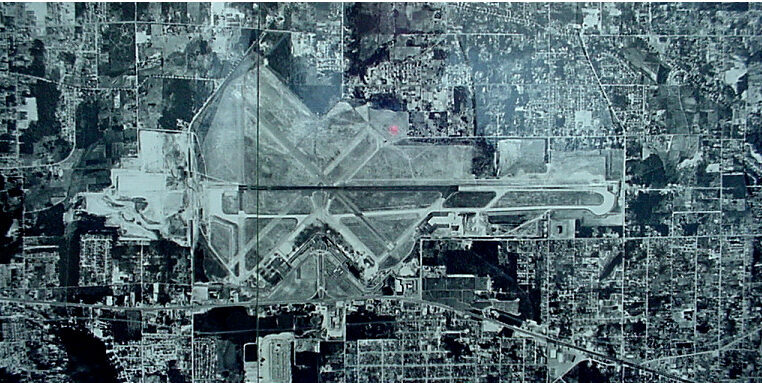
Sea-Tac Airport Aerial Photograph circa 1961
Black-and-white aerial photograph showing a mid-20th century airport facility with multiple intersecting runways and taxiways, surrounded by a residential and commercial street grid. The image appears to be a planning or survey document, possibly a composite of multiple aerial tiles given visible seam lines. -
 1961-01-01
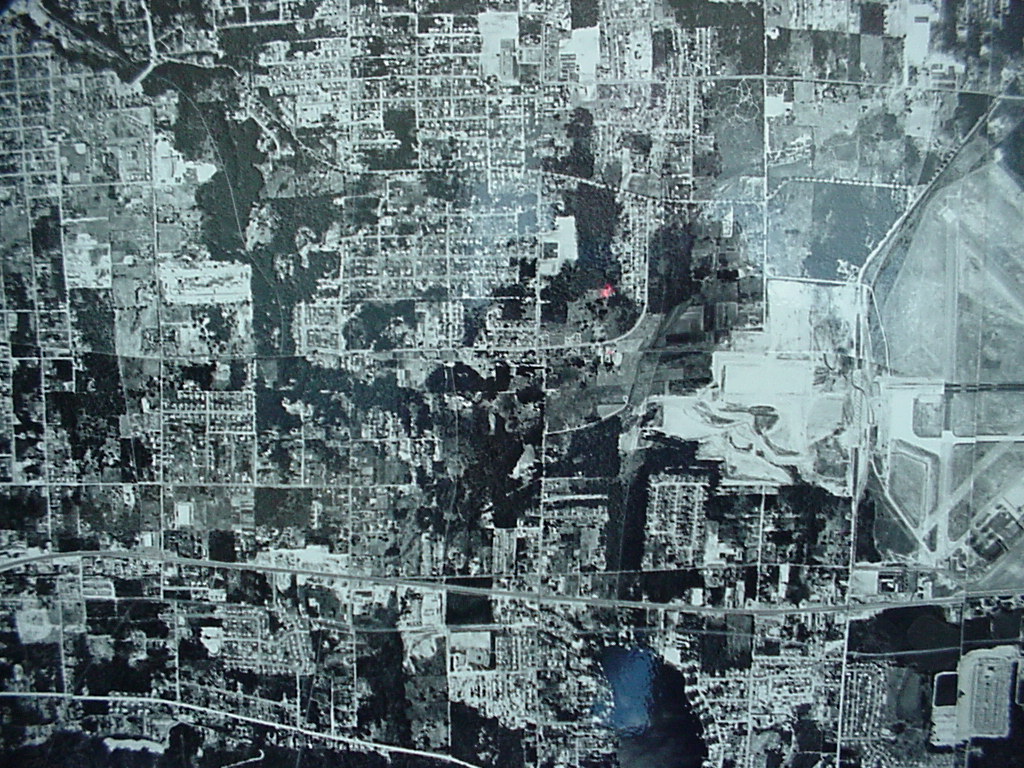
Sea-Tac Airport Runways 1961
-
 1961-01-01
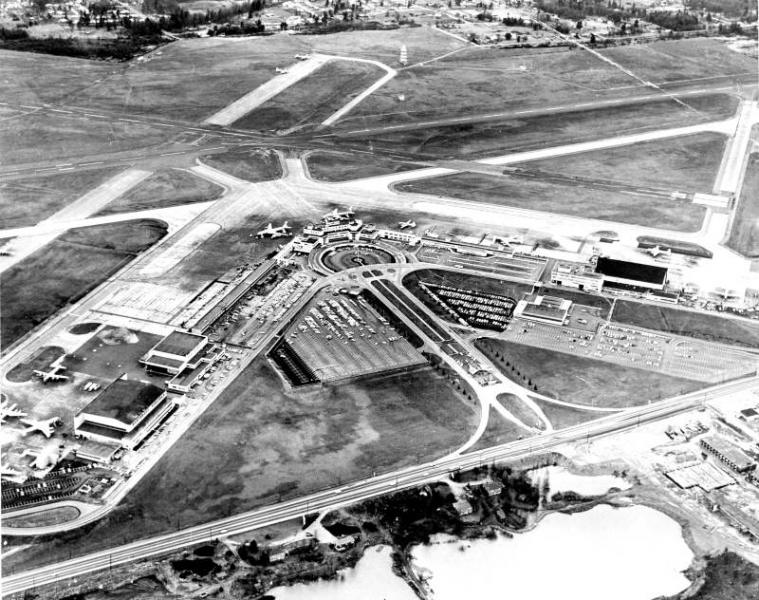
Sea-Tac Airport Aerial View, 1961
Black-and-white aerial photograph showing a commercial airport with a central terminal building, circular access road, parking areas, multiple runways in an X/cross configuration, and what appear to be propeller-era aircraft on the apron. The layout and scale are consistent with a regional hub airport, likely dating from the 1950s or early 1960s based on aircraft types and terminal design visible, but no text, captions, or watermarks are present to confirm the specific facility or date. -
 1961-01-01
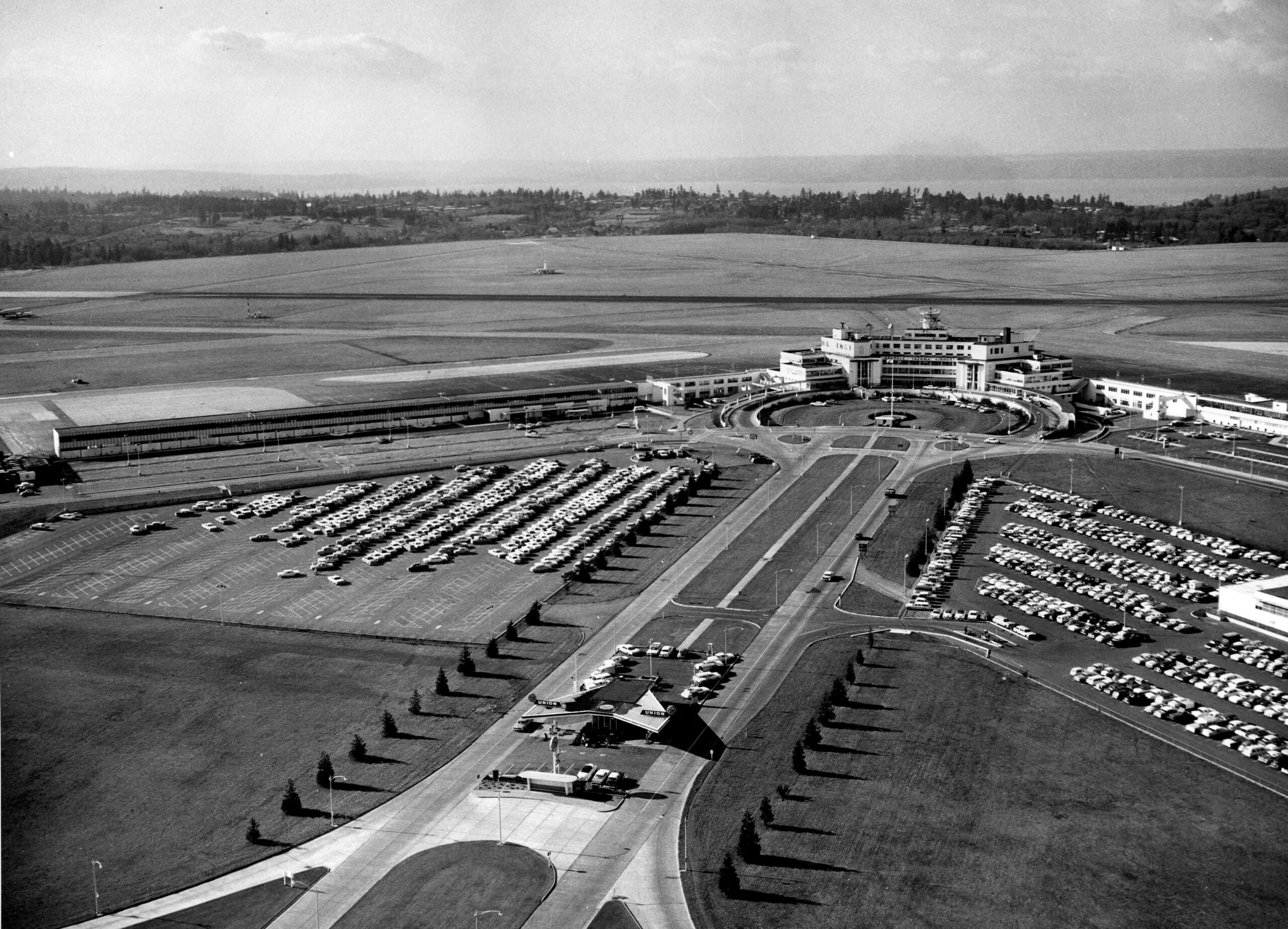
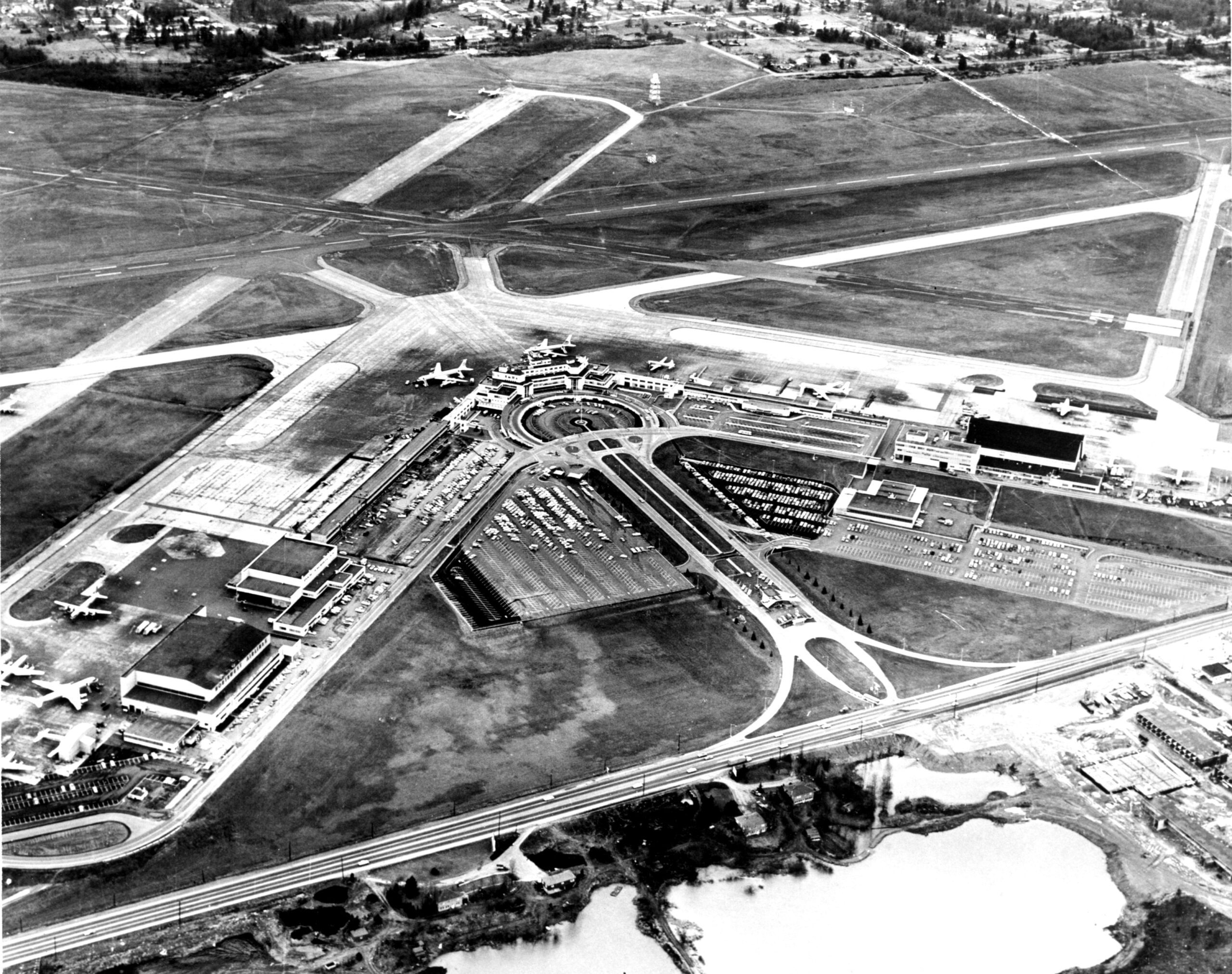
Sea-Tac Aerial 1961
Aerial photograph showing an airport terminal building with a circular drive, large surface parking lots filled with period automobiles, and visible runways. A Union Oil (Union 76) service station is visible at the entrance road; the body of water and tree line in the background suggest a Puget Sound-area location consistent with Seattle-Tacoma Airport. -
 1961-01-01
Sea-Tac Airport Aerial Photograph, 1961
Black-and-white aerial satellite or survey photograph showing a large commercial airport with multiple runways in an X/V configuration, surrounded by dense urban development. No visible text, labels, or watermarks are present to confirm the specific airport identity or date. -
 1960-01-01
Sea-Tac Aerial circa 1960s
Black-and-white aerial photograph showing a commercial airport with a central terminal building, circular roadway approach, large surface parking areas, and multiple runway intersections. Several propeller and early jet-era aircraft are visible on the apron and taxiways, suggesting the image dates from the late 1950s to early 1960s based on aircraft types and terminal architecture. -
 1957-07-17
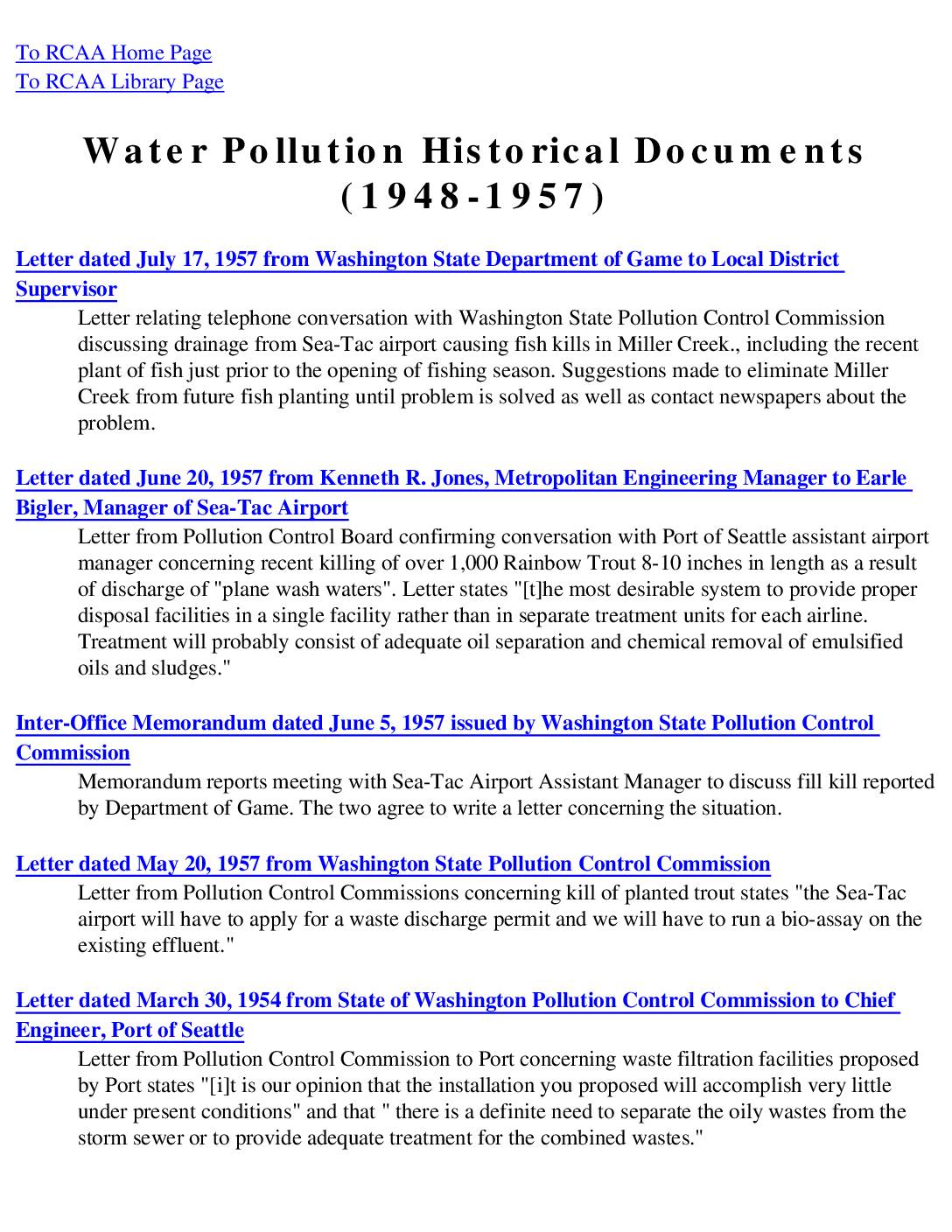
Water pollution historical documents (1948-1957)
This collection of historical documents from 1948 to 1957 chronicles ongoing water pollution problems caused by Sea-Tac Airport's drainage of aircraft wash water, oils, and chemicals into nearby Miller Creek and Des Moines Creek. The records show repeated fish kills, contamination of private property, and years of failed or inadequate treatment solutions, prompting complaints from residents, state legislators, and wildlife agencies. Despite numerous proposals and temporary fixes, the Washington State Pollution Control Commission continued to pressure the Port of Seattle to develop a permanent waste disposal system throughout the period. -
 1956-01-01
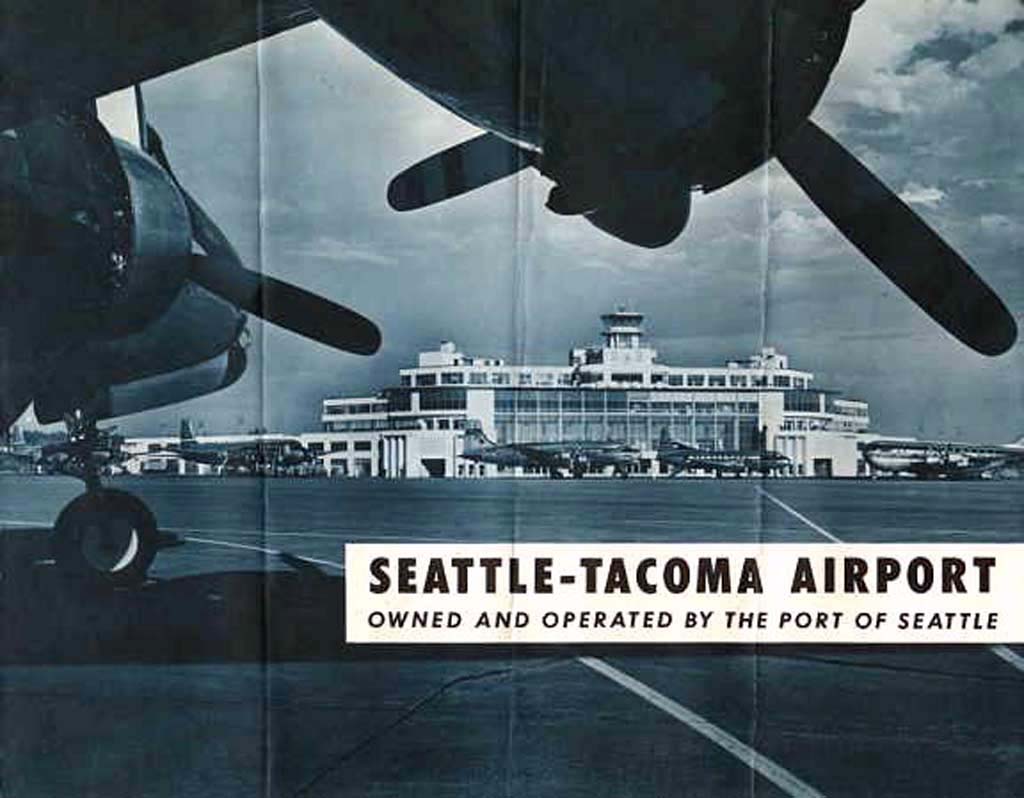
Sea-Tac Airport Terminal Promotional Brochure Cover, 1956
Cover image of a promotional brochure for Seattle-Tacoma Airport, owned and operated by the Port of Seattle. The black-and-white photograph shows the original terminal building viewed from the tarmac, framed by propeller aircraft in the foreground, consistent with mid-20th century airport imagery from the era of SeaTac's early operations. -
 1952-01-01
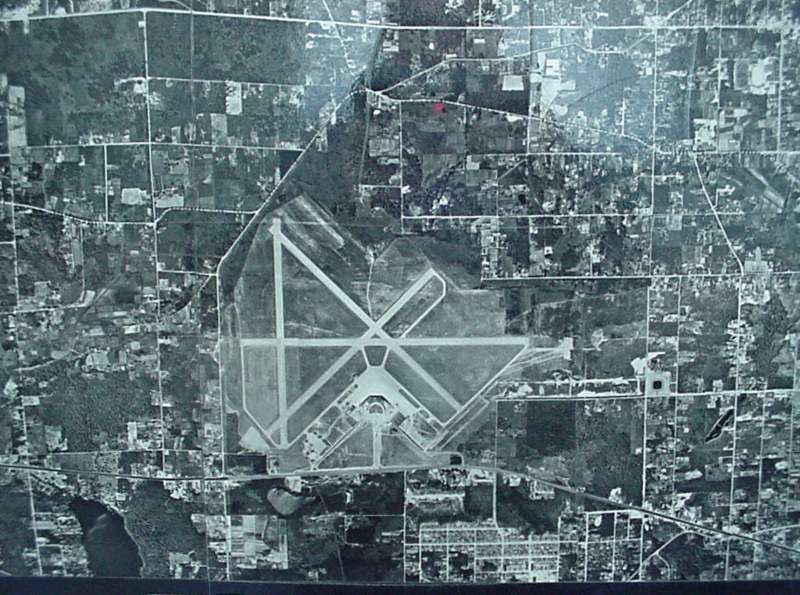
Aerial Runway Photo early 1950’s
Before southern extensions of 16L/34R (now the eastern runway) over 188th and before parking lot in front of terminal. The outline of the original 'plateau' is somewhat visible. Depicts surrounding neighborhoods and tree cover. -
 1950-01-01
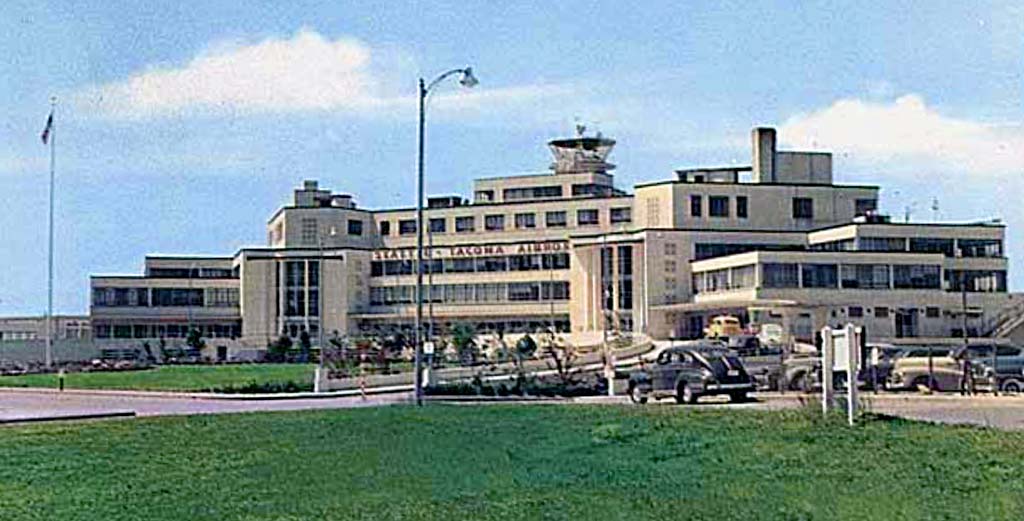
Sea Tac Airport Bow Lake ca 1950
A color photograph of the original Seattle-Tacoma Airport terminal building, with the name 'SEATTLE-TACOMA AIRPORT' visibly displayed on the facade. The image shows the Art Deco-style structure with its control tower, period automobiles in the foreground, and manicured grounds, consistent with the airport's early operational era following its 1949 opening.