TagNoise(262)
-
 2024-02-05
Briefing of SR 509 project and presentation of memorandum of understanding (MOU) with Washington State Department of Transportation (WSDOT)
The City of Burien and the Washington State Department of Transportation (WSDOT) have entered into a Memorandum of Understanding regarding the SR 509 Completion Project Stage 2, which extends the highway from S 188th Street to 24th Avenue South, with portions running through Burien's city limits. The project includes construction of a shared-use path, two roundabouts on S 160th Street, and short noise wall segments adjacent to highway on-ramps. WSDOT is responsible for costs associated with the proposed design and construction, while Burien bears costs for any changes it requests beyond standard design requirements. -
 2024-01-01
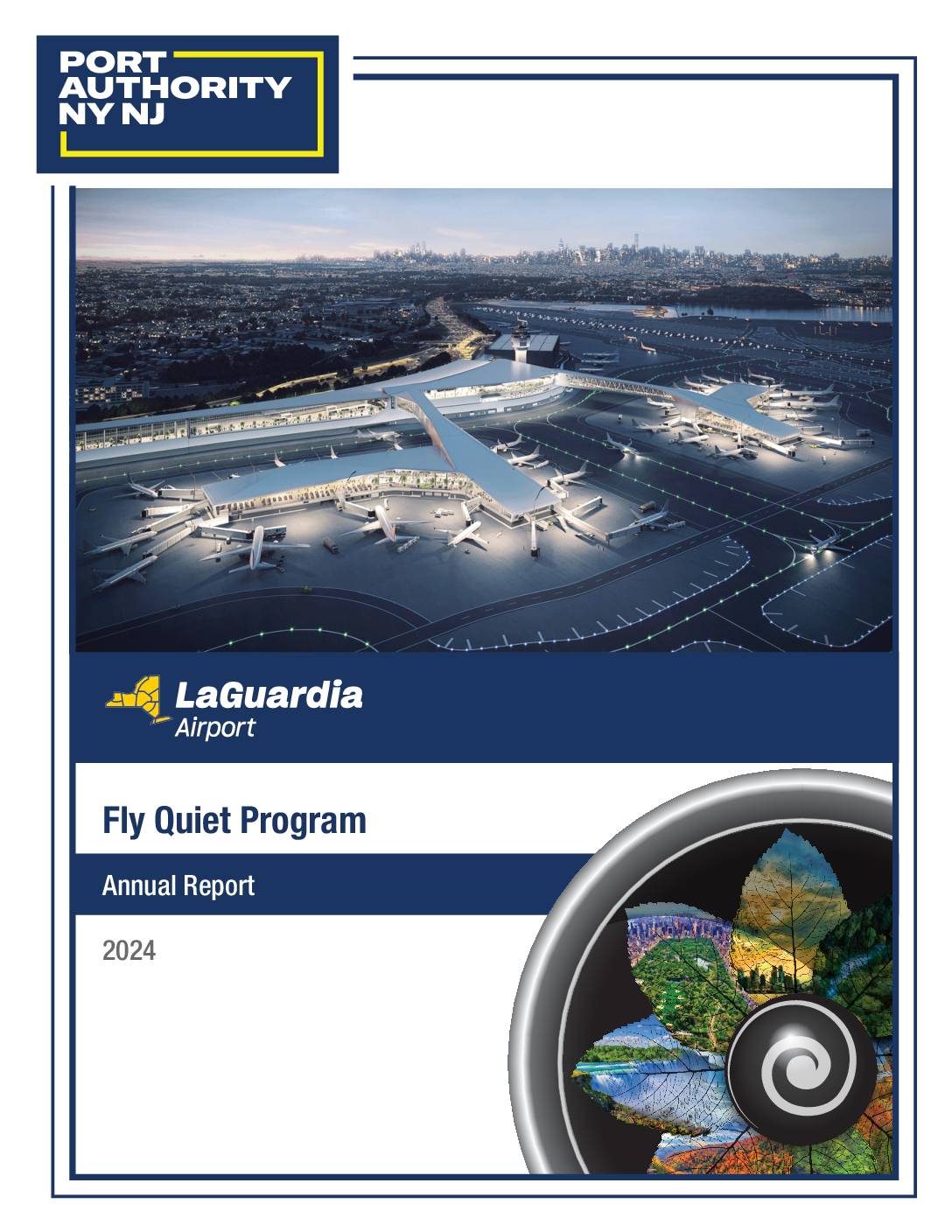
LaGuardia Airport Fly Quiet Program Annual Report 2024
The Port Authority of New York and New Jersey's 2024 Fly Quiet Program Annual Report for LaGuardia Airport outlines a voluntary initiative encouraging airlines to reduce noise by flying quieter aircraft and following noise abatement procedures. Airlines are scored on a 100-point scale, with half the points based on fleet noise quality—using FAA aircraft noise stage ratings from Stage 3 (loudest) to Stage 5 Plus (quietest)—and half based on community engagement and pilot training efforts. The program was developed through collaboration with airlines, the FAA, and the public to address the unique challenges of the busy New York/New Jersey airspace. -
 2023-12-13
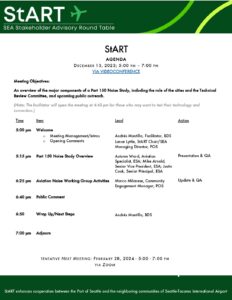
StART Meeting Agenda — December 13, 2023
Agenda for the Sea-Tac Airport Stakeholder Advisory Round Table (StART) meeting scheduled for December 13, 2023, 5:00–7:00 PM via videoconference. Topics include a Part 150 Noise Study overview, Aviation Noise Working Group activities, and public comment, with a tentative next meeting date of February 28, 2024. -
 2023-09-26
Attachment 4f: Scoping Comments Received — Actual Comments with Assigned Topic Code
This document contains scoping comments submitted to the Port of Seattle regarding the Sustainable Airport Master Plan (SAMP) environmental review process, compiled by the Quiet Skies Coalition. Community members raised concerns about the lack of long-term human health and environmental impact studies related to aircraft noise and emissions, questioning why the Port had not studied the effects of a four-year increase of 97,000 additional annual flights. The comments request comprehensive assessments covering neighborhoods such as Des Moines, Burien, Tukwila, and Normandy Park, and call for the Port to include worldwide scientific studies on the health effects of aircraft noise and pollution in its environmental review. -
 2023-09-04
Associations between aircraft noise exposure and self-reported sleep duration and quality in the United States-based prospective Nurses’ Health Study cohort: supplemental material
This supplemental material accompanies a research study examining whether aircraft noise exposure is linked to poorer sleep among women in the Nurses' Health Study, a large U.S. health cohort. The study measured nighttime and day-night aircraft sound levels near 90 U.S. airports and analyzed their association with self-reported short sleep duration and poor sleep quality. Researchers used detailed statistical methods, including directed acyclic graphs and multivariable models, to account for confounding factors and assess exposure-response relationships. -
 2023-08-22
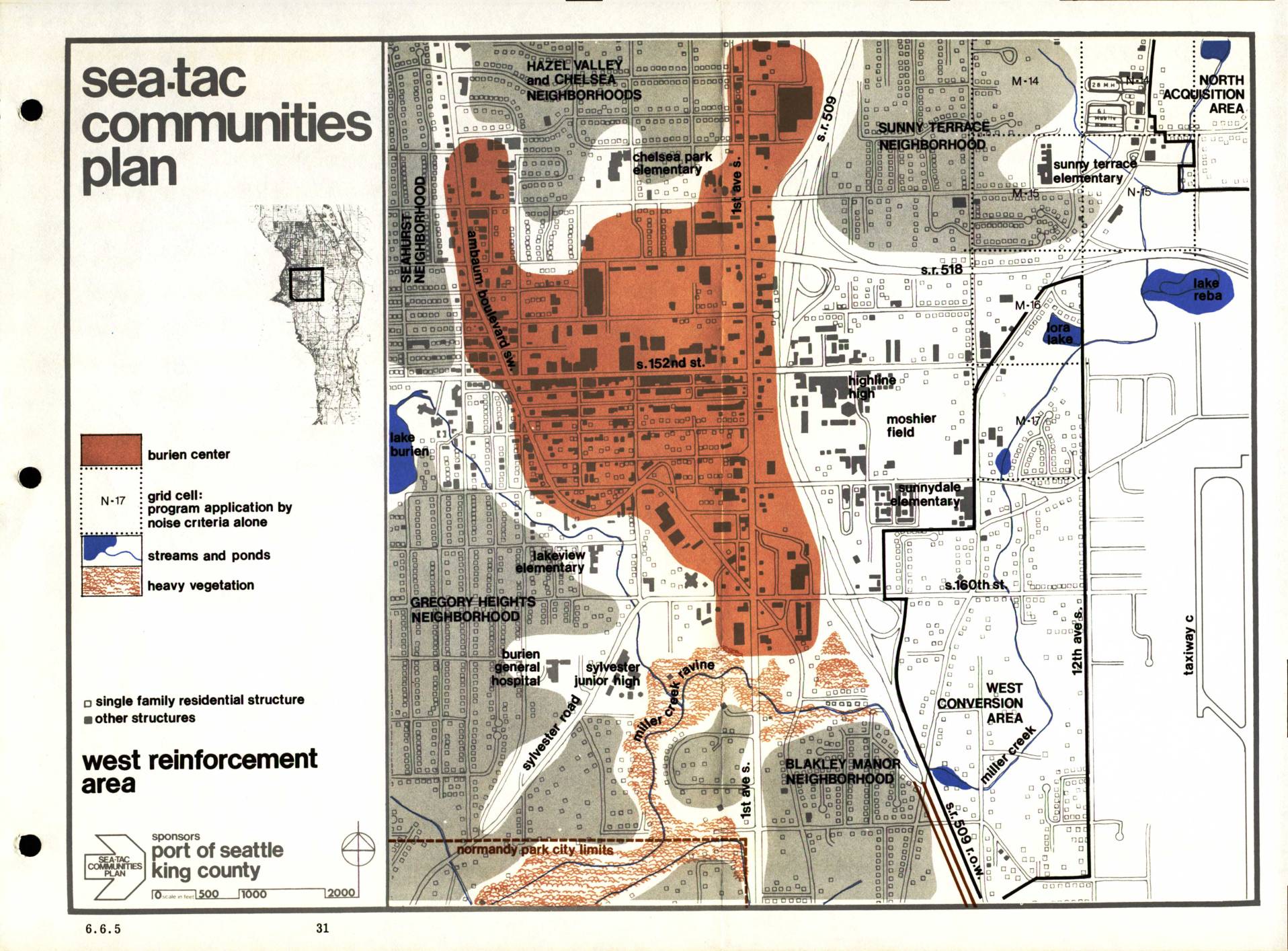
Sea-Tac Communities Plan: West Reinforcement Area Map (Section 6.6.5)
The Sea-Tac Communities Plan, sponsored by the Port of Seattle and King County, maps the West Reinforcement Area surrounding Seattle-Tacoma International Airport, identifying neighborhoods such as Hazel Valley, Chelsea, Sunny Terrace, Gregory Heights, and Blakley Manor that are affected by aircraft noise. The map uses color coding to highlight the Burien Center commercial core, grid cells where program eligibility is determined by noise criteria alone, streams and ponds, and areas of heavy vegetation. It distinguishes between single-family residential structures and other building types to guide noise mitigation and land-use planning decisions in communities near the airport. -
Wing walking flights in Sequim draw lawsuit and FAA investigation
By Dominic Gates Seattle Times aerospace reporter In Sequim, on the north coast of the Olympic Peninsula, you can sign up for a daring thrill ride available nowhere else in America: Mason Wing Walking will take you up in an airplane to about 3,500 feet where you can climb out of the open cockpit and -
 2023-08-10
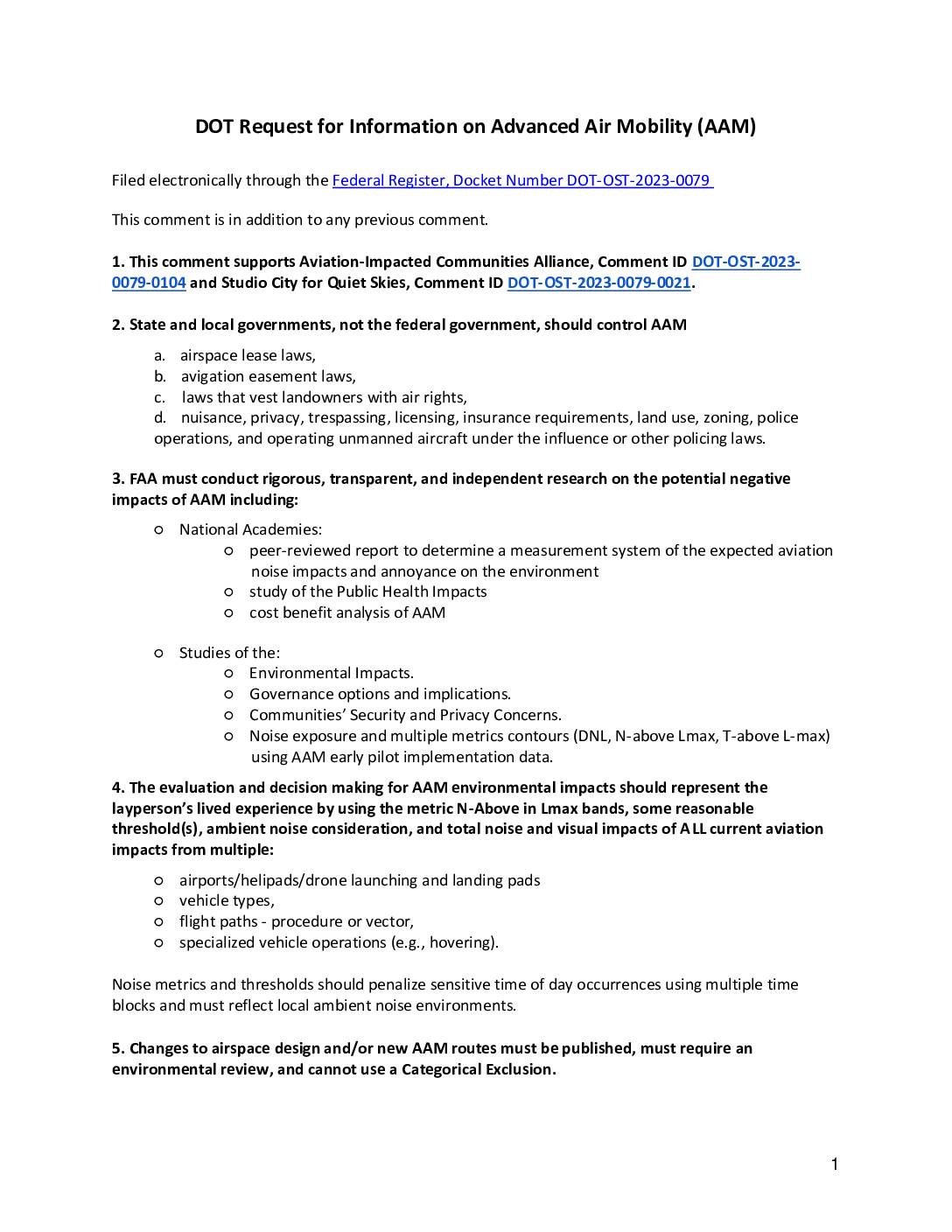
DOT request for information on Advanced Air Mobility (AAM)
A public comment submitted to the Department of Transportation argues that communities should have a stronger voice in shaping Advanced Air Mobility (AAM) policy, including drones and air taxis, before decisions are made. It calls on the FAA to conduct independent research on noise, health, environmental, and privacy impacts, and to use better noise measurement tools that reflect residents' real-world experience. The comment also urges regulators to avoid repeating mistakes made during the NextGen rollout, where communities were excluded from the process until after key decisions had already been implemented. -
 2023-07-30
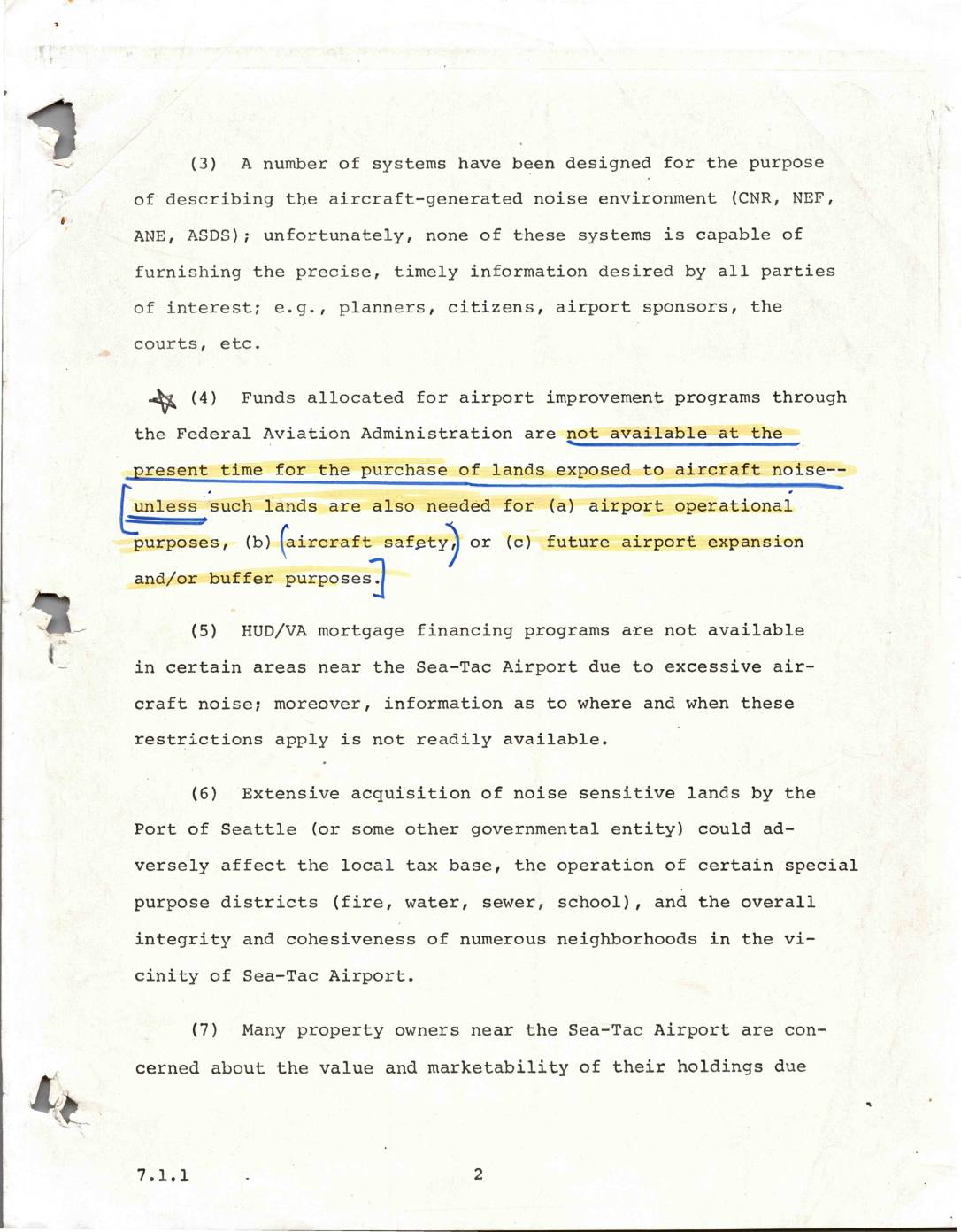
Aircraft noise environment and land use issues near Sea-Tac Airport
This document outlines several key challenges related to aircraft noise near Seattle-Tacoma (Sea-Tac) Airport. It notes that existing noise measurement systems lack the precision needed by planners, residents, and courts, while federal FAA funds cannot be used to purchase noise-affected lands unless they serve specific airport purposes. Additional concerns include restricted HUD/VA mortgage financing in high-noise areas, the potential negative impact on local tax bases if the Port of Seattle acquires large amounts of noise-sensitive land, and widespread property owner anxiety over declining home values and marketability. -
 2023-07-23
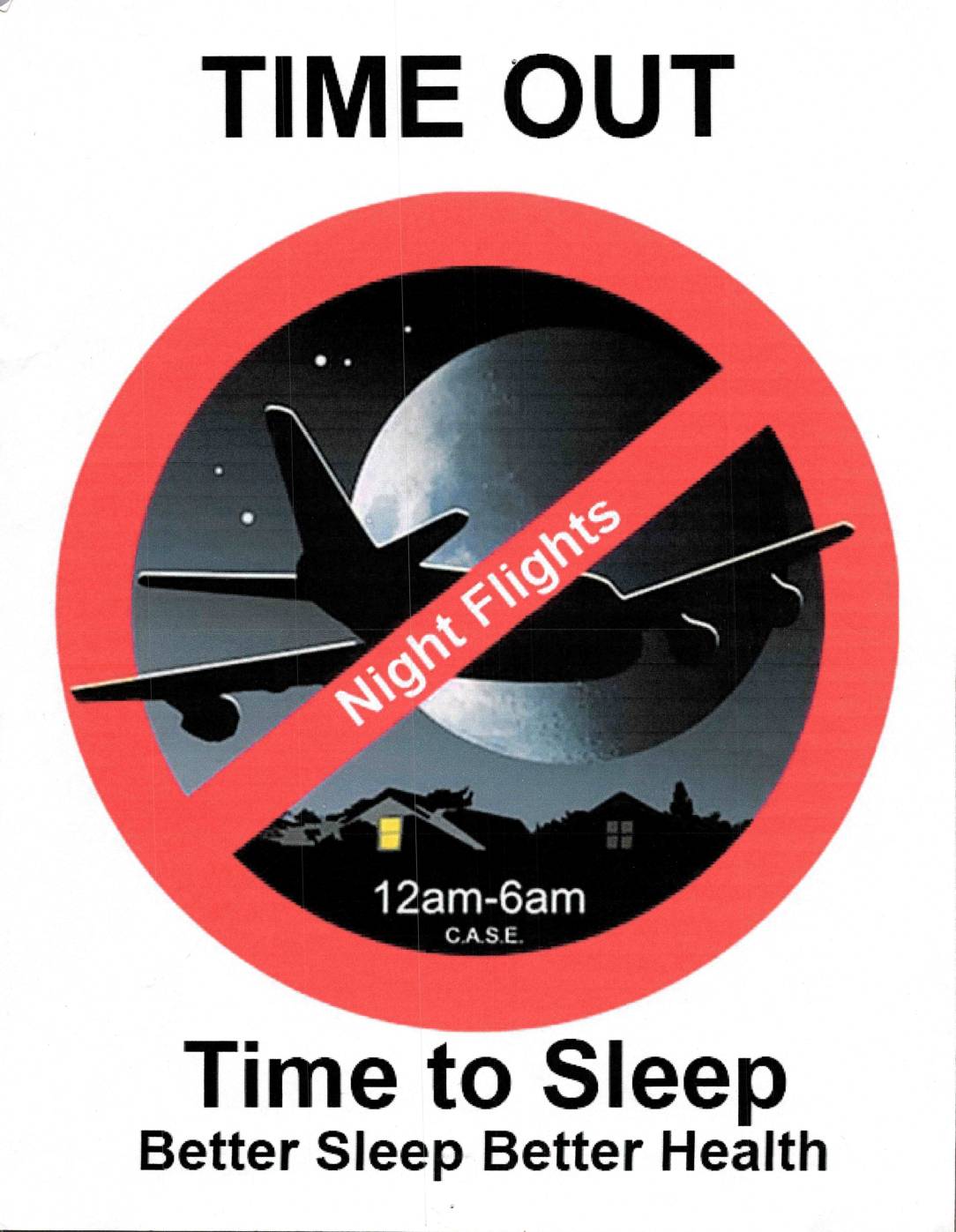
Time Out: Time to Sleep — CASE Night Flights Flyer
This C.A.S.E. (Communities Against Sea-Tac Expansion) campaign poster calls for a ban on night flights over residential neighborhoods between 12am and 6am. Under the slogan 'Time Out,' it argues that eliminating overnight aircraft noise is essential for community health, emphasizing that better sleep leads to better health. The image uses a standard prohibition symbol over a nighttime airplane silhouette to visually reinforce the demand for a quiet curfew period.