TagPort Of Seattle(2400)
-
 2017-07-26
Letter from Port Of Seattle to Mayor Pina regarding Concourse D Hardstand Holdroom and SAMP
In a July 2017 letter, Seattle-Tacoma International Airport's Managing Director Lance Lyttle acknowledged concerns from the City of Des Moines regarding the airport's Concourse D Hardstand Holdroom project, confirming that no additional gates would be added until the Sustainable Airport Master Plan (SAMP) environmental review was completed. Following this, the cities of Burien, Des Moines, Normandy Park, and SeaTac entered into an Interlocal Agreement in March 2018 to jointly hire the consulting firm Lockridge Grindal Nauen PLLP for $175,000 to conduct an environmental review of the SAMP. Costs were shared among the four cities based on a per-capita funding rate of approximately $1.50, with Burien covering the largest share at roughly 43%. -
 2017-07-26
Air quality initiatives at Sea-Tac Airport
This 2017 presentation by Port of Seattle Sustainability Manager Leslie Stanton outlines air quality initiatives at Seattle-Tacoma International Airport, covering pollution sources, reduction programs, and the Port's environmental goals. It highlights that while the Port has limited regulatory authority, it is pursuing innovative strategies to cut emissions, including efforts around ultrafine particulates and climate-related particulate matter reductions. The presentation also reviews existing air quality studies and identifies next steps for improving air quality in and around Sea-Tac Airport. -
 2017-07-25
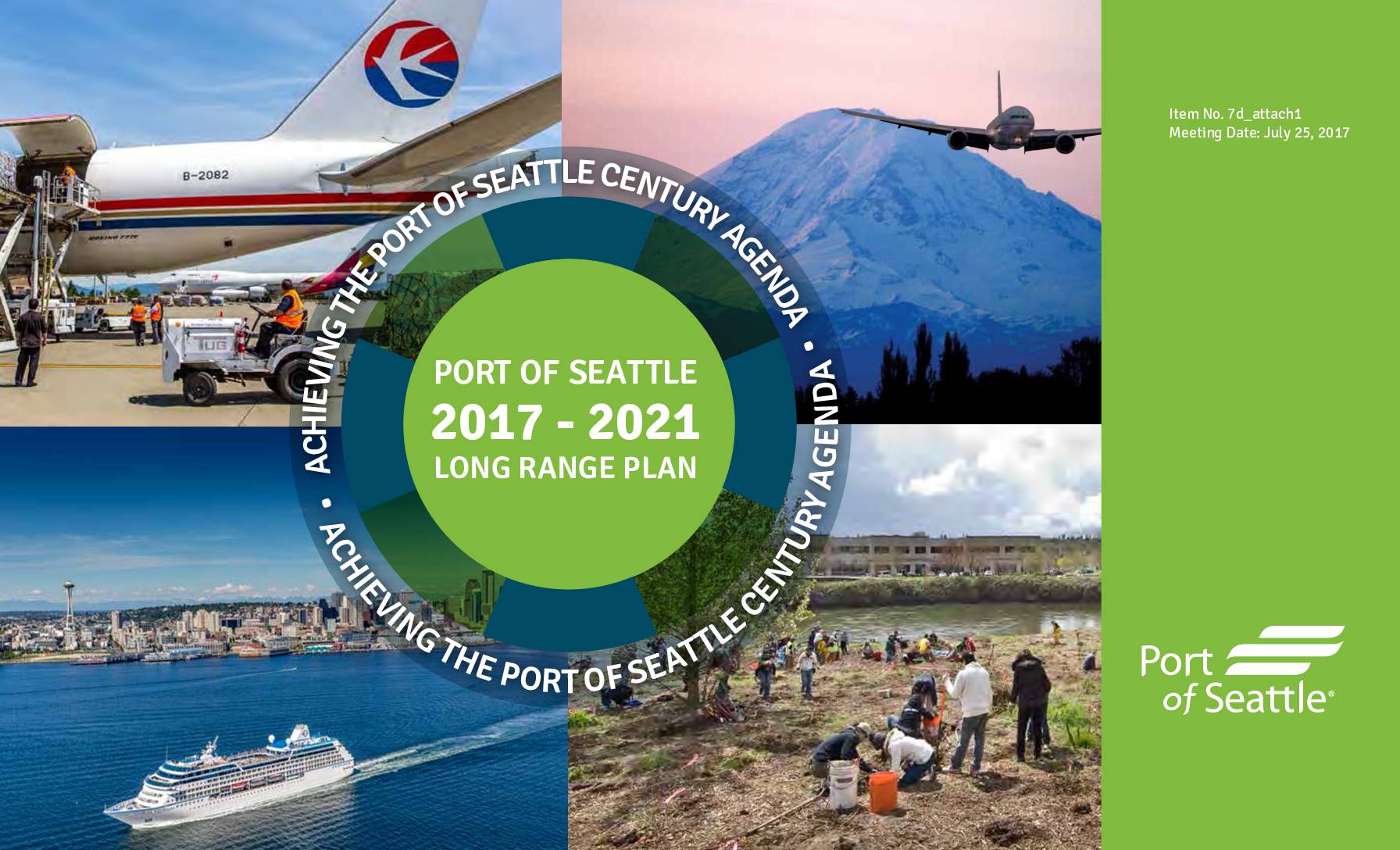
Achieving the Port Of Seattle Century Agenda: 2017-2021 long range plan
The Port of Seattle's 2017–2021 Long Range Plan outlines a five-year rolling strategy to achieve the Port's Century Agenda goals, including adding 100,000 jobs to reach 300,000 total port-related jobs in the region while reducing its environmental footprint. Developed by over 100 Port employees, the plan covers five focus areas — aviation, maritime, economic development, environment, and high-performance organization — and sets specific actions and performance measures for each. The plan is updated and formally adopted by the Commission annually to guide budgeting and operational priorities across all Port divisions. -
 2017-07-17
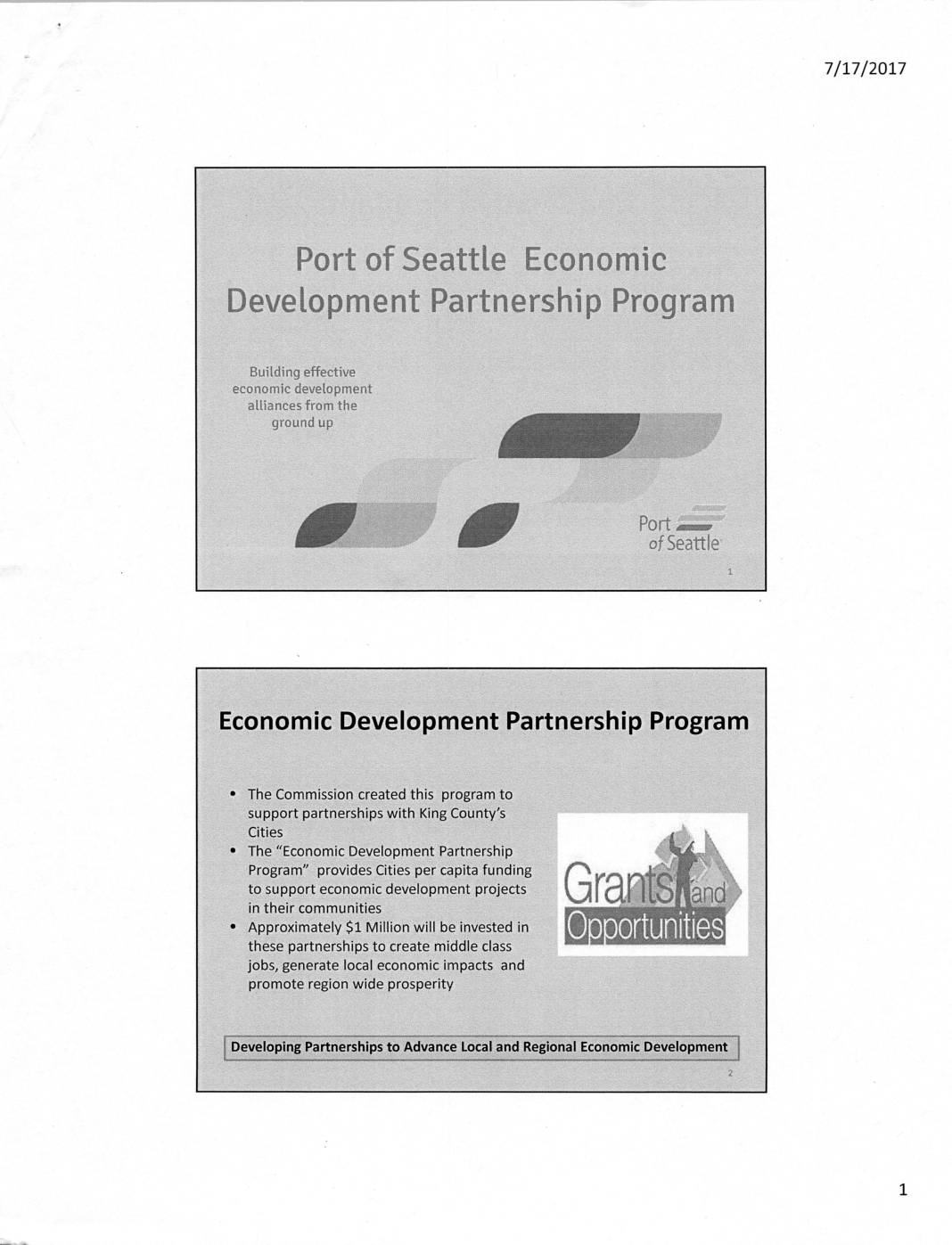
Port Of Seattle Economic Development Partnership Program
The Port of Seattle's Economic Development Partnership Program provides approximately $1 million in annual grant funding to the 38 cities in King County, distributed on a $1-per-capita basis (capped at $65,000, with a $5,000 minimum for the smallest cities). Cities can use the funds for eligible activities such as business recruitment, small business development, tourism, and downtown revitalization, but not for capital projects, and must provide a 50 percent local match. Cities may partner with local nonprofits or collaborate regionally to maximize the impact of their projects. -
 2017-06-06
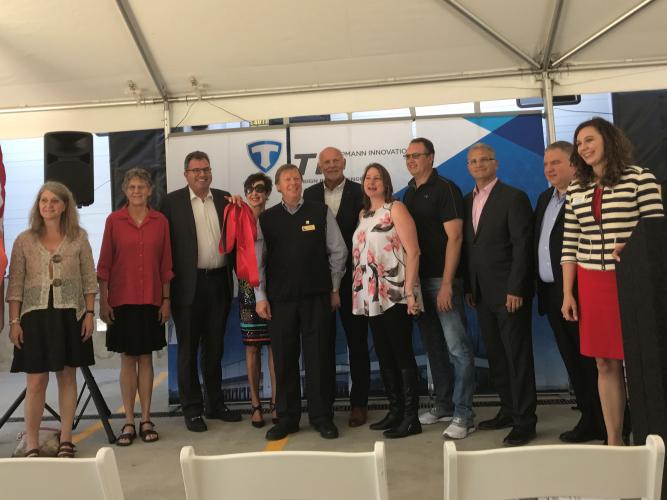
Burien/Port of Seattle community leaders celebrate NERA
A group of approximately twelve people pose together under a tent at what appears to be a corporate event or facility opening. A banner visible in the background displays the Tiemann Innovation logo and name. -
 2017-06-01
Technical Memorandum No. 5: Facility Requirements — Seattle-Tacoma International Airport
This 2017 technical memorandum, prepared by Leigh Fisher for the Port of Seattle, outlines facility requirements for Seattle-Tacoma International Airport as part of the Sustainable Airport Master Plan. It covers planned needs across airfield operations, passenger terminals, ground access and parking, air cargo, and general aviation based on projected activity levels. The document provides detailed assessments of existing infrastructure and identifies future capacity and design requirements to accommodate long-term growth at Sea-Tac. -
 2017-06-01
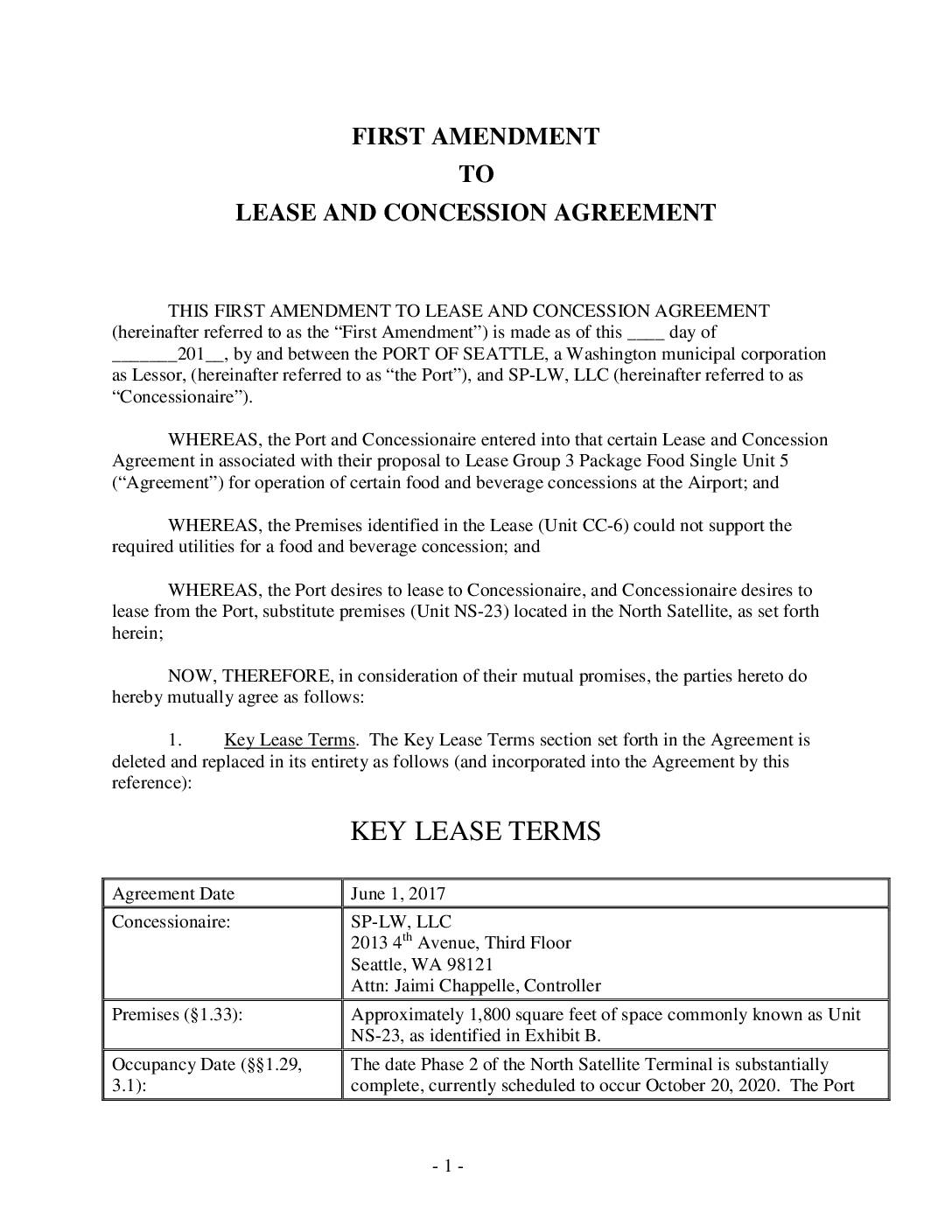
First amendment to lease and concession agreement
This document is a First Amendment to a Lease and Concession Agreement between the Port of Seattle and SP-LW, LLC, shifting the concessionaire's food and beverage operation from Unit CC-6 to Unit NS-23 in the North Satellite Terminal at Seattle-Tacoma International Airport. The amendment updates key lease terms, including an approximately 1,800-square-foot premises, a ten-year lease expiring December 31, 2031, and an initial minimum annual guarantee of $180,000. The Port also agreed to reimburse the concessionaire $360,095.72 for costs already incurred at the original unit. -
 2017-06-01
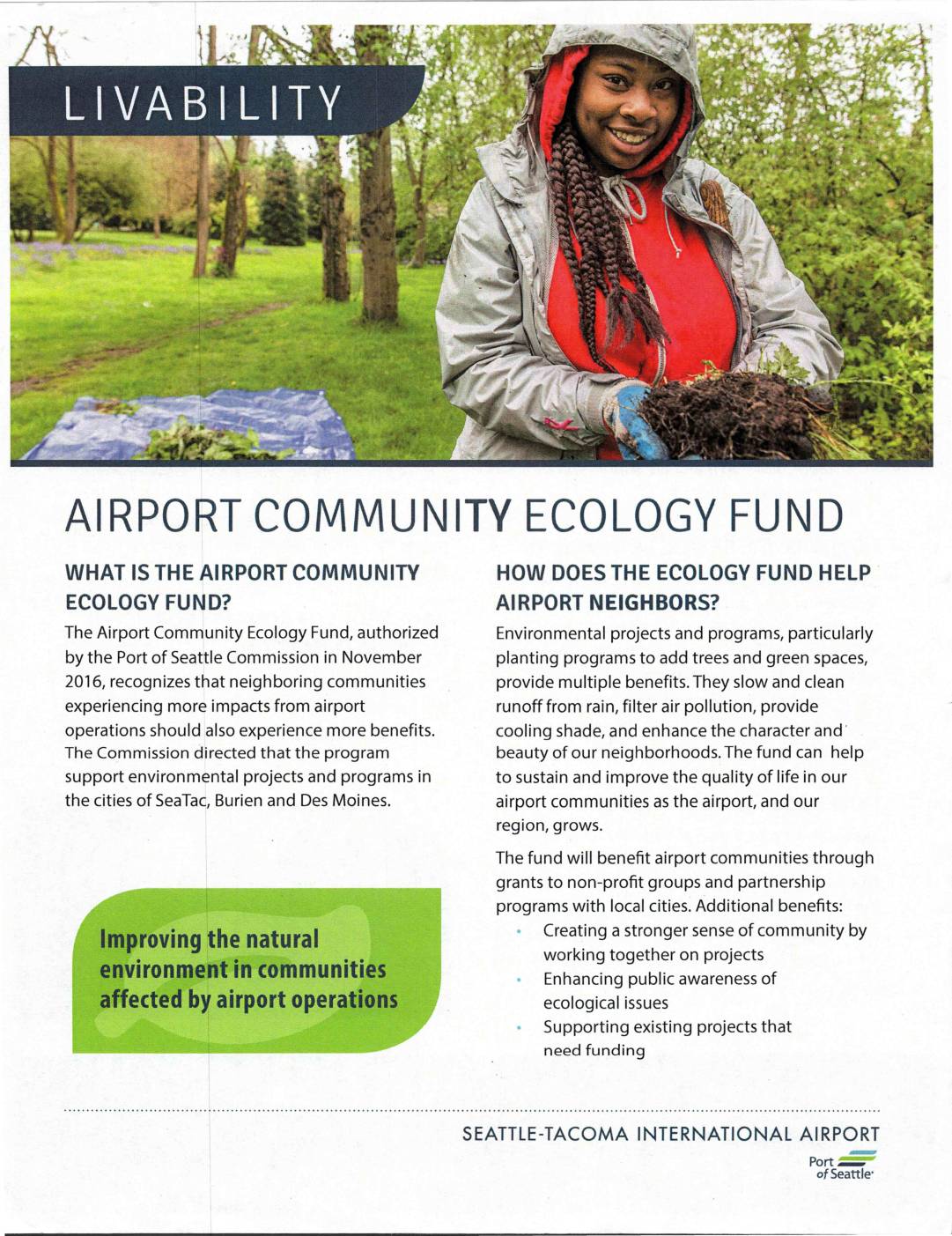
Airport Community Ecology Fund
The Airport Community Ecology Fund, authorized by the Port of Seattle Commission in November 2016, provides grants and partnership programs to improve the natural environment in communities affected by Seattle-Tacoma International Airport operations, specifically in SeaTac, Burien, and Des Moines. The fund supports environmental projects such as tree planting and green space development to help offset airport impacts through benefits like cleaner air, reduced runoff, and improved neighborhood character. Local non-profit organizations and community groups in the three eligible cities can apply for grants, provided their projects demonstrate measurable outcomes and a local match of three times the grant value. -
 2017-06-01
Environment and sustainability programs
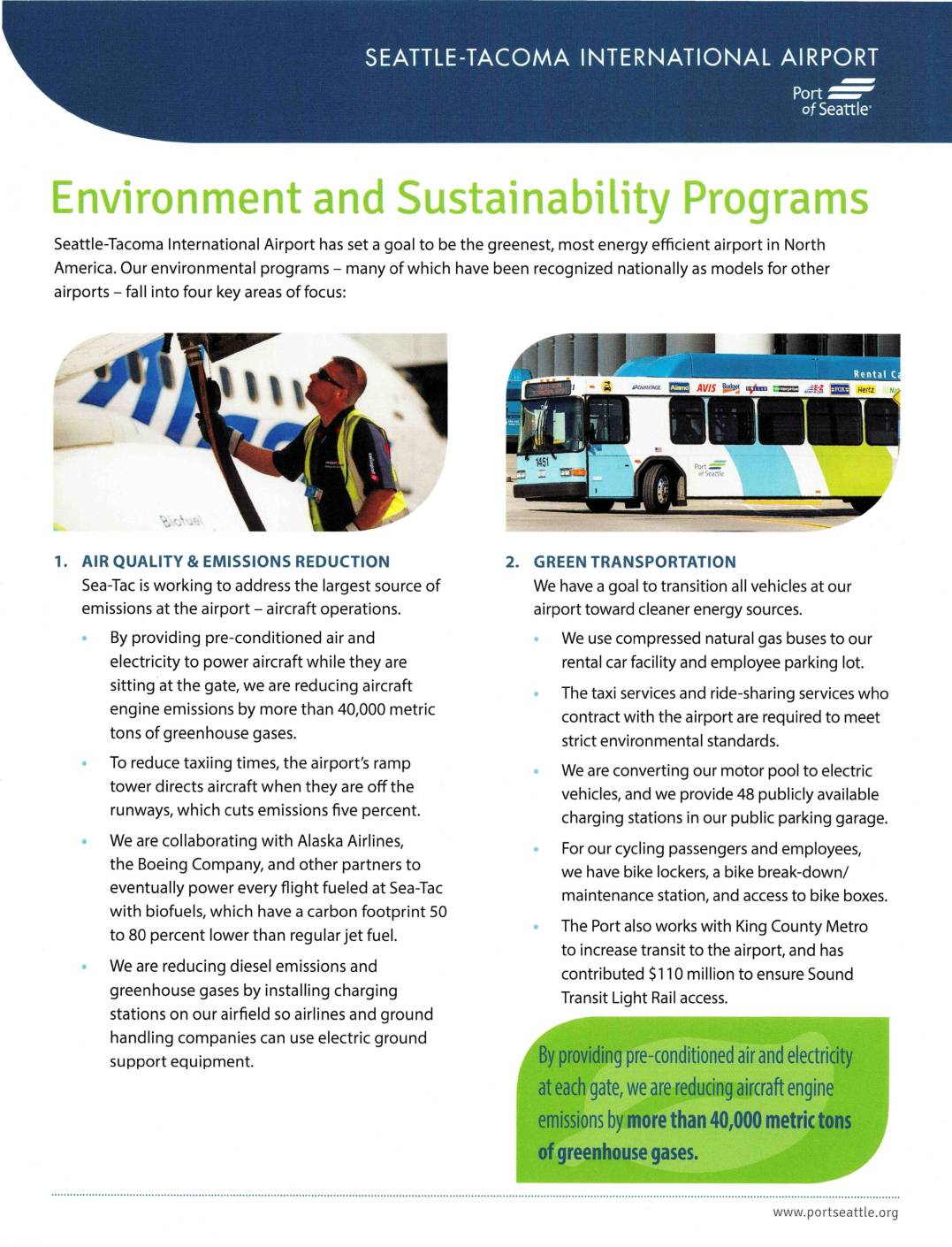
Seattle-Tacoma International Airport's Environment and Sustainability Programs outline the airport's efforts to become the greenest, most energy-efficient airport in North America across four key areas: air quality and emissions reduction, green transportation, waste reduction and recycling, and water and wildlife management. Initiatives include providing pre-conditioned air and electricity at gates to cut aircraft engine greenhouse gas emissions by over 40,000 metric tons, transitioning vehicles to cleaner energy sources, and working toward recycling 60 percent of solid waste by 2020. The airport also actively manages 160 acres of wetland habitat, uses avian radar to protect wildlife, and has relocated more than 800 birds to reduce hazards to aircraft. -
 2017-06-01
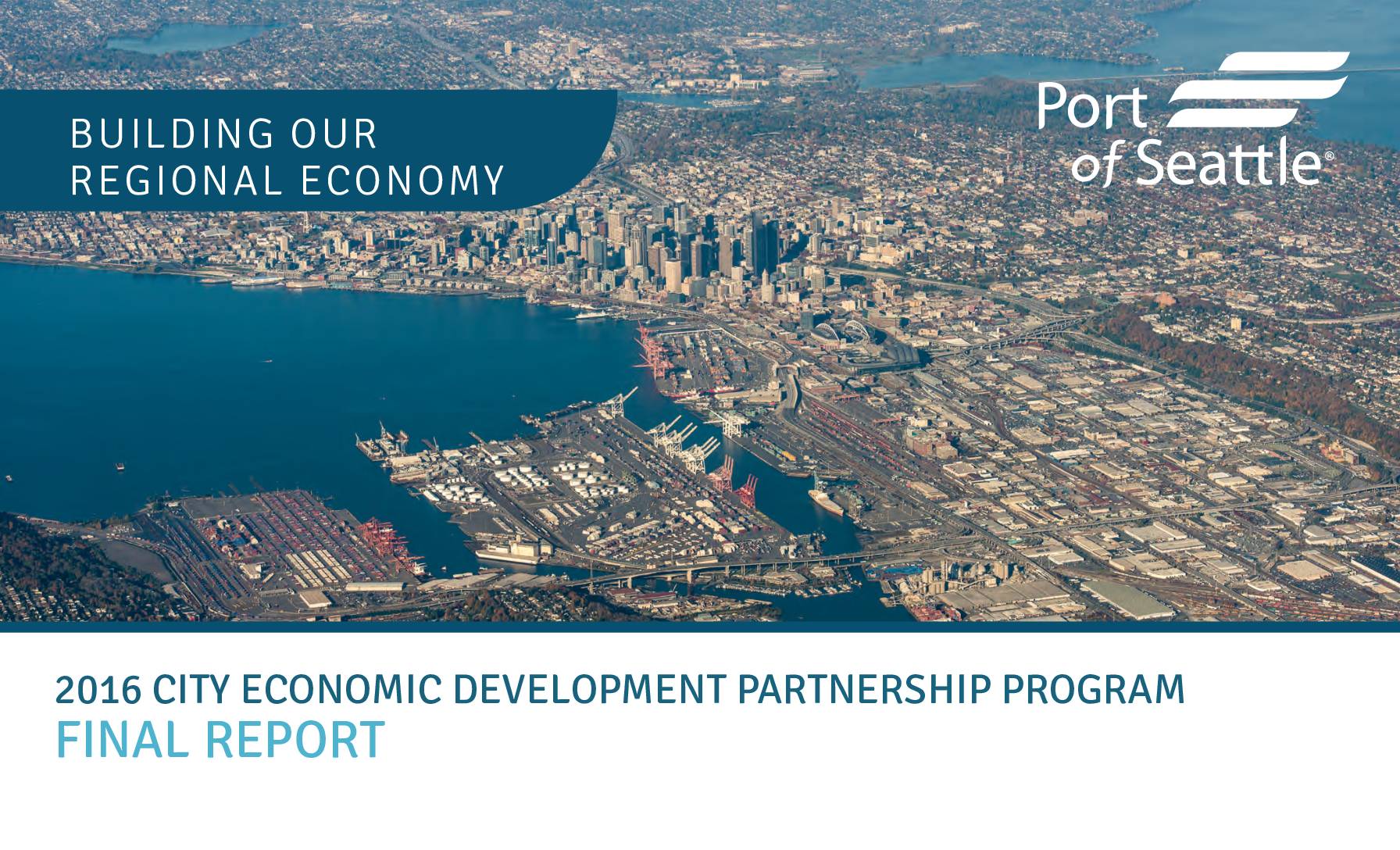
2016 City Economic Development Partnership Program Final Report
In June 2016, the Port of Seattle Commission launched a grant program distributing funds to 38 King County cities to support local economic development across the region. Grants were awarded at $1 per capita, ranging from $5,000 to $65,000, and cities used the money for projects such as business assistance, marketing, tourism promotion, and planning studies. The program encouraged collaboration between cities and helped kick-start initiatives that had previously been beyond individual city budgets.