TagHealth(103)
-
 2017-08-24
Talking Toxics | Part 1: Funding in Crisis
Educating Voters Environmental Priorities Coalition Lobby & Advocacy A series on protecting all communities from dangerous pollution. For 50 years, Washington Environmental Council has set our sights on a cleaner, brighter future and charted a path to get there. In 1988, WEC campaigned to pass Initiative 97 (commonly called the Model Toxics Control Act or -
 2014-10-13
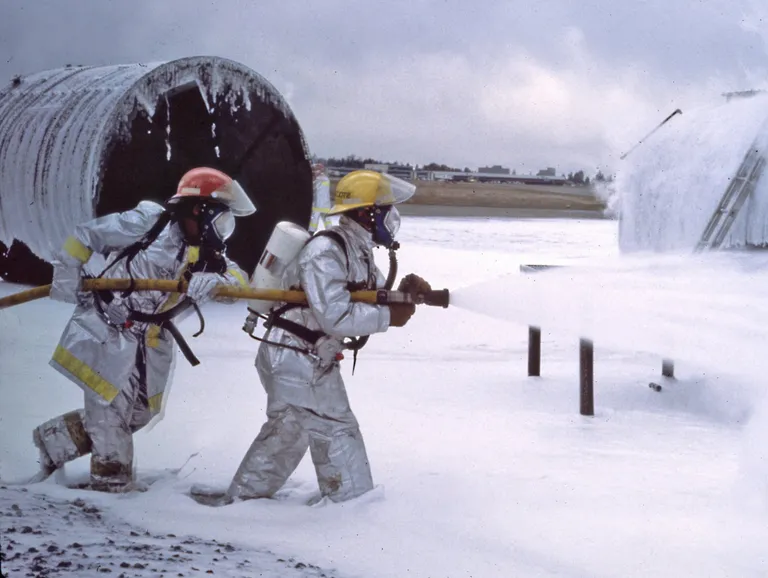
Firefighter PFAS training exercise October 13, 2014
Two firefighters in silver proximity suits and yellow helmets operate a hose line deploying fire-suppression foam across a tarmac area. A large cylindrical aircraft fuselage mockup is visible in the background, consistent with an Aircraft Rescue and Firefighting (ARFF) training exercise at an airport facility. -
2014-08-02
Community roundtables will tackle airplane noise issues – QNS
Posted on August 2, 2014 By Bob Harris After years of pressuring for the formation of community roundtables to discuss airplane noise over residential neighborhoods, Gov. Andrew Cuomo has authorized the formation of such groups. Meetings were recently held in a large hanger at the Vaughn College of Aeronautics adjacent to LaGuardia Airport. The Queens -
 2014-05-29
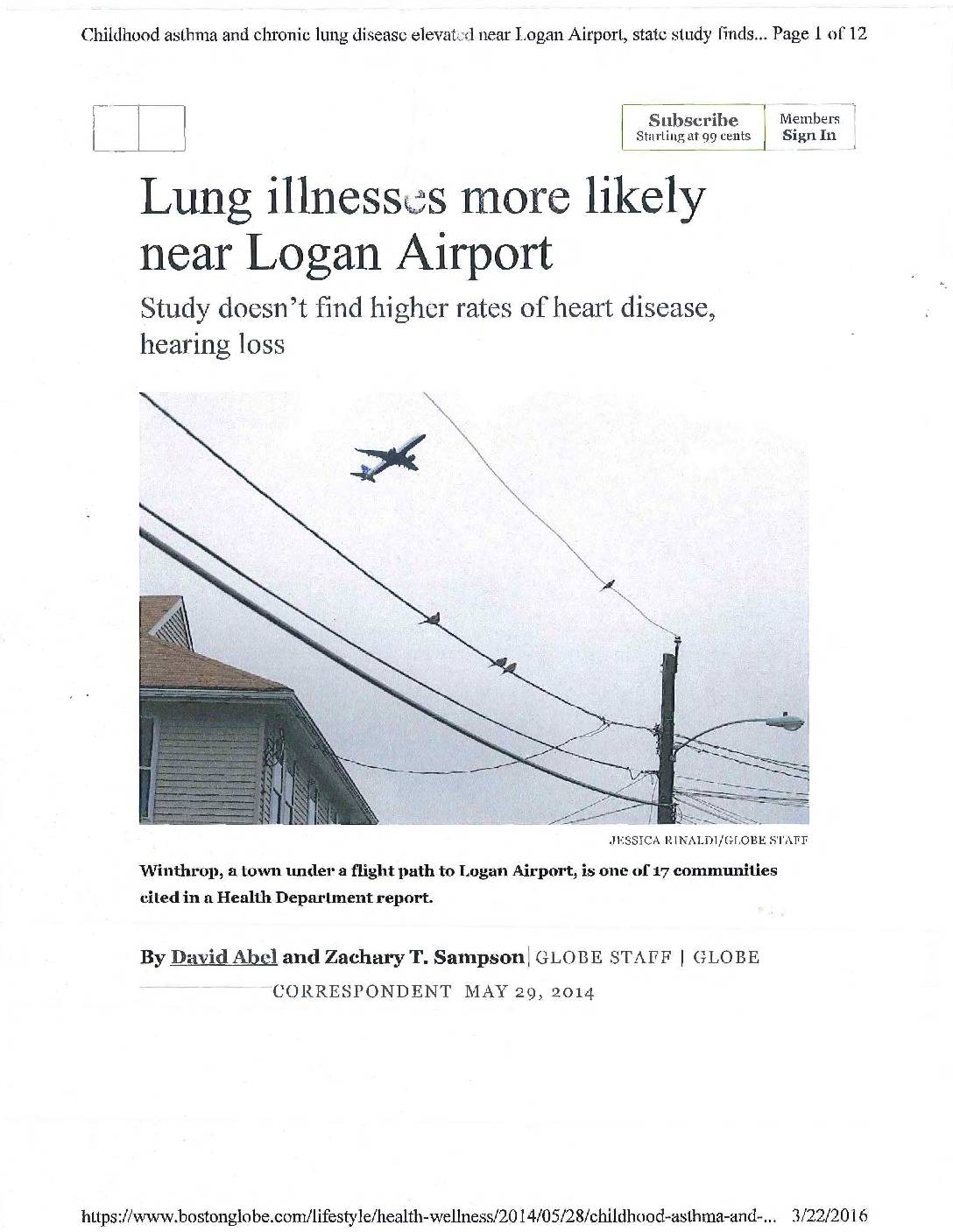
Childhood asthma and chronic lung disease elevated near Logan Airport, state study finds
Two studies highlight serious air pollution concerns near major U.S. airports. A 2014 Massachusetts state health study found that children living near Boston's Logan Airport are up to four times more likely to develop asthma symptoms, while nearby adults are nearly twice as likely to suffer chronic lung disease. A 2015 NJIT study reinforced these concerns nationwide, finding pollution levels up to 10 times higher within nine square miles of airports—with Seattle-Tacoma Airport specifically cited for carbon monoxide levels exceeding federal guidelines. -
 2014-05-29
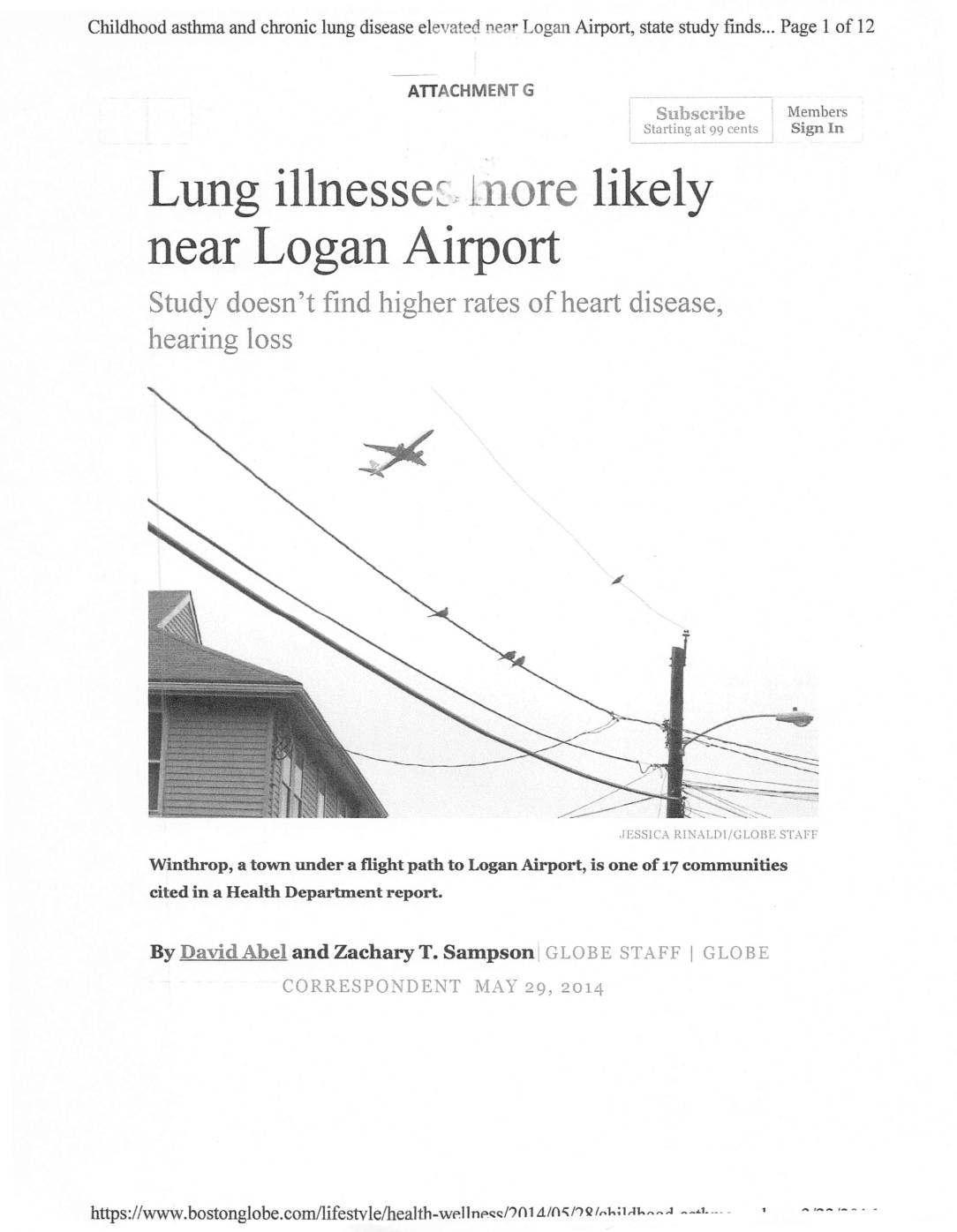
Lung illnesses more likely near Logan Airport
A 2014 Massachusetts state health study found that children living near Logan International Airport are up to four times more likely to show signs of undiagnosed asthma, while adults living nearby for three or more years are nearly twice as likely to develop chronic obstructive pulmonary disease. The $1.8 million study, commissioned by the state Legislature 14 years prior, confirmed statistically significant respiratory health effects even after accounting for vehicle traffic emissions, smoking rates, and poverty. No elevated rates of heart disease or hearing loss were found among airport-area residents. -
 2008-04-01
Monetary value of undisturbed sleep
A Swiss study interviewed 67 patients with obstructive sleep apnea who used CPAP therapy to estimate the monetary value people place on undisturbed sleep. Patients valued a good night's sleep at an average of about 70 Swiss francs per night, and after adjusting for the difference in severity between sleep apnea and traffic noise disturbance, the researchers estimated that noise-free sleep is worth roughly 7 to 24 Swiss francs per person per night. The findings suggest that sleep disrupted by road traffic noise carries a significant monetary cost that should be factored into airport and transportation noise policy decisions. -
 2006-01-01
Health of King County 2006
The Health of King County 2006 report provides a broad overview of the health status of King County, Washington residents, drawing on public health data from vital records, hospital discharges, and surveys. While King County residents generally enjoy better health than the rest of Washington State and the US, the report highlights growing concerns including rising rates of obesity, diabetes, and chronic diseases such as cancer, heart disease, and stroke. Chronic diseases accounted for 21,000 hospitalizations in 2004 at a cost of $531 million, with cancer, heart disease, and stroke alone responsible for more than half of all deaths in the county. -
 2002-02-14
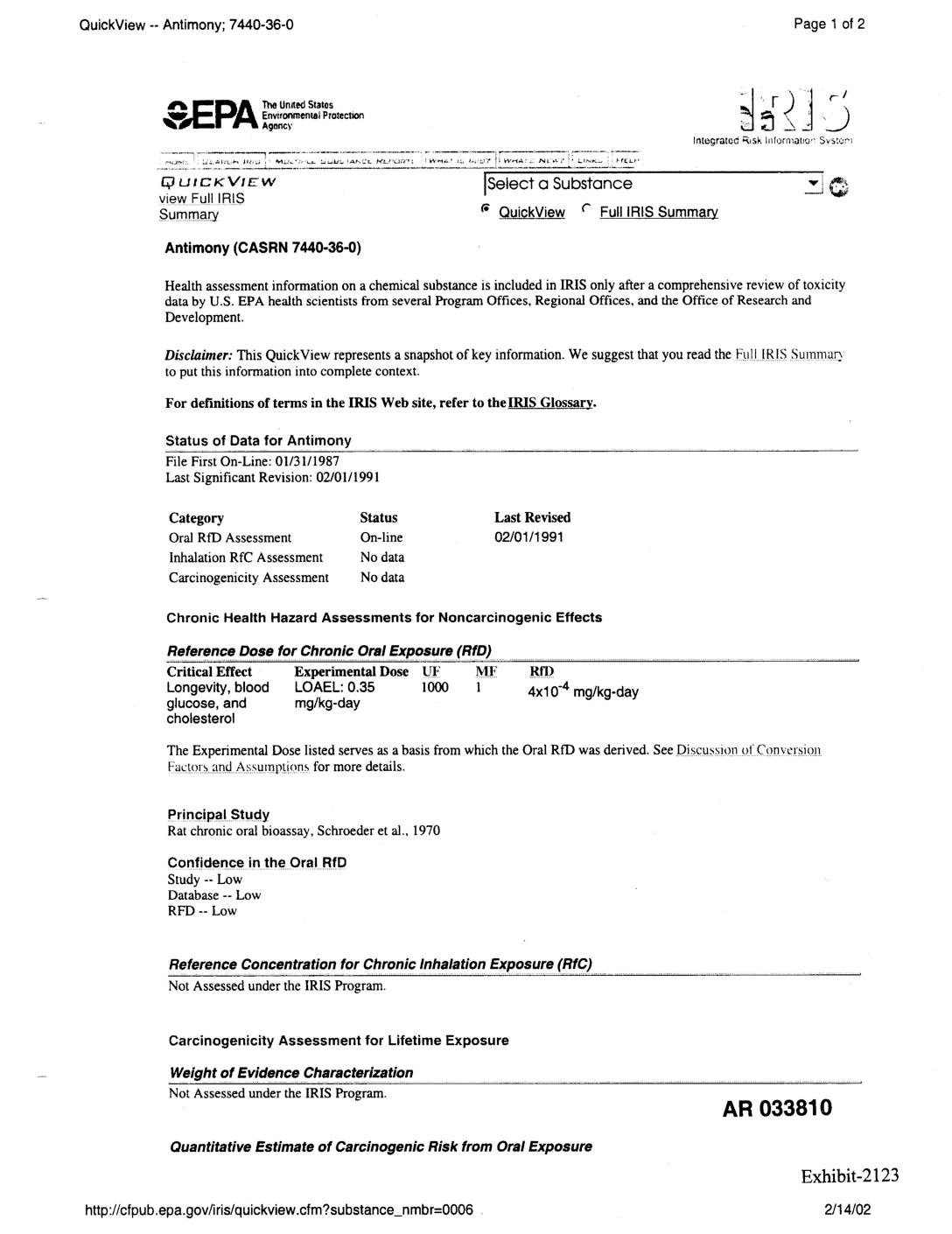
Exhibit 2123: EPA IRIS QuickView — Antimony (CASRN 7440-36-0) and Arsenic, Inorganic (CASRN 7440-38-2)
EPA Integrated Risk Information System (IRIS) QuickView pages for Antimony (CASRN 7440-36-0) and Arsenic, inorganic (CASRN 7440-38-2), accessed February 14, 2002. Antimony oral RfD is 4×10⁻⁴ mg/kg-day based on LOAEL of 0.35 mg/kg-day from Schroeder et al. 1970 rat chronic oral bioassay; confidence rated Low. Arsenic oral RfD is 3×10⁻⁴ mg/kg-day based on NOAEL of -
 2000-08-01
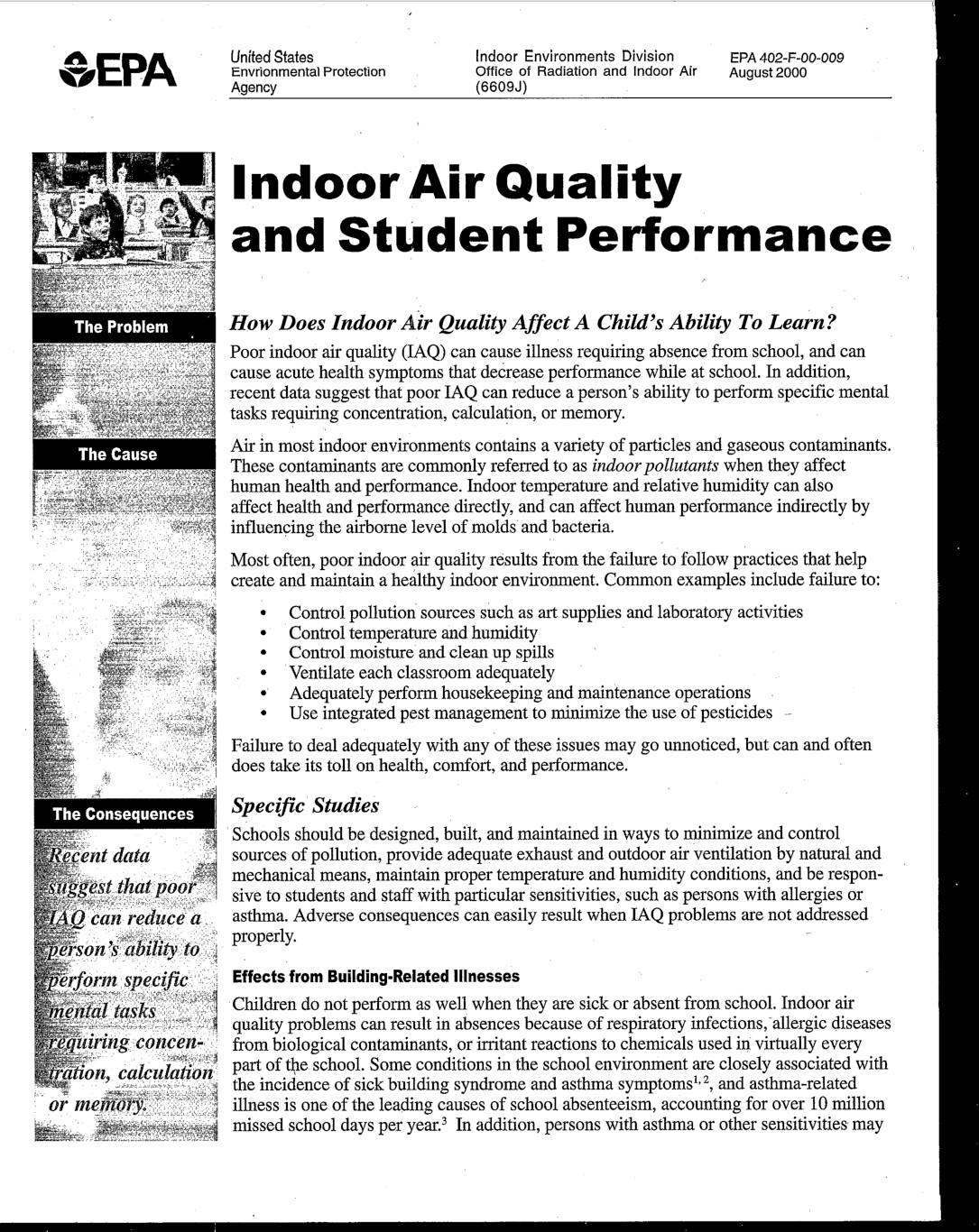
Indoor air quality and student performance
This EPA document explains how poor indoor air quality (IAQ) in schools can harm students' health and academic performance, causing absences due to respiratory illnesses and reducing the ability to concentrate, calculate, and remember. Studies show that high pollution levels, inadequate ventilation, and improper temperature and humidity control contribute to these problems. The EPA recommends schools use the IAQ Tools for Schools Kit to identify and address indoor air quality issues at little or no cost. -
 1999-12-01
Addressing Community Health Concerns Around Sea-Tac Airport: Second Report on the Work Plan Proposed in August 1998
This December 1999 report from the Washington State Department of Health and Public Health – Seattle & King County examines community health concerns in neighborhoods surrounding SeaTac International Airport. It investigates whether cancer rates, particularly glioblastoma (a brain tumor) and breast cancer, are elevated near the airport, and explores potential links to jet engine exhaust emissions. The report also addresses respiratory health issues in local schools and outlines efforts to monitor or model the path of aircraft emissions over the surrounding communities.