TagHealth(103)
-
 1999-12-01
Addressing community health concerns around Sea-Tac Airport: Second report on the work plan proposed in August 1998
This December 1999 report from the Washington State Department of Health investigates community health concerns near Seattle-Tacoma (SeaTac) International Airport, focusing on whether cancer rates—particularly glioblastoma and breast cancer—are elevated in surrounding neighborhoods. The report examines potential links between jet engine exhaust emissions and health outcomes, reviews air quality studies, and assesses respiratory disease risks, especially for schools located under flight paths. It was prepared collaboratively by state and county public health officials alongside community representatives. -
 1999-08-14
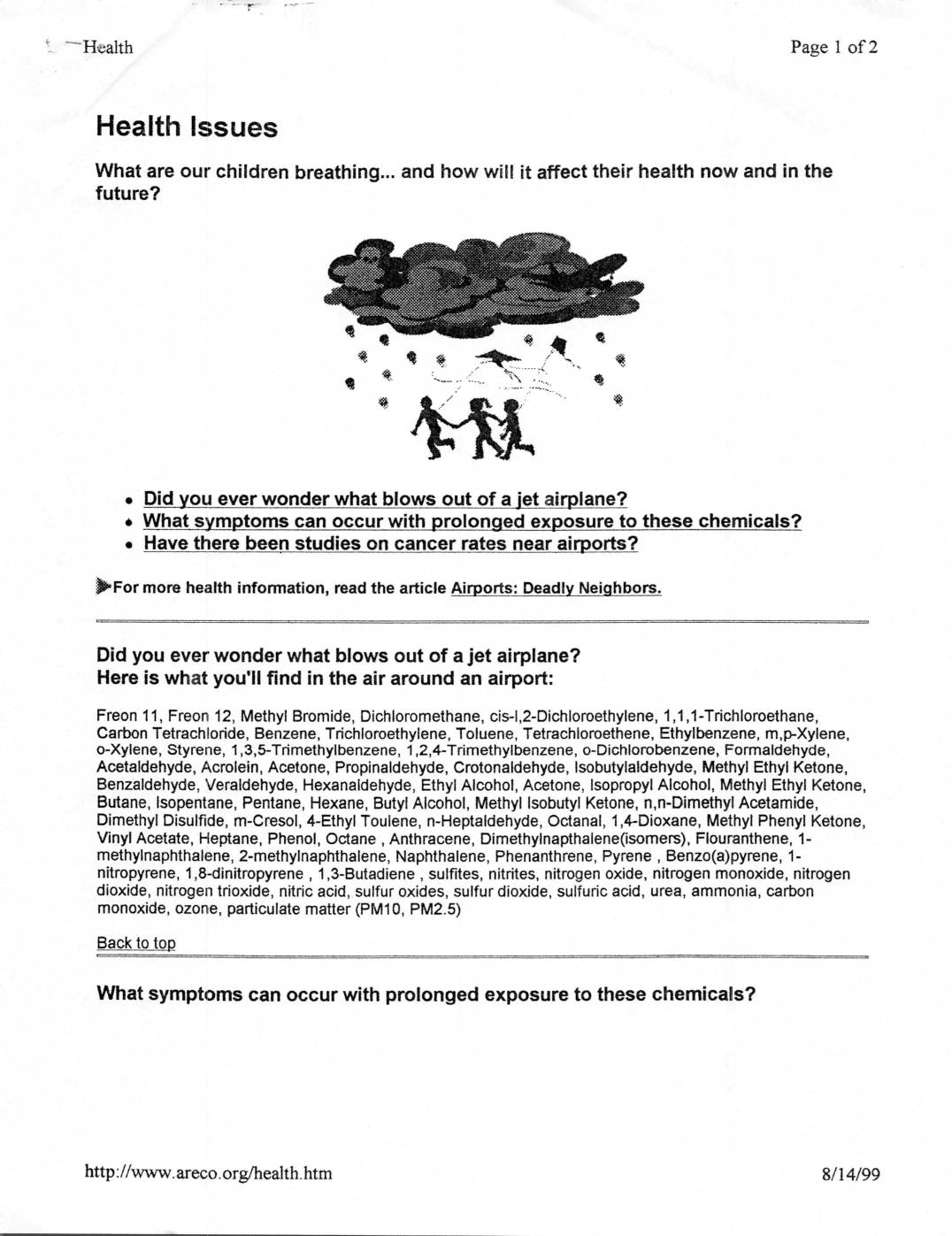
Health issues: What are our children breathing… and how will it affect their health now and in the future?
This 1999 health advocacy article raises concerns about air quality near airports, listing dozens of toxic chemicals found in jet exhaust — including benzene, formaldehyde, and 1,3-butadiene — and the serious health conditions linked to prolonged exposure, such as cancer, asthma, and lung disease. It references a 1993 EPA study of Midway Airport finding cancer risks more than 400 times the allowable federal limit, and cites Washington State health data showing elevated cancer rates and doubled rates of childhood respiratory disease near Seattle-Tacoma Airport and Boeing Field. The document was published by areco.org as part of a broader campaign highlighting the public health impacts of airport emissions on surrounding communities. -
 1999-02-01
Health profile for the SeaTac Airport Community
This 1999 report by the Seattle-King County Department of Public Health profiles the health of the community surrounding Seattle-Tacoma (SeaTac) Airport, comparing local health indicators to King County as a whole. Key findings include higher rates of lung cancer, firearm-related deaths, teen births, and respiratory hospitalizations in the SeaTac community, alongside lower rates of heart disease and stroke deaths among older residents. The report was produced in response to a request from local residents seeking a comprehensive community health assessment. -
 1998-08-01
The Health of King County: Highlights, August 1998
A 1998 public health report from the Seattle-King County Department of Public Health summarizing key health trends among King County residents. The report highlights both improvements, such as declining infant mortality, increased prenatal care access, falling teen birth rates, and reduced AIDS cases and sexually transmitted diseases, as well as ongoing challenges including chronic illnesses, drug-related deaths, smoking, obesity, and persistent health inequities across racial and socioeconomic groups. -
 1997-09-01
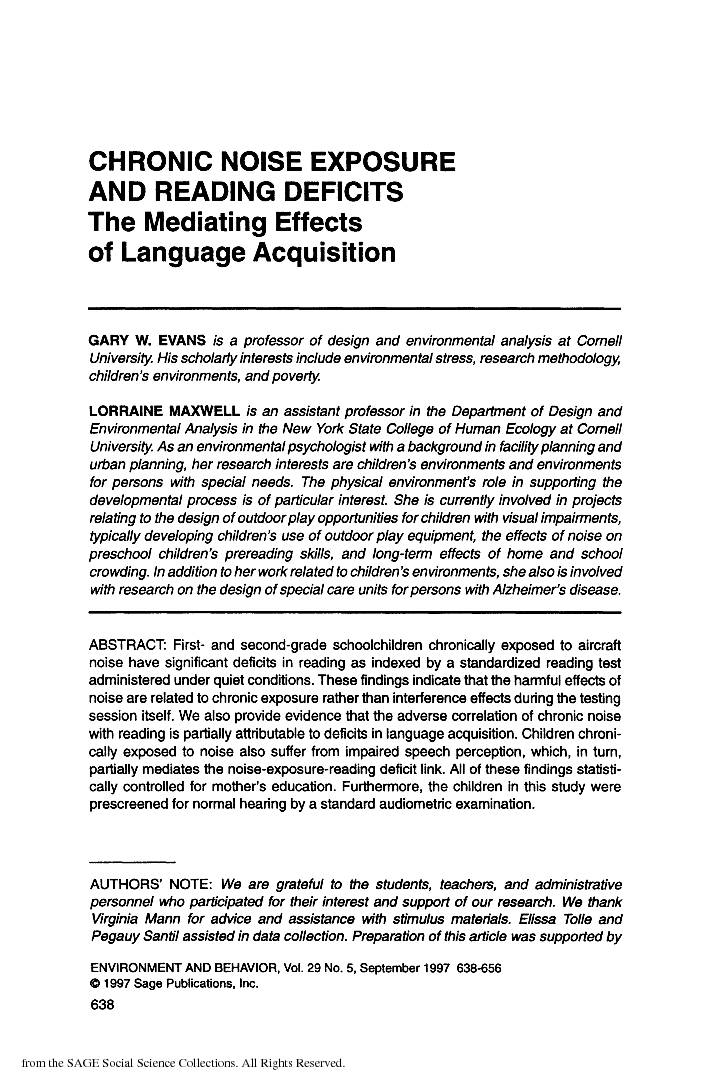
Chronic noise exposure and reading deficits: The mediating effects of language acquisition
A 1997 Cornell University study found that elementary school children chronically exposed to aircraft noise showed significant reading deficits, even when tested under quiet conditions — meaning the harm stems from long-term exposure, not just momentary distraction. The researchers identified impaired language acquisition, particularly speech perception, as a key reason why noise-exposed children fall behind in reading. These findings have direct relevance for communities near busy airports, where sustained noise levels may quietly undermine children's academic development. -
 1997-04-21
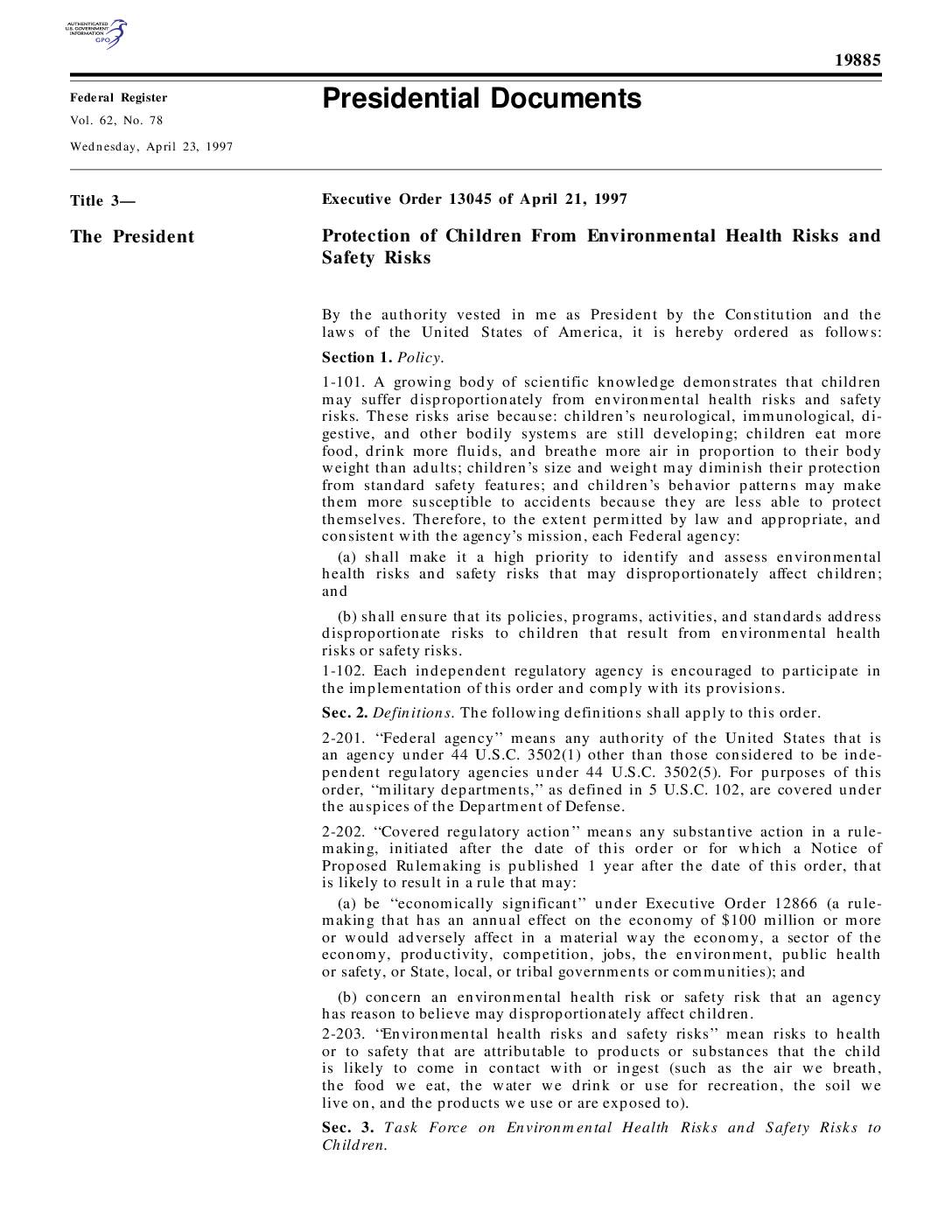
Executive order 13045 protection of children from environmental health risks and safety risks
Executive Order 13045, signed by President Clinton in April 1997, directs federal agencies to identify and address environmental health and safety risks that disproportionately affect children, recognizing that children are more vulnerable due to their developing bodies and behaviors. The order establishes a Task Force co-chaired by the Secretary of Health and Human Services and the EPA Administrator to coordinate federal research and recommend protective strategies. It also requires agencies to evaluate the effects of significant regulations on children's health and safety before those rules take effect. -
 1996-05-01
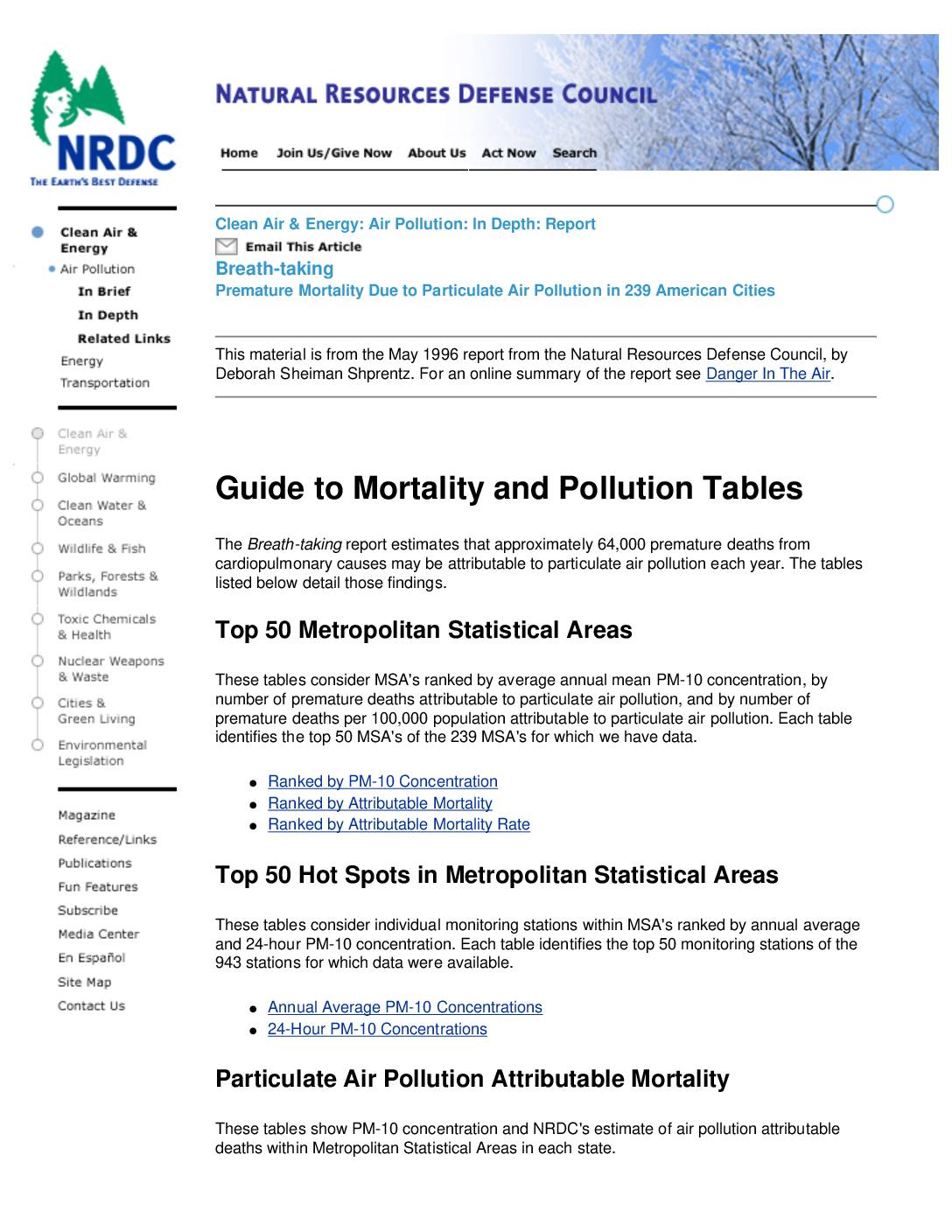
Breath-taking: Premature mortality due to particulate air pollution in 239 American cities
A 1996 Natural Resources Defense Council report estimates that approximately 64,000 premature deaths from cardiopulmonary causes occur each year due to particulate air pollution (PM-10) across 239 American cities. The report ranks metropolitan areas by PM-10 concentration, attributable mortality, and mortality rate, with California cities like Visalia, Bakersfield, and Fresno topping the pollution charts. Note: this document addresses urban air quality and public health broadly and does not contain content specifically related to Sea-Tac Airport noise policy. -
 1993-04-01
Estimation and Evaluation of Cancer Risks Attributed to Air Pollution in Southwest Chicago: Final Summary Report
Final Summary Report submitted to U.S. EPA Region 5 Air and Radiation Division by ViGYAN Inc., April 1993, estimating and evaluating cancer risks attributed to air pollution in southwest Chicago. The report assesses cancer risk from air pollutants in the southwest Chicago area, prepared under EPA contract for regional air quality and public health assessment. -
 1992-10-21
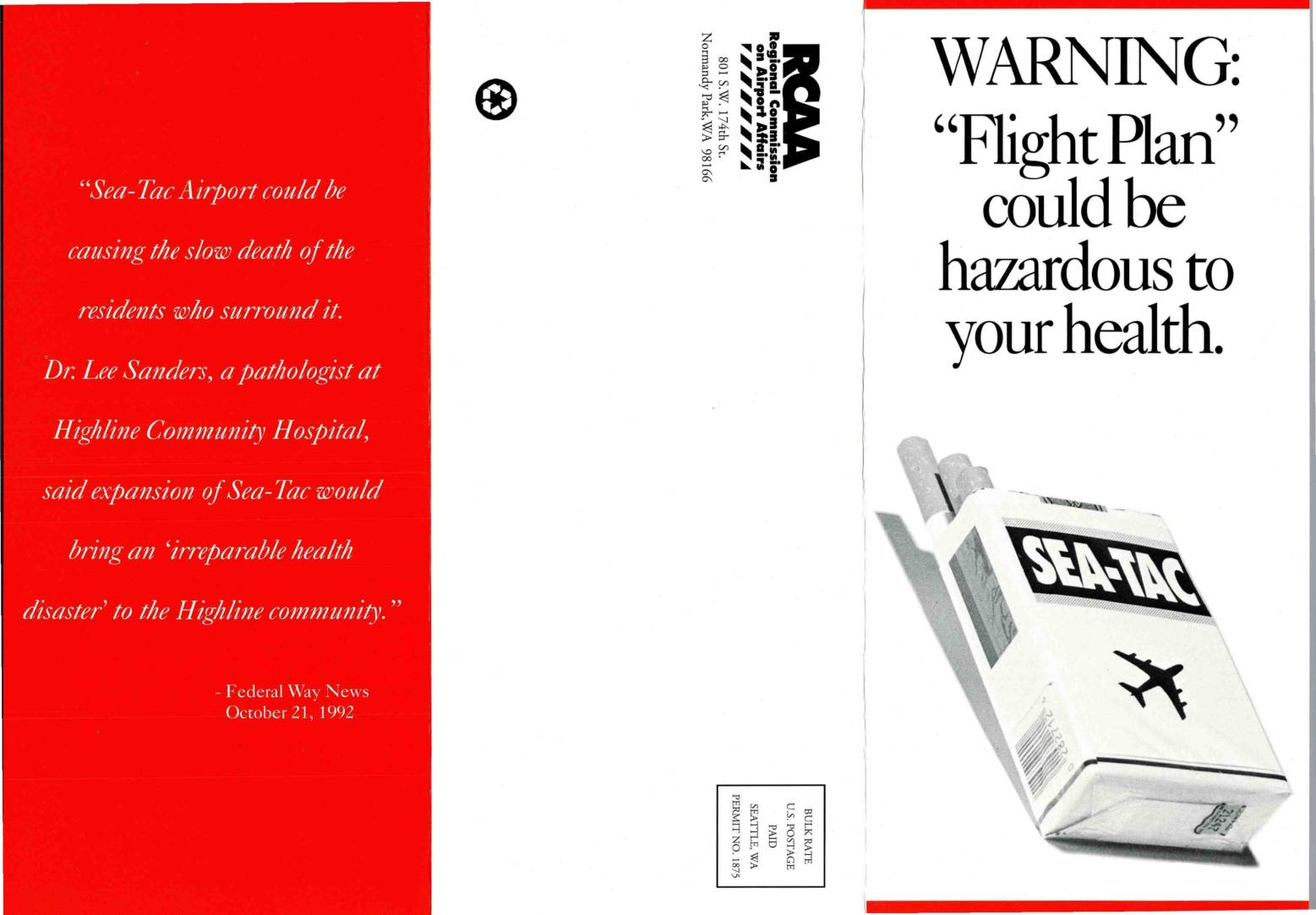
WARNING: ‘Flight Plan’ could be hazardous to your health
A 1992 pamphlet published by the Regional Commission on Airport Affairs (RCAA) warns that the Port of Seattle's expansion plan for Sea-Tac Airport — including the addition of a third runway — poses serious health risks to surrounding communities. Citing studies reviewed by physicians at Highline Community Hospital, the brochure links increased airport activity to higher rates of birth defects, cardiovascular disease, mental illness, and dangerous levels of air pollutants such as carbon monoxide, benzene, and lead. The document concludes that when health and community costs are fully considered, Sea-Tac expansion may be neither financially feasible nor ethically justifiable. -
 1992-10-05
The adverse health impacts of airport expansion with particular reference to Sea-Tac International Airport
A 1992 report by physicians from the Regional Coalition on Airport Affairs details the serious health risks posed by Sea-Tac International Airport's noise and air pollution on surrounding communities. It documents links between airport noise and increased use of tranquilizers, psychiatric hospitalizations, sleep disruption, lower birth weights, and declining school test scores, while also noting that Sea-Tac generates up to 5% of all air pollution in King County. The report argues that airport expansion would significantly worsen these already measurable public health impacts on South King County residents.