TagEPA(100)
-
 2017-04-15
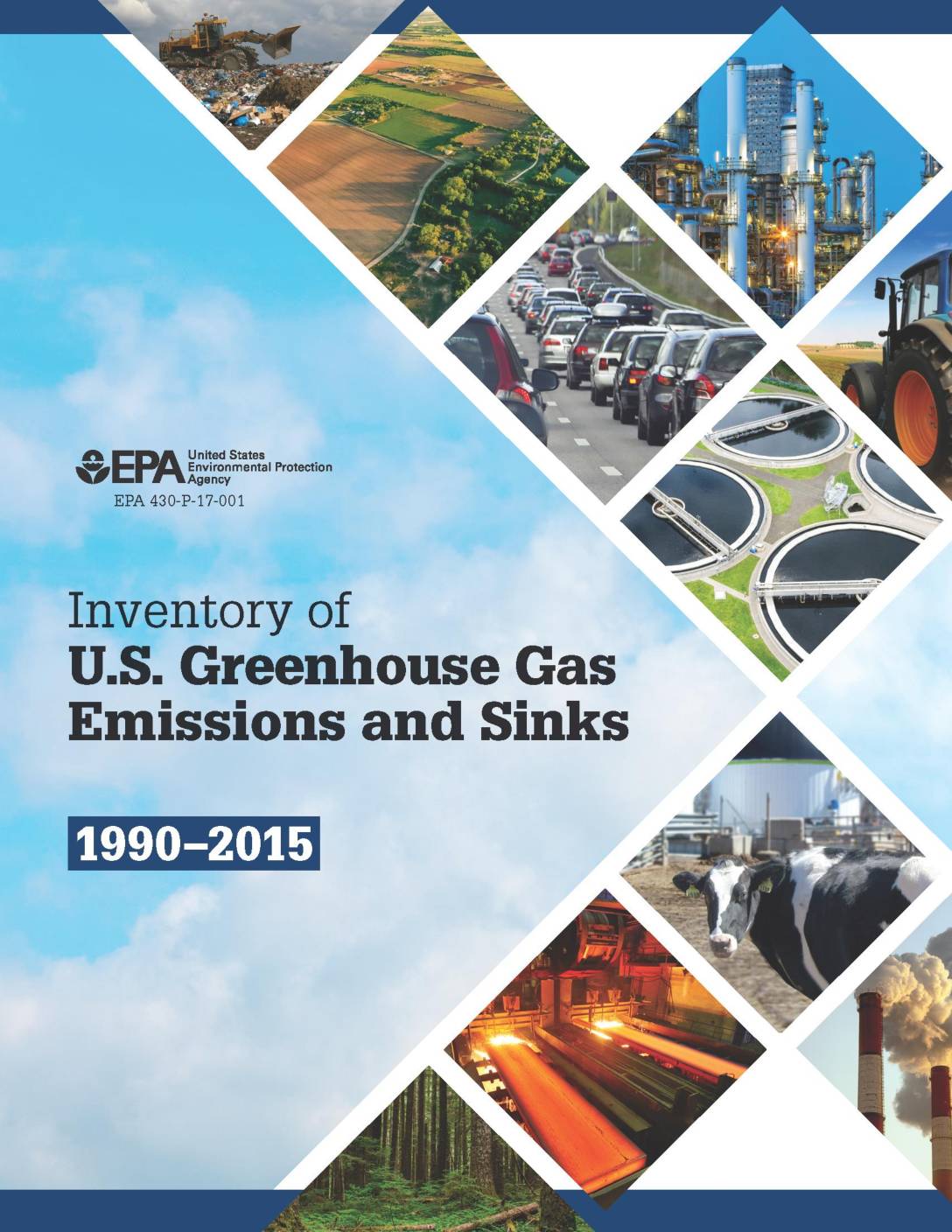
Inventory of U.S. greenhouse gas emissions and sinks: 1990–2015
This EPA report tracks U.S. greenhouse gas emissions and sinks from 1990 to 2015, covering sources such as transportation, agriculture, industry, and waste. It was published by the U.S. Environmental Protection Agency in 2017 and is available for download on the EPA website. Note: this document does not appear to contain information relevant to Sea-Tac Airport noise policy. -
 2017-04-01
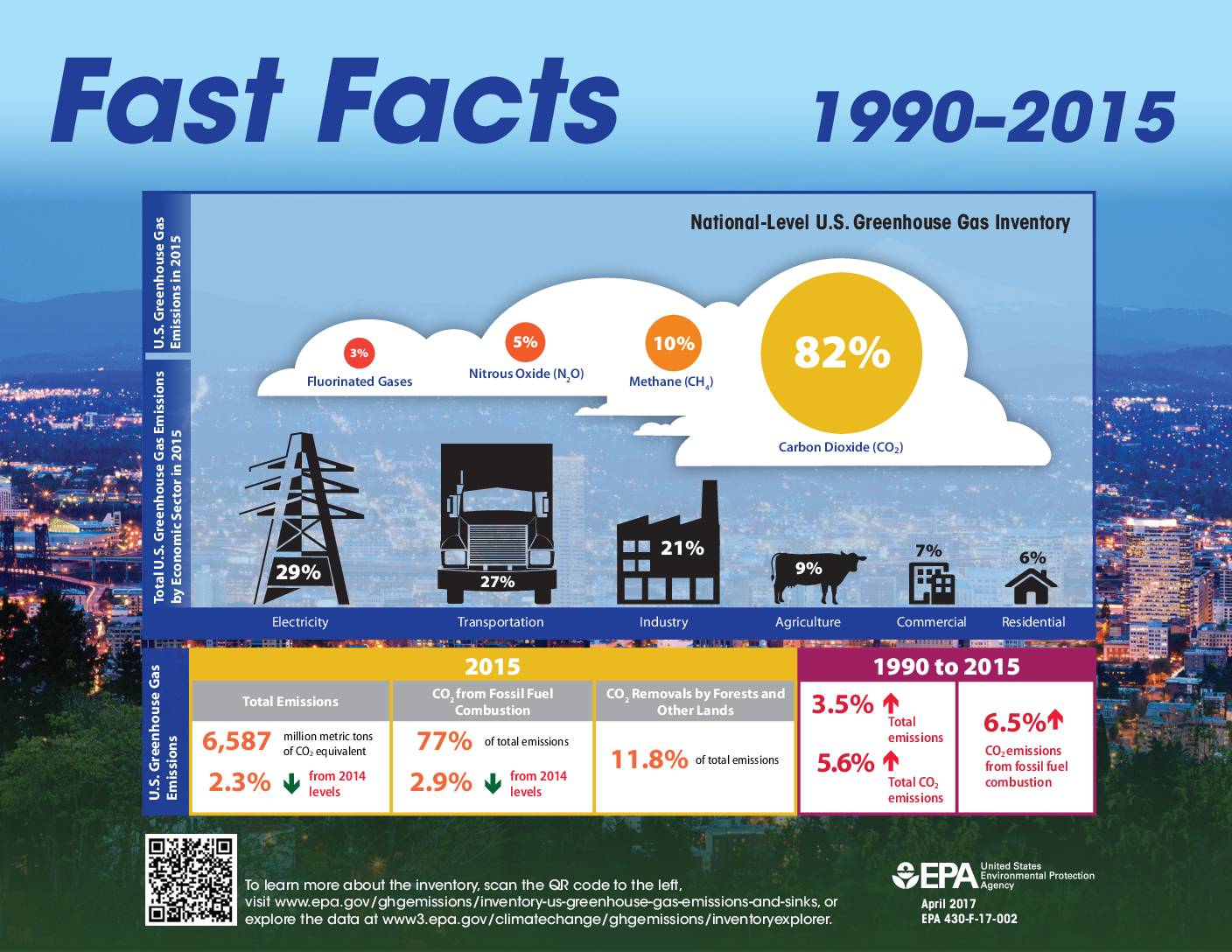
Fast facts 1990–2015: National-level U.S. greenhouse gas inventory
This EPA report summarizes U.S. greenhouse gas emissions data from 1990 to 2015, showing that total emissions reached 6,587 million metric tons of CO2 equivalent in 2015, a 2.3% decrease from 2014 levels. Carbon dioxide makes up the largest share at 82% of emissions, with electricity generation and transportation being the biggest contributing economic sectors at 29% and 27% respectively. The report includes detailed emissions breakdowns by gas type, economic sector, and fuel source, along with unit conversion tables and global warming potential values for reference. -
 2016-07-15
Air Quality Criteria Pollutant Emissions Inventory Task 2.8: Working Paper – Documentation of Assumptions
This 2016 working paper documents the methods and assumptions used to build an air quality emissions inventory for Seattle-Tacoma International Airport as part of the Sustainable Airport Master Plan. Using the FAA's EDMS modeling software, analysts estimated pollution from sources including aircraft engines, ground support equipment, parking, and stationary facilities such as generators and boilers. Aircraft operation data for 2014 was gathered from multiple sources, including FAA tower records, airline guides, and the Port of Seattle's own noise monitoring system. -
 2016-07-01
Environmental Justice, before and after Executive Order 12898: What are agencies doing, how well are they doing it, and what else can be done?
This academic paper examines how U.S. federal agencies have addressed Environmental Justice (EJ) since President Clinton's 1994 Executive Order 12898, which required agencies to reduce disproportionate pollution burdens on low-income and minority communities. The author, a Bureau of Land Management social scientist, reviews agency compliance efforts, highlights case studies like the Flint water crisis, and argues that practical steps such as staff training and social science tools can help agencies consistently protect vulnerable communities regardless of shifting political priorities. -
 2009-11-11
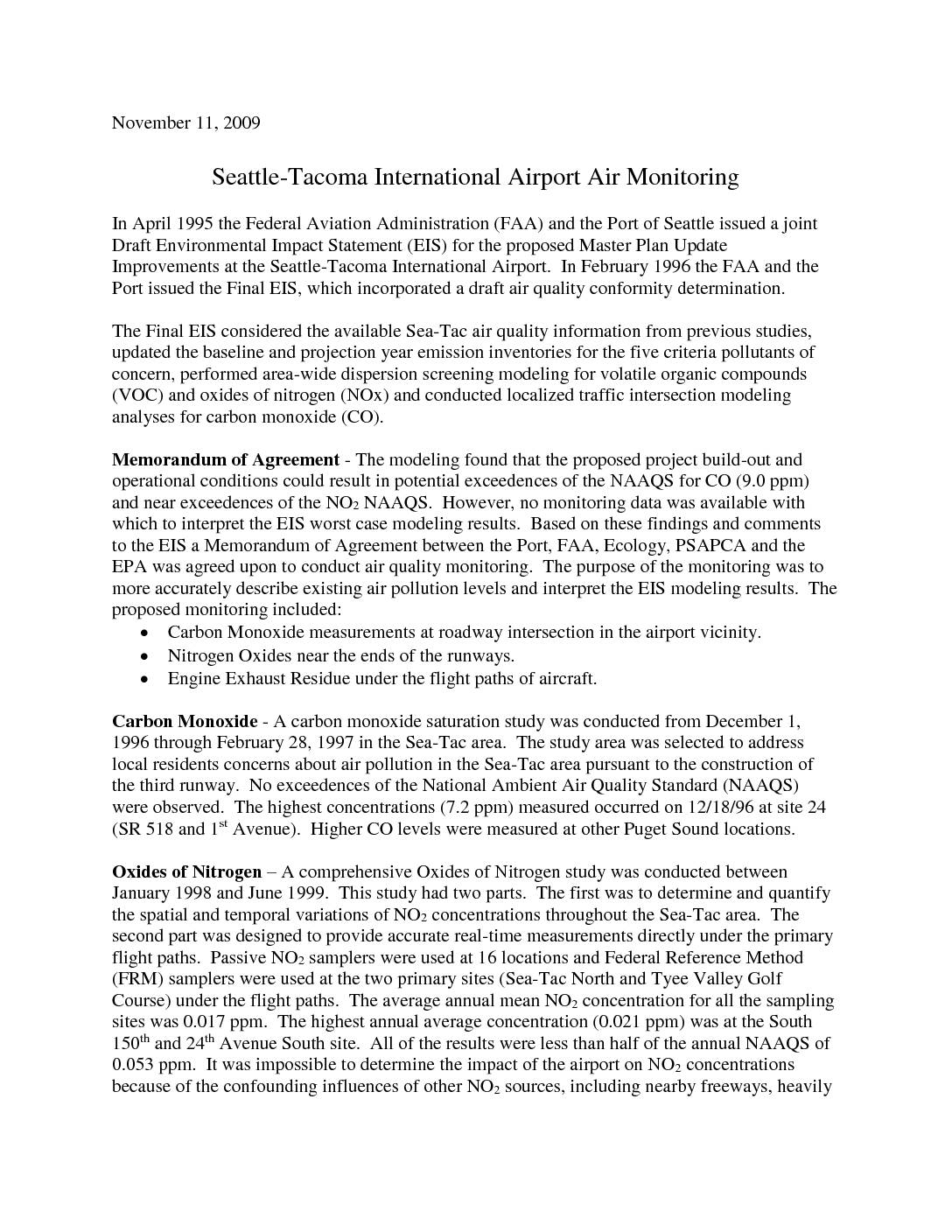
Seattle-Tacoma International Airport air monitoring
This 2009 report summarizes air quality monitoring studies conducted near Seattle-Tacoma International Airport between 1996 and 2002, following concerns raised during the airport's expansion planning. Measurements of carbon monoxide, nitrogen dioxide, particulate matter, and air toxics were taken at multiple sites around the airport, and none of the pollutants exceeded federal air quality standards. While some elevated levels of metals like chromium were detected at the Sea-Tac monitoring site, overall cancer risk from air toxics was lower than the regional average for the Seattle area. -
 2007-04-02
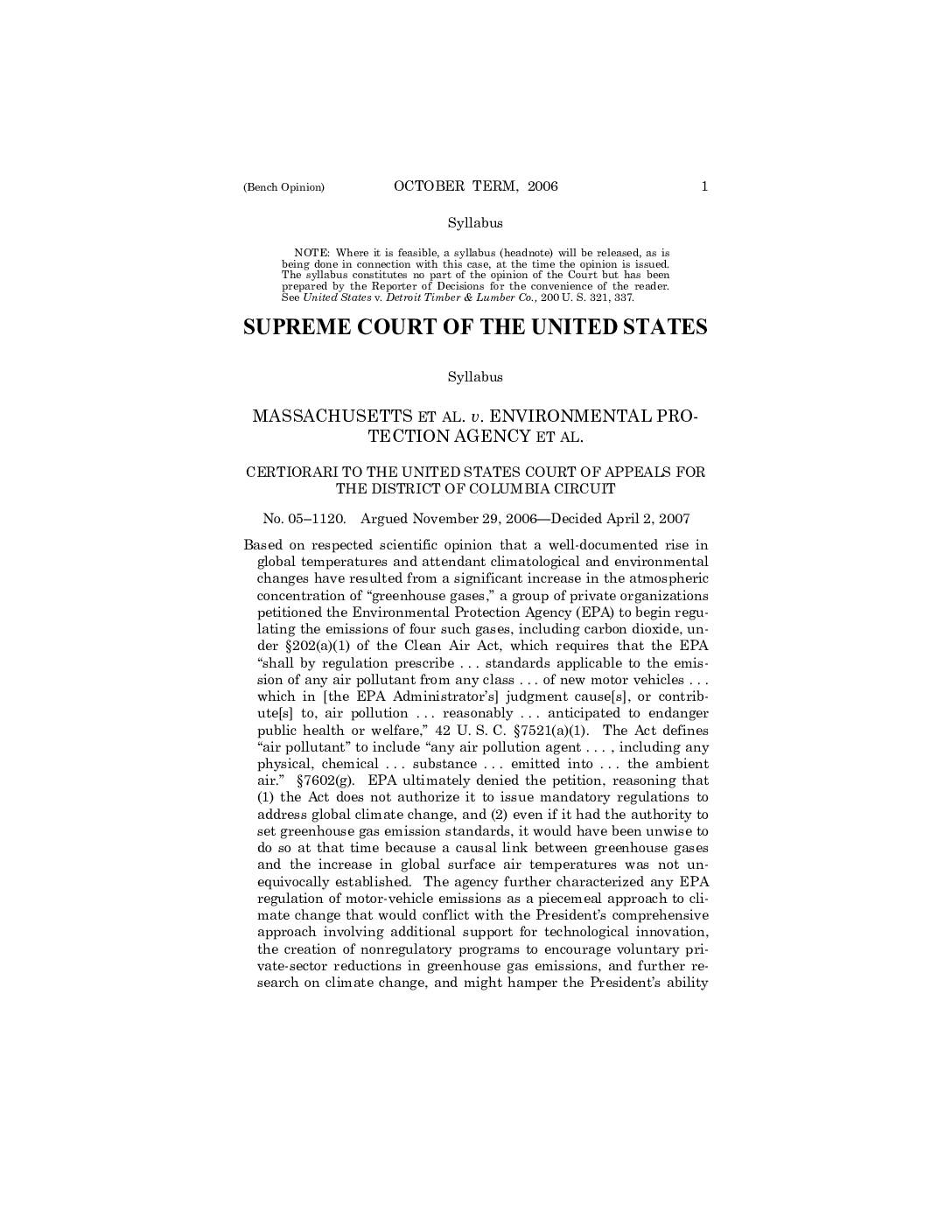
Massachusetts v. Environmental Protection Agency Supreme Court Decision
In this 2007 U.S. Supreme Court case, Massachusetts and other states sued the Environmental Protection Agency (EPA) for refusing to regulate greenhouse gas emissions from motor vehicles under the Clean Air Act. The Court ruled that the EPA had the authority and responsibility to regulate such emissions, and that states like Massachusetts had legal standing to challenge the EPA's inaction due to real harms caused by rising sea levels and climate change. This case established that carbon dioxide and other greenhouse gases can be regulated as air pollutants under federal law. -
 2007-01-01
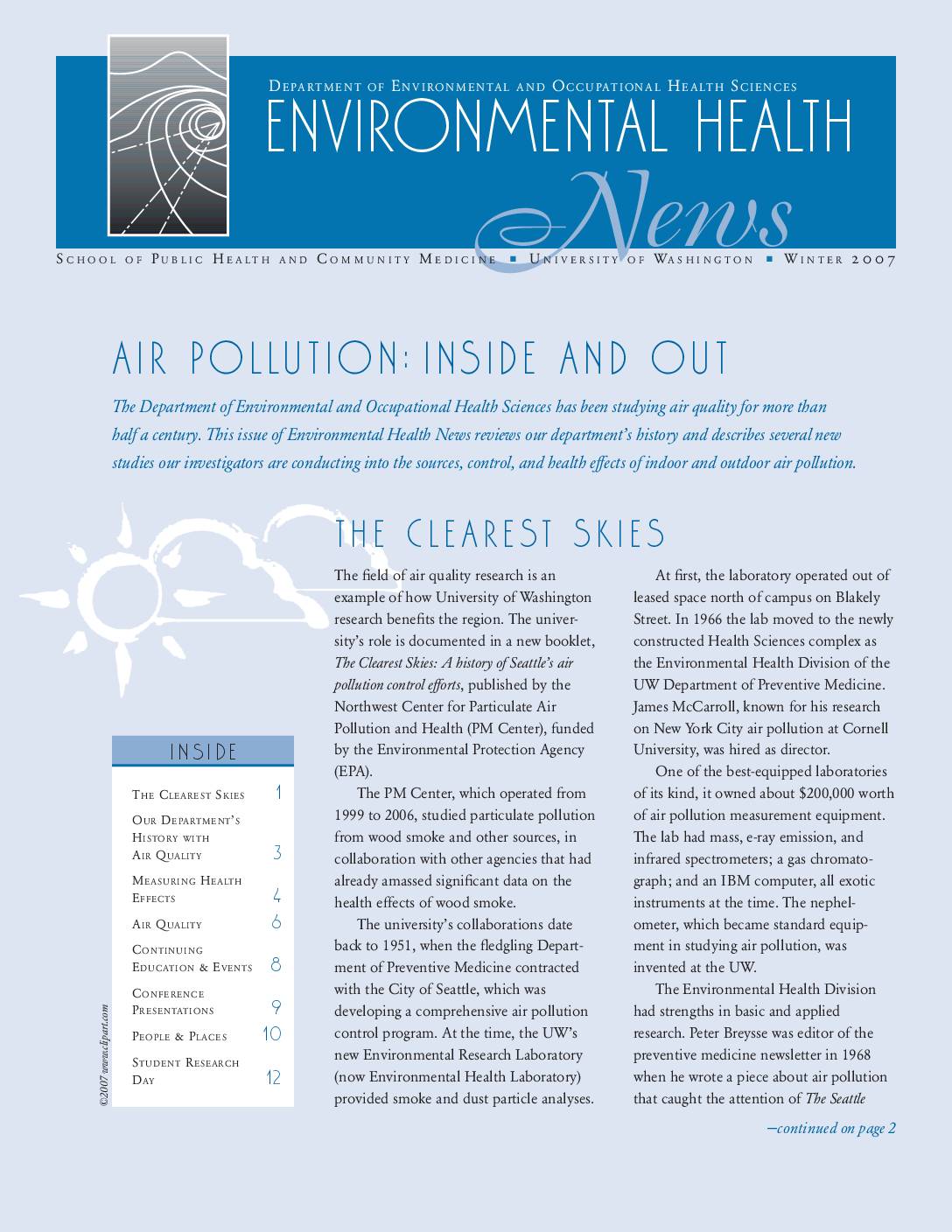
Environmental Health News, Winter 2007: Air Pollution Inside and Out
This University of Washington newsletter documents over 50 years of air quality research by the Department of Environmental and Occupational Health Sciences, tracing collaborations with Seattle and regional agencies dating back to 1951. It highlights key studies on particulate air pollution from sources such as car exhaust and burning vegetation in the Pacific Northwest, and describes the work of the EPA-funded Northwest Center for Particulate Air Pollution and Health (PM Center), which operated from 1999 to 2006. -
 2002-10-23
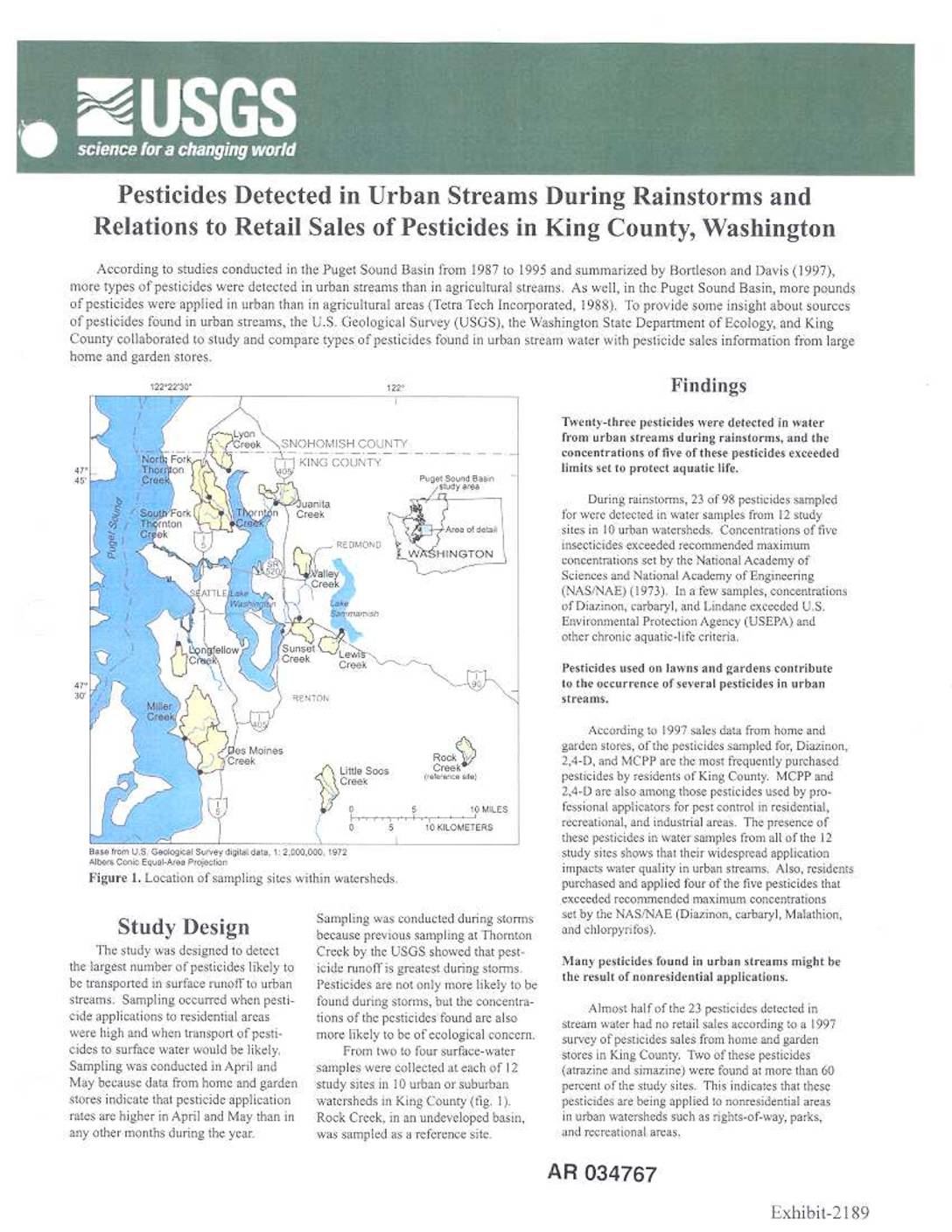
EXH AR034767: Pesticides Detected in Urban Streams During Rainstorms and Relations to Retail Sales of Pesticides in King County, Washington
USGS report (Exhibit AR034767) on pesticides detected in urban stream water during rainstorms in King County, Washington, in collaboration with Washington State Department of Ecology and King County. Twenty-three of 98 pesticides sampled were detected across 12 study sites in 10 urban watersheds; concentrations of five insecticides (carbaryl, chlorpyrifos, Diazinon, gamma-HCH/Lindane, Malathion) exceeded NAS/NAE recommended -
 2002-10-22
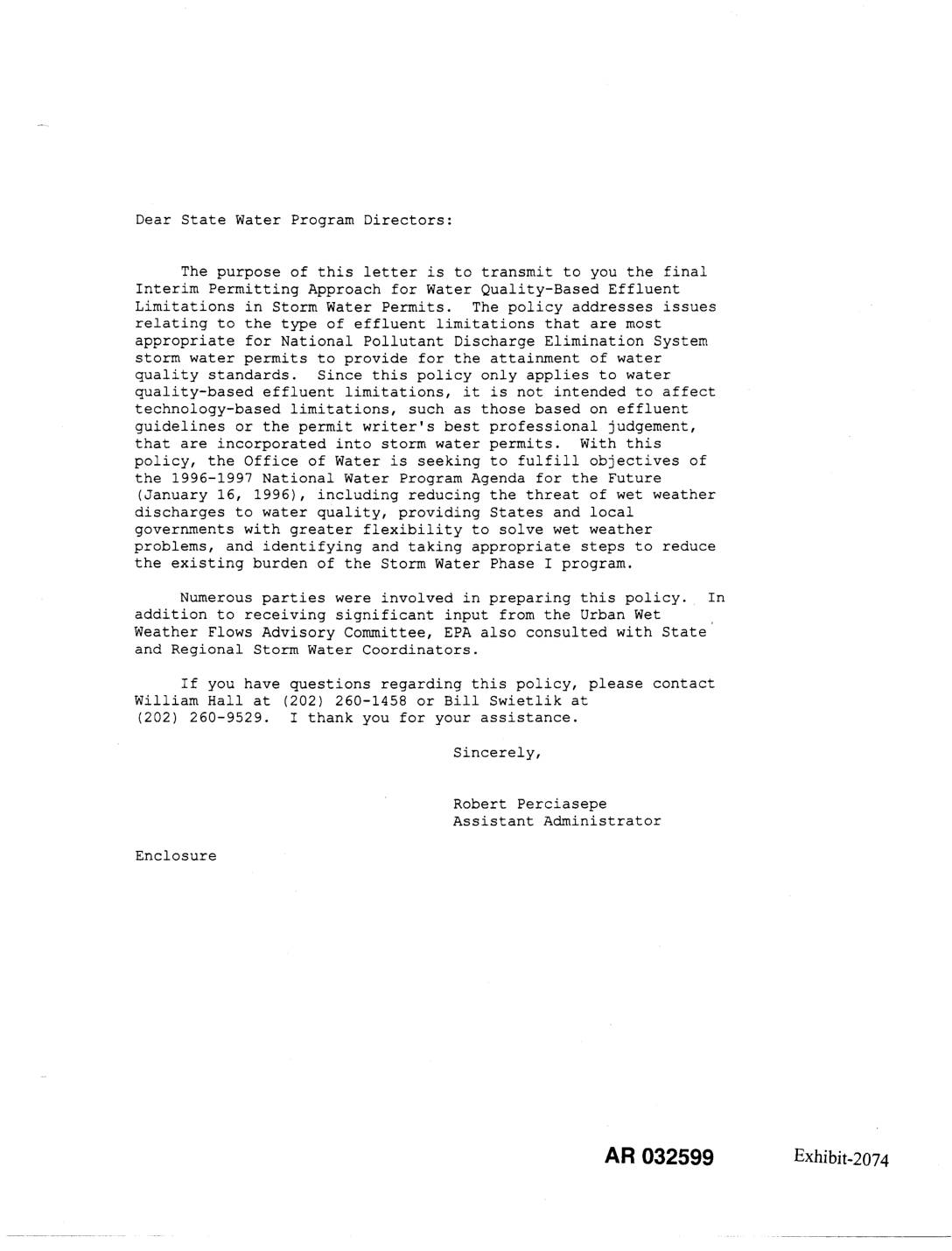
EXH AR032599: Interim Permitting Approach for Water Quality-Based Effluent Limitations in Storm Water Permits
Letter and memorandum from EPA Assistant Administrator Robert Perciasepe transmitting the final Interim Permitting Approach for Water Quality-Based Effluent Limitations in Storm Water Permits to State Water Program Directors and EPA Water Management Division Directors. The policy addresses NPDES storm water permit effluent limitations, adopting best management practices (BMPs) in lieu of numeric water quality-based -
 2002-10-21
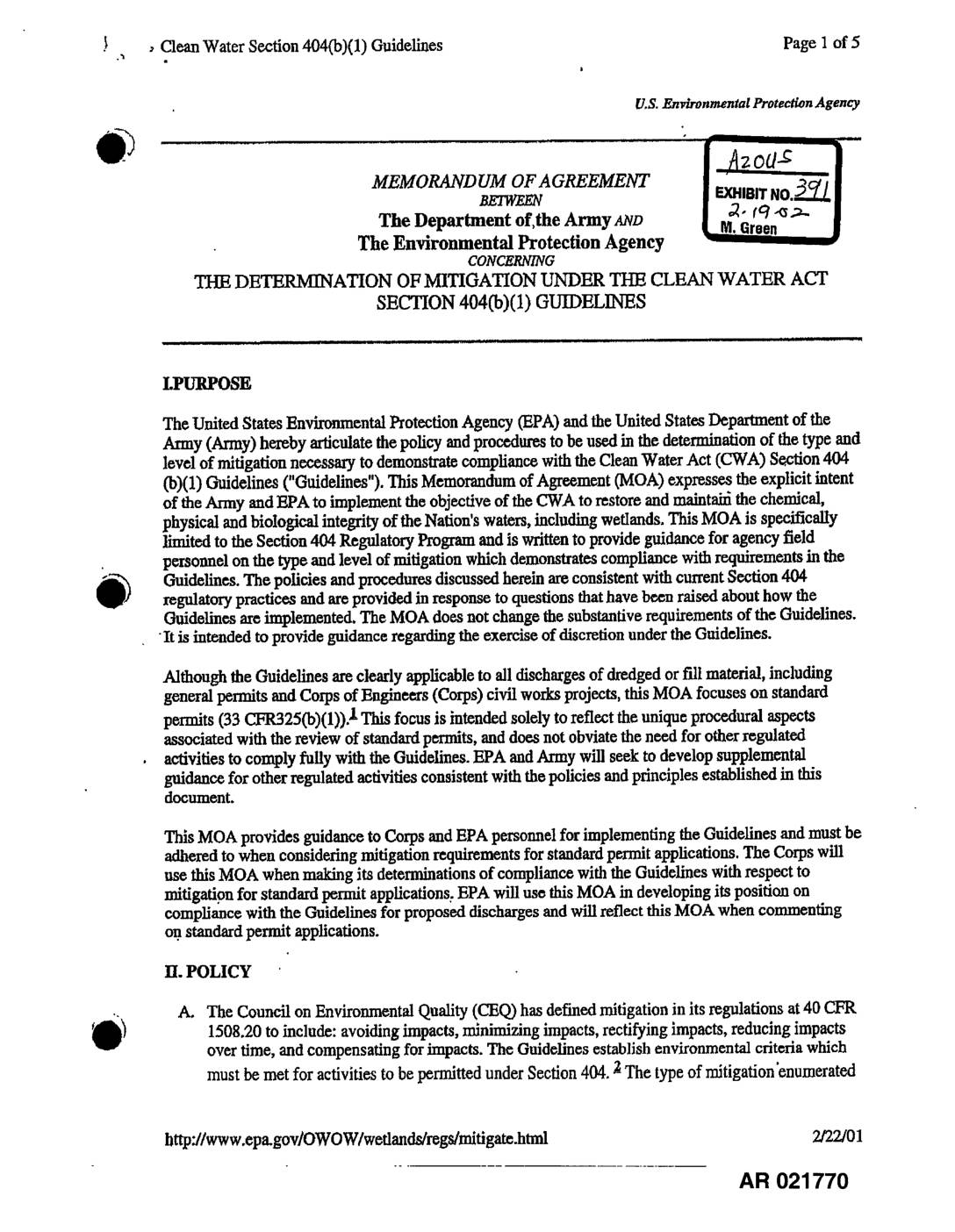
EXH 391: Army-EPA MOA – Mitigation Determination Under CWA Section 404(b)(1)
This 2001 Memorandum of Agreement between the U.S. Army and the EPA outlines the policies and procedures for determining what types of mitigation are required when issuing permits for discharging dredged or fill material into waters under Clean Water Act Section 404. It establishes a three-step mitigation sequence — first avoiding impacts, then minimizing unavoidable impacts, and finally providing compensatory mitigation for any remaining harm — with a goal of no overall net loss of wetlands. The document provides guidance to Army Corps of Engineers and EPA field personnel on how to evaluate standard permit applications in compliance with these environmental protection standards.