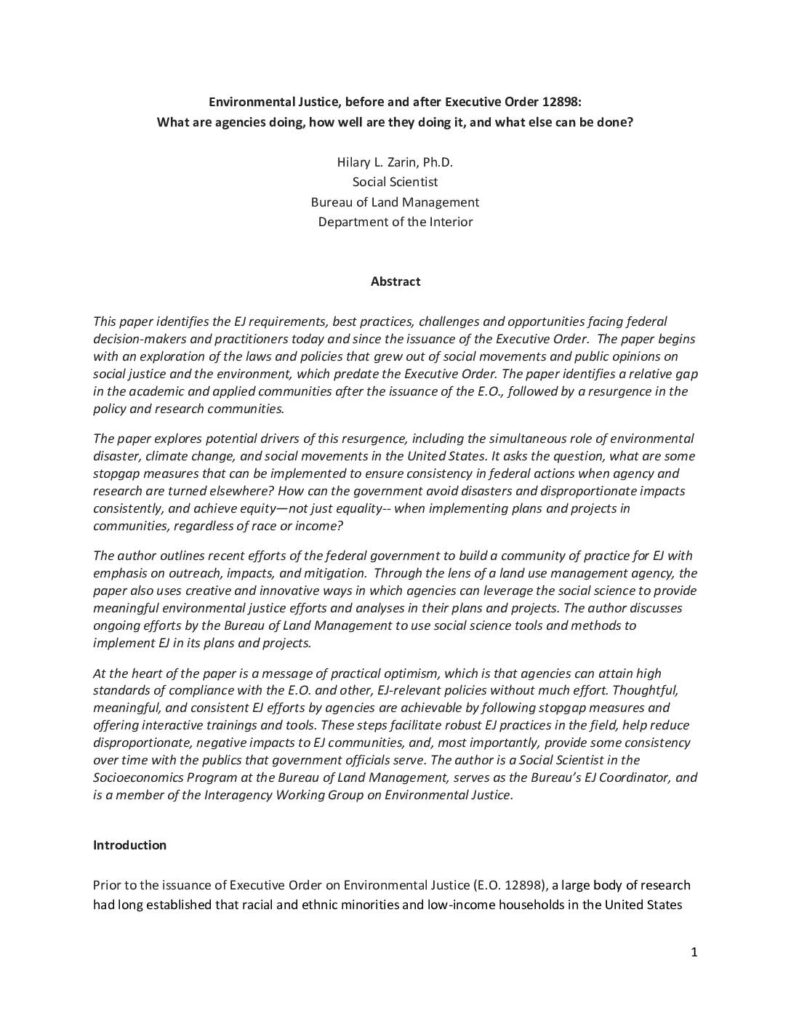
This academic paper examines how U.S. federal agencies have addressed Environmental Justice (EJ) since President Clinton's 1994 Executive Order 12898, which required agencies to reduce disproportionate pollution burdens on low-income and minority communities. The author, a Bureau of Land Management social scientist, reviews agency compliance efforts, highlights case studies like the Flint water crisis, and argues that practical steps such as staff training and social science tools can help agencies consistently protect vulnerable communities regardless of shifting political priorities.Open full document
Notes
This paper examines environmental justice requirements, best practices, and challenges facing federal agencies since Executive Order 12898. It explores the gap in EJ implementation after the order’s issuance, analyzes case studies from Porter Ranch and Flint, and proposes stopgap measures for consistent federal EJ compliance.