TagEPA(100)
-
 2002-10-20
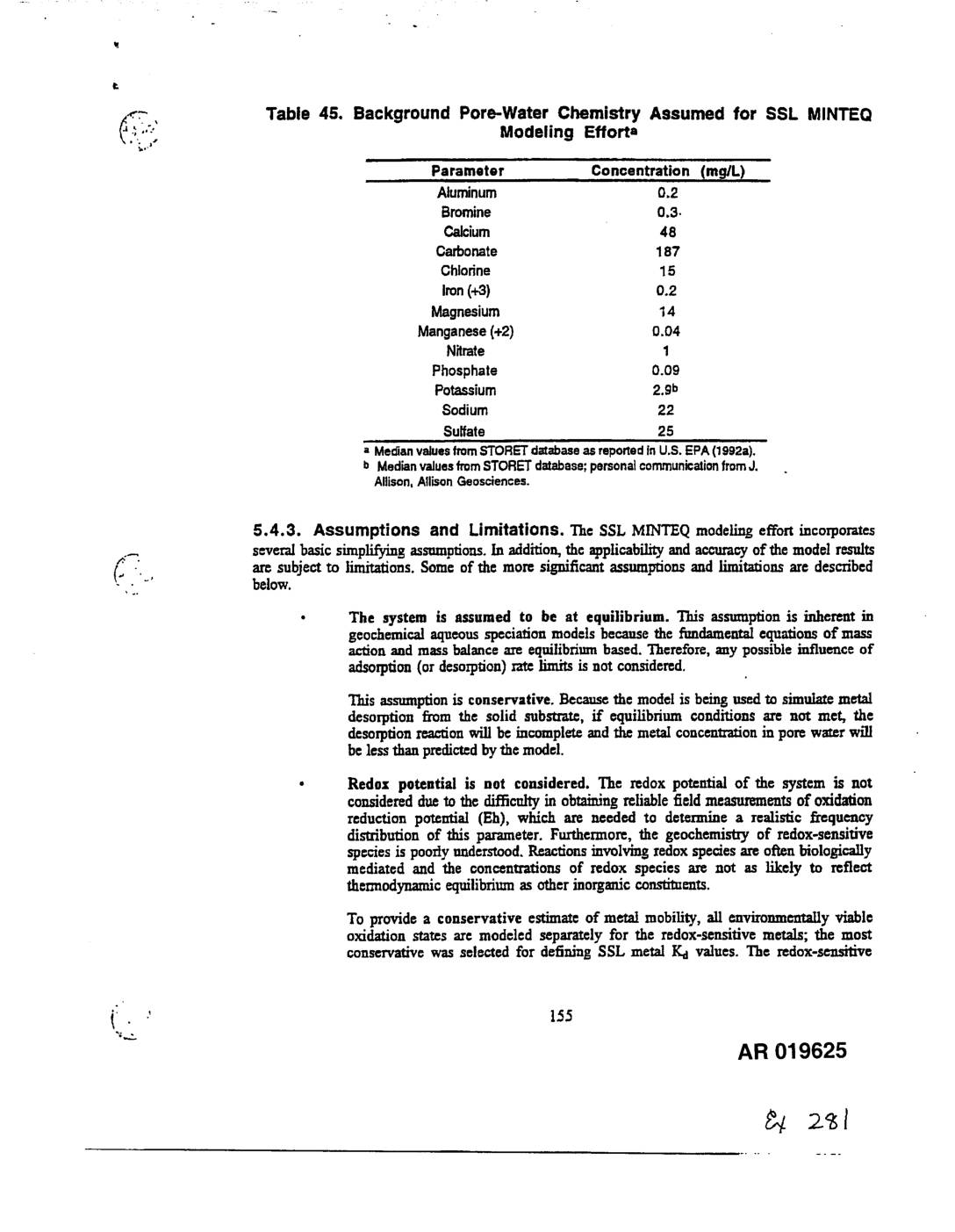
EXH AR019625: SSL MINTEQ Modeling — Background Pore-Water Chemistry, Assumptions, Limitations, Metal Kd Results
This technical document describes the background water chemistry and modeling assumptions used to estimate how metals move through soil and groundwater at contaminated sites. It outlines key simplifications in the MINTEQ geochemical model, including the assumption of chemical equilibrium and the exclusion of redox potential, and presents soil-sorption values (Kd) for various metals such as arsenic, chromium, and cadmium that vary with soil pH. The results show that metal mobility is most strongly influenced by pH levels in the subsurface environment. -
 2002-08-30
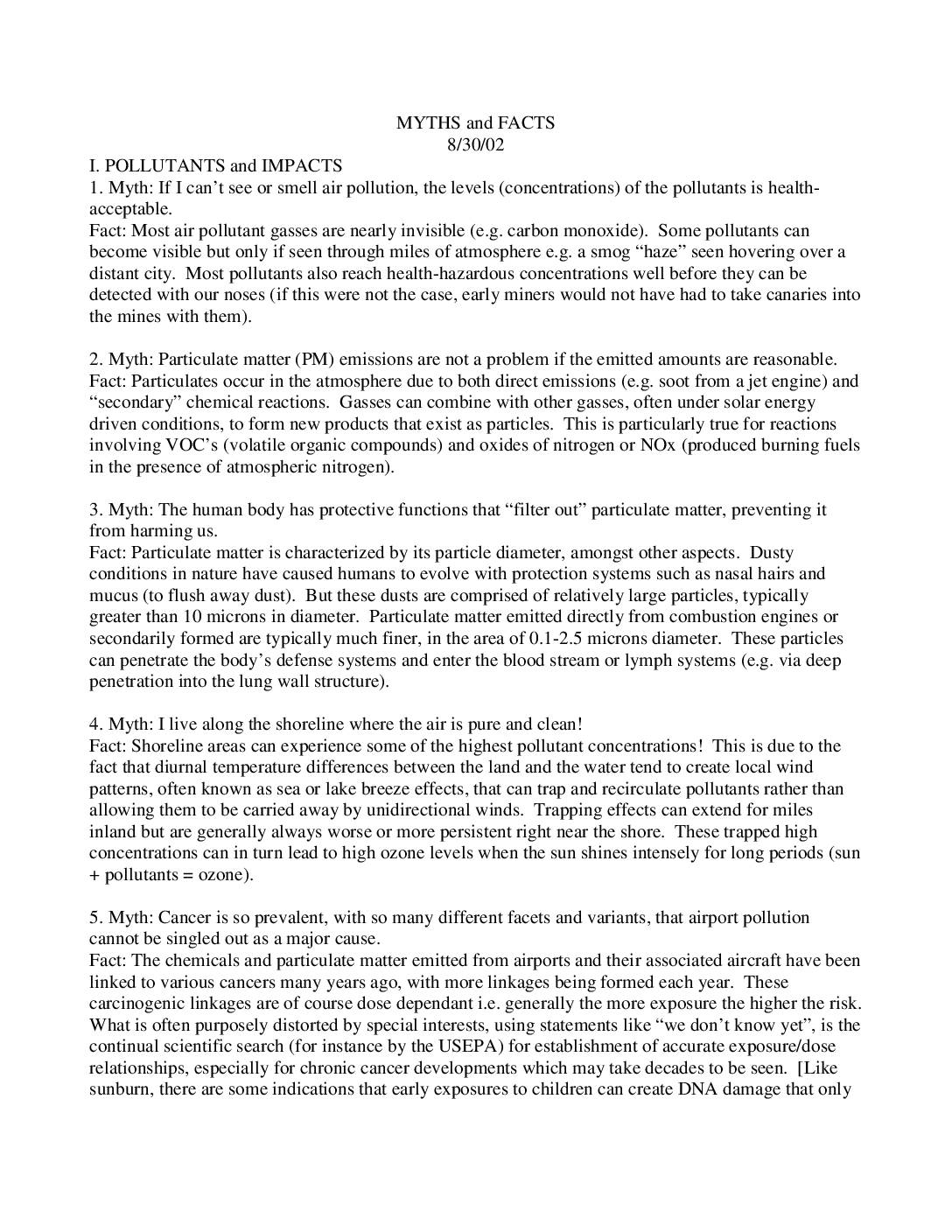
Myths and Facts: Airport Pollutants, Aircraft Emissions, and Pollution Simulators
This document debunks common myths about airport air pollution, noise, and emissions regulation, explaining that invisible pollutants can still reach dangerous levels, that fine particles from jet engines bypass the body's natural defenses, and that shoreline communities like those near Sea-Tac may face higher pollution concentrations due to wind patterns. It also reveals that neither the EPA nor FAA effectively regulates aircraft emissions or noise in ways that truly protect nearby residents, as regulatory authority rests with bodies like ICAO that are dominated by airline and airport interests. Additionally, the document highlights that official pollution modeling tools may significantly underestimate actual pollution levels, and that so-called 'noise abatement' programs often fail to reduce noise at all. -
 2002-02-14
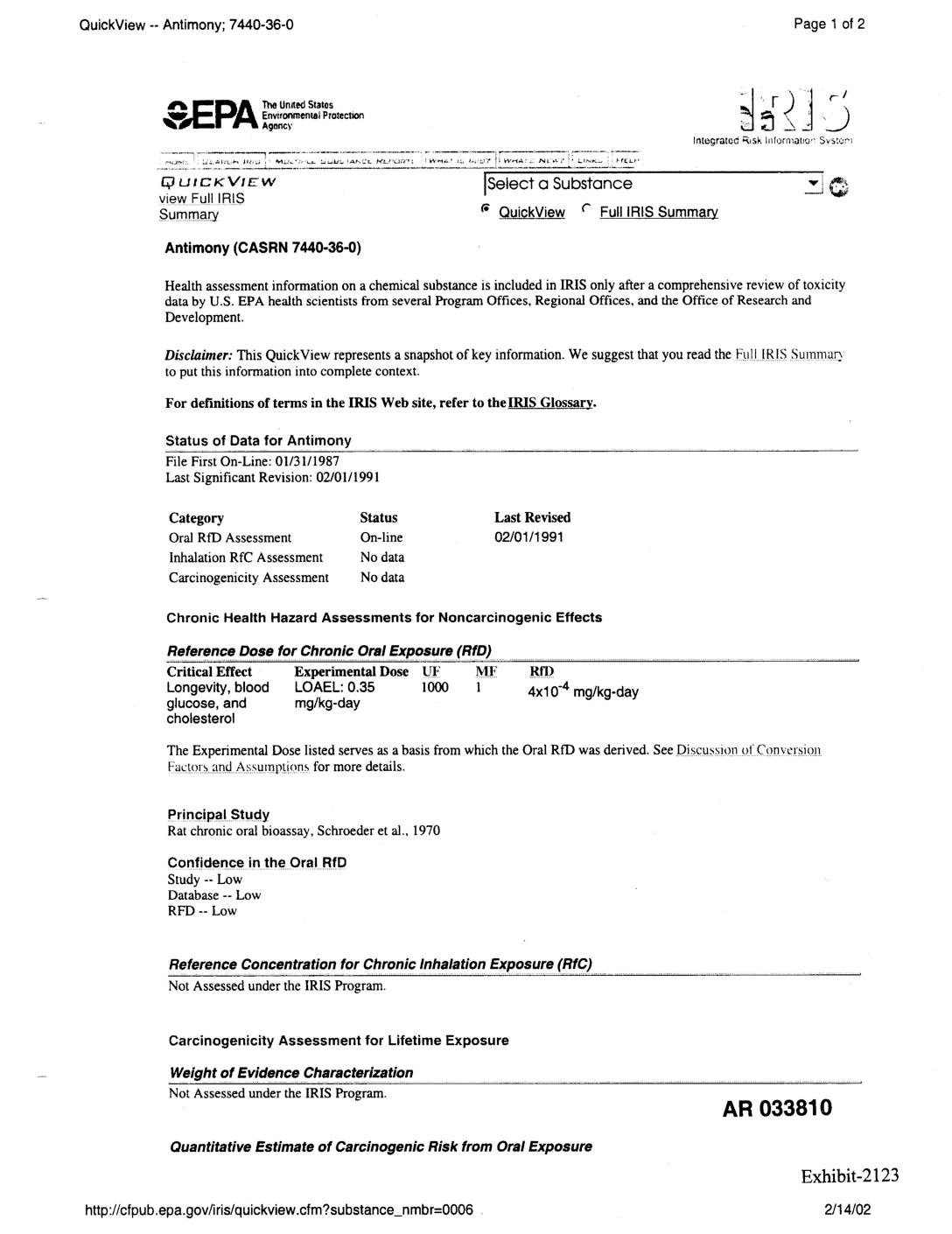
Exhibit 2123: EPA IRIS QuickView — Antimony (CASRN 7440-36-0) and Arsenic, Inorganic (CASRN 7440-38-2)
EPA Integrated Risk Information System (IRIS) QuickView pages for Antimony (CASRN 7440-36-0) and Arsenic, inorganic (CASRN 7440-38-2), accessed February 14, 2002. Antimony oral RfD is 4×10⁻⁴ mg/kg-day based on LOAEL of 0.35 mg/kg-day from Schroeder et al. 1970 rat chronic oral bioassay; confidence rated Low. Arsenic oral RfD is 3×10⁻⁴ mg/kg-day based on NOAEL of -
 2001-06-08
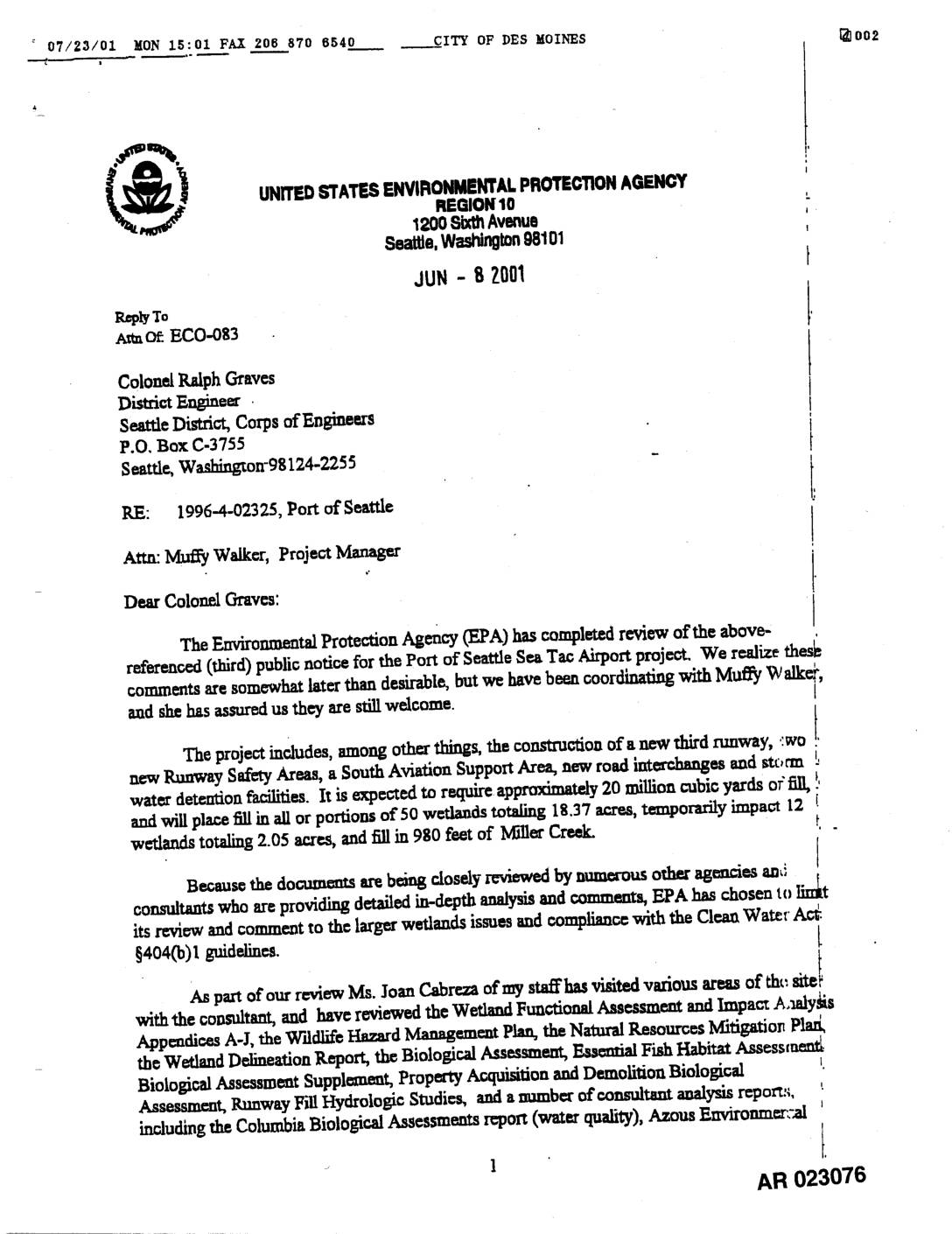
EXH AR023076: EPA Region 10 Letter to Army Corps re STIA Third Runway Wetlands Issues
In June 2001, the EPA's Region 10 office submitted formal comments to the U.S. Army Corps of Engineers regarding the Port of Seattle's Sea-Tac Airport Third Runway project, which proposed filling over 18 acres of wetlands and 980 feet of Miller Creek. The EPA raised concerns about unresolved hydrological impacts, including the effects of a proposed retaining wall on nearby wetlands and groundwater flows, the adequacy of buffers around borrow pits, and the Port's undisclosed plans for vacant land parcels in the project area. The agency urged the Corps to carefully review these wetland and Clean Water Act compliance issues before issuing a construction permit. -
 2000-09-01
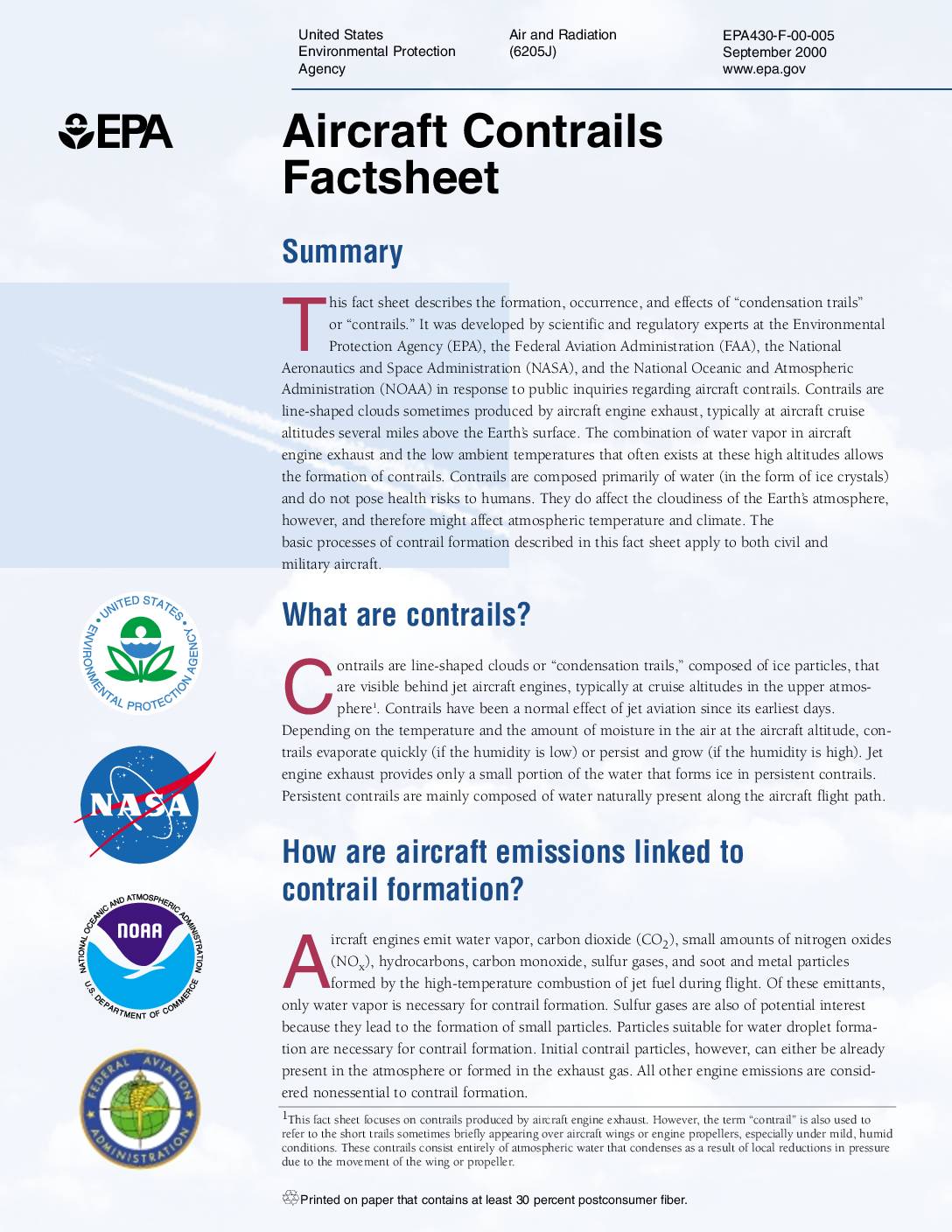
Aircraft contrails factsheet
This EPA fact sheet explains that aircraft contrails are line-shaped clouds made of ice crystals formed when water vapor in jet engine exhaust mixes with cold air at high altitudes. Contrails are composed primarily of water and do not pose direct health risks, but persistent contrails can spread into cirrus cloud cover and may influence the Earth's climate by affecting atmospheric cloudiness. Scientists estimate that persistent contrails cover about 0.1 percent of the Earth's surface on average, with the highest concentrations occurring over heavily trafficked air corridors like Europe and the United States. -
 2000-08-01
Indoor air quality and student performance
This EPA document explains how poor indoor air quality (IAQ) in schools can harm students' health and academic performance, causing absences due to respiratory illnesses and reducing the ability to concentrate, calculate, and remember. Studies show that high pollution levels, inadequate ventilation, and improper temperature and humidity control contribute to these problems. The EPA recommends schools use the IAQ Tools for Schools Kit to identify and address indoor air quality issues at little or no cost. -
 2000-04-01
EXH AR044580: Critical Review of the Use of Bioconcentration Factors for Hazard Classification of Metals and Metal Compounds
Report prepared by Kevin V. Brix and David K. DeForest of Parametrix, Inc. for the International Lead Zinc Research Organization, International Copper Association, and Nickel Producers Environmental Research Association (NiPERA), April 2000. Reviews bioconcentration factors (BCFs) for metals including cadmium, copper, lead, nickel, silver, and zinc in aquatic organisms (fish, bivalves, invertebrates, algae, diatoms). Covers -
 2000-03-01
Addressing community health concerns around SeaTac Airport: Response to the question, ‘Is it possible to monitor jet engine exhaust emissions or to model their path using data on prevailing winds and takeoff patterns?’
This March 2000 report, prepared by Washington State health and environmental agencies, examines whether jet engine exhaust emissions from Seattle-Tacoma International Airport can be monitored or modeled using wind and takeoff data. It reviews previous air quality studies, outlines health and environmental justice concerns for nearby communities, and recommends a structured air quality monitoring study with specific methods, data analysis approaches, and estimated costs. The report was developed in consultation with community representatives, the EPA, and local universities. -
 2000-01-01
EXH AR043247: Preliminary Data Summary — Airport Deicing Operations
EPA report (EPA 821-R-00-001, January 2000) presenting a preliminary data summary of airport deicing operations. Covers aircraft and pavement deicing/anti-icing fluids including ethylene glycol-based compounds, fluid types, fluid application methods, variables affecting fluid use, nonchemical deicing methods, and NPDES/Clean Water Act wastewater concerns. Data collected via 1993 screener questionnaire, airport/vendor/POTW mini-questionnaires, EPA site visits, EPA -
 1998-12-17
EXH AR041832: Laboratory Guidance and Whole Effluent Toxicity Test Review Criteria
Washington State Department of Ecology, Water Quality Program publication (WQ-R-95-80, revised December 1998) providing laboratory guidance and Whole Effluent Toxicity (WET) test review criteria. Covers WET testing requirements in NPDES permits, options for permittees, invalid test criteria including EPA statistical flowcharts, negative controls, test termination, acceptable start counts, pH adjustment, randomization, and power standards. Also