TagNoise(262)
-
 1983-02-04
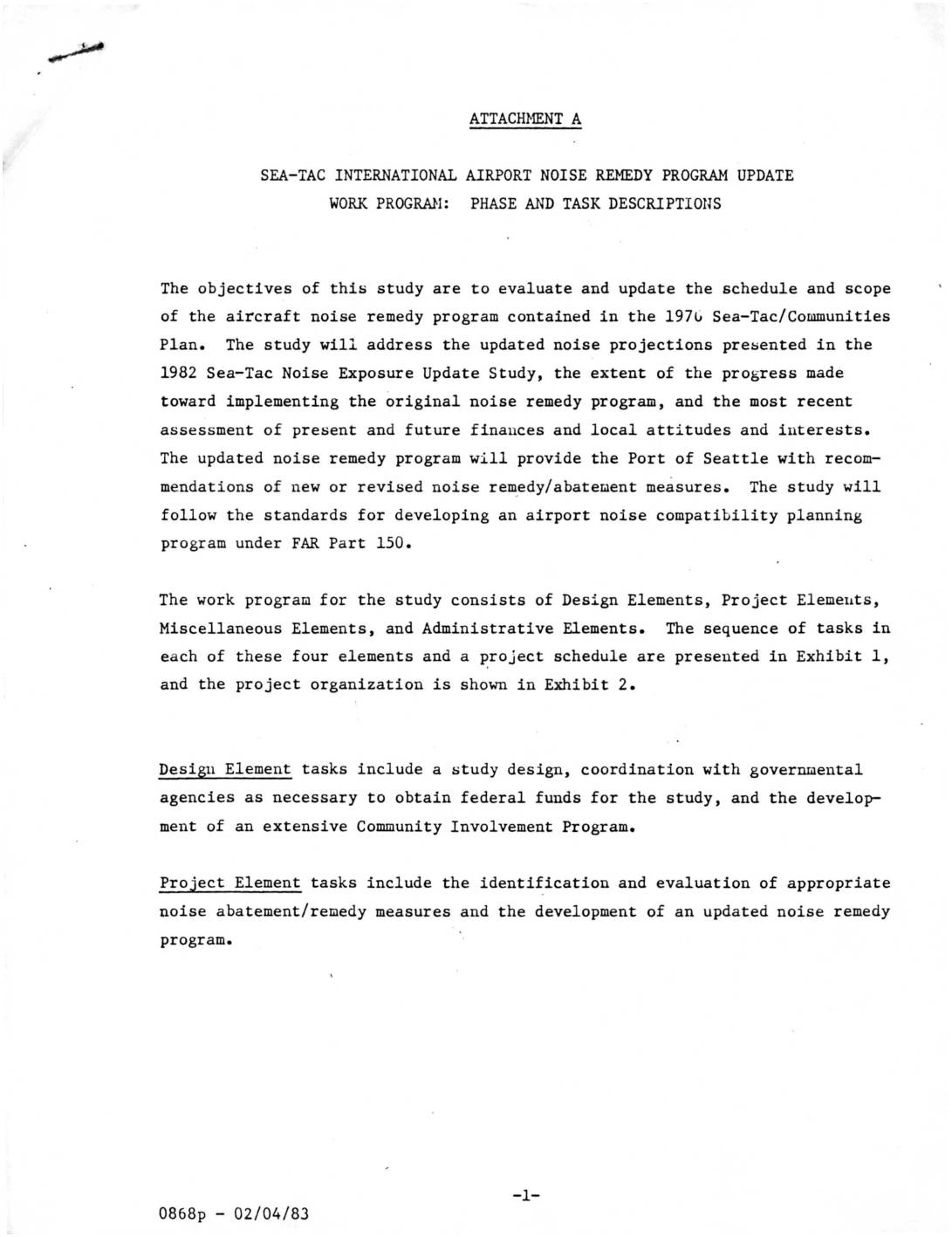
Airport Noise Remedy Update Work Program: Phase and Task Descriptions
This 1983 work program outlines a study to evaluate and update Sea-Tac International Airport's aircraft noise remedy program, originally established in the 1970 Sea-Tac/Communities Plan. The study, conducted by the Port of Seattle alongside Peat Marwick Mitchell & Co. and McClure Research Company, addresses updated noise projections, progress on existing remedies, and current financial conditions. Key tasks include study design, federal funding coordination, and a Community Involvement Program to keep the public informed and engaged in noise abatement planning. -
 1983-02-01
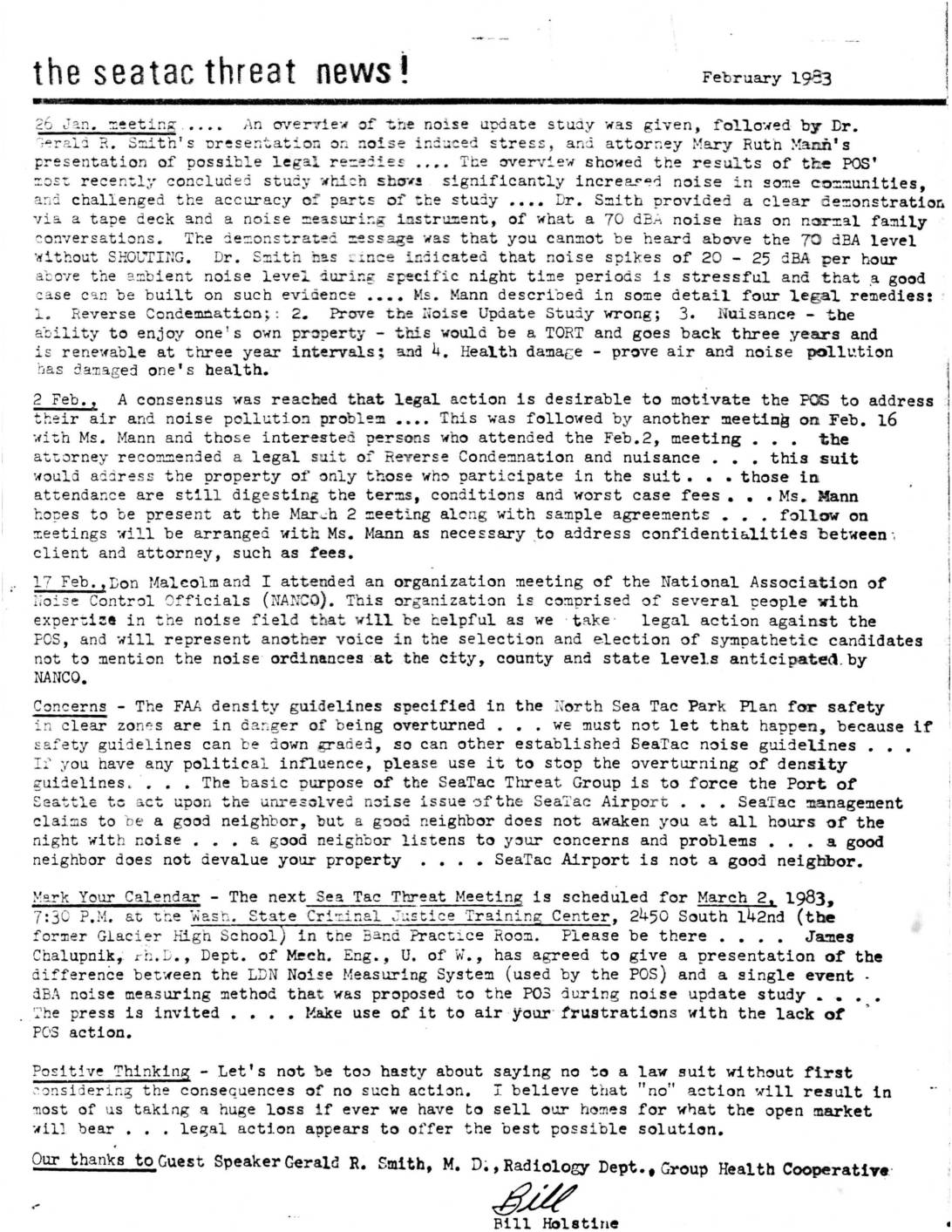
The Sea-Tac Threat News: February 1983
A February 1983 newsletter from the SeaTac Threat Group details community efforts to fight noise and air pollution from Seattle-Tacoma International Airport, including presentations on noise health impacts and four potential legal remedies such as reverse condemnation and nuisance suits. The group reached a consensus that legal action was the best way to pressure the Port of Seattle (POS) to address the airport's noise pollution, and members were encouraged to attend upcoming meetings with attorney Mary Ruth Mann to discuss terms and fees. The newsletter also highlights concerns about FAA safety density guidelines being overturned and urges residents with political influence to take action. -
 1982-06-01
Sea-Tac International Airport noise exposure update
★ 32This June 1982 report, produced by the Port of Seattle, provides an update on noise exposure levels at Seattle-Tacoma (Sea-Tac) International Airport. It documents the extent of aircraft noise affecting surrounding communities, serving as an official record to inform airport noise management and land-use planning policies. The report was part of ongoing efforts by the Port of Seattle to monitor and address the impact of airport operations on nearby residents. -
Student Scores Rise After Nearby Subway Is Quieted
By Ari L. Goldman April 26, 1982 Fifteen times during each school day, an IRT subway train would rumble and screech past Public School 98, near the northern tip of Manhattan. In classrooms facing the elevated tracks, all work would stop until the train barreled by. After years of complaints about the disruption, the Transit Authority -
 1980-06-01
Guidelines for considering noise in land use planning and control
Published in June 1980 by the Federal Interagency Committee on Urban Noise, this document provides guidelines for incorporating noise considerations into land use planning and control decisions. It was produced jointly by the U.S. Department of Transportation, Department of Defense, Environmental Protection Agency, and Department of Housing and Urban Development. The guidelines are intended to help planners and policymakers manage the impact of noise—such as that generated by airports like Sea-Tac—on surrounding communities through zoning and land use strategies. -
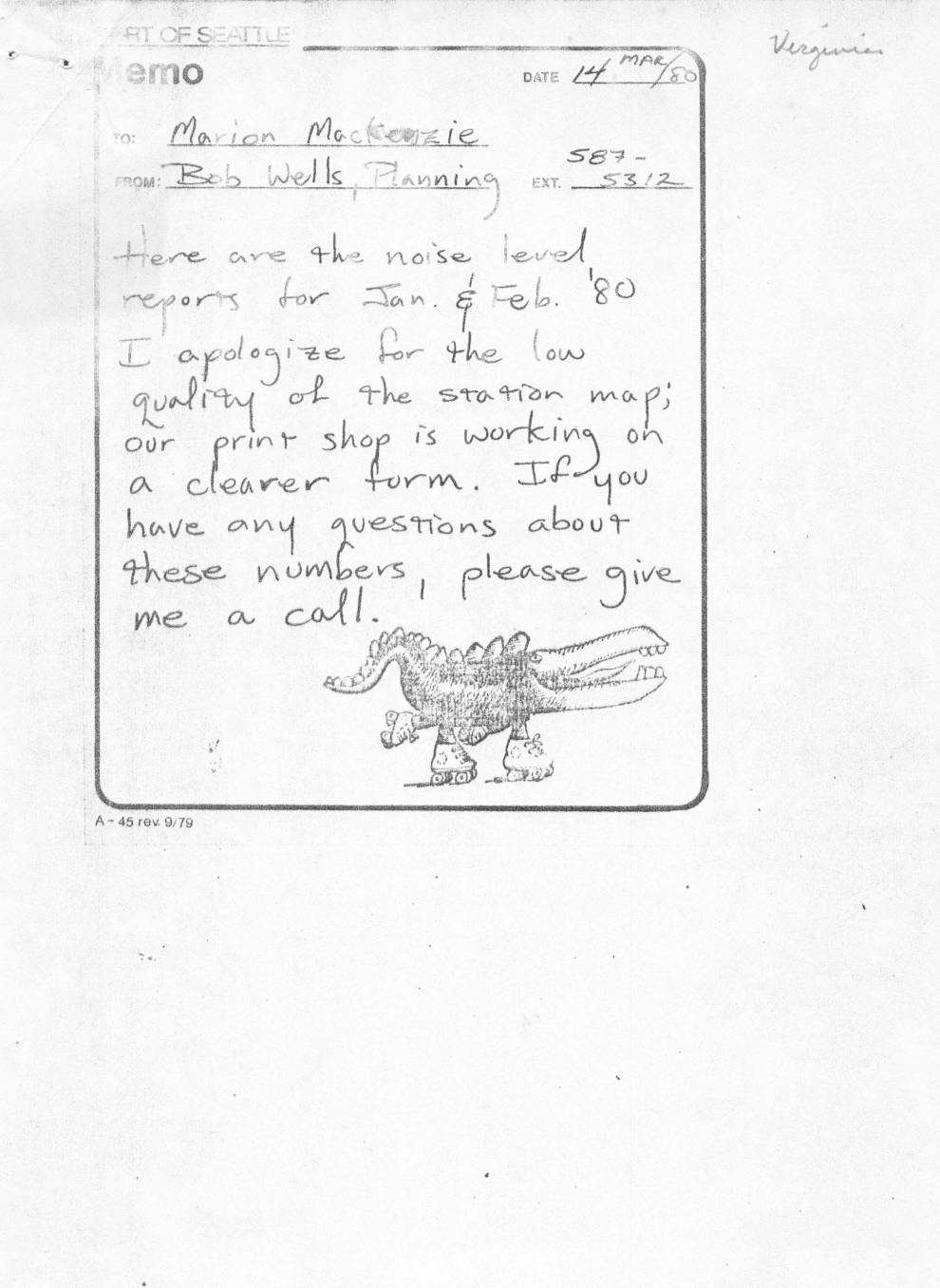 1980-03-14
Sea-Tac Airport Noise Monitoring System Report: January–February 1980
A March 1980 internal memo from Bob Wells of the Planning department transmits Noise Monitoring System reports for January and February 1980 to Marion MacKenzie, noting that the station map quality is poor while a clearer version is being prepared. The accompanying report for Sea-Tac International Airport shows monthly and long-term average Day-Night Sound Level (LDN) readings across nine remote monitoring stations, with January 1980 values ranging from 73 to 84 dBA. Operational notes indicate that 58% of January air traffic flew north to south, heavy snowfall forced a brief airport closure on the 8th–9th, and two minor clock failures in the monitoring system were corrected without any loss of noise data. -
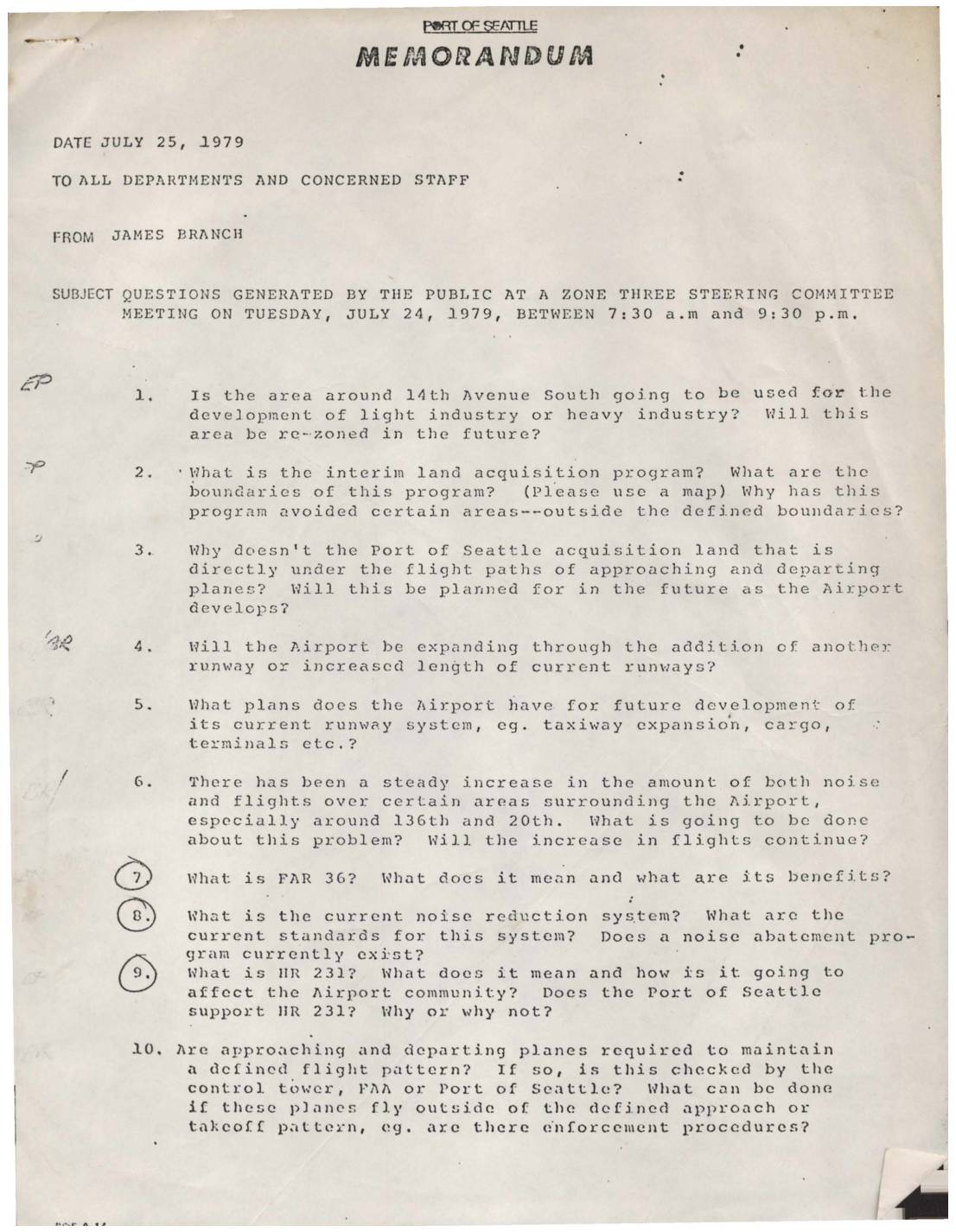 1979-07-25
Port Of Seattle Memorandum: Questions from Zone Three Steering Committee Meeting, July 24, 1979
A July 25, 1979 Port of Seattle internal memorandum from James Branch to all departments and staff compiles 23 questions raised by the public at a Zone Three Steering Committee meeting held on July 24, 1979. The questions cover a wide range of community concerns related to Seattle-Tacoma International Airport, including aircraft noise levels, flight path enforcement, land acquisition programs, runway expansion plans, clear zone definitions, and jet engine emissions affecting nearby neighborhoods. The memo also addresses topics such as FAR 36 noise standards, the Sunset Recreation Plan, the ADAP program, and how residents of the Highline and Zone 3 communities can better cooperate with the Port of Seattle to resolve ongoing airport-related issues. -
 1979-03-01
Quiet Communities: Minimizing the Effects of Noise through Land Use Controls
Published in March 1979 by the National Association of Counties Research, Inc., this guide examines how local governments can use land use controls—such as zoning and planning regulations—to reduce the impact of noise on residential communities. It covers noise sources including highway and transportation corridors, offering practical strategies for buffering noise-sensitive land uses from high-noise areas. The document is a foundational reference for planners and policymakers working to protect communities from airport, highway, and industrial noise. -
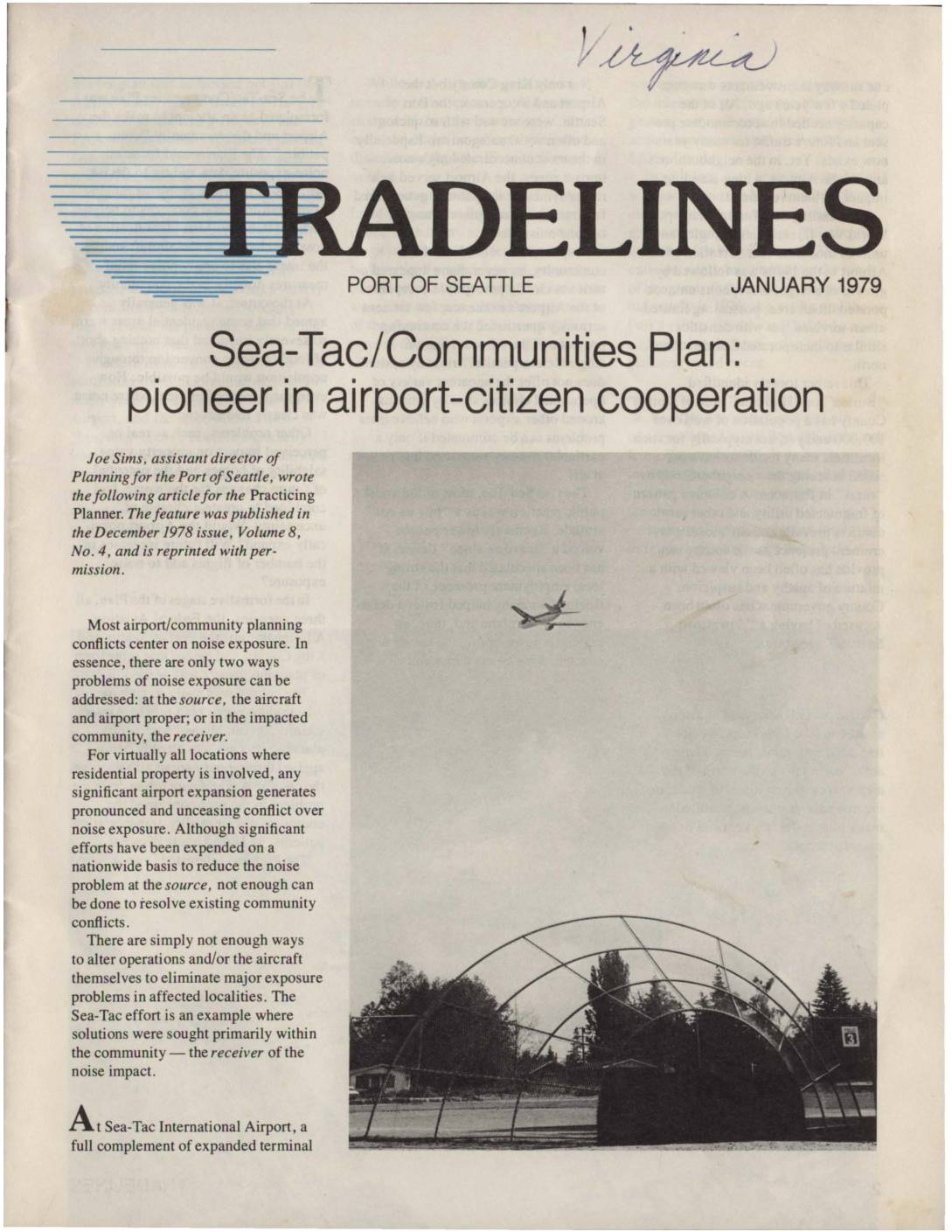 1979-01-01
Sea-Tac/Communities Plan: Pioneer in Airport-Citizen Cooperation
This 1979 article from the Port of Seattle's Tradelines newsletter describes the Sea-Tac/Communities Plan, a pioneering cooperative effort between the Port of Seattle, King County, and the FAA to address aircraft noise impacts on neighborhoods surrounding Sea-Tac International Airport. Rather than focusing solely on reducing noise at its source, the plan targeted the affected communities directly through measures such as home acquisitions in severely impacted areas, 'purchase guarantees' for moderately impacted zones, and residential insulation cost-sharing programs. Adopted in 1976, the plan is presented as an innovative model for airport-community compatibility planning, though the article acknowledges it represents only a partial solution to the broader challenges airports and their neighboring communities face. -
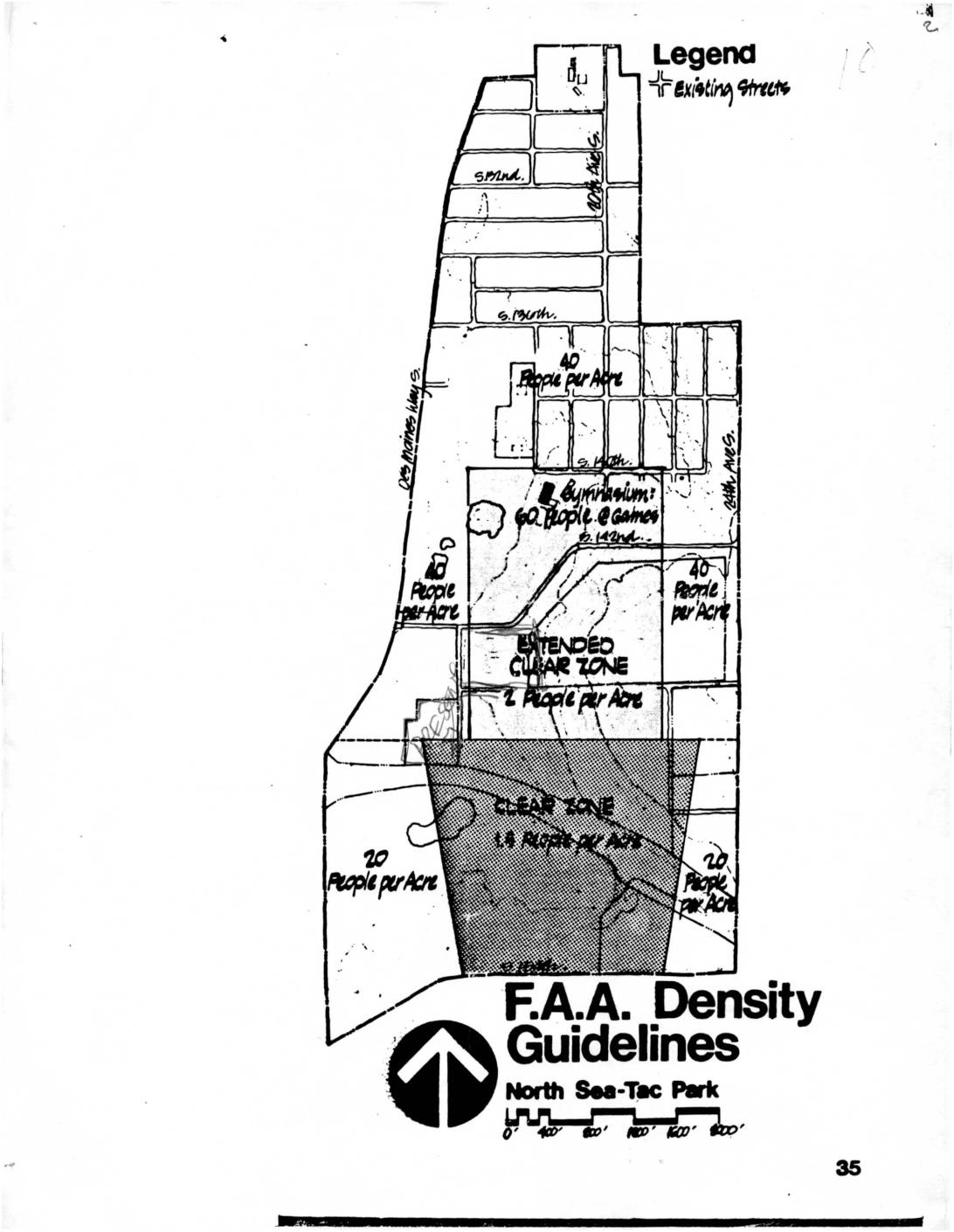 1978-08-28
FAA Noise Density Guidelines North Sea-Tac Park
This document presents F.A.A. Density Guidelines for North Sea-Tac Park, a neighborhood near Seattle-Tacoma International Airport. It maps out population density limits across different zones, ranging from 1.5 people per acre in the Clear Zone closest to the airport, to 2 people per acre in the Extended Clear Zone, up to 20-40 people per acre in areas farther from the runway. The guidelines reflect FAA safety and noise policy restrictions that limit how many residents can live in areas most directly affected by airport flight paths.