TagFAA(687)
-
 2015-11-25
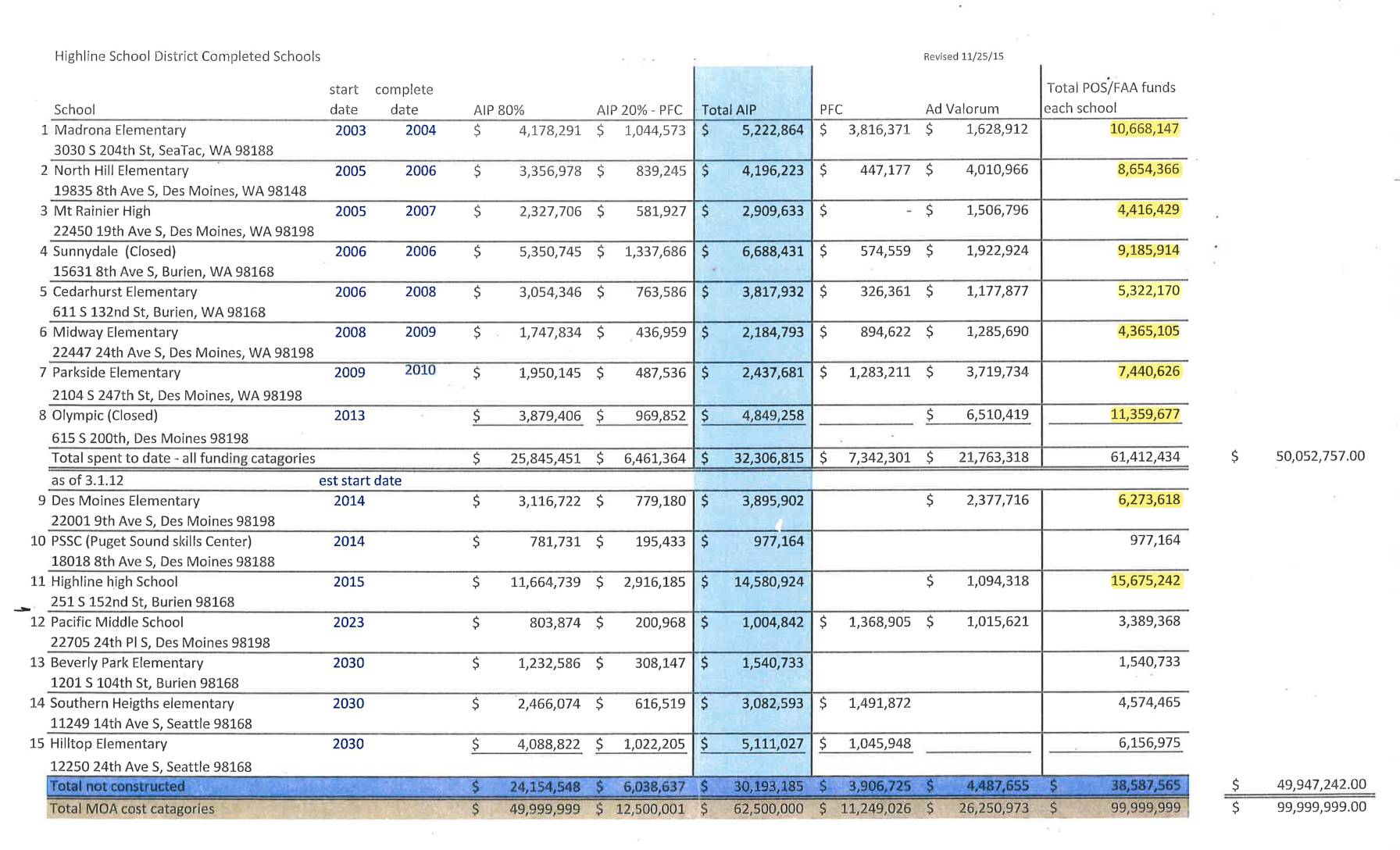
Highline School District Completed Schools: FAA/Port Payment Schedule
This document outlines the Highline School District's completed and planned school construction and renovation projects funded through a combination of Airport Improvement Program (AIP) grants, Passenger Facility Charges (PFC), and Ad Valorem (local tax) funds. The 15 schools listed, located in SeaTac, Des Moines, and Burien — communities surrounding Sea-Tac Airport — received noise mitigation and facility upgrades, with total project costs approaching $100 million. Completed projects through 2013 accounted for approximately $61.4 million in spending, with additional schools scheduled for construction through 2030. -
 2015-08-17
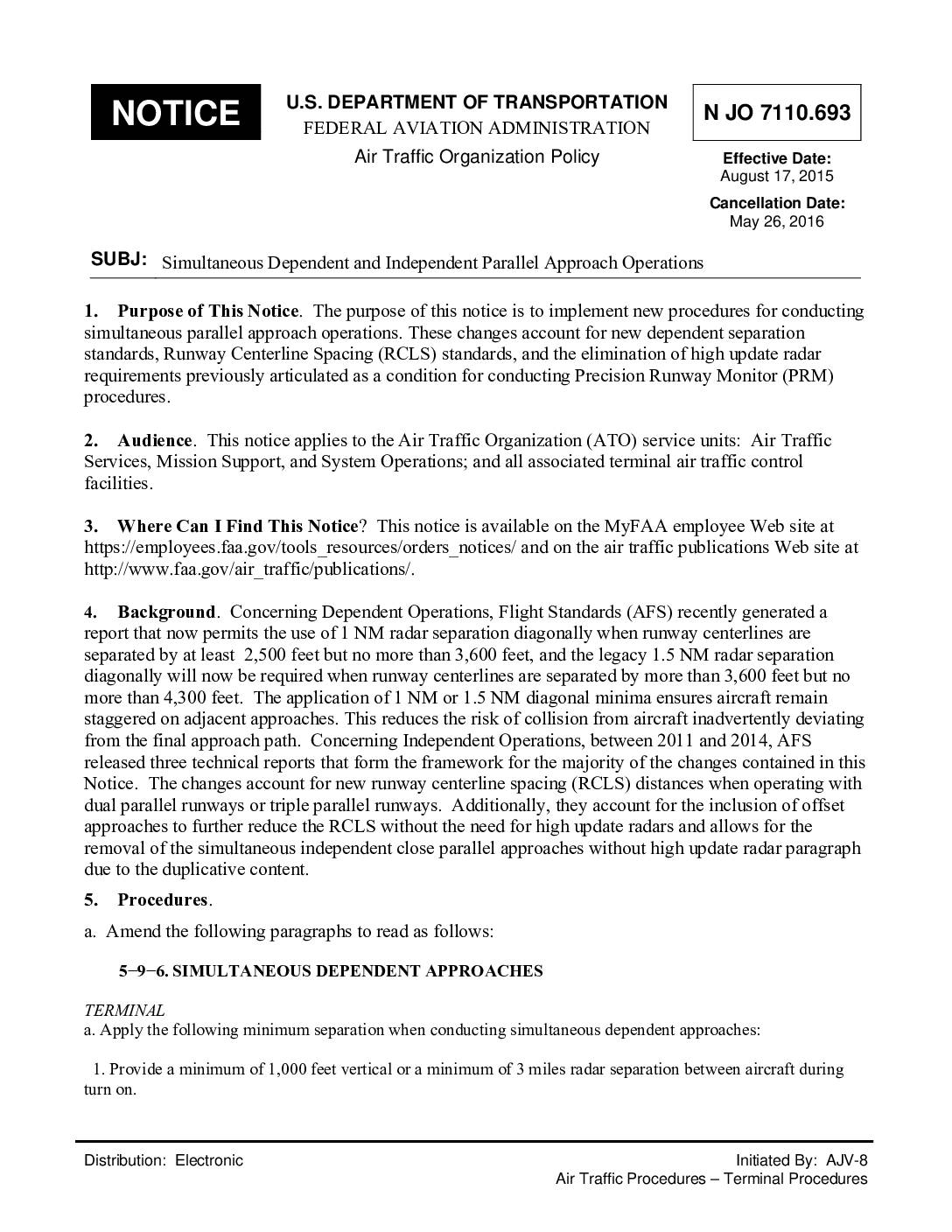
JO7110.693 Simultaneous dependent and independent parallel approach operations
This FAA notice (effective August 2015) updates the rules for how air traffic controllers manage aircraft making simultaneous approaches to parallel runways. It introduces new diagonal radar separation distances between aircraft based on how far apart the runway centerlines are, ranging from 1 mile of separation for runways 2,500–3,600 feet apart to 2 miles for runways 4,301–9,000 feet apart. While focused on controller procedures rather than noise policy directly, these standards govern how closely aircraft can be spaced during parallel runway approaches, which is relevant to arrival patterns affecting communities near airports like Sea-Tac. -
 2015-07-16
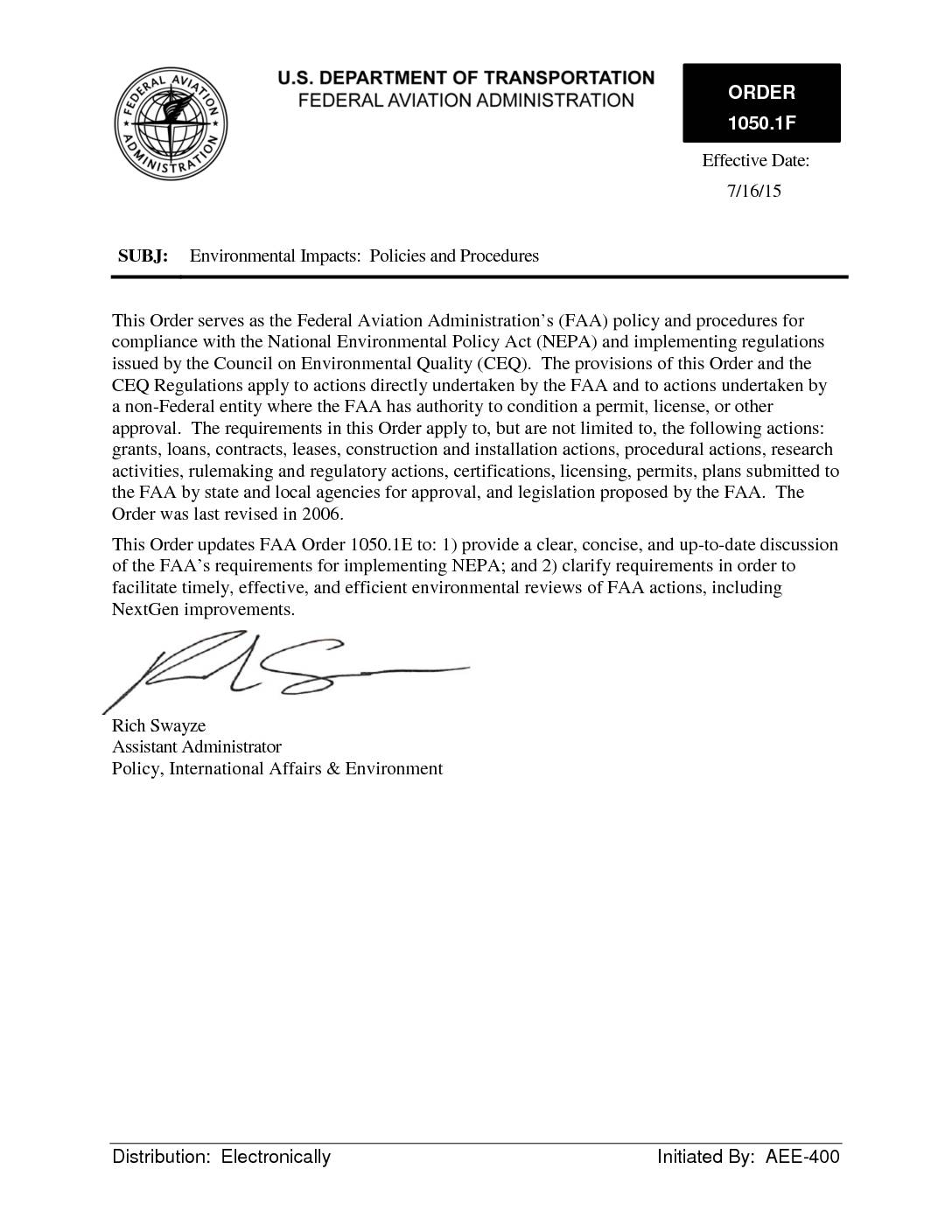
Environmental impacts: Policies and procedures (Order 1050.1F)
FAA Order 1050.1F, effective July 16, 2015, establishes the Federal Aviation Administration's policies and procedures for complying with the National Environmental Policy Act (NEPA), covering actions such as grants, construction, rulemaking, and NextGen airspace improvements. The order outlines when environmental reviews, assessments, or full impact statements are required, and defines responsibilities for the FAA, applicants, and contractors. It is relevant to noise and environmental impact considerations at airports like Sea-Tac, as it governs how the FAA evaluates and documents the environmental effects of aviation-related actions. -
 2015-04-09
Two heads of airport roundtable elected for LGA, JFK – QNS
Two heads of airport roundtable elected for LGA, JFK By Tom Momberg Posted on April 9, 2015 By Tom Momberg Members of the newly formed New York Airport Community Roundtable Committees for LaGuardia and John F. Kennedy International Airports met Tuesday night to install their leadership. The roundtable last adjourned in November without achieving any -
 2015-04-03
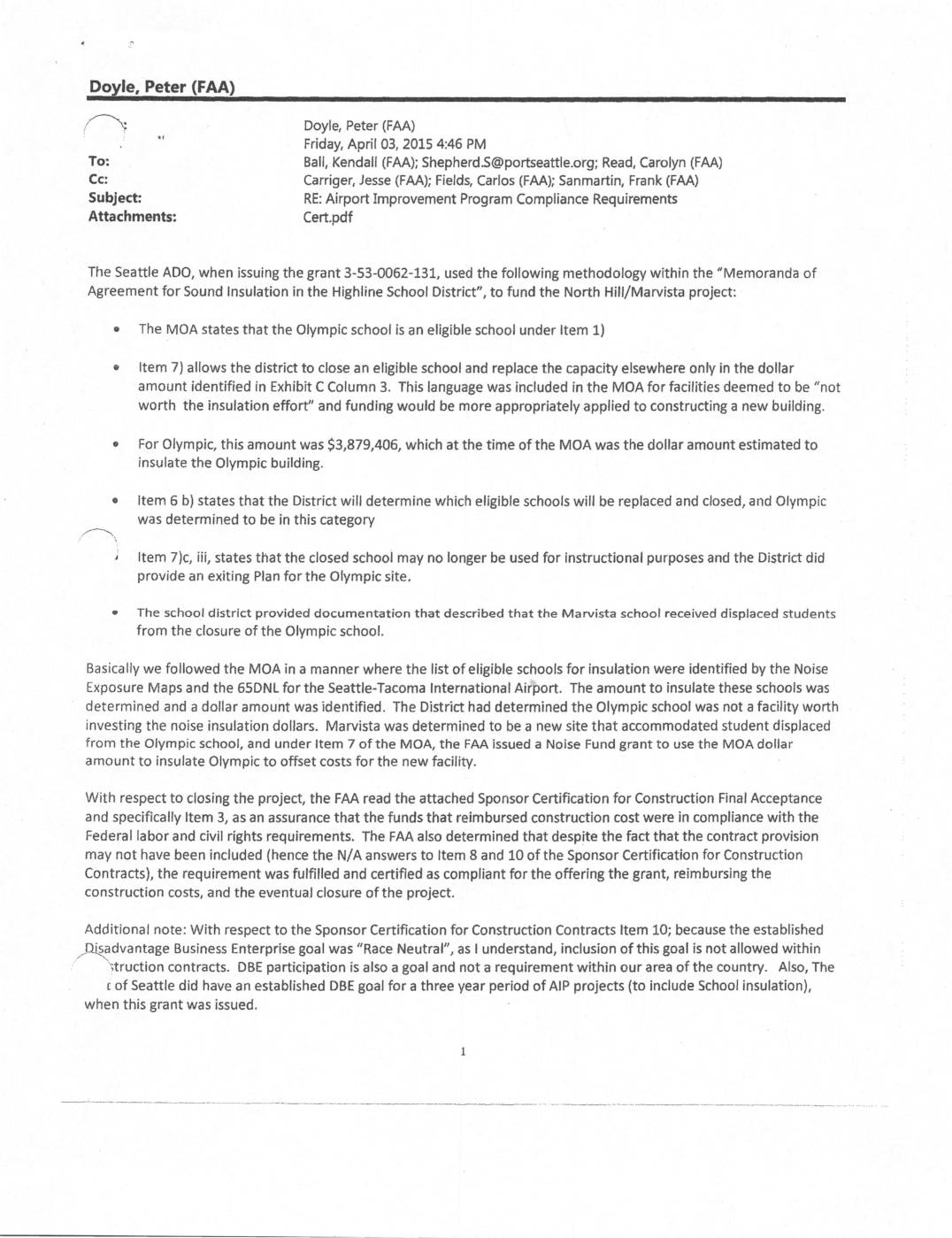
RE: Airport Improvement Program compliance requirements
In 2015, FAA officials exchanged emails explaining how federal Airport Improvement Program grant funds were used to replace the Olympic Elementary School in the Highline School District near Seattle-Tacoma International Airport. Because Olympic fell within the airport's 65 DNL noise zone but was deemed not worth insulating, the FAA allowed approximately $3.9 million in noise-mitigation funds to offset construction of the new Marvista Elementary School instead. The exchange was prompted by a Washington State Auditor inquiry questioning whether Davis-Bacon Act and other federal compliance requirements applied, given that the grant was awarded after the construction project had already been completed. -
 2014-12-31
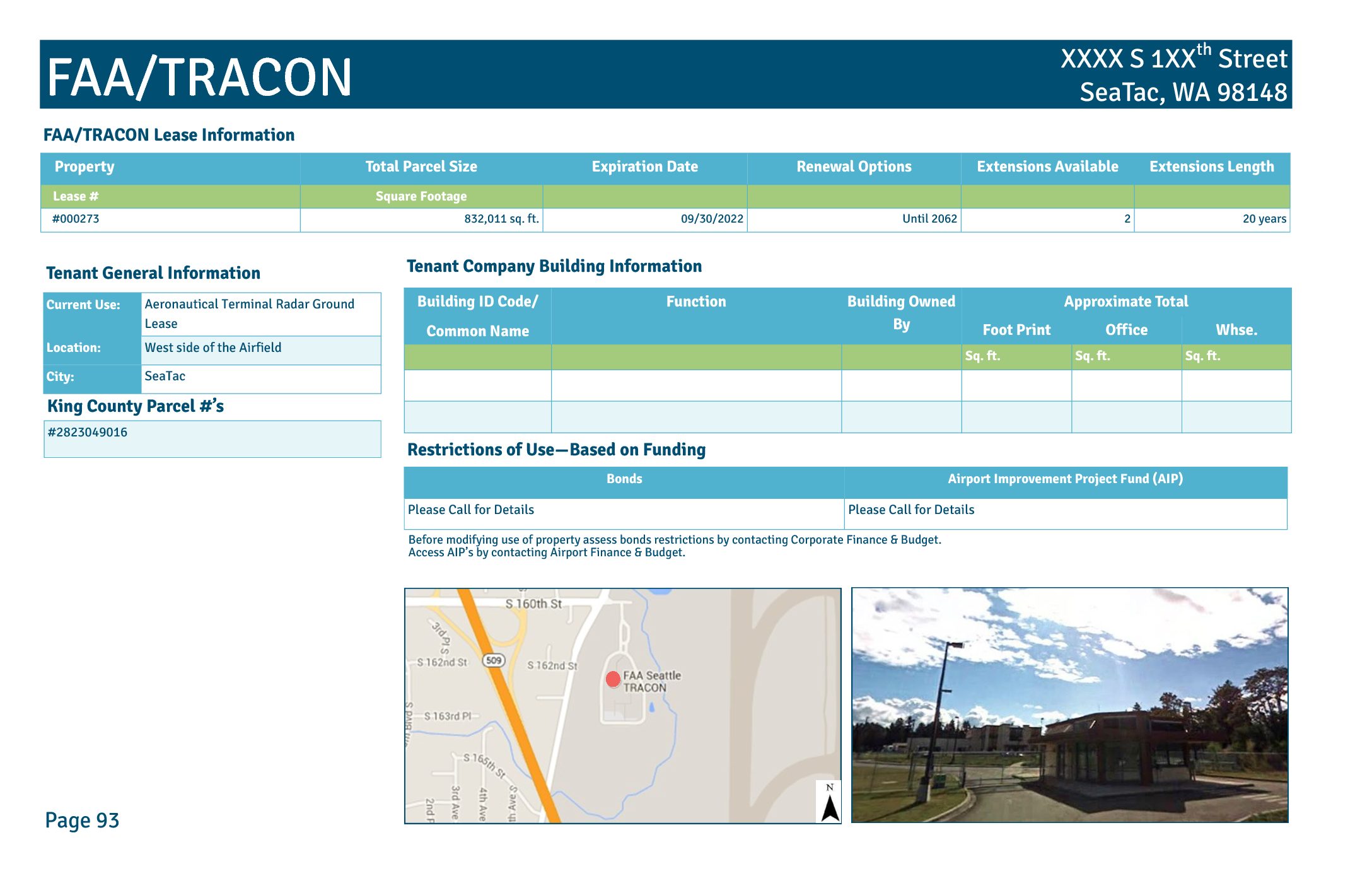
FAA/TRACON lease information
This document describes a Port of Seattle ground lease (Lease #000273) with the FAA/TRACON facility located on the west side of the airfield in SeaTac, Washington. The lease covers approximately 832,011 square feet, was set to expire on September 30, 2022, and includes two renewal options extending until 2062, each for a period of 20 years. The facility serves an aeronautical terminal radar function and is subject to bond and Airport Improvement Project (AIP) funding restrictions that require coordination with Airport Finance & Budget before any changes in property use. -
 2014-12-09
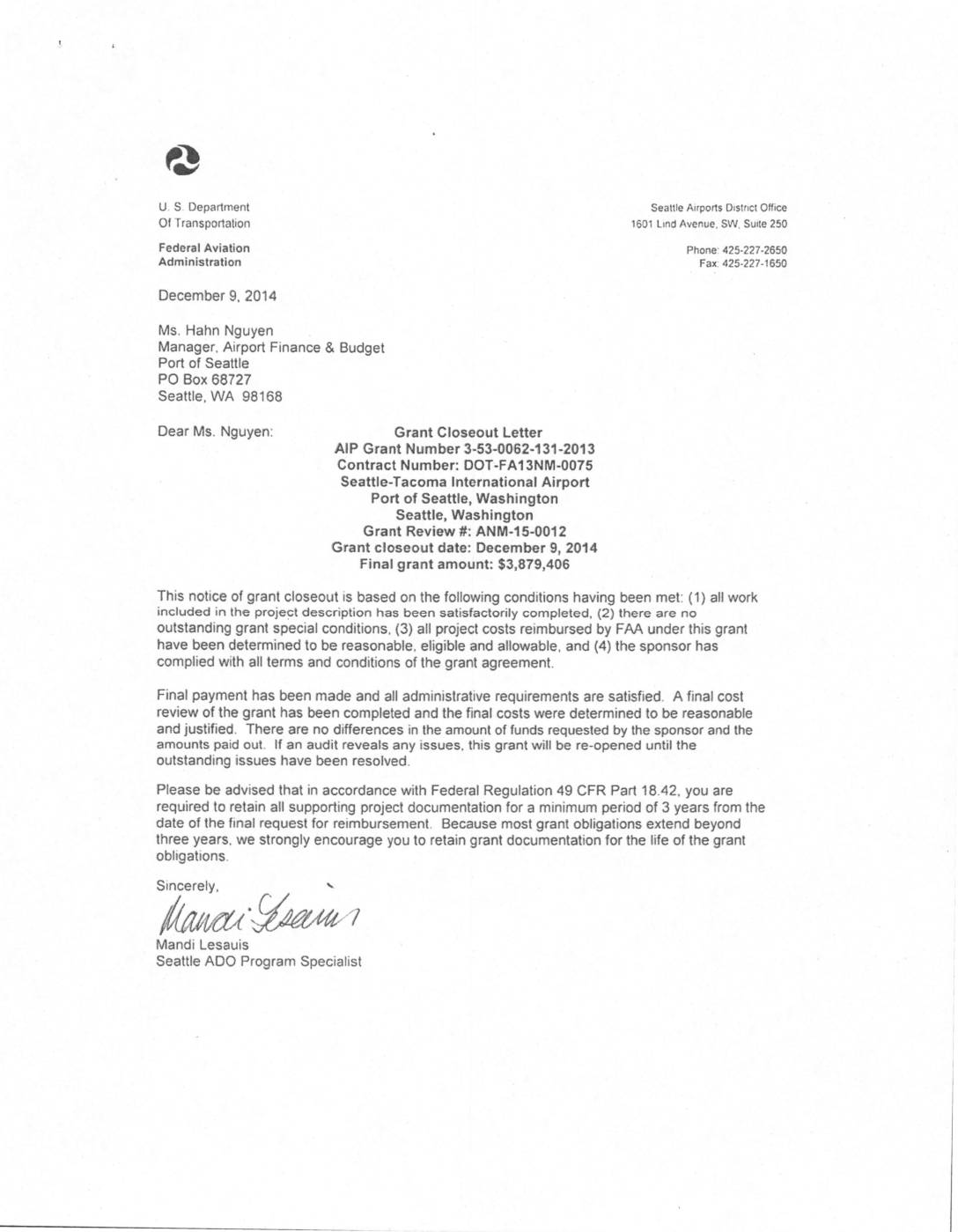
Grant closeout letter: AIP grant number 3-53-0062-131-2013
The Federal Aviation Administration (FAA) issued a grant to the Port of Seattle to fund noise mitigation work at Olympic Elementary School near Seattle-Tacoma International Airport, with a maximum federal contribution of $3.9 million covering 80% of allowable project costs. The grant (AIP Grant Number 3-53-0062-131-2013) was formally closed out on December 9, 2014, with a final paid amount of $3,879,406 after all work was confirmed satisfactorily completed and costs verified as reasonable and eligible. The Port of Seattle is required to retain all supporting project documentation for a minimum of three years from the final reimbursement request, in accordance with Federal Regulation 49 CFR Part 18.42. -
 2014-11-07
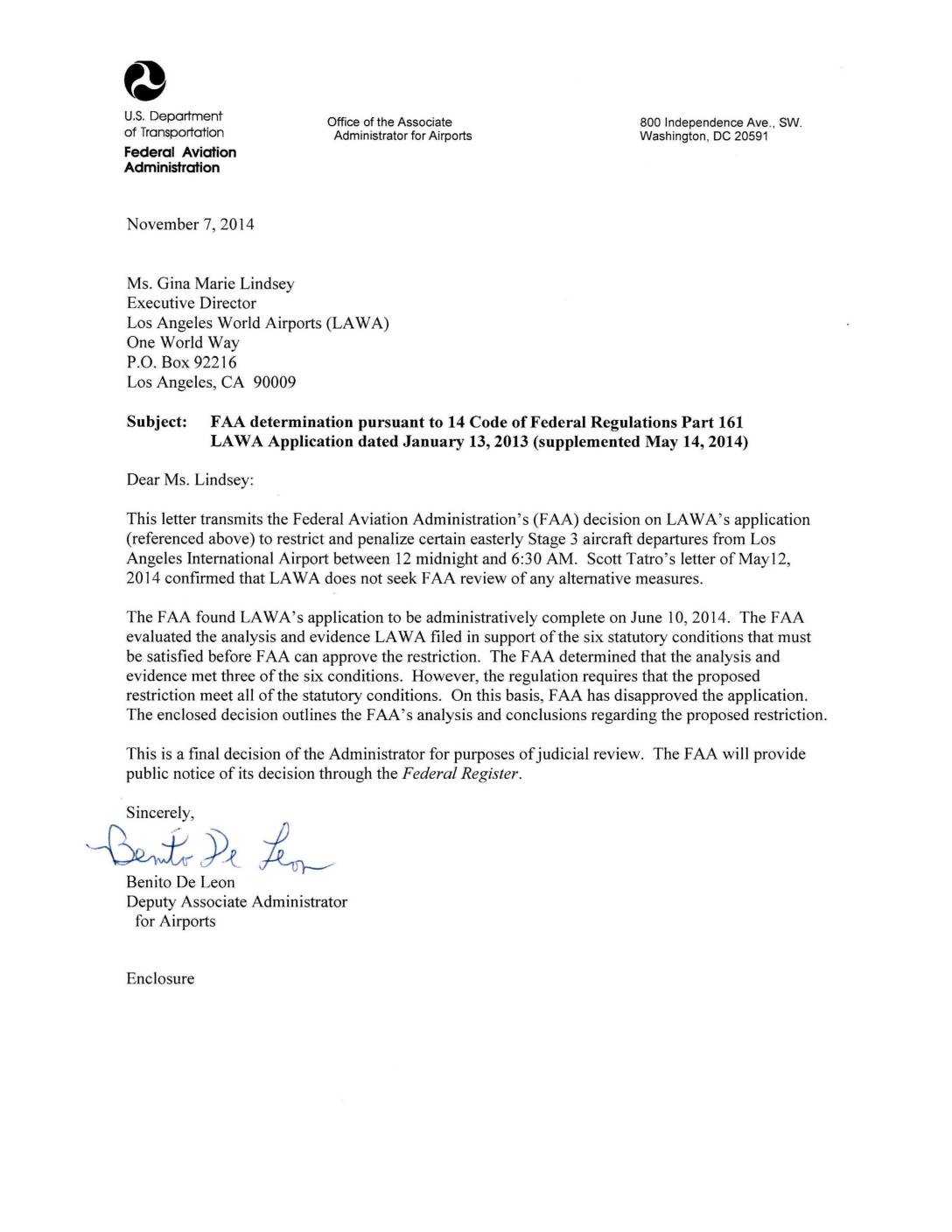
FAA determination pursuant to 14 Code of Federal Regulations Part 161 – LAWA Application for easterly Stage 3 aircraft departure restrictions at LAX
Federal Aviation Administration’s decision disapproving Los Angeles World Airports’ application to restrict and penalize certain easterly Stage 3 aircraft departures from Los Angeles International Airport between midnight and 6:30AM. The FAA found that while LAWA’s application met three of six statutory conditions, all conditions must be satisfied for approval. -
2014-08-02
Community roundtables will tackle airplane noise issues – QNS
Posted on August 2, 2014 By Bob Harris After years of pressuring for the formation of community roundtables to discuss airplane noise over residential neighborhoods, Gov. Andrew Cuomo has authorized the formation of such groups. Meetings were recently held in a large hanger at the Vaughn College of Aeronautics adjacent to LaGuardia Airport. The Queens -
 2014-07-10
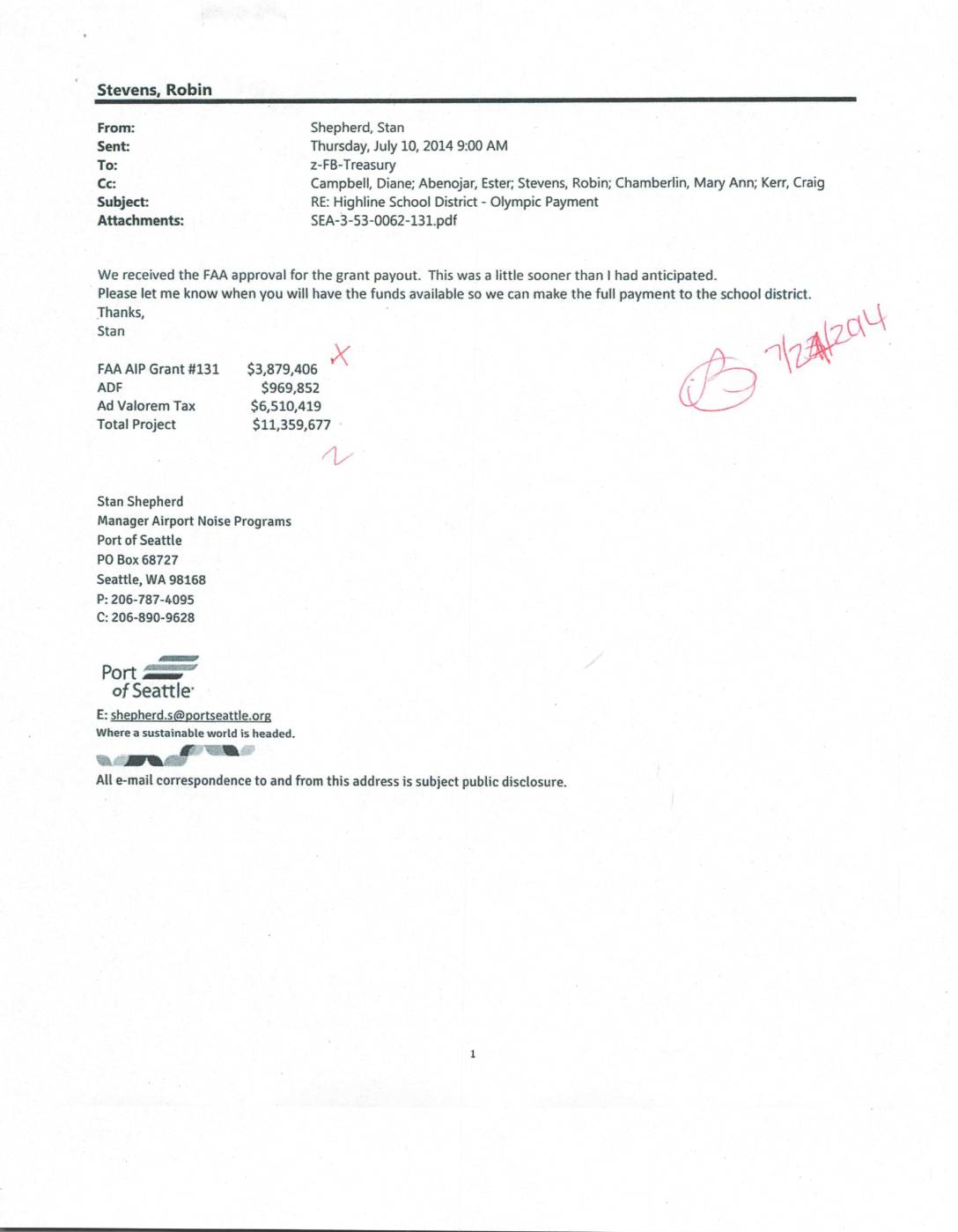
RE: Highline School District – Olympic payment
In July 2014, the FAA approved a final grant payment of $3,879,406 to the Port of Seattle for noise mitigation work completed at Olympic Elementary School near Seattle-Tacoma International Airport. The total project cost was approximately $11.36 million, funded through a combination of FAA Airport Improvement Program (AIP) grants, Airport Development Fund (ADF) contributions, and Ad Valorem Tax revenues. Port of Seattle Airport Noise Programs Manager Stan Shepherd notified the treasury department of the approved funds and requested confirmation of availability to issue full payment to the school district.