TagFAA(687)
-
 1973-07-27
Public health and welfare criteria for noise
This 1973 U.S. Environmental Protection Agency document establishes scientific criteria for understanding how noise affects public health and welfare, including hearing damage, annoyance, communication interference, and property value loss. Prepared by EPA's Office of Noise Abatement and Control under the Noise Control Act of 1972, it describes cause-and-effect relationships between noise exposure and human health impacts. The criteria laid out in this document were intended to serve as a foundation for developing future noise standards and regulations, though the document itself does not constitute a standard or regulation. -
 1973-06-07
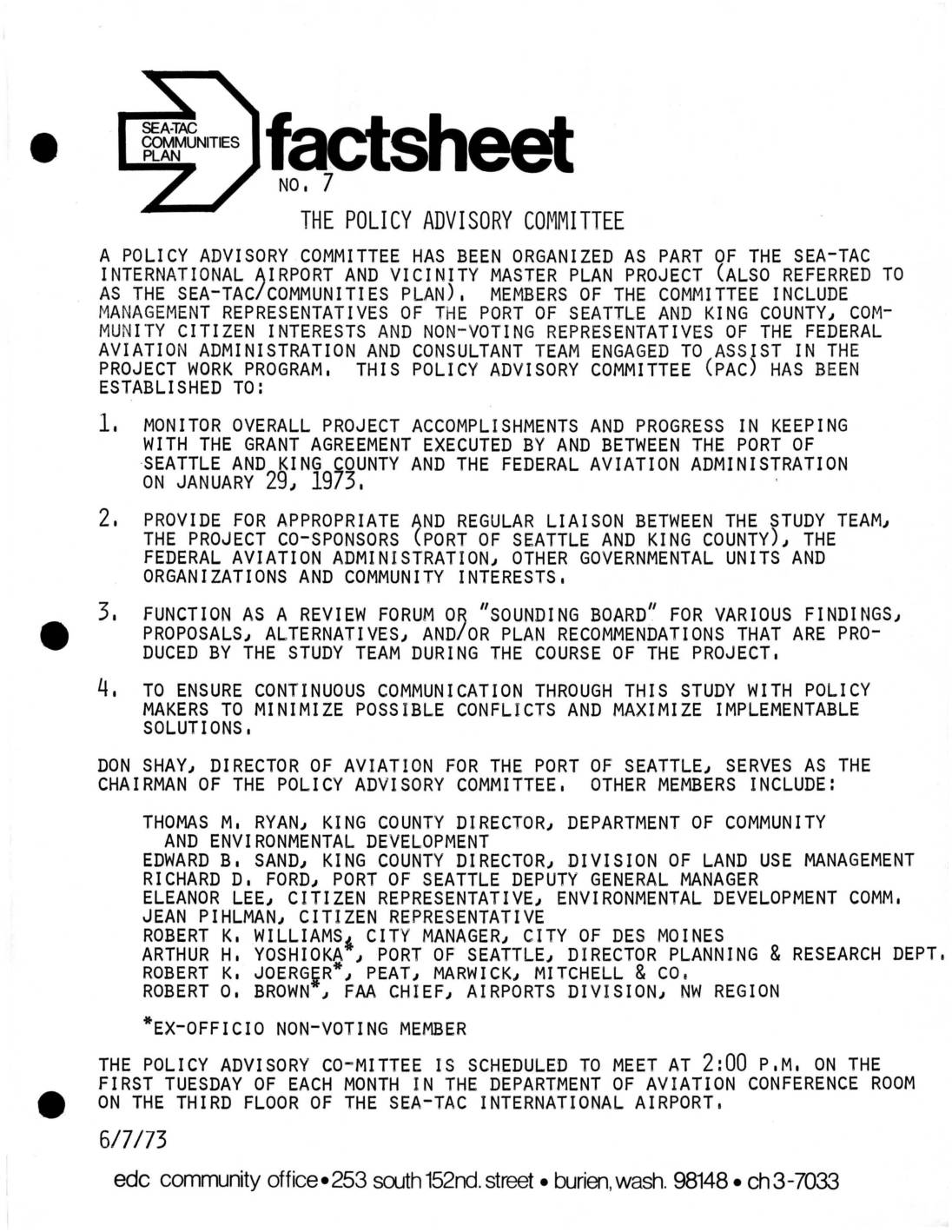
Sea-Tac Communities Plan Fact Sheet No. 7: The Policy Advisory Committee
These documents from 1973 describe the formation and early activities of the Policy Advisory Committee (PAC), established to oversee the Sea-Tac International Airport and Vicinity Master Plan Project. The committee brought together representatives from the Port of Seattle, King County, the FAA, and community citizens to monitor project progress, facilitate communication between stakeholders, and review study findings related to noise, land use, and environmental impacts. Regular monthly meetings and community task forces on topics such as noise abatement and drainage were organized to maximize public involvement in shaping airport policy. -
City of Burbank v. Lockheed Air Terminal
★ 32In one of the most maddening examples of airport law, the United States argued for reversal (ie. allowing for local airport control) of curfews. The FAA, which had previously supported the ban, adopted a neutral position when the The Department of Transportation, filed a Friend of the Court brief arguing for reversal. Summary Holding that -
 1973-05-01
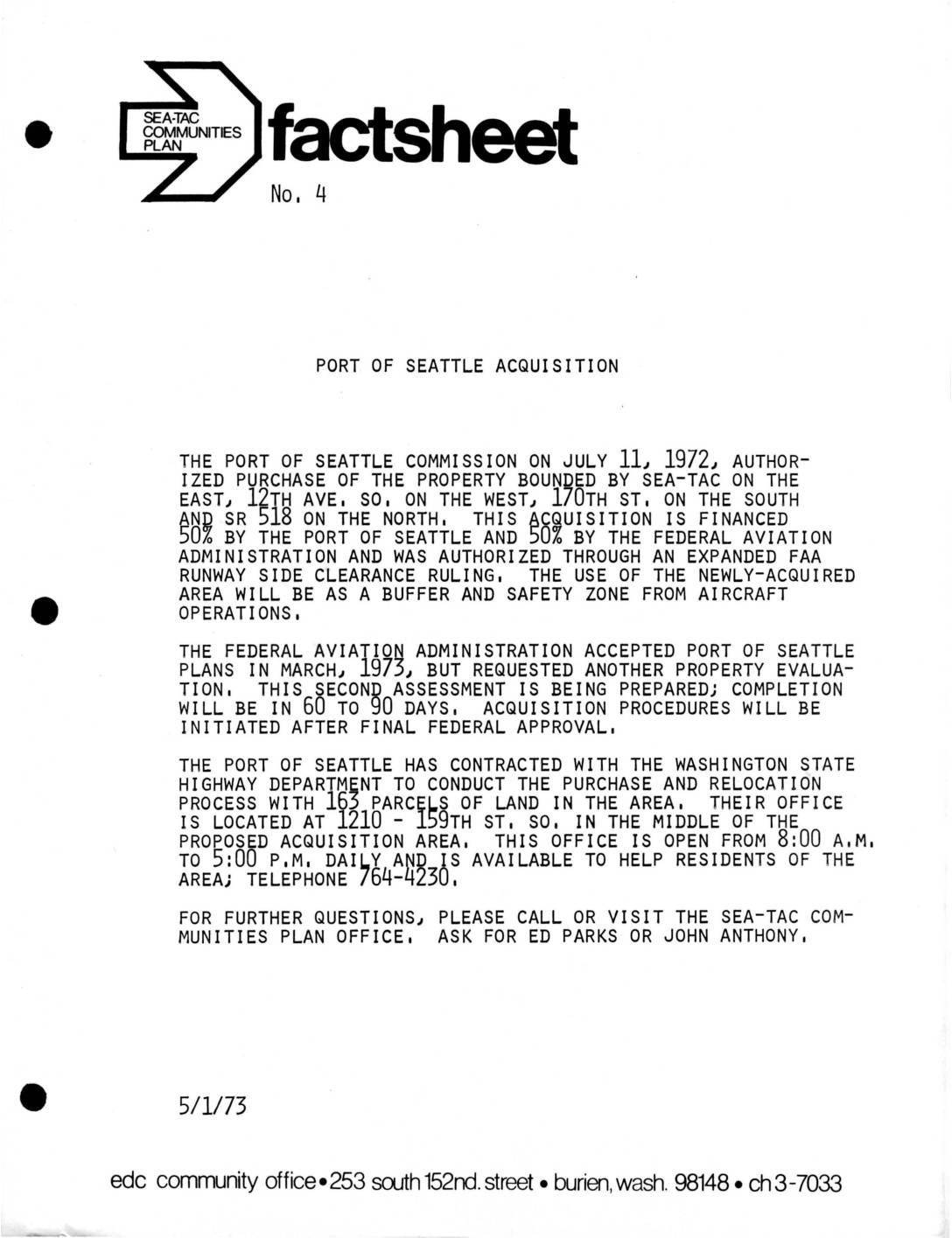
Fact Sheet No. 4: Port Of Seattle Acquisition
In July 1972, the Port of Seattle Commission authorized the purchase of property around Sea-Tac Airport, bounded by 12th Ave. S., 170th St., and SR 518, to serve as a buffer and safety zone from aircraft operations. The acquisition is split equally between the Port of Seattle and the Federal Aviation Administration under an expanded FAA runway side clearance ruling. As of May 1973, a second property evaluation was underway, with acquisition procedures set to begin after final federal approval of the 163 affected parcels. -
 1972-11-27
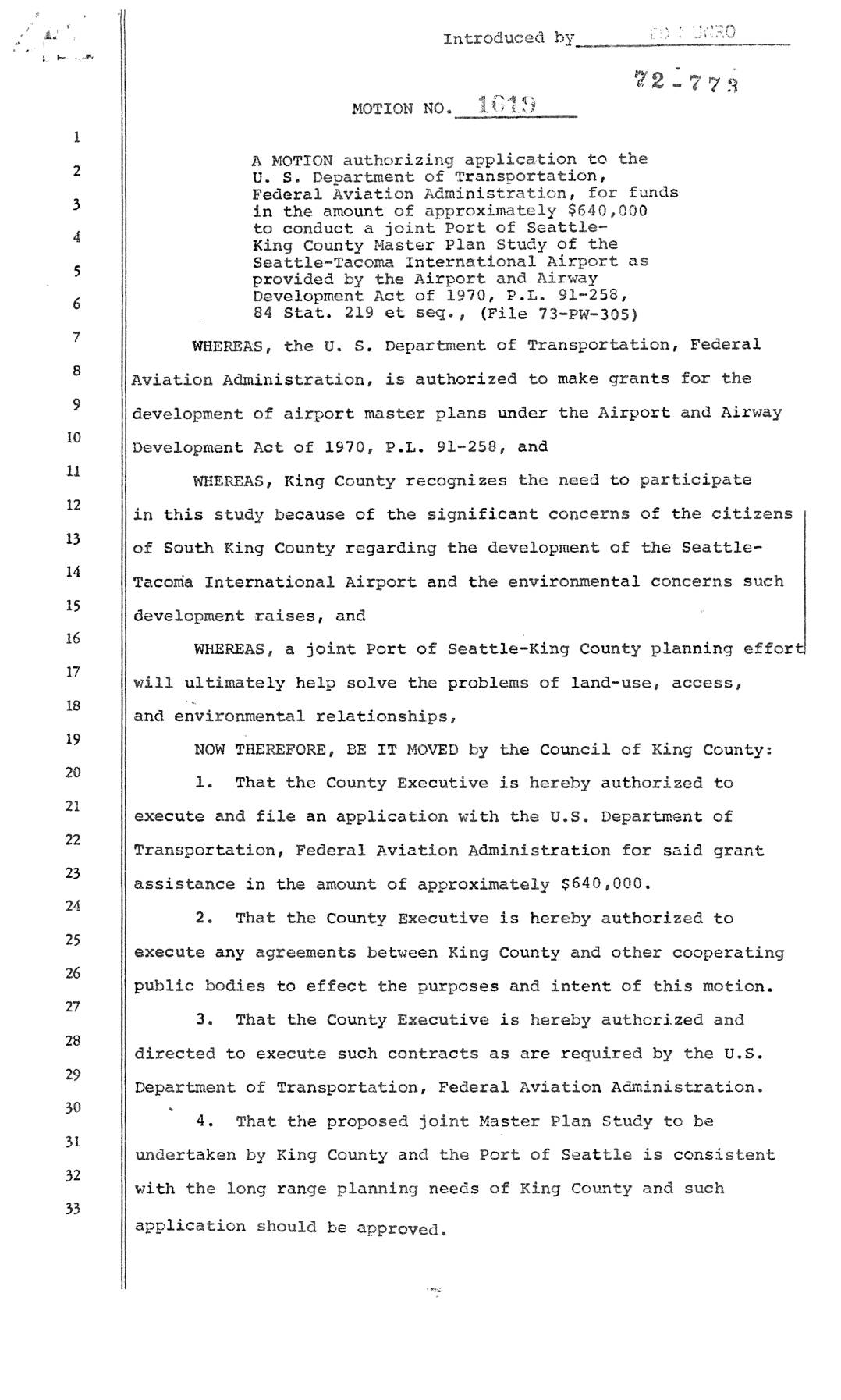
Motion No. 1019: Authorizing Application for Federal Aviation Administration Grant for Joint Port Of Seattle–King County Master Plan Study of Seattle-Tacoma International Airport
In November 1972, the King County Council passed Motion No. 1019, authorizing the County Executive to apply for approximately $640,000 in federal grant funding from the U.S. Department of Transportation's Federal Aviation Administration. The funds were intended to support a joint Port of Seattle–King County Master Plan Study of Seattle-Tacoma International Airport, prompted by citizen concerns in South King County about airport expansion and its environmental impacts. The motion also authorized the County Executive to enter into agreements with other public bodies and execute any contracts required by the FAA to carry out the study. -
 1970-12-31
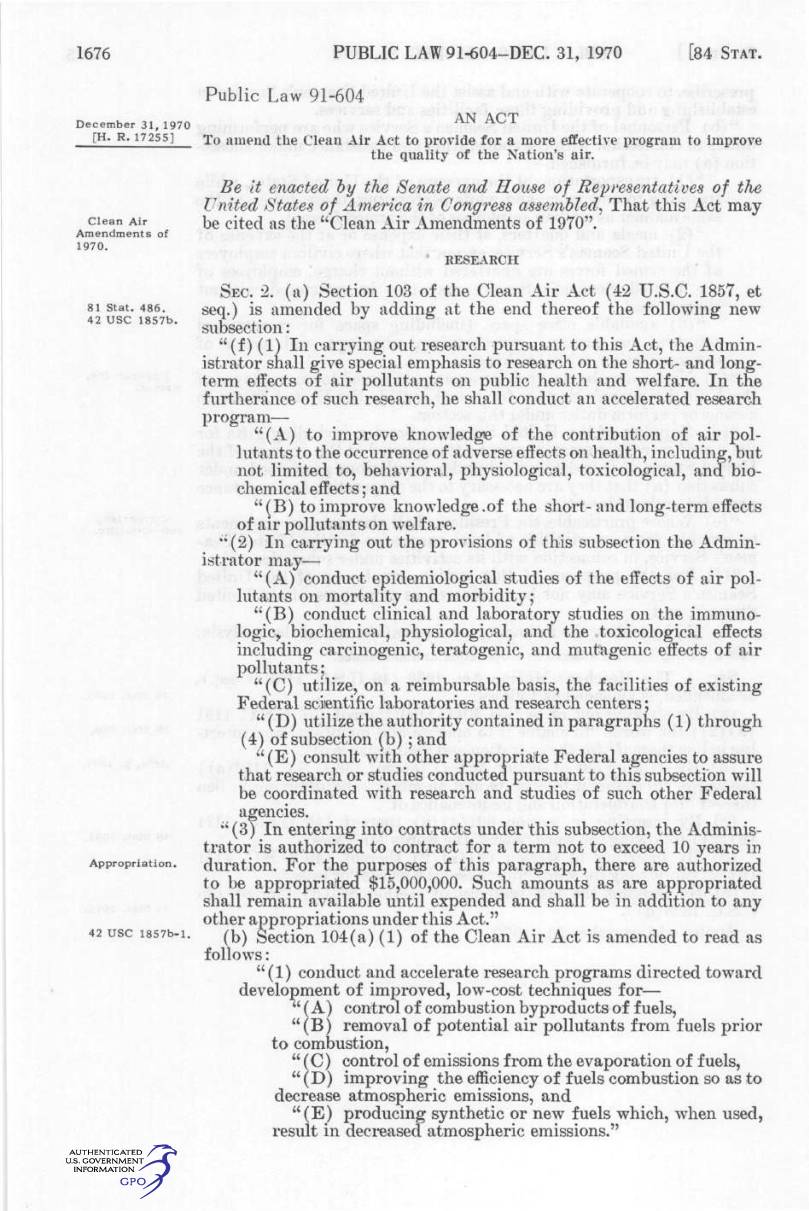
Clean Air Amendments of 1970 (Public Law 91-604)
★The Clean Air Amendments of 1970 (Public Law 91-604) strengthened the federal Clean Air Act by expanding research into the health and environmental effects of air pollutants, increasing grant funding to state and regional air pollution control agencies, and establishing a framework for national ambient air quality standards. The law required the EPA Administrator to publish and maintain a list of harmful air pollutants and issue scientific criteria for each within 12 months of listing. It also directed states to take primary responsibility for meeting national air quality standards within their borders through mandatory implementation plans. -
 1969-02-08
Sea-Tac International Airport: Part 3 — Boeing Bust to Deregulation
The Port of Seattle built Seattle-Tacoma International Airport during World War II to relieve pressure on existing airports such as Seattle’s Boeing Field. Following the war, Sea-Tac quickly established itself as the region’s aviation hub, but it had to undertake major improvements to accommodate newer jet aircraft and steadily increasing numbers of passengers. During the