TagFAA(687)
-
Draft FAA Policy Regarding Processing Land Use Changes on Federally Acquired or Federally Conveyed Airport Land
AGENCY: Federal Aviation Administration (FAA), DOT. ACTION: Proposed policy; request for comments. SUMMARY: This notice is directed to airport sponsors, consultants, and other stakeholders regarding a proposed update of the FAA policy and practice regarding processing land use changes on federally acquired or federally conveyed airport land. The updated policy confirms and clarifies the appropriate -
General Aviation Moves Closer to an Unleaded Future
The FAA’s approval of the use of G100UL fuel in all piston aircraft directly addresses the industry’s long-standing goal of finding solutions that can be used for the entire GA piston fleet. Related To: Aircraft Owners and Pilots Association (AOPA) The FAA on Sept. 1 signed on supplemental type certificates to allow General Aviation Modifications Inc.’s -
 2022-09-01
Navigating Section 163: September 2022 update
In August 2022, the FAA revised its internal guidance on Section 163, most notably changing how it defines a 'project' so that if any part of a development requires FAA approval, the agency retains authority over the entire project — limiting airports' ability to break larger efforts into smaller pieces to avoid oversight. The FAA also proposed a new land use policy in September 2022 governing how airport sponsors may use federally acquired or conveyed airport land for non-aeronautical purposes, identifying four categories of land use that determine when FAA approval is required. Airport sponsors were encouraged to submit comments on the proposed land use policy before October 17, 2022. -
 2022-09-01
Navigating Section 163: A guide to facilitating non-aeronautical development at your airport
This guide explains how airports can pursue non-aeronautical development under Section 163 of federal aviation law, with a 2022 update covering key FAA policy changes. The update clarifies that if any part of a development project requires FAA approval, the agency now claims approval authority over the entire project — limiting a previous practice of splitting projects into smaller pieces to bypass oversight. It also covers a proposed FAA land use policy affecting how airports may lease or repurpose federally acquired or grant-funded airport land for non-aviation uses. -
 2022-08-30
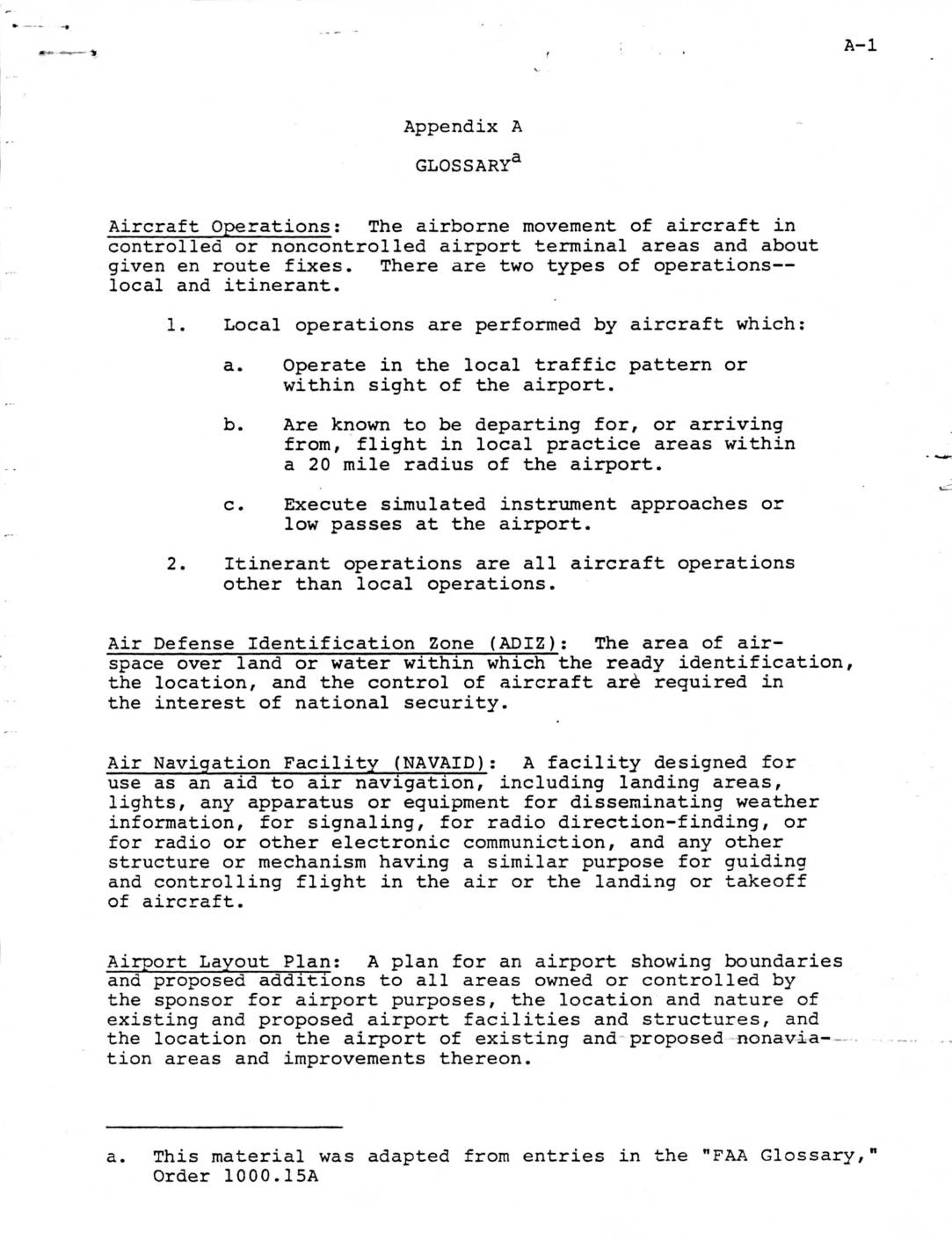
Glossary
This glossary from an FAA planning document defines key aviation terms used in airport operations and air traffic control, including types of aircraft operations (local and itinerant), radar systems, and airspace classifications. It covers planning concepts such as the Airport Master Plan, Airport Layout Plan, and Airport System Planning, as well as operational facilities like the Airport Traffic Control Tower and Air Route Traffic Control Center. These definitions provide a standardized reference for understanding airport development, airspace management, and noise-related policy discussions at facilities like Sea-Tac Airport. -
 2022-08-27
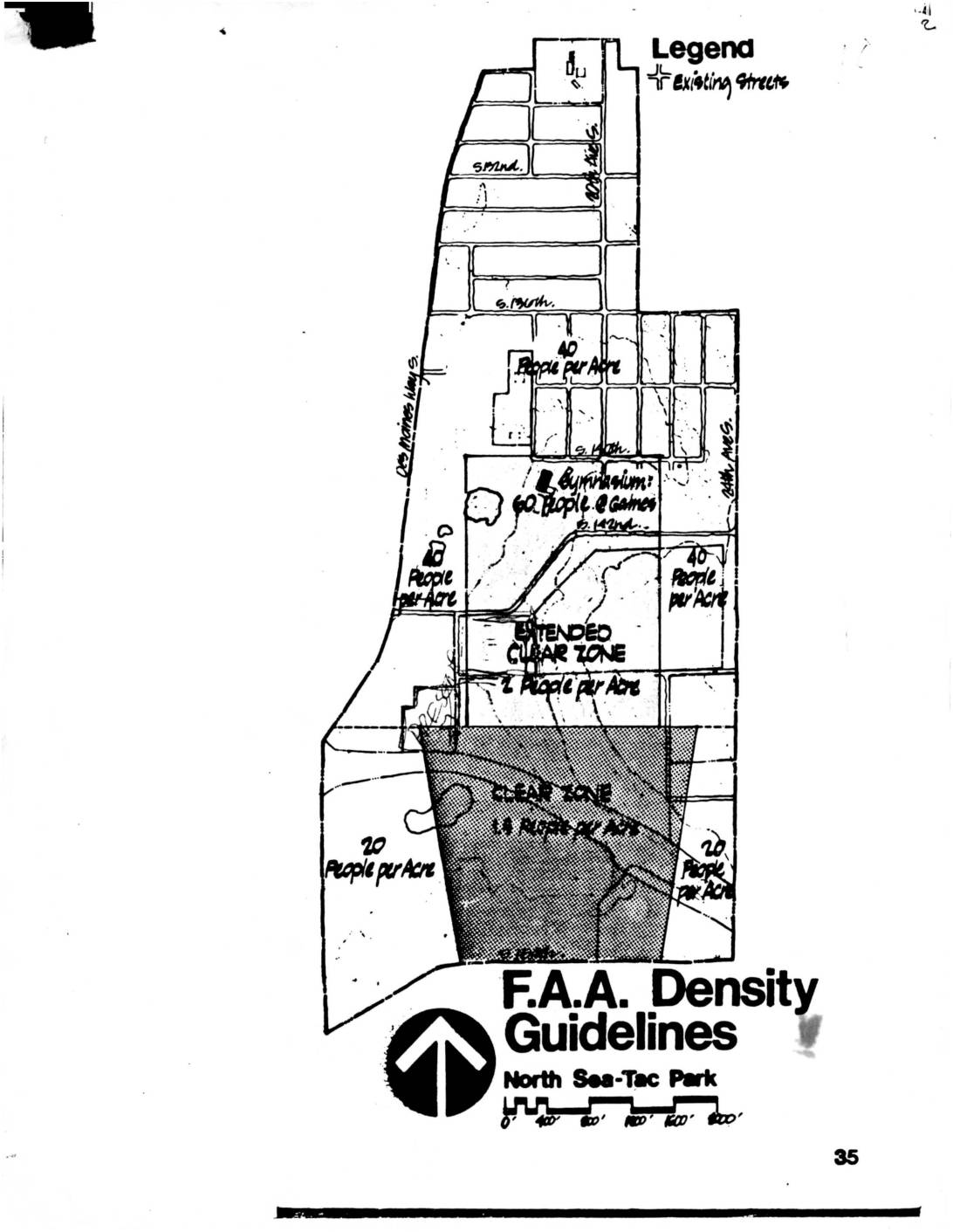
F.A.A. density guidelines: North Sea-Tac Park
This map illustrates the F.A.A. density guidelines for the North Sea-Tac Park area, showing recommended population limits per acre across different airport safety zones. The Clear Zone nearest the runway allows the fewest people (approximately 1.5 per acre), while the Extended Clear Zone permits around 2 people per acre, and surrounding residential areas are guided toward densities of 20 to 40 people per acre. A gymnasium is specifically noted at 60 people during games, reflecting how land use intensity is regulated based on proximity to airport flight paths. -
 2022-08-27
Draft report of the Land Use Committee: Sea-Tac Communities Plan
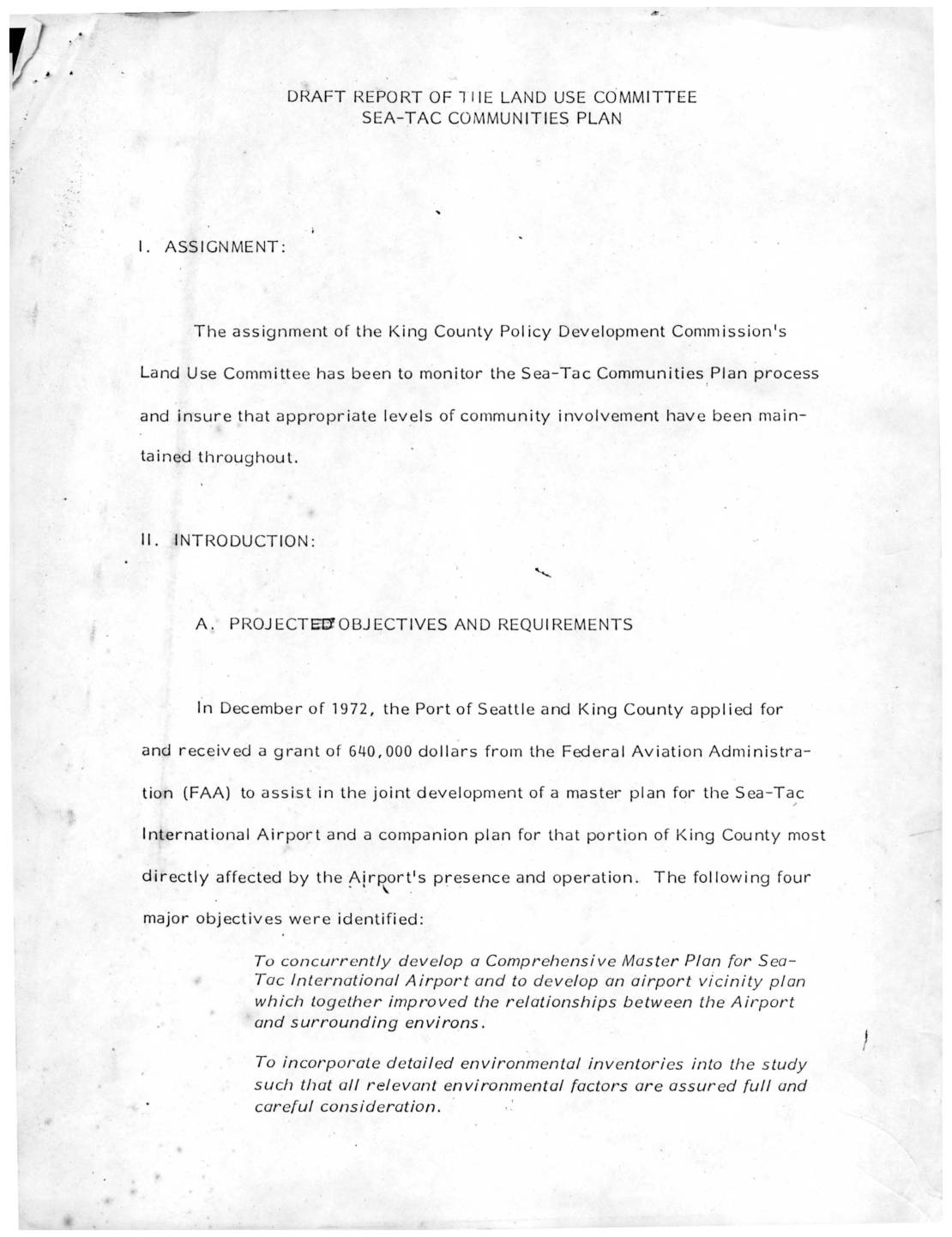
This draft report from the King County Policy Development Commission's Land Use Committee outlines the planning process for the Sea-Tac Communities Plan, a joint effort between King County and the Port of Seattle funded by a $640,000 FAA grant awarded in 1972. The plan aimed to concurrently develop a master plan for Sea-Tac International Airport and a companion land-use plan for surrounding communities most affected by airport noise and operations. A Policy Advisory Committee representing government agencies, consultants, and community groups oversaw the process, which moved through four phases covering data collection, site analysis, alternative plan development, and final recommendations for adoption by both the King County Council and the Seattle Port Commission. -
FAA Northwest Mountain Regional Office
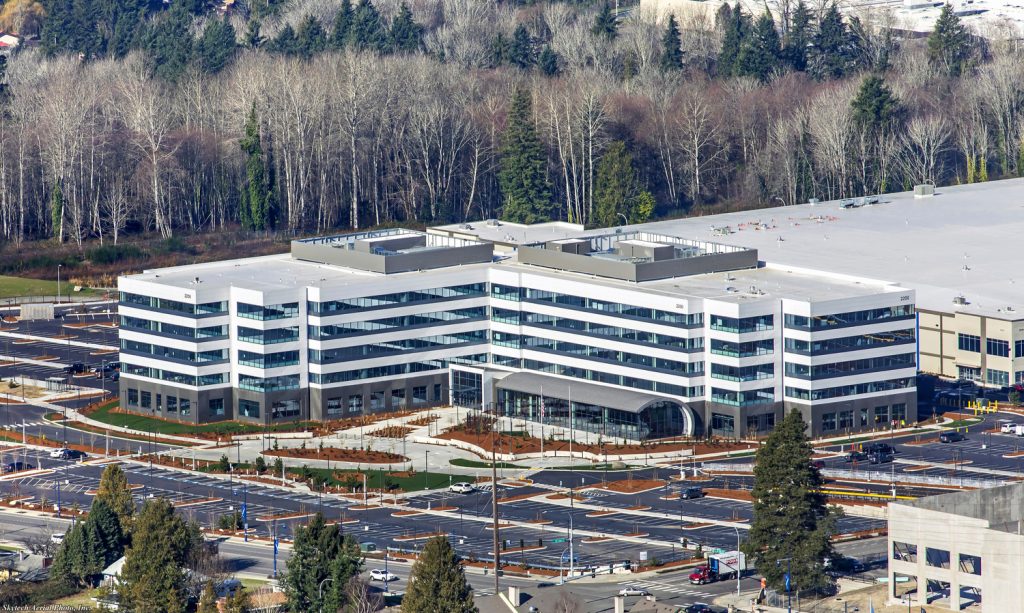
Aerial photograph showing a large U-shaped or H-shaped contemporary office building of approximately five to six stories, featuring alternating white and dark horizontal banding with extensive glazing. A watermark reading 'Skytech Aerial Photos, Inc.' is visible in the lower left corner, indicating professional aerial photography services. -
 2022-08-21
Annexes to the inventory of U.S. GHG emissions and sinks
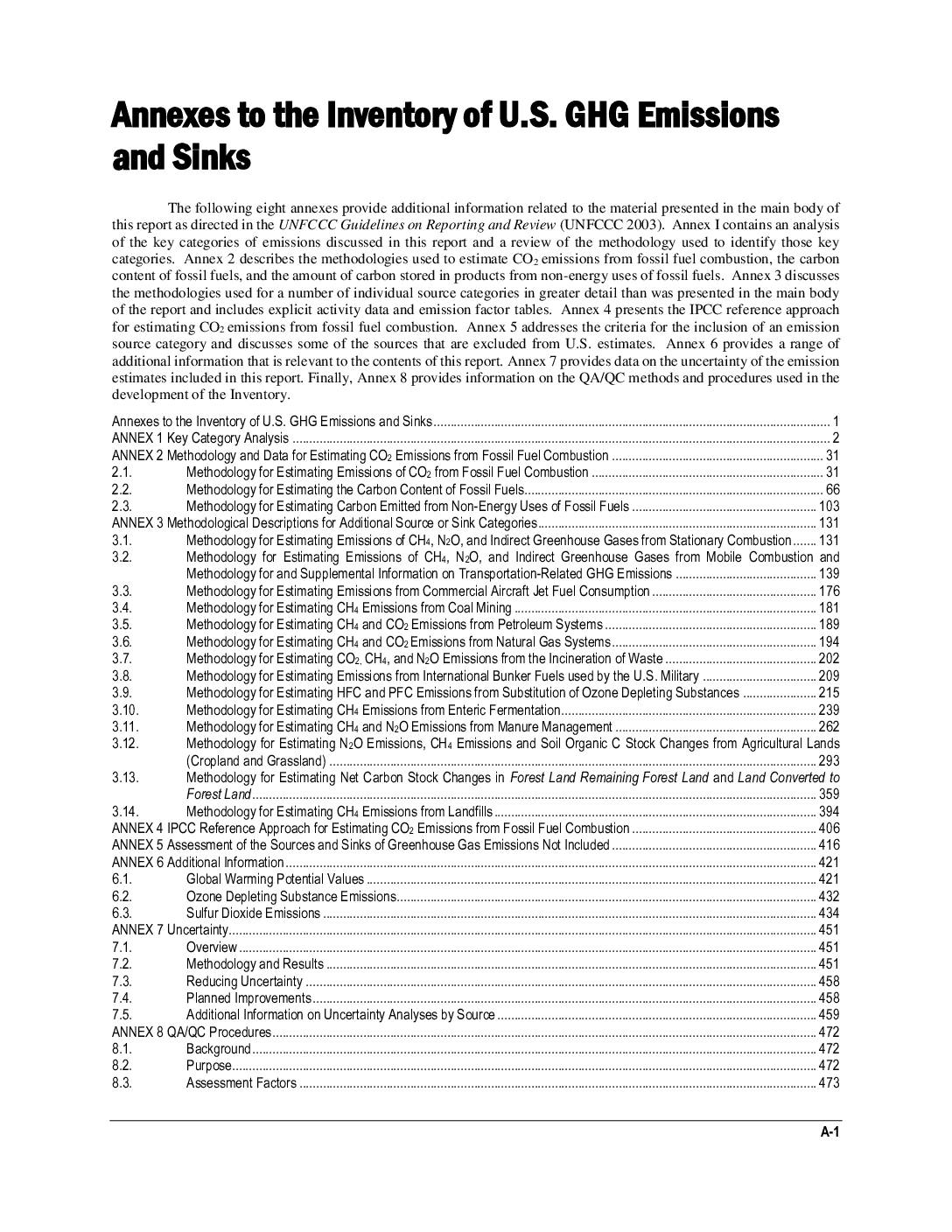
This document is a technical annex to the U.S. Greenhouse Gas Emissions and Sinks Inventory, outlining the methodologies used to measure and categorize national greenhouse gas emissions from 1990 to 2015. It identifies 'key categories' — the emission sources with the greatest impact on total national greenhouse gas levels, trends, and uncertainty — using standardized IPCC guidelines. The largest emission sources identified include road transportation, coal-fired electricity generation, and natural gas combustion across industrial, residential, and commercial sectors. -
FAA Order JO 7110.65Z – Air Traffic Control
★This order prescribes air traffic control procedures and phraseology for use by personnel providing air traffic control services. Controllers are required to be familiar with the provisions of this order that pertain to their operational responsibilities and to exercise their best judgment if they encounter situations not covered by it. Effective: May 19, 2022 Change: