TagFAA(687)
-
 2022-03-22
Sustainable Aviation Fuels (SAF): Update to FAA REDAC E&E Subcommittee
This March 2022 FAA presentation to the REDAC Energy & Environment Subcommittee provides an overview of Sustainable Aviation Fuels (SAF), highlighting both opportunities—such as drop-in compatibility with existing aircraft and infrastructure, and the potential to reduce lifecycle carbon emissions—and challenges including high production costs, limited incentives, and blend limits capped at 50%. The FAA's SAF program focuses on three areas: testing and accelerating fuel development, analyzing environmental and economic sustainability, and coordinating with public-private partnerships and international bodies like ICAO. While primarily focused on aviation decarbonization broadly, the program's emissions-reduction goals have indirect relevance to noise and environmental policy discussions at major airports like Sea-Tac. -
tracon-uRw2a
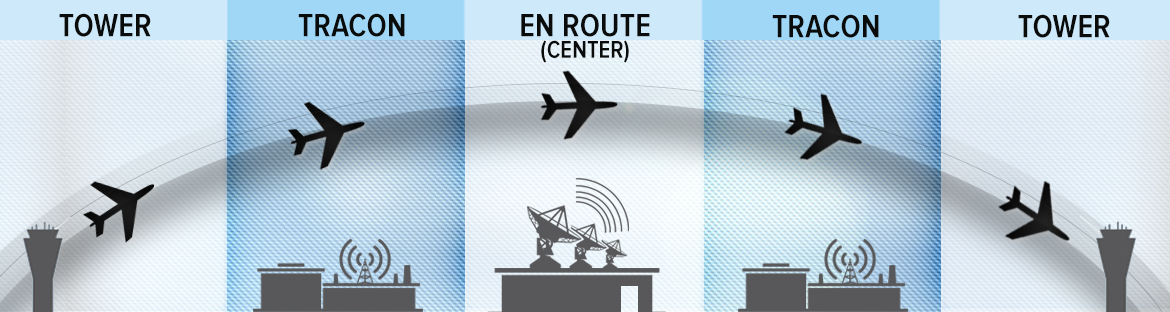
Diagram illustrating the FAA's layered air traffic control system, showing the handoff of aircraft between Tower (airport), TRACON (Terminal Radar Approach Control), and En Route Center facilities. The graphic depicts a flight path arc from departure to arrival, with corresponding ground facility silhouettes for each control segment. -
FAA-Greener-Skies-Initial-Benefits-of-RNPe-at-Seattle-International-Airport (1)
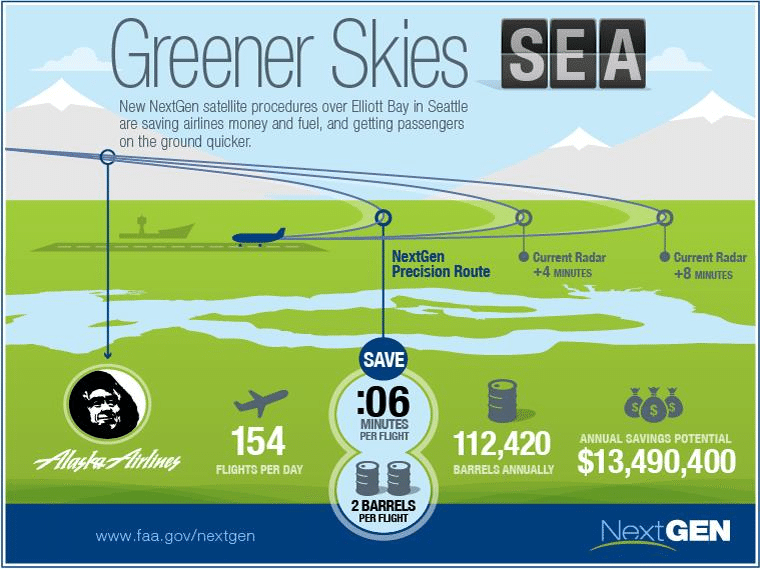
An FAA NextGen infographic promoting the 'Greener Skies' satellite precision navigation procedures over Elliott Bay at Seattle-Tacoma International Airport (SEA). It highlights Alaska Airlines' 154 daily flights saving 6 minutes per flight, 2 barrels of fuel per flight (112,420 barrels annually), and an annual savings potential of $13,490,400, sourced from www.faa.gov/nextgen. -
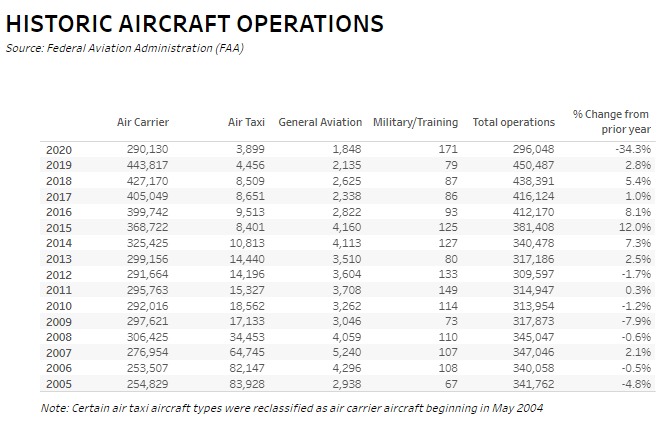
Tableau Historic Operations 2005-2020
A data table sourced from the Federal Aviation Administration (FAA) showing historic aircraft operations from 2005 to 2020, broken down by Air Carrier, Air Taxi, General Aviation, and Military/Training categories, along with total operations and percent change from prior year. The table shows a sharp -34.3% decline in total operations in 2020, dropping to 296,048, compared to 450,487 in 2019. -
Lawmakers examine FAA response to aviation noise, say more public outreach is needed
The number of people affected by loud aircraft has declined significantly over the past several decades Lori Aratani March 17, 2022 at 7:08 p.m. EDT A Southwest Airlines jet takes off from BWI Marshall Airport. (Katherine Frey/The Washington Post) Federal Aviation Administration officials told lawmakers Thursday that they have improved efforts to work with communities -
 2022-01-26
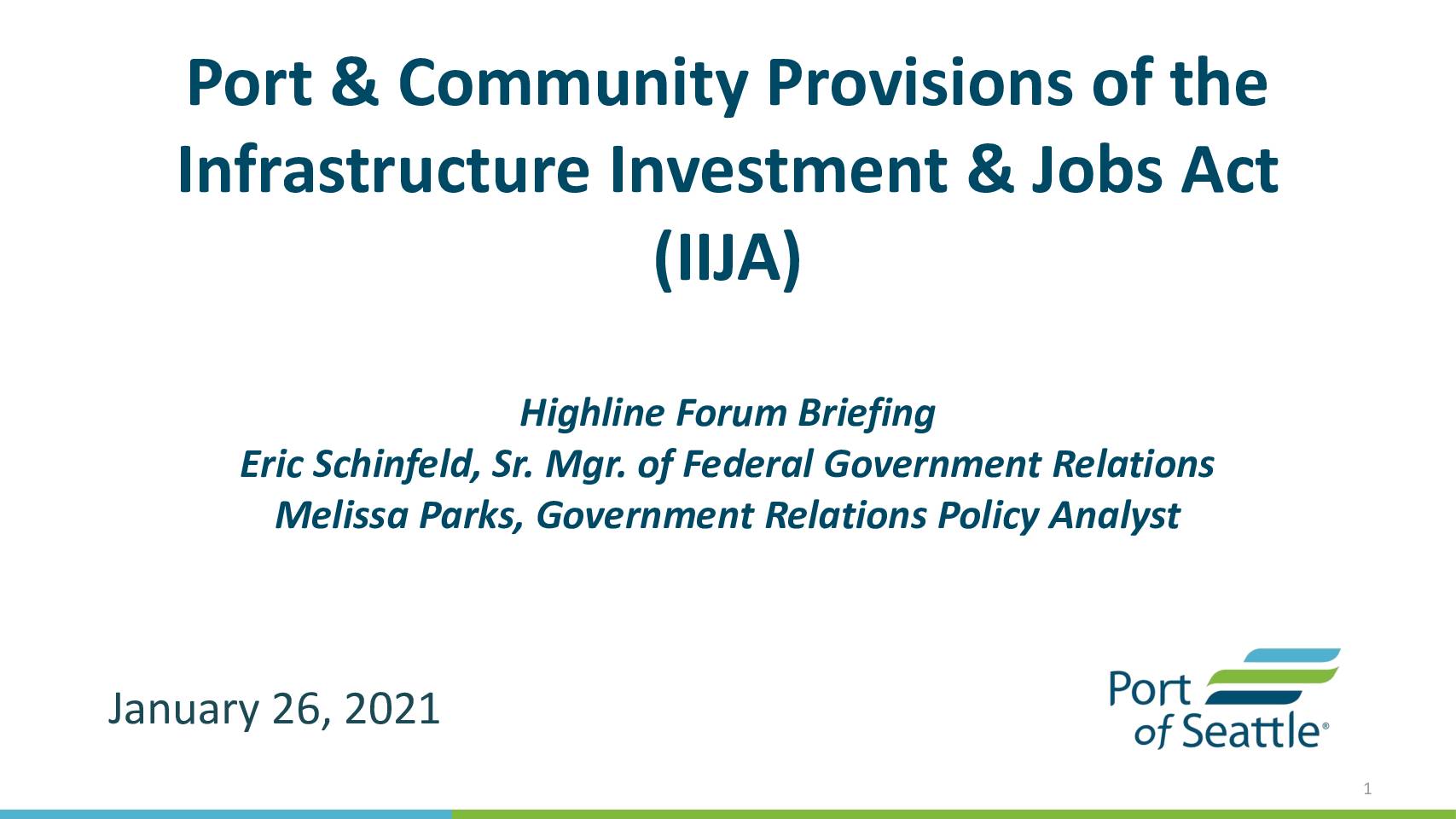
Port & community provisions of the Infrastructure Investment & Jobs Act (IIJA)
This January 2022 briefing by Port of Seattle staff outlines how the federal Infrastructure Investment and Jobs Act (IIJA), signed by President Biden in November 2021, allocates $1.2 trillion across transportation and infrastructure priorities. Of particular relevance to the Port of Seattle, the law includes $20 billion for airports, $5 billion for FAA facilities and equipment, and $5.225 billion for seaports, alongside billions more in competitive grant programs that ports can apply for. The briefing was presented to the Highline Forum, a community body focused on issues related to Sea-Tac Airport and surrounding neighborhoods. -
 2021-11-05
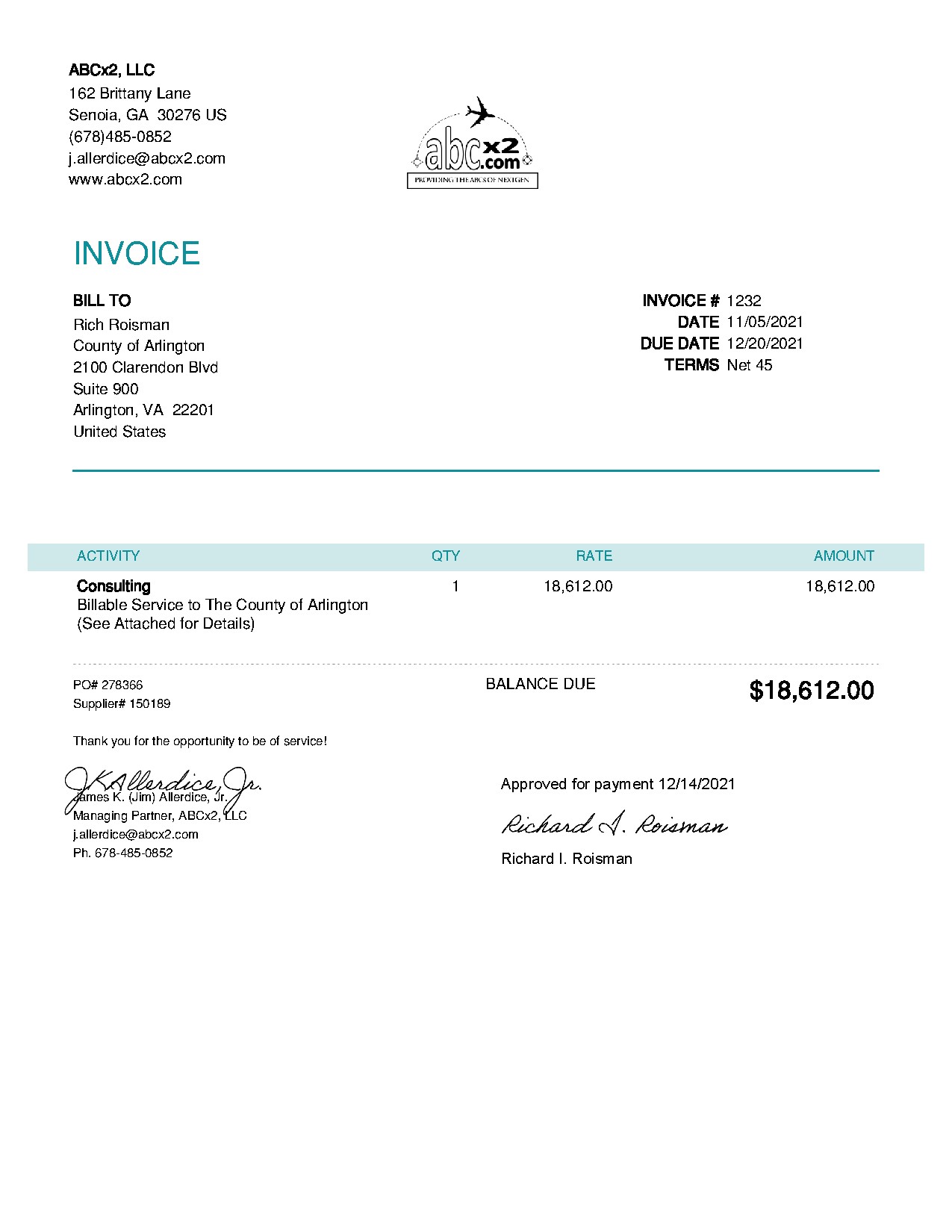
Invoice #1232 – ABCx2, LLC consulting services to County of Arlington
This invoice and supporting detail document a consulting billing of $18,612 submitted by ABCx2, LLC to Arlington County in November 2021 for aviation-related services during period 2021_10, including SID (Standard Instrument Departure) procedure design, noise analysis, whitepaper development, and FAA policy strategy meetings related to Ronald Reagan Washington National Airport (DCA). The work was performed by a team of consultants and subcontractors—including Vianair, who conducted flight design, noise analysis, and results visualization—as part of the larger Arlington Phase II project, which carried a total budget of $150,000 and had accumulated $112,999.50 in billings across seven periods. The invoice was approved for payment on December 14, 2021, by Arlington County's Richard I. Roisman. -
 2021-10-08
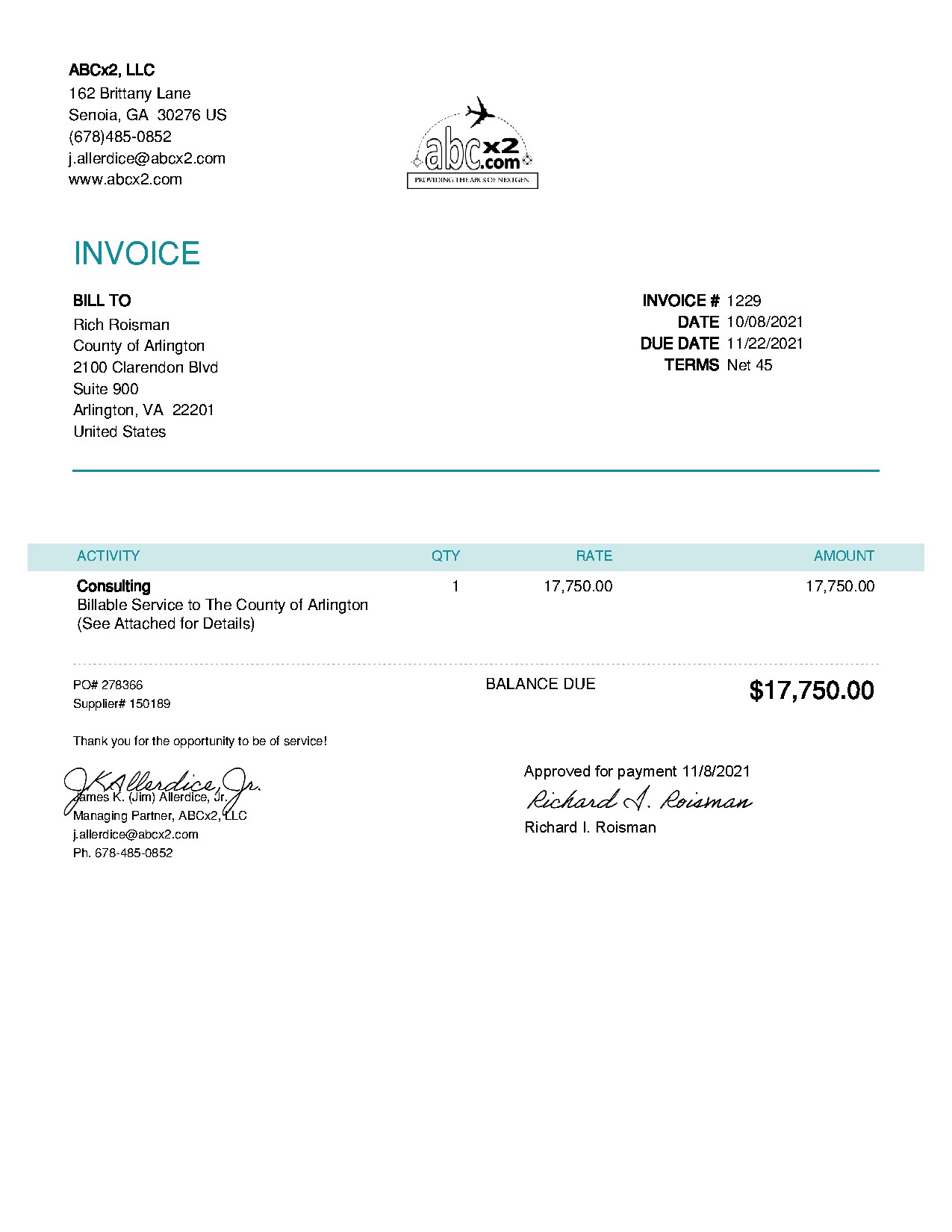
Invoice #1229 – ABCx2, LLC consulting services to County of Arlington
This document is an invoice dated October 8, 2021, from ABCx2, LLC to the County of Arlington, Virginia, for $17,750 in consulting services related to aviation noise policy work, including SID (Standard Instrument Departure) design meetings, white paper drafting, and flight tracking analysis. The attached billing detail shows the work was performed in September 2021 by a team including aviation consultants and a flight analysis firm called Vianair, with tasks involving FAA coordination and NextGen Advisory Committee engagement. The invoice represents one installment of a broader Phase II project with a total budget of $150,000, of which approximately $94,387 had been billed through September 2021. -
 2021-09-05
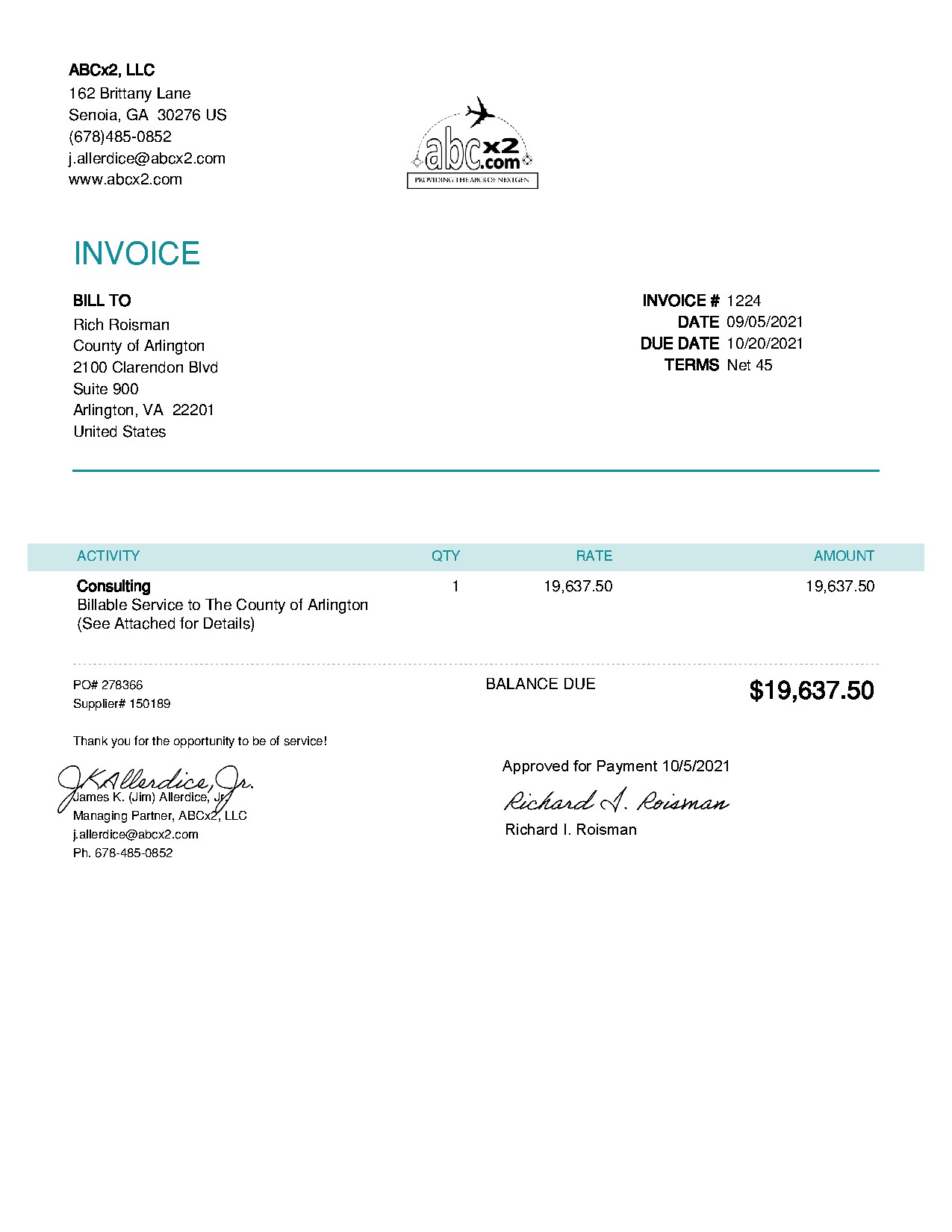
Invoice #1224 – ABCx2, LLC consulting services to County of Arlington
This document is an invoice from ABCx2, LLC to Arlington County, Virginia, for $19,637.50 in consulting services rendered during July and August 2021 as part of the Arlington Phase II project. The work included community working group (CWG) meetings and presentations, FAA-related briefings, noise abatement procedure drafting, and flight track data analysis performed by a team of consultants billed at $250–$350 per hour. The invoice reflects cumulative project spending of $76,637.50 against a total project budget of $150,000, leaving a remaining balance of $73,362.50. -
 2021-08-24
Port of Seattle Press Release: Project in North SeaTac Park Removed from SAMP
August 25, 2021 Early this year, Port staff submitted the draft federal environmental assessment (EA) for the Sustainable Airport Master Plan (SAMP) to the FAA for its review. The EA’s screening of alternatives included the proposed surface parking lot in North SeaTac Park (L06) and considered alternate ways to meet future employee parking needs. In that