Skip to content
  • STNI
  • Statistics
    • Ops and Passengers
      • King County International Airport (Boeing Field) Annual Operations
    • Financials
    • Aviation fuel uplift in the State of Washington 2018 – 2025
      • Aviation Fuel Tax Revenue in the State of Washington 1983-2025
      • Aviation Fuel Uplift at Sea-Tac Airport
    • Air Quality Monitoring
    • Flight Tracking
      • Flow and Flight Tracks
      • Five Year Comparison
      • Busiest Hours and Days
    • SEL Noise Reports & Graphs
      • About The Permanent Noise Monitors
      • Minutes of Quiet by Noise Monitor
      • Noise Events mapped
      • Noise Events (SEL)
    • Runways
    • Employees
    • Real Estate
      • Port Properties and Trees mapped
    • Parking
  • Events
  • Protest
    • Regular Events
    • Policy
      • Legislative Agenda 2027
      • Airport mitigation for the twenty first century
      • Port Dracula
    • Complain about a particular flight
    • Advocacy Organizations
    • Media Outlets
    • People
    • The Port of Seattle
      • Commission Meetings
      • Public Records Requests
      • StART
      • Highline Forum
    • Contact Your Electeds
  • Resources
    • FAQs
      • FAA Occurrences/Accidents/Indents
    • The SAMP
      • SAMP Public Comment Template
        • Two versions of Appendix K: NEPA/SEPA 2018 vs 2023
      • SAMP NTP: 31 projects by the numbers
      • SEPA Draft EIS (2026)
      • SAMP Record of Decision/FONSI (2025)
      • SAMP Draft EA (October 2024)
      • 2018 Scoping
    • Port Packages
      • Port Package Property Costs
      • Port Packages mapped
      • The Port Package Explainer
      • So you want a (first-time) Port Package? Start here
      • Port Package Looker Upper
      • How do I determine if I have a Port Package or Avigation Easement?
      • Progress on Port Package Update legislation
      • Having a Port Package Problem?
      • Port Package Site Visit Follow-Up
    • Document Library
    • Explainers
      • The Airport Law Cheat Sheet
      • The Grant Explainer
    • External Articles
    • History
      • Timeline
      • The Sea-Tac Communities Plan
        • Sea-Tac Communities Plan – Planning Maps
      • PSRC Third Runway Decision Process
    • Studies
    • Videos
  • Stories
  • Mission
  • Subscribe
  • Contact
Scroll down to content

Get InformedStay Informedx

I understand that you will never share my information with anyone, you will only use it to keep me updated on relevant events and that I may unsubscribe at any time.

STNI

STNISea-Tac Noise.Info

  • Solve for Sea-Tac. Solve for every airport.
  • Since 2016, working to obtain justice for everyone living under the flight path.
  • Less Noise. Cleaner Air. Better Public Health. Compensation.
  • Everything you think you know about the airport is wrong.

TagFAA(687)

Advanced Search Options

  • Dates
  • Media
    • External Articles
    • Images
    • PDFs
    • Video
    • Audio
  • Order By
  • 2022-10-17

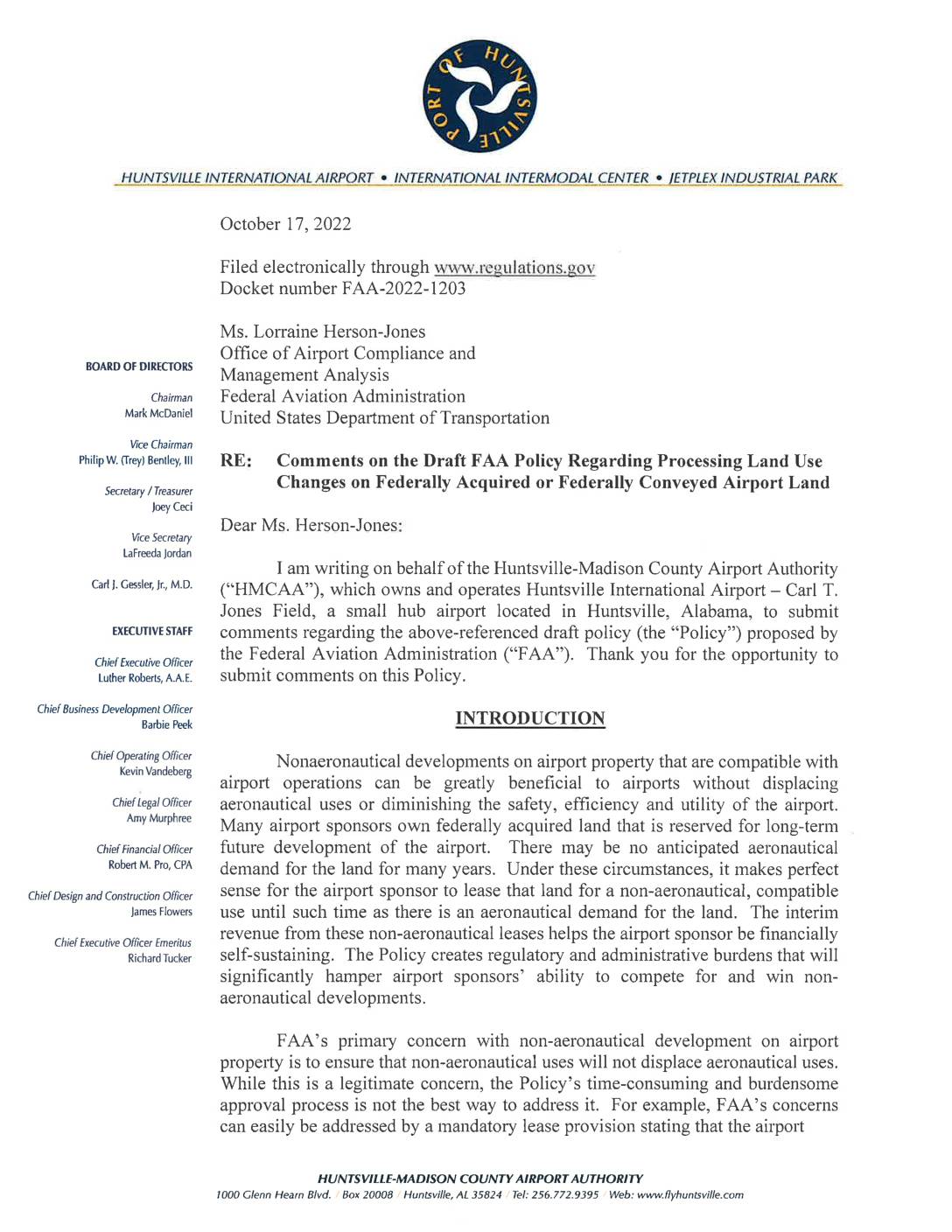
    Comments on the draft FAA policy regarding processing land use changes on federally acquired or federally conveyed airport land

    The Huntsville-Madison County Airport Authority submitted comments to the FAA in October 2022, objecting to a proposed federal policy governing land use changes on federally acquired or conveyed airport property. The authority argues the policy creates unnecessary regulatory burdens that hamper airports' ability to pursue compatible non-aeronautical developments, and calls for clearer, simpler rules — such as broader definitions of 'airport purpose' and airport-led category determinations rather than FAA approval for every land use change.
    CategoriesCorrespondence TagsAirport Layout Plans, FAA, Land UseFolderFAA
  • 2022-10-17

    Comments on Docket Number FAA 2022-1203: Draft Policy regarding processing land use changes on federally acquired or federally conveyed airport land

    Charlotte Douglas International Airport (CLT) submitted comments to the FAA in October 2022 opposing a proposed new policy on land use changes at federally acquired airport land, arguing that existing regulations already adequately govern non-aeronautical land use. CLT requested that if the policy moves forward, the FAA clarify approval timelines, lease evaluation procedures, and criteria for mixed-use land decisions. The letter emphasizes that non-aeronautical development is essential for airports to remain financially self-sustaining and to ensure compatible land use around airport property.
    CategoriesCorrespondence TagsAirport Layout Plans, Charlotte Douglas International Airport, FAA, Land UseFolderFAA
  • 2022-10-17

    ACI-NA comments on draft FAA policy regarding processing land use changes on federally acquired or federally conveyed airport land

    Airports Council International-North America (ACI-NA) submitted comments to the FAA in October 2022 opposing a draft policy that would impose new federal review and approval processes on how airports can use land that was federally acquired or conveyed. ACI-NA argued the policy is confusing, could lead to inconsistent decisions across FAA regional offices, and may delay airport development projects and increase costs. The organization urged the FAA to grandfather existing land use designations, clarify key undefined terms, and work collaboratively with airports to revise the policy.
    CategoriesCorrespondence TagsAirport Improvement Program, Airports Council International, FAA, Land UseFolderFAA
  • 2022-10-17

    NASAO comments on draft FAA policy regarding processing land use changes on federally acquired or federally conveyed airport land

    The National Association of State Aviation Officials (NASAO) submitted comments to the FAA in October 2022 regarding a draft policy on land use changes at federally acquired or conveyed airport land. NASAO raised concerns about lengthy lease review processes, the lack of defined timelines for approvals, and unclear procedures for lease renewals and extensions. The letter also questioned how the policy would affect existing leases and called for greater consistency across FAA regions.
    CategoriesCorrespondence TagsAirports, FAA, Land UseFolderFAA
  • 2022-10-17

    AAAE comments on draft FAA policy regarding processing land use changes on federally acquired or federally conveyed airport land

    The American Association of Airport Executives (AAAE) submitted formal comments in October 2022 opposing a proposed FAA policy that would require federal review of individual leases, subleases, and non-aeronautical development projects on federally acquired or conveyed airport land. AAAE argues the policy would reduce airport revenue, slow development, and exceed FAA's appropriate role, which should be limited to aviation safety oversight rather than involvement in specific real estate transactions. The organization urges FAA to maintain existing policies and work collaboratively with the airport industry on any needed improvements.
    CategoriesCorrespondence TagsAAAE, FAA, Land UseFolderFAA
  • Section 163

    Section 163 of the FAA Reauthorization Act of 2018 regulates the uses of properties acquired by airport sponsors using FAA funds. These include property buyouts for noise mitigation and other non-aeronautical uses. SEC. 163. LIMITED REGULATION OF NON-FEDERALLY SPONSORED PROPERTY. (a) <> In General.--Except as provided in subsection (b), the Secretary of Transportation may not
    CategoriesLegislation TagsAirport Layout Plans, FAA, Land Use, Reauthorization Act Of 2018, Section 163
  • Screen Shot 2012 09 14 at 5.21.15 PM

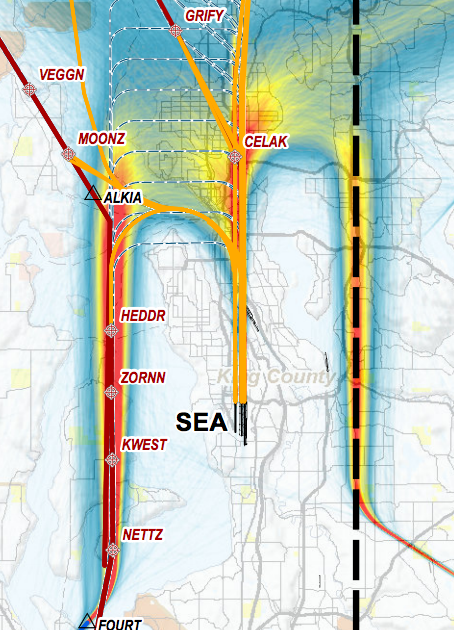
    A noise exposure or flight track density map centered on Seattle-Tacoma International Airport (labeled 'SEA'), showing instrument fixes/waypoints including GRIFY, VEGGN, MOONZ, CELAK, ALKIA, HEDDR, ZORNN, KWEST, NETTZ, and FOURT over King County, Washington. Heat-map coloring (red/orange/yellow/blue) indicates noise or traffic concentration levels along approach and departure corridors.
    TagsFAA, Greener SkiesFolderGreener Skies
  • vTFCQVDfpjAtQMX 800×450 noPad

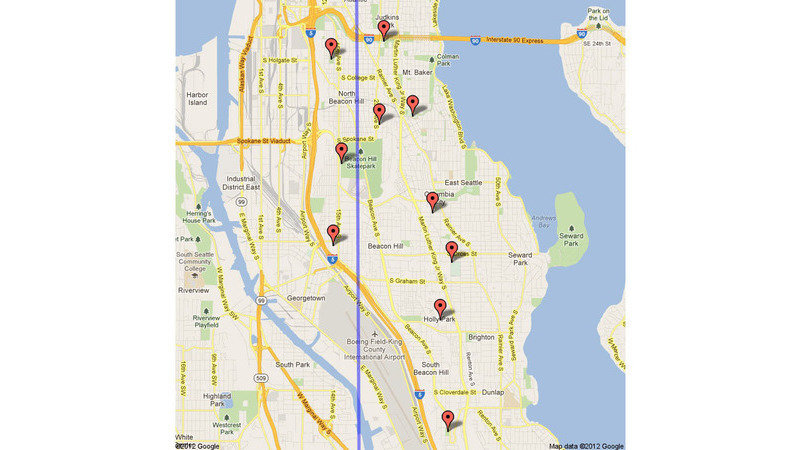
    A Google Maps screenshot (watermarked '©2012 Google') showing the Beacon Hill, Georgetown, and South Seattle neighborhoods near Boeing Field/King County International Airport. Multiple red map pins mark specific locations along a north-south corridor, with a vertical blue line overlaid, likely indicating noise-impact sites or complaint locations relative to flight paths.
    TagsFAA, Greener SkiesFolderGreener Skies
  • 2022-09-16

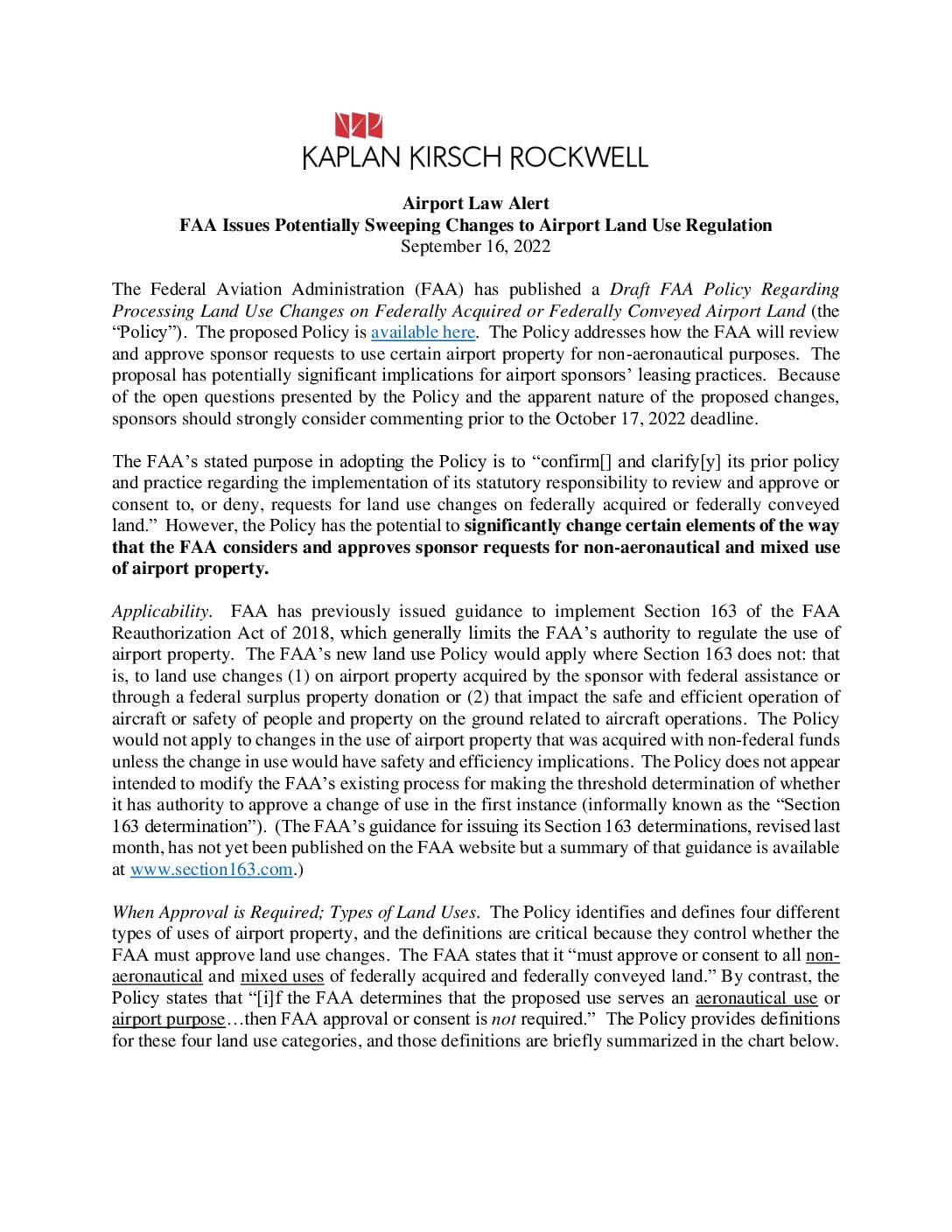
    Airport Law Alert: FAA Issues Potentially Sweeping Changes to Airport Land Use Regulation

    The FAA proposed sweeping new rules in September 2022 governing how airports can use federally acquired or conveyed land for non-aeronautical purposes, such as hotels, warehouses, and car rental facilities. Under the draft policy, airports would need FAA approval for any non-aeronautical or mixed-use activities on such land, with approvals tied strictly to lease terms and requiring renewal each time a lease expires. The changes could significantly increase the regulatory burden on airport sponsors by eliminating the previous practice of permanently designating certain property as non-aeronautical and potentially triggering environmental review requirements under NEPA.
    TagsAirport Law, FAA, Kaplan Kirsch Rockwell, Land Use, NEPA, Reauthorization Act Of 2018, Section 163FolderLaw
  • 2022-09-15

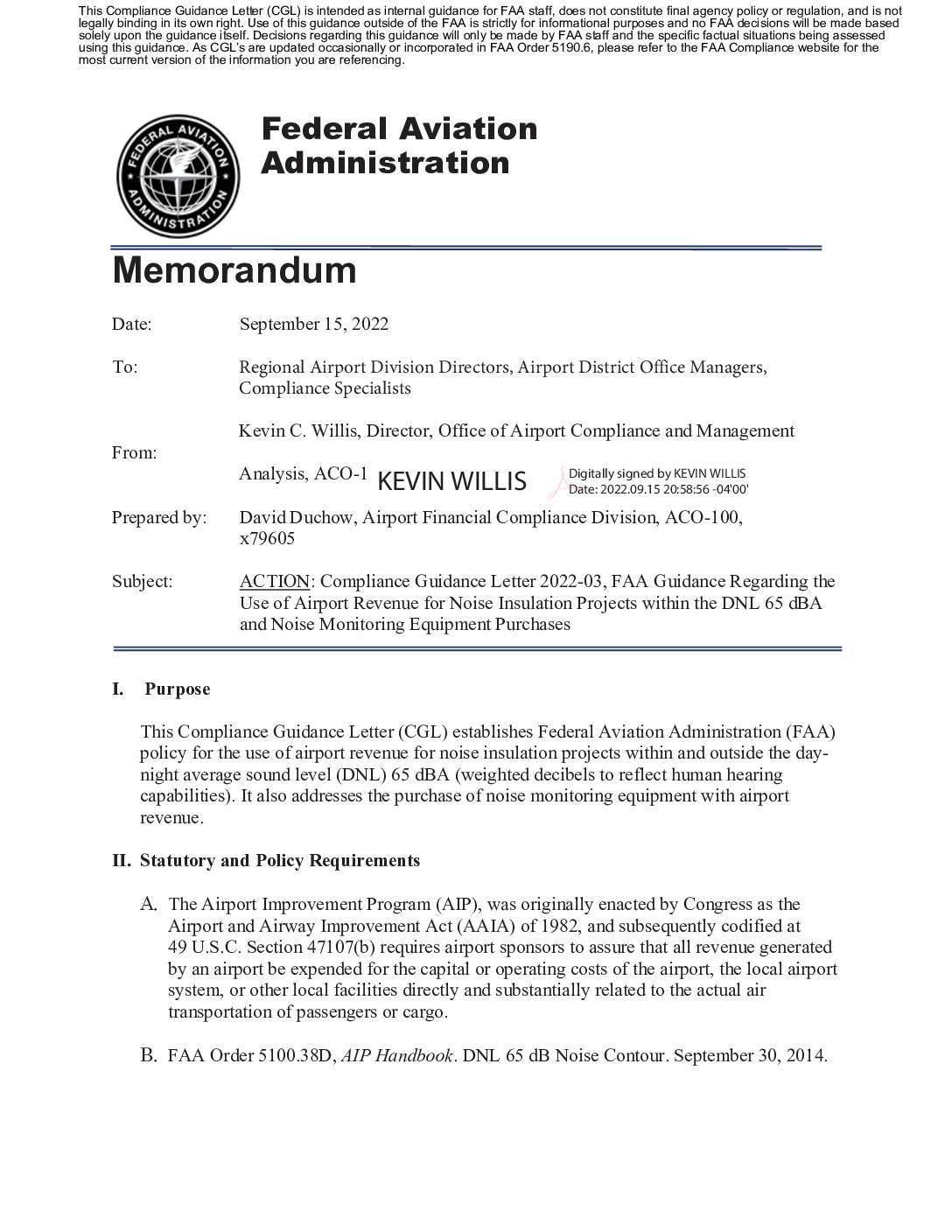
    Compliance Guidance Letter 2022-03, FAA guidance regarding the use of airport revenue for noise insulation projects within the DNL 65 dBA and noise monitoring equipment purchases

    This 2022 FAA guidance letter explains how airports can legally spend airport revenue on noise insulation projects, such as new windows, doors, and air conditioning, for homes and schools located within the DNL 65 dBA noise contour — the federal threshold for significant aircraft noise impact. Spending airport revenue on noise insulation for properties outside that noise boundary is generally prohibited as revenue diversion, unless a lower local noise standard has been officially adopted or 'block rounding' has been approved. The letter also clarifies that airports may purchase mobile or permanent noise monitoring equipment using airport revenue, provided certain conditions are met, but monitors cannot be used to enforce noise abatement flight procedures.
    TagsAIP, DNL65, FAA, Noise Mitigation, Noise MonitorsFolderFAA

Posts pagination

Page 1 … Page 27 Page 28 Page 29 Page 30 Page 31 … Page 69
Sidebar On/Off

Upcoming Events

  • Part 150 NCP Workshop — Burien
    Add to CalendarMSaturday Oct 17: 10:00am

    Attend a Port of Seattle open house on the Part 150 Study Noise Compatibility Program (NCP). The Part 150 program determines the noise boundary around the airport and opportunities for noise mitigation such as sound insulation.

    [...]
  • Part 150 NCP Workshop — SeaTac
    Add to CalendarMMonday Oct 19: 6:00pm

    Attend a Port of Seattle open house on the Part 150 Study Noise Compatibility Program (NCP). The Part 150 program determines the noise boundary around the airport and opportunities for noise mitigation such as sound insulation.

    [...]
  • Part 150 NCP Workshop — Des Moines
    Add to CalendarMTuesday Oct 20: 6:00pm

    Attend a Port of Seattle open house on the Part 150 Study Noise Compatibility Program (NCP). The Part 150 program determines the noise boundary around the airport and opportunities for noise mitigation such as sound insulation.

    [...]

[See all...]


Issues

Sea-Tac Airport is currently undergoing the largest and longest expansion in its history, collectively known as the Sustainable Airport Master Plan (SAMP). Some of it you can already hear, but you’re probably not aware of what it all means. Here’s what you need to know.
read more...

Read This!

As the source for federal transportation grants, the Puget Sound Regional Council was charged with developing a system to meet the growing need for commercial aviation. When the search for a second airport failed, they authorized the Port of Seattle to build the Third Runway, with a mandate to develop a noise abatement and mitigation program. In their effort to stop the Third Runway, the ACC argued over every detail of the Port's efforts--including property buyouts and sound insulation. The dispute was meant to be settled by a three member Expert Arbitration Panel. This is their final report. It finds 2-1, that the Port's program was insufficient in several respects. Despite that, funding for the Third Runway was approved by the PSRC, and the 'Port Package' program, proceeded largely unchanged. Expert Arbitration Panel's final decision finding that the Port of Seattle had not shown sufficient reduction in real on-the-ground noise impacts to satisfy noise reduction conditions required for approval of a third runway at Sea-Tac International Airport. The majority decision concluded the Port's noise abatement programs were insufficient despite being impressive in scope.
continue...

  • Sea-Tac Noise.Info
  • Connect with STNI

    • Subscribe
    • Port Package Problem?
    • Donate
    • Podcast
    • Socials
      • Facebook
      • X (Twitter)
      • Bluesky
      • Instagram
  • Learn

    • Frequently Asked Questions
    • Explainers
    • Youtube
    • Research Requests
    • Complain about one flight
  • Goals

    Fulfill the promises of 1976:
    • Compensation
    • Reduced noise
    • Improved air quality
    • Environmental remediation
Login/Register
©2026•Data Privacy

Message

We use cookies to provide basic functionality. We also provide access to search engines in order to provide site analytics. We do not sell or share your data.
V V