TagFAA(687)
-
 2022-07-28
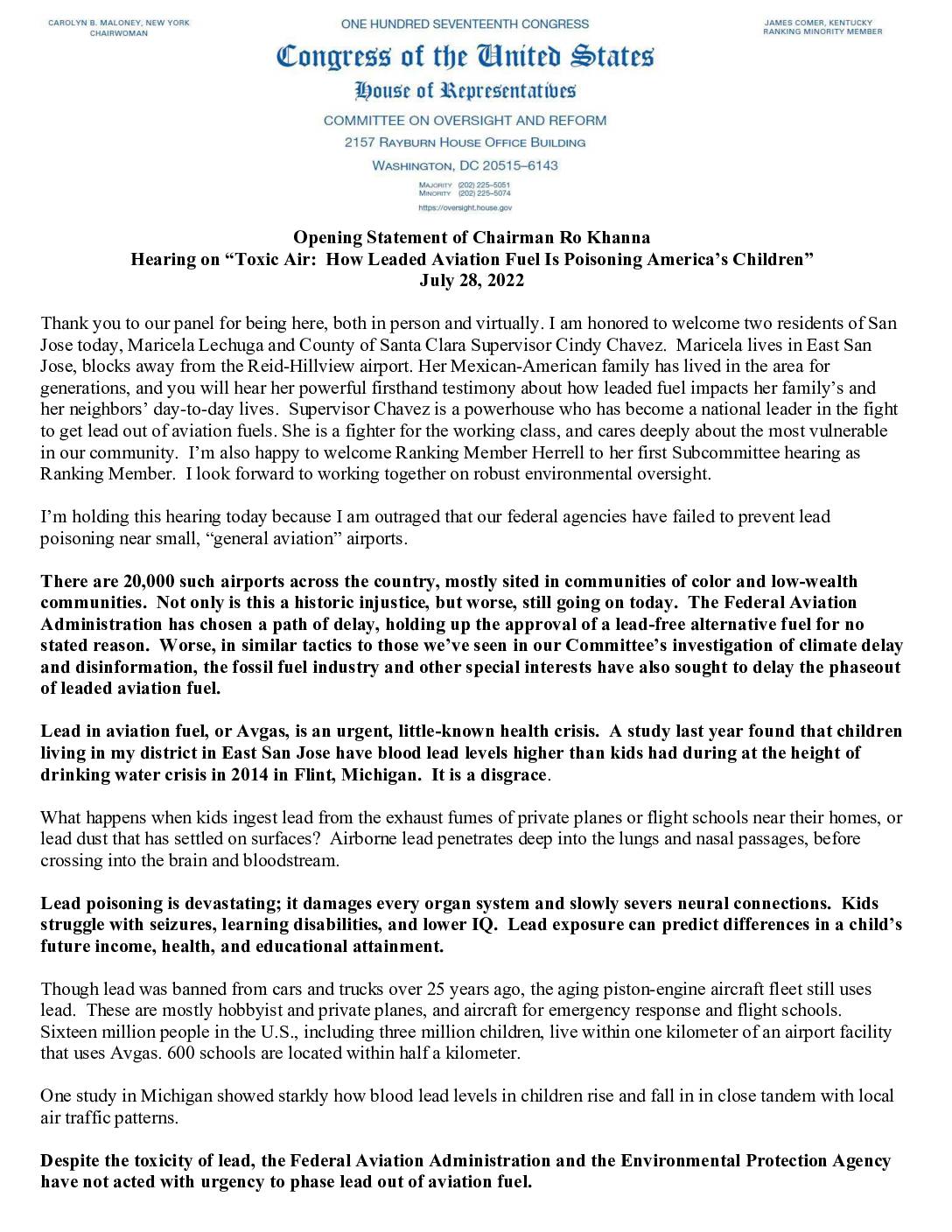
Opening Statement of Chairman Ro Khanna: Hearing on “Toxic Air: How Leaded Aviation Fuel Is Poisoning America’s Children”
In a July 2022 congressional hearing, Chairman Ro Khanna highlighted the health dangers of leaded aviation fuel (Avgas) still used in small general aviation aircraft, noting that children near airports in communities of color face blood lead levels exceeding those seen during the Flint water crisis. The statement criticizes the FAA and EPA for failing to act urgently on phasing out leaded fuel, despite the existence of viable unleaded alternatives, and accuses oil companies and aviation industry groups of deliberately delaying the transition. Khanna calls on federal agencies to accelerate approval of lead-free fuel options, involve affected communities in decision-making, and use infrastructure funding to support the switch to unleaded aviation fuel. -
 2022-07-14
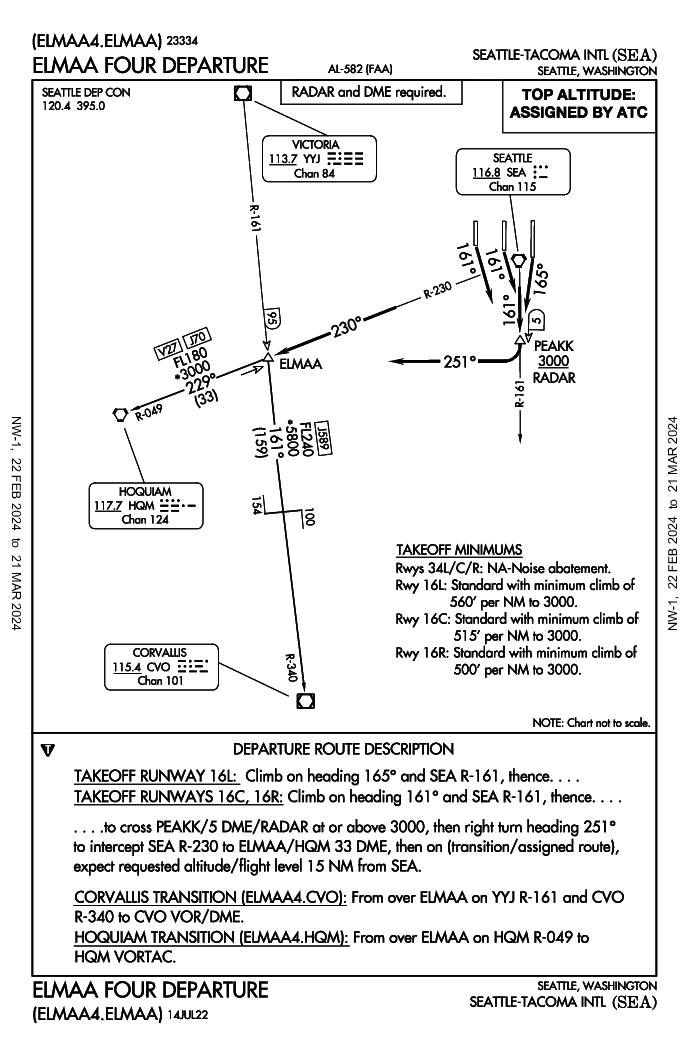
ELMAA Four Departure (ELMAA4.ELMAA) — Seattle-Tacoma International Airport Standard Instrument Departure
The ELMAA Four Departure is a standard instrument departure procedure for Seattle-Tacoma International Airport (SEA) that routes aircraft southward after takeoff on runways 16L, 16C, or 16R. Departing aircraft climb on headings of 161°–165°, cross the PEAKK waypoint at or above 3,000 feet, then turn right to intercept the SEA R-230 radial toward the ELMAA fix, with onward transitions available to Hoquiam (HQM) or Corvallis (CVO). Notably, departures from runways 34L, 34C, and 34R are not authorized due to noise abatement restrictions, and minimum climb gradients of up to 560 feet per nautical mile are required depending on the runway used. -
 2022-07-14
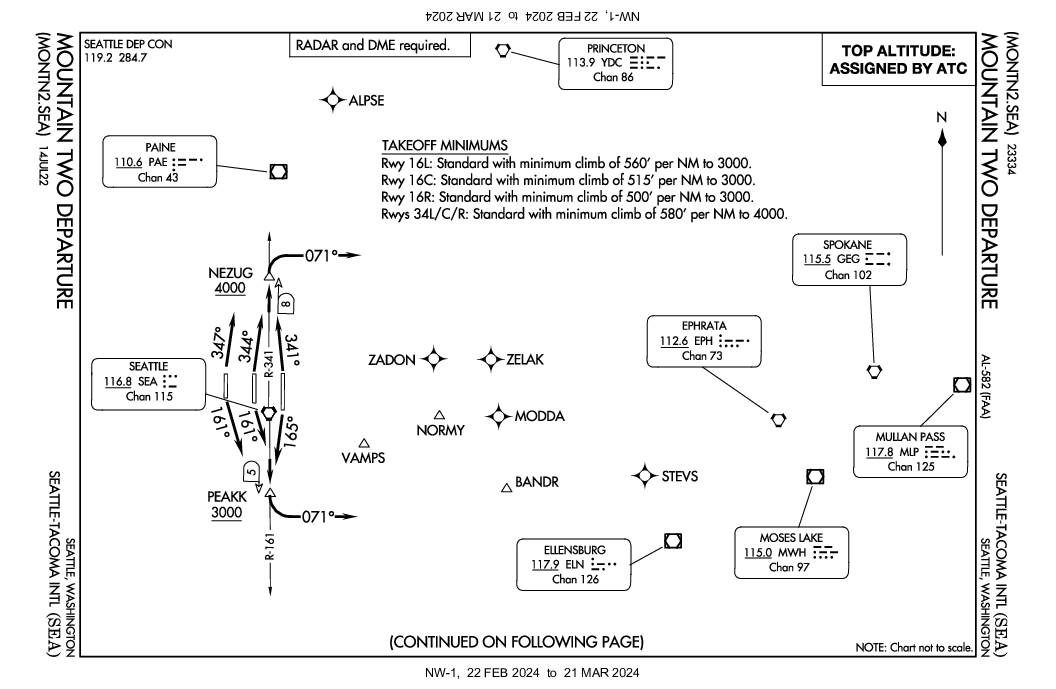
Mountain Two Departure (MONTN2.SEA) — Seattle-Tacoma International Airport Standard Instrument Departure
The Mountain Two Departure (MONTN2.SEA) is an instrument departure procedure for Seattle-Tacoma International Airport (SEA) that provides pilots with specific climb and routing instructions based on which runway they are using. Departing aircraft must meet minimum climb gradients ranging from 500 to 580 feet per nautical mile depending on the runway, and are directed to fly specific headings before turning eastbound on a 071° heading toward fixes like PEAKK or NEZUG. The procedure requires radar and DME equipment, with top altitude assigned by ATC and a lost communications protocol directing pilots to proceed direct to the SEA VORTAC at 4,000 feet. -
 2022-06-30
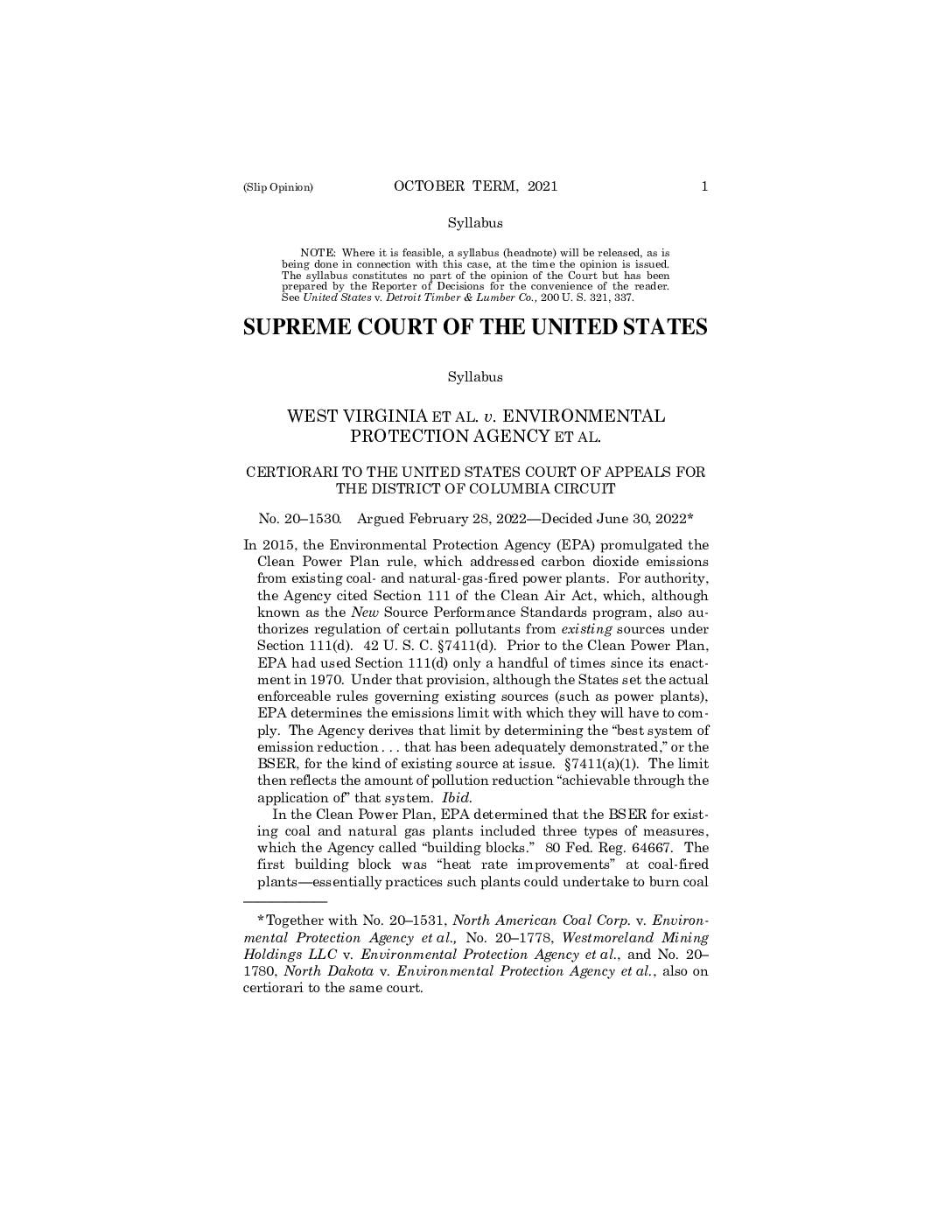
West Virginia et al. v. Environmental Protection Agency et al.
In West Virginia v. EPA (2022), the U.S. Supreme Court ruled on whether the Environmental Protection Agency had the legal authority to use the Clean Air Act's Section 111(d) to require power plants to shift electricity generation away from coal toward cleaner energy sources. The Court examined EPA's 2015 Clean Power Plan, which set carbon dioxide emissions limits so strict that coal plants could only comply by reducing their own production or investing in natural gas and renewable energy. The case ultimately turned on whether Congress had clearly granted EPA such broad authority to reshape the national energy mix, a question analyzed under the 'major questions doctrine.' -
 2022-05-19
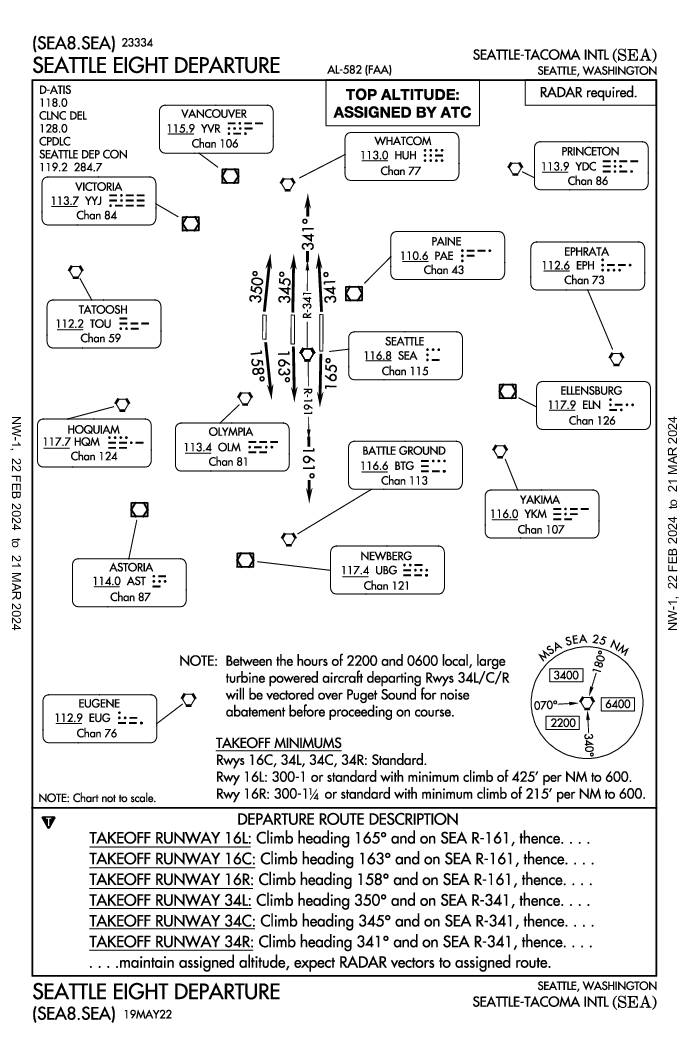
Seattle Eight Departure (SEA8.SEA) — Standard Instrument Departure Chart
The Seattle Eight Departure (SEA8.SEA) is a standard instrument departure procedure for Seattle-Tacoma International Airport, outlining specific climb headings and routes for each runway to guide aircraft safely after takeoff. A notable noise-abatement provision requires large turbine-powered aircraft departing runways 34L, 34C, and 34R between 10 PM and 6 AM local time to be vectored over Puget Sound before proceeding on course. The procedure requires radar and assigns top altitude by ATC, with special minimum climb gradients applicable to runways 16R and 16L. -
 2022-05-01
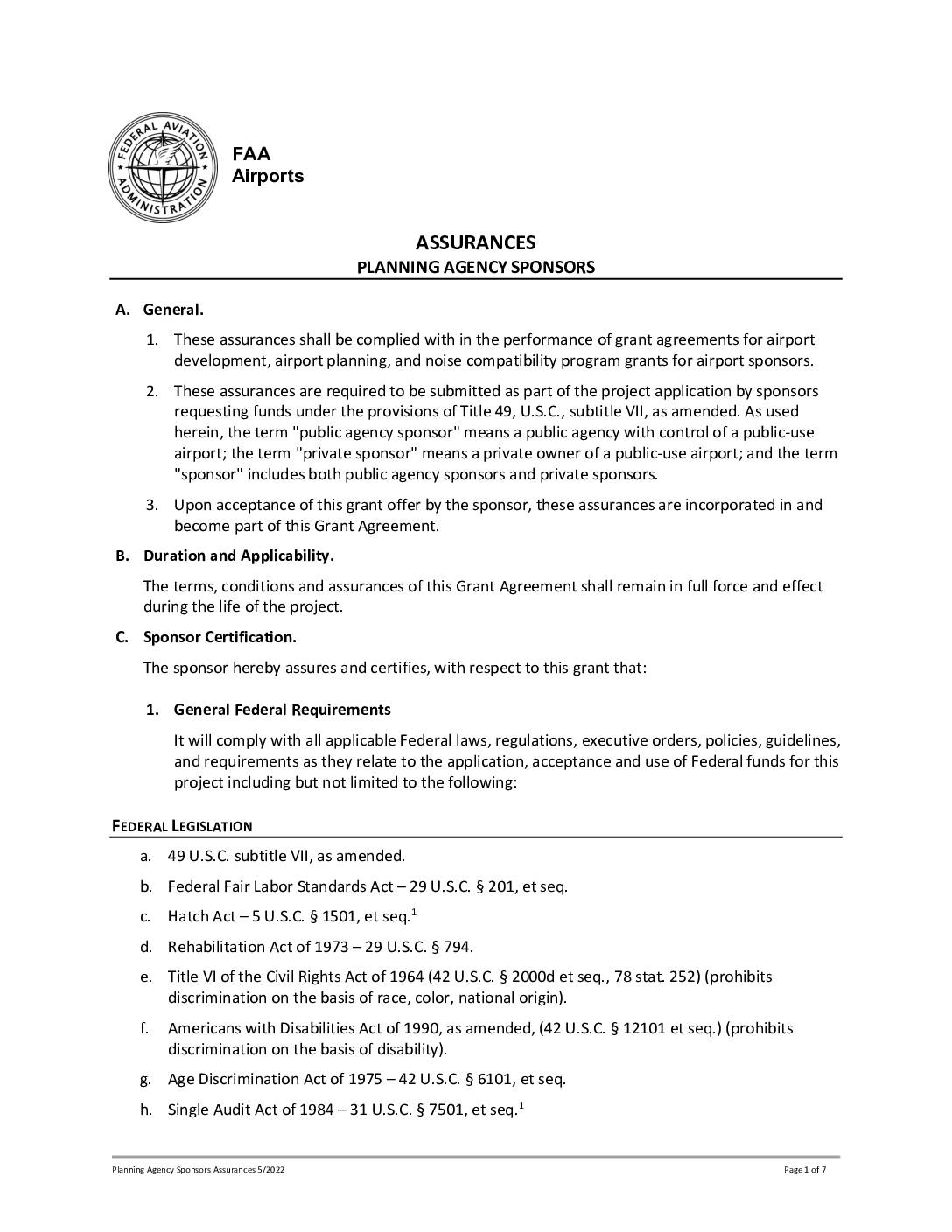
Assurances: Planning agency sponsors
This FAA document outlines the legal assurances that planning agency sponsors must agree to when receiving federal grant funds for airport development, planning, or noise compatibility programs. Sponsors certify compliance with a broad range of federal laws, executive orders, and regulations—including civil rights, disability, and environmental requirements—and must maintain proper financial records subject to federal audit. The agreement remains binding for the full life of the funded project. -
 2022-05-01
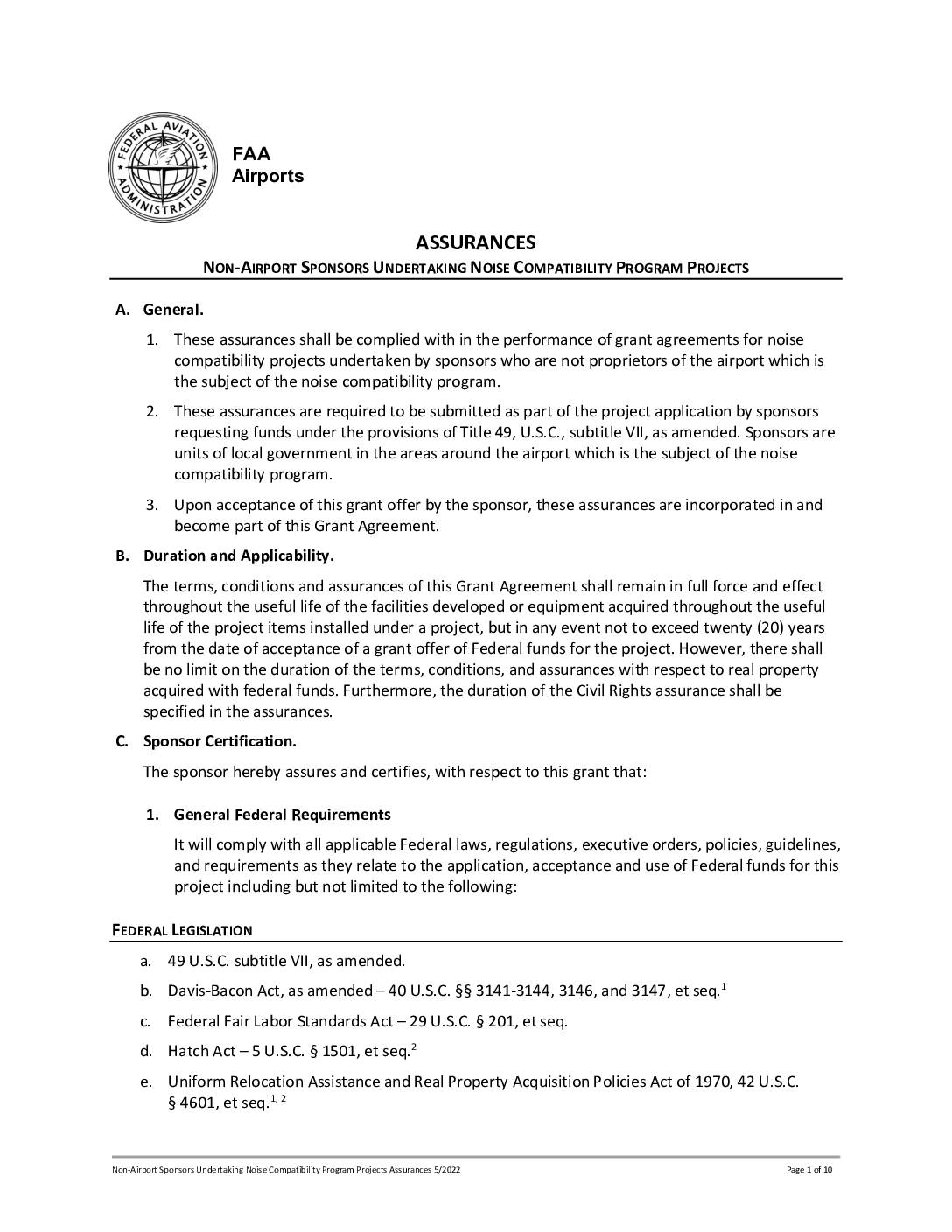
Assurances: Non-airport sponsors undertaking noise compatibility program projects
This FAA document outlines the legal assurances that non-airport sponsors (such as local governments near an airport) must agree to when receiving federal grant funds for noise compatibility projects. Sponsors must comply with a wide range of federal laws, executive orders, and regulations — covering areas like civil rights, environmental protection, labor standards, and property acquisition — for the duration of the project, up to 20 years. These assurances become legally binding upon acceptance of the federal grant offer. -
 2022-05-01
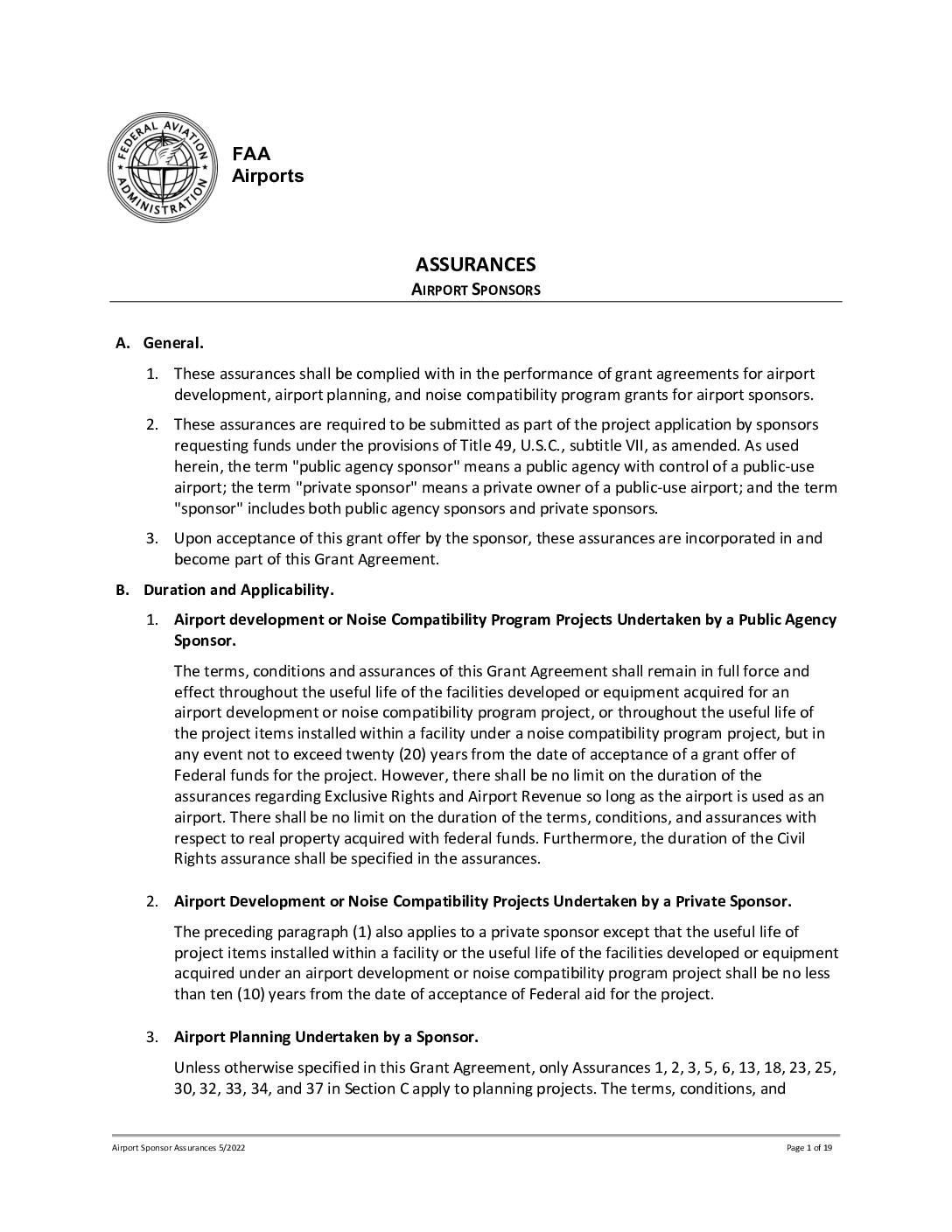
Assurances: Airport sponsors
This FAA document outlines the legally binding assurances that airport sponsors must agree to when accepting federal grant funds for airport development, planning, or noise compatibility programs. Sponsors certify compliance with a broad range of federal laws, executive orders, and regulations—including civil rights, environmental, and labor standards—for the duration of the project's useful life, which can extend up to 20 years. Certain obligations, such as those related to exclusive rights, airport revenue, and real property acquired with federal funds, have no expiration as long as the airport remains in operation. -
 2022-03-29
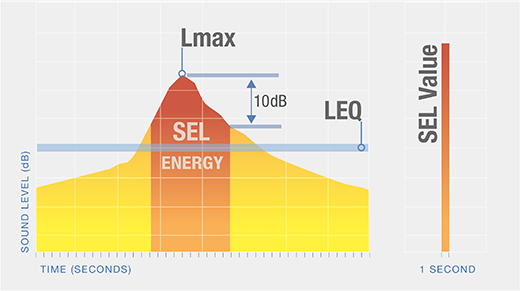
Fundamentals of Noise and Sound | Federal Aviation Administration
Noise Metrics Noise Contours Sound is energy transferred through the air that our ears detect as small changes in air pressure. The more energy put into making a sound, the louder it will be. Try whispering. Then yell. You can feel how much more energy goes into yelling. Noise is sound that is unwanted. Some -
6 Questions about Section 163 (Including ‘Is this Really Good for Airports?’)
FAA is obligated to document whether or not it has regulatory authority over use of airport property. A Section 163 determination involves looking at airport layout plan authority and how land was acquired. Rebecca Kanable Whether it’s a proposed Airport Layout Plan (ALP) change, a change in land use from aeronautical to non-aeronautical, or a