TagThird Runway(1084)
-
SEATLE PI: Ex-Des Moines mayor fined $2,500
Article on scandal involving former mayor Don Wasson’s attempt to pack the city council and move forward with the 3rd Runway -
 2018-08-02
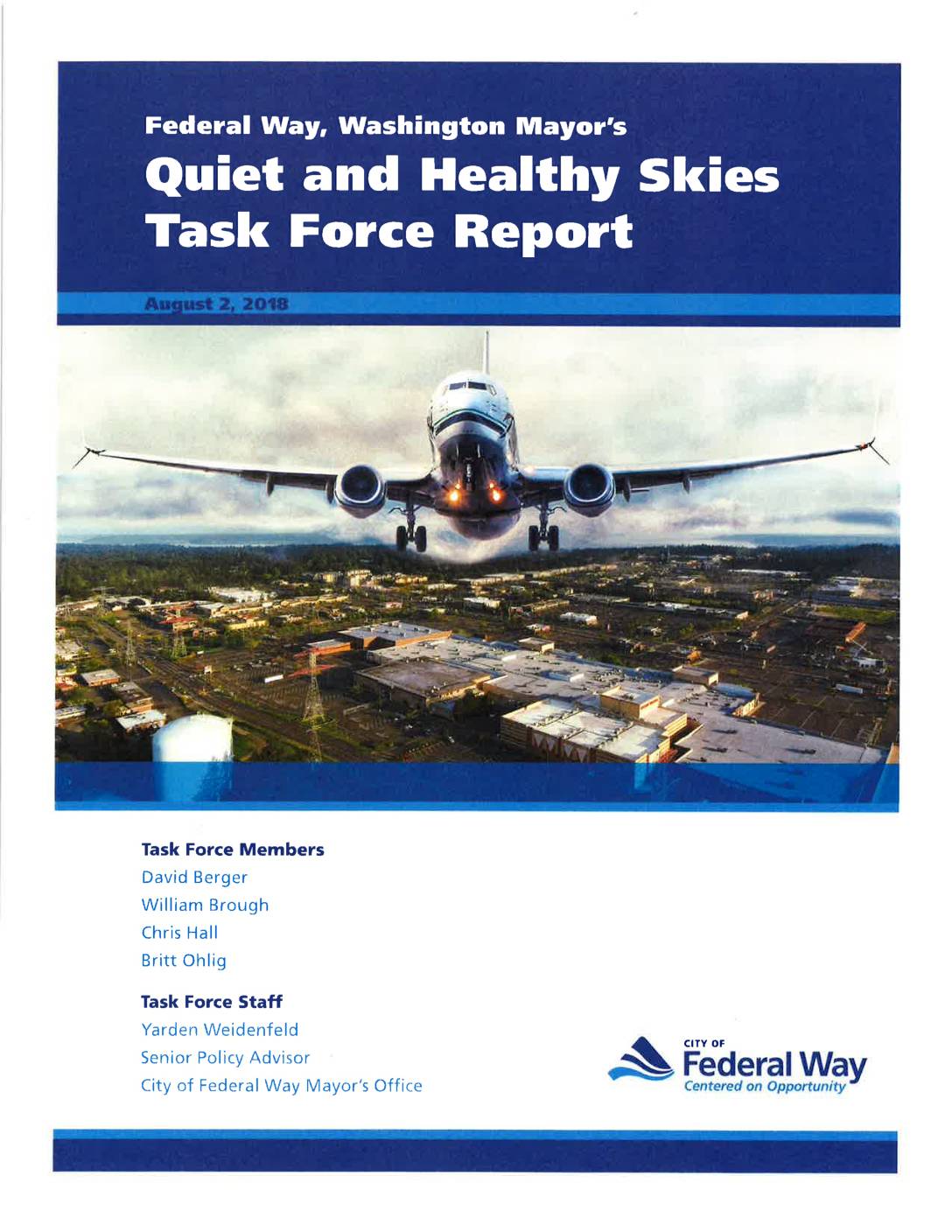
Federal Way Mayor’s Quiet and Healthy Skies Task Force Report
The Federal Way Mayor's Quiet and Healthy Skies Task Force Report, published August 2, 2018, examines how increased flight operations and Sea-Tac International Airport's third runway have worsened aircraft noise and air pollution for Federal Way residents. The report evaluates potential remedies such as changes to flight paths, glide slopes, and schedules, while also analyzing legal authority over cargo flight curfews and reviewing the airport's Sustainable Airport Master Plan. It concludes with recommendations aimed at reducing the disproportionate noise and health burdens placed on Federal Way communities. -
 2018-08-02
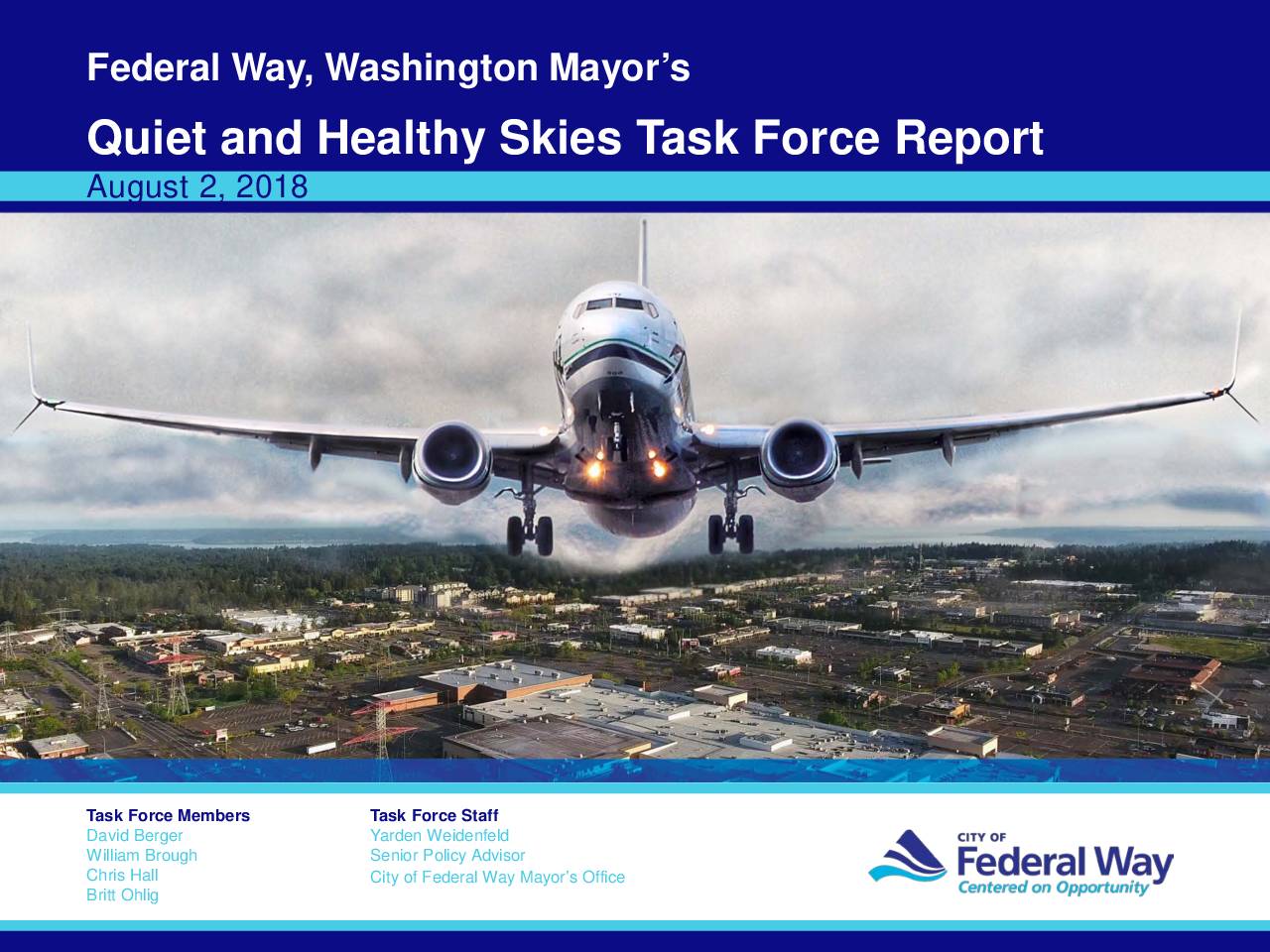
Federal Way Mayor’s Quiet and Healthy Skies Task Force Report
The Federal Way Mayor's Quiet and Healthy Skies Task Force Report (August 2018) examines the noise and health impacts of Seattle-Tacoma International Airport's Third Runway on Federal Way neighborhoods. It presents runway usage statistics from 2007–2017 showing a dramatic rise in flight operations, and references a 1997 impact mitigation study that identified over $148 million in recommended sound insulation and avigation easements for Federal Way communities affected by overflight noise. -
 2018-06-24
Declaration of Mary L. Vigilante in Opposition to Plaintiffs’ Amended Motion for Class Certification
Bearse v. Port Of Seattle -
 2018-06-21
Resolution No. 3245: Reaffirming adoption of a Master Plan Update for Seattle-Tacoma International Airport
Passed before 3rd Runway -
 2018-05-01
Health based criteria for use in managing airport and aircraft noise
This 2018 Harvard University master's thesis by Bryan Johnson examines health-based criteria that could be used to better manage noise from airports and aircraft. The research explores how noise exposure standards and guidelines could be grounded in public health evidence, offering a framework for more effective noise policy. It is relevant to ongoing discussions about managing community noise impacts around busy airports like Sea-Tac. -
 2017-05-12
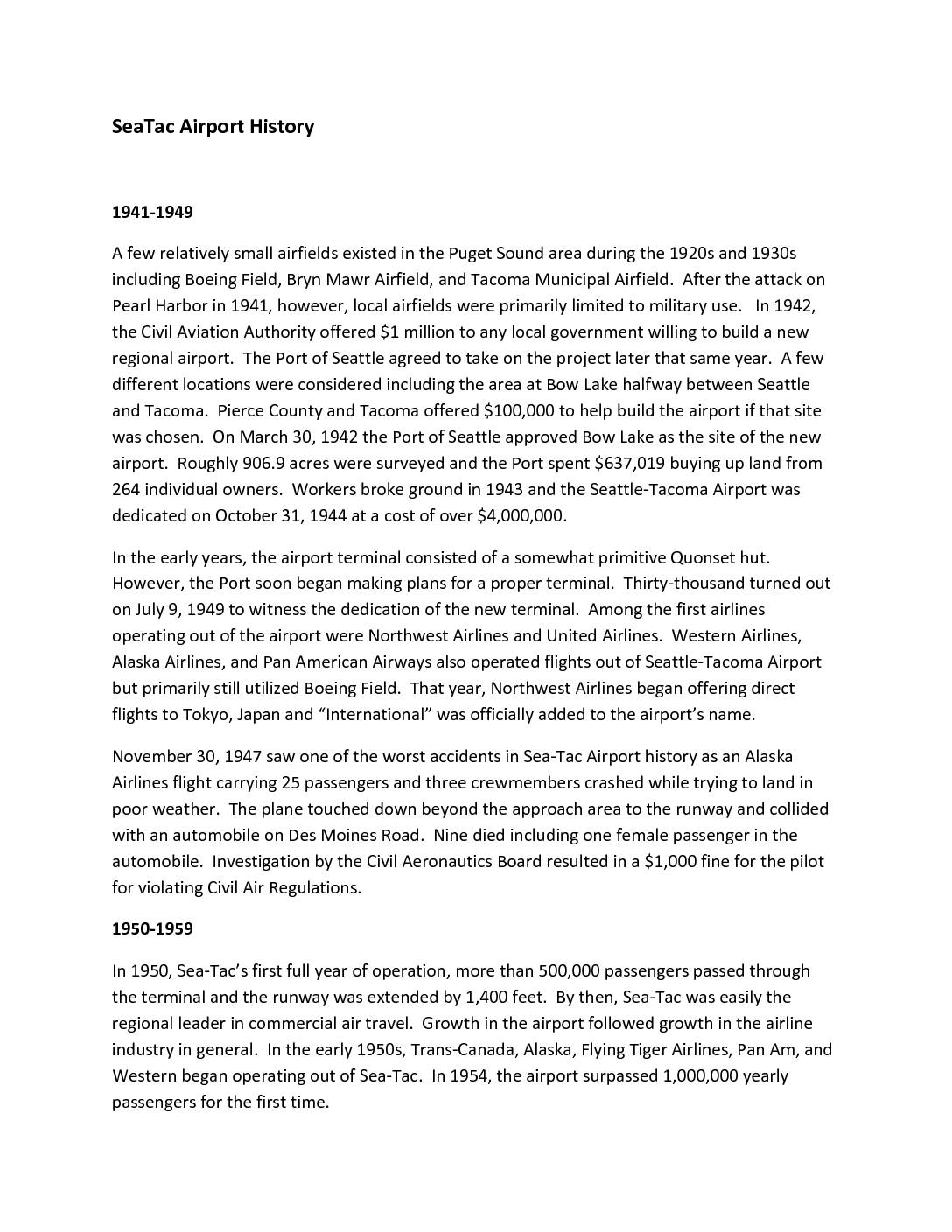
SeaTac Airport history
Seattle-Tacoma International Airport (Sea-Tac) has grown from a modest wartime airfield dedicated in 1944 on 906 acres of land near Bow Lake into one of the busiest airports in the United States, now serving nearly 47 million passengers annually. Over the decades, the airport underwent numerous expansions, security upgrades, and name controversies while navigating major events such as airline deregulation, the post-9/11 security overhaul, and a community-opposed third runway completed in 2008. Today, Sea-Tac supports more than 87,000 jobs and generates over $22 billion in economic activity for the region. -
 2016-11-09
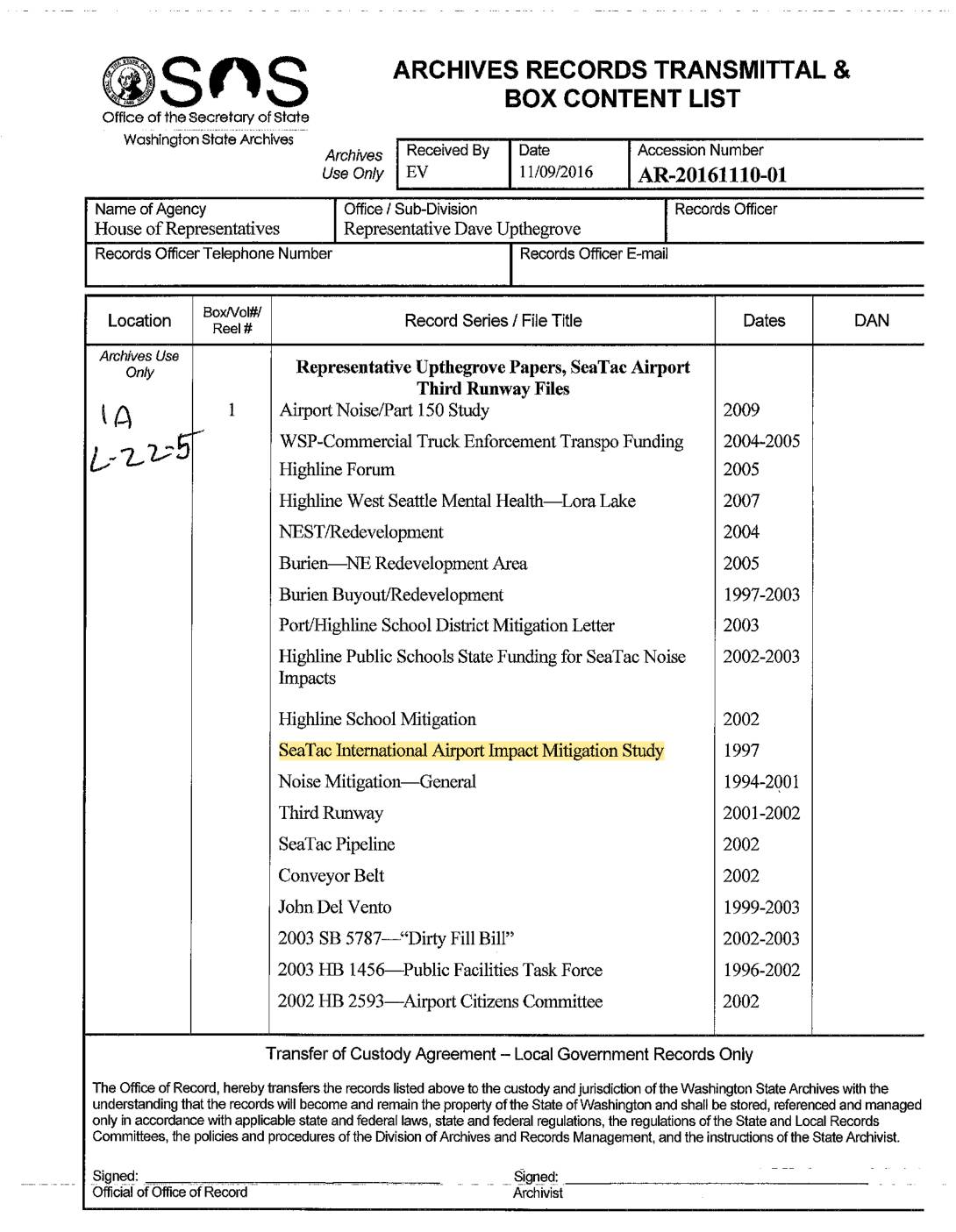
Archives Records Transmittal & Box Content List: Representative Upthegrove Papers, Sea-Tac Airport Third Runway Files
This is an archival transmittal record from the Washington State Archives documenting the transfer of Representative Dave Upthegrove's papers related to Sea-Tac Airport's Third Runway and associated noise mitigation files. The collection spans records from 1994 to 2009 and includes files on airport noise studies, school district mitigation funding, community redevelopment areas affected by airport expansion, and related legislation such as the 'Dirty Fill Bill' and Airport Citizens Committee bills. The records were received by the Washington State Archives on November 9, 2016, under accession number AR-20161110-01. -
 2016-06-28
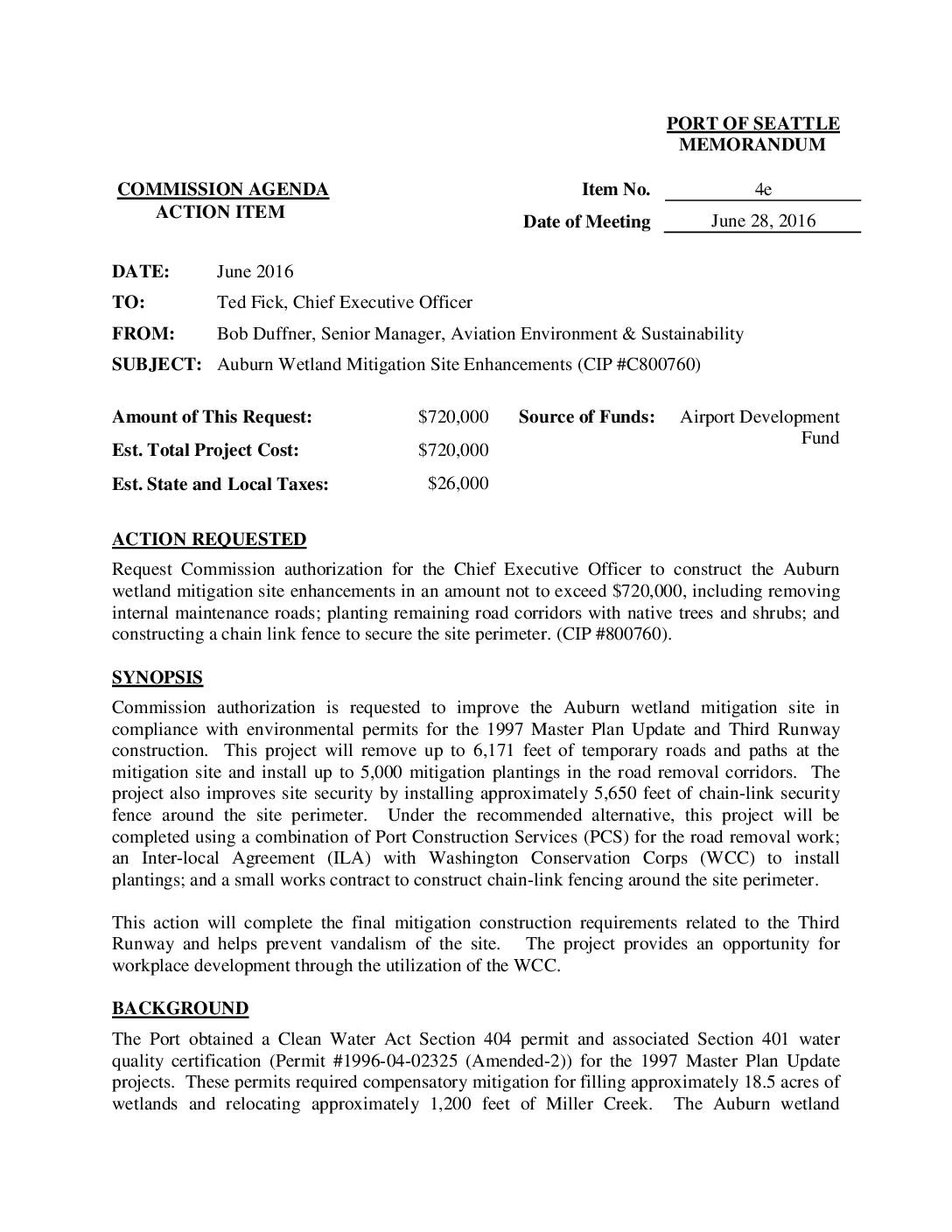
Auburn Wetland Mitigation Site Enhancements Memo (CIP #C800760)
The Port of Seattle requested $720,000 in Commission authorization to improve the Auburn wetland mitigation site, a nature area created to offset environmental impacts from Sea-Tac Airport's Third Runway construction. The project involves removing roughly 6,171 feet of temporary internal roads, planting approximately 5,000 native trees and shrubs in their place, and installing a new chain-link security fence to stop ongoing trespassing, vandalism, and illegal dumping. These enhancements are required to comply with Clean Water Act permits tied to the 1997 Master Plan Update and are intended to reduce long-term maintenance costs. -
 2015-02-13
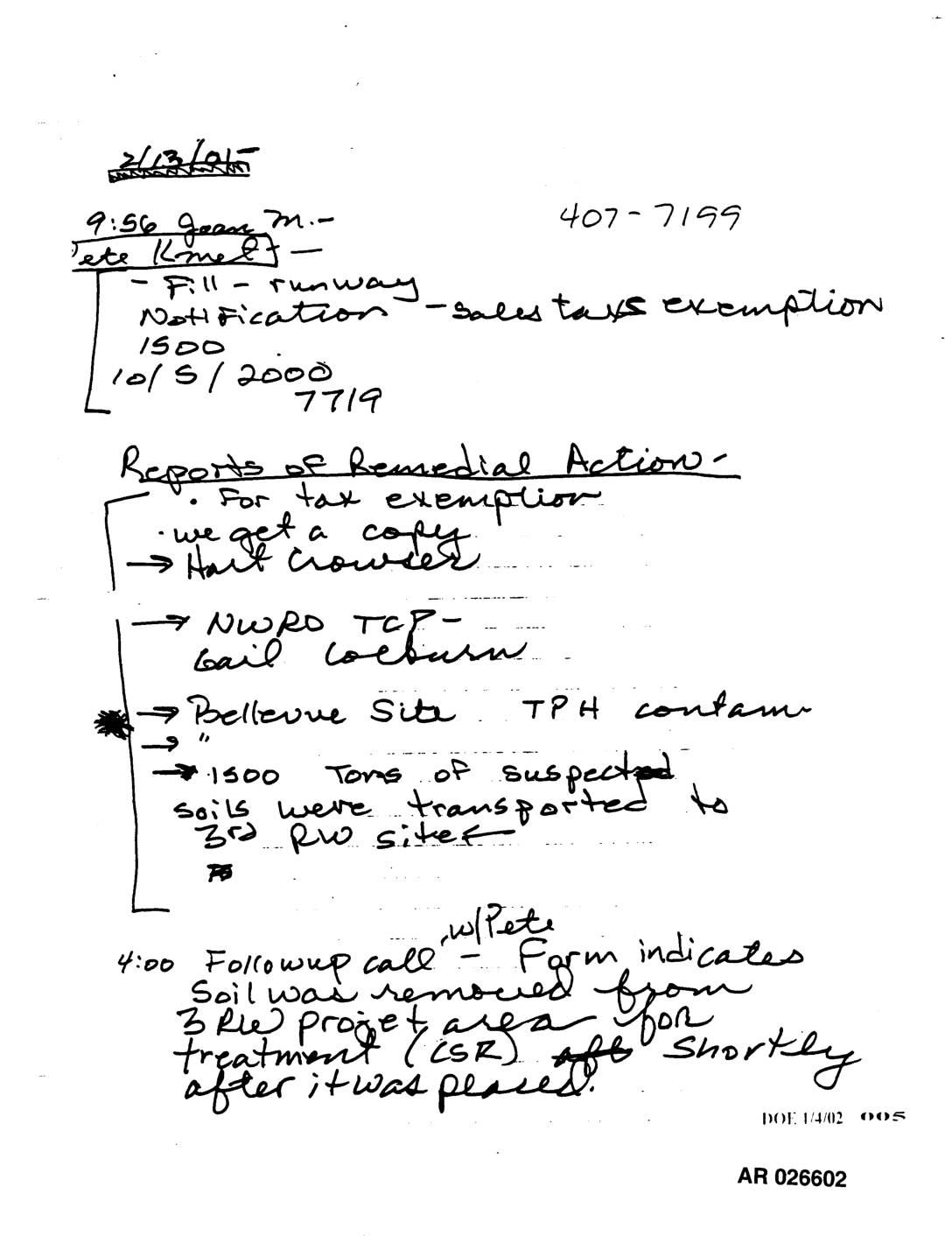
EXH AR026602: Handwritten Notes — Third Runway Fill Dirt, Sales Tax Exemption, TPH Contamination, Soil Removal
Handwritten notes dated 2/13 document a phone call at 9:56 AM regarding fill and runway notification related to a sales tax exemption, referencing figures of 1,500 and 10/5/2000. The notes also address Reports of Remedial Action concerning tax exemption copies, a Bellevue Site with TPH contamination, and 1,500 tons of suspected contaminated soils transported to three RW sites. A 4:00 PM follow-up call with Pete confirmed that soil was removed from three RW project areas for treatment (ISR) shortly after it was placed.