TagSalmon(32)
-
 2002-10-22
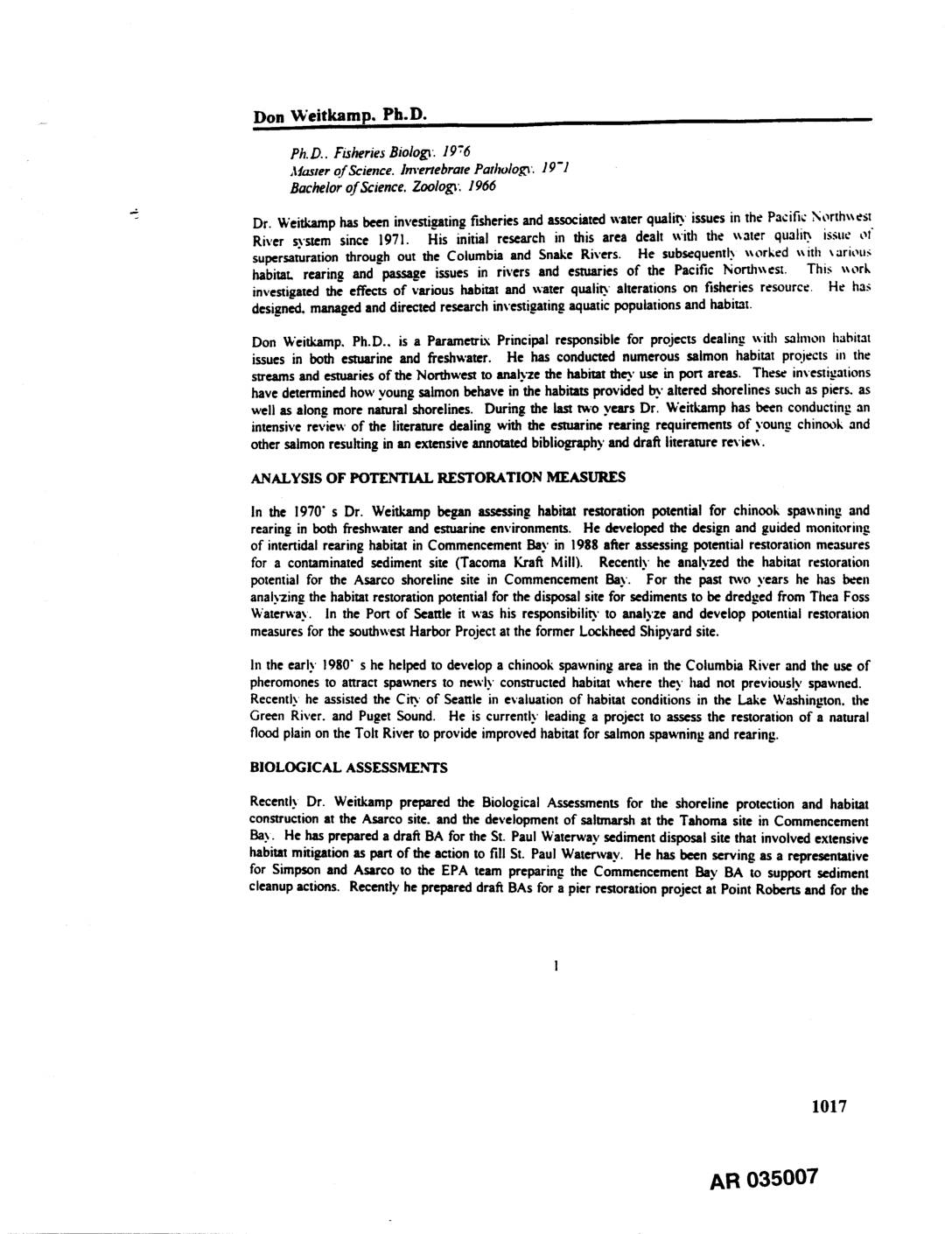
EXH AR035007: Curriculum Vitae — Don Weitkamp, Ph.D., Fisheries Biologist
Curriculum vitae for Don Weitkamp, Ph.D. (Parametrix Principal), fisheries biologist specializing in salmon habitat issues in estuarine and freshwater environments in the Pacific Northwest. Documents expertise in chinook salmon habitat assessment, biological assessments (BAs), and habitat restoration in Commencement Bay, Green-Duwamish River, Elliott Bay, Columbia River, Snake River, and Puget Sound. Projects include Asarco shoreline -
 2002-10-21
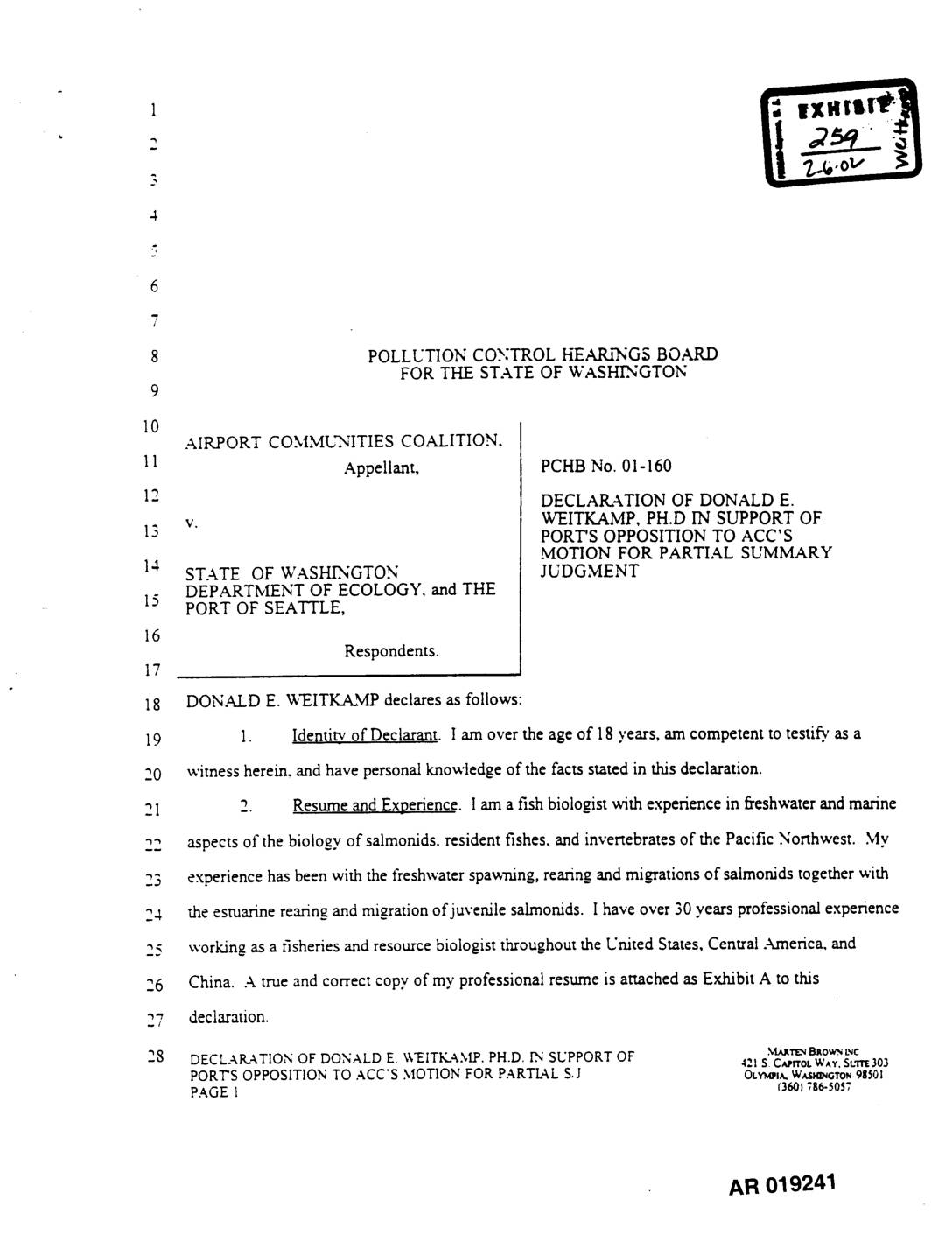
EXH 259: Declaration Donald E. Weitkamp PhD Support Opposition ACC Motion Partial Summary Judgment
Fish biologist Donald E. Weitkamp submitted this declaration opposing a legal challenge to Sea-Tac Airport's expansion plans, arguing that the airport's stormwater controls and water quality measures adequately protect nearby streams. He concluded that the headwater portions of Miller, Walker, Des Moines, and Gilliam Creeks near the airport are unlikely to support chinook or chum salmon, as urbanization has altered those streams to favor warm-water species instead. The declaration supports the Port of Seattle's position that its Master Plan Update projects meet environmental standards and will not significantly harm local aquatic resources. -
 2002-10-21
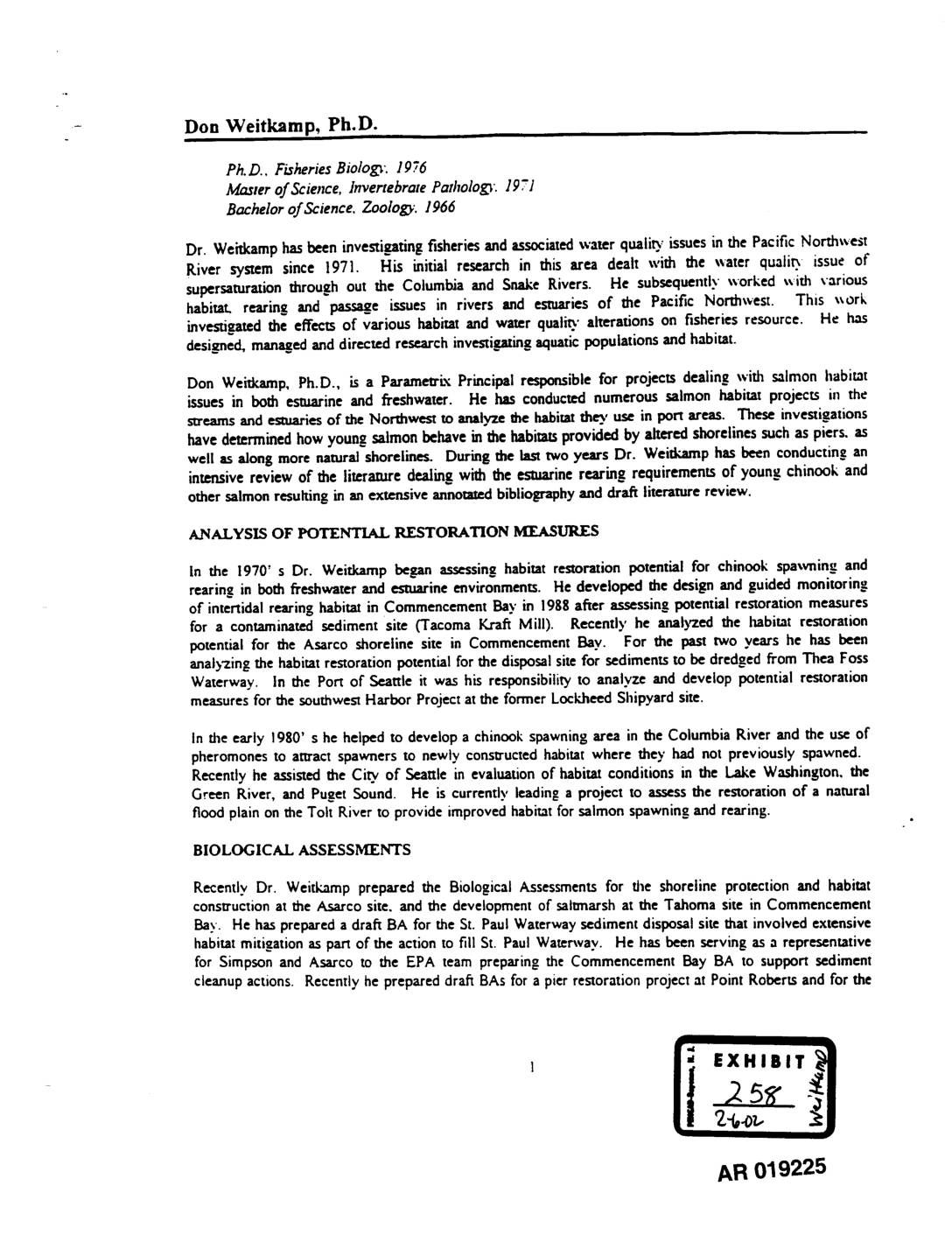
EXH 258: CV Don Weitkamp PhD Fisheries Biologist Parametrix
This document is a professional biography and project experience summary for Dr. Don Weitkamp, a fisheries biologist with a Ph.D. from 1976, who has spent decades studying salmon habitat, water quality, and shoreline restoration in the Pacific Northwest. His work has focused on rivers, estuaries, and coastal areas including Commencement Bay, the Green-Duwamish River, and Elliott Bay, involving biological assessments, habitat restoration, and hydroelectric dam impacts. This document does not contain information related to Sea-Tac Airport noise policy. -
 2002-02-12
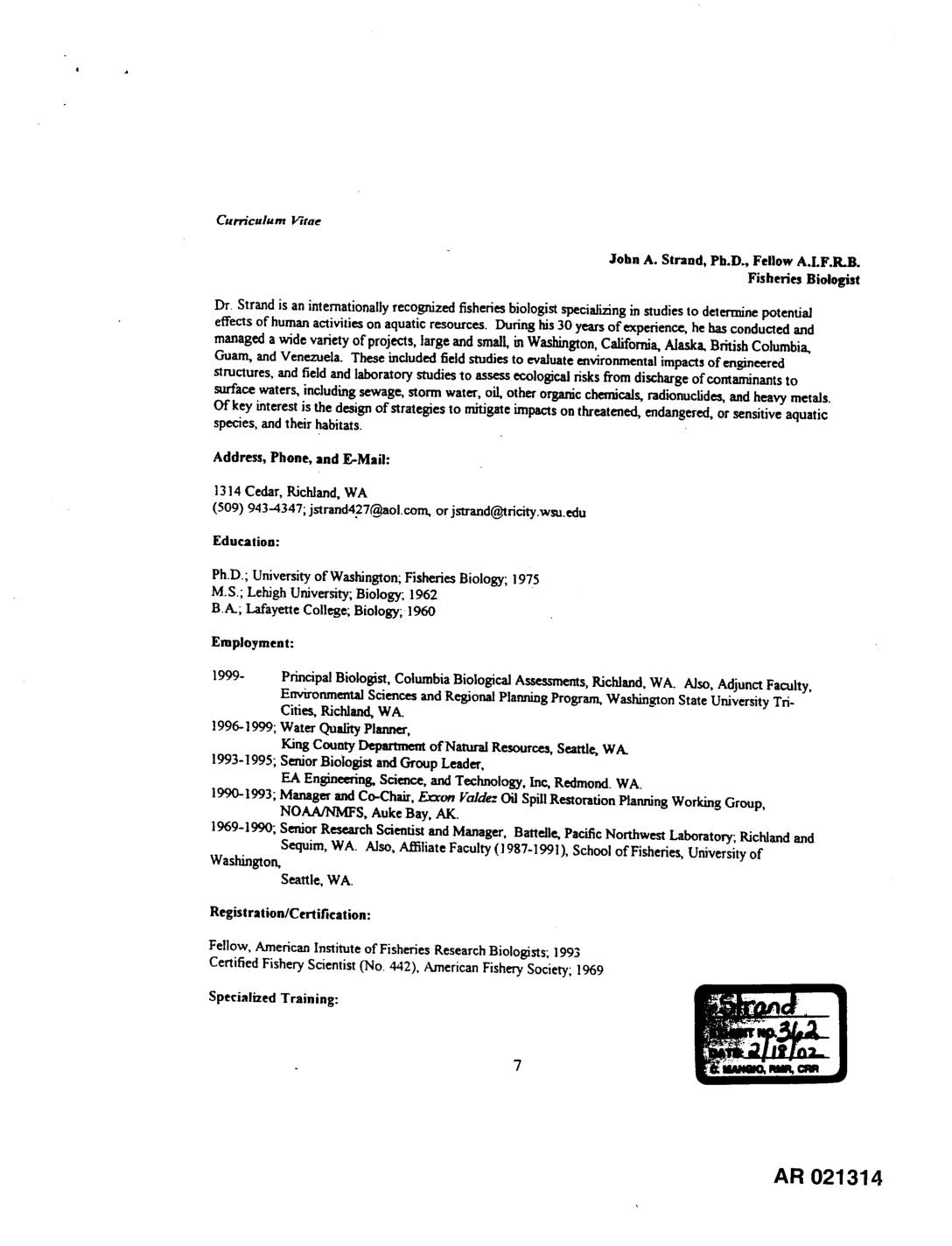
EXH 362: CV John A. Strand PhD FAIFR Fisheries Biologist
This document is the curriculum vitae of Dr. John A. Strand, a fisheries biologist with 30 years of experience studying the effects of human activities on aquatic resources. His work spans Washington, California, Alaska, and other regions, covering environmental impact assessments, aquatic toxicology, and regulatory compliance related to contaminants such as oil, heavy metals, and radionuclides. While not directly related to airport noise policy, his expertise in endangered species protection and habitat mitigation may have been relevant to environmental review processes in the Seattle-area region. -
 2001-12-20
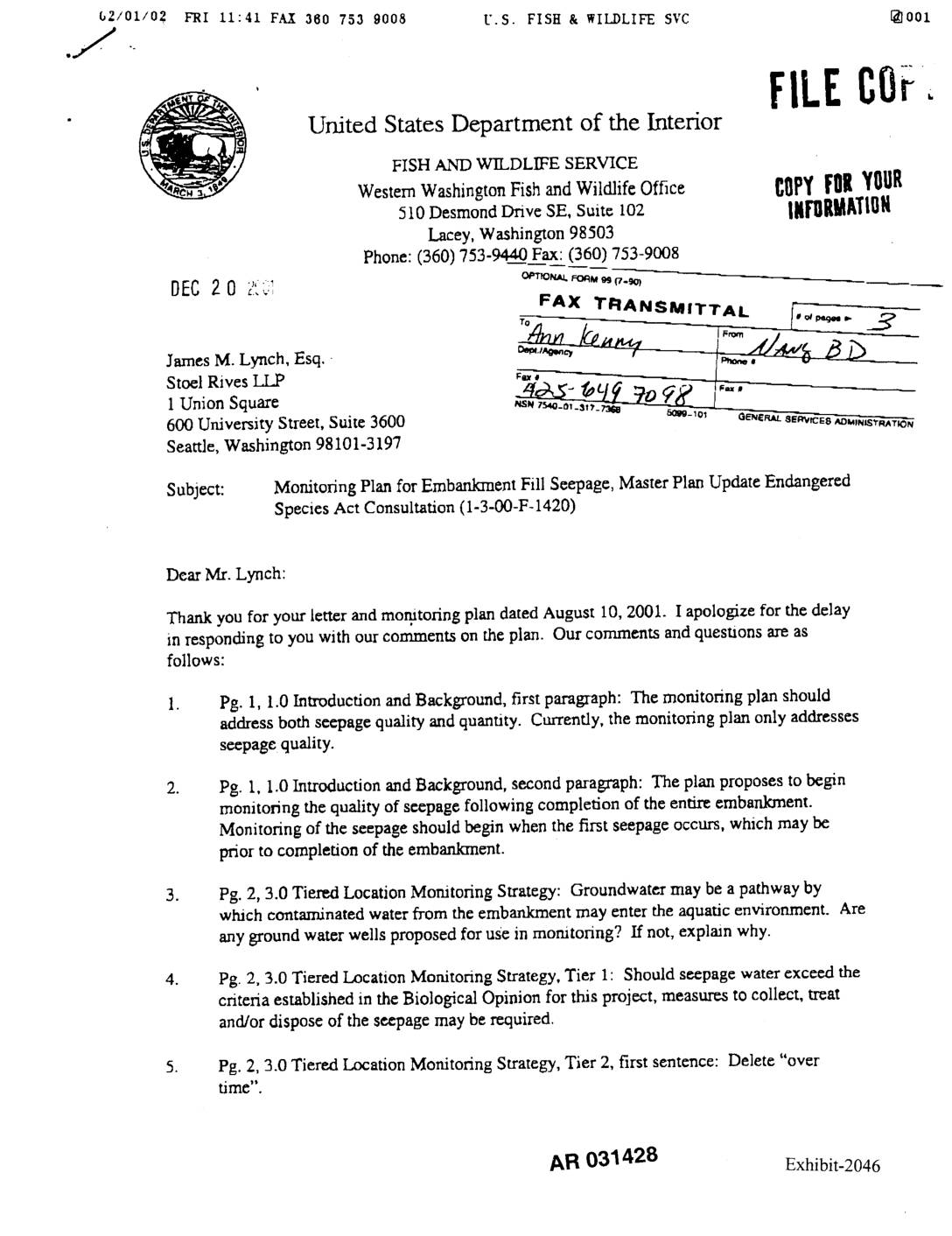
EXH AR031428: U.S. Fish & Wildlife Service Comments on Monitoring Plan for Embankment Fill Seepage, Master Plan Update ESA Consultation (1-3-00-F-1420)
Letter dated December 20, 2001 from Ken S. Berg, Manager, Western Washington Fish and Wildlife Office (U.S. Fish & Wildlife Service) to James M. Lynch, Stoel Rives LLP, providing 20 numbered comments on the Monitoring Plan for Embankment Fill Seepage submitted August 10, 2001 under Endangered Species Act consultation 1-3-00-F-1420 (Sea-Tac Airport Master Plan Update). -
 2001-09-01
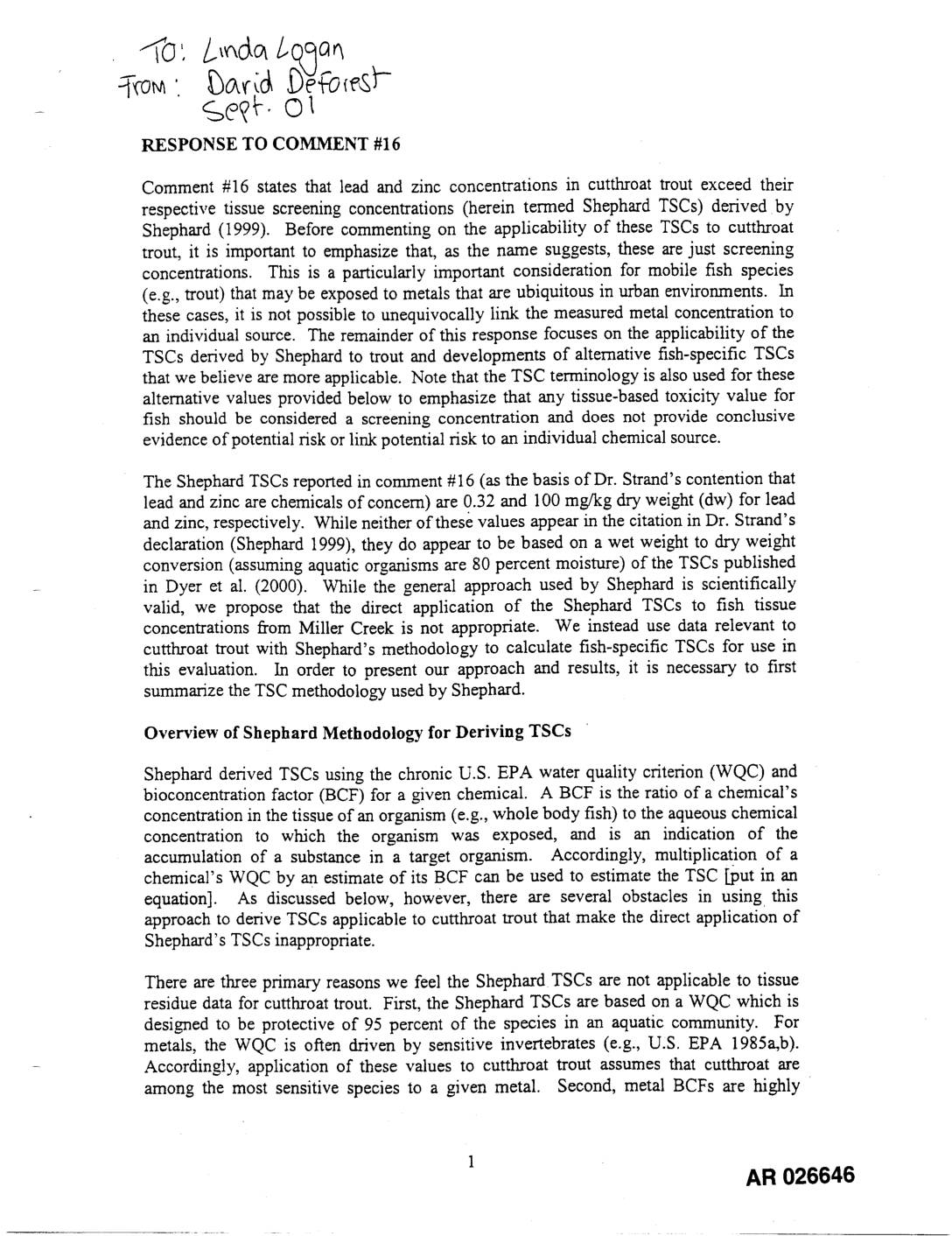
EXH AR026646: Response to Comment #16 — Fish Tissue Screening Concentrations Lead, Zinc, Copper, Miller Creek Cutthroat Trout
This technical memo evaluates whether lead and zinc levels found in cutthroat trout from Miller Creek pose a risk, arguing that standard tissue screening concentrations are not appropriate for trout. Using fish-specific toxicity data and bioconcentration factors, the authors derive alternative thresholds and conclude that measured metal levels in the trout fall well below harmful concentrations. The document recommends using species-specific methods rather than generic screening values when assessing metal risks to fish. -
 2001-09-01
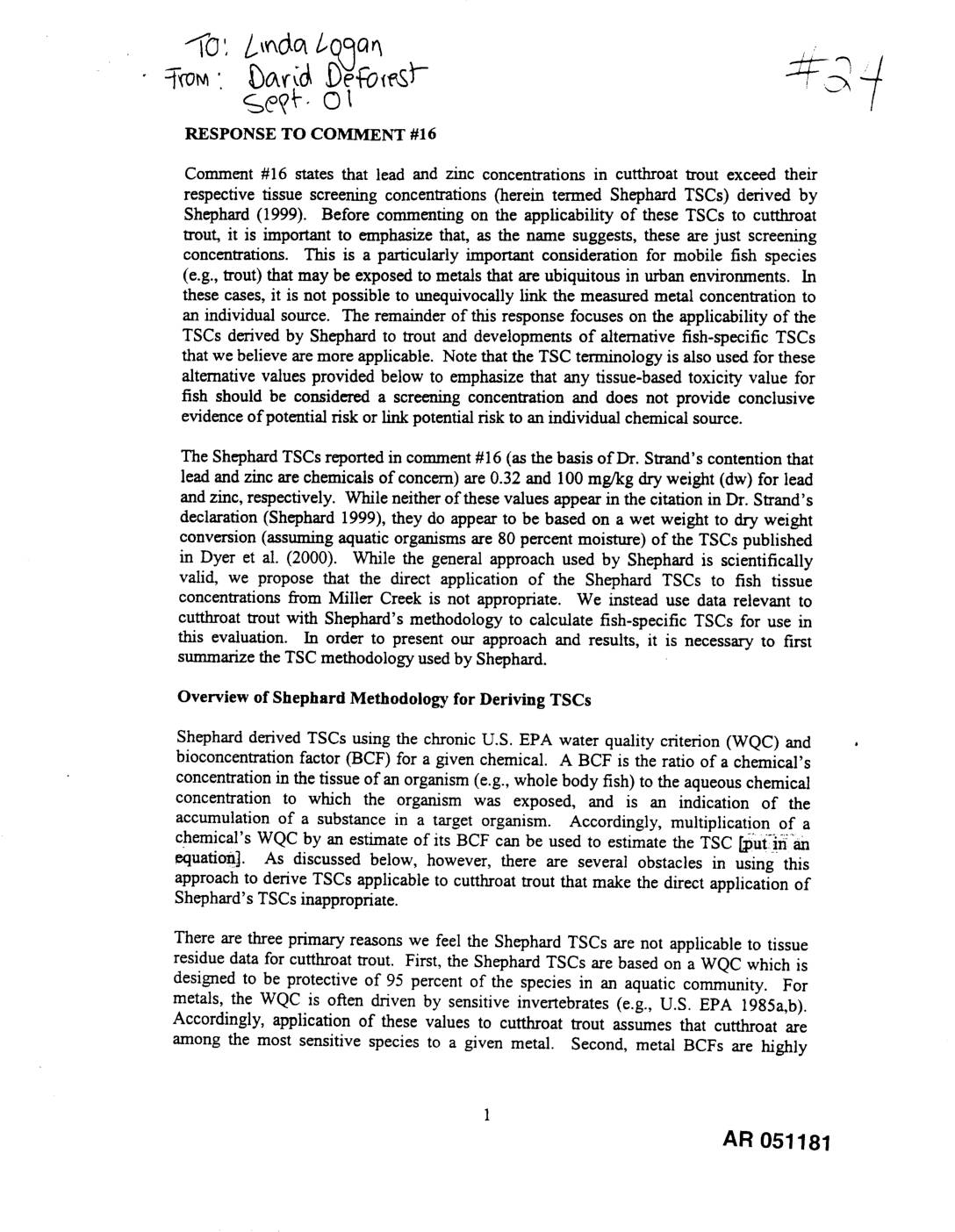
EXH AR051181: Response to Comment #16 — Fish-Specific Tissue Screening Concentrations for Lead, Zinc, and Copper in Cutthroat Trout, Miller Creek
Response to Comment #16 by David DeForest to Linda Logan (September 2001) critiquing Shephard (1999) tissue screening concentrations (TSCs) for lead (0.32 mg/kg dw) and zinc (100 mg/kg dw) as applied to cutthroat trout from Miller Creek. Argues Shephard TSCs derived from EPA water quality criteria and bioconcentration factors (BCFs) are not appropriate for cutthroat -
 2001-08-09
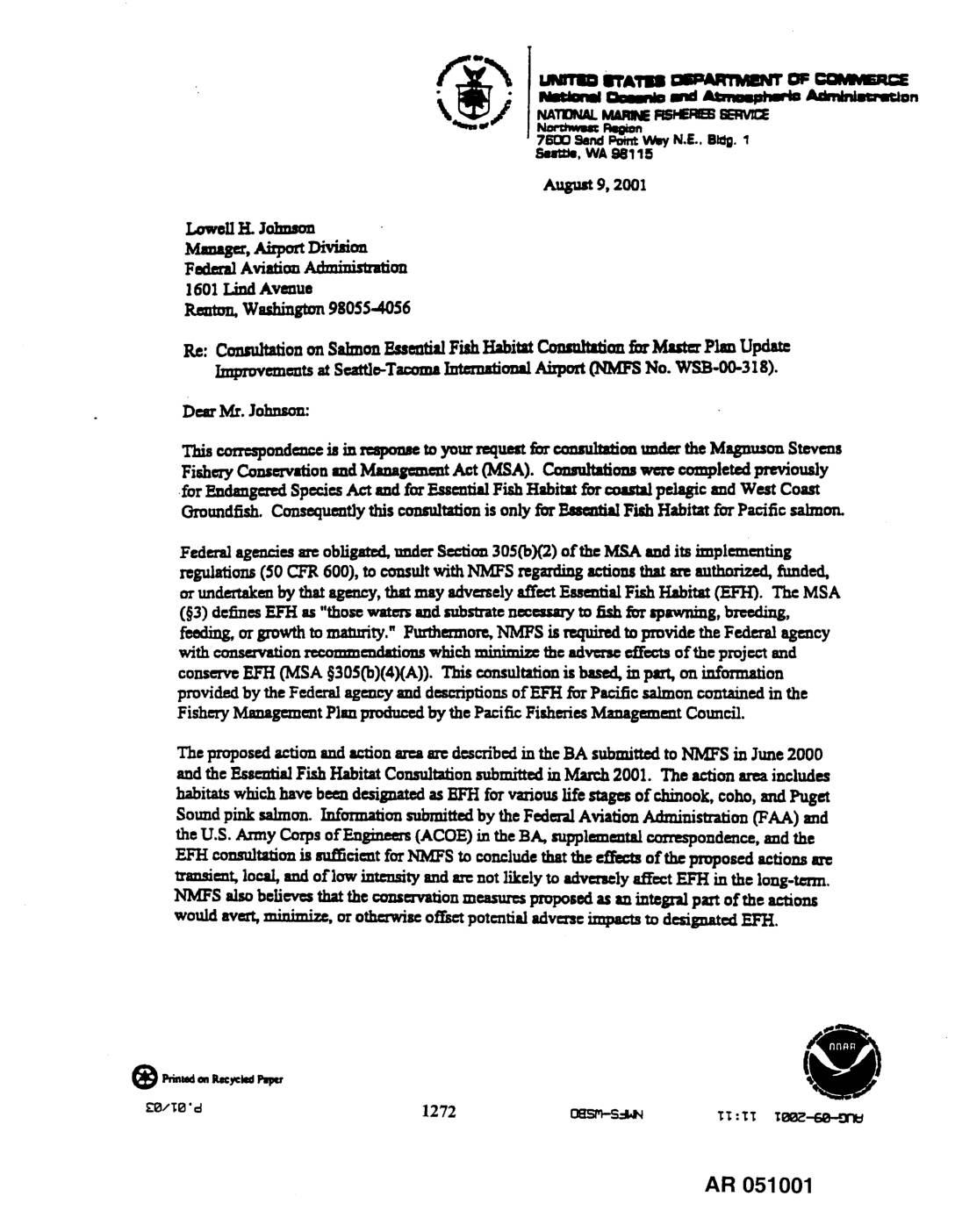
EXH AR051001: NMFS Salmon Essential Fish Habitat Consultation Letter for Sea-Tac Airport Master Plan Update Improvements
NMFS No. WSB-00-318. Letter dated August 9, 2001 from NOAA National Marine Fisheries Service (NMFS) Acting Regional Administrator Donna Darm to Lowell H. Johnson, Manager Airport Division, Federal Aviation Administration (FAA), regarding Essential Fish Habitat (EFH) consultation under Magnuson Stevens Fishery Conservation and Management Act (MSA) Section 305(b)(2) and 50 CFR 600 for Master Plan -
 2001-05-31
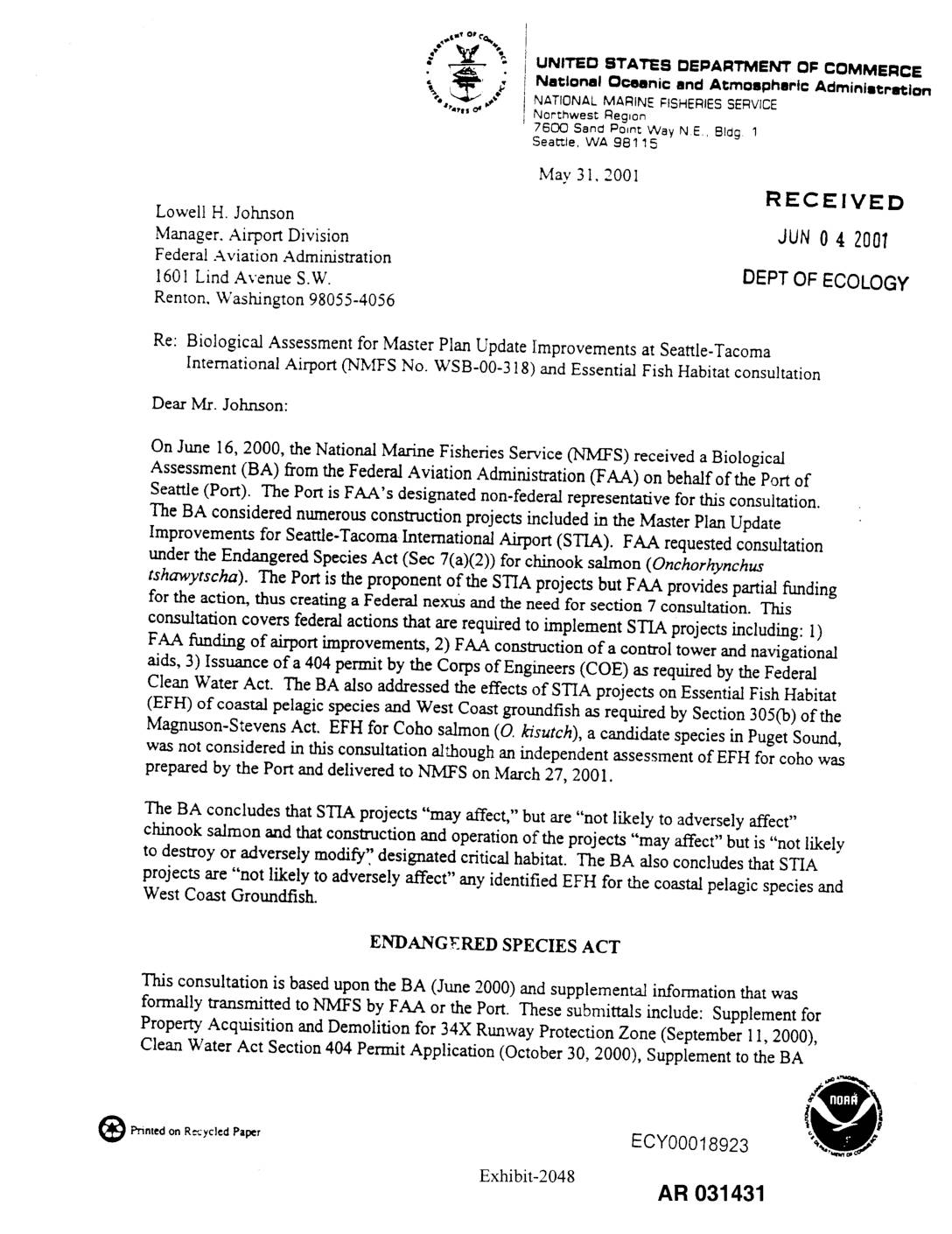
Exhibit 2048: NMFS Biological Opinion Letter on STIA Master Plan Update Improvements — Chinook Salmon and Essential Fish Habitat Consultation
Letter dated May 31, 2001 from NMFS Northwest Region to FAA Airport Division Manager Lowell H. Johnson (NMFS No. WSB-00-318) concurring with the ‘may affect, not likely to adversely affect’ determination for threatened Puget Sound chinook salmon (Onchorhynchus tshawytscha) and designated critical habitat under ESA Section 7(a)(2), and finding STIA projects ‘not likely to adversely -
 2001-05-31
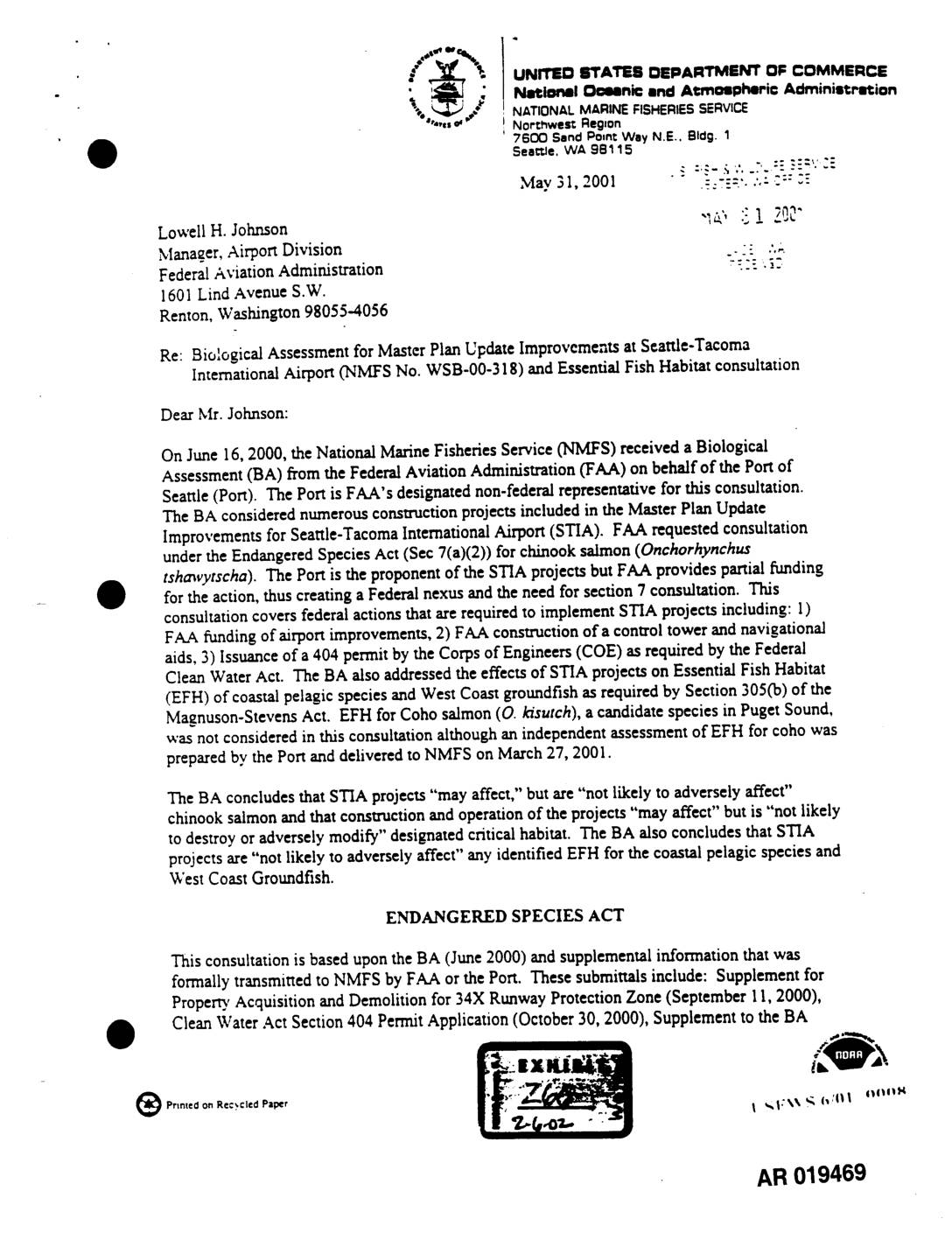
EXH AR019469: NMFS Biological Opinion — STIA Master Plan Update, ESA Section 7 & Essential Fish Habitat
In May 2001, the National Marine Fisheries Service (NMFS) issued a biological opinion concluding that planned construction and expansion projects at Seattle-Tacoma International Airport — including a new 8,500-foot runway and other facility upgrades — were not likely to adversely affect threatened Puget Sound chinook salmon or their designated critical habitat. The review, requested by the FAA under the Endangered Species Act, examined potential impacts to nearby waterways such as Miller, Des Moines, and Gilliam creeks, as well as Essential Fish Habitat for coastal and groundfish species. NMFS concurred with the airport's own Biological Assessment, determining the projects could proceed with the mitigation measures proposed.