TagPuget Sound(124)
-
 2007-01-01
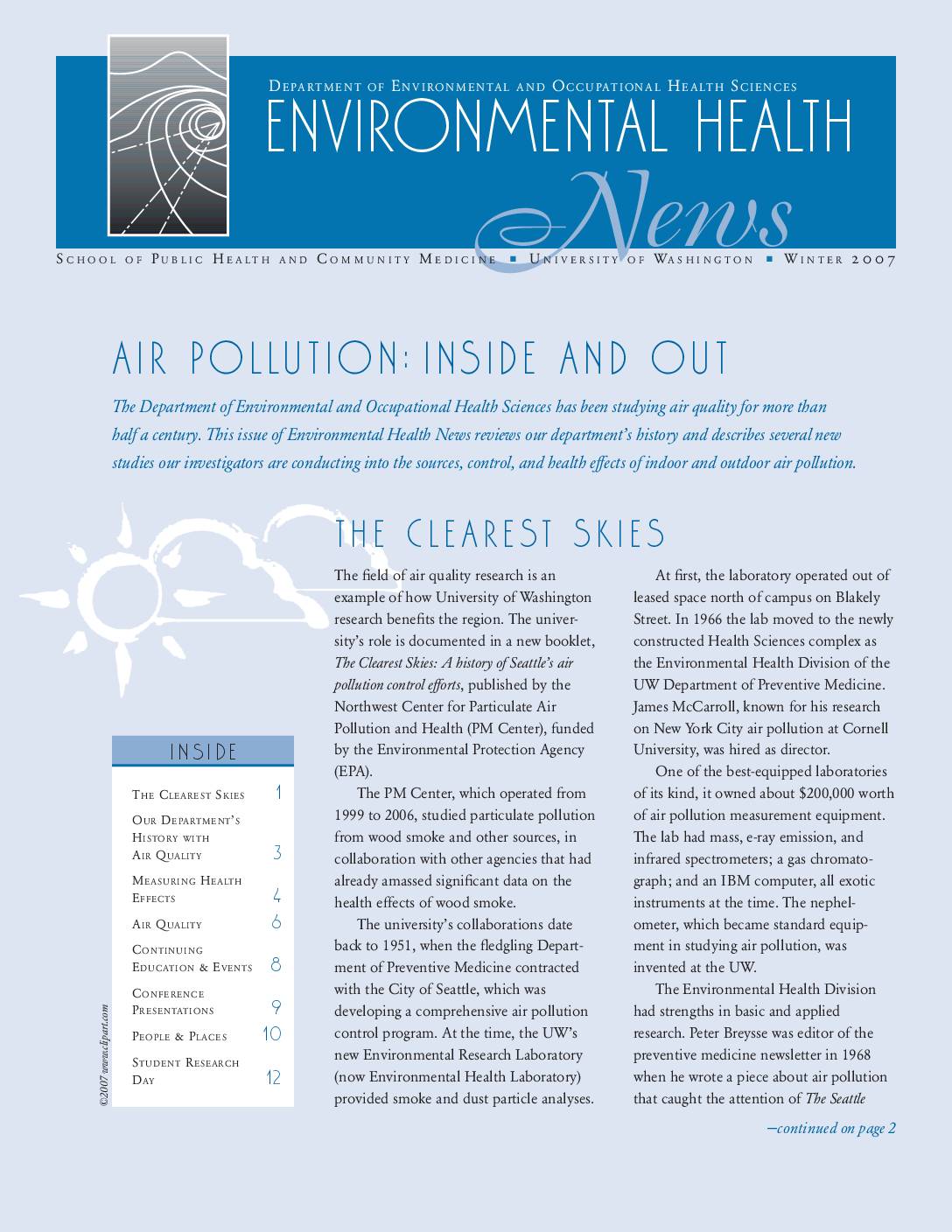
Environmental Health News, Winter 2007: Air Pollution Inside and Out
This University of Washington newsletter documents over 50 years of air quality research by the Department of Environmental and Occupational Health Sciences, tracing collaborations with Seattle and regional agencies dating back to 1951. It highlights key studies on particulate air pollution from sources such as car exhaust and burning vegetation in the Pacific Northwest, and describes the work of the EPA-funded Northwest Center for Particulate Air Pollution and Health (PM Center), which operated from 1999 to 2006. -
 2004-03-16
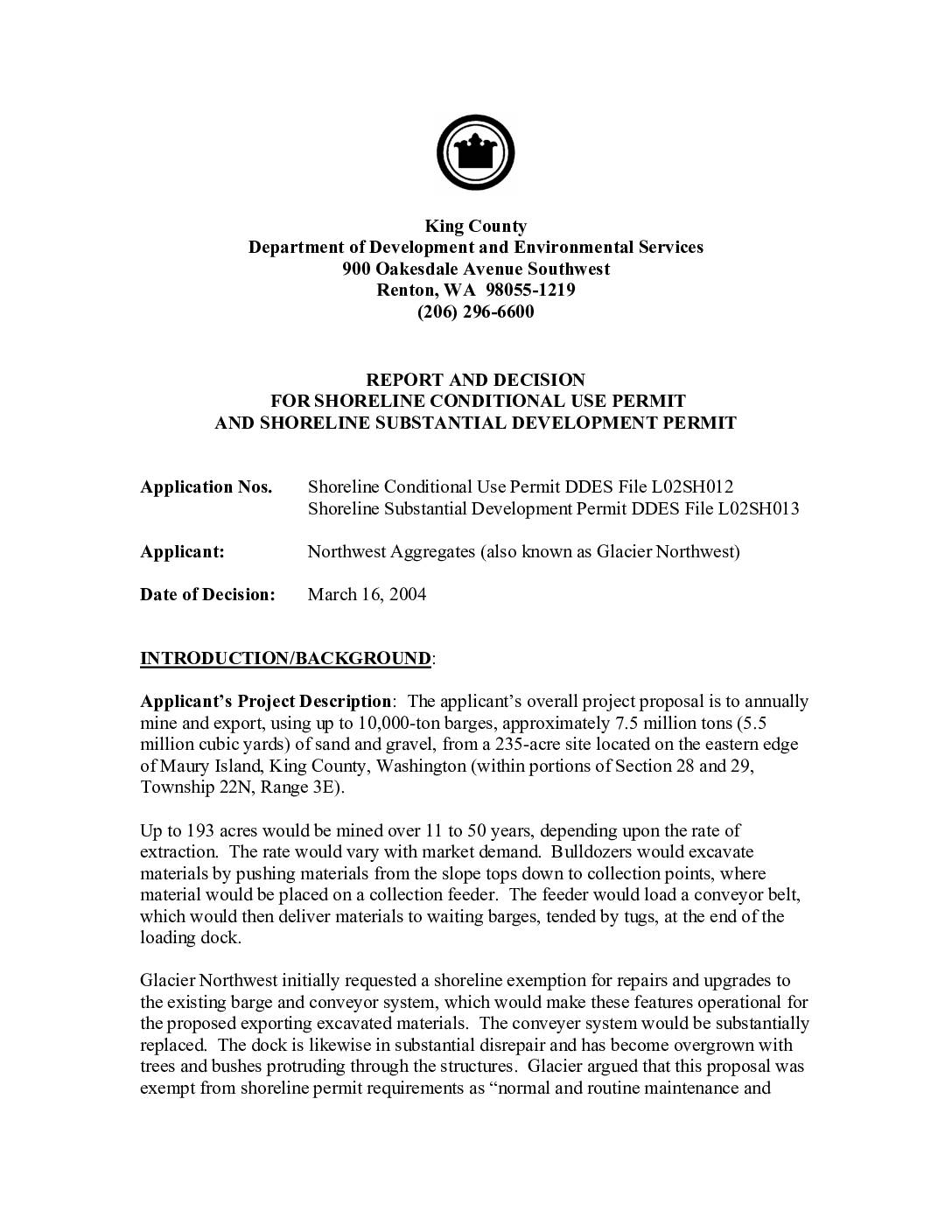
Report and decision for shoreline conditional use permit and shoreline substantial development permit
This 2004 King County decision concerns a permit application by Glacier Northwest (Northwest Aggregates) to mine and export sand and gravel from Maury Island and replace an aging barge-loading dock on Puget Sound. The project proposed replacing 228 old creosote timber piles with 62–82 steel piles, extending the dock further into the water to protect nearby eelgrass beds, and enclosing the conveyor in a steel pipe to reduce spillage and noise. Note: this document relates to a Maury Island mining and shoreline development project and does not contain information about Sea-Tac Airport noise policy. -
 2003-09-04
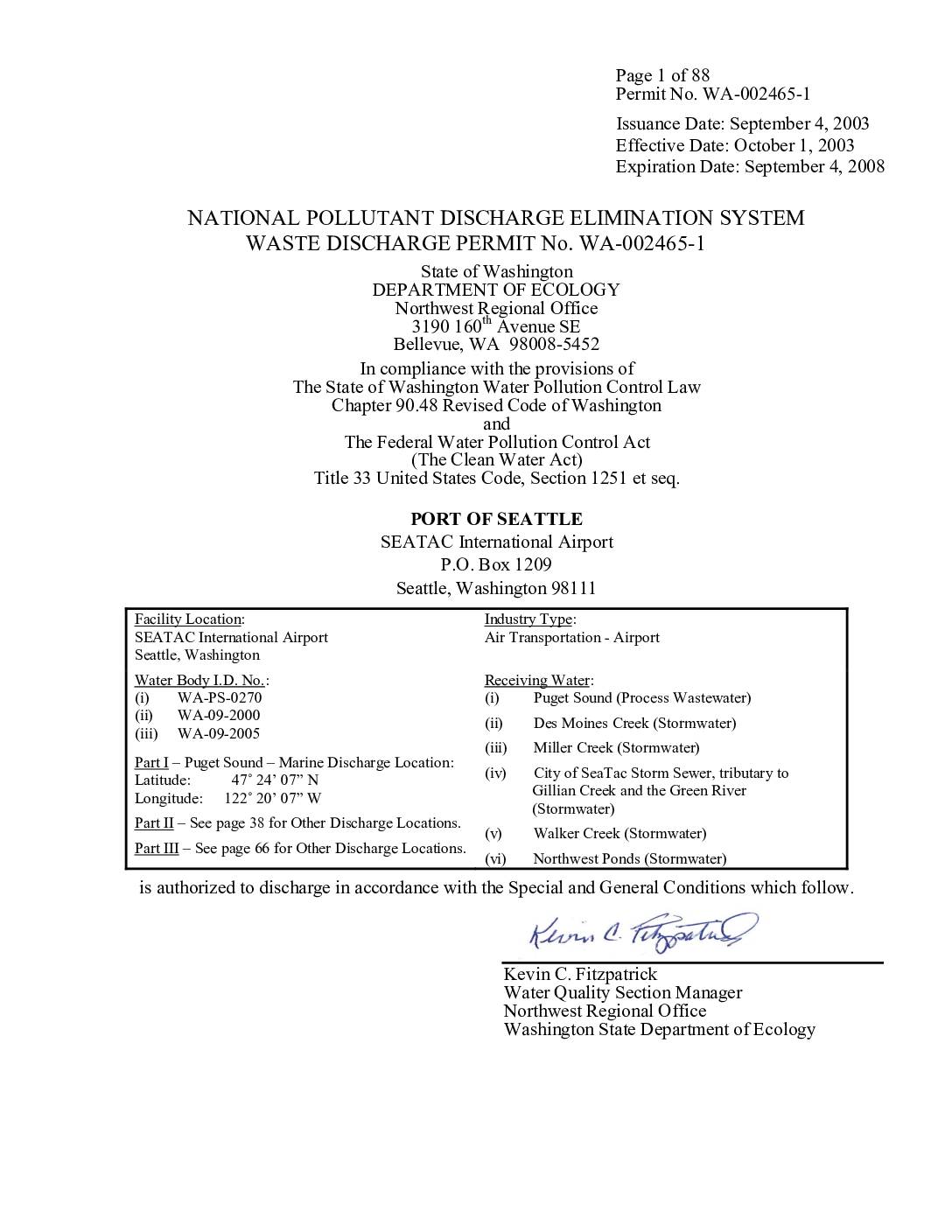
National Pollutant Discharge Elimination System waste discharge permit No. WA-002465-1
This is a National Pollutant Discharge Elimination System (NPDES) water discharge permit issued by the Washington State Department of Ecology to the Port of Seattle for Seattle-Tacoma International Airport, effective October 1, 2003 through September 4, 2008. The permit governs how the airport is authorized to discharge industrial wastewater and stormwater runoff into surrounding water bodies, including Puget Sound, Des Moines Creek, Miller Creek, and Walker Creek. It sets out special conditions covering discharge limitations, monitoring requirements, toxicity testing, and operations and maintenance standards to protect water quality in the region. -
 2003-09-04
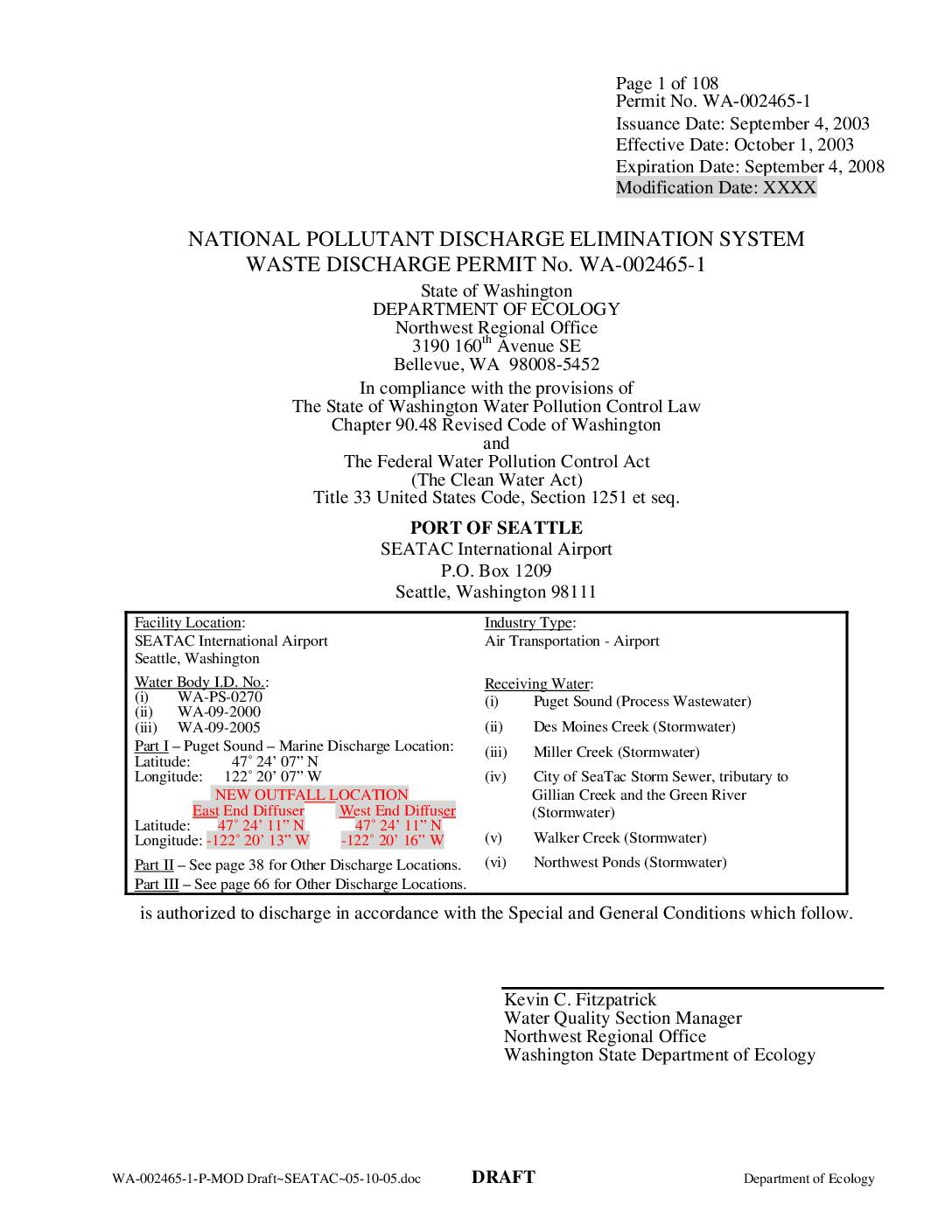
National Pollutant Discharge Elimination System waste discharge permit No. WA-002465-1
This is a National Pollutant Discharge Elimination System (NPDES) waste discharge permit issued by the Washington State Department of Ecology to the Port of Seattle for SeaTac International Airport, originally effective October 1, 2003. The permit regulates the discharge of industrial wastewater and stormwater into receiving waters including Puget Sound, Des Moines Creek, Miller Creek, Walker Creek, and other local waterways. It sets effluent limits, monitoring requirements, and operational standards for the airport's Industrial Wastewater System to protect water quality in the surrounding region. -
 2002-12-05
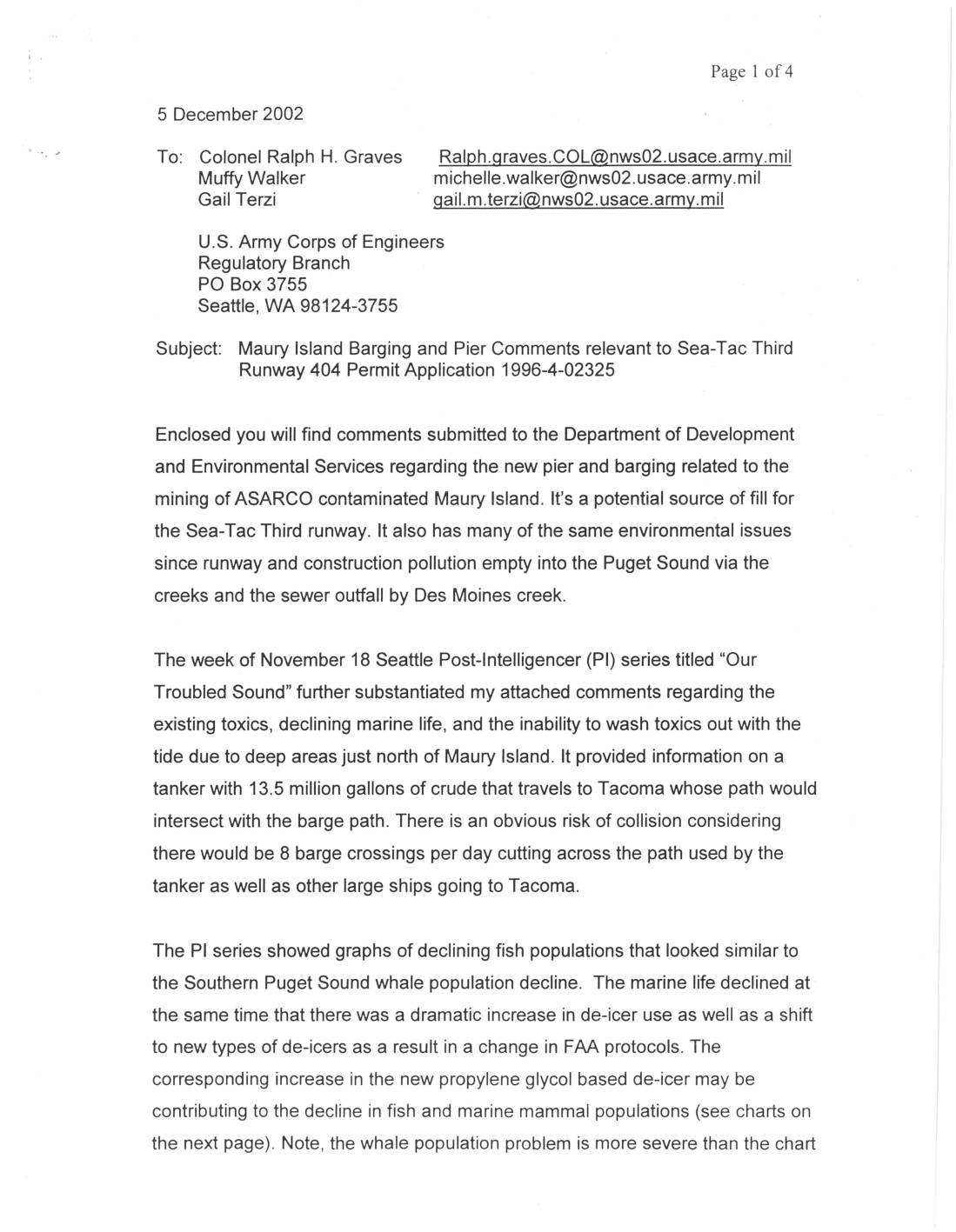
Maury Island Barging and Pier Comments Relevant to Sea-Tac Third Runway 404 Permit Application 1996-4-02325
A December 2002 letter to the U.S. Army Corps of Engineers raises environmental and public health concerns about the Sea-Tac Airport Third Runway project, arguing that construction pollution, ASARCO-contaminated fill material, and increased de-icing fluid use may be harming Puget Sound marine life, including orca populations. The author also warns of collision risks between barges transporting runway fill material and large tankers crossing the same waters. The letter calls for denial of the third runway permit, citing the absence of any cumulative air pollution or health hazard analysis and questioning the project's necessity given declining air and marine cargo traffic. -
 2002-10-23
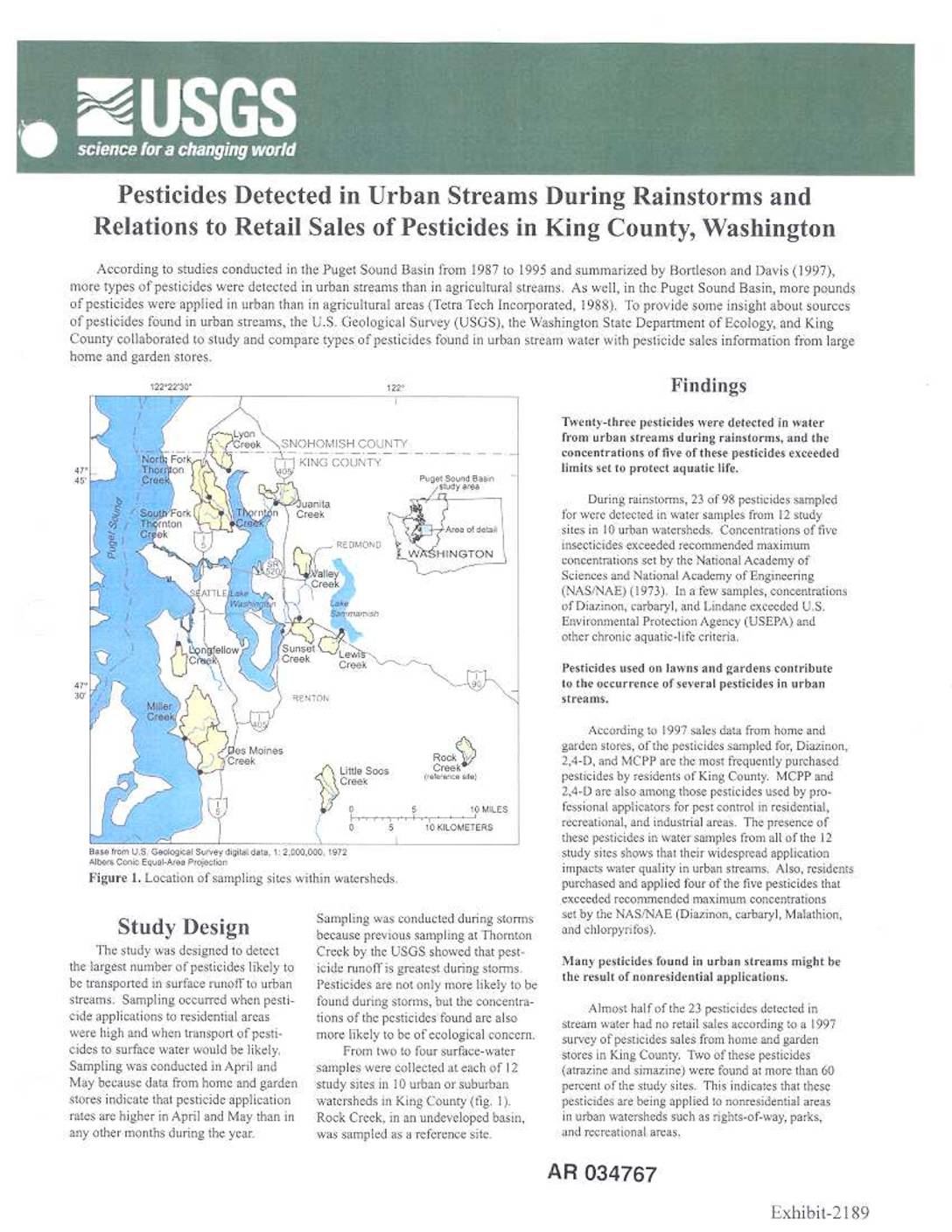
EXH AR034767: Pesticides Detected in Urban Streams During Rainstorms and Relations to Retail Sales of Pesticides in King County, Washington
USGS report (Exhibit AR034767) on pesticides detected in urban stream water during rainstorms in King County, Washington, in collaboration with Washington State Department of Ecology and King County. Twenty-three of 98 pesticides sampled were detected across 12 study sites in 10 urban watersheds; concentrations of five insecticides (carbaryl, chlorpyrifos, Diazinon, gamma-HCH/Lindane, Malathion) exceeded NAS/NAE recommended -
 2002-10-23
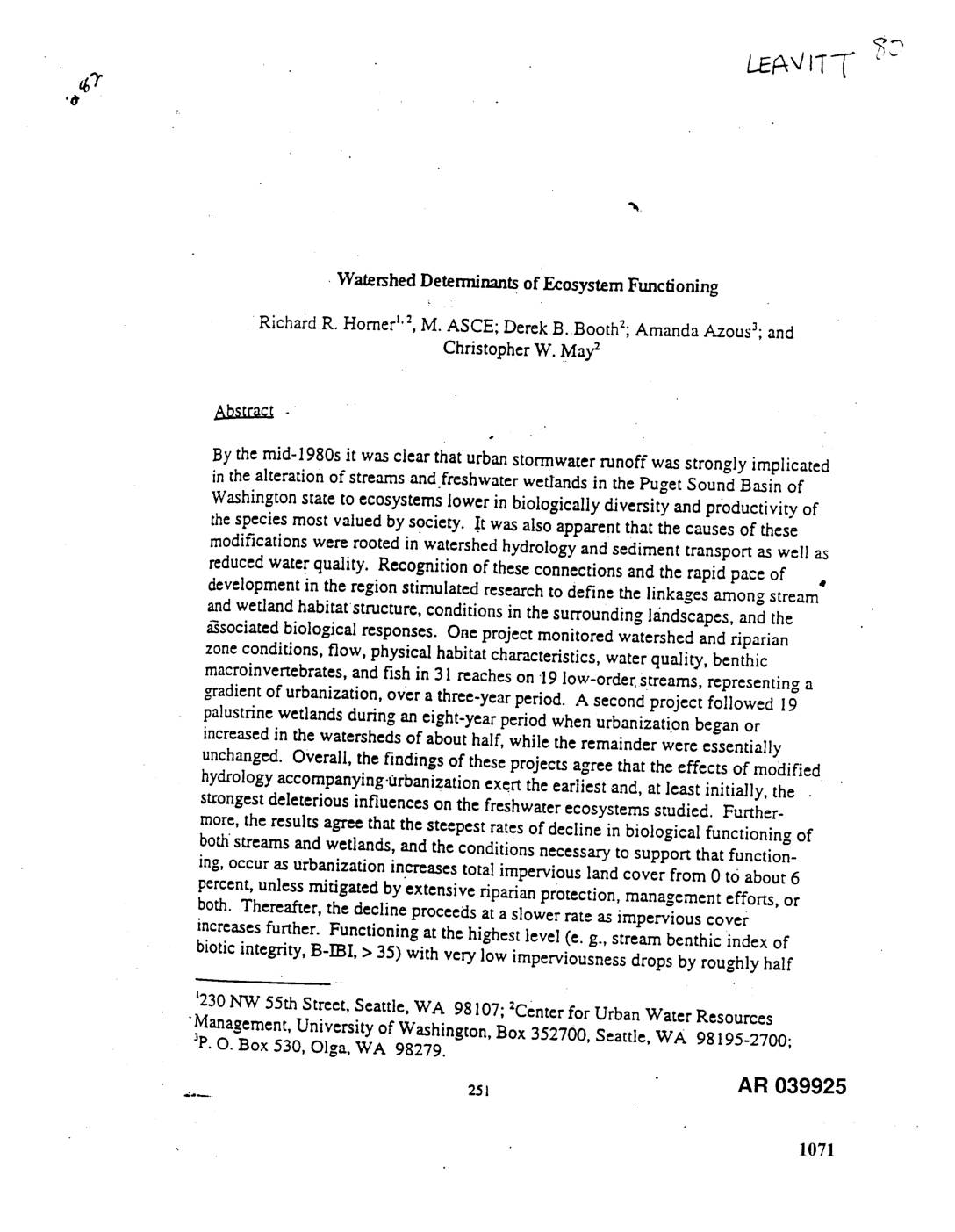
EXH AR039925: Watershed Determinants of Ecosystem Functioning
Academic paper by Richard R. Horner, Derek B. Booth, Amanda Azous, and Christopher W. May (University of Washington Center for Urban Water Resources Management) on watershed determinants of ecosystem functioning in the Puget Sound Basin. Studies 31 stream reaches on 19 low-order streams and 19 palustrine wetlands over multi-year periods, examining effects of urbanization and -
 2002-10-22
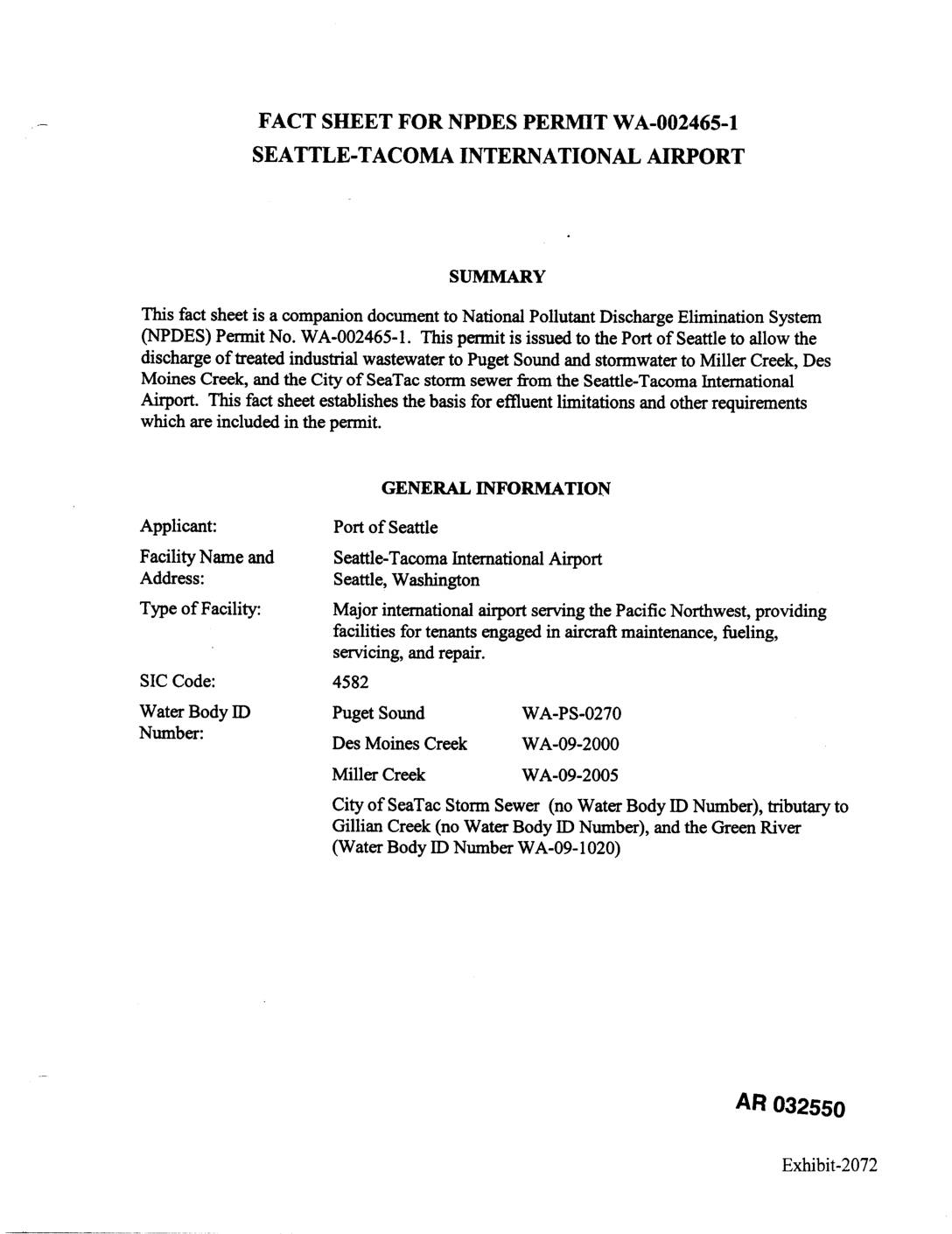
EXH 2072: Fact Sheet NPDES Permit WA-002465-1 STIA
This document is a fact sheet accompanying an NPDES (National Pollutant Discharge Elimination System) permit issued to the Port of Seattle for Seattle-Tacoma International Airport, governing how the airport manages and discharges treated industrial wastewater and stormwater. It covers discharge locations into Puget Sound, Des Moines Creek, Miller Creek, and the City of SeaTac storm sewer system, and establishes effluent limitations and monitoring requirements. The permit addresses water quality standards, pollution prevention plans, and compliance schedules to protect surrounding waterways from airport-related contaminants. -
 2002-10-22
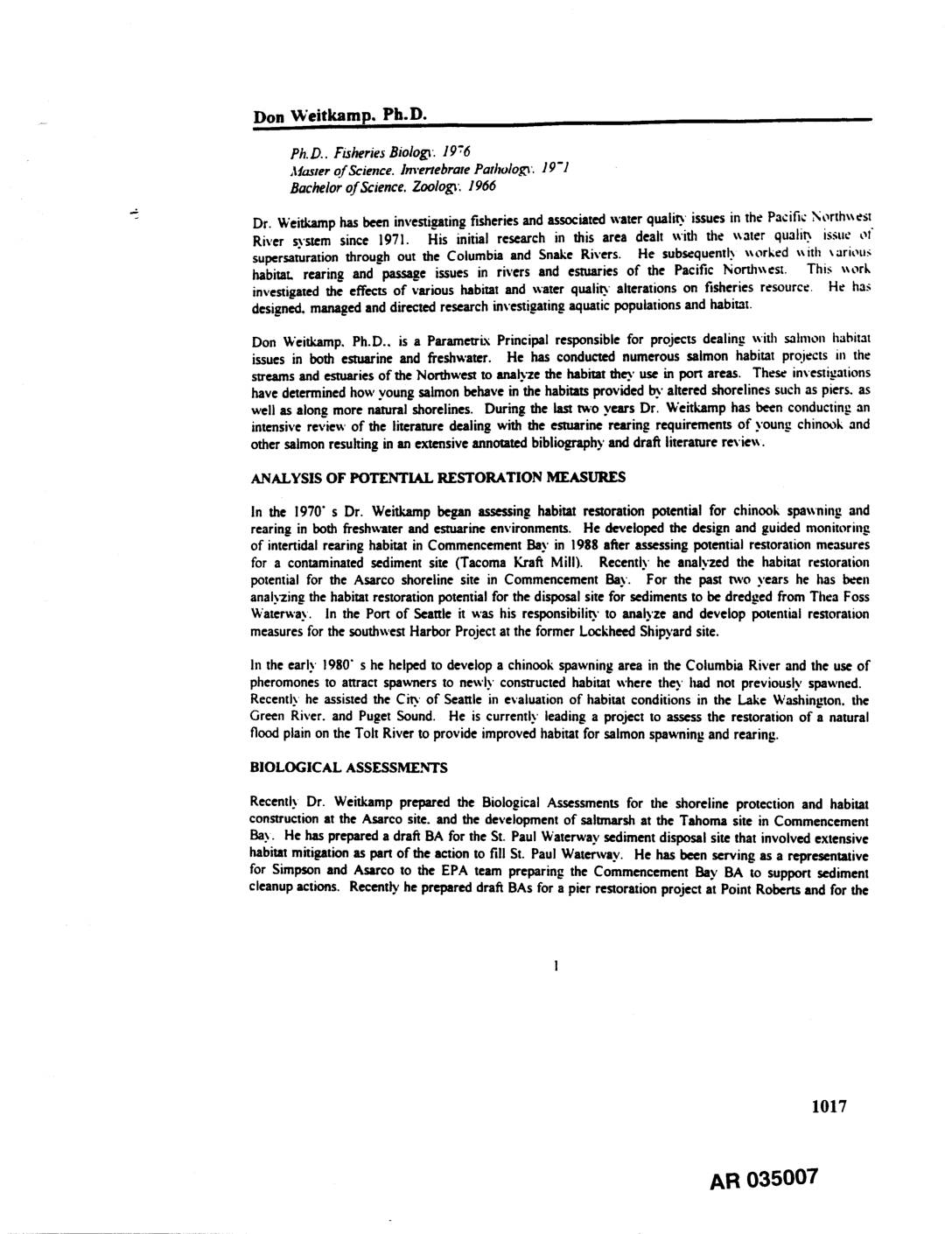
EXH AR035007: Curriculum Vitae — Don Weitkamp, Ph.D., Fisheries Biologist
Curriculum vitae for Don Weitkamp, Ph.D. (Parametrix Principal), fisheries biologist specializing in salmon habitat issues in estuarine and freshwater environments in the Pacific Northwest. Documents expertise in chinook salmon habitat assessment, biological assessments (BAs), and habitat restoration in Commencement Bay, Green-Duwamish River, Elliott Bay, Columbia River, Snake River, and Puget Sound. Projects include Asarco shoreline -
 2002-02-12
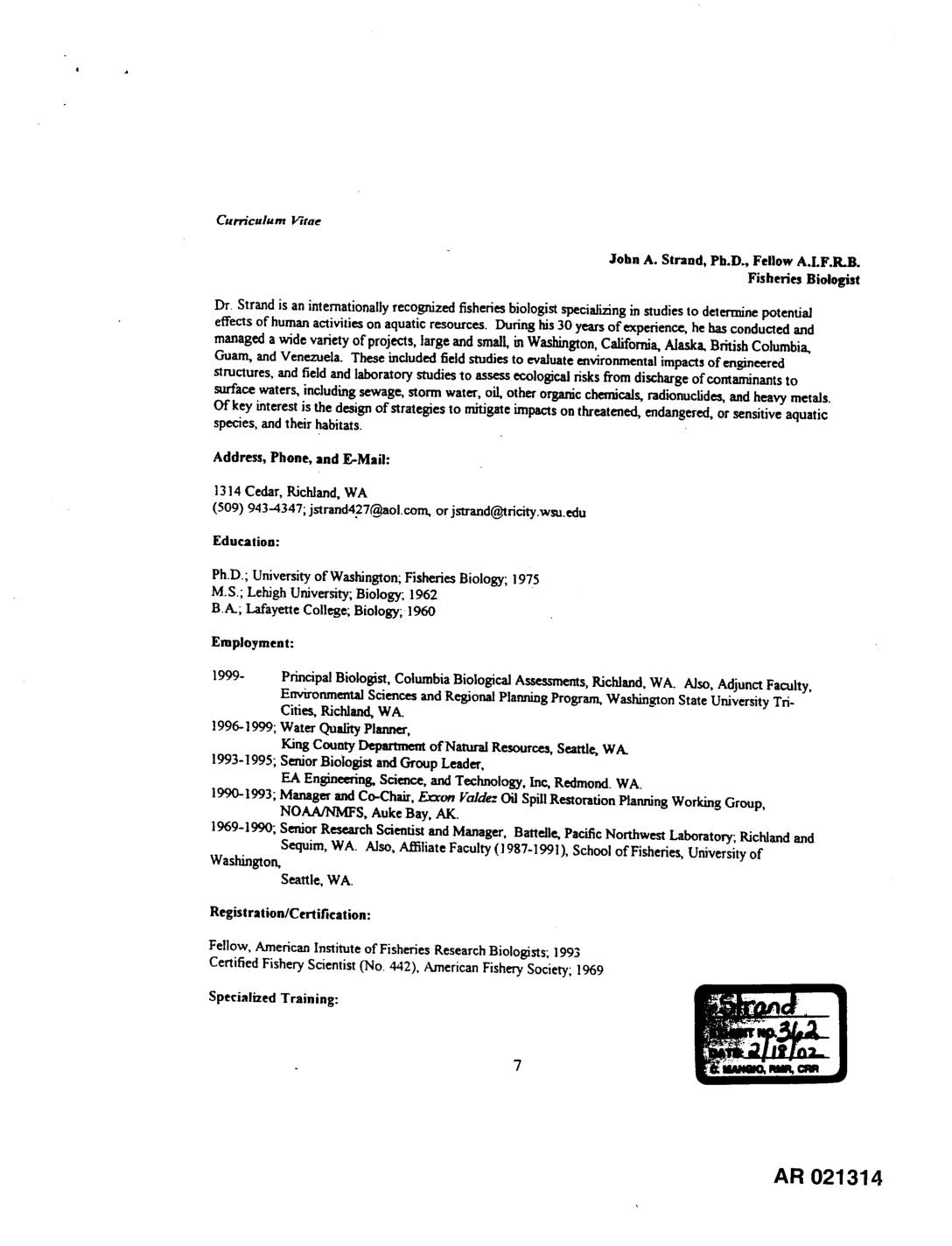
EXH 362: CV John A. Strand PhD FAIFR Fisheries Biologist
This document is the curriculum vitae of Dr. John A. Strand, a fisheries biologist with 30 years of experience studying the effects of human activities on aquatic resources. His work spans Washington, California, Alaska, and other regions, covering environmental impact assessments, aquatic toxicology, and regulatory compliance related to contaminants such as oil, heavy metals, and radionuclides. While not directly related to airport noise policy, his expertise in endangered species protection and habitat mitigation may have been relevant to environmental review processes in the Seattle-area region.