Notes
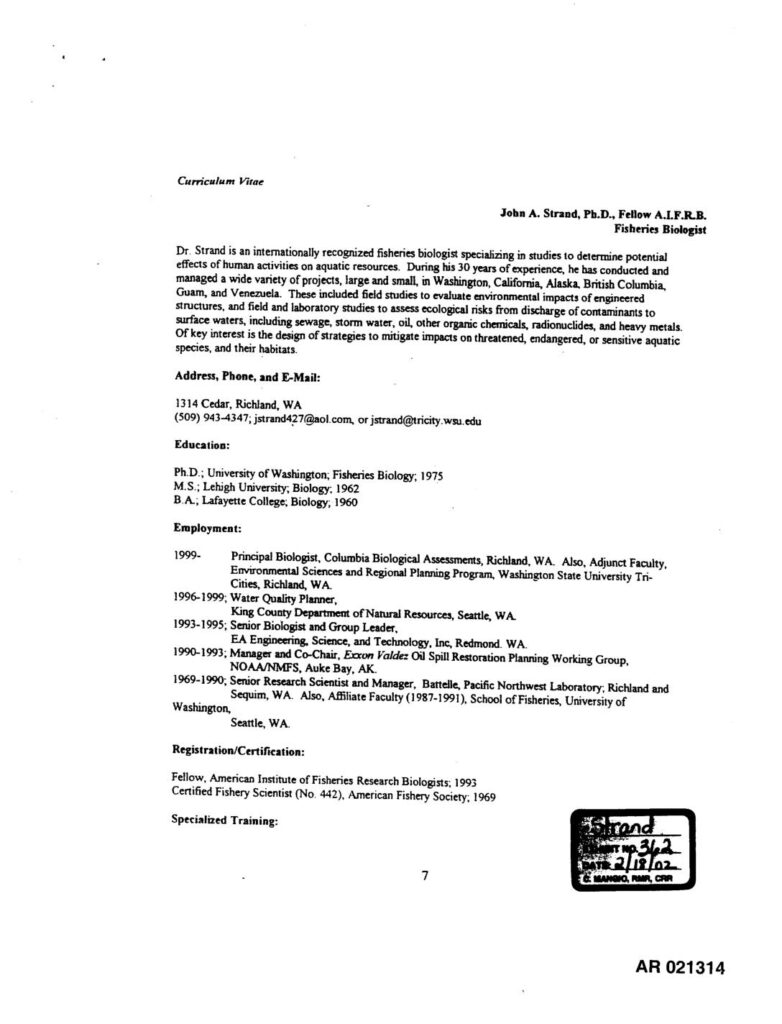
Curriculum vitae of John A. Strand, Ph.D., Fellow A.I.F.R.B., Certified Fishery Scientist (No. 442), Principal Biologist at Columbia Biological Assessments, Richland, WA, and Adjunct Faculty at Washington State University Tri-Cities. Exhibit 362, AR 021314-021316, filed in PCHB Third Runway EIS proceedings. Strand’s 30-year career spans fisheries biology, aquatic toxicology, environmental impact assessment, and regulatory compliance (Clean Water Act Section 316, NPDES, Endangered Species Act) across Washington, California, Alaska, British Columbia, Guam, and Venezuela. Key roles include Federal Co-Chair of the Exxon Valdez Oil Spill Restoration Planning Working Group (NOAA/NMFS, 1990-1993), Senior Research Scientist at Battelle Pacific Northwest Laboratory, and member of King County Biological Review Panel evaluating policies relevant to threatened chinook salmon. Publications address Bunker C fuel oil fate after 1988 Nestucca oil spill, bioaccumulation of chemical contaminants in Duwamish River mussels, combined sewer overflow ecological risks in Elliott Bay, and Puget Sound chinook salmon conservation. University of Washington Ph.D. in Fisheries Biology (1975).