TagPuget Sound(124)
-
 2018-09-26
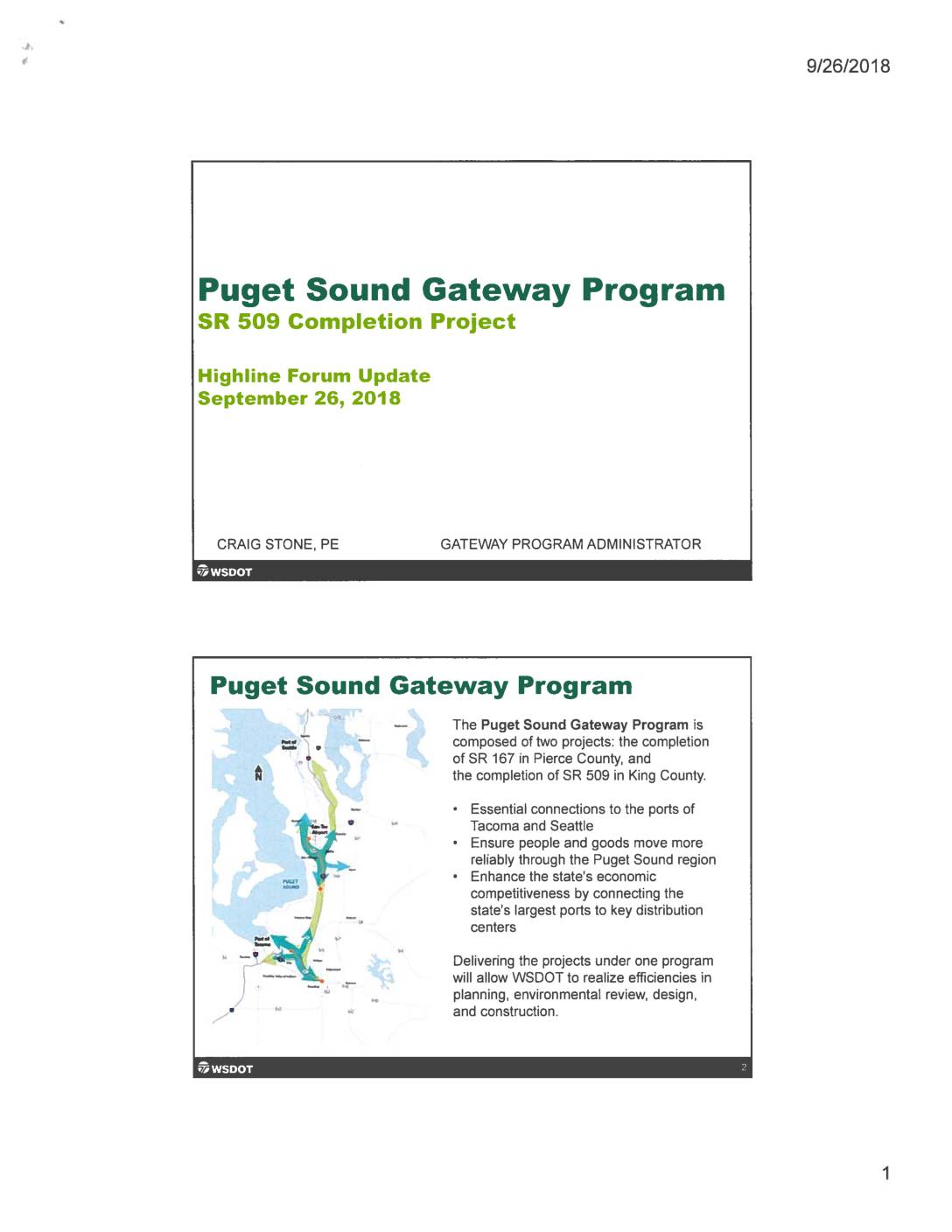
Puget Sound Gateway Program SR 509 Completion Project: Highline Forum update
The Puget Sound Gateway Program, presented at a Highline Forum in September 2018, outlines two highway completion projects—SR 509 in King County and SR 167 in Pierce County—designed to improve freight movement between the ports of Seattle and Tacoma and key distribution centers. Among its key benefits, the program includes a new south access point to Sea-Tac Airport and aims to reduce congestion on local roads surrounding the airport. Funding for the program combines state, local, federal, and toll revenue sources, with electronic tolling on all new lanes expected to begin as early as 2025. -
 2018-09-01
Construction and Implementation Plan
Construction and Implementation Plan for the Puget Sound Gateway Program, prepared by the Washington State Department of Transportation (WSDOT) in September 2018. Covers SR 167 Completion Project and SR 509 Completion Project, including project phasing, construction stages, delivery method, funding sources (toll funding, local funding, grants), expenditure and sequencing plan, and community and stakeholder engagement. -
 2018-09-01
Construction and Implementation Plan
Construction and Implementation Plan for the Puget Sound Gateway Program, prepared by the Washington State Department of Transportation (WSDOT) in September 2018. Covers SR 167 Completion Project and SR 509 Completion Project, including project phasing, construction stages, delivery method, funding sources (toll funding, local funding, grants), expenditure and sequencing plan, and community and stakeholder engagement. -
 2018-05-01
The Regional Transportation Plan — 2018
The Regional Transportation Plan — 2018 is a draft planning document produced by the Puget Sound Regional Council (PSRC) in May 2018, outlining the regional transportation vision and investment priorities for the greater Puget Sound area, including King, Pierce, Snohomish, and Kitsap counties. Funded in part by federal transportation agencies and Washington State, the plan addresses multimodal transportation networks including roads, transit, and non-motorized travel. Note: this document does not specifically address Sea-Tac Airport noise policy and may have limited relevance to airport noise concerns. -
 2018-05-01
The Regional Transportation Plan — 2018: Executive summary
The Puget Sound Regional Council's 2018 Regional Transportation Plan outlines how the central Puget Sound region, which has seen rapid population and job growth since 2010, intends to manage an additional one million residents by 2040. The plan details major investments across highway, transit, rail, ferry, bicycle, and pedestrian systems to reduce traffic congestion and better connect housing, employment centers, and freight hubs. It aims to provide equitable access to the region's natural, cultural, and recreational assets while keeping the transportation system sustainable through projected growth. -
 2018-05-01
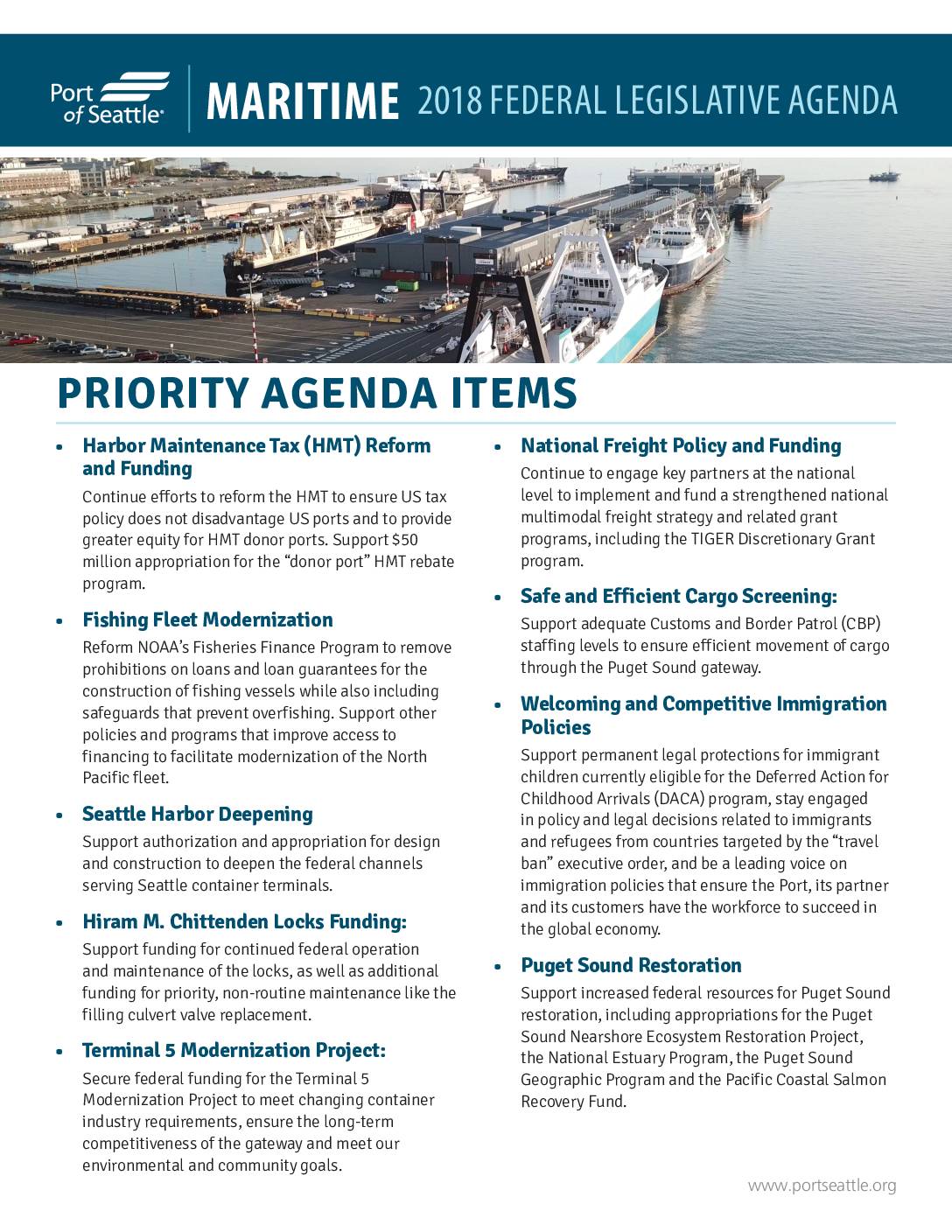
Maritime 2018 federal legislative agenda
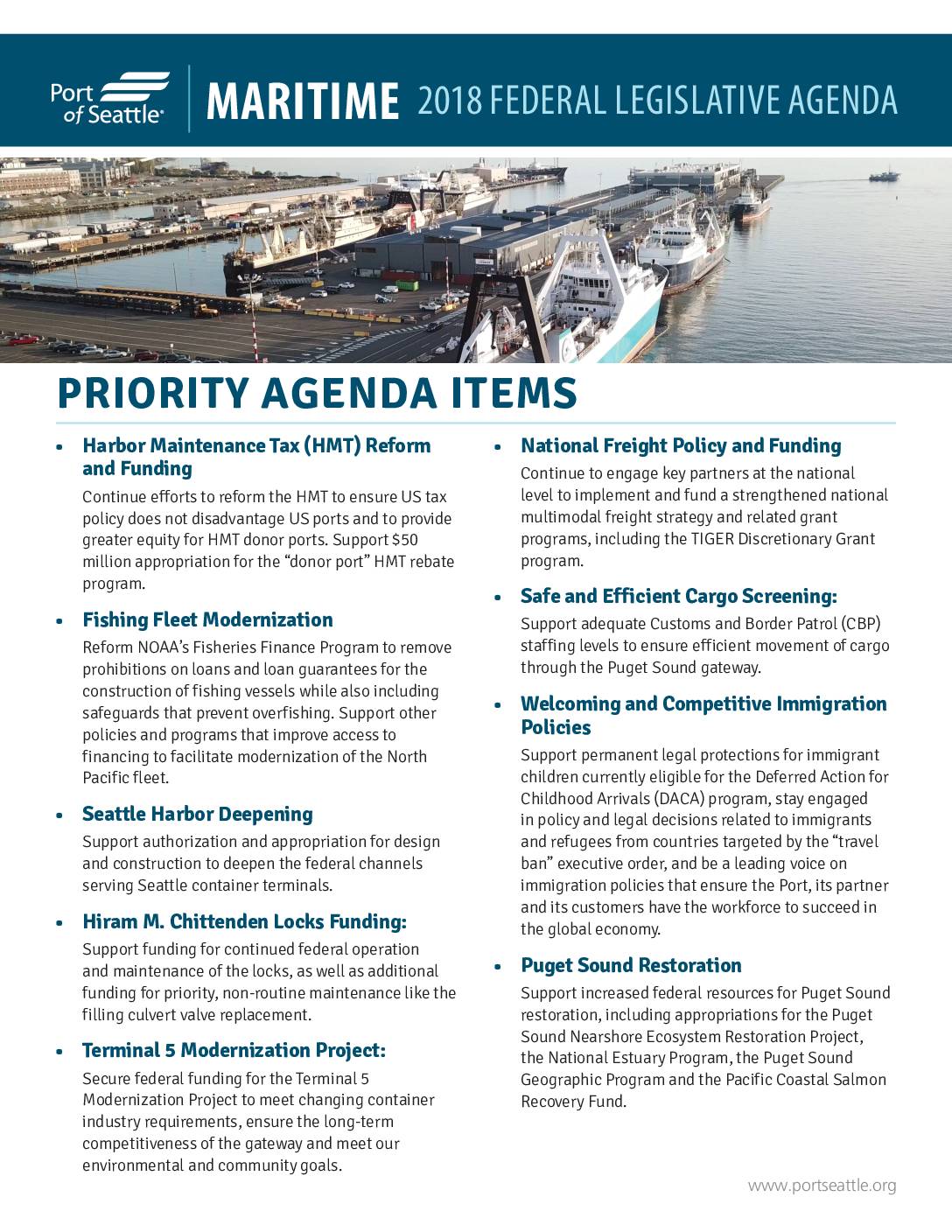
This document outlines the Port of Seattle's 2018 Federal Maritime Legislative Agenda, detailing priority issues such as Harbor Maintenance Tax reform, fishing fleet modernization, Seattle Harbor deepening, and Terminal 5 upgrades. It also addresses immigration policies, Puget Sound restoration, and trade priorities. Note that this document focuses exclusively on maritime and cargo port operations and does not contain information related to Sea-Tac Airport noise policy. -
 2018-02-01
Maritime 2018 federal legislative agenda
This document outlines the Port of Seattle's 2018 Federal Legislative Agenda for maritime priorities, covering topics such as Harbor Maintenance Tax reform, fishing fleet modernization, Seattle Harbor deepening, and Terminal 5 upgrades. It also addresses immigration policies, Puget Sound environmental restoration, and trade policy advocacy. Note that this document focuses exclusively on maritime issues and does not contain information related to Sea-Tac Airport noise policy. -
 2017-08-15
Puget Sound Gateway Program SR 509 Completion Project
WSDOT presentation by Senior Transportation Planner Thomas Noyes to the SDOT Freight Advisory Board on August 15, 2017, covering the Puget Sound Gateway Program SR 509 Completion Project and SR 167. Topics include direct freight links from Port of Seattle and Port of Tacoma to regional distribution centers and Eastern Washington, direct access to Seattle-Tacoma -
 2017-08-15
Puget Sound Gateway Program SR 509 Completion Project
WSDOT presentation by Senior Transportation Planner Thomas Noyes to the SDOT Freight Advisory Board on August 15, 2017, covering the Puget Sound Gateway Program SR 509 Completion Project and SR 167. Topics include direct freight links from Port of Seattle and Port of Tacoma to regional distribution centers and Eastern Washington, direct access to Seattle-Tacoma -
 2014-06-01
Ten Steps Toward a History of a House (Seattle & King County)
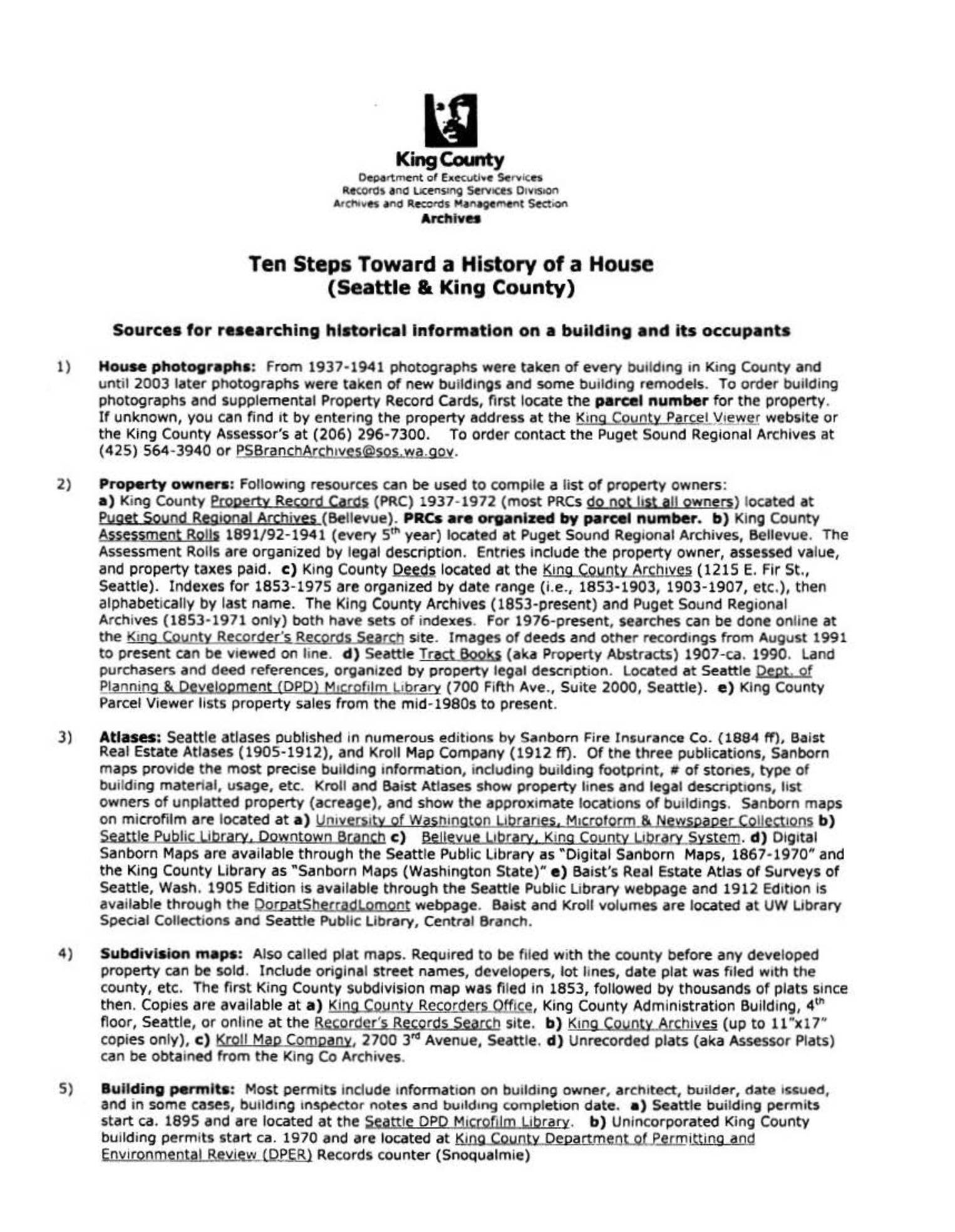
This King County Archives guide outlines ten steps for researching the history of a house in Seattle and King County, covering sources such as historical building photographs, property records, atlases, subdivision maps, building permits, census data, and city directories. Researchers can access materials through institutions like the Puget Sound Regional Archives, Seattle Public Library, and University of Washington Libraries, as well as various online databases. While the guide focuses on general property and occupant history, it provides a useful framework for tracing land use and development patterns relevant to regional planning and noise policy research.