TagPort Of Seattle(2349)
-
 2018-11-13
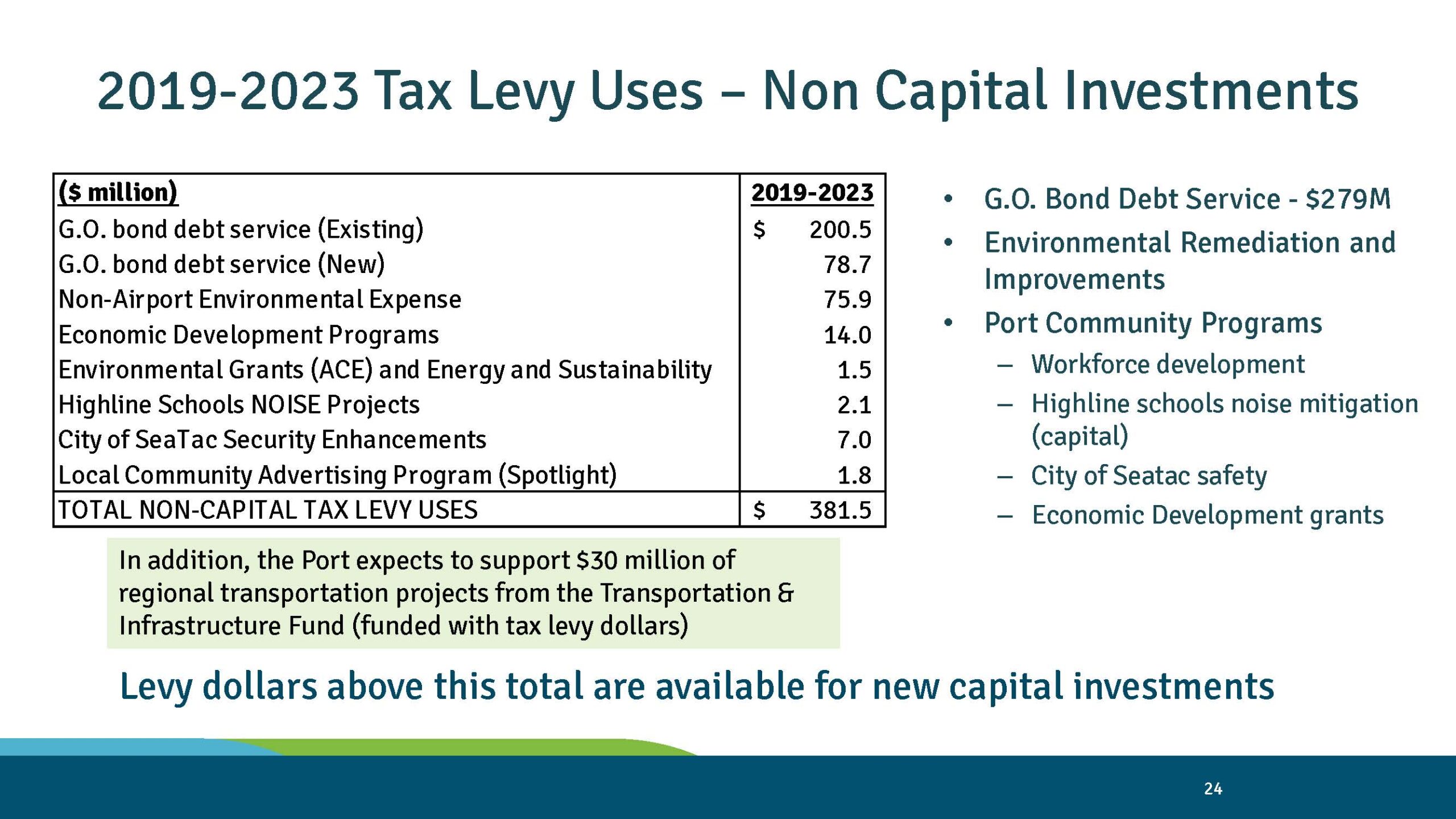
Port Of Seattle Draft Finance Plan 2019–2023 — Tax Levy Non-Capital Uses (Page 24)
A Port of Seattle budget presentation slide detailing non-capital tax levy uses for 2019–2023, totaling $381.5 million. Line items include G.O. bond debt service (existing $200.5M and new $78.7M), Non-Airport Environmental Expense ($75.9M), Economic Development Programs ($14M), Highline Schools NOISE Projects ($2.1M), and City of SeaTac Security Enhancements ($7.0M), with a note that an additional $30M is expected for regional transportation projects from the Transportation & Infrastructure Fund. -
 2018-11-06
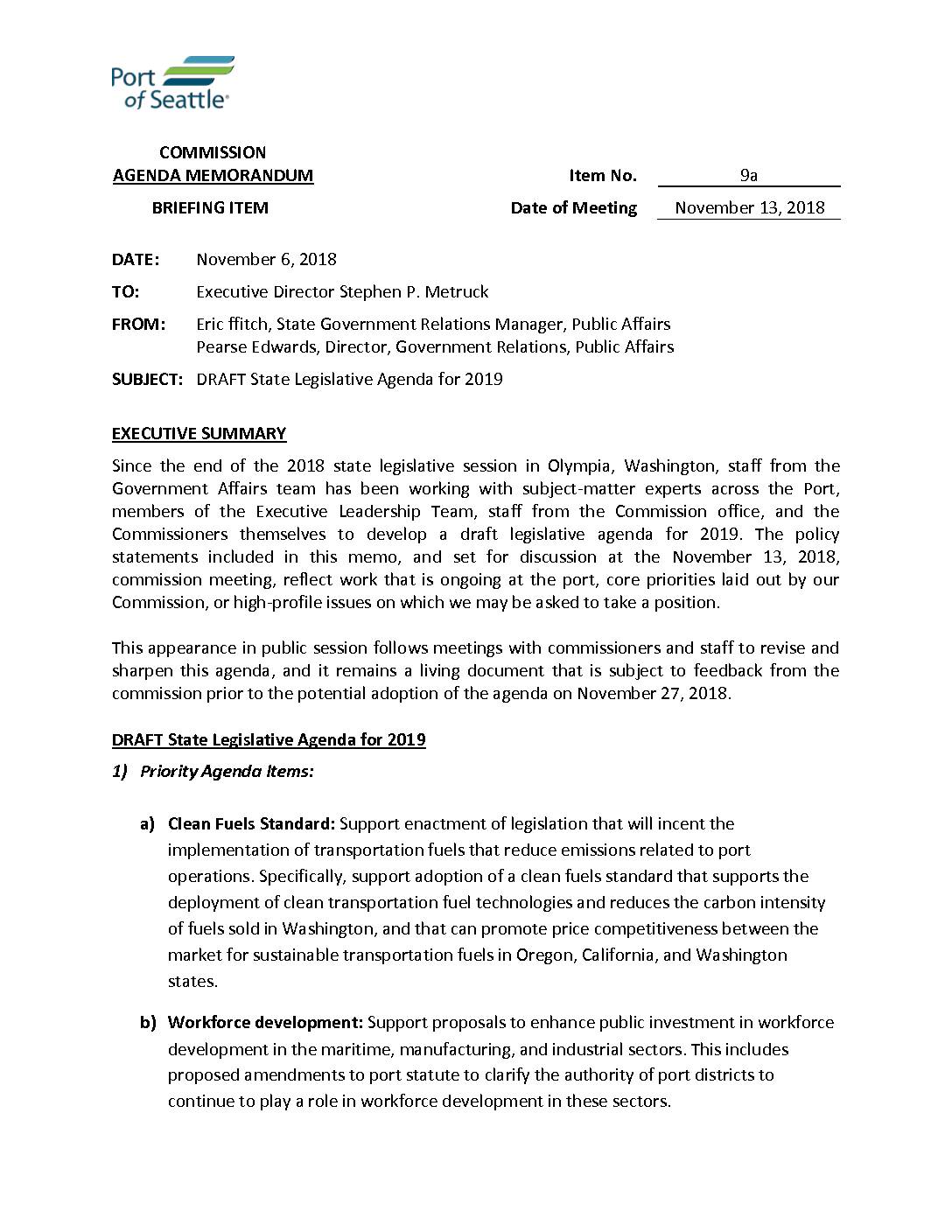
Draft state legislative agenda for 2019
The Port of Seattle's draft 2019 state legislative agenda outlines priority policy areas including support for a clean fuels standard to reduce emissions from port operations, workforce development in maritime and industrial sectors, and improved transportation access to Sea-Tac Airport via State Route 518 and the Puget Sound Gateway program. The agenda also covers land use protections for port-related zones, small business inclusion, and funding for a Maritime Innovation Center. While the document addresses transportation infrastructure near Sea-Tac, it does not specifically focus on airport noise policy. -
 2018-11-06
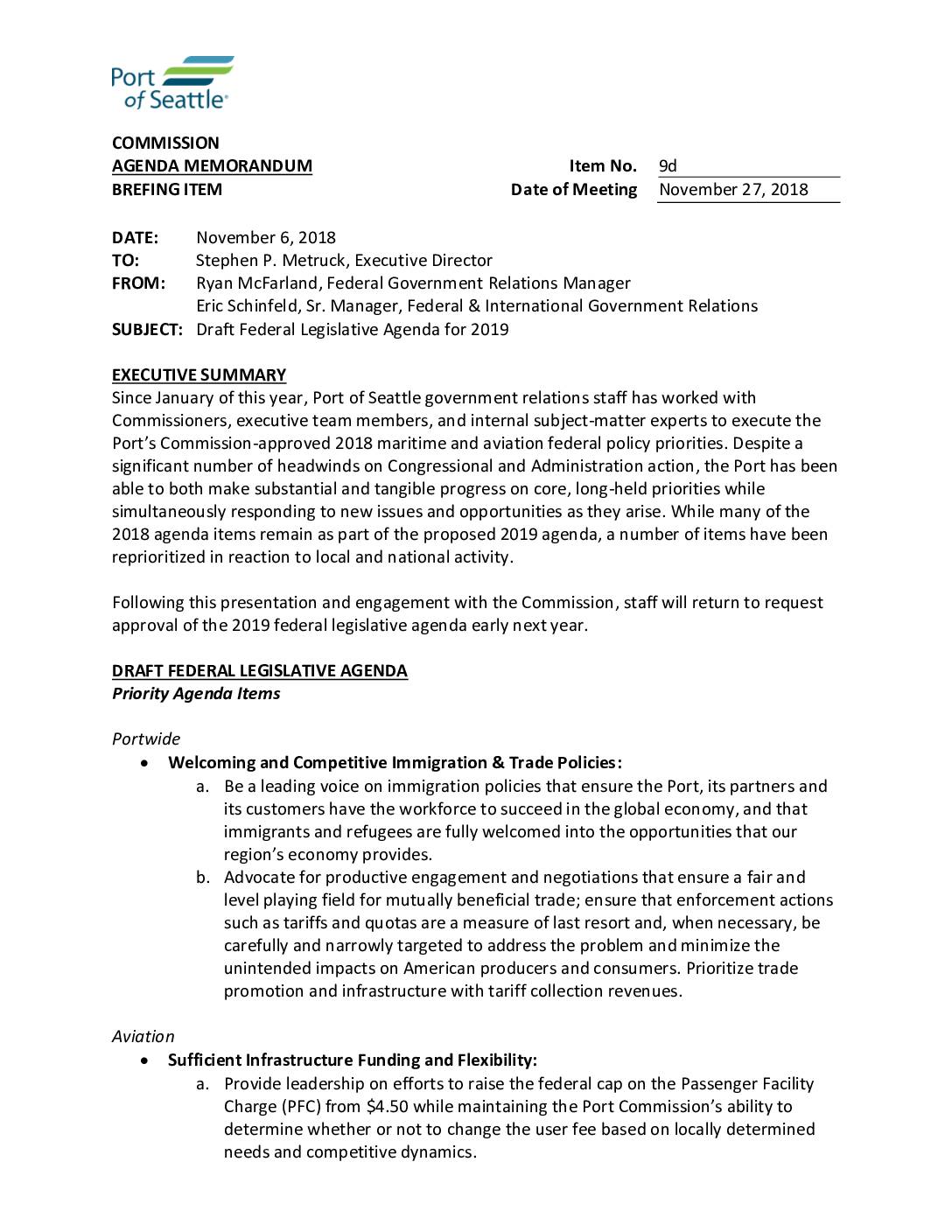
Draft federal legislative agenda for 2019
This November 2018 Port of Seattle briefing memo outlines the draft federal legislative priorities for 2019, covering aviation, maritime, and trade policy goals. On airport community issues, the Port seeks to increase FAA responsibility for engaging with residents affected by overflight noise, expedite hiring of a regional noise ombudsman, and participate in a federally funded study examining the health impacts of aircraft noise on Seattle-area communities. The agenda also addresses related concerns such as air quality, sustainable aviation fuel, and passenger facility funding. -
 2018-11-02
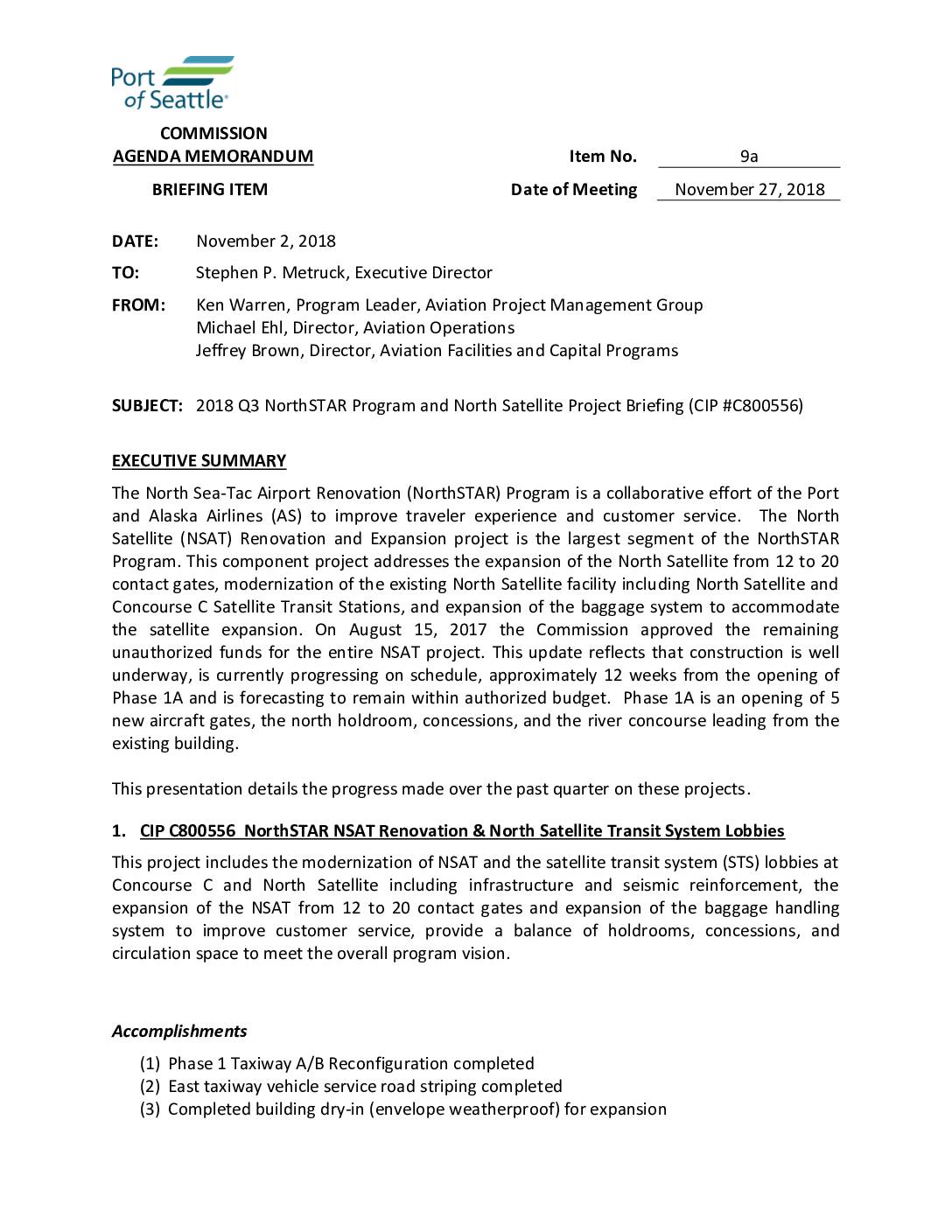
2018 Q3 NorthSTAR Program and North Satellite Project briefing (CIP #C800556)
This November 2018 Port of Seattle commission briefing provides a quarterly update on the NorthSTAR Program, a joint Port of Seattle and Alaska Airlines effort to renovate and expand Sea-Tac Airport's North Satellite facility from 12 to 20 contact gates. Construction was reported as on schedule and within its $672.1 million authorized budget, with Phase 1A — including 5 new gates, a north holdroom, and concessions — on track to open in January 2019. The report also covers workforce diversity metrics, change orders, and upcoming milestones extending through a projected project completion in July 2021. -
2018-10-25
Burien stirred up by roar from sharp increase in Sea-Tac Airport overflights
Originally published October 25, 2018 at 6:00 am Updated October 25, 2018 at 7:40 am The FAA has directed all southbound Horizon Air Q400 turboprop planes taking off from Sea-Tac to the north to make an automated turn immediately after takeoff almost due west over Burien. The flight-path change has spurred protests and a lawsuit from -
 2018-10-24
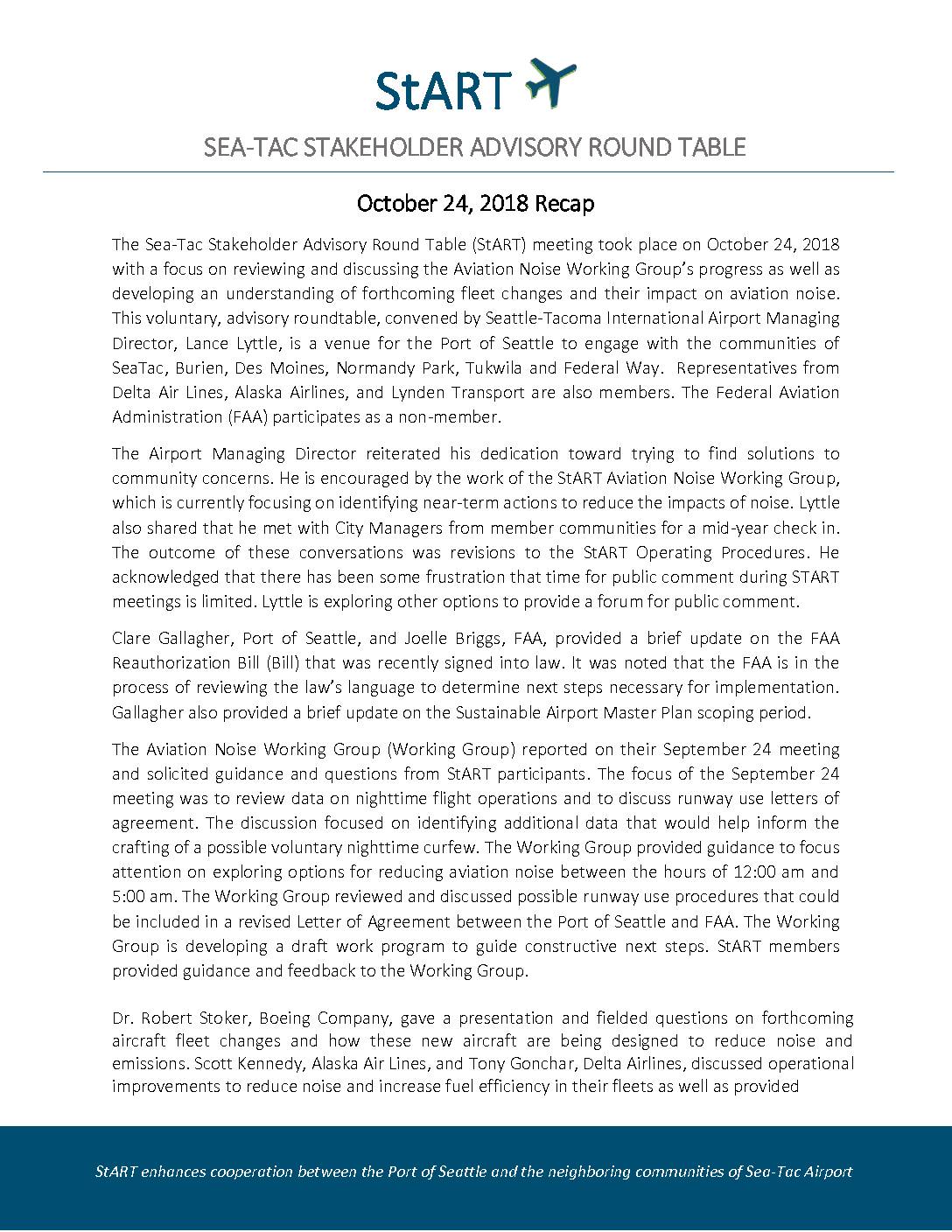
StART October 24, 2018 Meeting Recap
The October 24, 2018 StART meeting brought together the Port of Seattle, neighboring communities, airlines, and the FAA to discuss progress on reducing aviation noise around Sea-Tac Airport. Key topics included a possible voluntary nighttime flight curfew between midnight and 5 a.m., updates to the FAA Reauthorization Bill, and presentations from Boeing, Alaska Airlines, and Delta Airlines on new quieter aircraft and fuel-efficient fleet upgrades. The next public meeting was scheduled for December 19, 2018 at SeaTac City Hall. -
 2018-10-09
SAMP Near-Term Projects Environmental Review: Attachment 3 — Public Scoping Meetings Advertisements/Notices
The Port of Seattle and the Federal Aviation Administration (FAA) held public scoping meetings as part of the Sustainable Airport Master Plan (SAMP) Near-Term Projects environmental review, drawing over 300 attendees and more than 750 written comments. Notices for the meetings were distributed through mail, media releases, social media, advertisements, and legal affidavits. Following the scoping period, the agencies planned to brief the Port of Seattle Commission in early 2019 and release a full draft environmental review for public comment in Fall 2019. -
 2018-10-01
Sea-Tac International Airport Airport Tariff No. 1: Naming rates and charges for use of airport facilities and services
This document is the Sea-Tac International Airport Tariff No. 1, originally issued by the Port of Seattle Commission in 1980 and effective January 1, 1981, with subsequent revisions through 2018. It outlines the rates and charges for use of airport facilities and services, covering areas such as landing fees, airline charges, parking, ground transportation, utilities, security, and various violation fines. The tariff serves as the official schedule of fees governing commercial and operational activities at Seattle-Tacoma International Airport. -
SAMP Public Comments Due!
On-line form E-Mail US Postal: Mr. Steve Rybolt Port of Seattle Aviation Environment and Sustainability P.O. Box 68727 Seattle, WA 98168 -
 2018-09-17
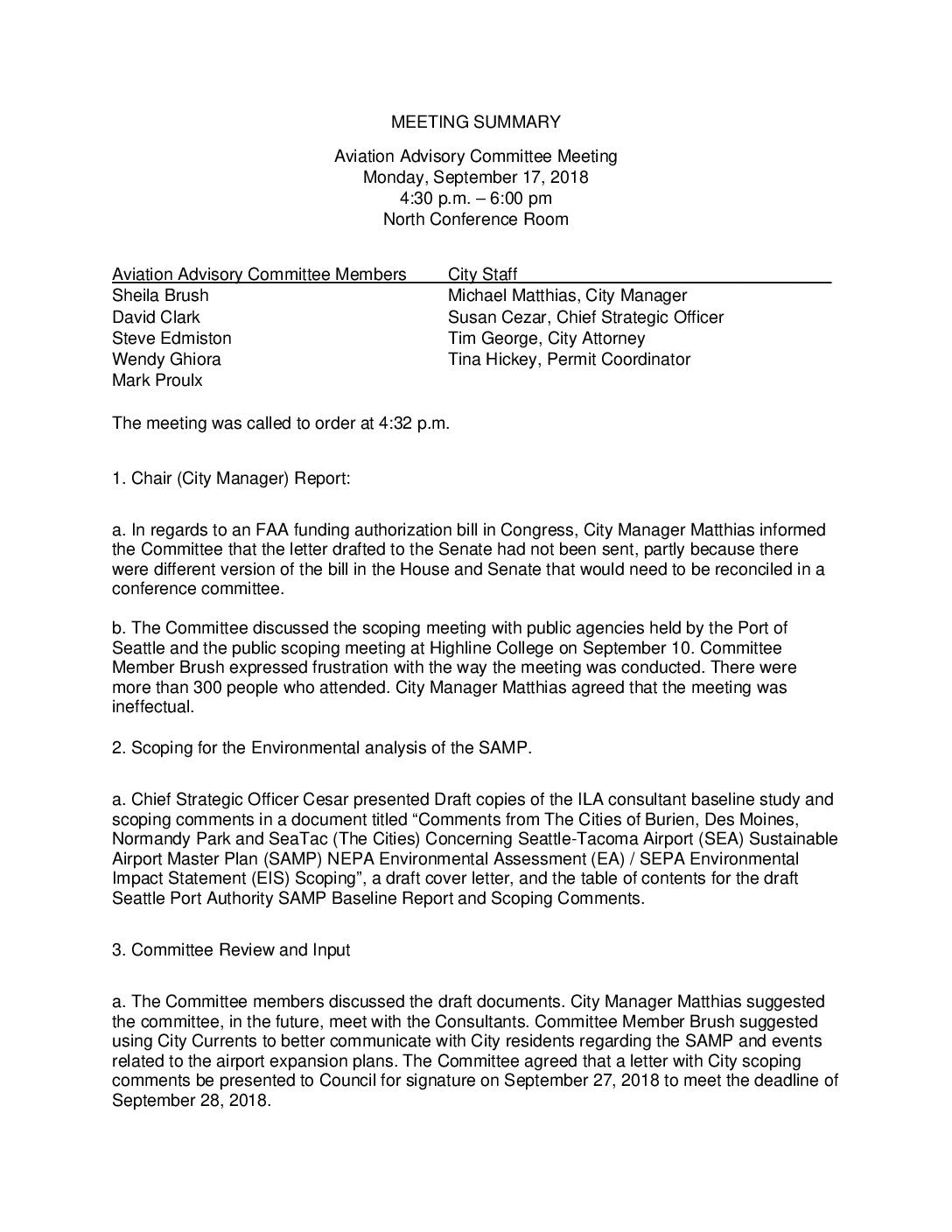
Aviation Advisory Committee Meeting Minutes, September 17, 2018
The Burien Aviation Advisory Committee met on September 17, 2018 to discuss the Port of Seattle's Sustainable Airport Master Plan (SAMP) and its environmental review process. Key topics included a poorly-received public scoping meeting at Highline College that drew over 300 attendees, and the committee's review of draft scoping comments to be submitted jointly by the cities of Burien, Des Moines, Normandy Park, and SeaTac. The committee agreed to present a formal letter of scoping comments to City Council on September 27, 2018, ahead of the September 28 submission deadline.