TagNoise(262)
-

NoiseQuest: airport noise research and community tools
Community Tools Our Community Tools section includes: Guidance for Prospective Home Buyers, information about How an Aircraft Works, a listing of Frequently Asked Questions, a Link and Learn page for learners of all ages to find out more about aviation, noise, the environment and science, a Glossary of Terms, and Links to Airports. Read more -
FQUROH: A Flight Demonstration Project for Airframe Noise Reduction Technology
FQUROH: A Flight Demonstration Project for Airframe Noise Reduction Technology – YouTube To make future aircraft quieter, JAXA has been developing airframe noise reduction technologies. The footage introduces JAXA’s FQUROH flight demonstration project for airframe noise reduction technology. (March 2018) (FQUROH stands for the “Flight Demonstration of Quiet Technology to Reduce Noise from High-lift Configurations”) -
 2018-01-01
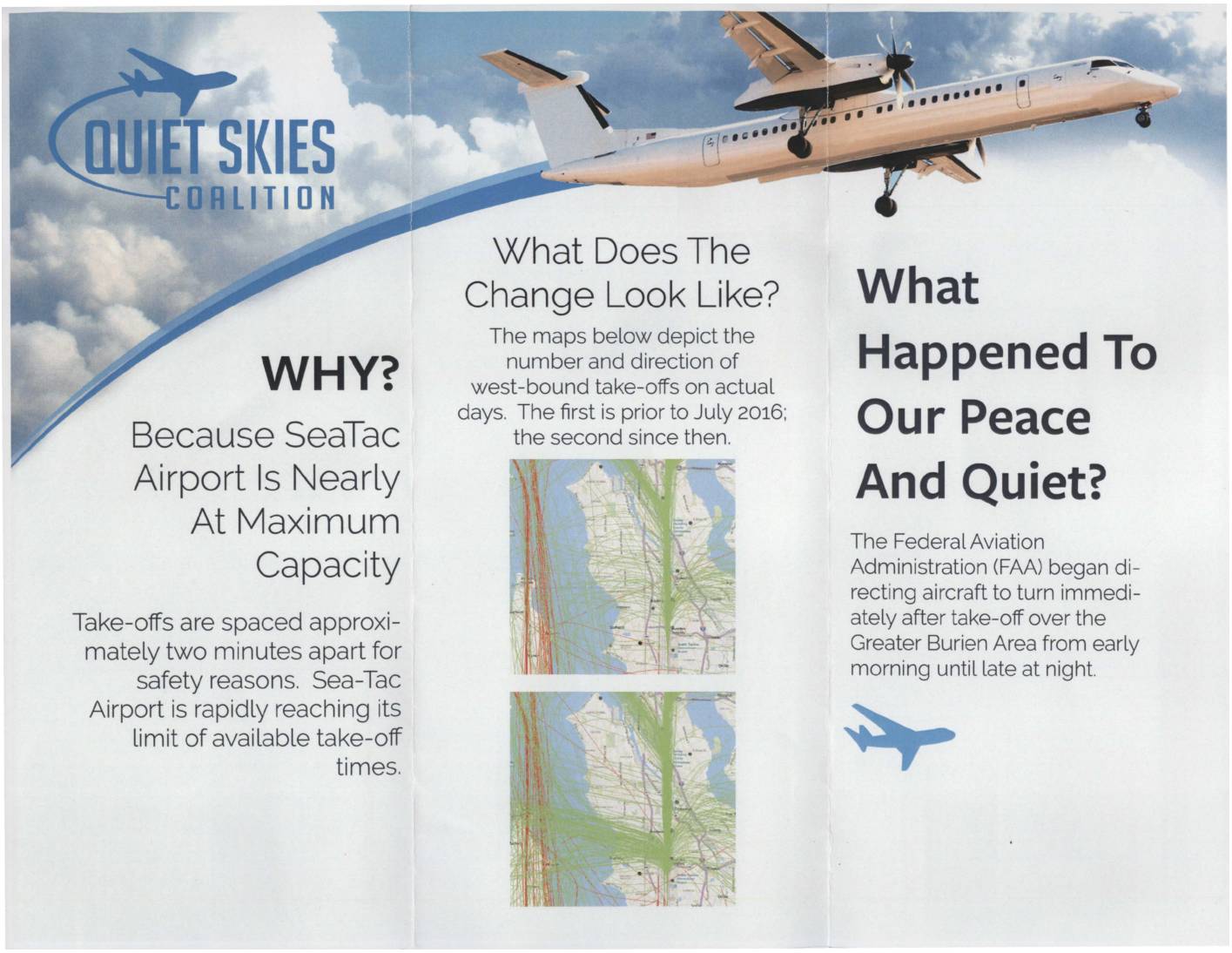
Quiet Skies Coalition: What Happened to Our Peace and Quiet?
The Quiet Skies Coalition is a community group opposing increased aircraft noise over the Greater Burien area near Seattle-Tacoma (Sea-Tac) Airport. Since July 2016, the FAA began directing westbound flights to turn immediately after takeoff over residential neighborhoods, a change driven by Sea-Tac nearing its maximum capacity with takeoffs spaced roughly two minutes apart. The coalition urges residents to contact the FAA and Port of Seattle to object, and welcomes financial contributions to support their advocacy efforts. -
 2018-01-01
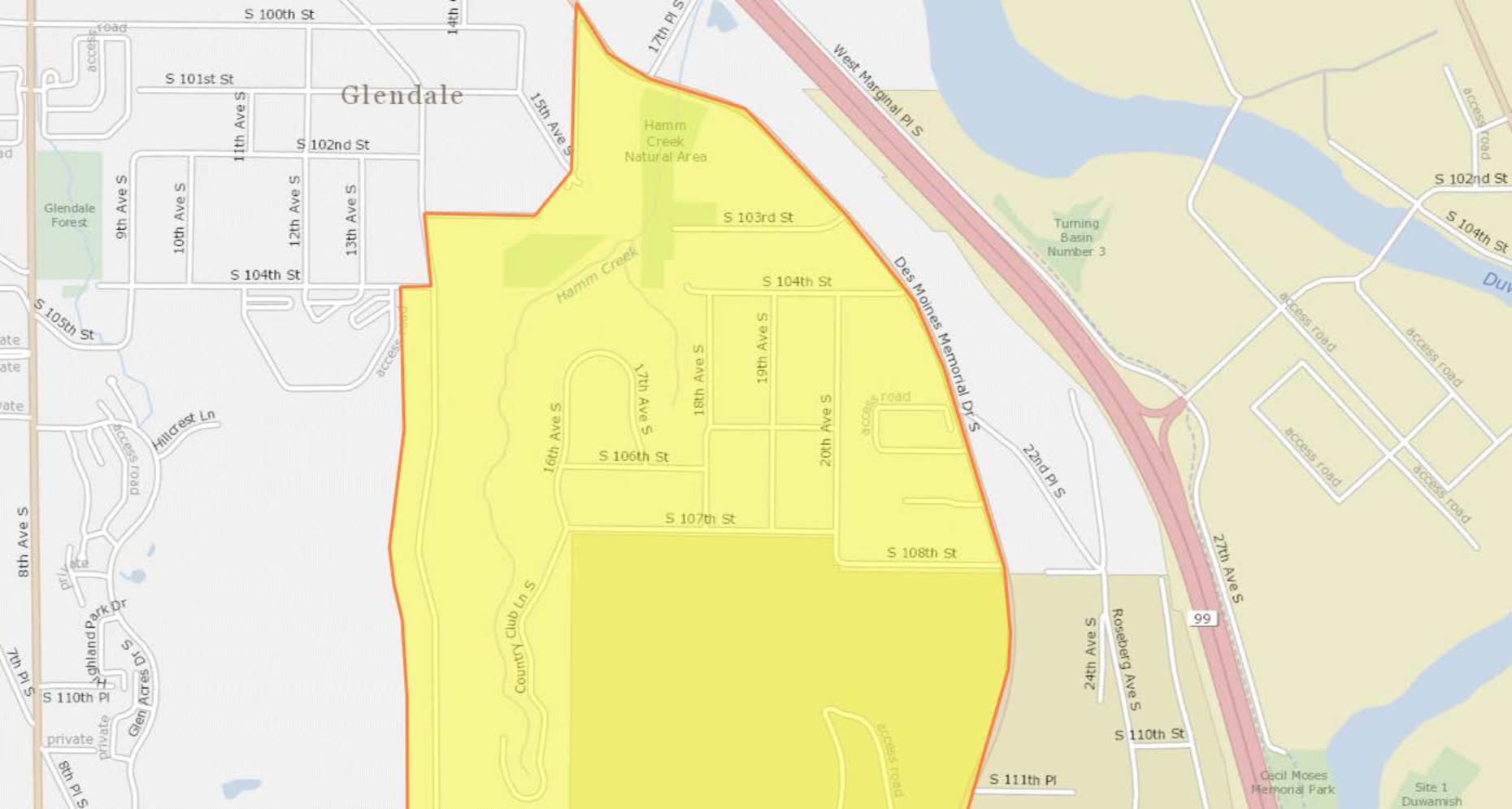
DNL65 Boundary Map (2018)
This document contains a series of maps outlining a highlighted geographic zone spanning several Seattle-area neighborhoods, including Glendale, Southern Heights, Boulevard Park, and North SeaTac. The yellow-shaded areas, bordered in red, appear to delineate a specific study or policy boundary likely related to Sea-Tac Airport noise impact zones. Streets and landmarks such as Hamm Creek Natural Area, Des Moines Memorial Drive, and Southern Heights Park are visible within and around the designated boundary. -
 2017-11-23
Introduction to the ICAO Engine Emissions Databank
The ICAO Engine Emissions Databank is an international reference database tracking exhaust emissions—including smoke, hydrocarbons, carbon monoxide, and nitrogen oxides—from commercial turbojet and turbofan aircraft engines. It compiles certified emissions data measured during a standardized Landing/Take-Off (LTO) cycle below 3,000 feet, making it relevant for assessing local air quality impacts at airports like Sea-Tac. The databank is regularly updated to reflect new engine certifications and design changes, though its fuel-flow figures are not intended for comparing overall engine fuel efficiency. -
 2017-11-13
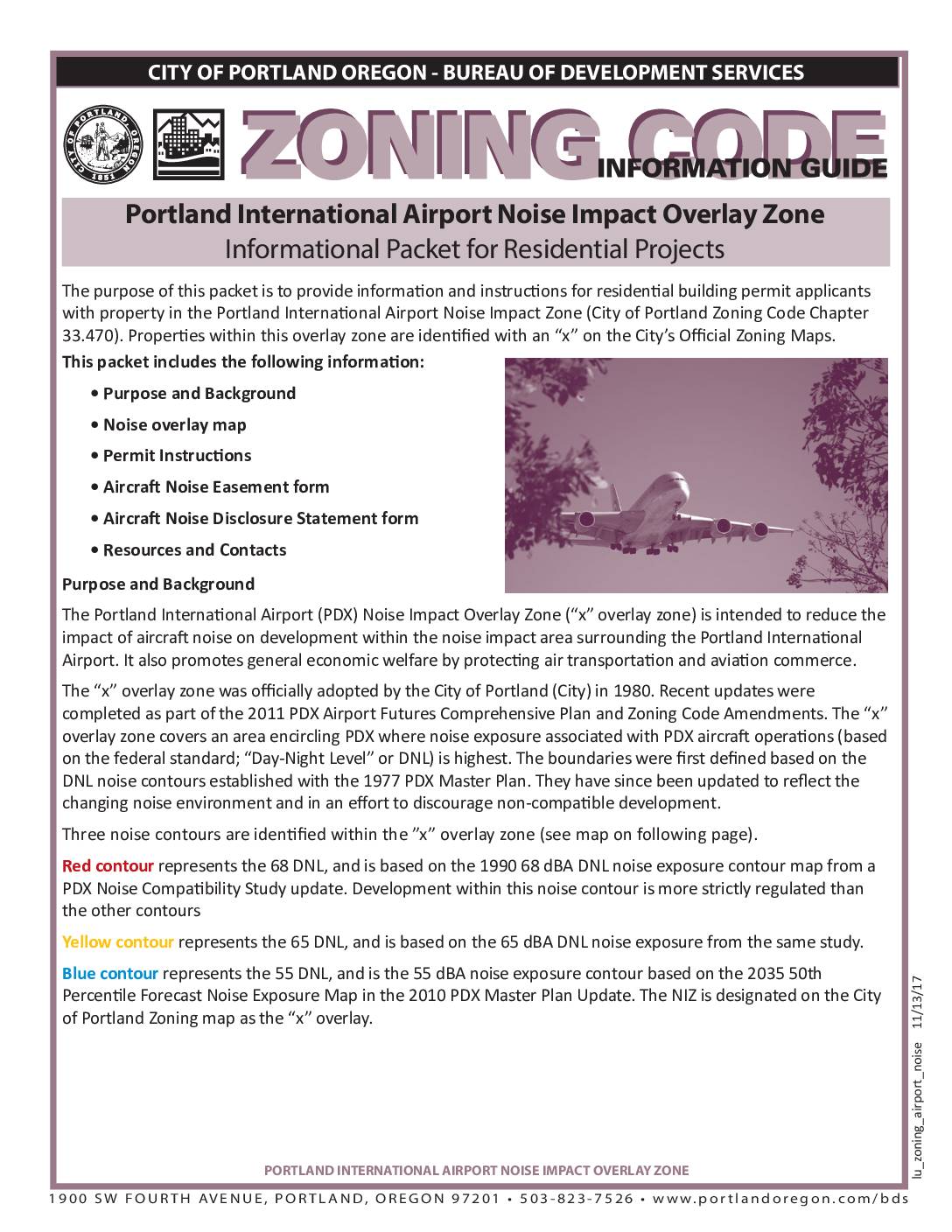
Portland International Airport Noise Impact Overlay Zone: Informational Packet for Residential Projects
This document from the City of Portland Bureau of Development Services explains the rules for building or significantly renovating homes near Portland International Airport (PDX) within designated noise impact zones. Properties in the zone are divided into three noise contours (68, 65, and 55 DNL), each with different requirements ranging from full prohibition of new residential development to mandatory noise easements, acoustical engineer certifications, and noise disclosure statements. Homeowners and developers may be eligible for reimbursement from the Port of Portland for certain compliance costs if they use an approved acoustical engineer. -
 2017-11-05
The Noise Impact of the FAA’s NextGen Program on Vashon Island
This November 2017 presentation by David Goebel examines how the FAA's NextGen modernization program—specifically the new 'HAWKZ' RNAV flight procedure—has increased aircraft noise over Vashon Island, located west of Seattle-Tacoma International Airport. It explains why so many arriving flights are routed over the island despite SeaTac's runways running north-south, compares the old radar-based approach with the new GPS-guided one, and discusses the real-world altitude impacts residents have experienced. The presentation also covers community response options and what other affected neighborhoods have done to push back against similar NextGen-related noise increases. -
 2017-11-01
Puget Sound Gateway Program – Phase 1 of the SR 509 Completion Project: Noise technical report
This 2017 Noise Technical Report, prepared by The Greenbusch Group for the Washington State Department of Transportation, evaluates the noise impacts of Phase 1 of the SR 509 Completion Project near Seattle-Tacoma International Airport. It compares the proposed highway improvements against a 2003 environmental impact study, assessing changes in noise levels, affected residents, and noise abatement measures such as sound walls. The report concludes with recommendations for minimizing construction and long-term traffic noise impacts on surrounding communities. -
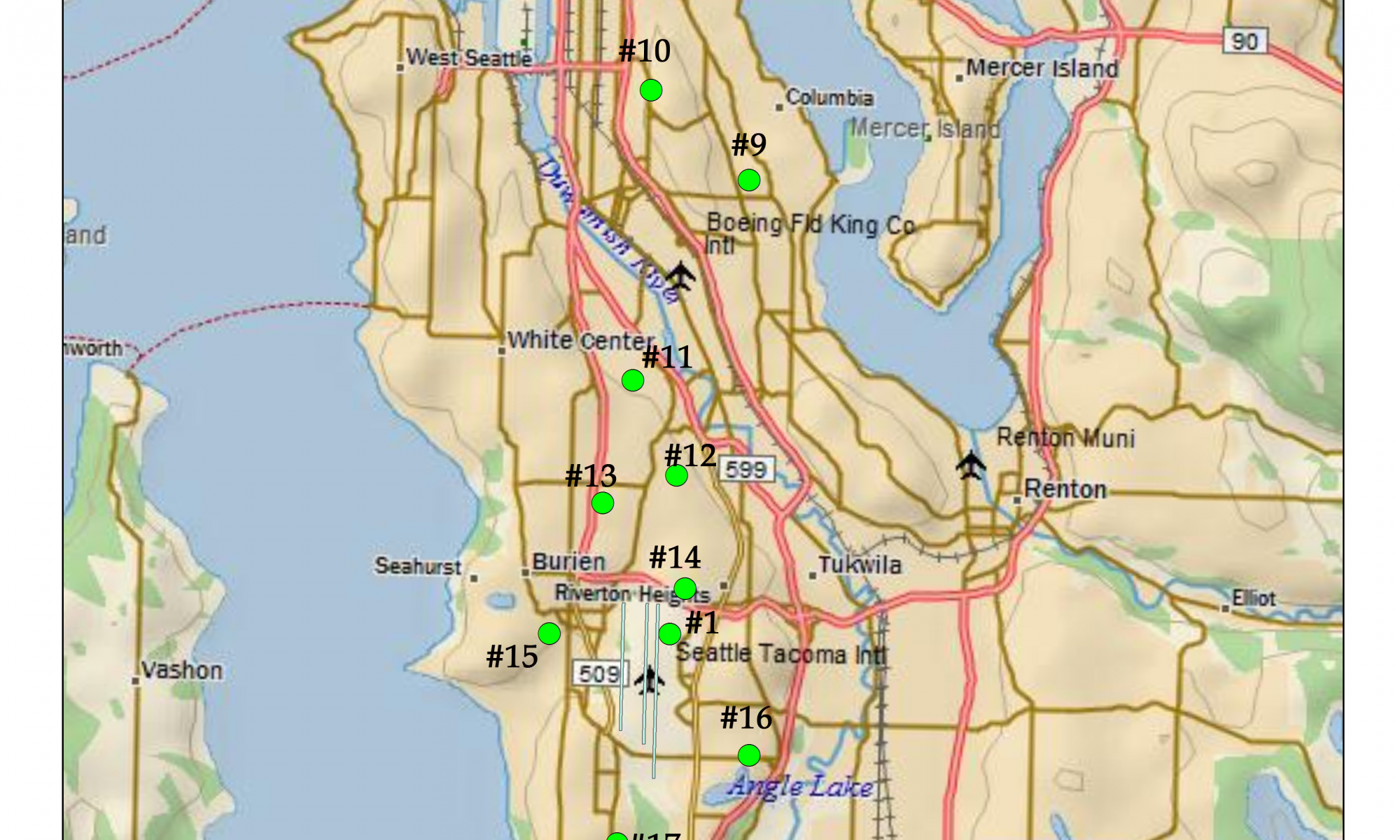
NMT_locations
A map showing numbered noise monitoring stations (#1, #9–#17) around Seattle-Tacoma International Airport (Sea-Tac) and the surrounding communities including Burien, White Center, Tukwila, Renton, and West Seattle. The stations are marked with green dots and correspond to a noise measurement network in the vicinity of Sea-Tac, Boeing Field/King County International Airport, and Renton Municipal Airport. -
 2017-06-02
Airplane noise is ‘continual assault’ on residents’ ears — letters to the editor, Federal Way Mirror, June 2, 2017
A June 2, 2017 edition of the Federal Way Mirror features letters to the editor debating airplane noise and airport policy in the Federal Way, Washington area. Residents express frustration over increasing flight noise, with one writer describing it as a 'continual assault' on residents' ears, while another argues that Federal Way should advocate for a second regional airport at Everett's Paine Field rather than expanding Sea-Tac's third runway. The letters reflect ongoing community concern about the quality-of-life impacts of growing air traffic over South Sound neighborhoods.