TagNoise(262)
-
2014-08-02
Community roundtables will tackle airplane noise issues – QNS
Posted on August 2, 2014 By Bob Harris After years of pressuring for the formation of community roundtables to discuss airplane noise over residential neighborhoods, Gov. Andrew Cuomo has authorized the formation of such groups. Meetings were recently held in a large hanger at the Vaughn College of Aeronautics adjacent to LaGuardia Airport. The Queens -
 2013-10-01
Seattle-Tacoma International Airport Part 150 noise compatibility study final: Chapter three – noise analysis
This chapter from Sea-Tac Airport's 2013 Part 150 Noise Compatibility Study explains how aircraft noise is measured and analyzed around Seattle-Tacoma International Airport. It covers the basic properties of sound—including loudness, pitch, and duration—and explains why noise is measured on the logarithmic decibel (dB) scale rather than a standard linear scale. The chapter also outlines how noise contour modeling was conducted to assess the real-world impact of aircraft operations on surrounding communities. -
 2013-01-01
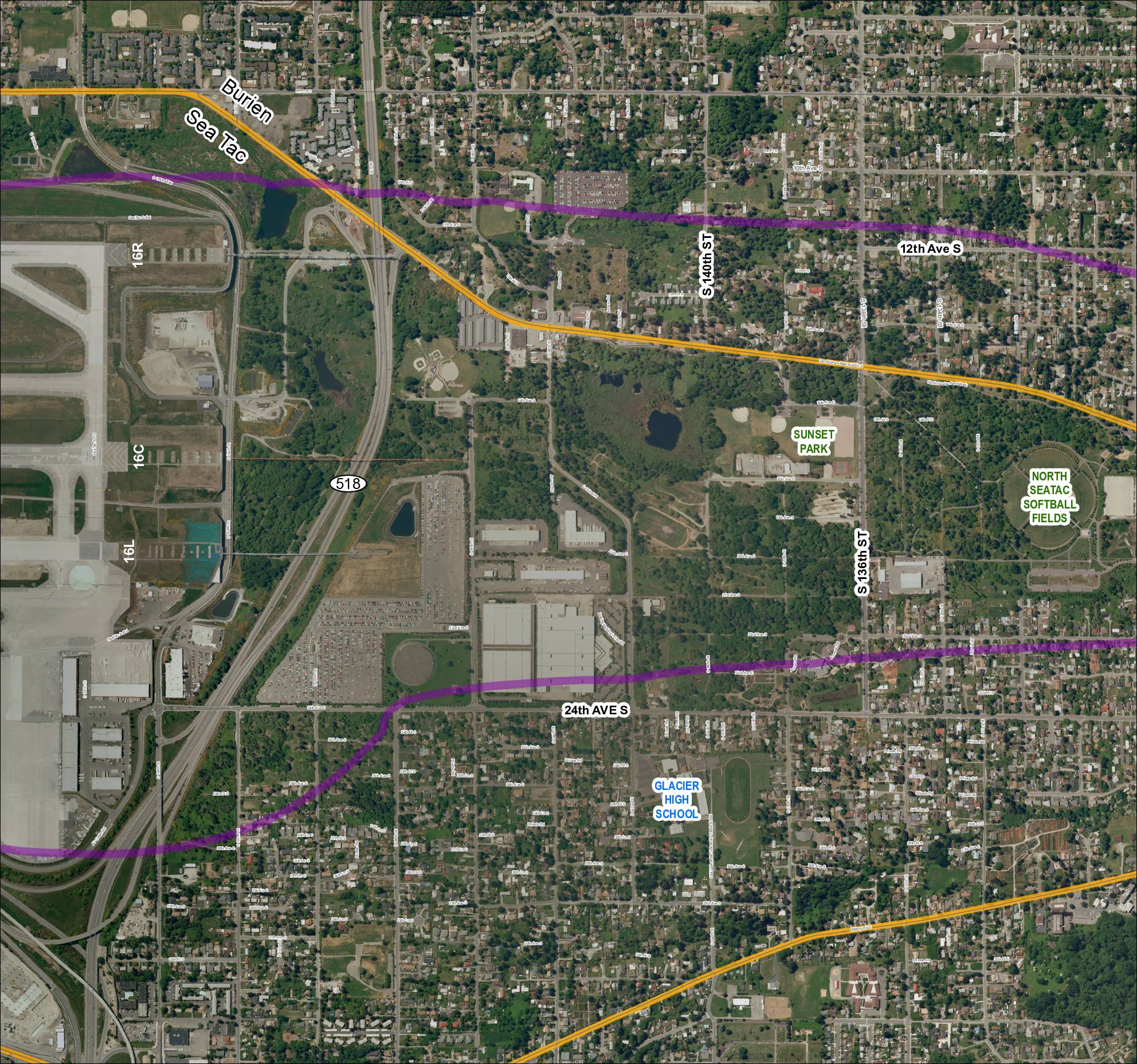
Grid 4: 2013 Baseline Map — Sea-Tac Airport Area
This aerial map shows the area surrounding Seattle-Tacoma International Airport, including the cities of Burien and SeaTac, with runway designations 16R, 16C, and 16L marked along the western edge. Two colored flight-path or noise-contour lines — one purple and one gold — are overlaid on the map, tracing routes that extend east through residential neighborhoods, parks such as Sunset Park and North SeaTac Softball Fields, and past landmarks including Glacier High School. The map appears to be part of a noise or flight-path policy study documenting how aircraft departure and arrival corridors affect surrounding communities along SR 518 and adjacent streets. -
 2013-01-01
POS Part 150 Your Comments Are Welcome Post Card
A public-outreach card issued by the Port of Seattle inviting community comments on the Seattle-Tacoma International Airport Part 150 Noise Compatibility Study. Contact channels listed include email (seapart150comments@landrum-brown.com), a study website (www.airportsites.net/sea-part150), and a Port of Seattle noise-notification page (portseattle.org/community/environment/noise.shtml). -
 2012-11-01
Final Environmental Assessment for Proposed Arrival Procedures to Seattle-Tacoma International Airport: Appendix F — Noise and Its Effects on People
This document explains the noise metrics used to evaluate aircraft noise around Seattle-Tacoma International Airport, including decibels (dB), A-weighted decibels (dBA), and the Day-Night Average Sound Level (DNL). It describes how sound is measured on a logarithmic scale, meaning noise levels don't add up the way ordinary numbers do, and explains why A-weighted measurements are the standard used by the FAA and EPA because they best match how human ears perceive sound. These concepts form the technical foundation for assessing the environmental impact of proposed flight arrival procedures at Sea-Tac. -
 2012-11-01
Final Environmental Assessment for Greener Skies Over Seattle: Proposed Arrival Procedures to Seattle-Tacoma International Airport — Volume 2 Appendices
This November 2012 Federal Aviation Administration report evaluates the environmental impacts of proposed new arrival flight procedures at Seattle-Tacoma International Airport, part of the 'Greener Skies Over Seattle' initiative. It includes detailed appendices covering noise modeling, effects of aircraft noise on communities, historic and endangered species considerations, and agency coordination records. The goal of the proposed procedures was to reduce fuel consumption and emissions while assessing changes in noise exposure for surrounding neighborhoods. -
 2012-10-31
Draft Environmental Assessment for Greener Skies Over Seattle: Proposed Arrival Procedures to Seattle-Tacoma International Airport, Volume 2 – Appendices
FAA Draft Environmental Assessment (EA), Volume 2 Appendices, for the Greener Skies Over Seattle project proposing new arrival procedures to Seattle-Tacoma International Airport (Sea-Tac Airport / KSEA), dated 31 October 2012. Appendices cover noise metrics (DNL, SEL, Leq, dBA), NIRS noise modeling technical report, aircraft operations and flight tracks, runway utilization, meteorological conditions, historic resource -
 2012-10-26
Frustrated Residents Fire Back at FAA Officials
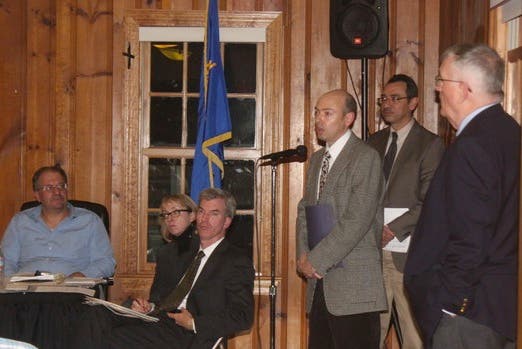
Joseph Kellard, Patch Staff Posted Fri, Oct 26, 2012 at 4:00 pm ET Story and photos by Tara Conry Is the Federal Aviation Administration compromising safety and ignoring an agreement to reduce noise pollution in order to maximize efficiency at JFK airport? Those were the charges residents made at the Oct. 23 meeting of the -
 2012-05-25
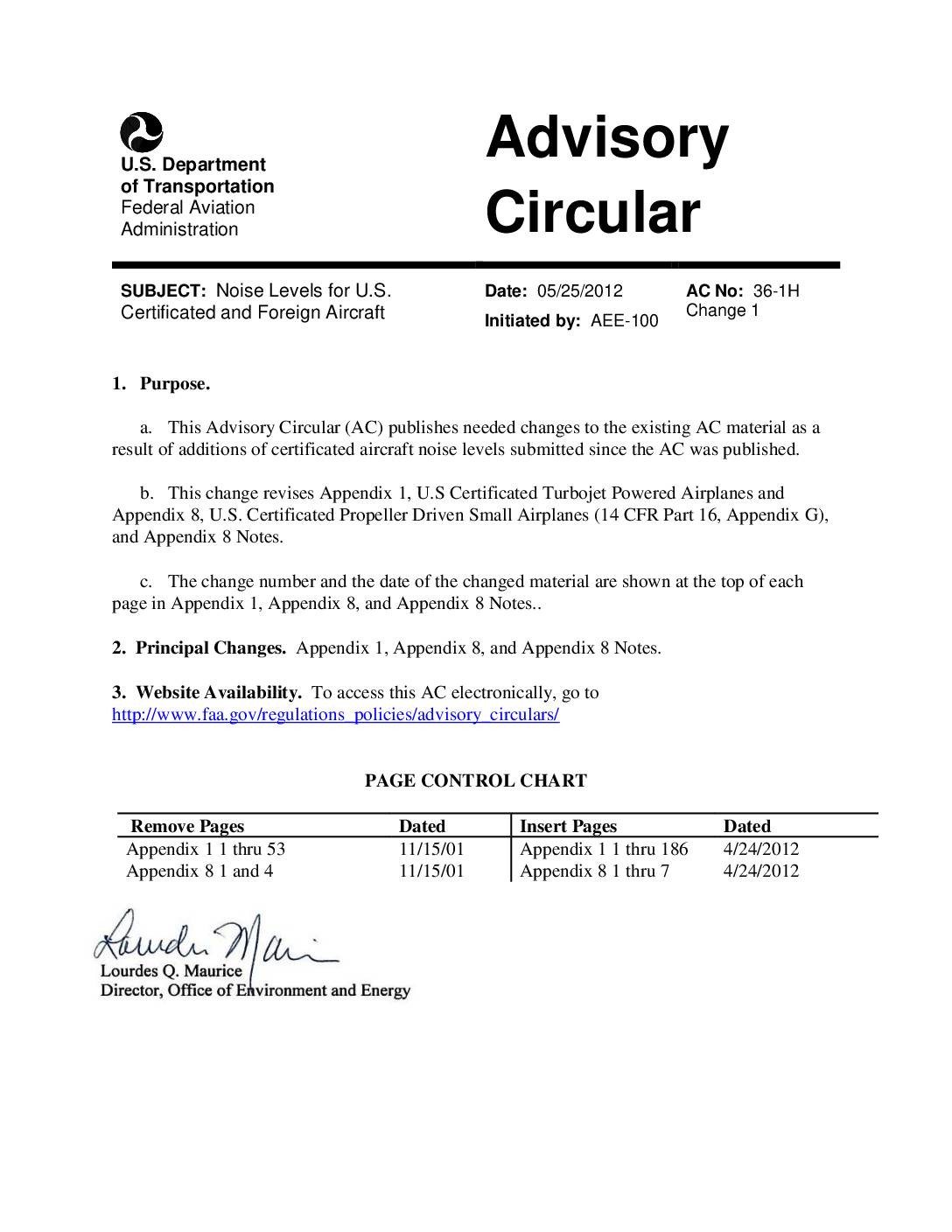
Noise levels for U.S. certificated and foreign aircraft
This FAA Advisory Circular (AC 36-1H) published in 2001 and updated in 2012 provides official noise level data for U.S.-certificated and foreign aircraft, including turbojet and propeller-driven planes tested under 14 CFR Part 36 and ICAO Annex 16 standards. Noise measurements, expressed in Effective Perceived Noise Levels (EPNdB), cover takeoff, sideline, and approach conditions and are organized across multiple appendices by aircraft type and compliance stage. The document serves as a reference for tracking progress in aircraft noise reduction and supports noise policy decisions at airports across the United States. -
 2012-03-01
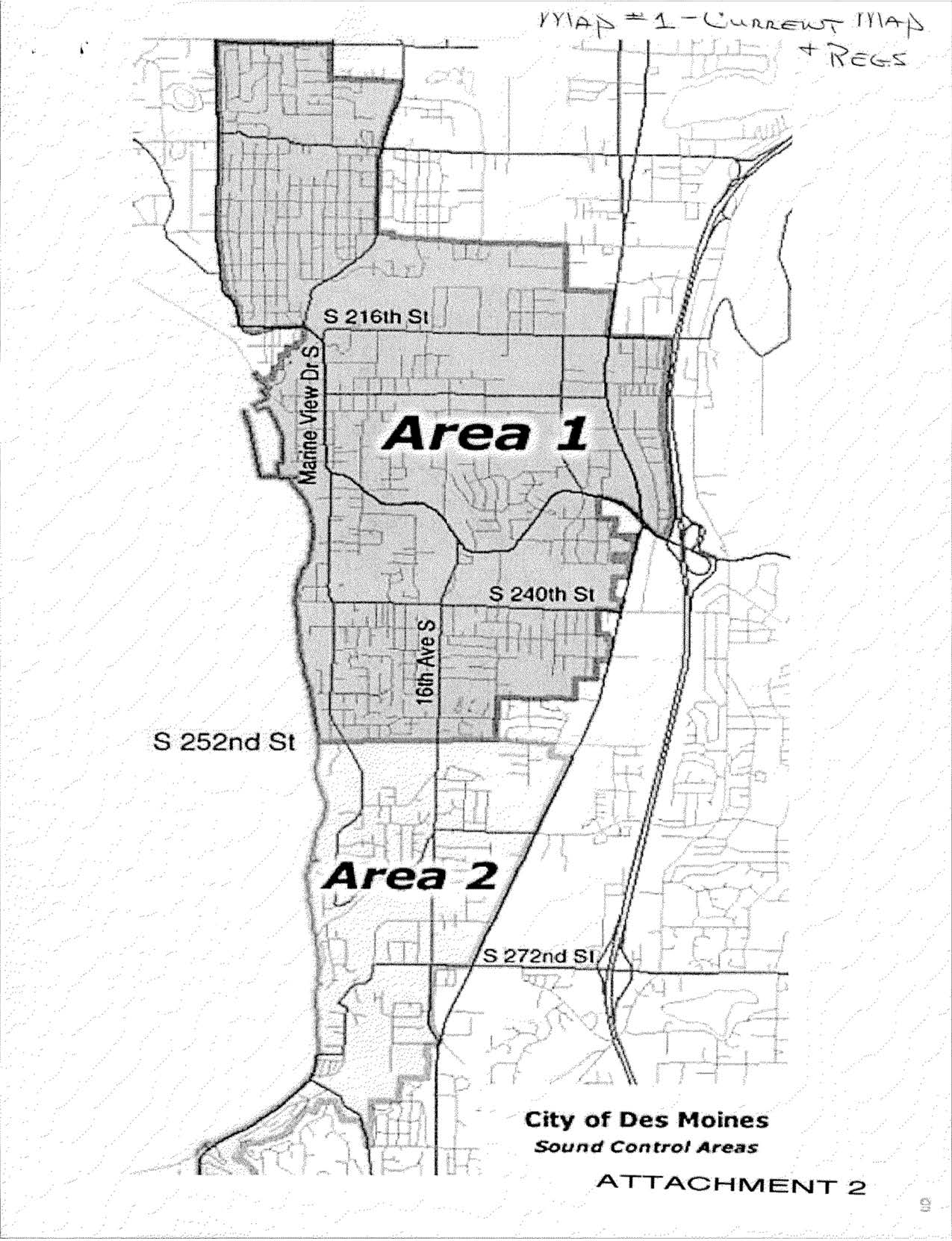
Des Moines Sound Control Areas Map — March 2012 Study Session
A map labeled 'City of Des Moines Sound Control Areas' (Attachment 2) depicting two designated sound control zones: Area 1, bounded approximately by S 216th St to the north and S 240th St to the south along Marine View Dr S and 16th Ave S, and Area 2, extending south to approximately S 272nd St. A handwritten note at the top reads 'MAP #1 – Current Map + Regs,' indicating this is part of a Sea-Tac Airport noise policy or regulatory archive.