TagEnvironmental Justice(100)
-
 2024-01-08
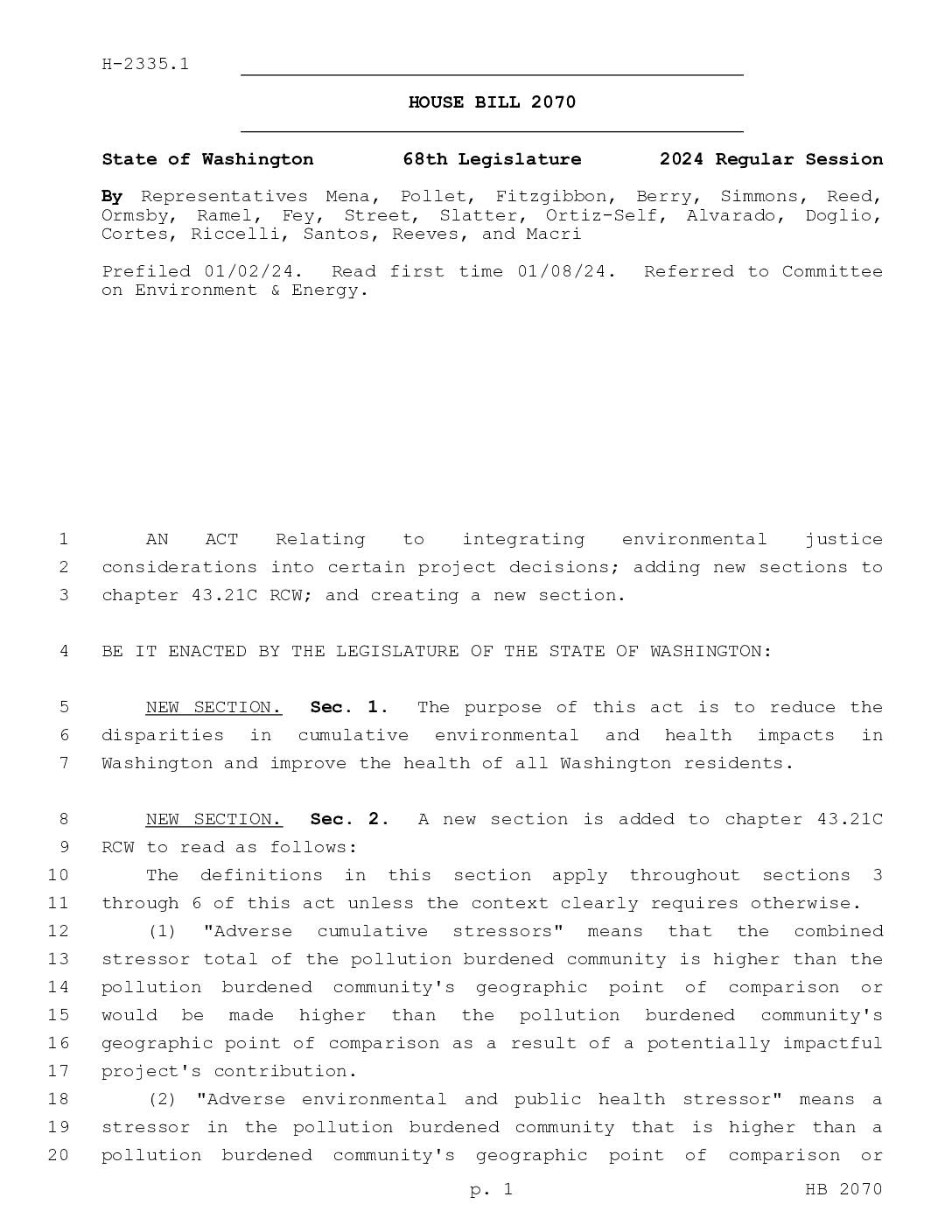
HB 2070: Integrating Environmental Justice Considerations into Certain Project Decisions
Washington House Bill 2070 (2024) aims to reduce environmental health disparities by requiring environmental justice impact assessments for projects that may add pollution burdens to already overburdened communities. The bill defines key terms such as 'disproportionate impact' and 'adverse cumulative stressors' to evaluate whether a proposed project would worsen air, water, or other environmental conditions in vulnerable neighborhoods. Note: this bill addresses broad environmental justice considerations statewide and does not specifically concern Sea-Tac Airport noise policy. -
 2024-01-05
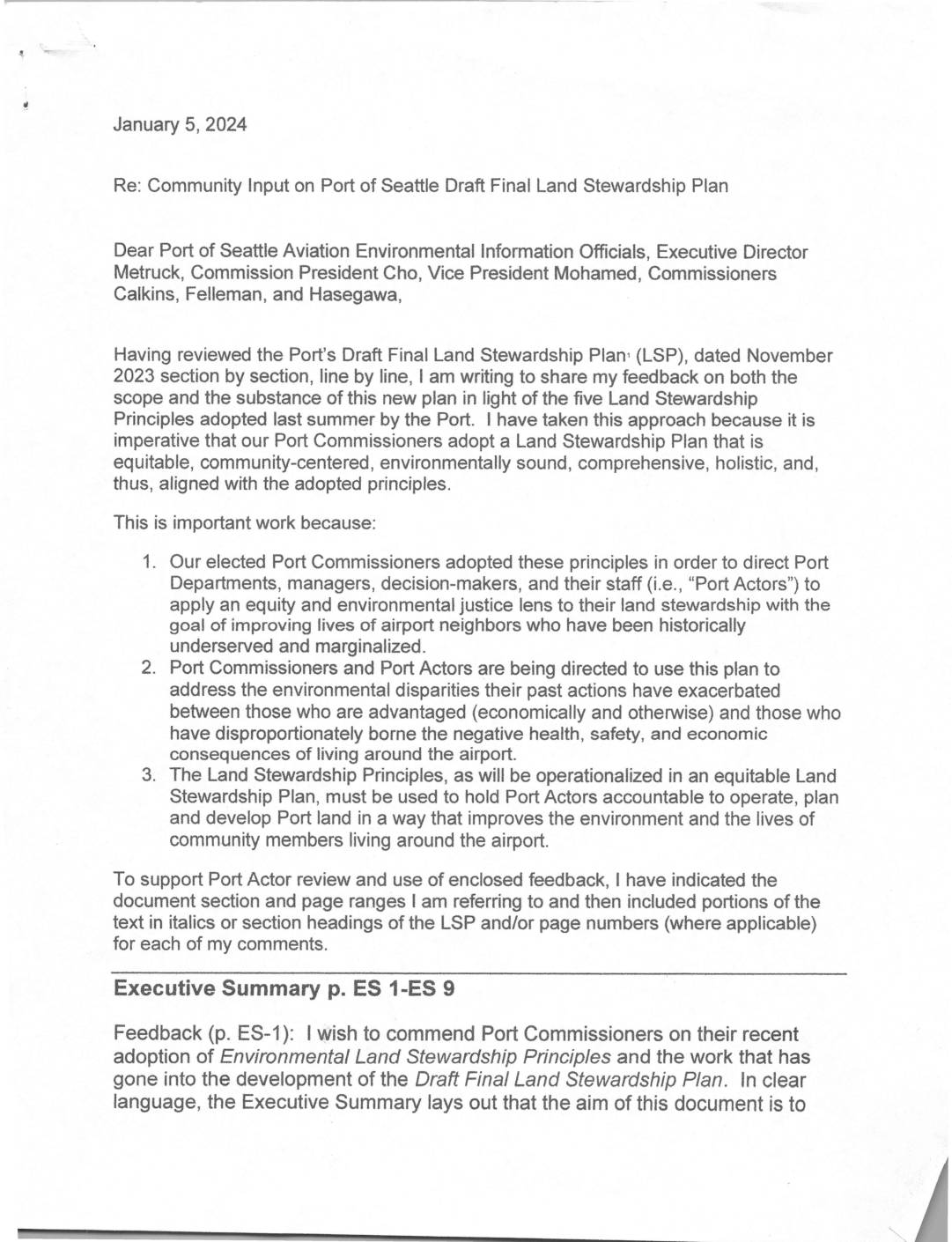
Community Input on Port Of Seattle Draft Final Land Stewardship Plan
A community member submitted detailed feedback to Port of Seattle officials on January 5, 2024, reviewing the Draft Final Land Stewardship Plan (LSP) for Seattle-Tacoma International Airport. The letter argues that the plan falls short of the Port's own adopted Environmental Land Stewardship Principles, particularly regarding equity, environmental justice, and restoration of habitats degraded by past Port actions. The writer urges Port decision-makers to strengthen the plan by embedding equity goals across all objectives, expanding the definition of land stewardship to include restoration, and better addressing the historical health, noise, and environmental burdens borne by communities living near the airport. -
 2024-01-03
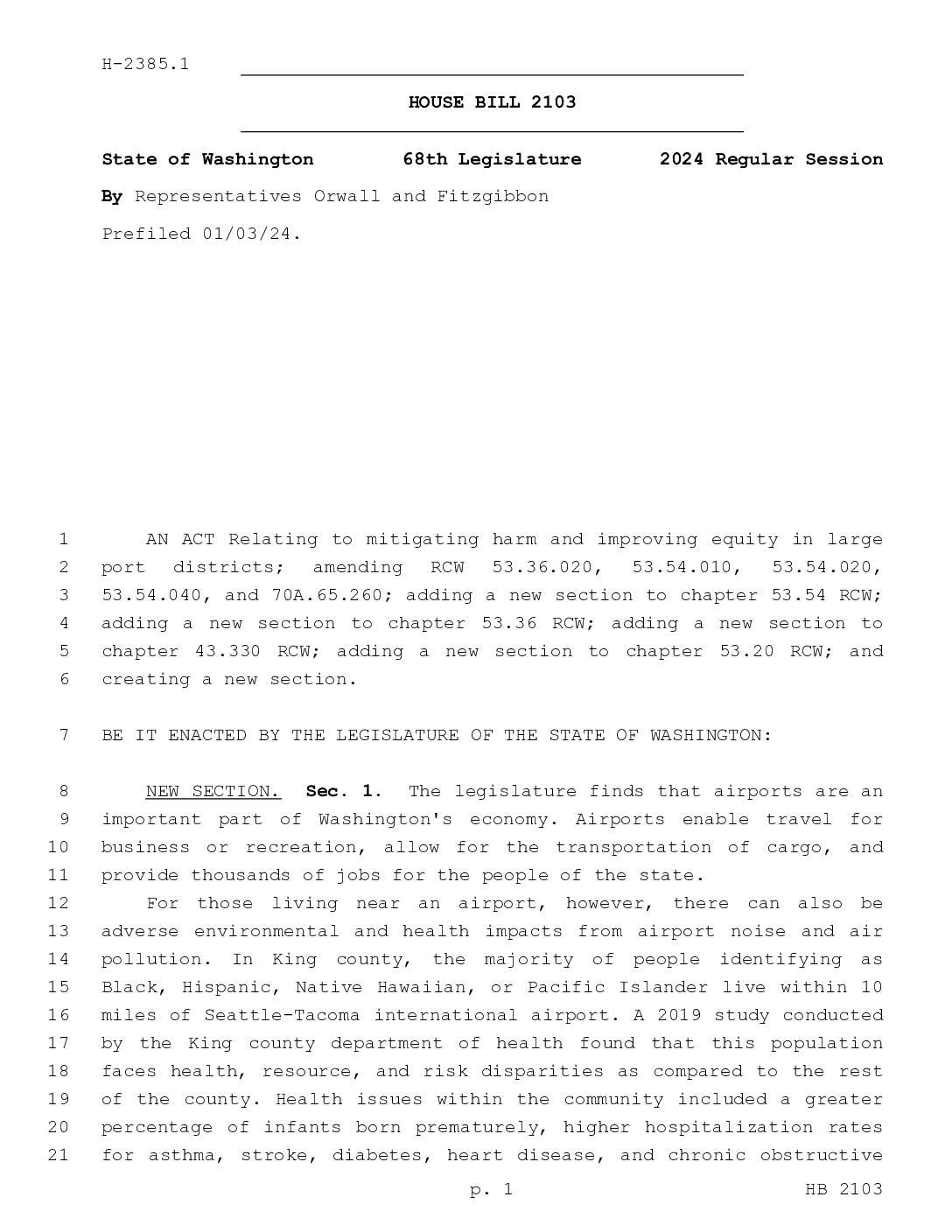
House Bill 2103: Mitigating Harm and Improving Equity in Large Port Districts
Washington House Bill 2103 (2024) requires large port districts operating major airports, such as Seattle-Tacoma International Airport, to dedicate a growing portion of their property tax levy revenue toward programs that reduce noise and air pollution impacts on nearby communities. The bill was prompted by health and equity concerns, as studies show that communities of color living close to Sea-Tac face higher rates of asthma, heart disease, premature births, and other health disparities. Mitigation programs funded under the bill may include repairing failed soundproofing equipment, providing air purifiers, creating urban green spaces, and supporting indoor community facilities in affected neighborhoods. -
 2024-01-01
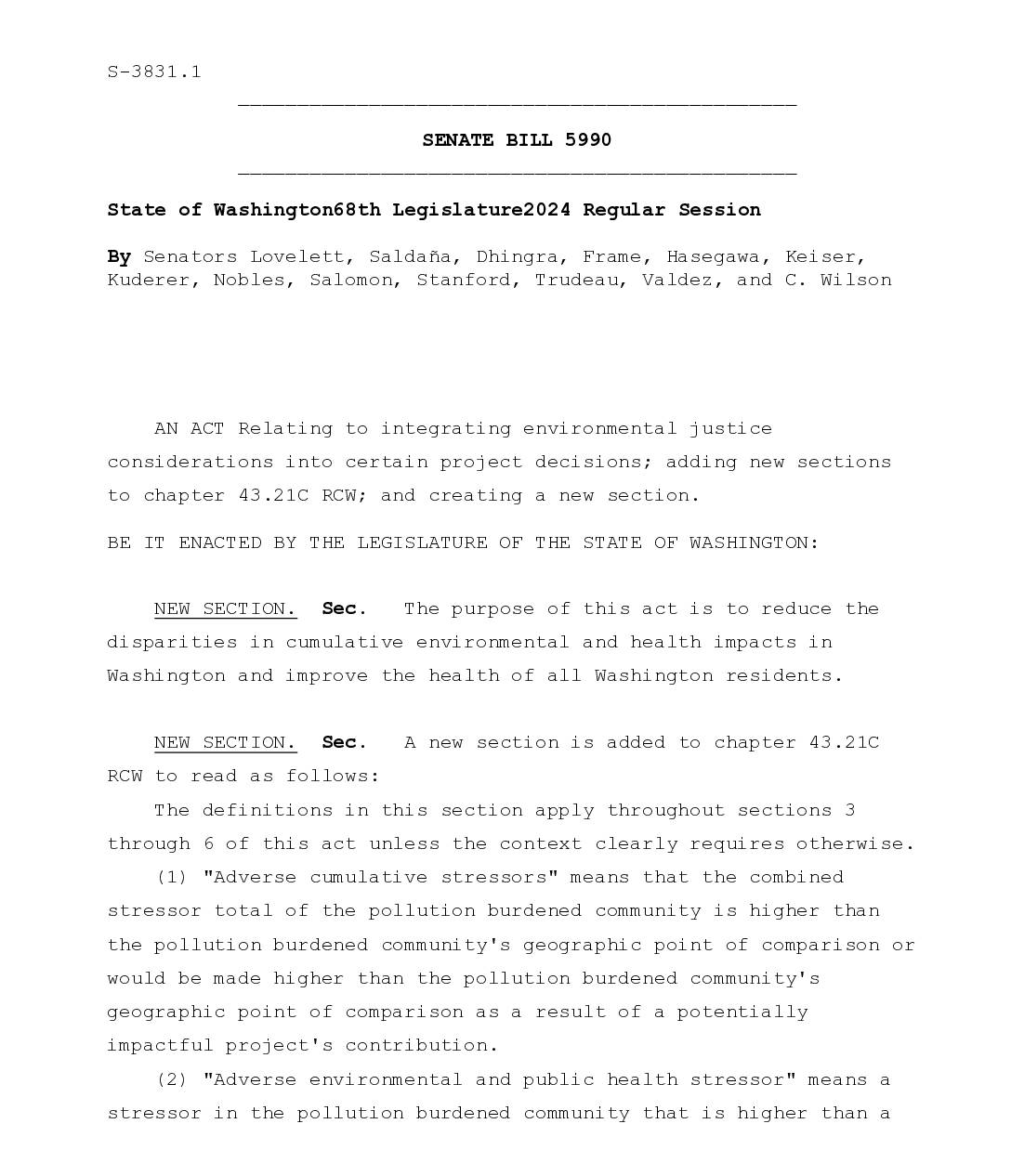
Senate Bill 5990: Integrating Environmental Justice Considerations into Certain Project Decisions
Washington Senate Bill 5990, introduced in the 2024 legislative session, aims to reduce environmental health disparities by requiring detailed impact assessments before approving projects in communities already burdened by pollution. The bill defines key terms such as 'disproportionate impact' and 'environmental justice impact statement,' and establishes a framework for evaluating whether new or expanded projects would worsen cumulative health and environmental stressors in overburdened communities. Note: this bill addresses broad environmental justice policy statewide and does not specifically address Sea-Tac Airport noise or aviation-related impacts. -
 2024-01-01
2024 Environmental Justice Report: Washington State Attorney General’s Office
The Washington State Attorney General's Office 2024 Environmental Justice Report details efforts to protect communities—particularly low-income and communities of color—from disproportionate environmental harms through the Healthy Environment for All (HEAL) Act. The report covers actions such as lawsuits, community outreach, and policy letters aimed at reducing pollution and toxic exposures across Washington State. Note: This document does not address Sea-Tac Airport noise policy and may not be relevant to that specific topic. -
 2024-01-01
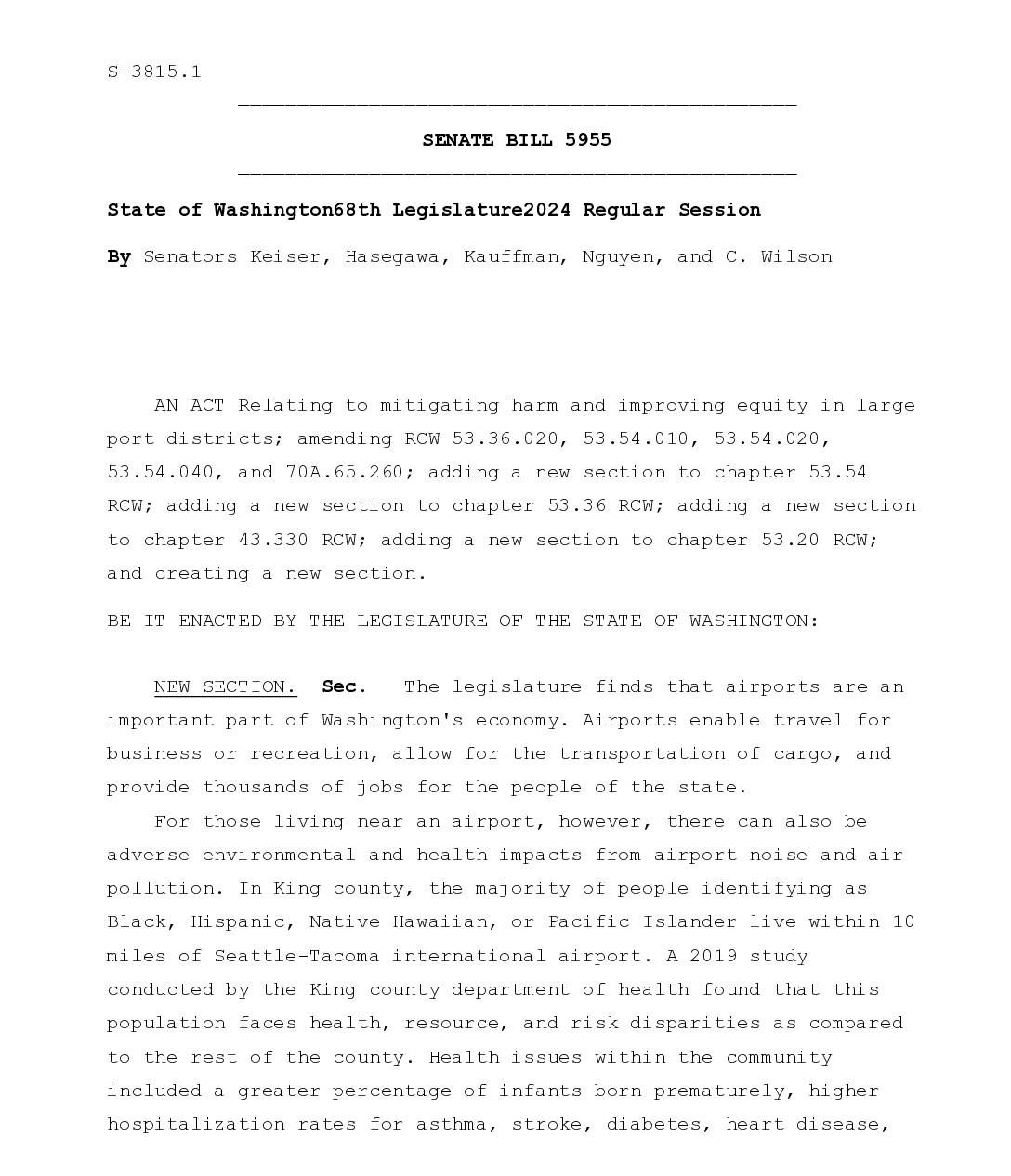
Senate Bill 5955: Mitigating Harm and Improving Equity in Large Port Districts
Washington Senate Bill 5955 (2024) requires large port districts operating airports, such as the Port of Seattle which runs Sea-Tac International Airport, to dedicate a growing share of their annual property tax levy revenue toward programs that reduce noise and air pollution impacts on nearby communities. Starting in 2024, at least half of any levy revenue increase must fund mitigation efforts, rising to a minimum of 1% of total levy revenue by 2025 and increasing by 1% each year up to a cap of 10%. The bill was introduced in response to documented health disparities—including higher rates of asthma, heart disease, and premature births—affecting Black, Hispanic, Native Hawaiian, and Pacific Islander residents who disproportionately live within 10 miles of Sea-Tac Airport. -
 2023-12-21
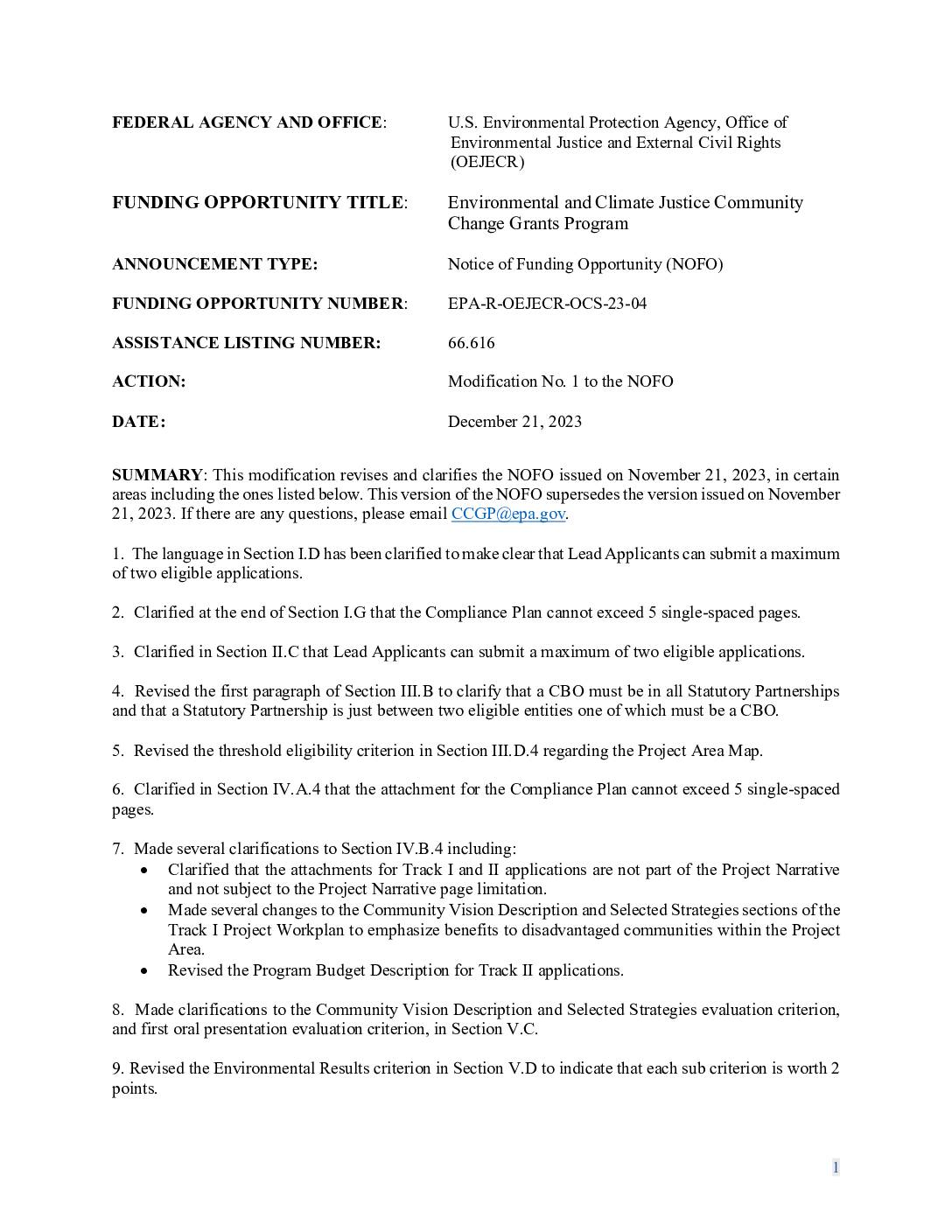
Environmental and Climate Justice Community Change Grants Program: Notice of Funding Opportunity modification No. 1
This document is a modification to a U.S. EPA funding opportunity notice for the Environmental and Climate Justice Community Change Grants Program, issued December 21, 2023. It updates application rules, eligibility requirements, and evaluation criteria for community organizations seeking environmental and climate justice grants. Note: this document does not appear to be directly related to Sea-Tac Airport noise policy. -
 2023-12-01
Improving air quality in overburdened communities highly impacted by air pollution: 2023 report
This 2023 report from the Washington State Department of Ecology focuses on improving air quality in overburdened communities that are highly impacted by air pollution across Washington State. It outlines regional office contacts, accessibility services, and language assistance resources available to affected residents. Note: This document does not specifically address Sea-Tac Airport noise policy and may not be directly relevant to airport noise concerns. -
 2023-10-24
Property Tax Levy 2023 (and a few words about sex trafficking)
Commissioners, It’s with an increasingly heavy heart we take in your discussion of the Property Tax Levy every year now. Despite your claims to be the most progressive commission ever, the tax levy is evidence that your relationship with the cities under the flight path, especially fence line communities, is steadily becoming less equitable with -
 2023-10-01
Seattle-Beacon Hill Station: Focus on Air Monitoring
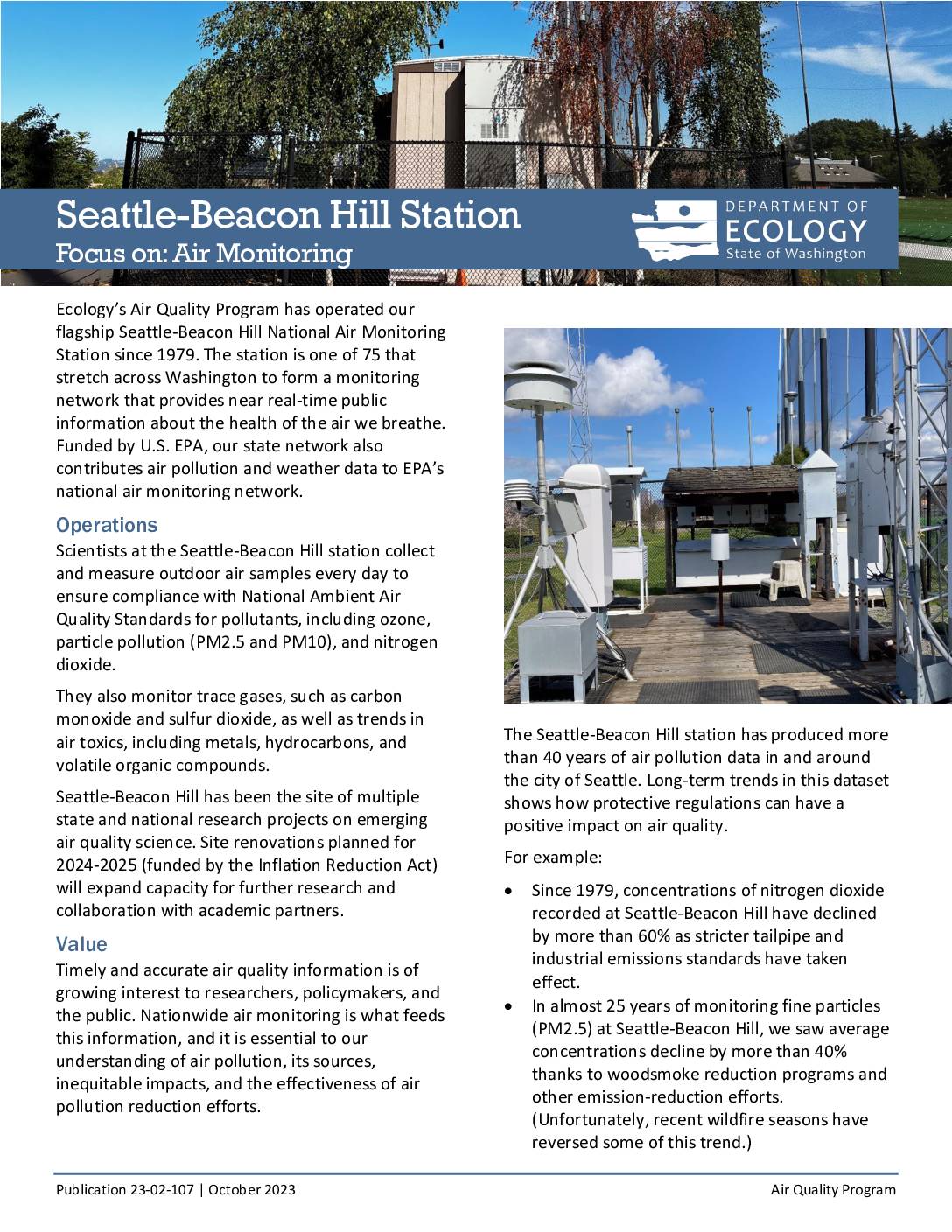
Washington State's Department of Ecology has operated the Seattle-Beacon Hill Air Monitoring Station since 1979, tracking pollutants such as ozone, nitrogen dioxide, fine particles, and air toxics to ensure compliance with national air quality standards. Over four decades of data show significant air quality improvements, including a 60% decline in nitrogen dioxide and a 40% reduction in fine particle concentrations, largely due to stricter emissions regulations. The station also supports ongoing research and community efforts to address air pollution disparities in overburdened neighborhoods of South Seattle.