TagEnvironmental Justice(100)
-
 2023-10-01
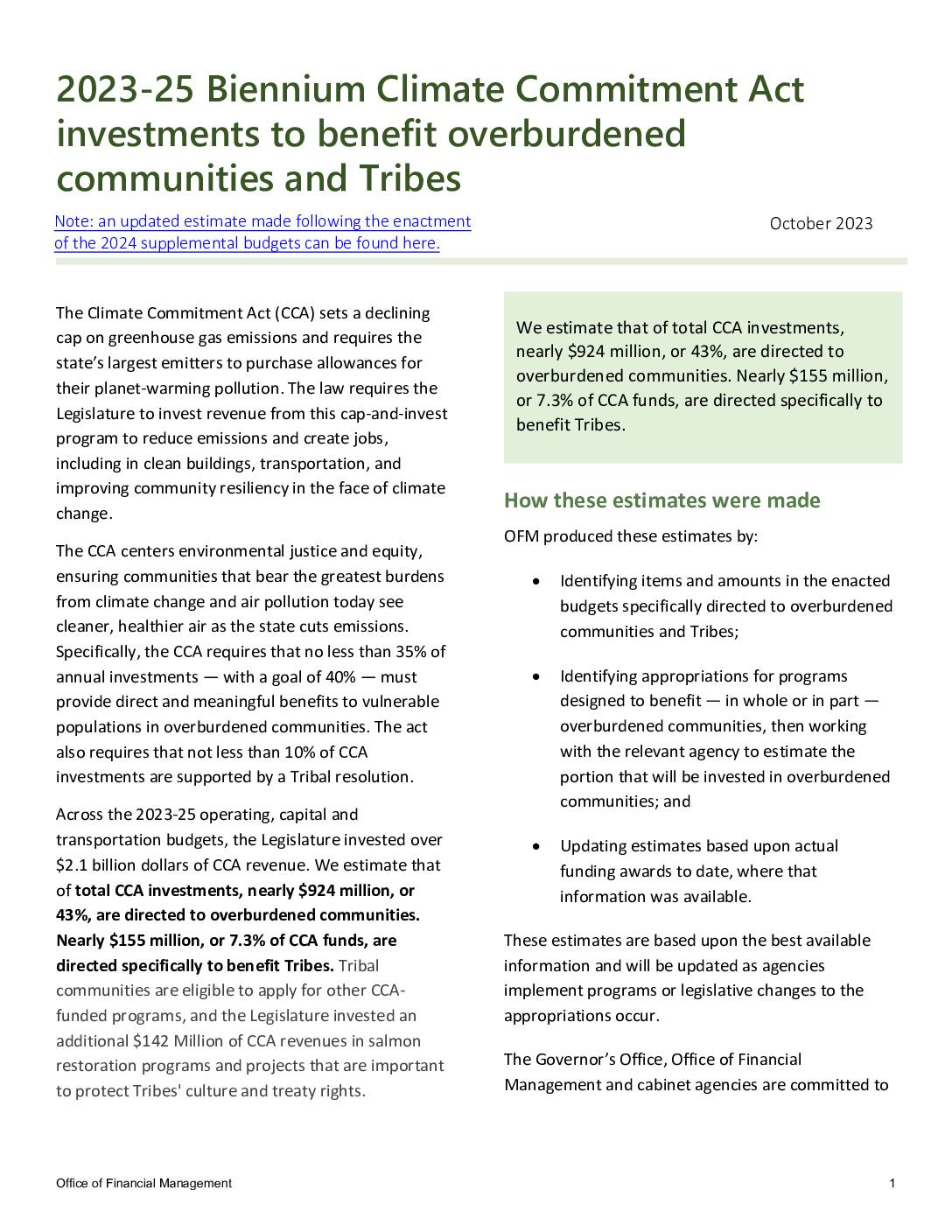
2023-25 Biennium Climate Commitment Act Investments to Benefit Overburdened Communities and Tribes
Washington State's Climate Commitment Act invested over $2.1 billion in the 2023-25 budget cycle to reduce greenhouse gas emissions, with an estimated $924 million (43%) directed to overburdened communities and $155 million (7.3%) specifically benefiting Tribes. Key investments include rebates for energy-efficient home equipment, weatherization assistance for low-income households, transit grants, bike and pedestrian safety improvements, and air quality programs in heavily polluted communities. An additional $142 million was directed to salmon restoration projects important to Tribal culture and treaty rights. -
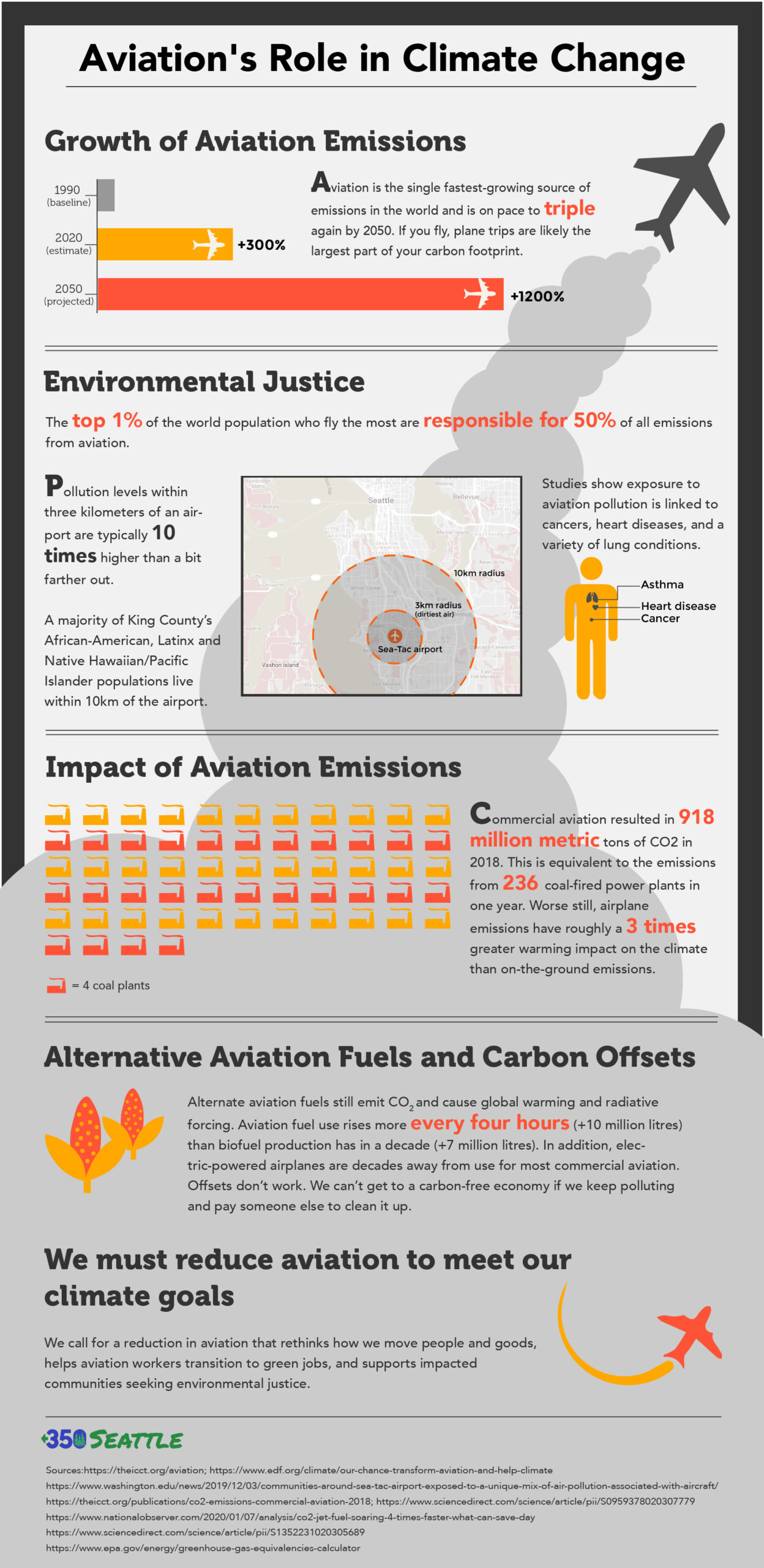
350 Seattle Infographic on Aviation Emissions and Sea-Tac Airport Environmental Justice
An infographic published by 350 Seattle detailing aviation's environmental impact, including projected emissions growth to +1200% by 2050, environmental justice concerns around Sea-Tac Airport, and the claim that commercial aviation produced 918 million metric tons of CO2 in 2018. The infographic includes a map showing the 3km and 10km pollution radius around Sea-Tac Airport and calls for a reduction in aviation to meet climate goals. -
 2023-08-15
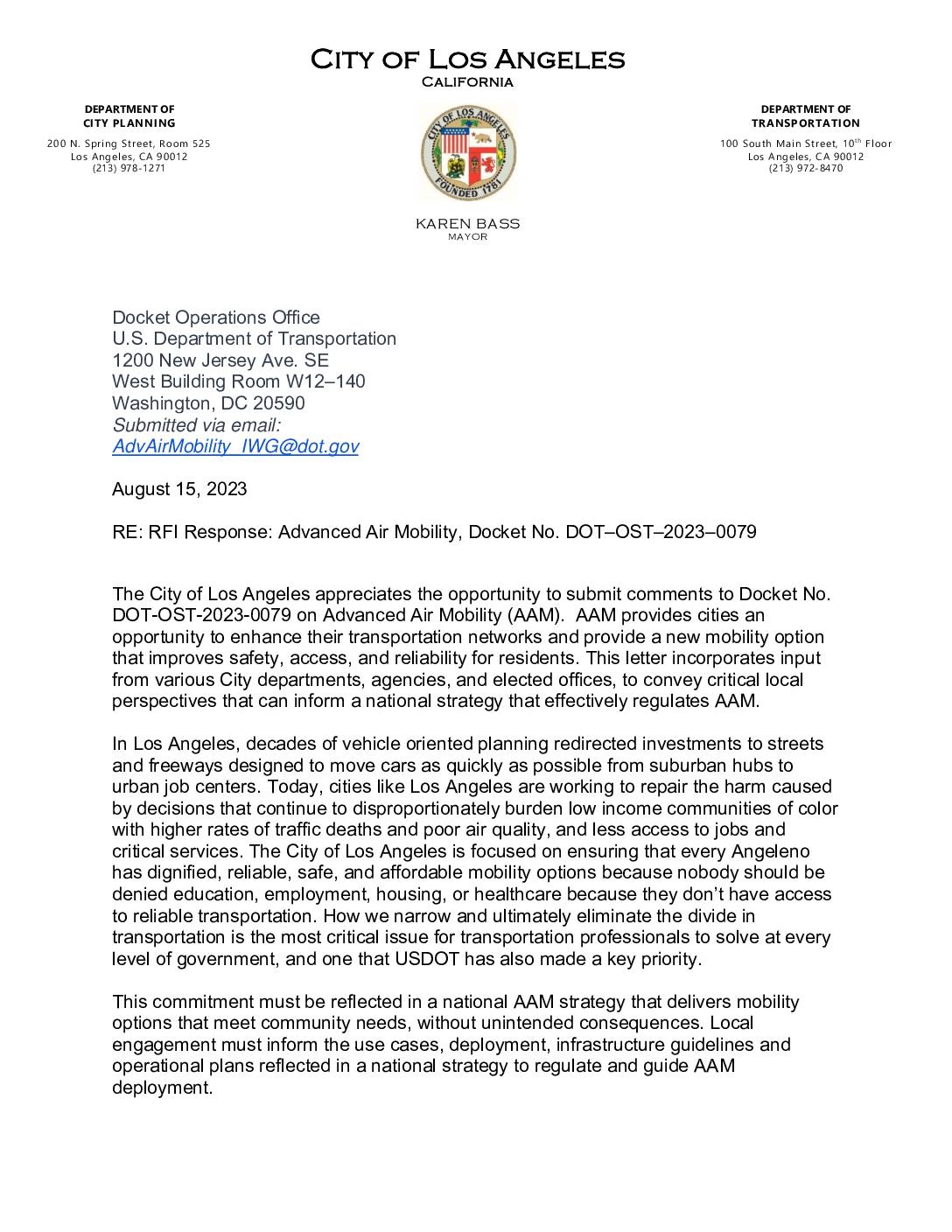
City of Los Angeles RFI Response: Advanced Air Mobility, Docket No. DOT-OST-2023-0079
The City of Los Angeles submitted formal comments to the U.S. Department of Transportation in August 2023 regarding Advanced Air Mobility (AAM), calling for stronger local government involvement in shaping national AAM policy. The letter emphasizes safety, equity, and environmental concerns, including the need for rigorous aircraft noise, vibration, and frequency analysis to protect communities already burdened by past transportation decisions. Los Angeles urges federal agencies to require independent environmental studies and ensure that low-income communities and communities of color are not further harmed by the rollout of new aerial vehicle technologies. -
 2023-07-10
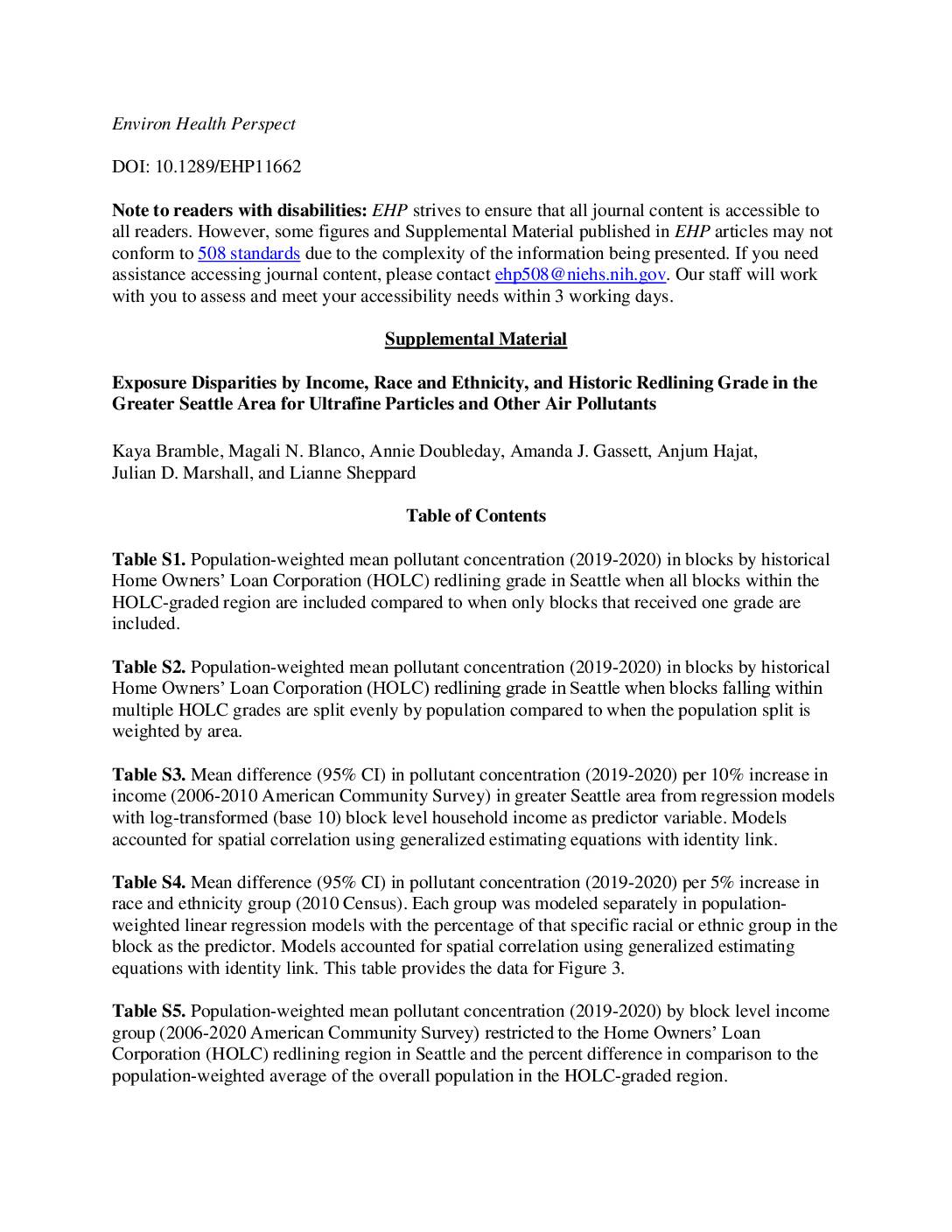
Exposure disparities by income, race and ethnicity, and historic redlining grade in the greater Seattle area for ultrafine particles and other air pollutants: supplemental material
https://ehp.niehs.nih.gov/doi/full/10.1289/EHP11662 -
 2023-07-10
Supplemental material: Exposure disparities by income, race and ethnicity, and historic redlining grade in the greater Seattle area for ultrafine particles and other air pollutants
This environmental health study examines how exposure to ultrafine particles and other air pollutants varies across the greater Seattle area based on income, race and ethnicity, and historical redlining grades assigned by the Home Owners' Loan Corporation (HOLC). Researchers analyzed pollutant concentration data from 2019-2020 alongside census and demographic data to identify disparities between communities. The supplemental materials include statistical tables and scatterplots supporting the main findings on environmental inequality across Seattle neighborhoods. -
 2023-07-05
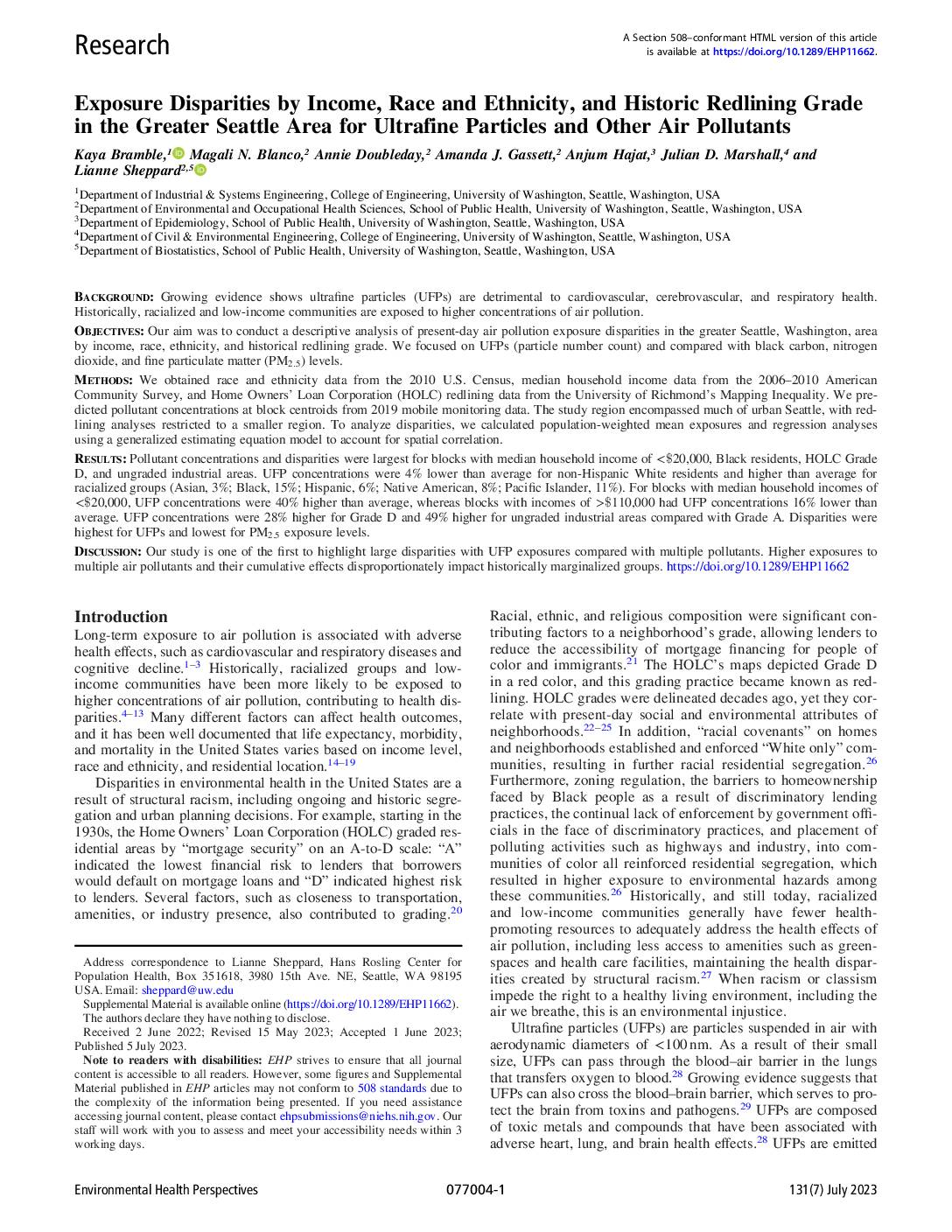
Exposure disparities by income, race and ethnicity, and historic redlining grade in the greater Seattle area for ultrafine particles and other air pollutants
A University of Washington study found that low-income and minority communities in the greater Seattle area are exposed to significantly higher levels of ultrafine particles (UFPs) and other air pollutants compared to wealthier, predominantly white neighborhoods. The research also revealed that neighborhoods historically designated as 'hazardous' under 1930s redlining practices continue to experience disproportionately poor air quality today. Disparities were most pronounced for UFPs, which are tiny particles linked to heart, lung, and brain health problems, and least pronounced for fine particulate matter (PM2.5). -
 2023-06-07
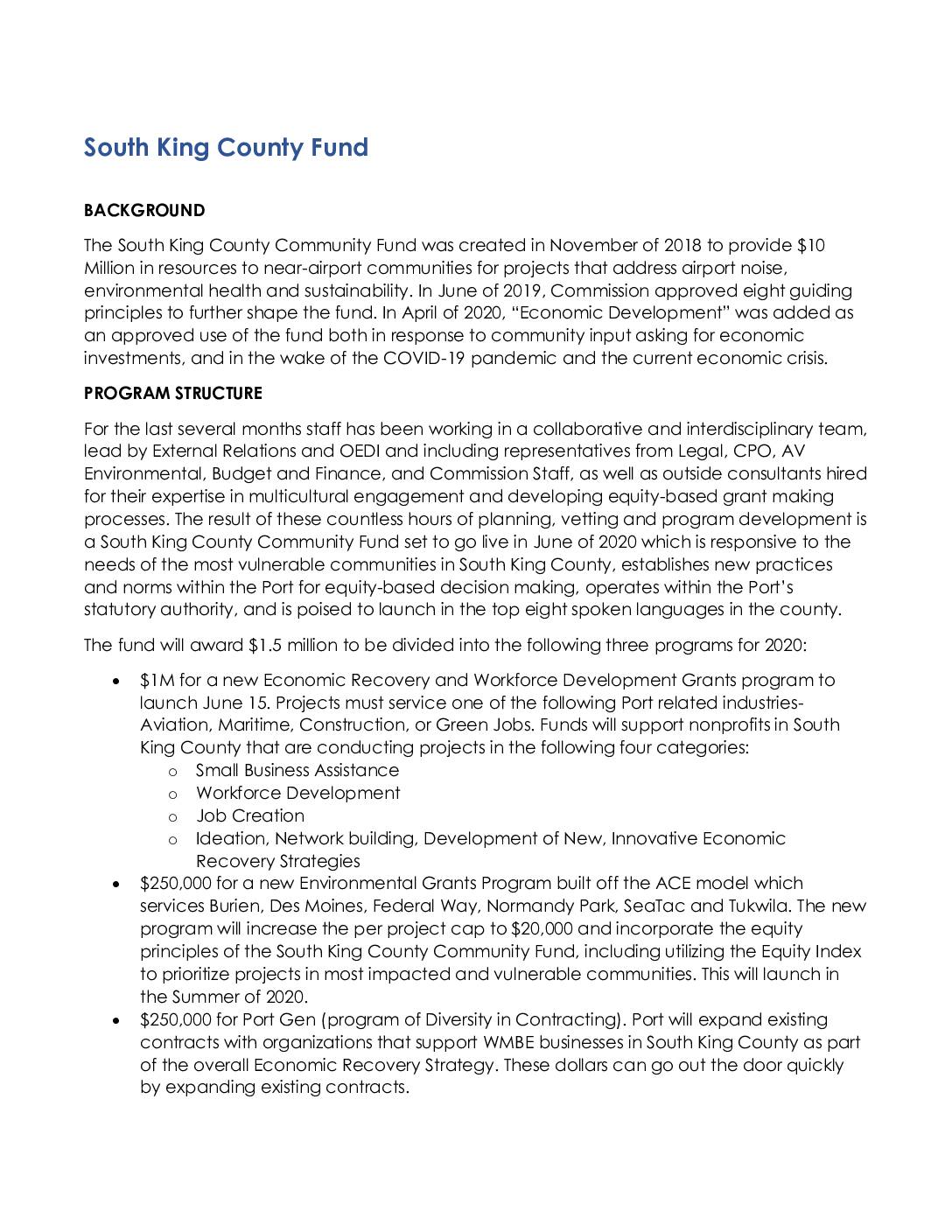
South King County Fund background and proposal process
The South King County Community Fund, created in 2018, provides $10 million to communities near Seattle-Tacoma International Airport to address airport noise, environmental health, and economic development. In 2020, $1.5 million was allocated across three programs: economic recovery and workforce development grants, an environmental grants program, and support for minority- and women-owned businesses. Projects are evaluated on criteria including community ties, target populations, equity impact, and benefits to Port-related industries such as aviation and construction. -
 2023-05-07
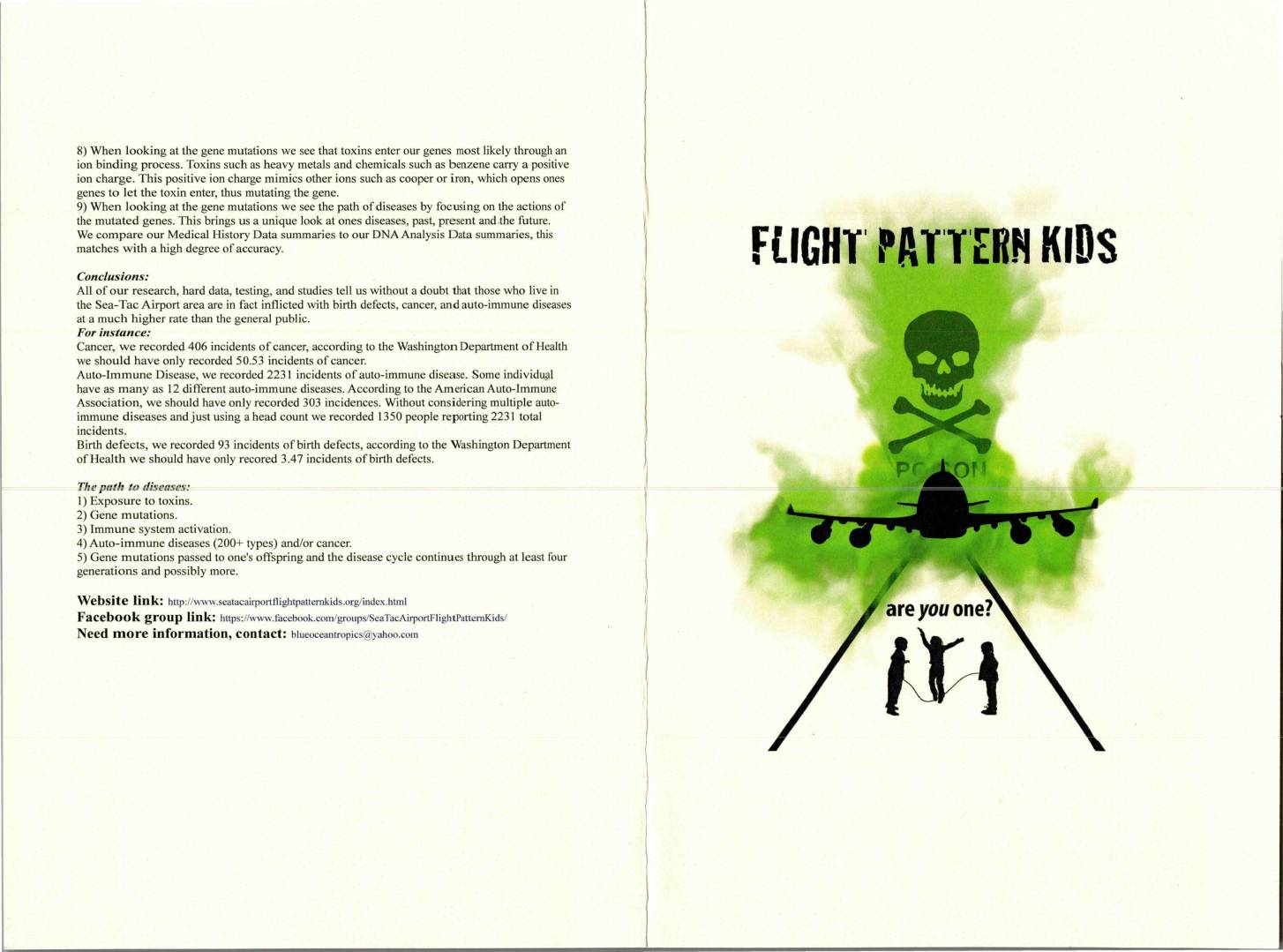
Flight Pattern Kids: Sea-Tac Airport Environmental Health Research Flyer
The 'Flight Pattern Kids' group, a non-profit based near Seattle-Tacoma International Airport, claims that residents living within a 3-mile radius of the airport experience significantly elevated rates of cancer, birth defects, and auto-immune diseases compared to the general population. Their self-reported study of 330+ families suggests these health issues stem from toxic environmental exposure linked to airport operations, which they argue causes gene mutations passed across generations. The group is calling for further environmental testing of air, water, and soil in the surrounding area. -
 2023-03-01
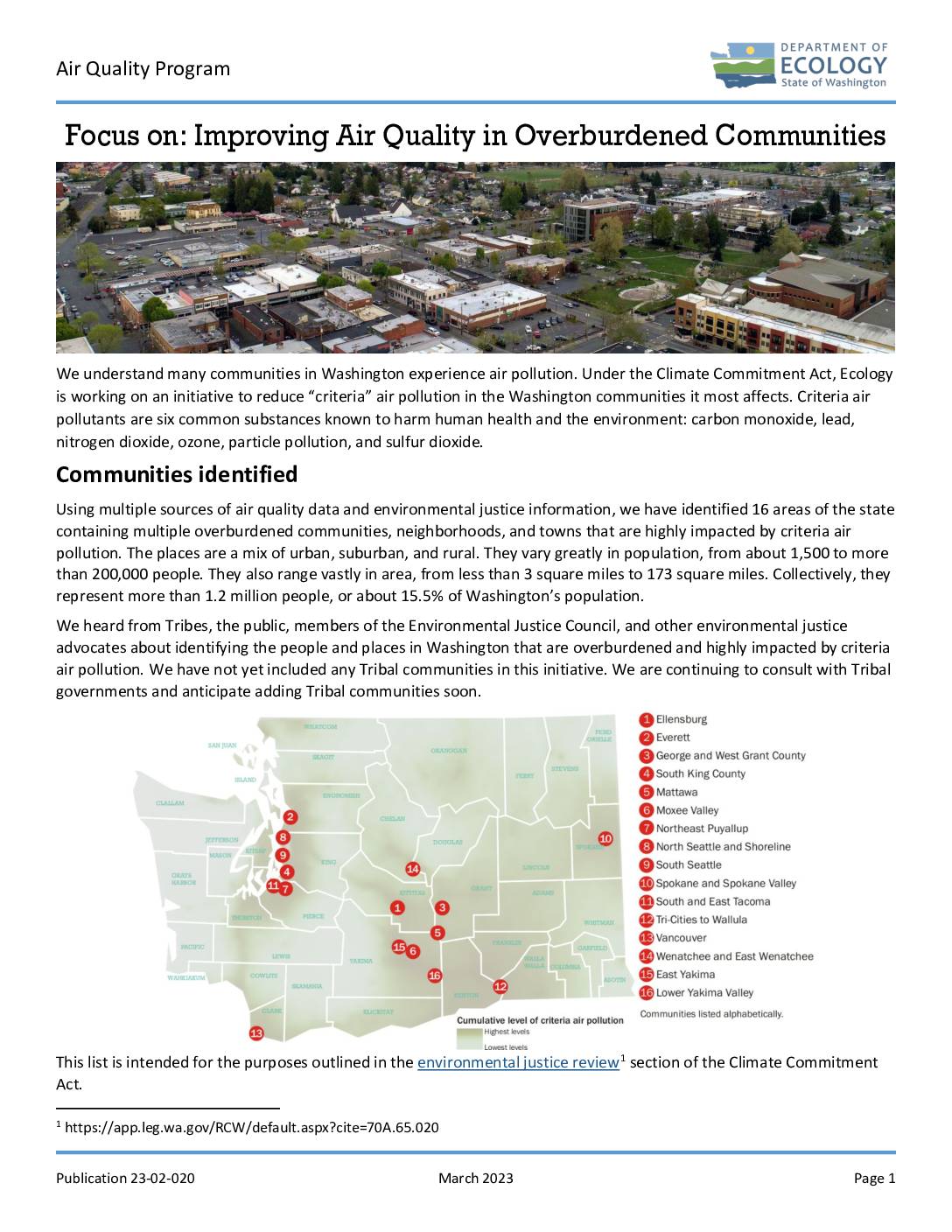
Focus on: Improving Air Quality in Overburdened Communities
Washington State's Department of Ecology has identified 16 overburdened communities across the state that are highly impacted by criteria air pollution, collectively representing over 1.2 million residents. Using air quality data and environmental justice tools, the agency is working under the Climate Commitment Act to reduce six key pollutants — including particle pollution, ozone, and nitrogen dioxide — in areas ranging from South Seattle and South King County to rural communities like Mattawa and the Lower Yakima Valley. Next steps include expanding air monitoring, engaging affected communities, and working with Tribal governments to address pollution impacts over multiple years. -
 2023-03-01
Identifying Overburdened Communities Highly Impacted by Air Pollution: Technical Support Document
This March 2023 technical support document from the Washington State Department of Ecology's Air Quality Program outlines methods for identifying communities that are disproportionately burdened by air pollution across Washington State. It provides regional office contact information and maps showing the four Ecology regions covering all 39 Washington counties. Note: this document focuses on statewide air quality and environmental justice topics and does not contain information specific to Sea-Tac Airport noise policy.