TagEnvironmental Justice(100)
-
 2023-02-14
Aviation Noise and Emissions Mitigation Act (H.R. 1048)
H.R. 1048, the Aviation Noise and Emissions Mitigation Act, introduced in February 2023, would direct the EPA to establish a 3-year pilot grant program to measure aircraft and airport noise and emissions—including greenhouse gases, particulate matter, and ultrafine particles—in communities near airports and flight paths. Grant recipients would be required to use technology capable of tracing noise and emissions to specific sources, produce neighborhood- and ZIP Code-level data, and work with local organizations to develop mitigation strategies. The program aims to create a replicable national model for ongoing monitoring and to identify frontline communities disproportionately impacted by aviation-related pollution. -
 2023-01-01
HEAL progress report: Seeding the culture and building the structures for a Just Transition through Washington’s landmark law on environmental justice
This progress report from Front and Centered evaluates Washington State's HEAL Act, a landmark environmental justice law, assessing how state agencies are implementing requirements such as community engagement plans, environmental health disparities mapping, and funding structures. The report focuses on protecting frontline communities of color from compounding environmental, climate, and economic harms. Note: this document does not address Sea-Tac Airport noise policy and is unlikely to be relevant to that specific topic area. -
2022-10-12
Port Package updates are essential to the American Dream
A letter to the Commissioners of the Port of Seattle: explaining the history of Port Packages and their place in environmental justice. The American Dream is a safe, healthy home, at an affordable price, where you can raise your children, in one of the most beautiful areas in the world. But with so many Port Package failures and fewer and fewer new homes being eligible for sound insulation, that dream is becoming harder to achieve under the flight path. -
 2022-09-01
Destination 2030: Environmental justice appendix
This appendix from the Destination 2030 Metropolitan Transportation Plan examines environmental justice in the central Puget Sound region, analyzing how transportation costs and benefits are distributed among minority and low-income populations across King, Kitsap, Pierce, and Snohomish counties. Using 1990 Census data and 1997–1998 estimates, it finds that low-income populations are concentrated in Seattle, Tacoma, and Everett, while the region's minority population stands at roughly 15 percent, with the highest concentrations in northern Pierce County and southwestern King County. The analysis was conducted to ensure that burdens and benefits of the regional transportation plan are equitably shared across groups defined by race, income, age, or disability. -
 2022-08-20
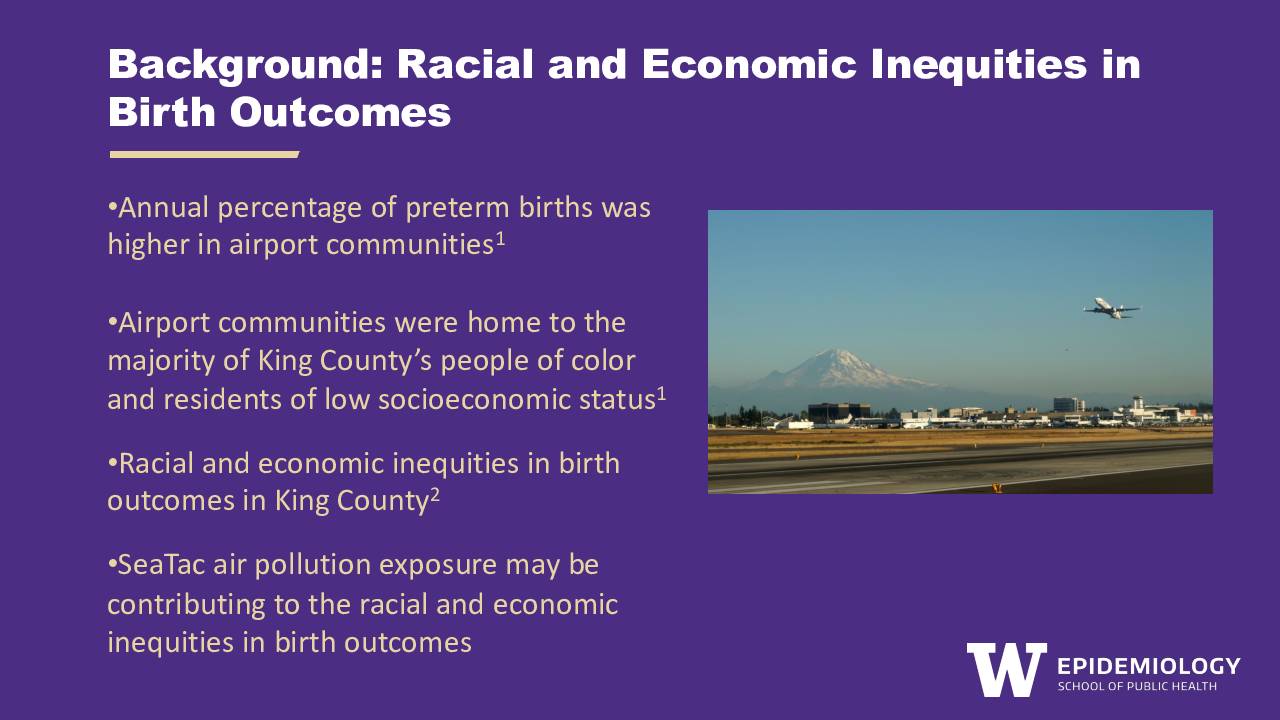
Background: Racial and economic inequities in birth outcomes
A University of Washington Epidemiology researcher, Anna Harrington, presents findings showing that communities near Seattle-Tacoma International Airport have higher rates of preterm births and are home to a disproportionate share of King County's people of color and low-income residents. The presentation proposes a qualitative research study to explore how airport community stakeholders perceive the public health risks of SeaTac air pollution on pregnant people, and what barriers they face in reducing that exposure. The study aims to understand whether risk perceptions and mitigation strategies differ based on the racial identity and income level of pregnant individuals. -
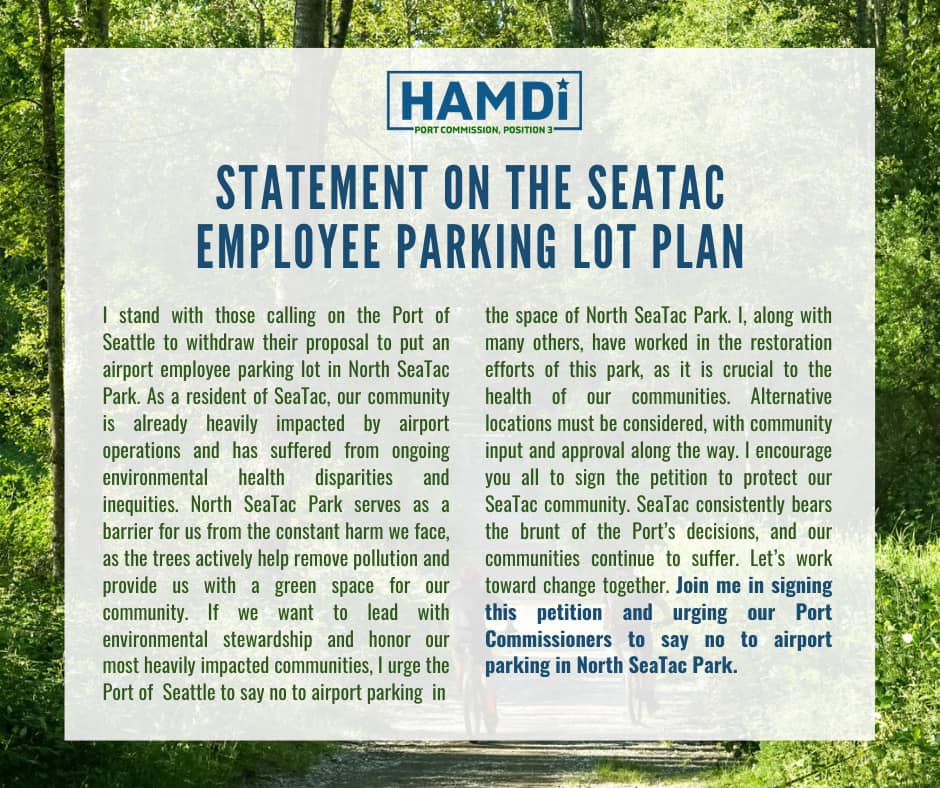
Hamdi Campaign Statement Opposing NSTP Employee Parking Lot
A campaign statement from Hamdi, candidate for Port Commission Position 3, opposing the Port of Seattle's proposal to build an airport employee parking lot in North SeaTac Park. The statement cites environmental health disparities in the SeaTac community, highlights the park's role in reducing pollution, and calls on supporters to sign a petition urging Port Commissioners to reject the plan. -
 2022-07-14
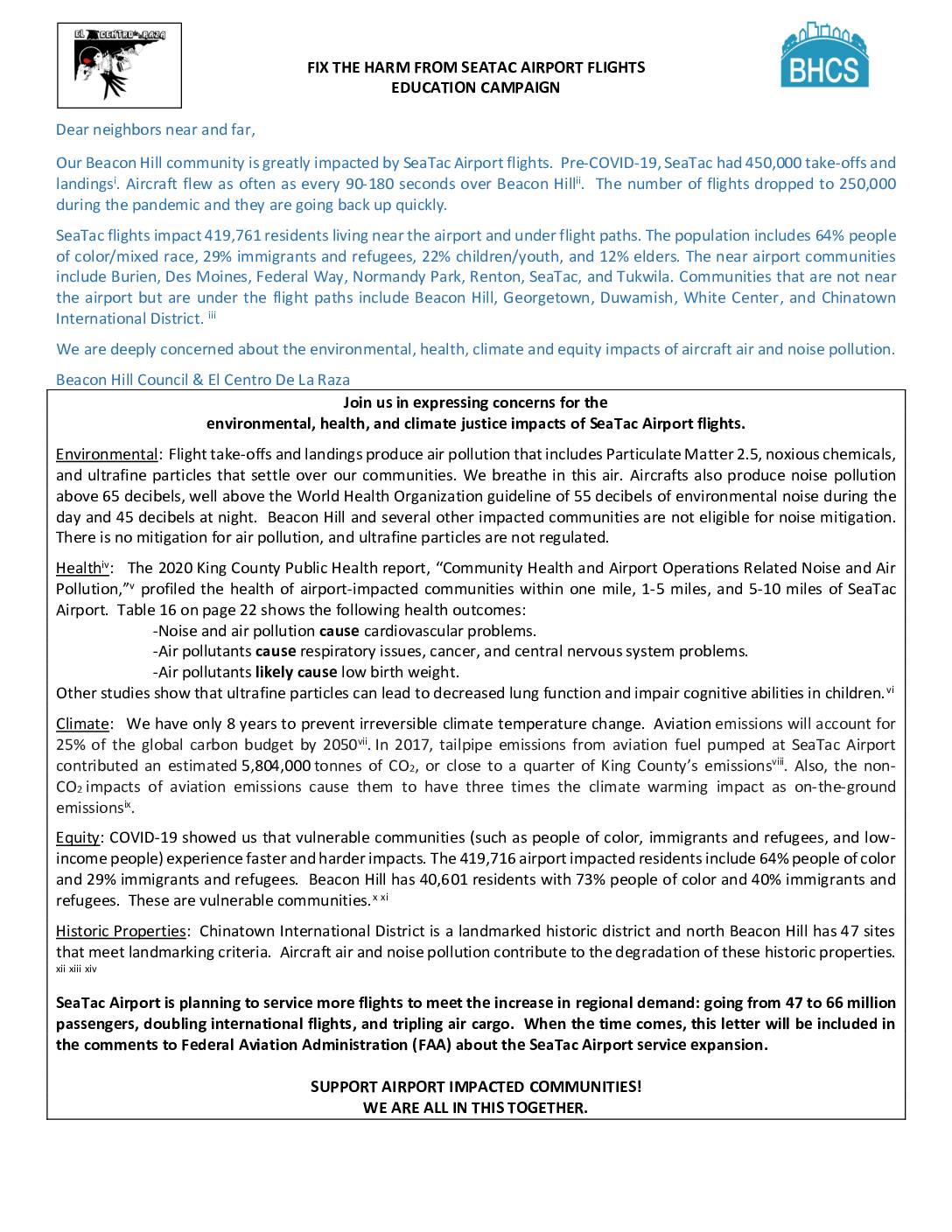
Fix the Harm from Sea-Tac Airport Flights: Education Campaign Fact Sheet
The Beacon Hill Council and El Centro De La Raza are calling on community members to take action against the environmental, health, and equity harms caused by SeaTac Airport flight operations, which affect nearly 420,000 residents — including large proportions of people of color, immigrants, and refugees. Aircraft noise regularly exceeds World Health Organization safe limits, while air pollution from flights contributes to cardiovascular disease, respiratory illness, and developmental harm in children, with no current mitigation available for many impacted neighborhoods. The campaign also warns that SeaTac's planned expansion — from 47 to 66 million passengers, doubled international flights, and tripled air cargo — will worsen these impacts, and pledges to submit community concerns to the FAA during the expansion review process. -
 2022-07-06
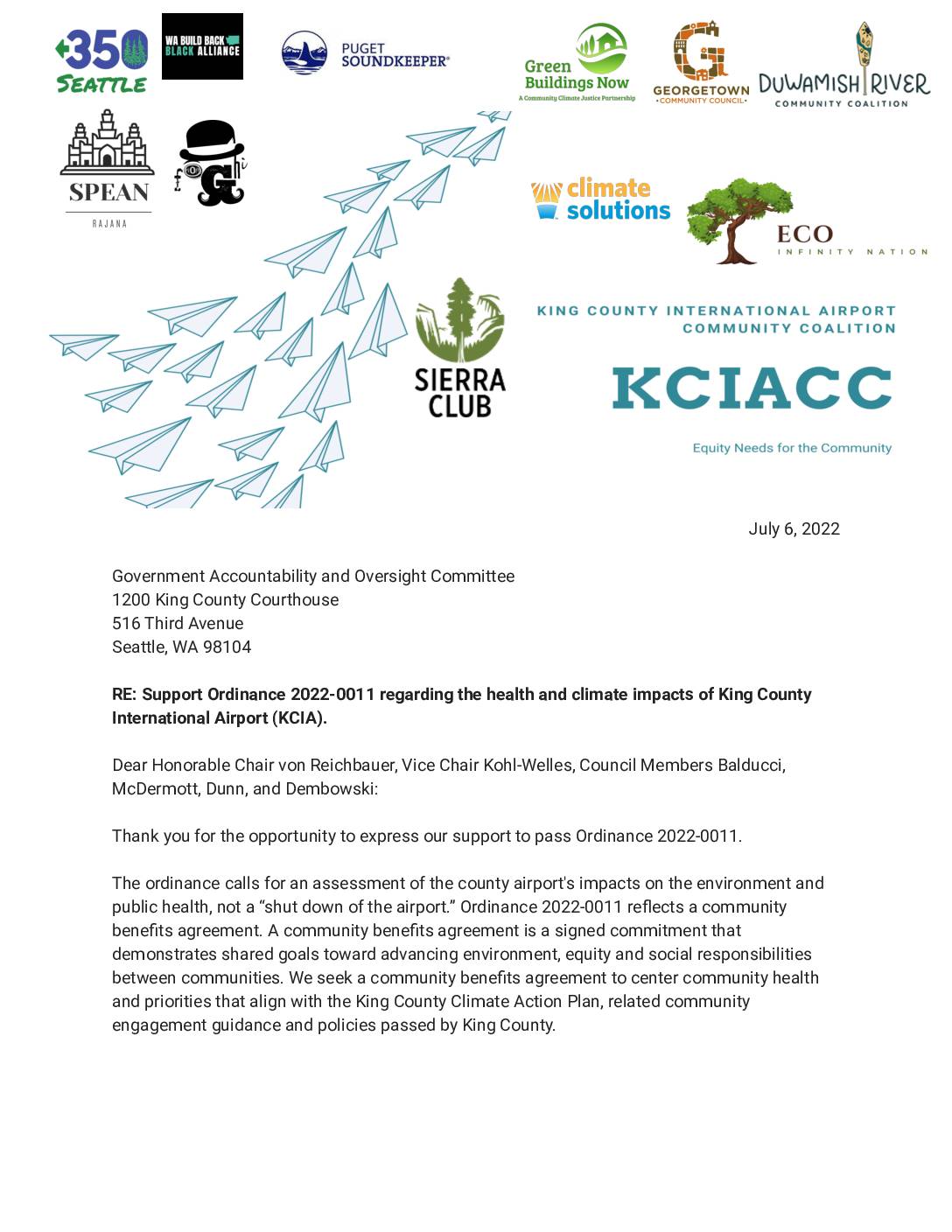
Support Ordinance 2022-0011 regarding the health and climate impacts of King County International Airport (KCIA)
Letter from KCIACC and community organizations supporting Ordinance 2022-0011, which calls for environmental and health impact assessments at King County International Airport and establishment of a community-led advisory committee. The letter emphasizes the need for community benefits agreements and environmental justice for communities disproportionately impacted by airport operations. -
 2021-05-17
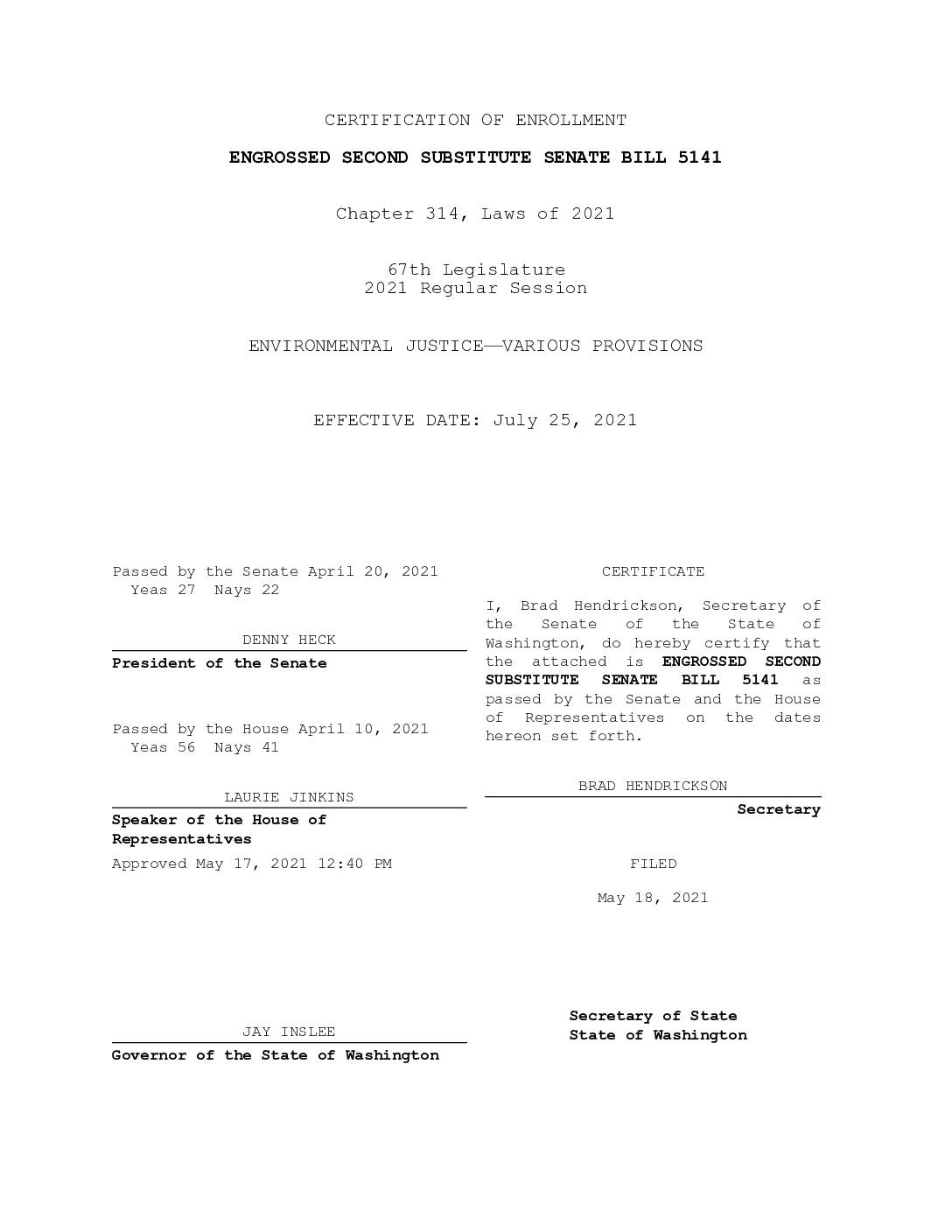
Engrossed Second Substitute Senate Bill 5141: Environmental Justice—Various Provisions (HEAL Act)
Washington State's Engrossed Second Substitute Senate Bill 5141, signed into law in May 2021, aims to reduce environmental and health disparities by implementing recommendations from the state's Environmental Justice Task Force. The law requires covered state agencies—including the departments of ecology, health, transportation, and others—to address the disproportionate environmental burdens faced by low-income communities and communities of color. It establishes an Environmental Justice Council and directs state programs to prioritize benefits for communities with the greatest environmental and health burdens. -
 2021-05-01
King County 2020 Strategic Climate Action Plan
King County's 2020 Strategic Climate Action Plan (SCAP), published in May 2021, outlines the county's strategies for reducing greenhouse gas emissions, supporting frontline communities, and preparing for climate change impacts. The plan covers areas including transportation, building energy, green infrastructure, food systems, housing, and environmental justice, with a strong emphasis on equity and community engagement. Note: this document addresses countywide climate policy and does not contain specific content related to Sea-Tac Airport noise policy.