TagEcology(788)
-
 2002-10-22
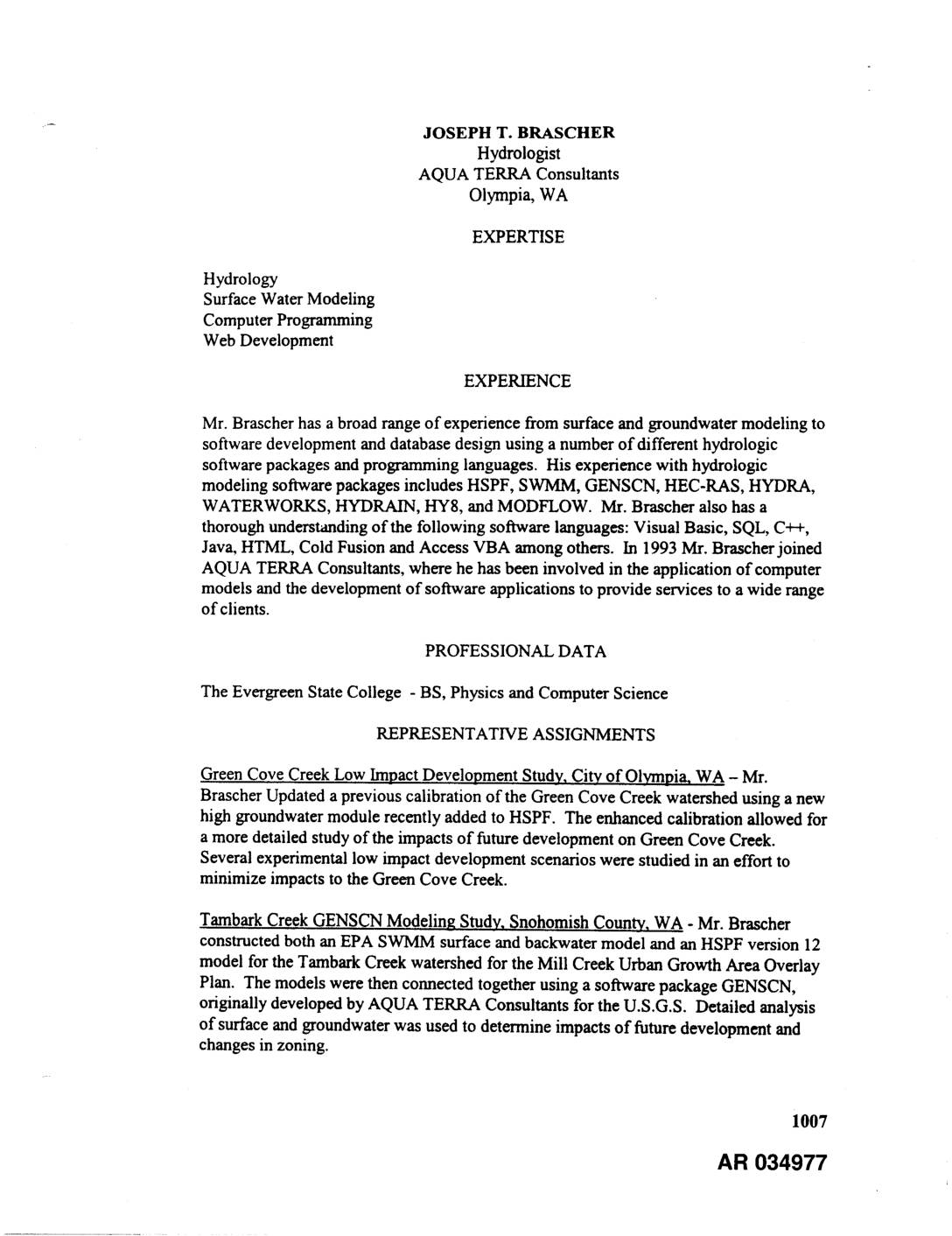
EXH AR034977: Resume of Joseph T. Brascher, Hydrologist, AQUA TERRA Consultants
Resume of Joseph T. Brascher, Hydrologist at AQUA TERRA Consultants, Olympia, WA. Details expertise in hydrology, surface water modeling, computer programming, and web development. Experience with hydrologic modeling software packages including HSPF, SWMM, GENSCN, HEC-RAS, HYDRA, WATERWORKS, HYDRAIN, HY8, and MODFLOW. Representative assignments include Green Cove Creek Low Impact Development Study (City of Olympia), Tambark -
 2002-10-22
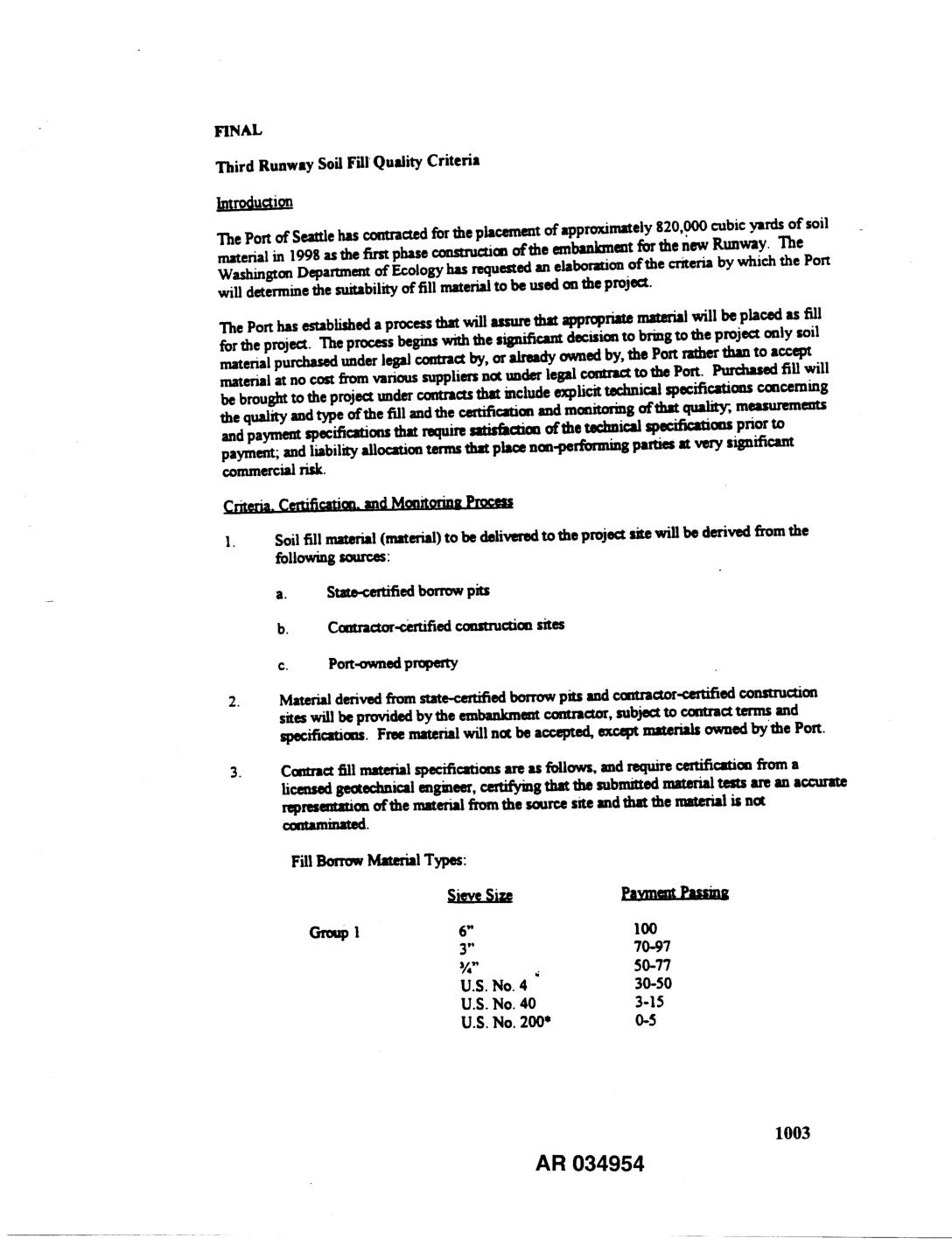
EXH AR034954: Third Runway Soil Fill Quality Criteria
Port Of Seattle document establishing soil fill quality criteria for Third Runway embankment construction in 1998, covering approximately 820,000 cubic yards of fill material. Specifies Fill Borrow Material Types (Group 1, Group 2, Group 3) with sieve size gradation requirements (6″, 3″, ¾”, U.S. No. 4, U.S. No. 40, U.S. No. 200), MTCA Method A -
 2002-10-22
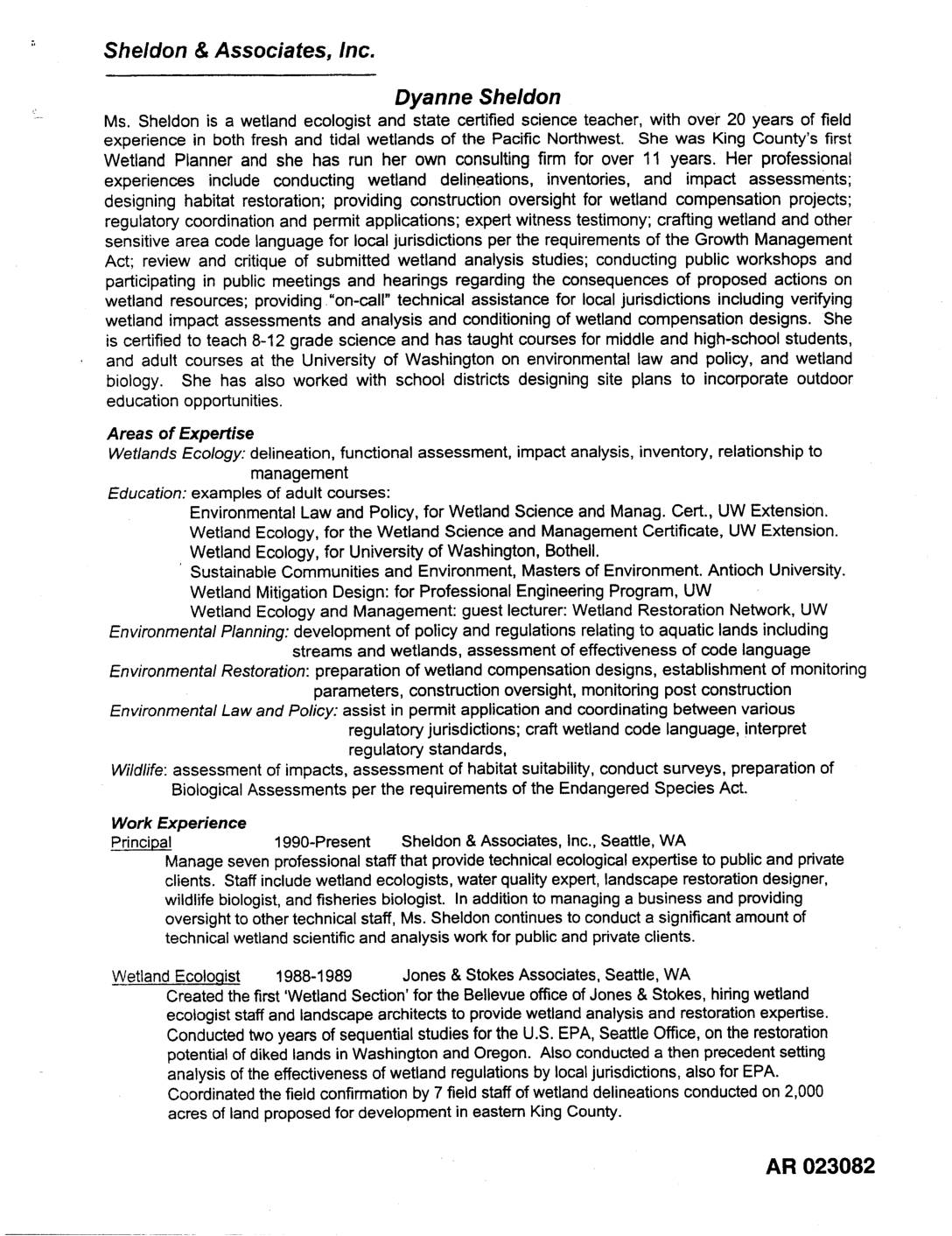
EXH AR023082: CV Dyanne Sheldon, Wetland Ecologist, Sheldon & Associates Inc.
This document is the professional curriculum vitae of Dyanne Sheldon, principal of Sheldon & Associates, Inc., a Seattle-based wetland ecology consulting firm. Among her relevant work, she co-authored both the Sea-Tac Airport Wetland Inventory and the Sea-Tac Airport Wetland Management Plan in 1991 for the Port of Seattle's Environmental Management Section. Her broader expertise spans wetland delineation, habitat restoration, environmental planning, and regulatory compliance across the Pacific Northwest. -
 2002-10-21
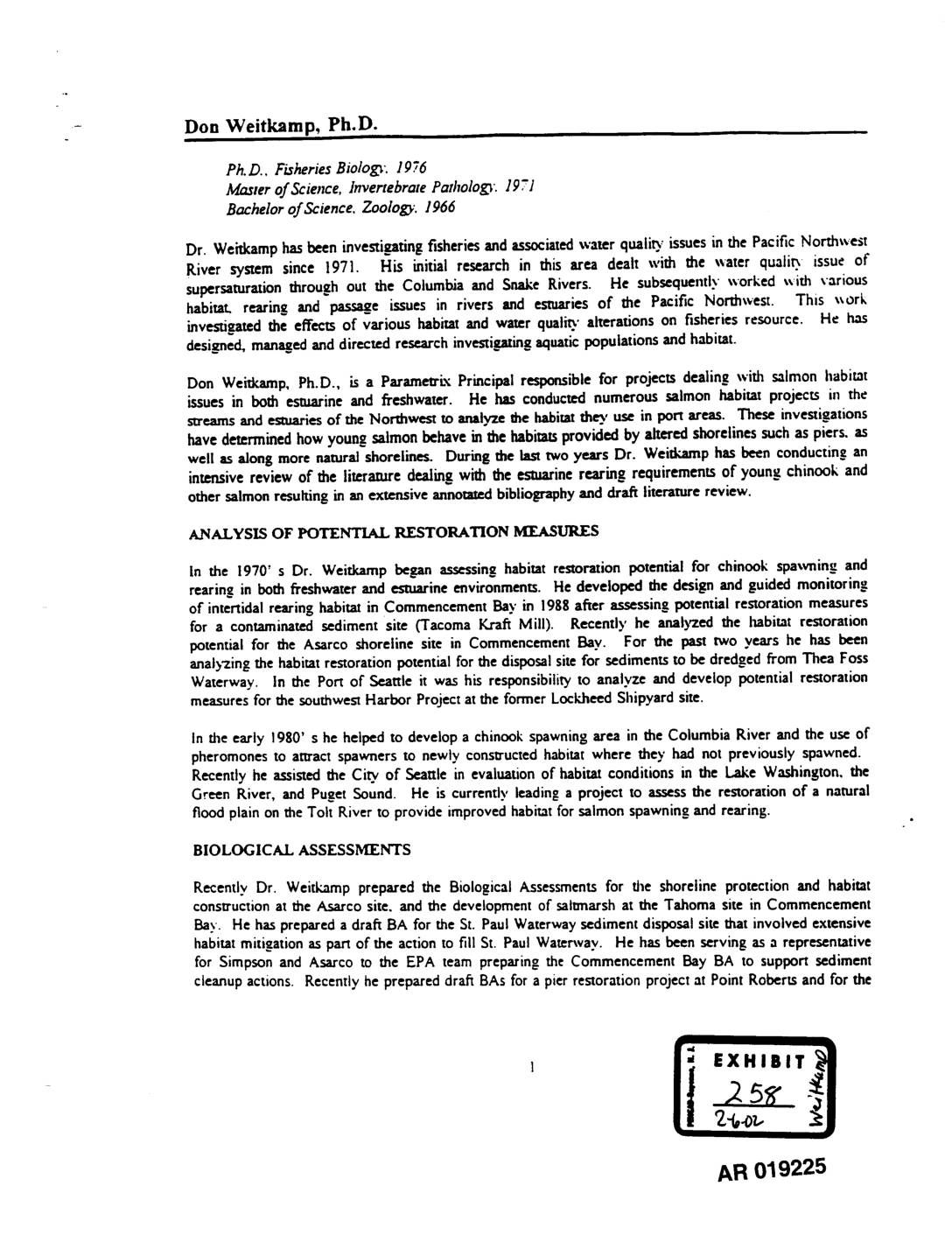
EXH 258: CV Don Weitkamp PhD Fisheries Biologist Parametrix
This document is a professional biography and project experience summary for Dr. Don Weitkamp, a fisheries biologist with a Ph.D. from 1976, who has spent decades studying salmon habitat, water quality, and shoreline restoration in the Pacific Northwest. His work has focused on rivers, estuaries, and coastal areas including Commencement Bay, the Green-Duwamish River, and Elliott Bay, involving biological assessments, habitat restoration, and hydroelectric dam impacts. This document does not contain information related to Sea-Tac Airport noise policy. -
 2002-10-21
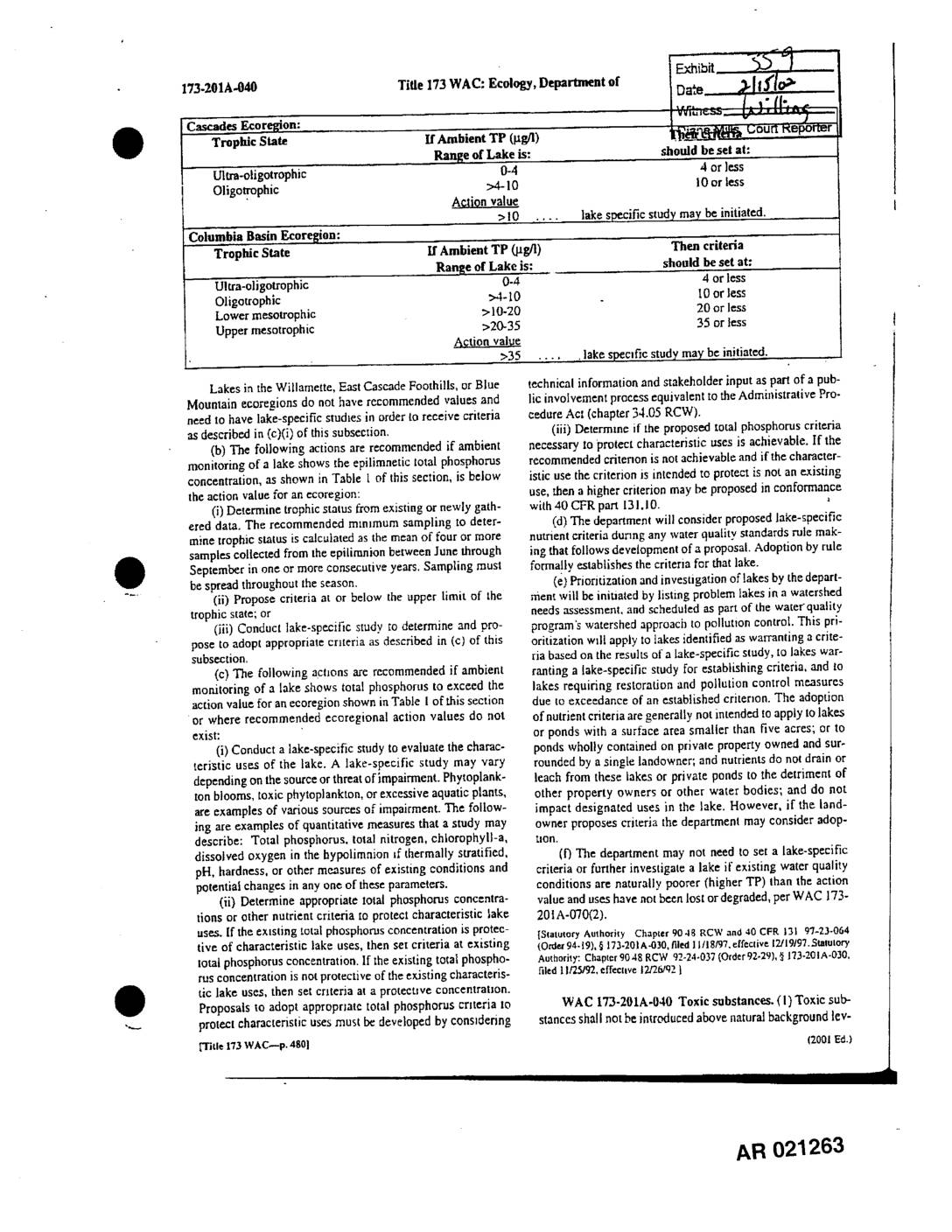
EXH AR021263: WAC 173-201A WA Water Quality Standards — Toxic, Radioactive, Lake Nutrient
This document outlines Washington State water quality standards for surface waters, including criteria for total phosphorus levels in lakes across different ecoregions (Cascades and Columbia Basin) and limits for toxic substances such as heavy metals, pesticides, and radioactive materials. It establishes trophic state classifications and action values that trigger lake-specific studies when exceeded, and sets numerical criteria for aquatic life protection in both freshwater and marine environments. -
 2002-10-21
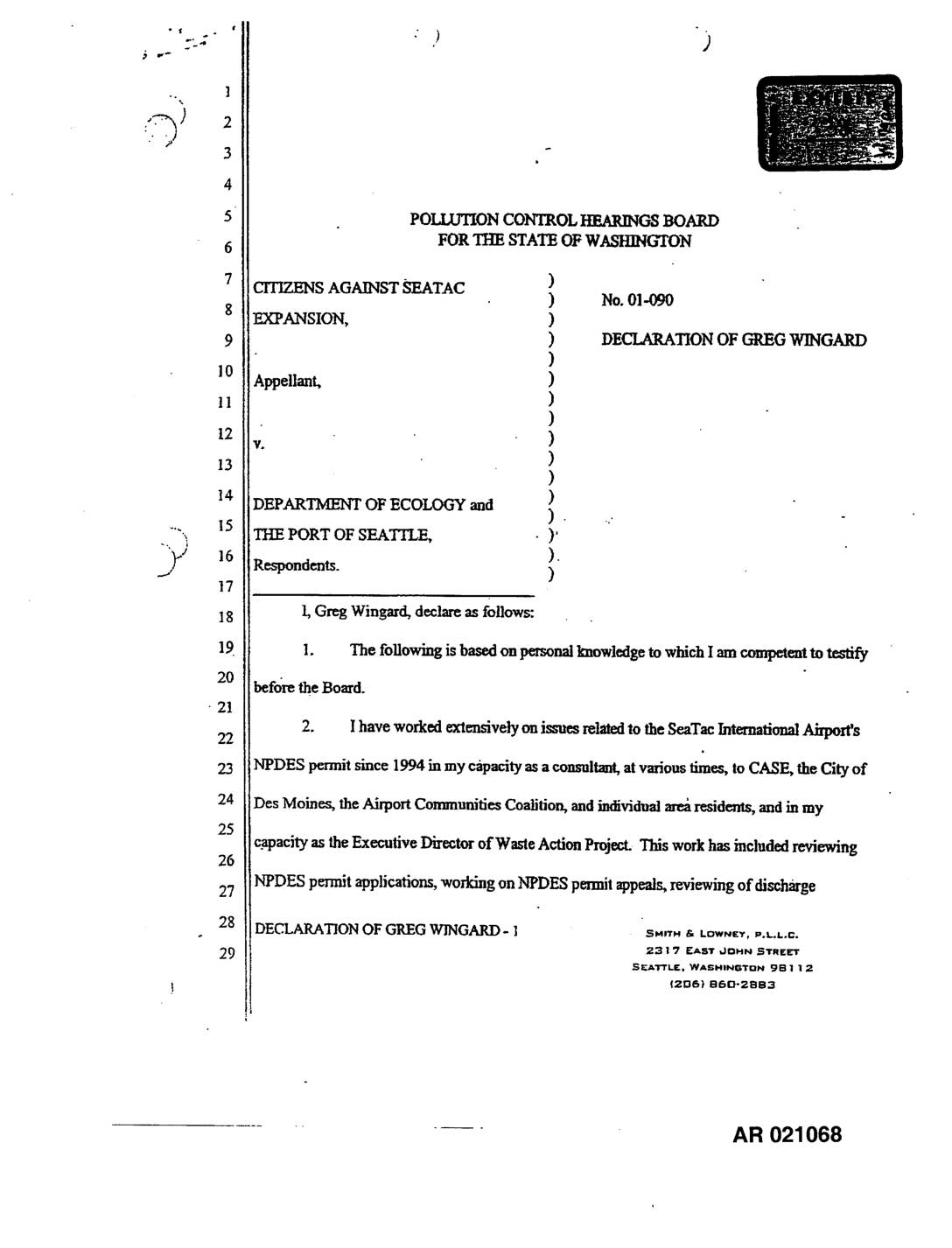
EXH AR021068: Declaration Greg Wingard — CASE v. Ecology & Port, PCHB No. 01-090
Greg Wingard, an environmental consultant and Executive Director of Waste Action Project, submitted this declaration in a 2001 Pollution Control Hearings Board appeal challenging a permit modification for Seattle-Tacoma International Airport's stormwater discharges. Wingard argues that the modified NPDES permit failed to identify the specific locations of new discharge outfalls into local waterways including Miller, Des Moines, Gilliam, and Walker Creeks, preventing meaningful public participation and environmental review. He contends that without knowing where discharges will occur, it is impossible to evaluate potential cumulative impacts on downstream waterways and riparian property owners. -
 2002-10-21
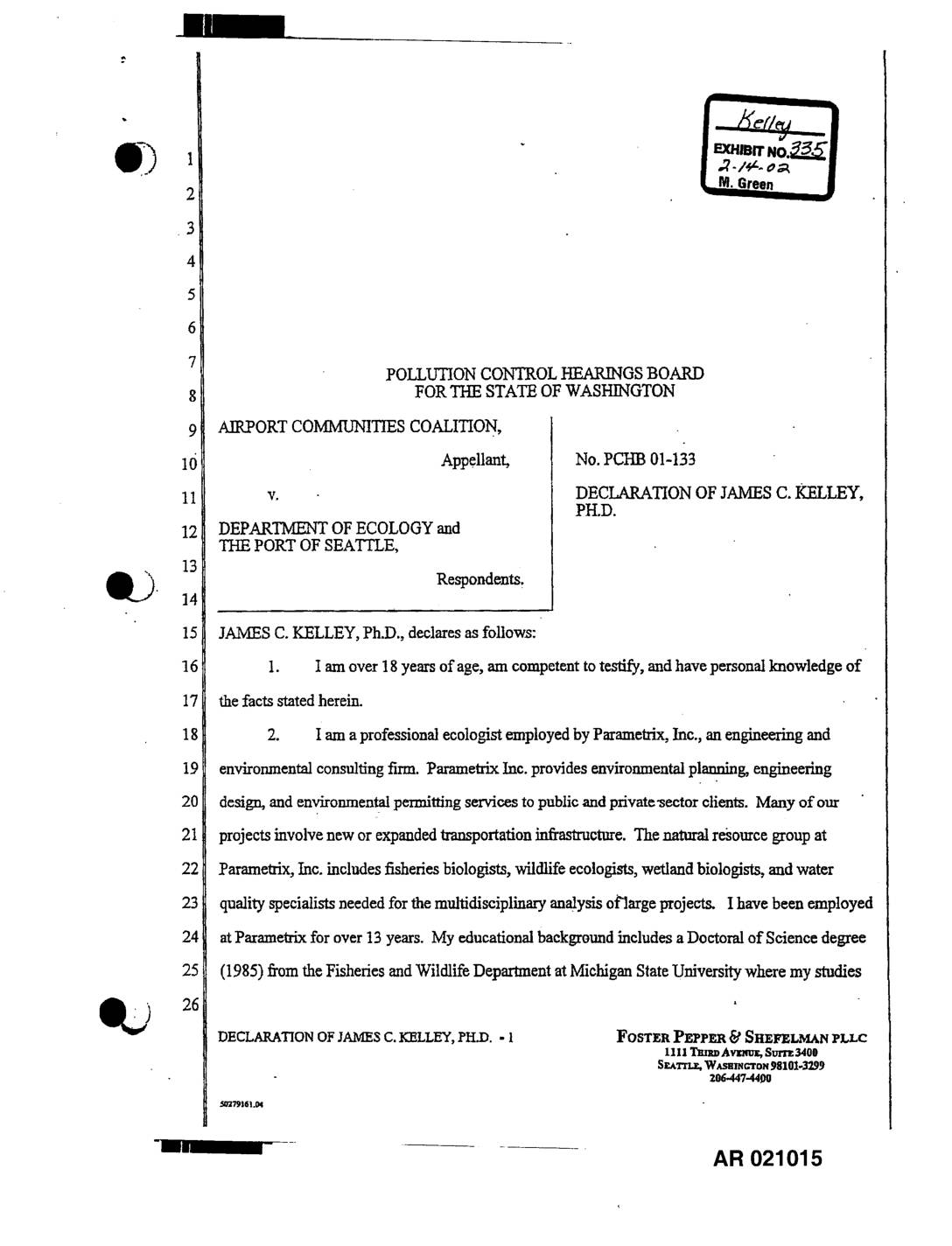
EXH 335: Declaration James C. Kelley PhD — Wetland Impacts Mitigation STIA Master Plan Update PCHB 01-133
In this legal declaration, ecologist James C. Kelley, Ph.D., testifies about the environmental impact of Seattle-Tacoma International Airport's Master Plan Update, which permanently fills 18.37 acres of wetland. He describes a comprehensive mitigation plan designed to replace lost ecological functions in the Miller, Walker, and Des Moines Creek basins. Kelley also notes that the affected wetlands and streams were already significantly degraded by decades of logging, farming, and urban development before the airport expansion. -
 2002-10-21
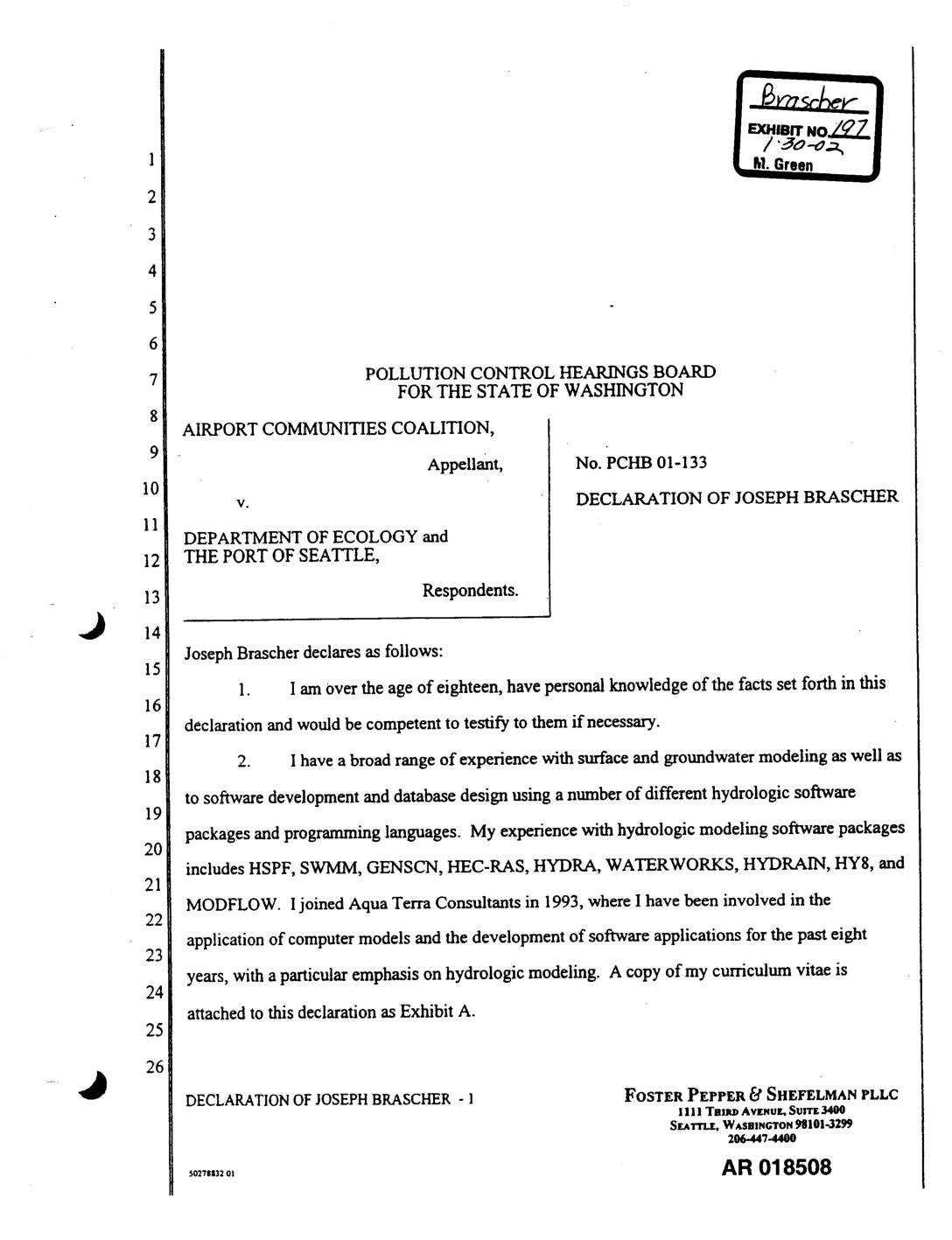
Exhibit 197: Declaration of Joseph Brascher — HSPF Hydrologic Modeling, Miller and Walker Creeks, STIA Master Plan Update
Joseph Brascher, a hydrologic modeling expert at Aqua Terra Consultants, submitted this declaration in a 2001 Washington State Pollution Control Hearings Board case involving the Port of Seattle's Master Plan Update for Sea-Tac International Airport. He describes how the HSPF (Hydrologic Simulation Program – Fortran) computer model was used to analyze stormwater runoff and flow impacts on Miller and Walker Creeks resulting from planned airport construction. The declaration also outlines additional studies and design details requested by the Washington State Department of Ecology as conditions of its §401 water quality certification for the project. -
 2002-10-21
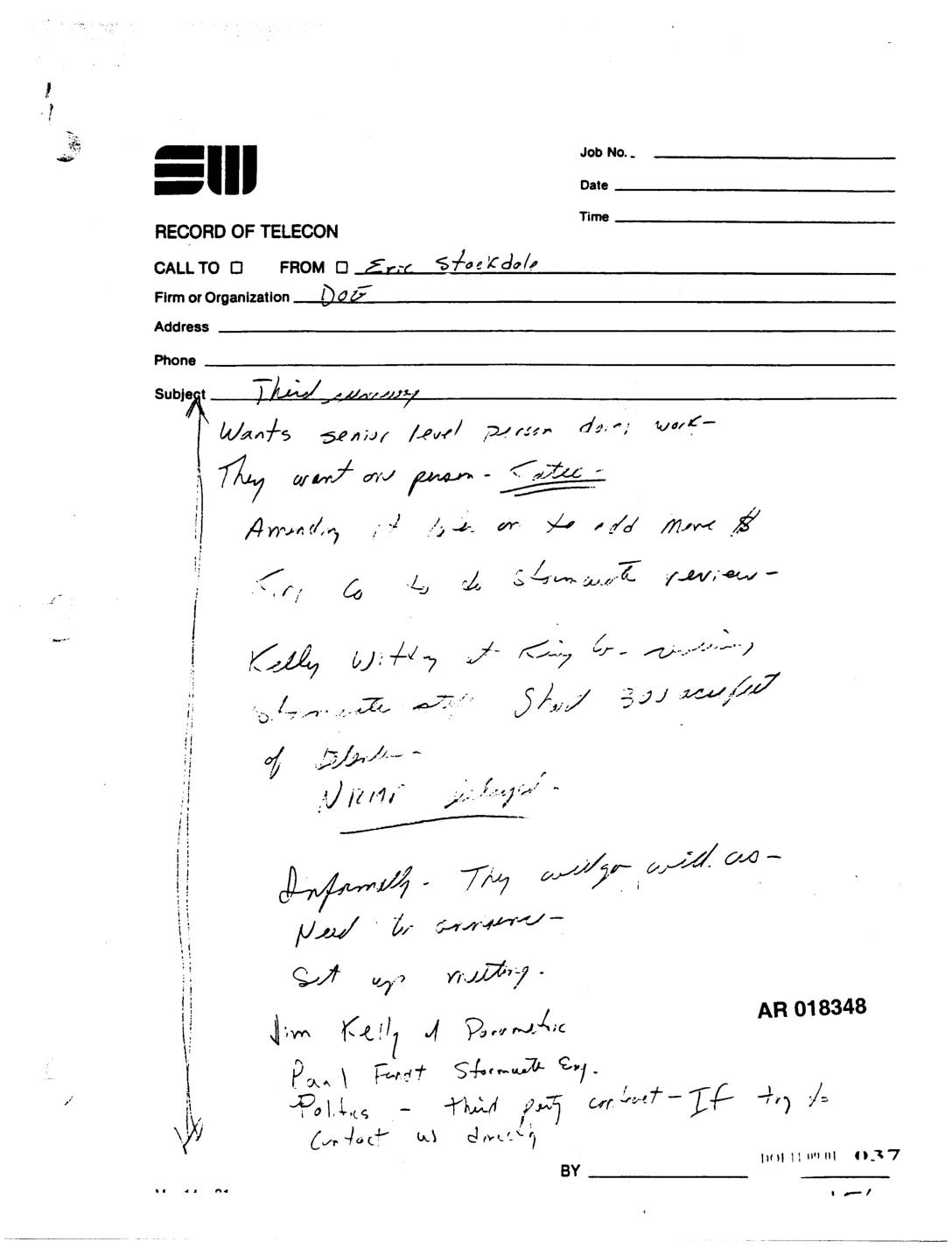
EXH AR018348: Record of Telecon — Eric Stockdale, DOE, Third Runway Stormwater Review
Handwritten record of telecon from Eric Stockdale of DOE (Department of Ecology). Notes reference a senior level person doing work, mention of Kelly, King County, stormwater review, ‘Shou 333 receipt of Bilski’, NEMI biology, informal discussion, need to set up meeting. Also references Jim Kelly of Parometric, Paul Fordt Stormwater Engineer, Politics — third party -
 2002-10-21
EXH AR016822: Prefiled Direct Testimony of Donald E. Weitkamp, Ph.D. — PCHB 01-160
Prefiled direct testimony of Donald E. Weitkamp, Ph.D., filed in PCHB case 01-160 before the Pollution Control Hearings Board for the State of Washington. Appellants are Airport Communities Coalition (ACC) and Citizens Against Sea-Tac Expansion (CASE); respondents are Department of Ecology and Port Of Seattle. Testimony covers aquatic habitat impacts of the STIA Master Plan