TagACC(1548)
-
 2000-05-02
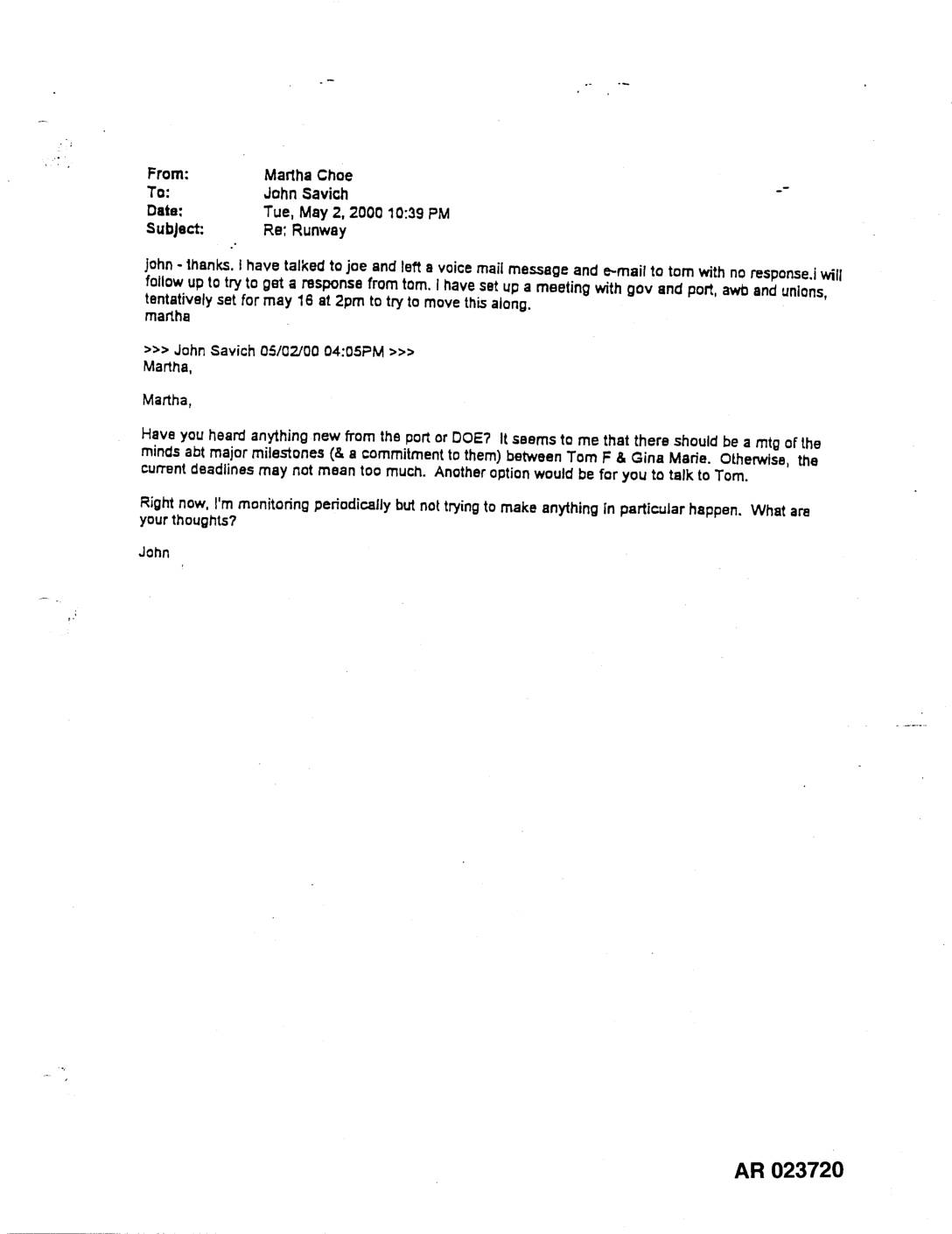
EXH AR023720: Email Chain — Martha Choe to John Savich, Third Runway Coordination
In a May 2, 2000 email exchange regarding Sea-Tac Airport runway issues, Martha Choe updates John Savich on her efforts to coordinate between key stakeholders, noting she has spoken with Joe and attempted to reach Tom but received no response. She has arranged a meeting tentatively scheduled for May 16 at 2pm, bringing together the Governor's office, the Port, AWB, and unions to help move the runway matter forward. John had suggested that a high-level commitment to major milestones between DOE's Tom F. and Gina Marie was needed to give existing deadlines real weight. -
 2000-05-01
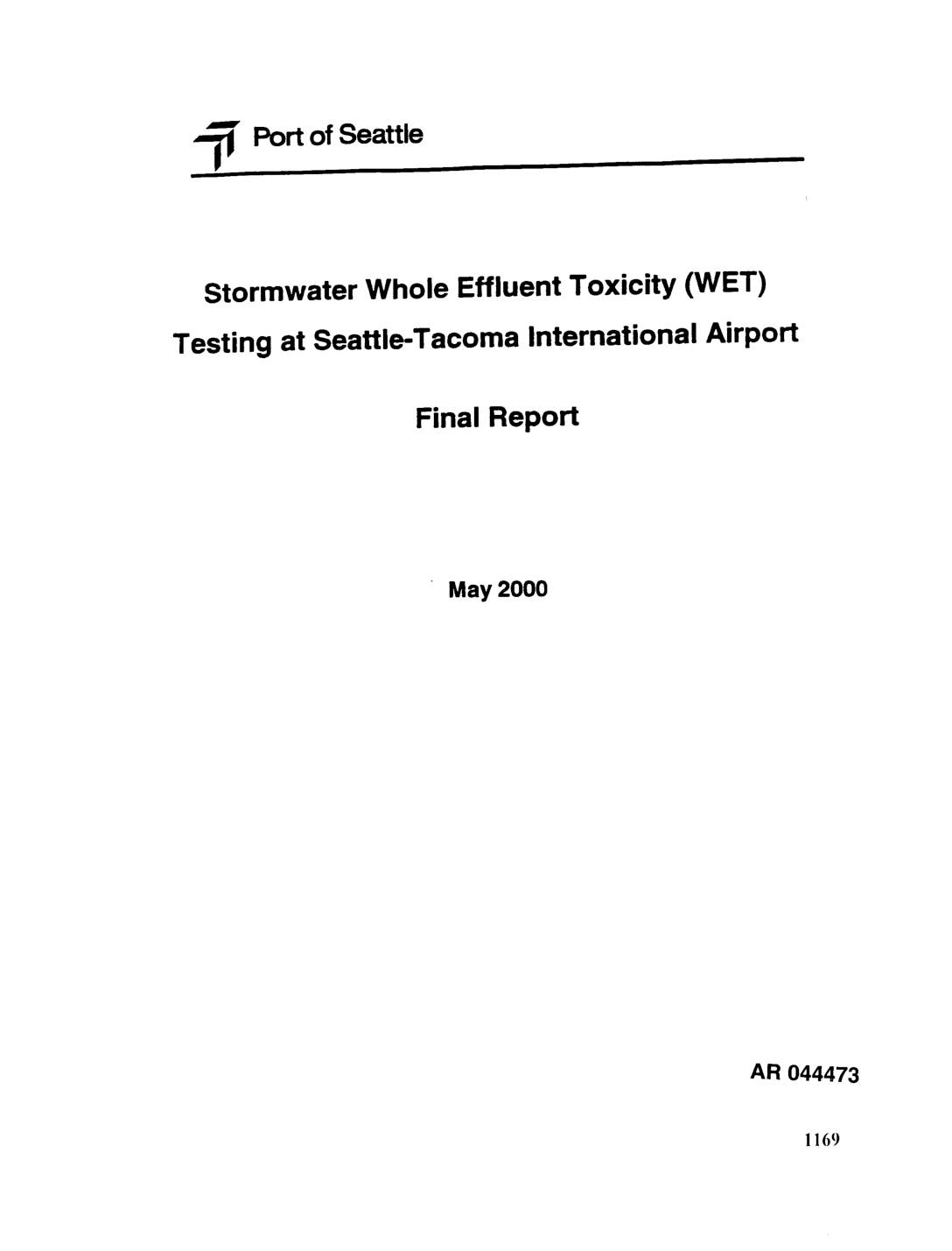
EXH AR044473: Stormwater Whole Effluent Toxicity (WET) Testing at STIA Final Report
Final report prepared by Scott Tobiason, Aviation Environmental Programs, Port Of Seattle, documenting Stormwater Whole Effluent Toxicity (WET) testing at Seattle-Tacoma International Airport (STIA), May 2000. AR 044473. Covers WET testing background, sampling methods, STIA storm drainage subbasins, source-tracing of SDN1 outfall, chelation testing, synthetic runoff WET test results, field investigations, and NPDES stormwater discharge -
 2000-04-27
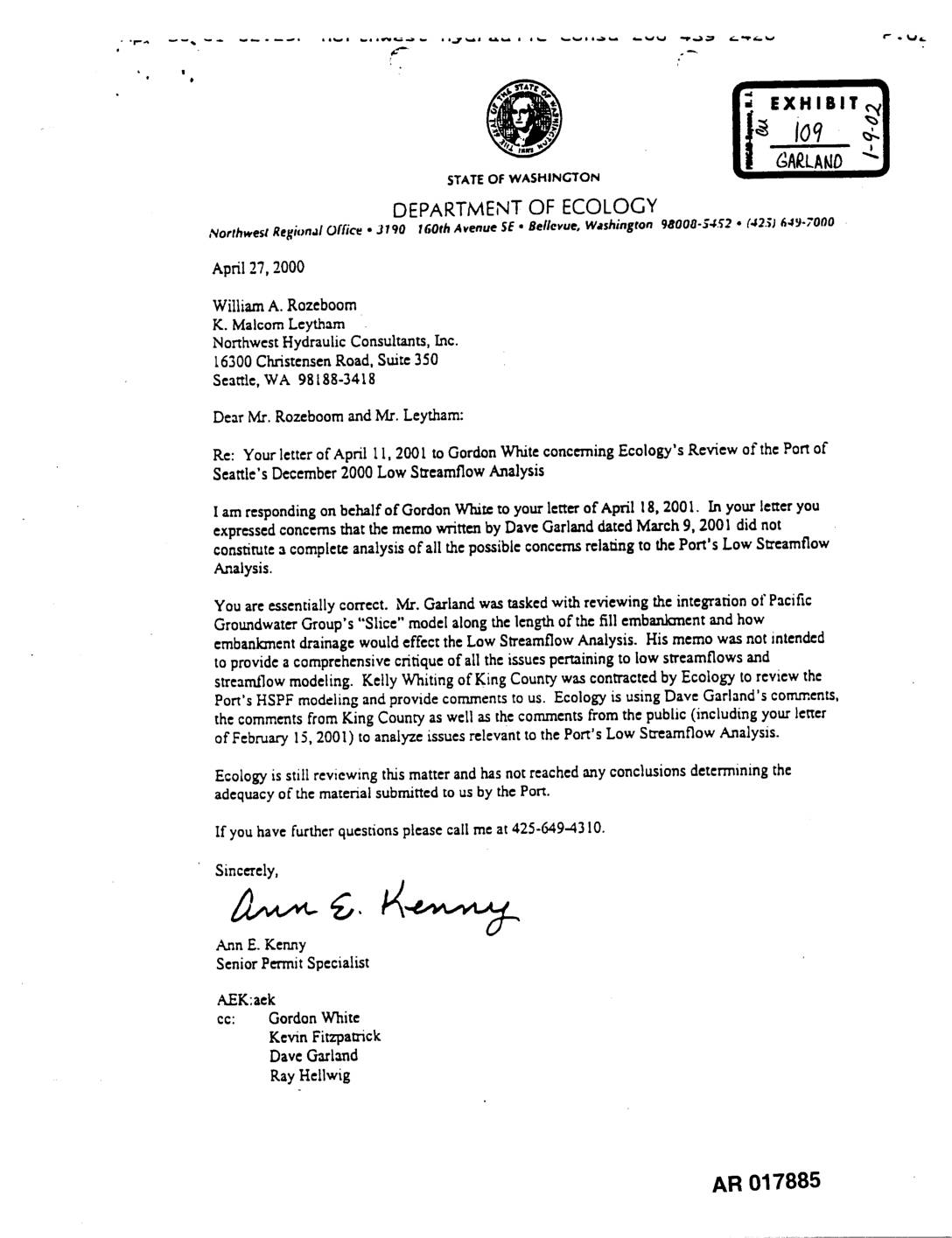
Exhibit 109: Ecology Letter to Northwest Hydraulic Consultants Re: Port Of Seattle Low Streamflow Analysis Review
Letter dated April 27, 2000 from Ann E. Kenny, Senior Permit Specialist, Washington State Department of Ecology (Northwest Regional Office), to William A. Rozeboom and K. Malcom Leytham of Northwest Hydraulic Consultants, Inc. Responds to their April 11, 2001 letter to Gordon White concerning Ecology’s review of Port Of Seattle’s December 2000 Low Streamflow Analysis. -
 2000-04-25
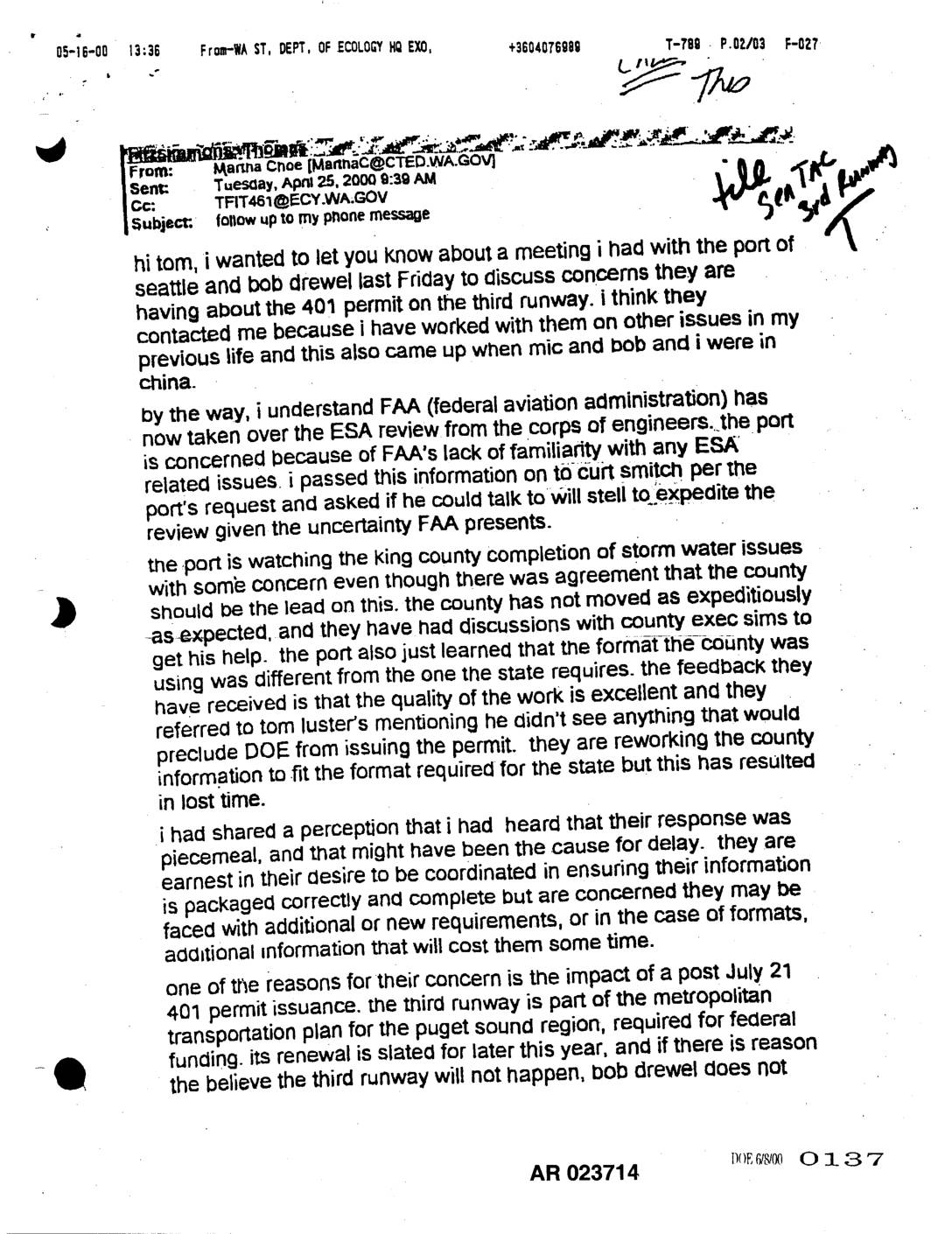
EXH AR023714: Email Martha Choe (CTED) to Tom — 401 Permit Concerns Third Runway
A April 25, 2000 email from Martha Choe of the Washington State Community, Trade and Economic Development office to a colleague at the Department of Ecology summarizes concerns raised by the Port of Seattle regarding delays in obtaining a 401 water quality permit for Sea-Tac Airport's proposed third runway. Key issues include the FAA's unfamiliarity with Endangered Species Act requirements after taking over the review from the Army Corps of Engineers, King County's slow progress on stormwater documentation, and formatting problems that caused further delays. The email warns that if the permit is not issued by July 21, 2000, the third runway's inclusion in the regional transportation plan—and its federal funding eligibility—could be jeopardized. -
 2000-04-25
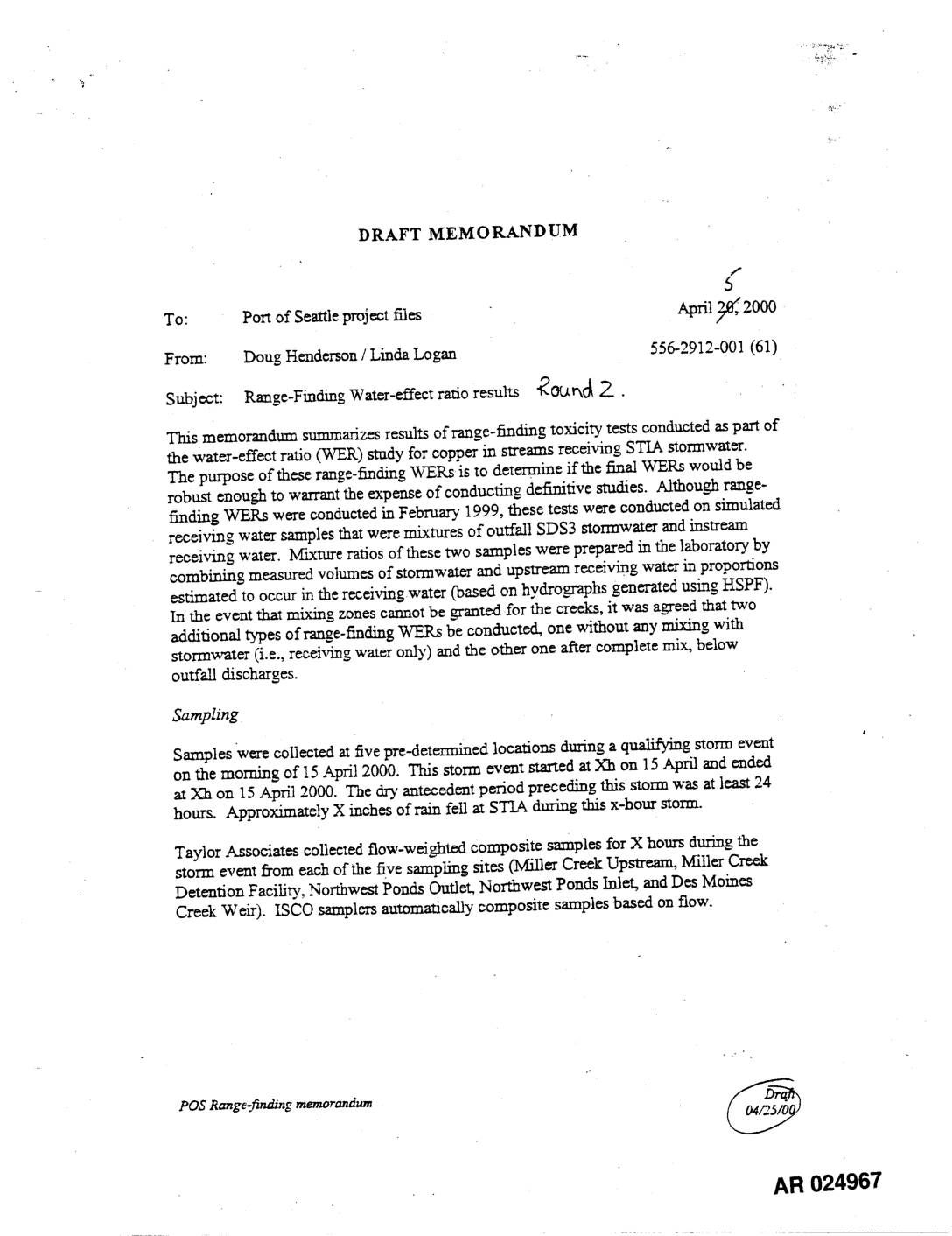
EXH AR024967: Draft Memo — Range-Finding Water-Effect Ratio Results Round 2 STIA Stormwater Copper Study
This April 2000 draft memorandum from the Port of Seattle summarizes range-finding toxicity tests conducted to evaluate water-effect ratios (WERs) for copper in streams receiving stormwater runoff from Seattle-Tacoma International Airport (STIA). Water samples were collected from five sites—including Miller Creek and Des Moines Creek—during a storm event on April 15, 2000, and tested using Daphnia magna to measure how site water chemistry affects copper toxicity compared to clean laboratory water. The results were intended to help determine whether full definitive WER studies were warranted, which could support the establishment of site-specific water quality standards for copper in receiving streams. -
 2000-04-25
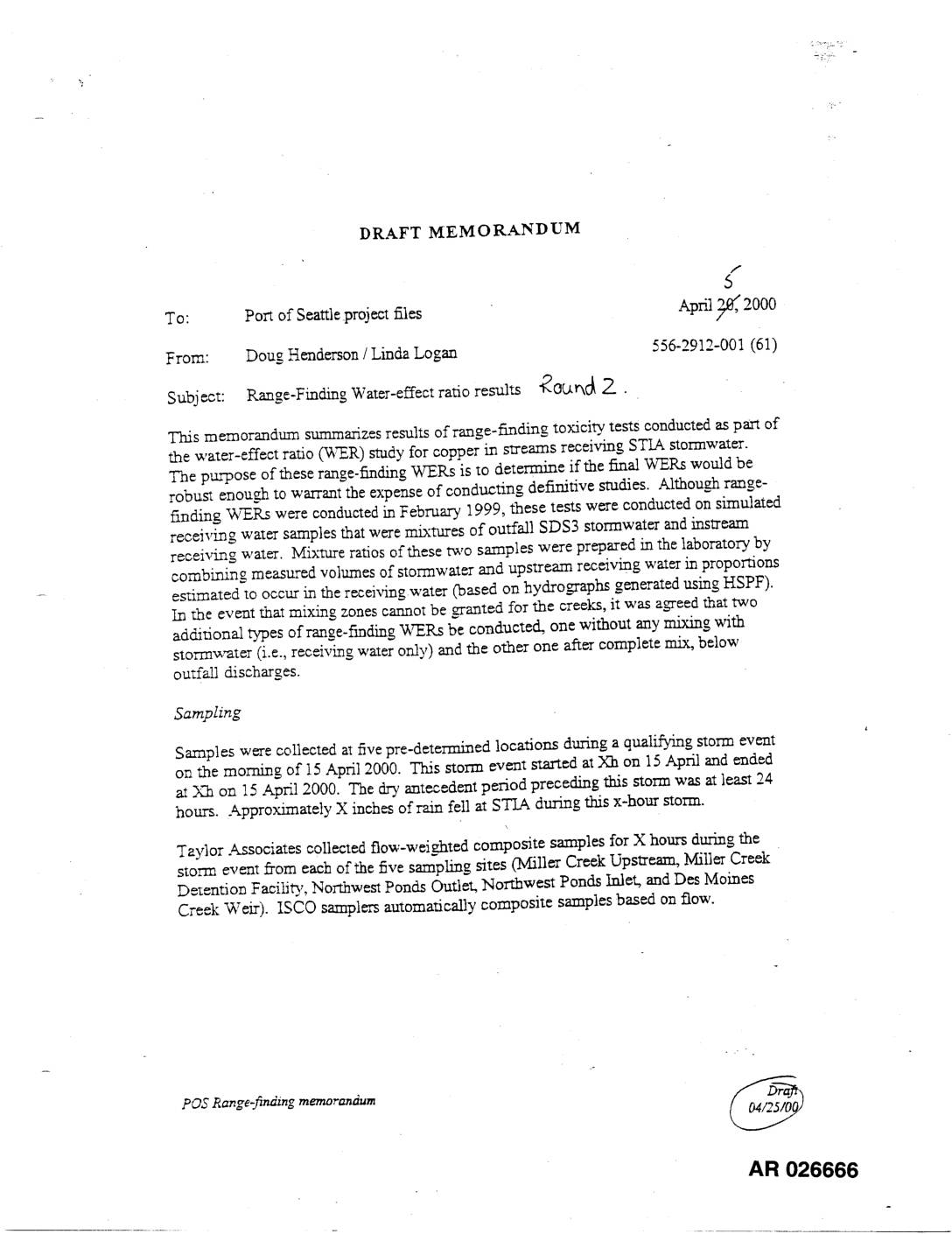
EXH AR026666: Draft Memo — Range-Finding Water-Effect Ratio Results Round 2 WER Study
A draft memorandum dated April 2000 summarizes range-finding water-effect ratio (WER) toxicity tests conducted for the Port of Seattle to measure copper levels in streams receiving stormwater runoff from Seattle-Tacoma International Airport (STIA). Water samples were collected from five sites — including Miller Creek and Des Moines Creek — during a storm event on April 15, 2000, and tested using Daphnia magna organisms to compare copper toxicity in site water versus clean laboratory water. The results were intended to determine whether more expensive definitive WER studies would be warranted, and to help establish site-specific water quality standards for copper. -
 2000-04-24
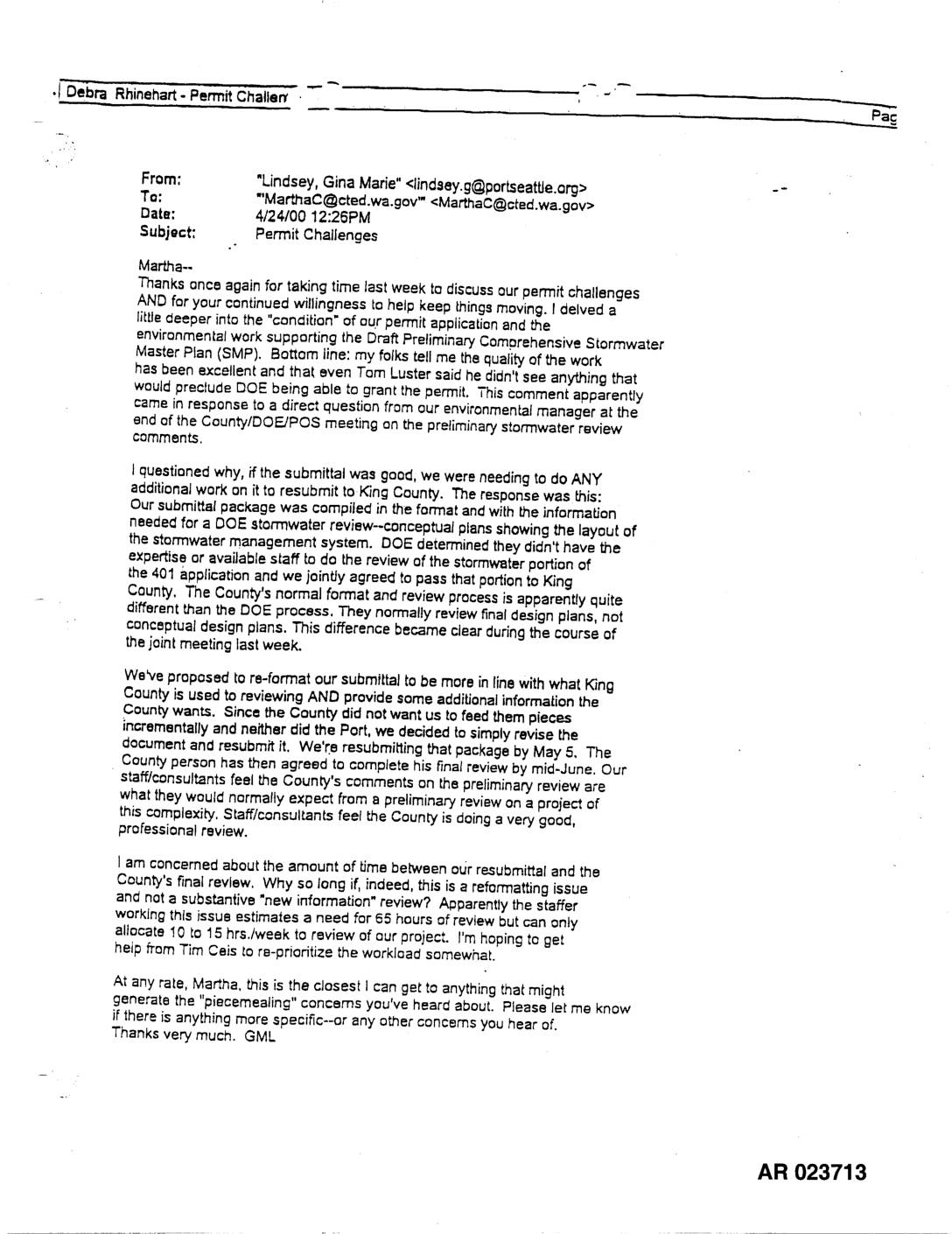
EXH AR023713: Email Lindsey to Martha C. (Ecology) — Permit Challenges & Stormwater Master Plan Review
In an April 2000 email, Port of Seattle executive Gina Marie Lindsey updates a Washington State Department of Ecology contact about the status of the Port's stormwater permit application related to a Comprehensive Stormwater Master Plan. She explains that while the environmental work quality was deemed strong, the submittal needed to be reformatted to meet King County's review standards rather than DOE's, with a revised package due May 5 and a County final review expected by mid-June. Lindsey also addresses concerns about potential 'piecemealing' of the permit process and expresses concern about the lengthy timeline given the County reviewer's limited weekly hours for the project. -
 2000-04-20
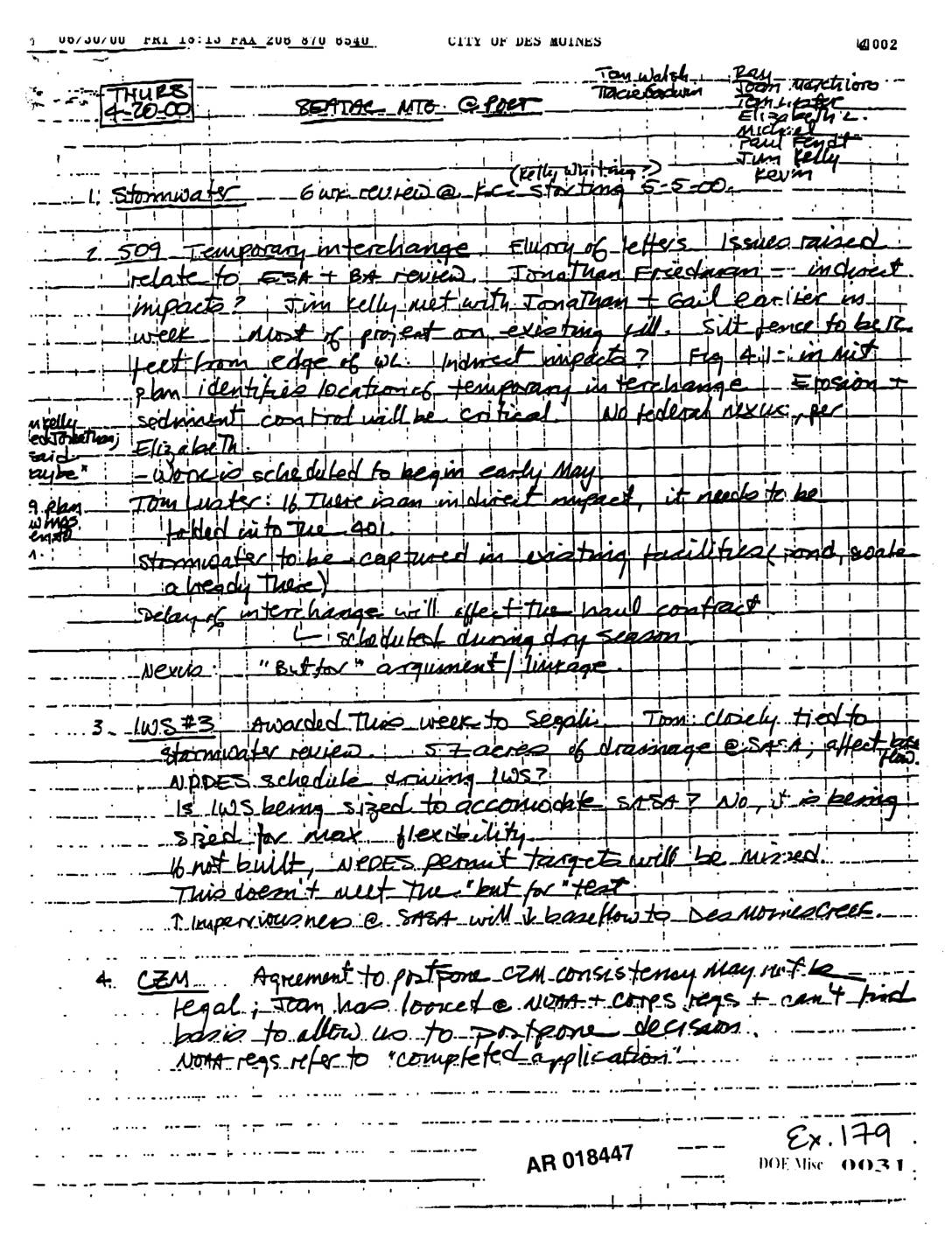
Exhibit 179: Handwritten Meeting Notes — BEATAC Meeting at Port, April 20, 2000
Handwritten notes from a BEATAC meeting at the Port on April 20, 2000, AR018447, involving City of Des Moines personnel including Tom Walsh, Tacie Borden, John Marchiloro, Jim Kelly, and others. Topics include: stormwater review at FCC starting 5-5-00; SR-509 temporary interchange issues (ESA/BA review, Jonathan Freedman indirect impacts, erosion/sediment control, no federal nexus); LWS#3 -
 2000-04-20
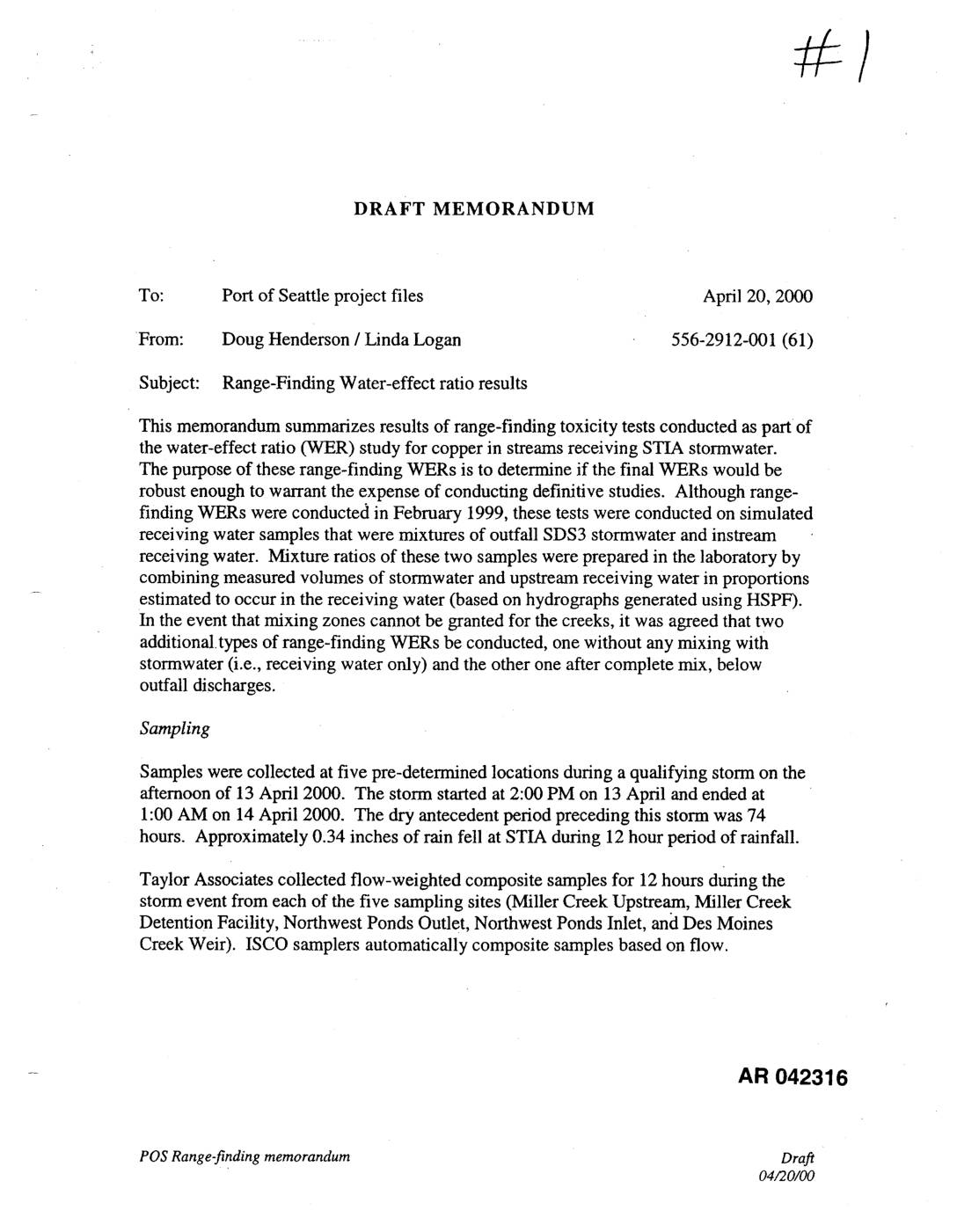
EXH AR042316: Draft Memorandum — Range-Finding Water-Effect Ratio Results for Copper in STIA Stormwater Streams
Draft memorandum dated April 20, 2000, authored by Doug Henderson and Linda Logan (job number 556-2912-001) for Port of Seattle project files, summarizing range-finding water-effect ratio (WER) toxicity tests for copper in streams receiving Seattle-Tacoma International Airport (STIA) stormwater. Tests used Daphnia magna as indicator species; copper was spiked into site water and synthetic laboratory -
 2000-04-19
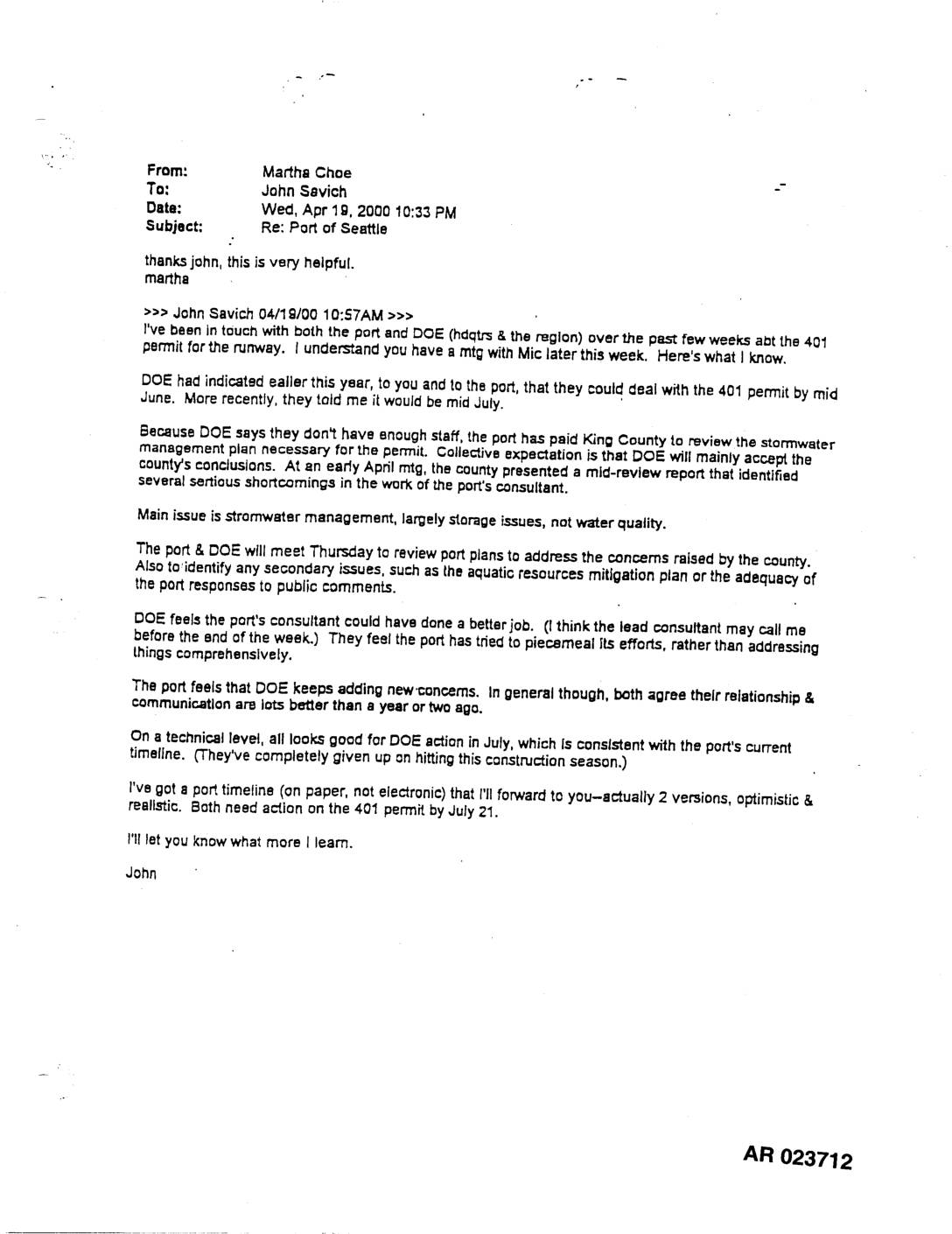
EXH AR023712: Email Exchange 401 Permit Status STIA Third Runway
A April 2000 email exchange between EPA staff members John Savich and Martha Choe provides an update on the status of a Clean Water Act Section 401 water quality permit for a Port of Seattle runway project. The main sticking point is stormwater storage management, with the Washington State Department of Ecology (DOE) targeting a mid-July decision after King County completed a review that identified serious shortcomings in the port's consultant work. Both the optimistic and realistic port timelines require DOE action on the 401 permit by July 21, meaning the port had already abandoned any hope of beginning construction that season.