TagACC(1548)
-
 2000-02-29
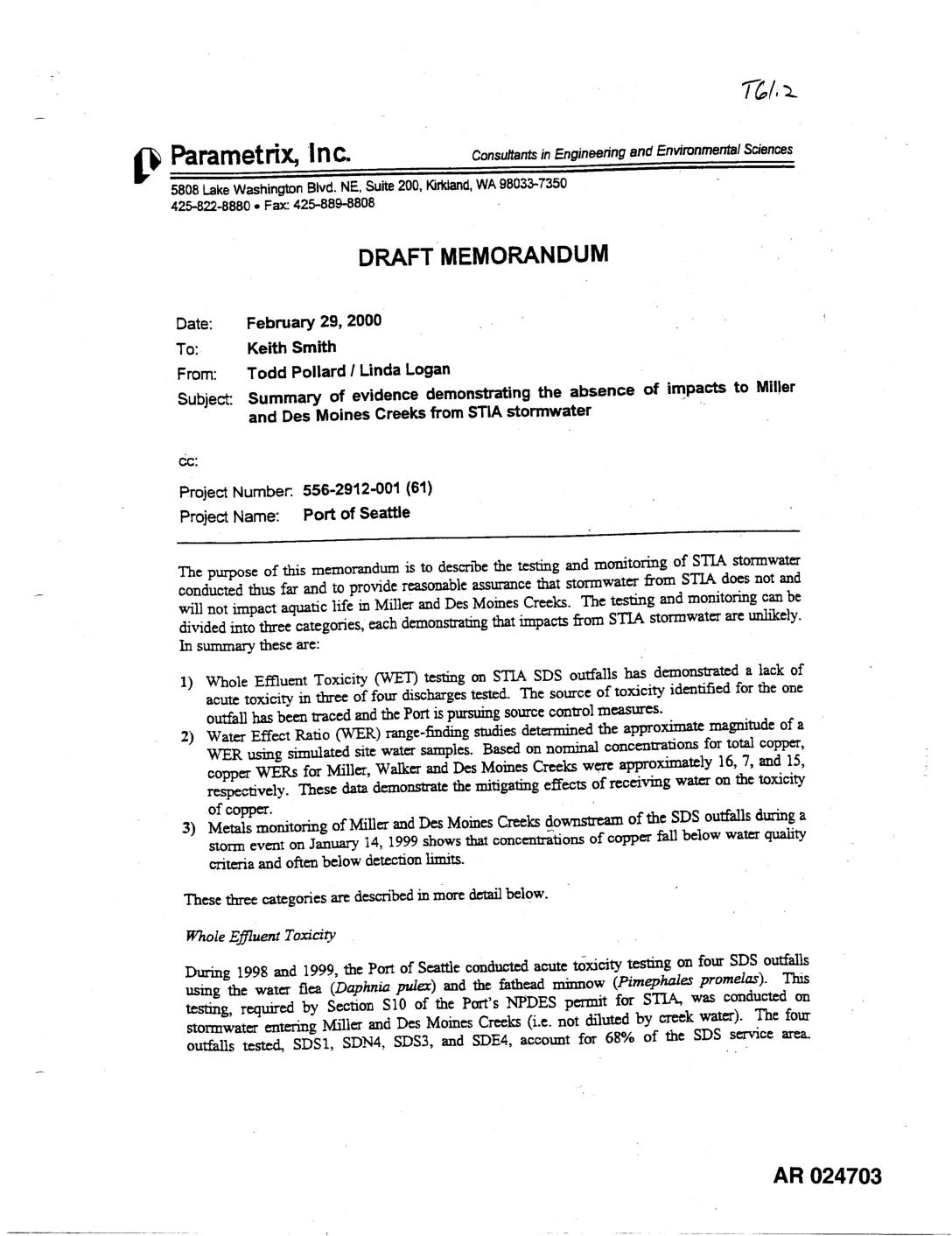
EXH AR024703: Draft Memo — Evidence Summary, No Impacts to Miller & Des Moines Creeks from STIA Stormwater
A February 2000 draft memo from environmental consultants Parametrix summarizes testing and monitoring data concluding that stormwater runoff from Seattle-Tacoma International Airport (STIA) does not harm aquatic life in nearby Miller and Des Moines Creeks. Three lines of evidence are presented: whole effluent toxicity tests showing most outfalls are non-toxic, water effect ratio studies demonstrating that creek water significantly reduces copper toxicity, and metals monitoring confirming that copper concentrations in the creeks fell below water quality standards. The one outfall found to be toxic (SDN1) was traced to zinc leaching from galvanized rooftops, with the Port of Seattle pursuing corrective measures. -
 2000-02-28
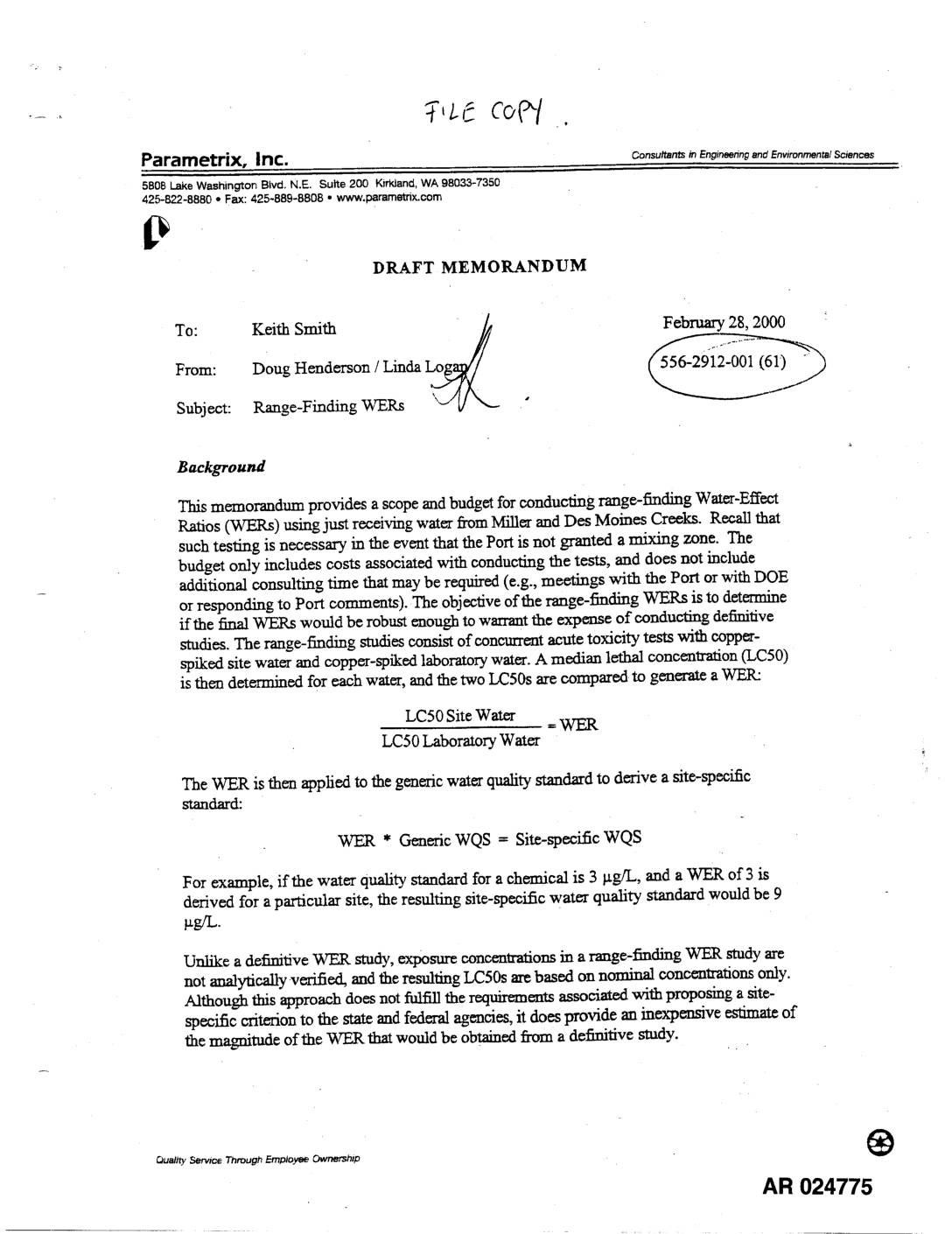
EXH AR024775: Draft Memo Range-Finding WERs Miller and Des Moines Creeks
A February 2000 draft memorandum from Parametrix, Inc. outlines a scope and budget for range-finding Water-Effect Ratio (WER) studies using receiving water from Miller and Des Moines Creeks, conducted in connection with stormwater discharge permitting near the Port. The studies involve acute toxicity tests with copper-spiked water to determine whether site-specific water quality standards could be higher than generic state standards, potentially eliminating the need for a mixing zone. Estimated costs range from $2,110 for one creek site to $2,650 for two sites. -
 2000-02-28
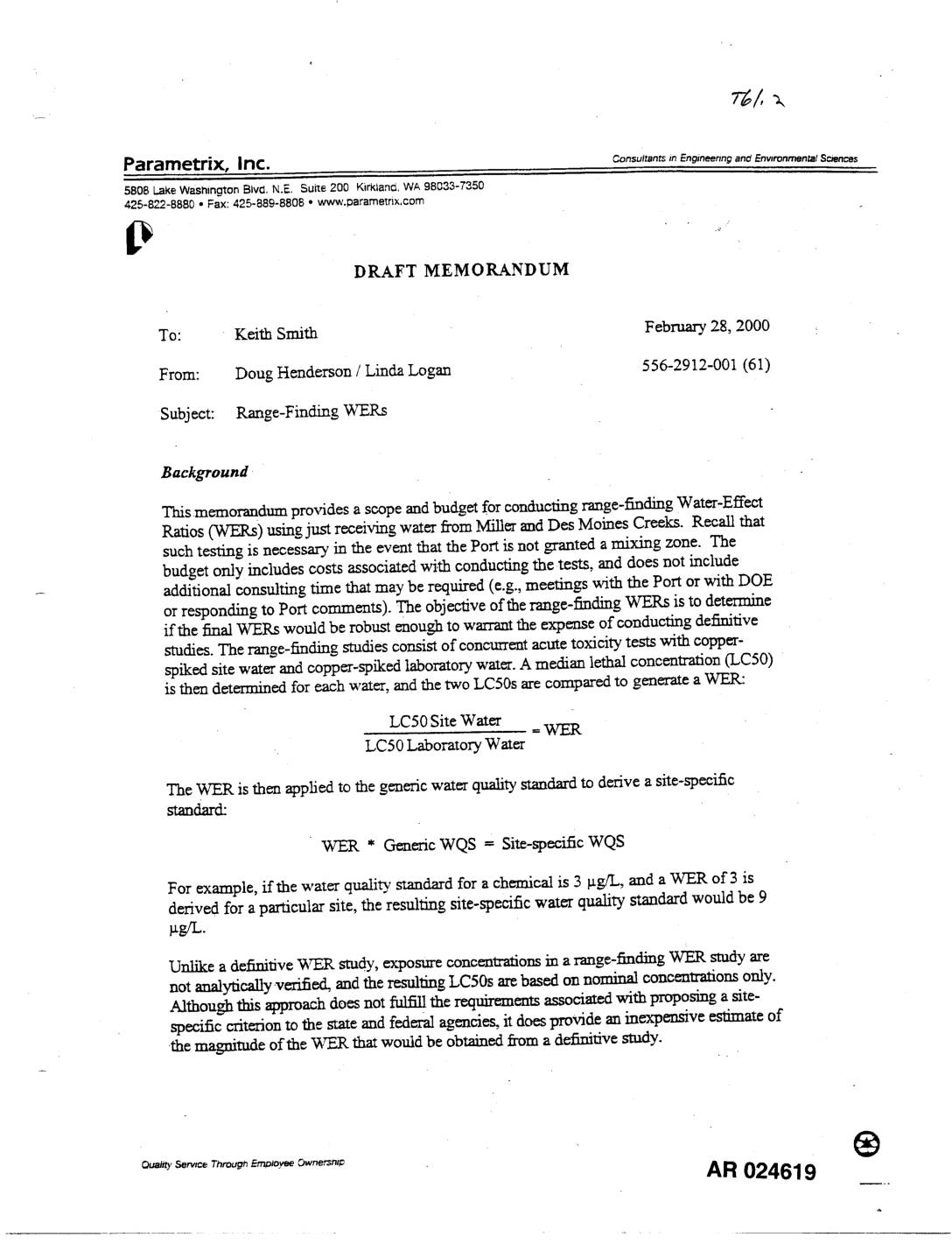
EXH AR024619: Draft Memo Range-Finding Water-Effect Ratios Miller & Des Moines Creeks
A February 2000 draft memorandum from Parametrix, Inc. outlines a scope and budget for range-finding Water-Effect Ratio (WER) studies using receiving water from Miller and Des Moines Creeks, intended to help determine whether copper discharge standards at a Port facility could be adjusted through site-specific water quality criteria. The studies involve acute toxicity tests comparing copper-spiked site water to copper-spiked laboratory water, with estimated costs ranging from $2,110 for one site to $2,650 for two sites. Results from earlier 1999 range-finding tests suggested WERs high enough to potentially justify more definitive studies, but new tests without mixing zone assumptions were recommended to better assess achievable permit limits. -
 2000-02-17
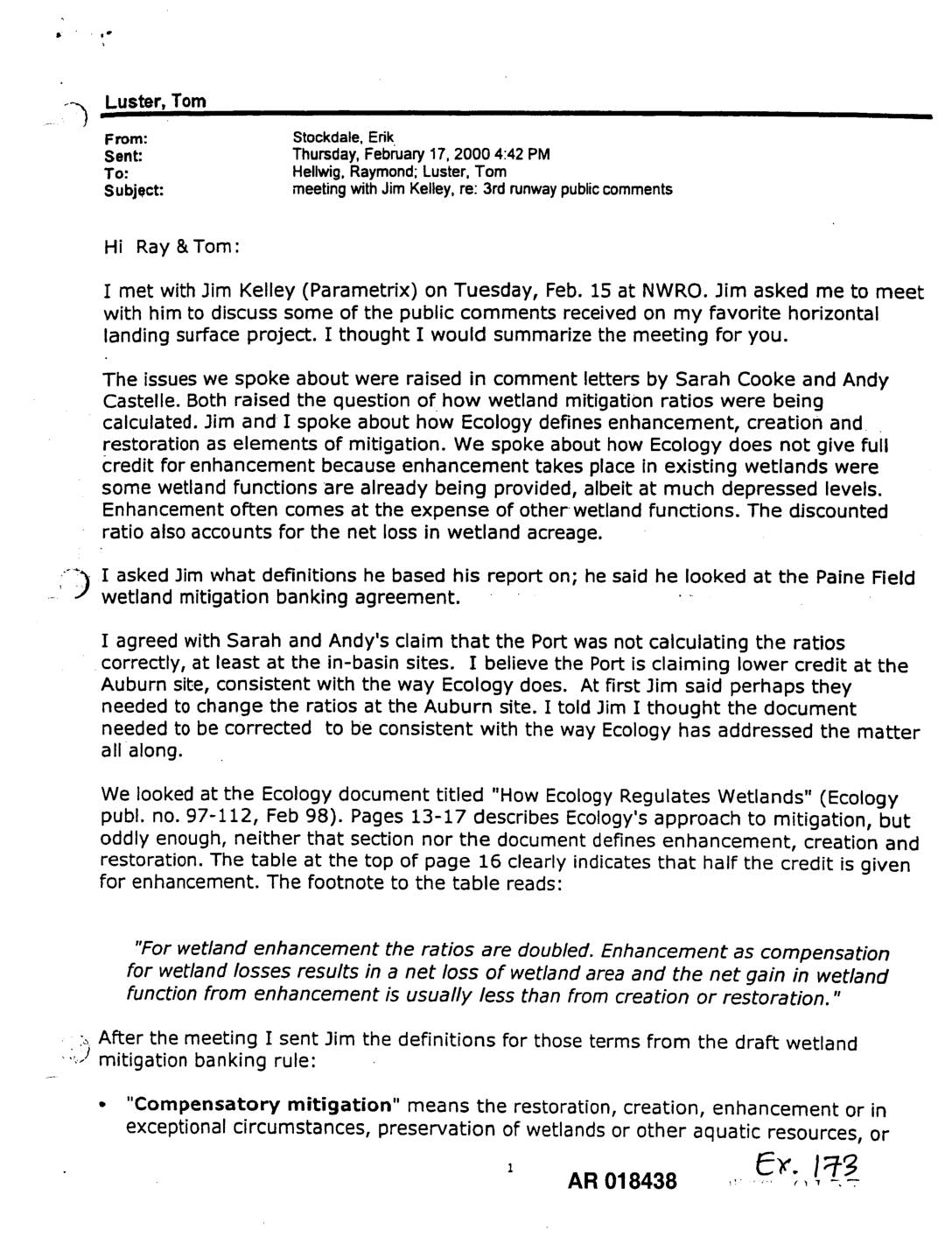
Exhibit 173: Email — Meeting with Jim Kelley (Parametrix) Re Third Runway Public Comments on Wetland Mitigation Ratios
Email from Erik Stockdale (Ecology NWRO) to Raymond Hellwig and Tom Luster, dated February 17, 2000, summarizing a February 15 meeting with Jim Kelley of Parametrix regarding public comments on the Sea-Tac Airport third runway project (AR 018438–018440, Exhibit 173). Issues raised by commenters Sarah Cooke and Andy Castelle concerned incorrect wetland mitigation ratio calculations -
 2000-02-16
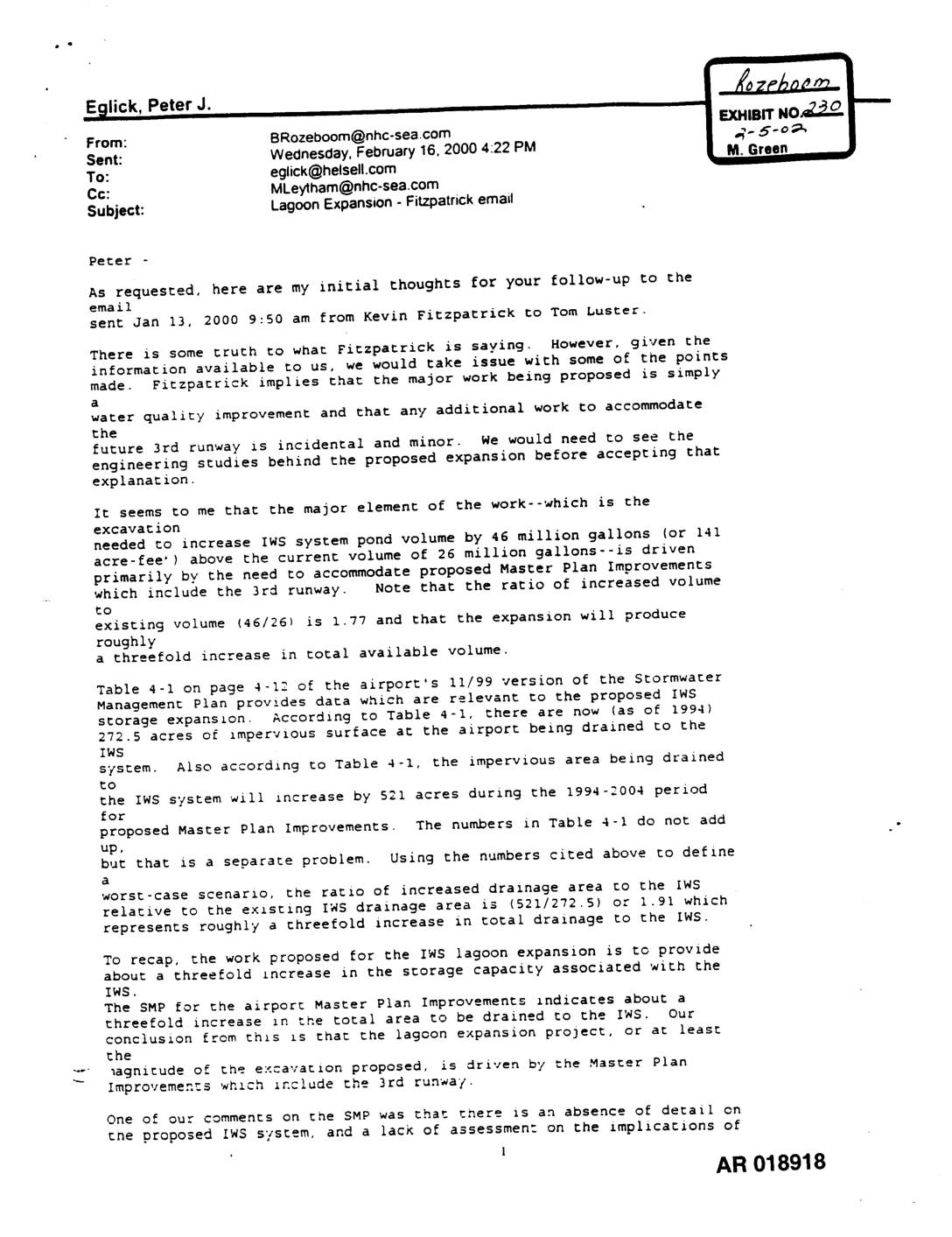
Exhibit 230: Email from Bill Rozeboom (Northwest Hydraulic Consultants) to Peter Eglick Re: IWS Lagoon Expansion and Fitzpatrick Email Analysis
A February 2000 email from hydraulic consultant Bill Rozeboom argues that the proposed expansion of Sea-Tac Airport's Integrated Wetlands System (IWS) lagoon—tripling its storage capacity—is primarily driven by the airport's Master Plan Improvements, including the proposed third runway, rather than being a routine water quality project. Rozeboom notes that the planned increase in impervious drainage area (roughly 521 additional acres) closely mirrors the proposed increase in IWS storage volume, supporting his conclusion that the third runway is the primary driver of the expansion. He also raises concerns that the environmental documents fail to adequately assess the impact of large-scale out-of-basin water transfers on aquifer recharge and stream base flows in the Miller Creek and Des Moines Creek basins. -
 2000-02-14
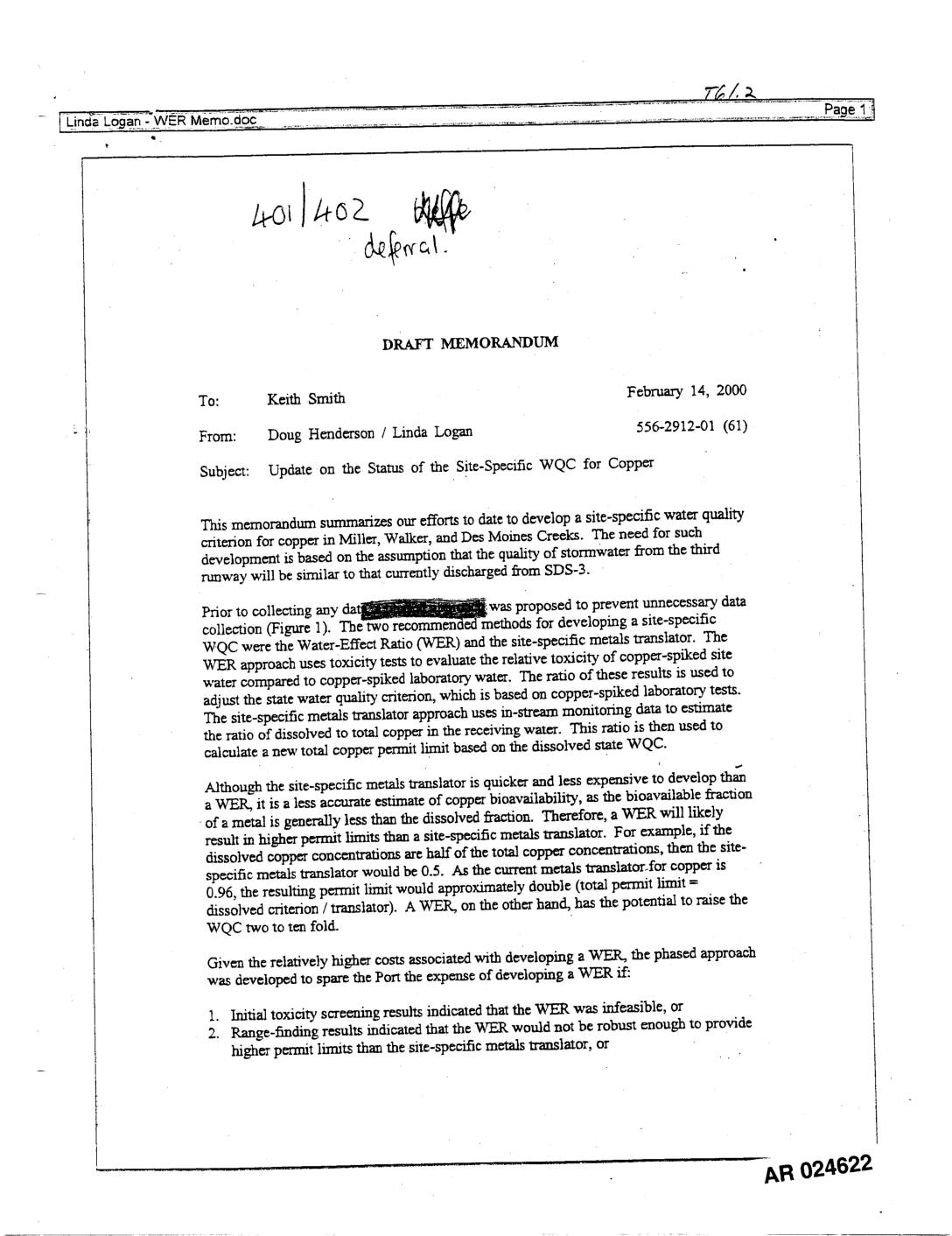
EXH AR024622: Draft Memo — Site-Specific WQC Copper Status Update, Miller, Walker & Des Moines Creeks
A February 2000 internal draft memorandum from environmental consultants to Port of Seattle staff summarizes efforts to develop a site-specific water quality criterion for copper in Miller, Walker, and Des Moines Creeks, in connection with stormwater runoff anticipated from a proposed third runway at Sea-Tac Airport. The memo evaluates two technical approaches—the Water-Effect Ratio (WER) and the site-specific metals translator—for potentially raising copper discharge permit limits, and outlines initial toxicity screening and range-finding study results. It also describes ongoing negotiations with the Washington State Department of Ecology regarding unresolved issues such as mixing zones, AKART requirements, and critical sampling conditions. -
 2000-02-14
EXH AR024917: Draft Memo — Site-Specific WQC Status Update, Copper, Miller, Walker & Des Moines Creeks
A February 2000 draft memorandum from environmental consultants to Keith Smith summarizes efforts to develop a site-specific water quality criterion for copper in Miller, Walker, and Des Moines Creeks near Seattle-Tacoma Airport, in anticipation of stormwater runoff from a proposed third runway. The memo outlines two technical approaches—the Water-Effect Ratio (WER) and the site-specific metals translator—for potentially raising copper discharge permit limits, and describes toxicity screening and range-finding studies conducted in 1999. The phased study approach was designed to avoid unnecessary costs if the WER method proved infeasible or if the Washington Department of Ecology would not permit its use in adjusting permit limits. -
 2000-02-10
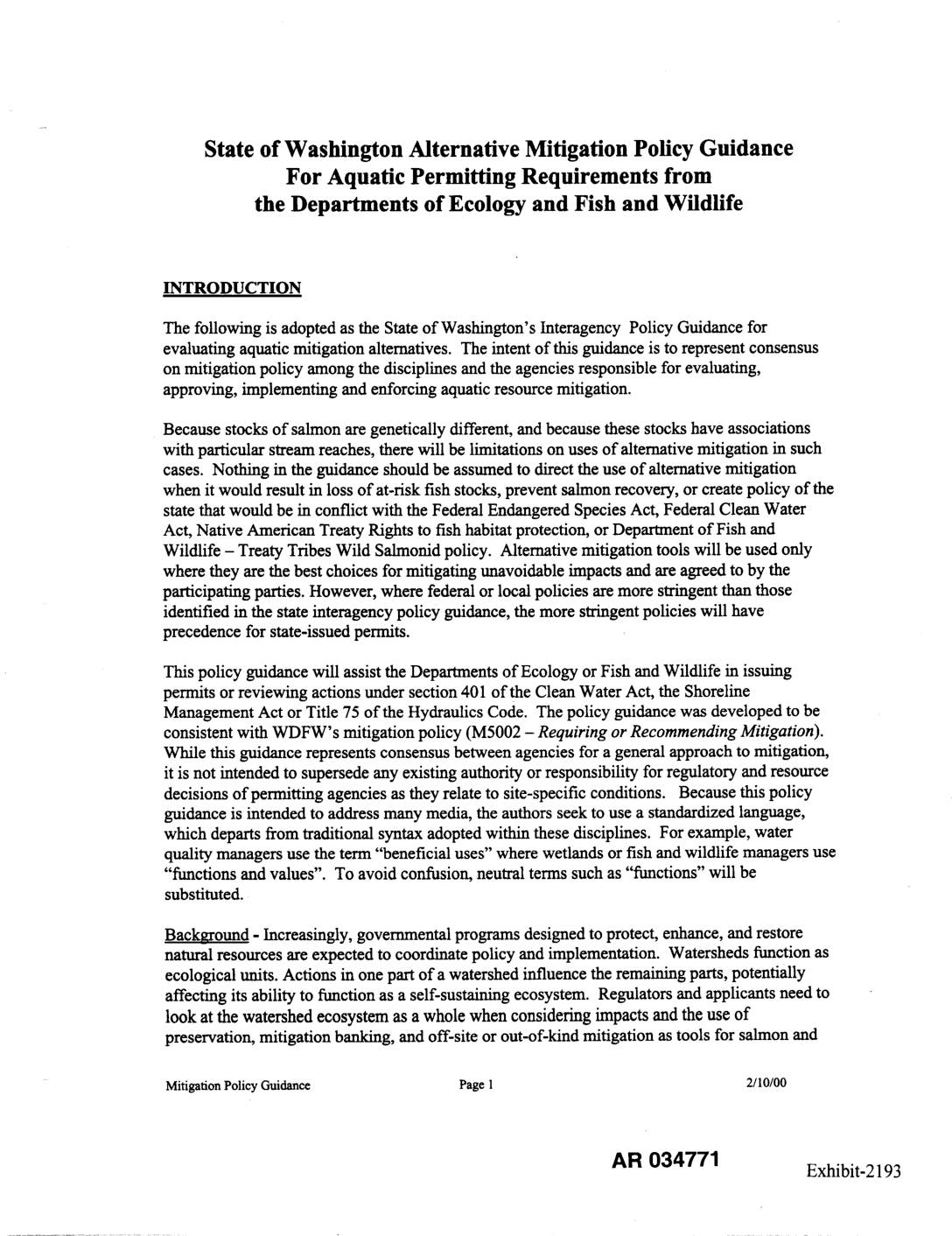
EXH AR034771: State of Washington Alternative Mitigation Policy Guidance for Aquatic Permitting Requirements from the Departments of Ecology and Fish and Wildlife
State of Washington interagency policy guidance (AR 034771, Exhibit 2193) adopted by Washington Department of Fish and Wildlife (WDFW) and Washington Department of Ecology (WDOE) for evaluating aquatic mitigation alternatives under section 401 of the Clean Water Act, the Shoreline Management Act (RCW 90.58), and the Hydraulic Code (RCW 75.20). Covers mitigation sequencing (avoiding, minimizing, -
 2000-02-08
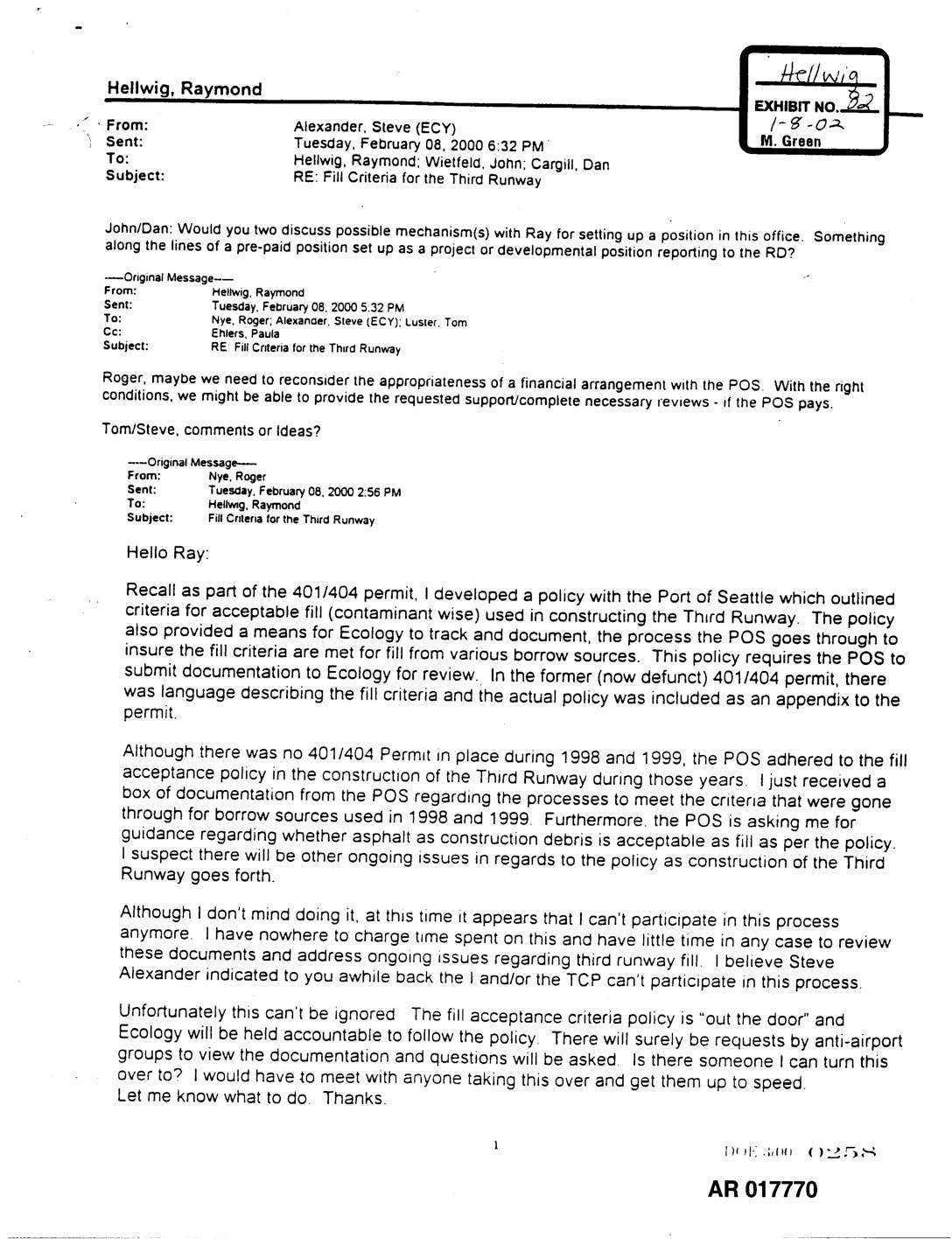
Exhibit 82: Email Chain RE Fill Criteria for the Third Runway — Ecology/Port Of Seattle Financial Arrangement Discussion
Email chain dated February 8, 2000 among Washington State Department of Ecology staff (Roger Nye, Raymond Hellwig, Steve Alexander) regarding fill criteria compliance for the Third Runway at Sea-Tac Airport. Roger Nye describes the 401/404 permit fill acceptance policy developed with Port Of Seattle governing contaminant criteria for borrow sources used in Third Runway construction -
 2000-02-01
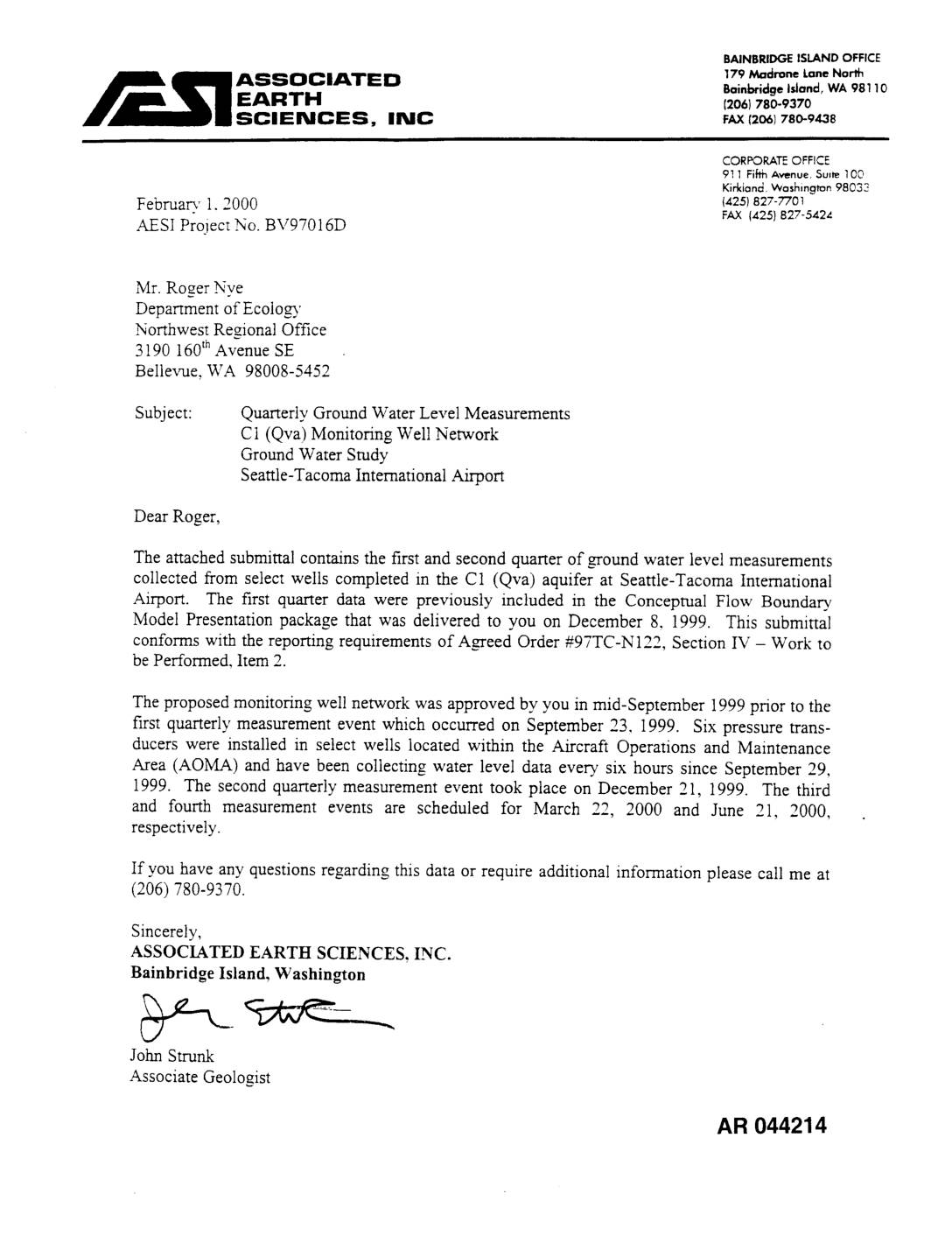
EXH AR044214: Quarterly Ground Water Level Measurements, C1 (Qva) Monitoring Well Network, Ground Water Study, STIA
Letter dated February 1, 2000 from John Strunk, Associated Earth Sciences, Inc. (AESI Project No. BV97016D) to Roger Nye, Washington Department of Ecology Northwest Regional Office, submitting first and second quarter ground water level measurements from the C1 (Qva) aquifer monitoring well network at Seattle-Tacoma International Airport. Reports on six pressure transducers installed in the