TagThird Runway(1084)
-
 2000-09-01
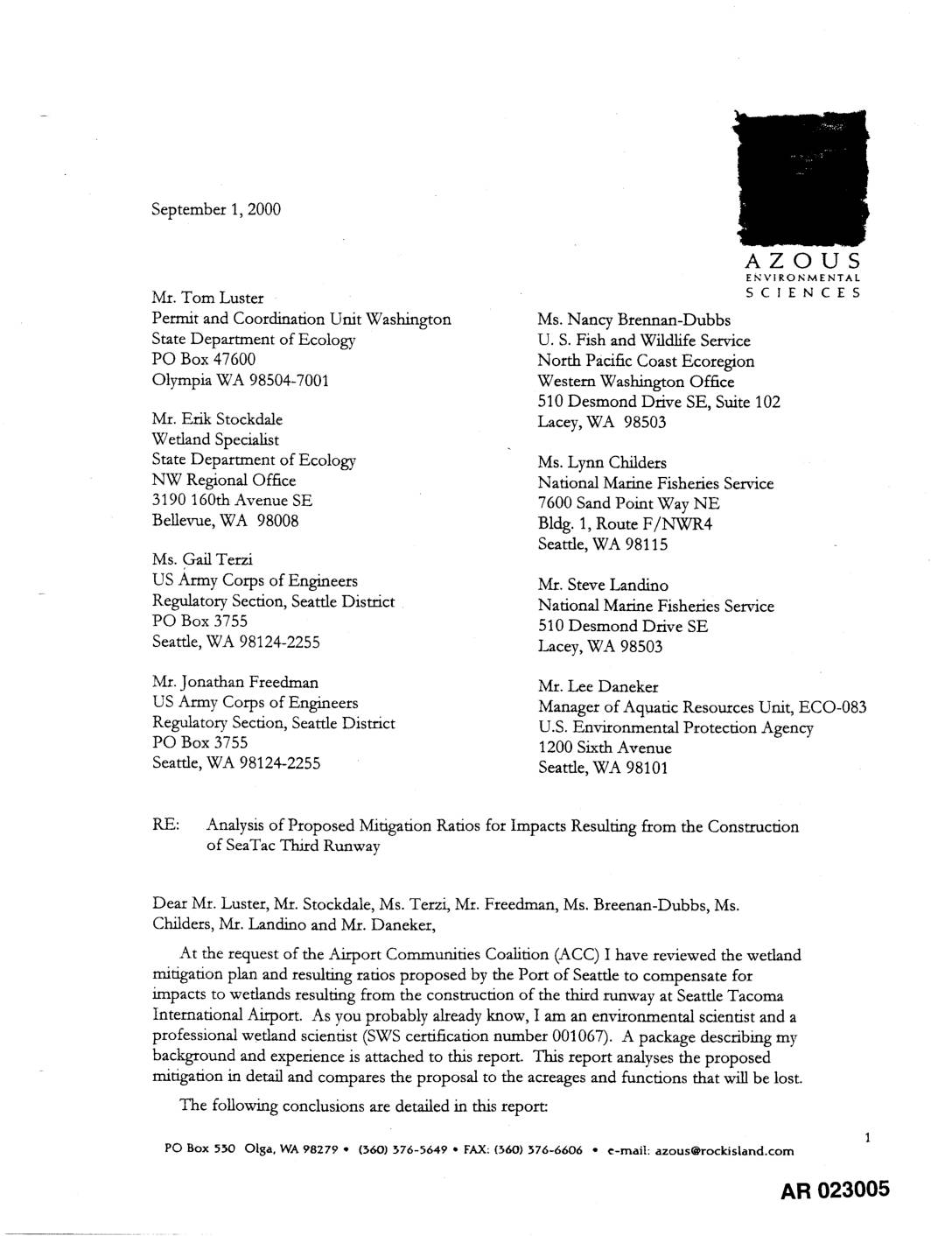
EXH AR023005: ACC Analysis Proposed Mitigation Ratios STIA Third Runway Wetland Impacts
A September 2000 report by Azous Environmental Sciences, commissioned by the Airport Communities Coalition, critically analyzes the Port of Seattle's wetland mitigation plan for the SeaTac Third Runway construction project. The report identifies numerous errors in wetland acreage accounting, inadequate mitigation ratios, and flaws in the proposed compensatory measures, including out-of-basin mitigation that fails to replace lost wetland functions in the affected Miller, Walker, and Des Moines Creek watersheds. The author concludes that the Port's plan falls short of Washington State Department of Ecology standards and the regulatory goal of no net loss of wetland functions. -
 2000-09-01
EXH AR025072: Des Moines Creek Flow Augmentation Preliminary Design — STIA
This September 2000 preliminary design report, prepared by Kennedy/Jenks Consultants for the Port of Seattle, outlines a plan to augment water flow in Des Moines Creek near Seattle-Tacoma International Airport. The report covers facility configuration, process components such as backflow prevention, dechlorination, and aeration systems, as well as an evaluation of chemical dechlorination alternatives. The project was designed to improve creek water quality by treating and releasing water in a controlled manner. -
 2000-08-24
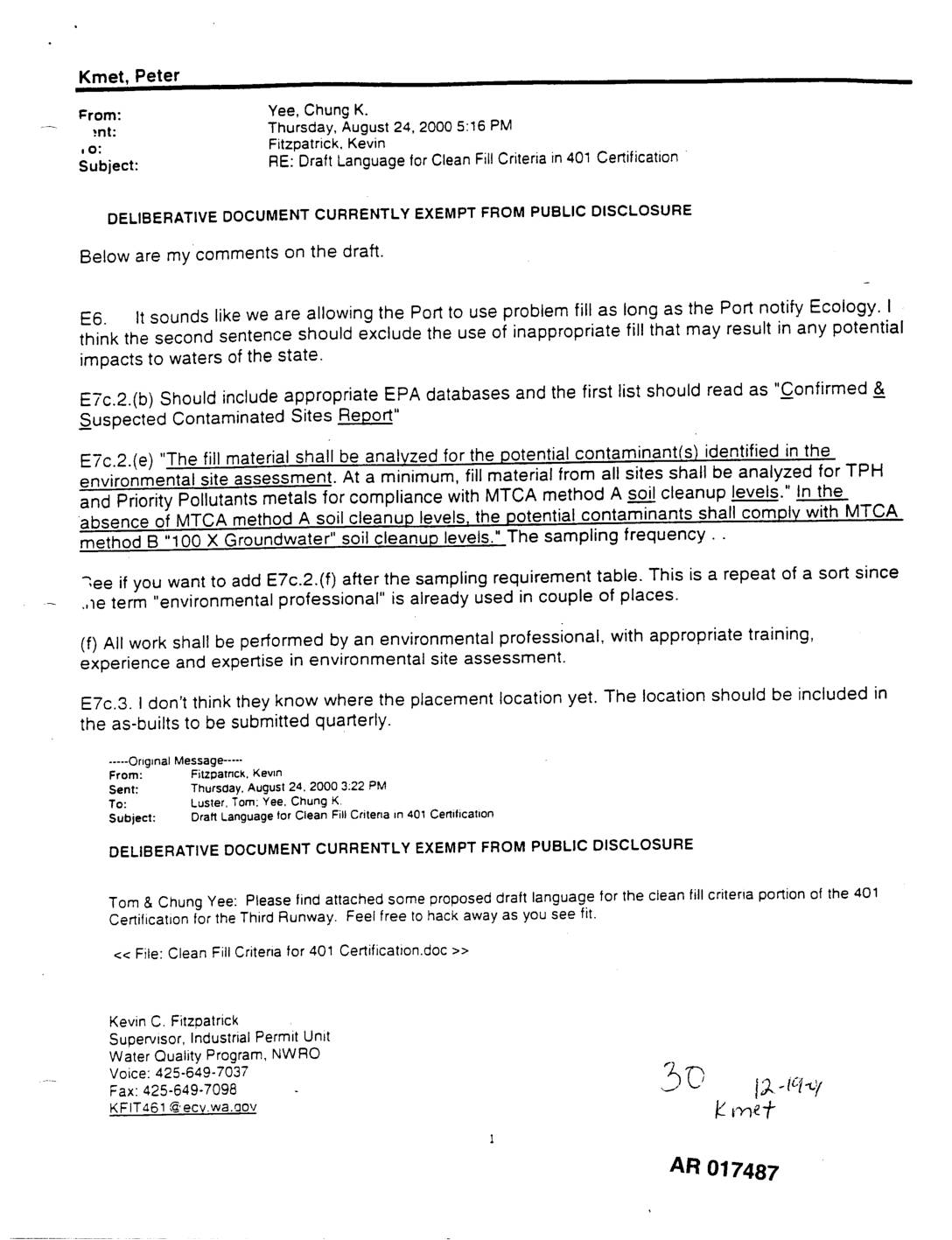
EXH AR017487: Email RE: Draft Language for Clean Fill Criteria in 401 Certification — Chung K. Yee to Kevin Fitzpatrick
AR017487. Email from Chung K. Yee (Ecology, NWRO Water Quality Program) to Kevin Fitzpatrick dated August 24, 2000, commenting on draft clean fill criteria language for the 401 Certification for the Third Runway at Sea-Tac Airport. Comments address sections E6, E7c.2.(b), E7c.2.(e), and E7c.3, covering inappropriate fill, EPA databases, Confirmed & Suspected Contaminated Sites Report, -
 2000-08-24
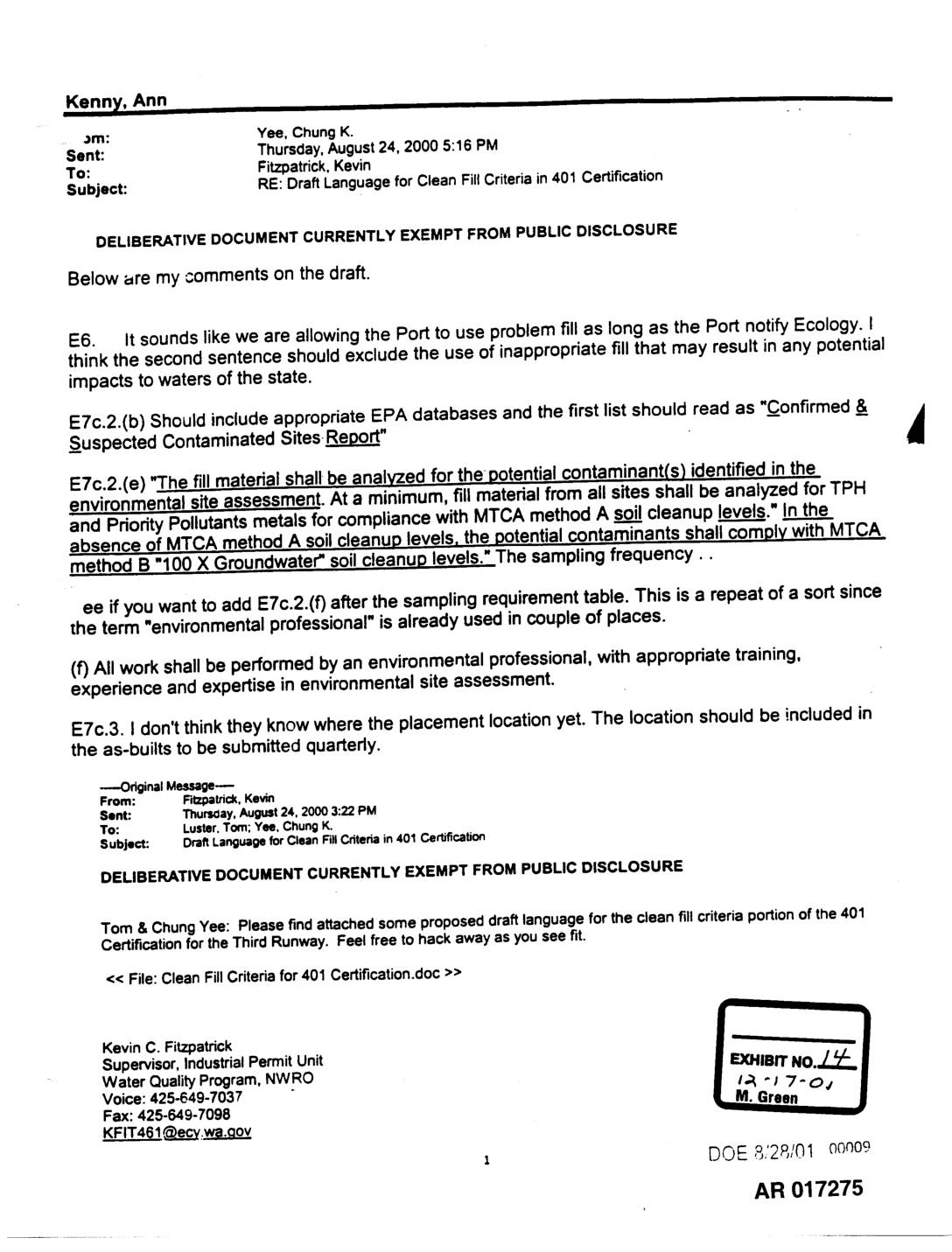
EXH AR017275: Ecology Internal Email — Comments on Draft Clean Fill Criteria Language for 401 Certification, Third Runway
Internal email chain from Chung K. Yee to Kevin Fitzpatrick (Supervisor, Industrial Permit Unit, Water Quality Program, NWRO, Washington Department of Ecology) dated August 24, 2000, commenting on draft clean fill criteria language for the 401 Certification for the Third Runway at Sea-Tac Airport. Comments address sections E6, E7c.2(b), E7c.2(e), E7c.2(f), and E7c.3, covering issues -
 2000-08-21
EXH AR045646: Geotechnical Input to MSE Wall and Reinforced Slope Design, Third Runway Embankment
Draft memorandum dated August 21, 2000 from Jamie Beaver, Mike Bailey P.E., and Barry Chen P.E. of Hart Crowser, Inc. to Jim Thomson at HNTB (project J-4978-30) providing geotechnical design information for RECo for MSE wall and reinforced embankment fill design for the Third Runway Embankment at Sea-Tac Airport. Document includes minimum factors of safety -
 2000-08-16
EXH AR022982: ACC Review Wetlands Mitigation Plan STIA Third Runway Construction
A wetland scientist hired by the Airport Communities Coalition reviewed the Port of Seattle's proposed wetland mitigation plan for the SeaTac Third Runway construction and concluded it was wholly inadequate. The report argues that the planned out-of-basin mitigation at an Auburn site fails to replace the wetland functions lost in the Walker Creek, Des Moines Creek, and Miller Creek watersheds, and that placing mitigation in a different drainage basin cannot scientifically compensate for local losses under Washington State environmental law. The reviewer also warns that the Auburn mitigation site faces multiple risks and is unlikely to be sustainable long-term. -
 2000-08-14
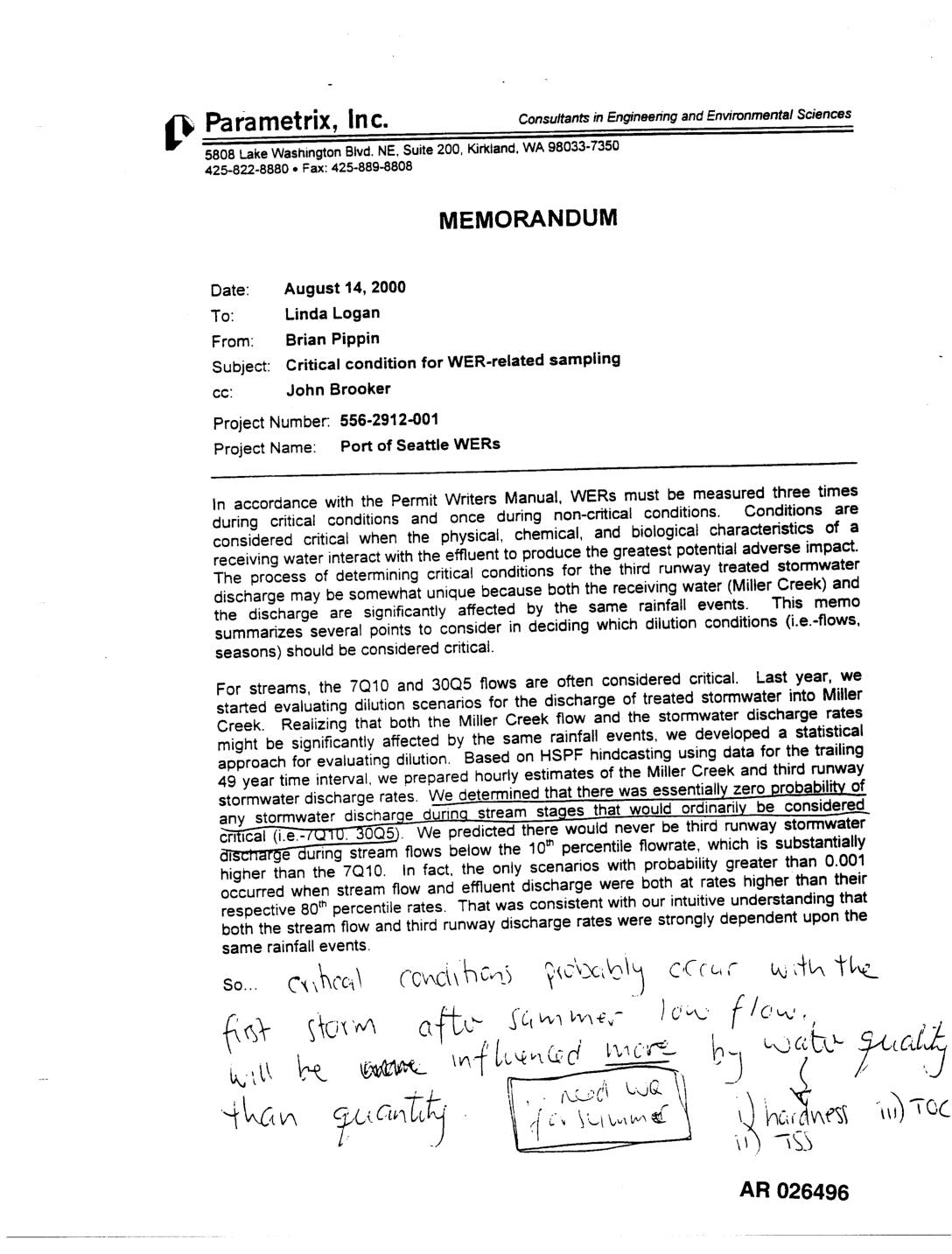
Exhibit 725: Memorandum on Critical Condition for WER-Related Sampling, Port Of Seattle Third Runway Stormwater Discharge into Miller Creek
Memorandum from Brian Pippin (Parametrix, Inc.) to Linda Logan (cc: John Brooker), dated August 14, 2000, Project Number 556-2912-001, Port of Seattle WERs. Discusses critical conditions for Water Effect Ratio (WER) sampling per the Permit Writers Manual for the third runway treated stormwater discharge into Miller Creek. Uses HSPF hindcasting over 49-year period to evaluate -
 2000-08-09
EXH AR045601: Evaluation of Perched Zone Interception and Possible Impacts to Wetland Hydrology, Borrow Area 3, Sea-Tac Third Runway
Hart Crowser draft report prepared for Port of Seattle, August 9, 2000 (J-4978-13), evaluating perched groundwater zone interception and potential wetland hydrology impacts from Borrow Area 3 excavation for the Sea-Tac Third Runway project. Addresses Pacific Groundwater Group (PGG, 2000) concerns commissioned by Washington State Department of Ecology regarding impacts to Wetland 29. Includes ModFlow -
 2000-08-01
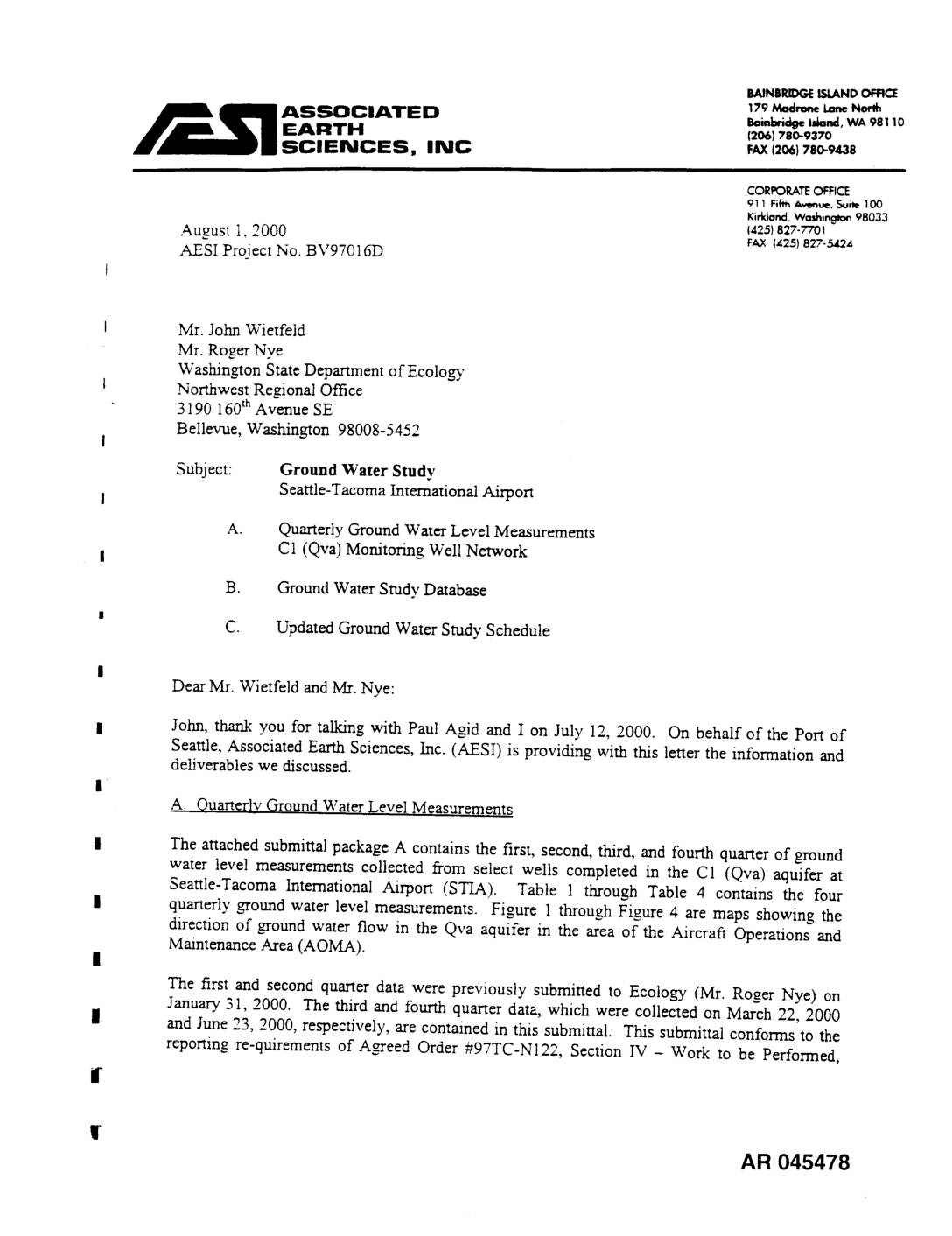
EXH AR045478: Ground Water Study — STIA Quarterly Ground Water Level Measurements, C1 (Qva) Monitoring Well Network
Letter dated August 1, 2000 from Associated Earth Sciences, Inc. (AESI), Project No. BV97016D, to Mr. John Wietfeld and Mr. Roger Nye of Washington State Department of Ecology Northwest Regional Office, on behalf of Port Of Seattle. Transmits quarterly ground water level measurements for Q1–Q4 from select wells completed in the C1 (Qva) advance outwash -
 2000-07-31
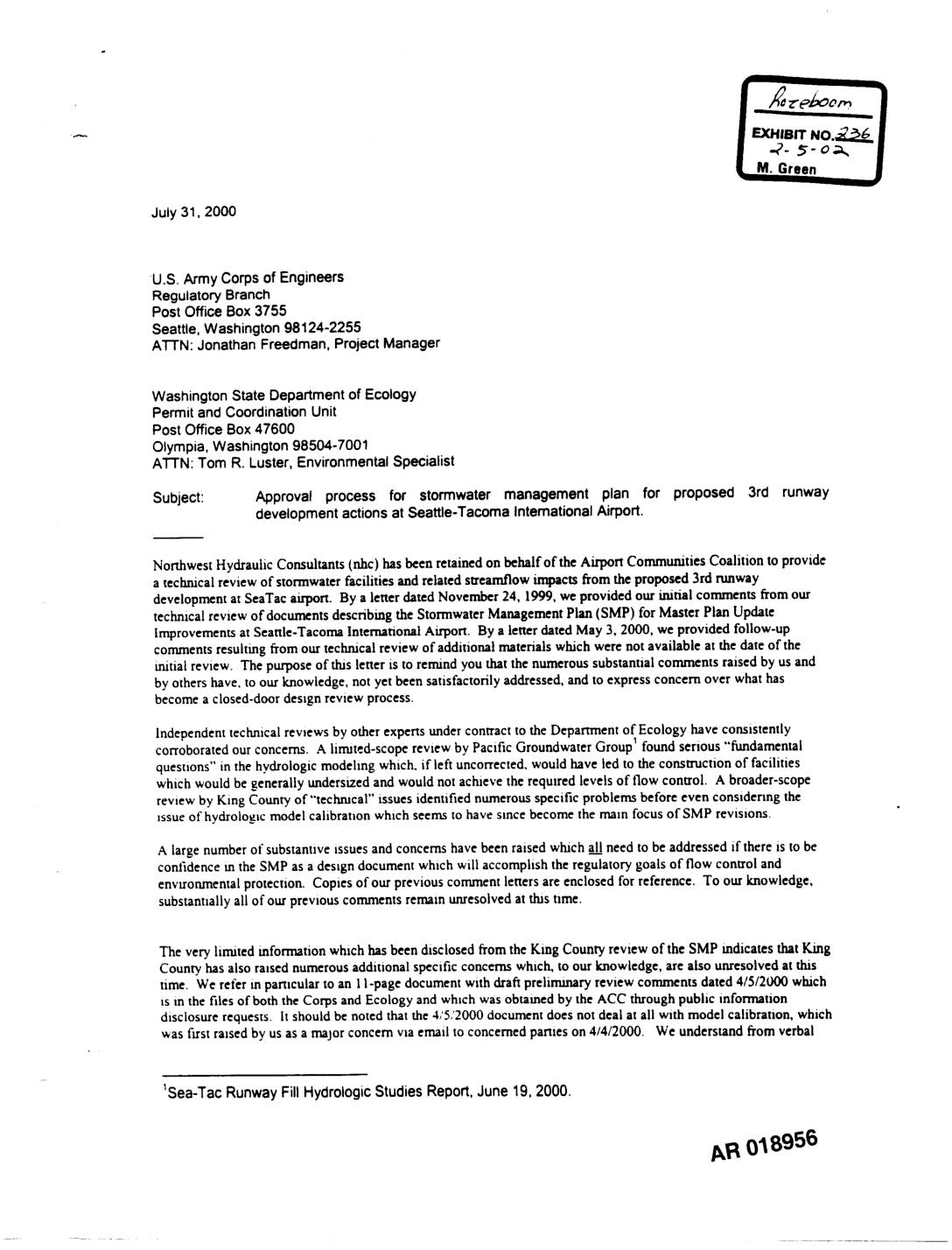
EXH 236: Letter Northwest Hydraulic Consultants to Army Corps & Ecology — STIA Third Runway Stormwater Management Plan Approval Process
In a July 31, 2000 letter to the U.S. Army Corps of Engineers and Washington State Department of Ecology, Northwest Hydraulic Consultants — representing the Airport Communities Coalition — raised concerns about unresolved technical problems with the Stormwater Management Plan (SMP) for Seattle-Tacoma International Airport's proposed third runway. Independent reviews had identified serious flaws in hydrologic modeling that could result in undersized stormwater facilities failing to meet flow control requirements. The consultants urged regulators to publicly disclose ongoing SMP discussions and allow meaningful time for further review before approving the project.