TagPart 150(269)
-
 2017-04-01
John F. Kennedy International Airport final noise exposure map report
A Title 14 CFR Part 150 Final Noise Exposure Map Report for JFK International Airport prepared by Environmental Science Associates and other consulting firms for the Port Authority of New York & New Jersey. The report addresses federal aviation noise regulations and mapping requirements. -
 2017-03-01
Laguardia airport title 14 code of federal regulations (cfr) part 150 final noise exposure map report
Final Noise Exposure Map Report for LaGuardia Airport prepared under Title 14 CFR Part 150 by Environmental Science Associates and other consulting firms for the Port Authority of New York & New Jersey. This report addresses federal requirements for airport noise compatibility planning. -
 2017-01-11
Confidential–Issues concerning litigation
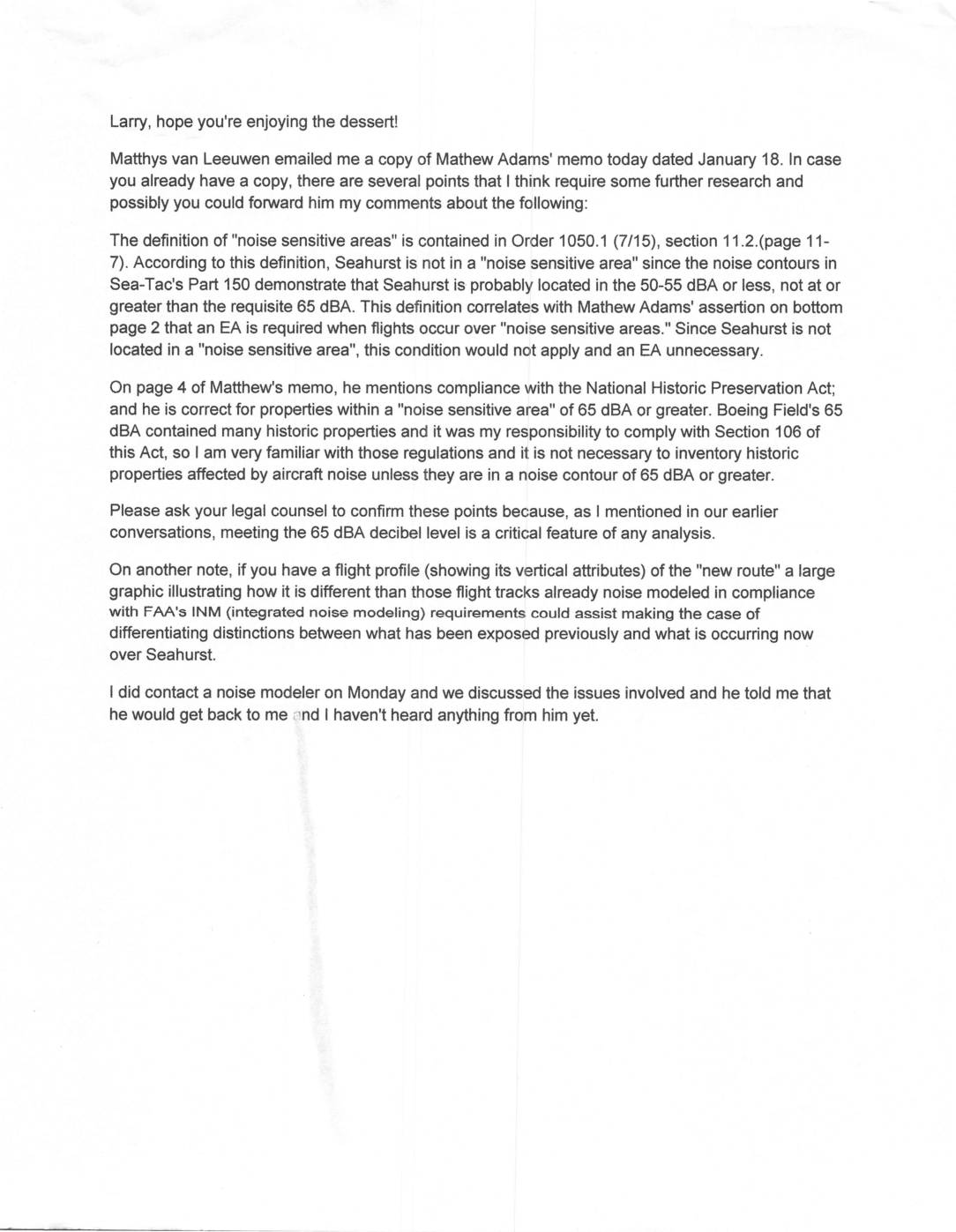
These documents contain communications from January 2017 regarding aircraft noise concerns over the Seahurst and White Center neighborhoods near Seattle-Tacoma International Airport. A noise consultant advises that Seahurst likely falls below the FAA's 65 dBA threshold that defines 'noise sensitive areas,' arguing this means an Environmental Assessment (EA) and historic property inventory are not required. Separately, a Burien resident emails city officials sharing research from Sea-Tac's Part 150 Study suggesting that flights over these neighborhoods were anticipated and approved, and that the absence of an EIS may not constitute valid grounds for litigation by the Quieter Skies coalition. -
 2016-10-21
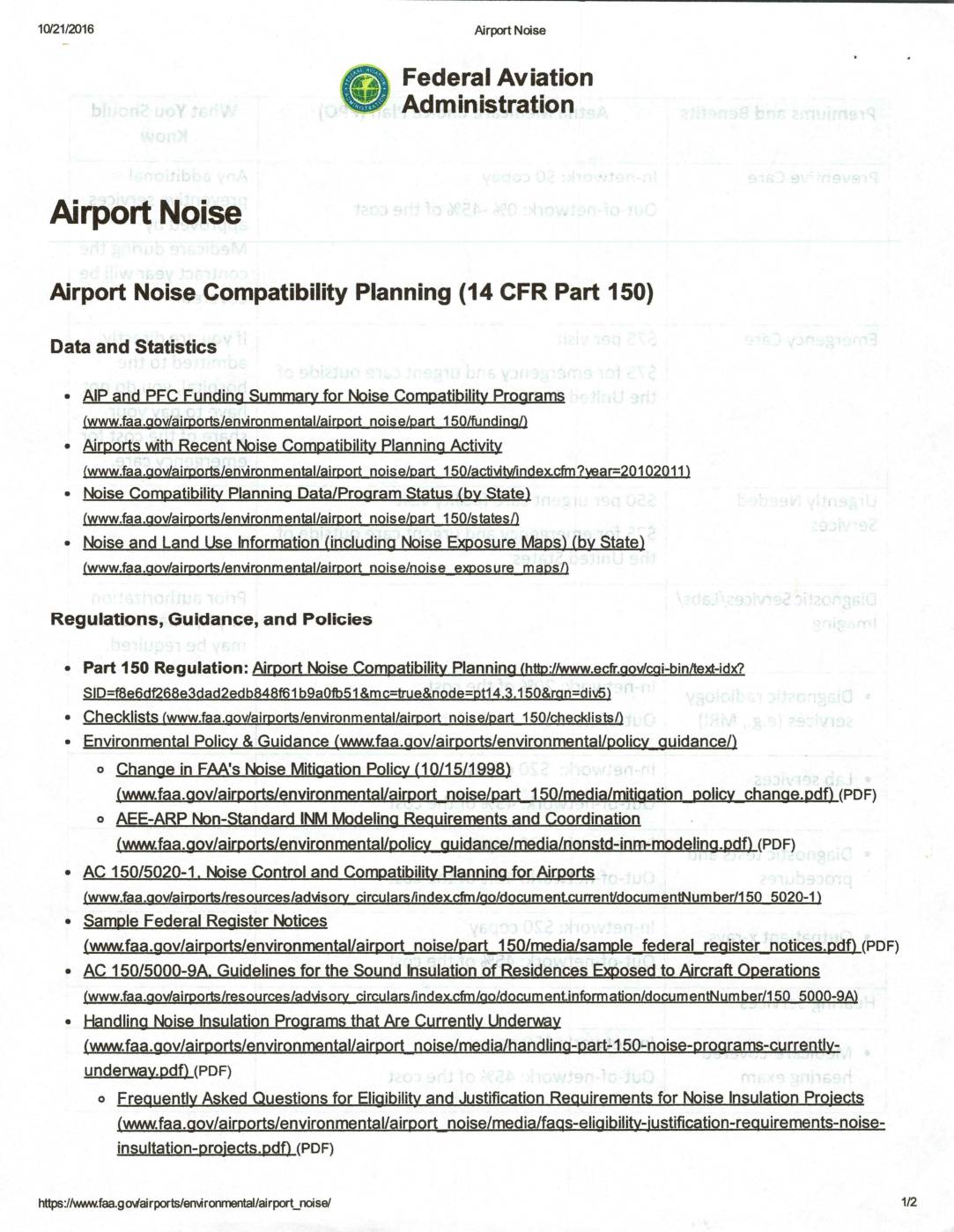
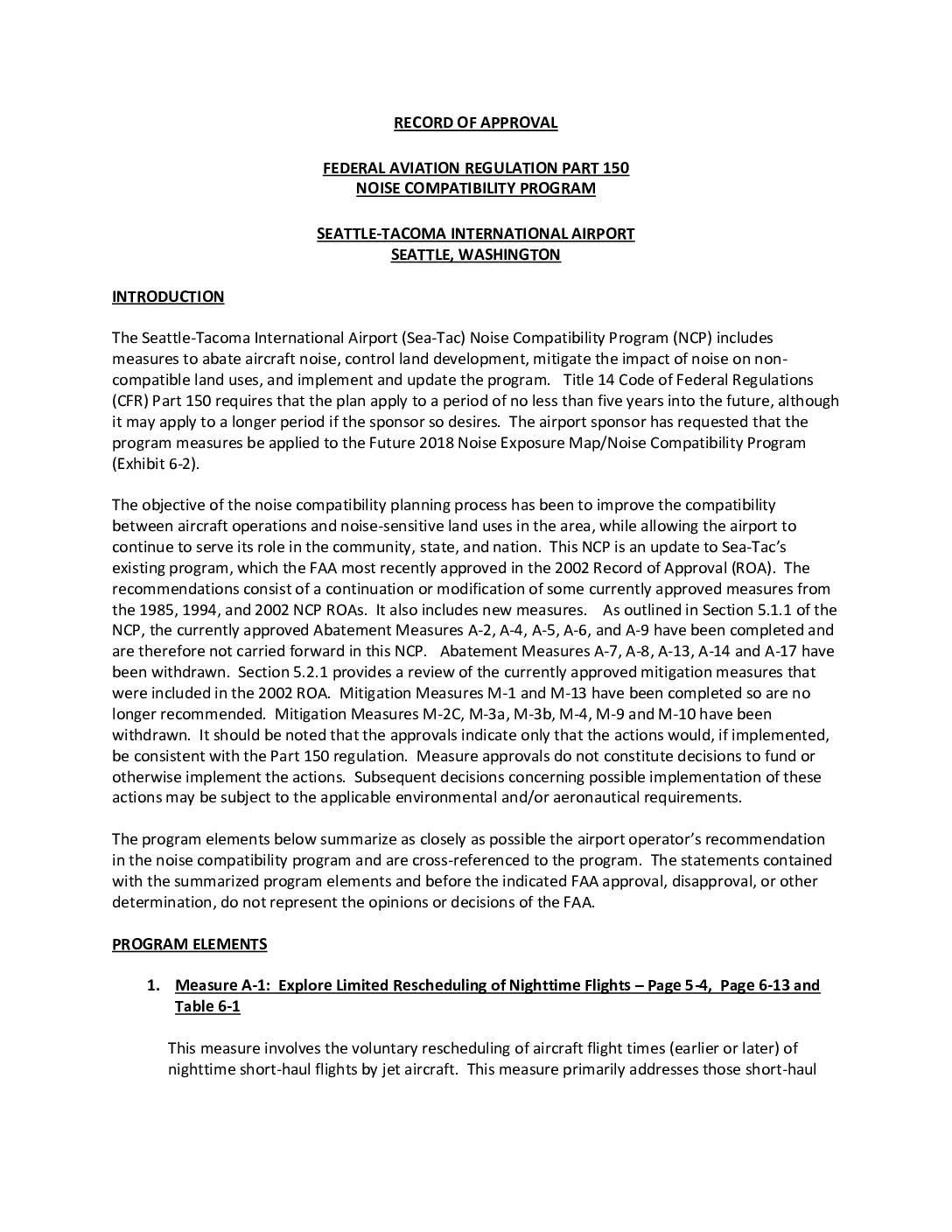
Airport noise compatibility planning (14 CFR Part 150)
This Federal Aviation Administration (FAA) page outlines the agency's Airport Noise programs, covering two key regulatory frameworks: Airport Noise Compatibility Planning (14 CFR Part 150) and Airport Noise and Access Restrictions (14 CFR Part 161). It provides links to funding summaries, noise exposure maps, planning data by state, and regulatory guidance including advisory circulars on noise control and sound insulation for residences near airports. The page also references the FAA's Land Use Planning Initiative, which offers guidance to airport sponsors and local agencies on improving compatibility between airports and surrounding communities. -
 2016-10-11
Airport noise insulation project
This October 2016 Port of Seattle briefing presents the Airport Noise Insulation Project for Sea-Tac Airport, outlining how a federally guided noise study (known as a Part 150) is used to identify noise and land-use conflicts in surrounding communities. The project aims to provide sound insulation to eligible homeowners in high-noise areas, with approved mitigation measures qualifying for 80% federal Airport Improvement Program (AIP) grant funding. The briefing covers project elements, homeowner eligibility requirements, community benefits, and associated costs. -
2014-08-02
Community roundtables will tackle airplane noise issues – QNS
Posted on August 2, 2014 By Bob Harris After years of pressuring for the formation of community roundtables to discuss airplane noise over residential neighborhoods, Gov. Andrew Cuomo has authorized the formation of such groups. Meetings were recently held in a large hanger at the Vaughn College of Aeronautics adjacent to LaGuardia Airport. The Queens -
-
 2013-11-20
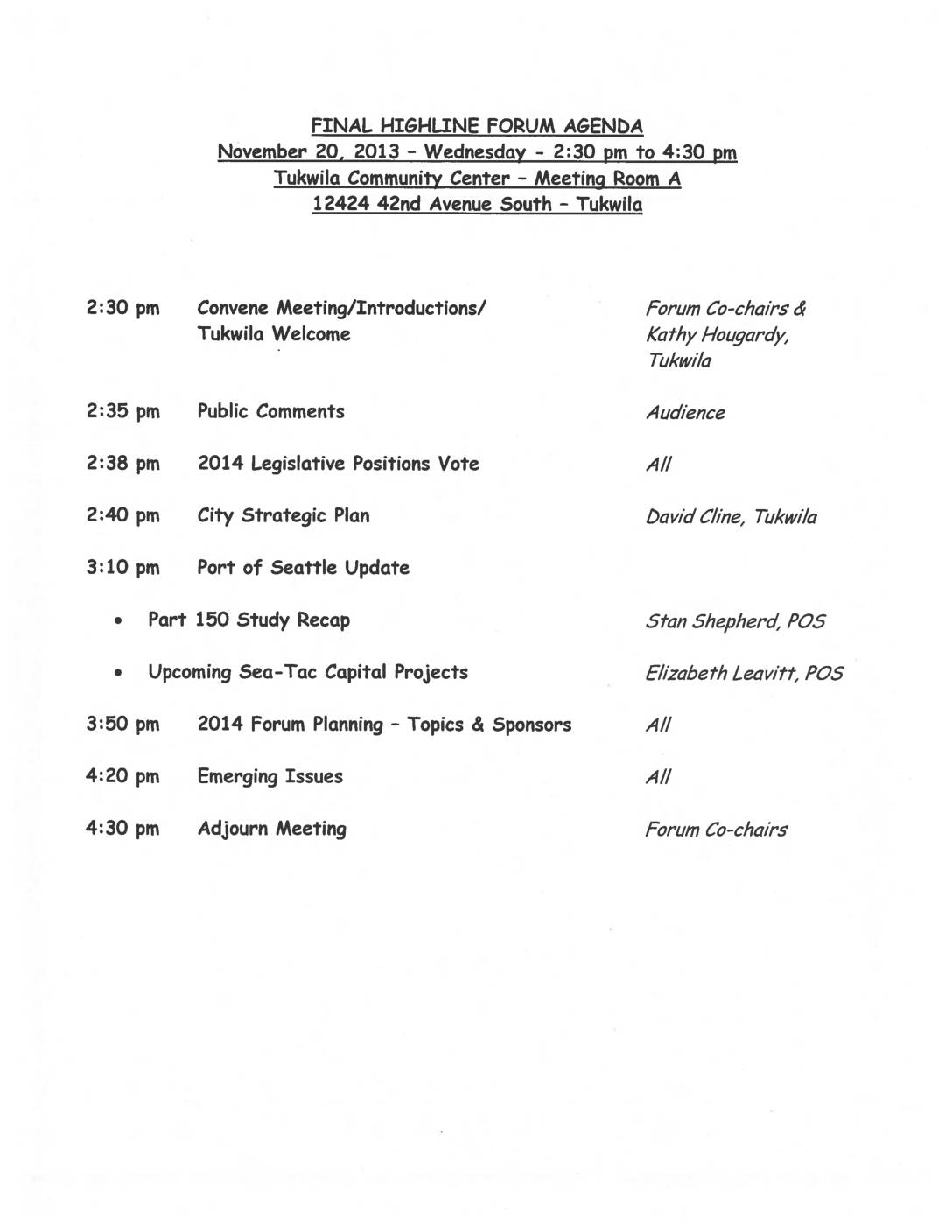
Highline Forum Agenda: November 20, 2013
The November 20, 2013 Highline Forum meeting, held at the Tukwila Community Center, included a Port of Seattle update featuring a recap of the Part 150 noise study and a review of upcoming Sea-Tac Airport capital projects, presented by Port of Seattle staff Stan Shepherd and Elizabeth Leavitt. The forum also addressed a vote on 2014 SW King County legislative positions, which included a new position related to port cooperation, and planning for the following year's meeting schedule and topics. Guidance provided to co-chairs ahead of the meeting outlined procedures for managing the legislative vote and organizing 2014 forum hosting responsibilities among member jurisdictions. -
 2013-11-19
Seattle-Tacoma International Airport Noise Programs
Seattle-Tacoma International Airport operates several noise programs aimed at reducing the impact of aircraft noise on surrounding communities, including sound insulation, flight track monitoring, and community land-use planning. A key component is the Part 150 Noise Study, which makes the airport eligible for federal grants and focuses on areas within the 65 decibel Day Night Level (DNL) contour, without imposing flight restrictions or shifting noise to other neighborhoods. The program also includes an updated Noise Remedy Boundary that has been expanded beyond the previous boundary to better reflect projected future noise contours around the airport. -
 2013-10-23
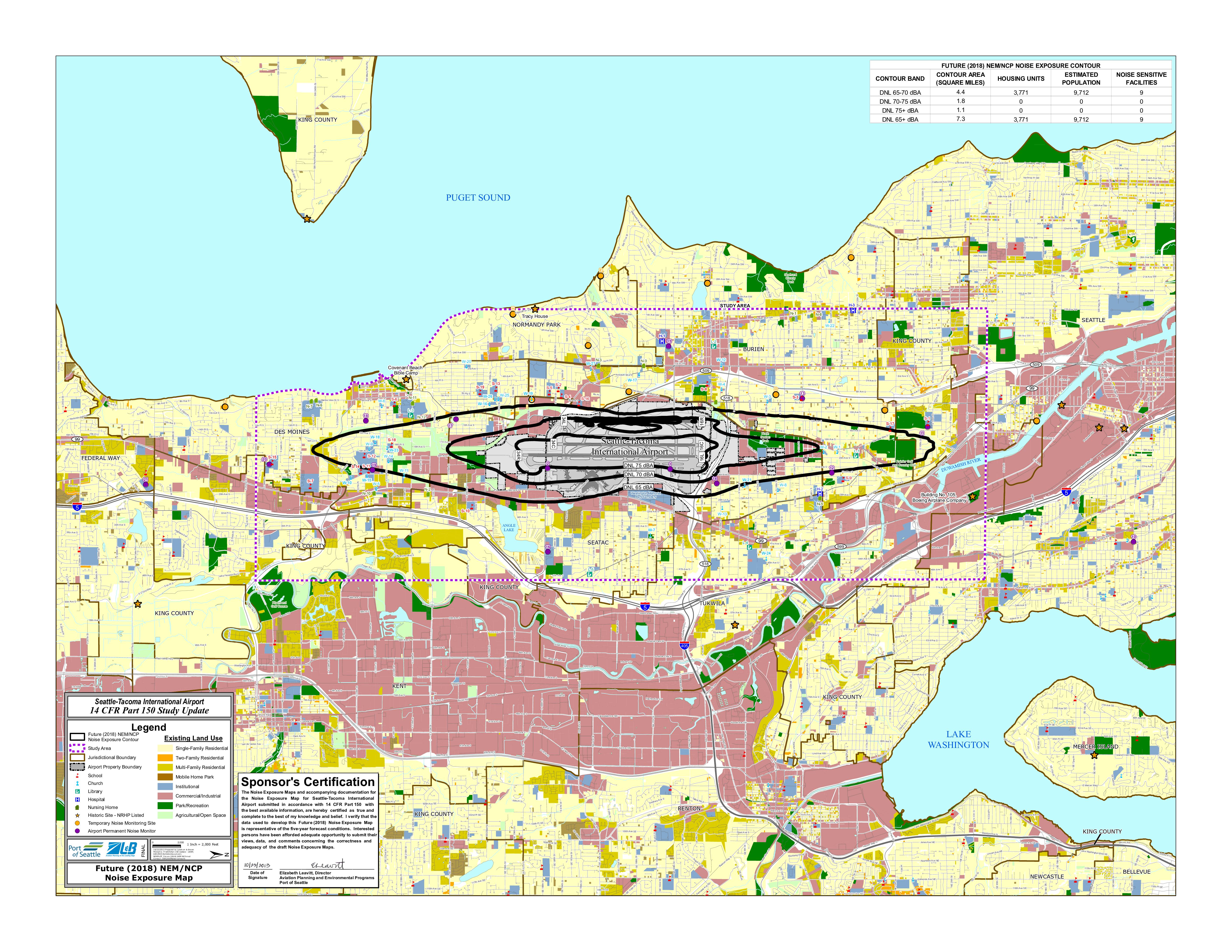
Future (2018) NEM/NCP Noise Exposure Map: Seattle-Tacoma International Airport 14 CFR Part 150 Study Update
This map, prepared by Landrum & Brown for the Port of Seattle's 14 CFR Part 150 Study Update, shows projected aircraft noise exposure around Seattle-Tacoma International Airport for the year 2018. It illustrates three noise contour zones (DNL 65, 70, and 75 dBA), with the total area above DNL 65 dBA covering approximately 7.3 square miles and affecting an estimated 3,771 housing units and 9,712 residents. The map also identifies noise-sensitive land uses such as schools, churches, hospitals, and libraries within the affected area, and was certified by the Port of Seattle's Director of Aviation Planning and Environmental Programs.