TagFAA(687)
-
 2024-02-22
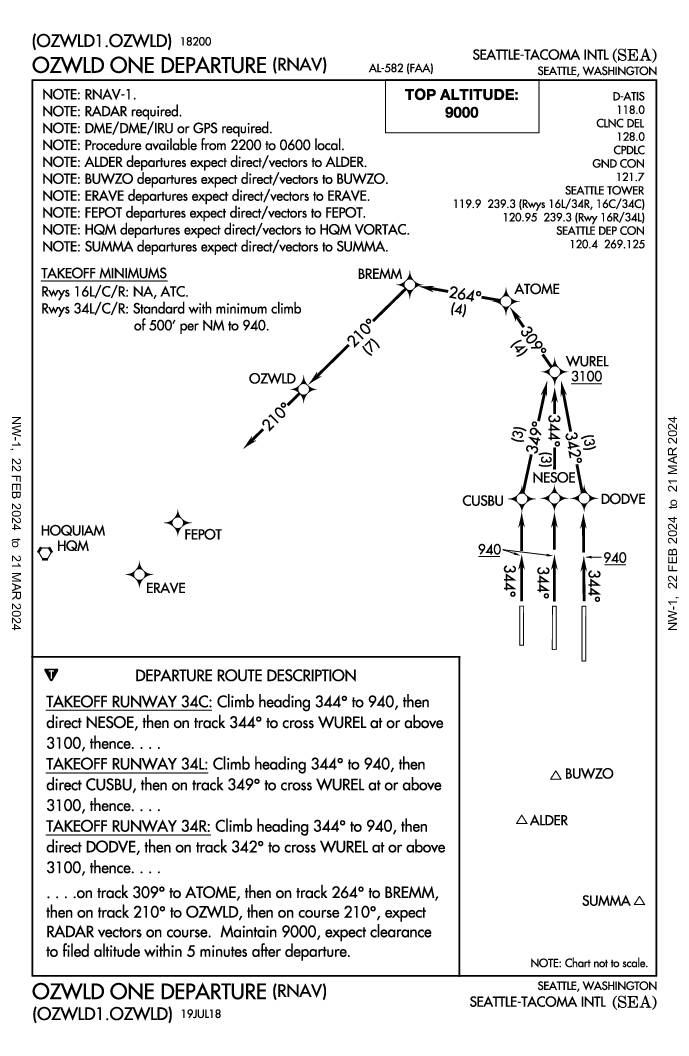
OZWLD One Departure (RNAV): Seattle-Tacoma International Airport Standard Instrument Departure Chart
The OZWLD One Departure (RNAV) is an instrument departure procedure for Seattle-Tacoma International Airport (SEA) that routes aircraft departing from runways 34L, 34C, and 34R northwestward through a series of waypoints—including NESOE, CUSBU, DODVE, WUREL, ATOME, BREMM, and OZWLD—before continuing on course. The procedure is only available between 2200 and 0600 local time, a restriction that reflects noise-mitigation efforts limiting certain departure routes to overnight hours. Aircraft must maintain a minimum climb gradient of 500 feet per nautical mile to 940 feet, cross WUREL at or above 3,100 feet, and maintain 9,000 feet until cleared to their filed altitude. -
 2024-02-22
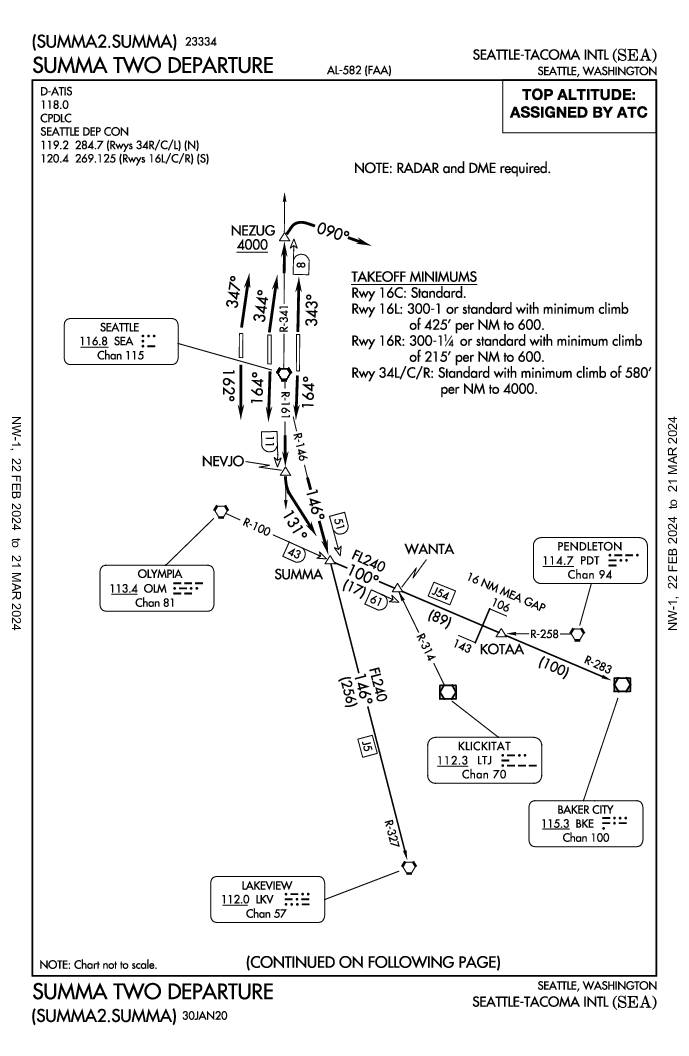
SUMMA Two Departure (SUMMA2.SUMMA) — Seattle-Tacoma International Airport Standard Instrument Departure
The SUMMA TWO Departure (SUMMA2.SUMMA) is a standard instrument departure procedure for Seattle-Tacoma International Airport (SEA) in Seattle, Washington, requiring both RADAR and DME equipment. Aircraft departing on runways 16L, 16C, 16R, 34L, 34C, and 34R follow specific headings and VOR radials through waypoints NEVJO, NEZUG, and SUMMA intersection before proceeding on assigned transitions toward destinations such as Baker City or Lakeview. Takeoff minimums vary by runway, with some requiring minimum climb gradients of up to 580 feet per nautical mile, and top altitude is assigned by ATC up to FL240. -
 2024-02-16
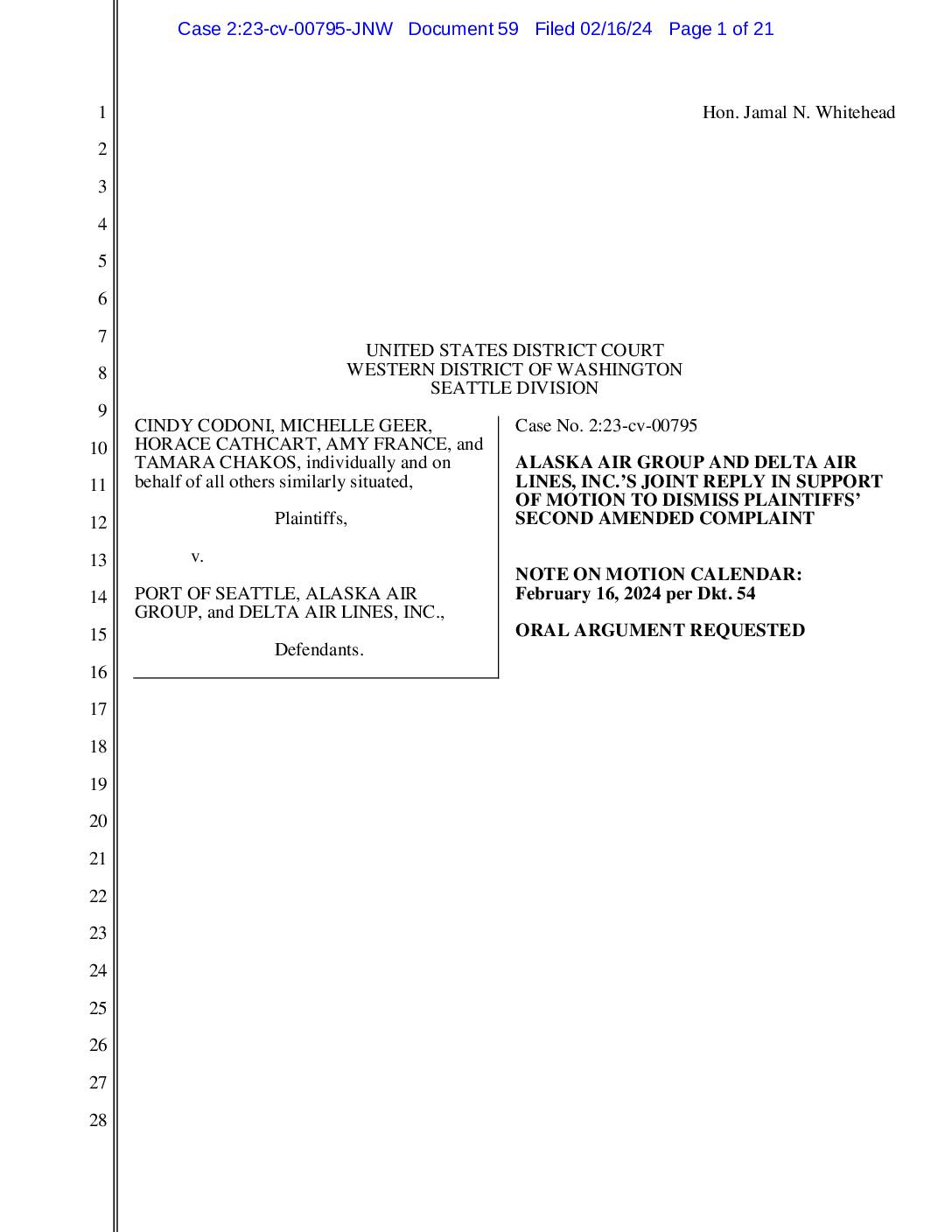
Alaska Air Group and Delta Air Lines, Inc.’s Joint Reply in Support of Motion to Dismiss Plaintiffs’ Second Amended Complaint
Alaska Air Group and Delta Air Lines filed a joint reply in federal court seeking dismissal of a class-action lawsuit brought by Seattle-area residents over noise and air quality impacts from flights at Seattle-Tacoma International Airport. The airlines argue that federal law—including the Airline Deregulation Act and the Clean Air Act—preempts the plaintiffs' state-law claims, leaving no room for local or state courts to regulate airline flight operations. The case, heard in the U.S. District Court for the Western District of Washington, centers on whether residents can use state law to challenge airline service to Sea-Tac Airport. -
 2024-02-14
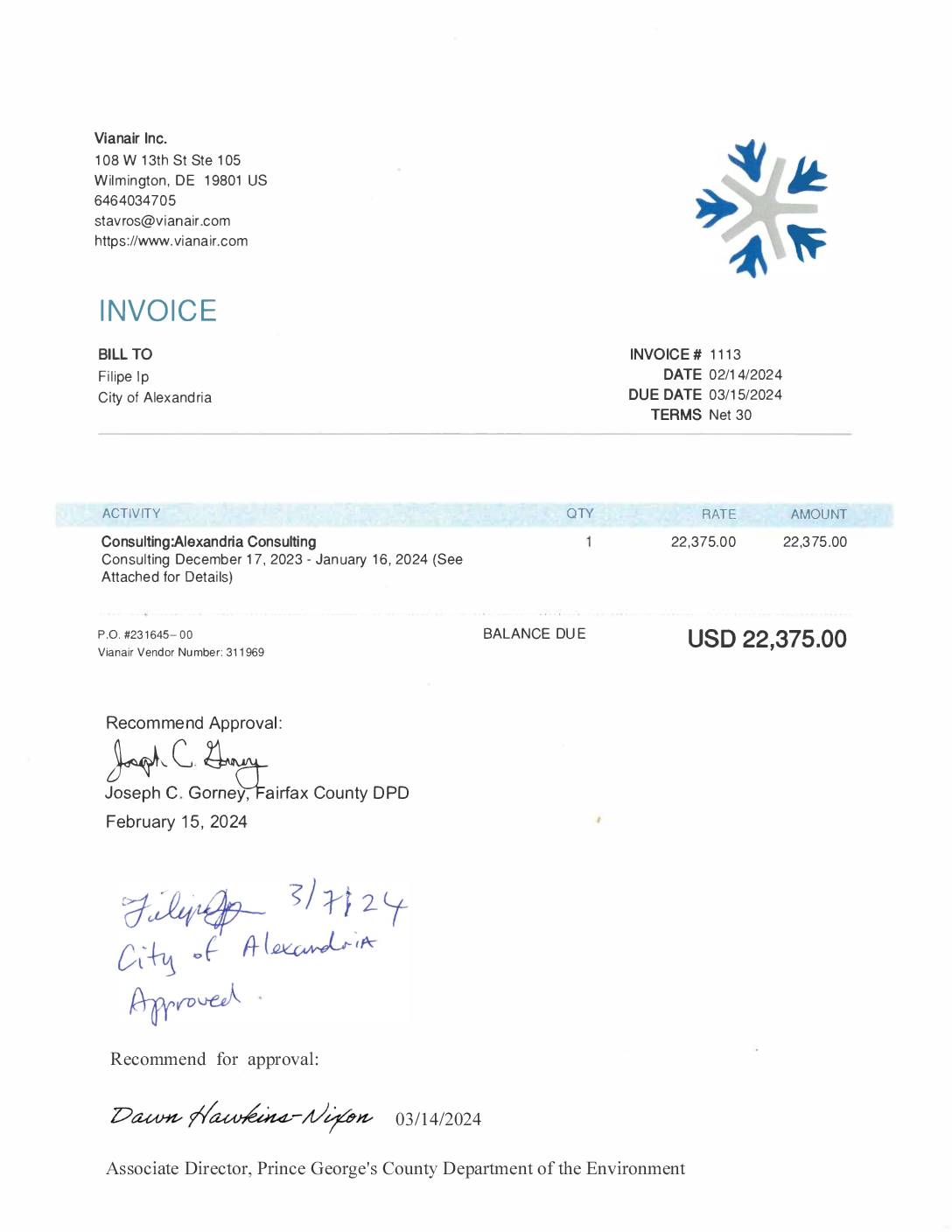
Invoice #1113 – Alexandria consulting services, December 17, 2023 – January 16, 2024
This document is an invoice and monthly status report from Vianair Inc. to the City of Alexandria for consulting services performed between December 17, 2023 and January 16, 2024, totaling $22,375. The work included flight procedure design, SID/STAR analysis, website development, DCA noise report preparation, and software analysis services performed by consultants Jim, Jason, and Garry. The invoice was approved by representatives from Fairfax County DPD and Prince George's County Department of the Environment. -
 2024-02-12
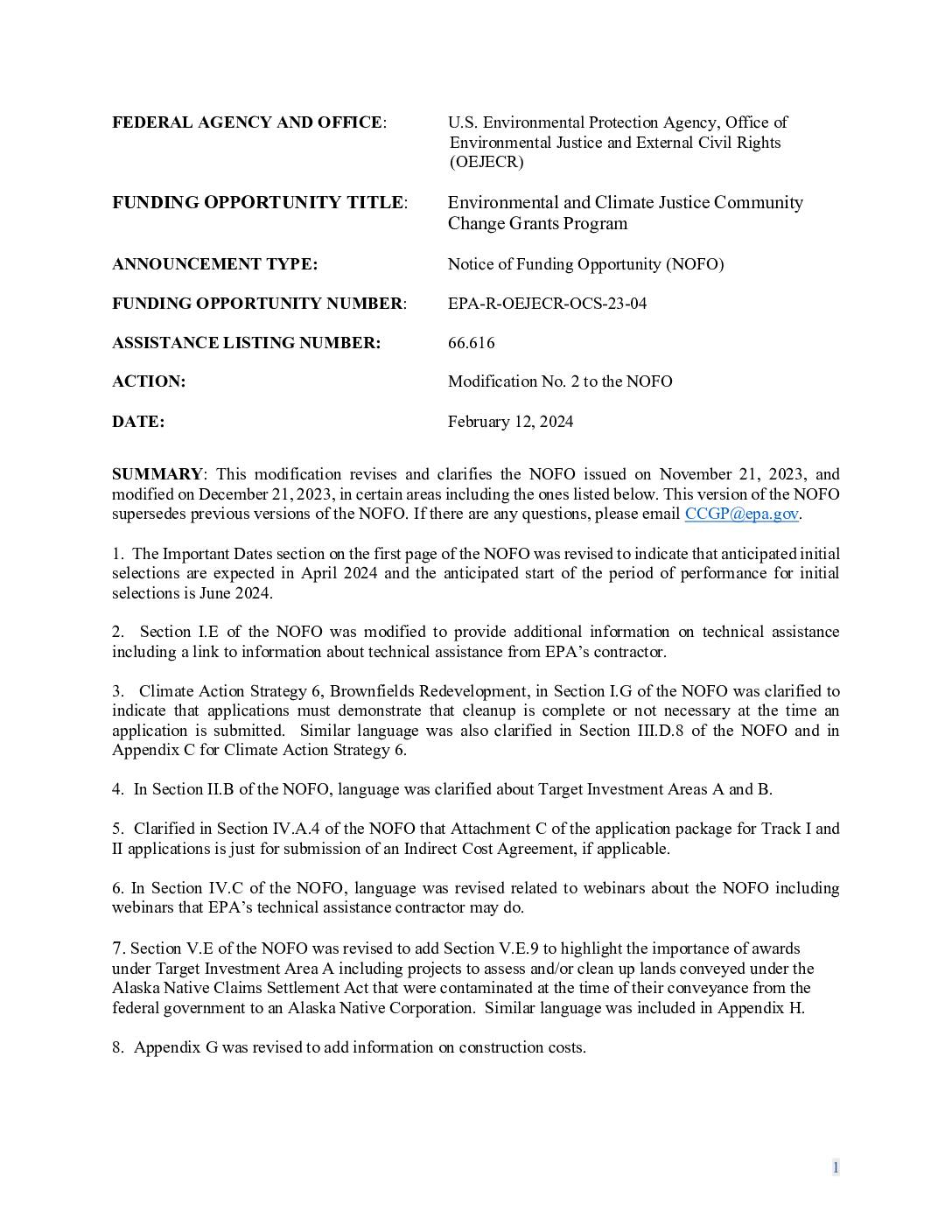
Environmental and Climate Justice Community Change Grants Program: Notice of Funding Opportunity (Modification No. 2)
This document is a federal funding opportunity from the U.S. Environmental Protection Agency (EPA) offering grants through the Environmental and Climate Justice Community Change Grants Program, with applications accepted on a rolling basis until November 21, 2024. It outlines eligibility requirements, funding tracks, and application procedures for communities seeking support for environmental and climate justice projects. Note: This document does not appear to be directly related to Sea-Tac Airport noise policy. -
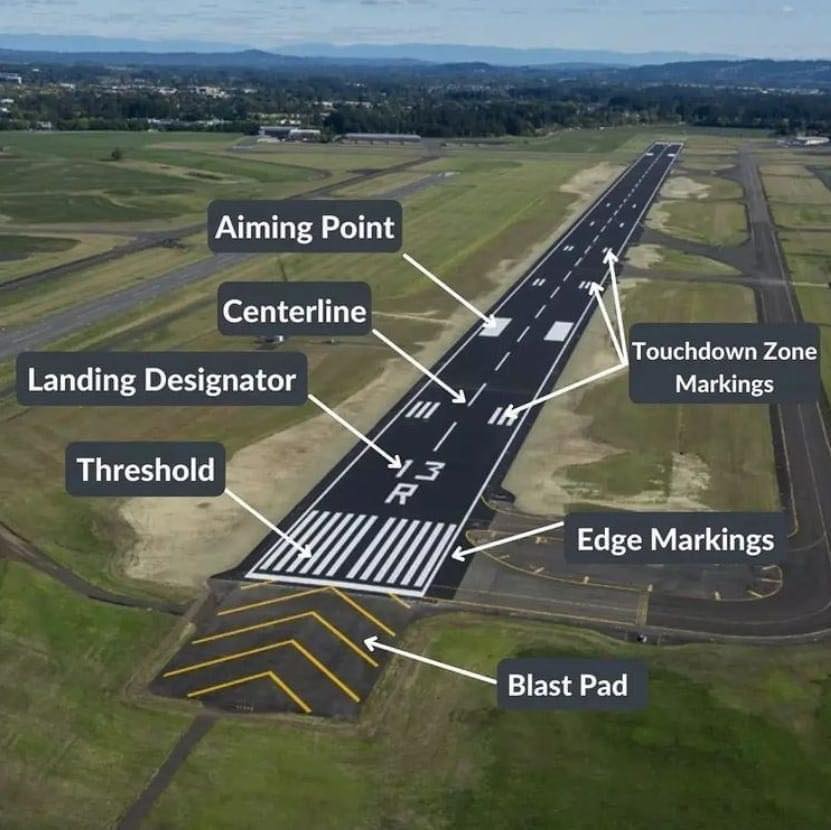
Runway Diagram
Aerial photograph of an airport runway with labeled markings including Threshold, Centerline, Aiming Point, Landing Designator, Touchdown Zone Markings, Edge Markings, and Blast Pad. The runway designator visible is '13R', but the specific airport is not confirmed from visible text alone. -
 2024-01-17
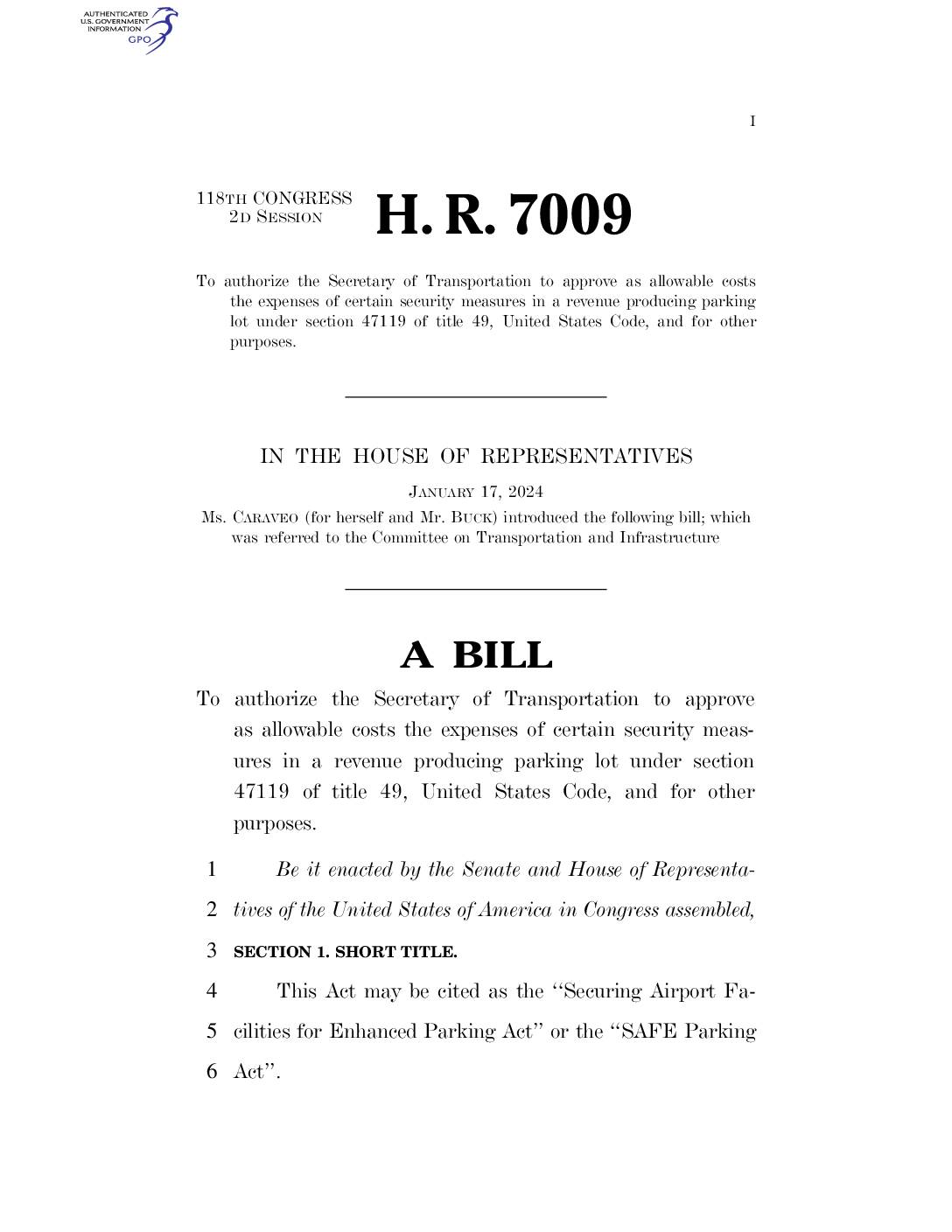
H.R. 7009 – Securing Airport Facilities for Enhanced Parking Act (SAFE Parking Act)
H.R. 7009, the SAFE Parking Act, is a bill introduced in January 2024 that would allow the U.S. Secretary of Transportation to approve federal funding for security improvements in airport revenue-generating parking lots, including CCTV systems, physical barriers, alarm systems, and crime-tracking analytical tools. The authority granted under the bill would expire on December 31, 2025, at which point the Comptroller General would be required to submit a report to Congress on how the funds were used and recommendations for updating the broader airport improvement program. -
Boeing is under fire after Alaska Airlines MAX 9 blowout. So is the FAA
By Lauren Rosenblatt Seattle Times staff reporter Nearly a week after a panel blew off an Alaska Airlines 737 MAX 9 aircraft midflight, lawmakers and federal regulators are starting to look to the Boeing plane’s troubled history to understand what happened — and what didn’t. On Thursday, fingers started pointing. The Federal Aviation Administration announced -
 2024-01-01
LaGuardia Airport Fly Quiet Program Annual Report 2024
The Port Authority of New York and New Jersey's 2024 Fly Quiet Program Annual Report for LaGuardia Airport outlines a voluntary initiative encouraging airlines to reduce noise by flying quieter aircraft and following noise abatement procedures. Airlines are scored on a 100-point scale, with half the points based on fleet noise quality—using FAA aircraft noise stage ratings from Stage 3 (loudest) to Stage 5 Plus (quietest)—and half based on community engagement and pilot training efforts. The program was developed through collaboration with airlines, the FAA, and the public to address the unique challenges of the busy New York/New Jersey airspace. -
 2023-12-21
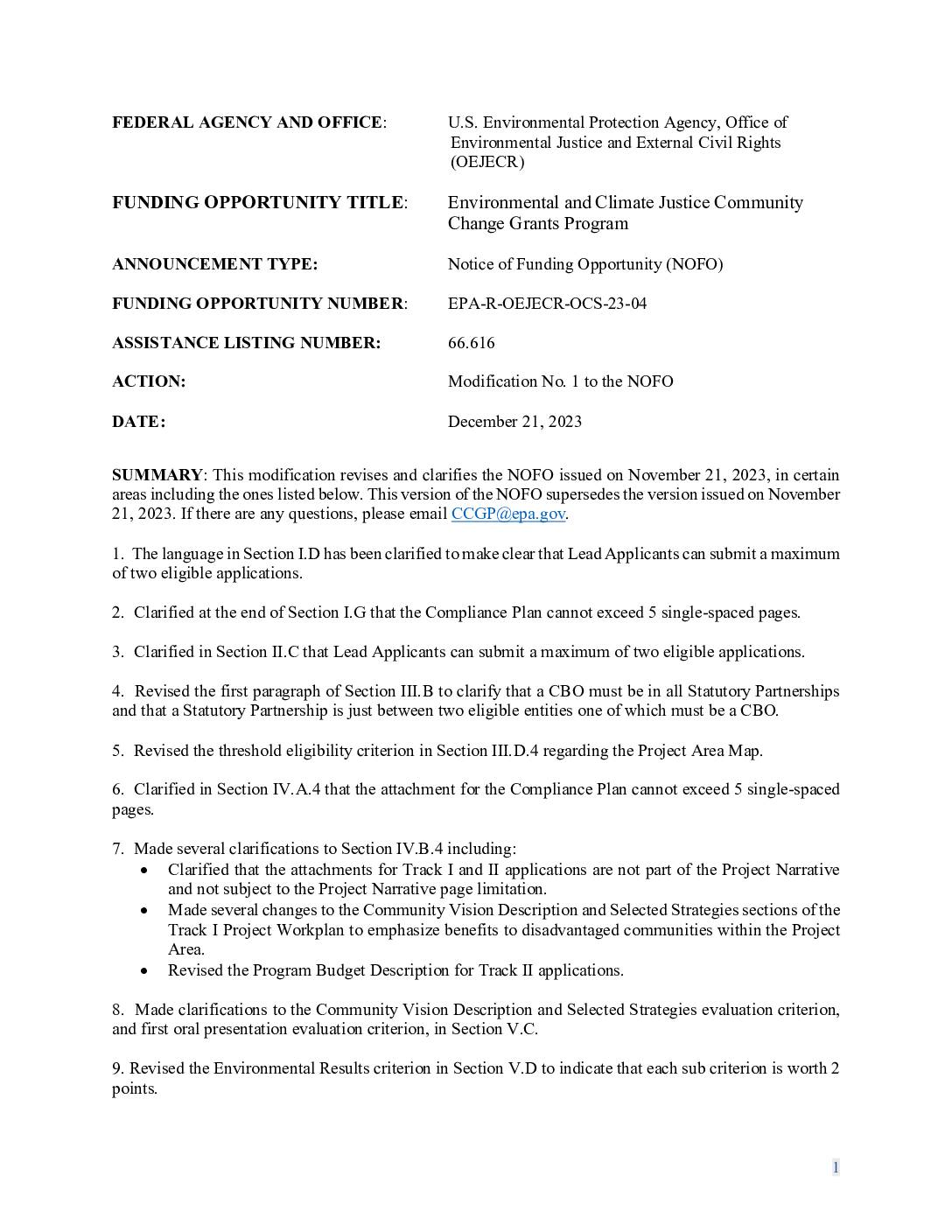
Environmental and Climate Justice Community Change Grants Program: Notice of Funding Opportunity modification No. 1
This document is a modification to a U.S. EPA funding opportunity notice for the Environmental and Climate Justice Community Change Grants Program, issued December 21, 2023. It updates application rules, eligibility requirements, and evaluation criteria for community organizations seeking environmental and climate justice grants. Note: this document does not appear to be directly related to Sea-Tac Airport noise policy.