TagFAA(687)
-
 2024-05-06
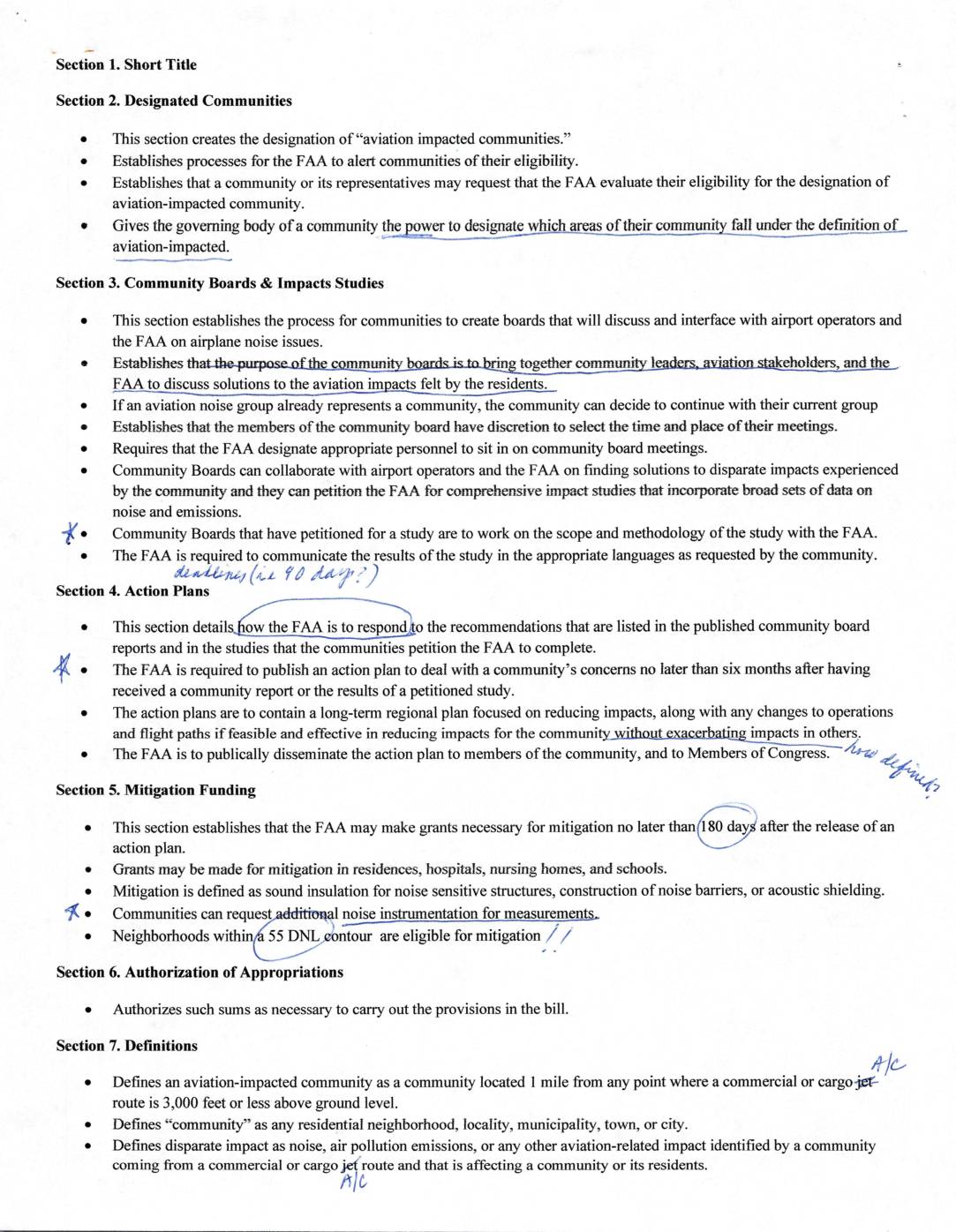
Airport impacted communities act summary
This legislative summary outlines a proposed bill to protect communities near busy flight routes from aviation noise and pollution. It establishes a process for the FAA to designate 'aviation-impacted communities' located within one mile of low-altitude commercial or cargo flight paths, create local community boards to engage with the FAA and airport operators, and develop action plans and mitigation funding for affected residents. Key provisions include grants for sound insulation and noise barriers, eligibility for neighborhoods within a 55 DNL contour, and requirements for the FAA to respond to community concerns within set deadlines. -
 2024-05-06
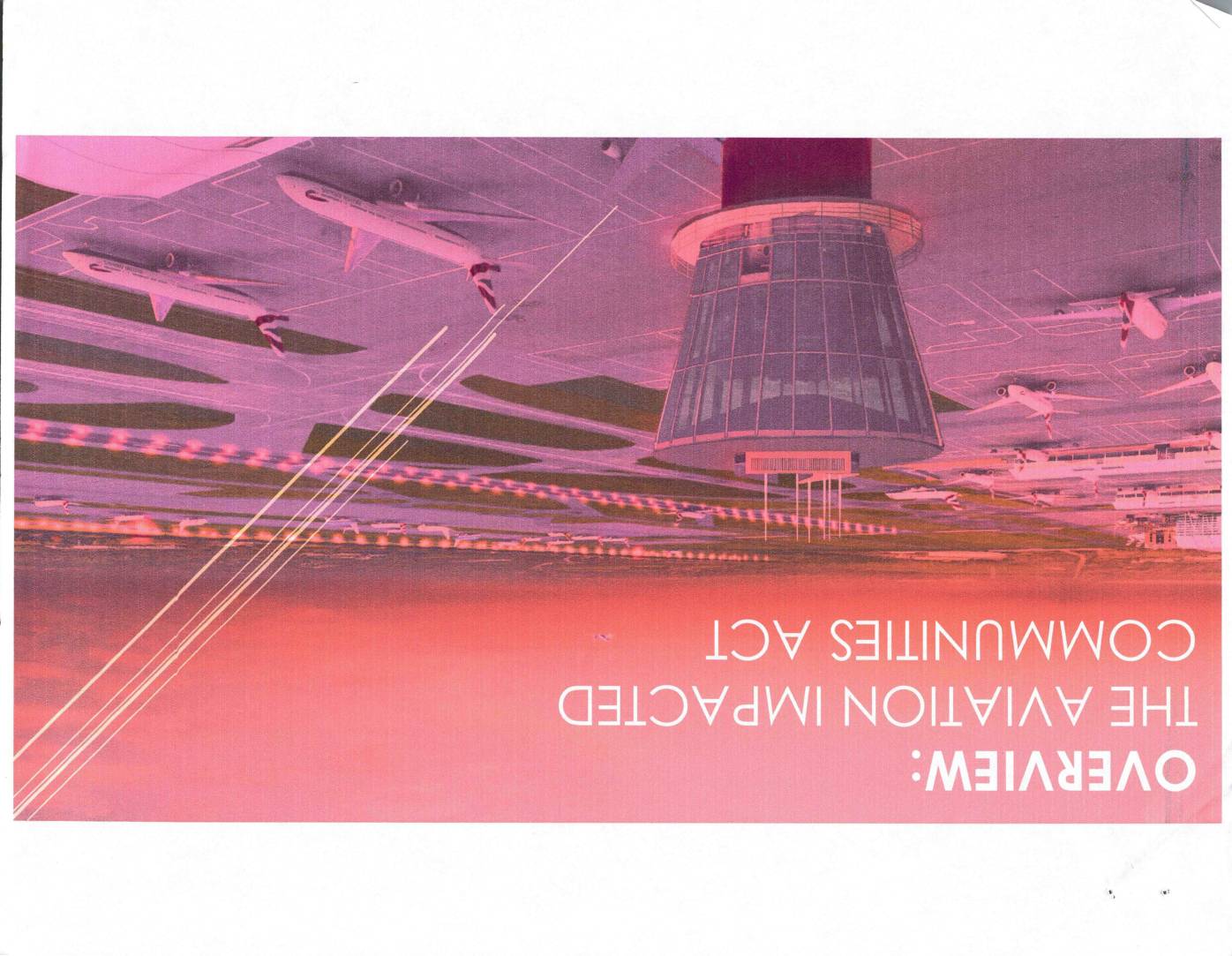
Overview: The Aviation Impacted Communities Act
This document provides an overview of the Aviation Impacted Communities Act, which establishes a formal process for communities affected by airport noise and flight paths. The process begins with the FAA notifying eligible communities of their 'designated community' status, then proceeds through board formation, meetings, studies, action plans, and ultimately grants for mitigation funds. A community qualifies as 'aviation impacted' if it is located no more than one mile from any commercial or cargo jet route at 3,000 feet or less above ground level. -
 2024-05-06
State governance of special purpose districts (ports) and FAA preeminence
This presentation, prepared for the City of Burien Airport Committee, examines the governance structure of Washington State's special purpose port districts and the FAA's preeminent authority over airport operations. It explains that port districts, enabled by state law since 1911 and governed by directly elected commissioners, hold broad powers including management of airports, while federal FAA regulations take precedence over local planning decisions. The document also touches on noise control considerations relevant to communities near Sea-Tac Airport, referencing state and federal regulatory frameworks. -
 2024-04-30
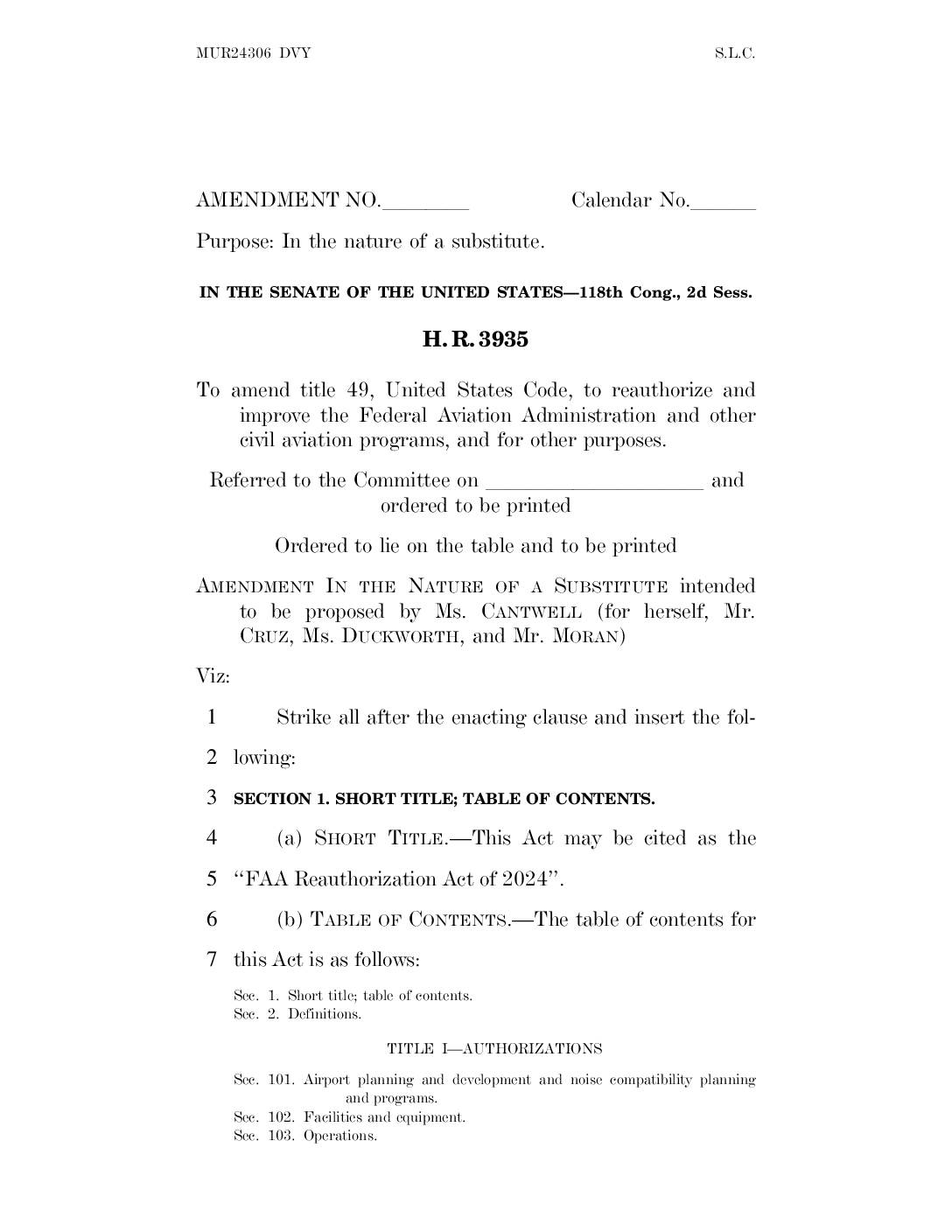
FAA Reauthorization Act of 2024
The FAA Reauthorization Act of 2024 (H.R. 3935) is a comprehensive Senate bill proposing to reauthorize and reform the Federal Aviation Administration and civil aviation programs. It covers a wide range of topics including airport planning and noise compatibility programs, FAA organizational oversight, and numerous aviation safety improvements. Of particular relevance to airport communities, the bill includes provisions addressing noise compatibility planning, airspace modernization, and safety standards that may affect operations at airports like Sea-Tac. -
 2024-04-29
FAA Reauthorization Act Bipartisan Bicameral Legislative Logo
A stylized logo depicting the U.S. Capitol dome inside a illuminated lightbulb, rendered in gold/yellow on a dark background. This appears to be an organizational or policy-related emblem, possibly associated with a legislative or policy research group. -
 2024-04-29
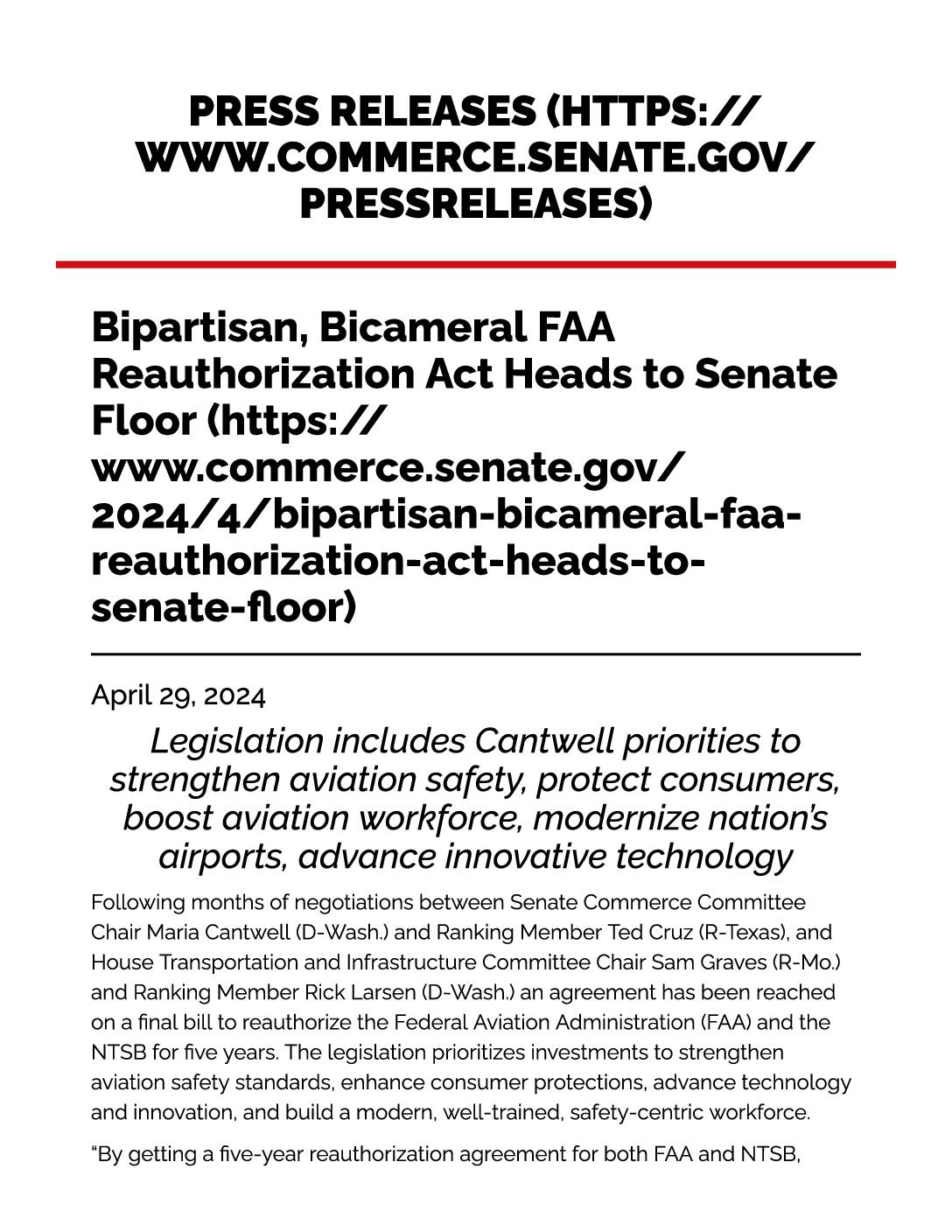
Bipartisan, bicameral FAA Reauthorization Act heads to Senate floor
The FAA Reauthorization Act of 2024, a bipartisan bill announced on April 29, 2024, authorizes more than $105 billion for the Federal Aviation Administration through 2028 to strengthen aviation safety, modernize airports, and protect consumers. Key provisions include mandating 25-hour cockpit voice recorders, reducing runway close calls through new tracking technology, and enhancing aircraft certification oversight. The legislation also sets new consumer rights, including guaranteed refunds for flights cancelled or delayed more than three hours. -
 2024-04-05
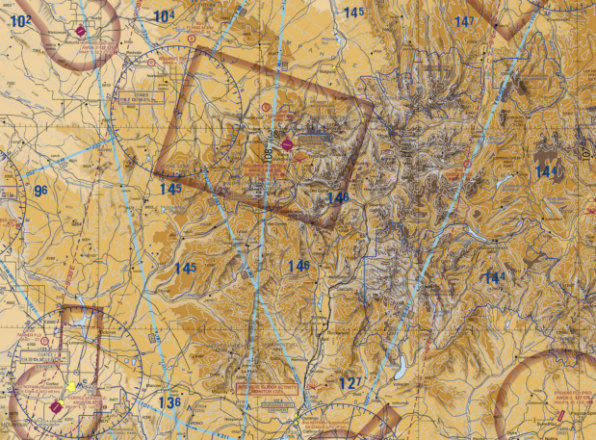
Deciphering the FAA’s wildly complex aviation maps
Among all of the visual information published by the U.S. government, there may be no product with a higher information density than the Federal Aviation Administration’s (FAA) aviation maps. Intended for pilots, the FAA publishes free detailed maps of the entire U.S. airspace, and detailed maps of airports and their surroundings and updates them frequently. The density -
 2024-02-22
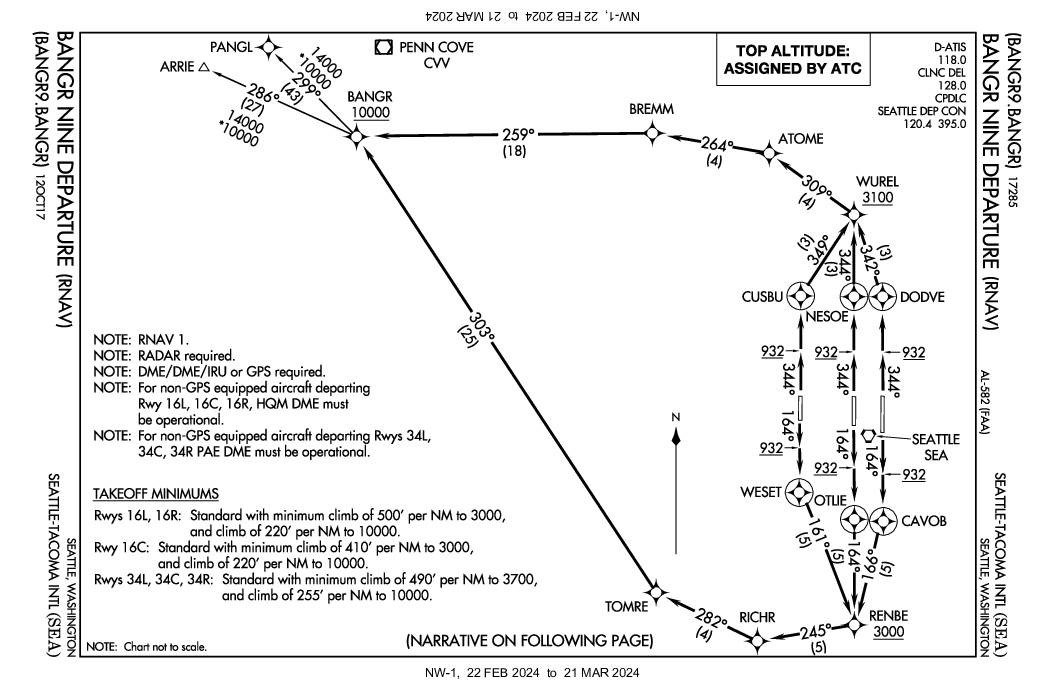
BANGR Nine Departure (RNAV) — Seattle-Tacoma International Airport (SEA)
The BANGR Nine Departure is a standardized instrument departure procedure (SID) for pilots flying out of Seattle-Tacoma International Airport (SEA), directing aircraft on specific headings and altitudes depending on which runway they use. Aircraft departing on northbound runways (34L, 34C, 34R) climb to at least 932 feet before routing through waypoints like CUSBU, NESOE, or DODVE, crossing WUREL at or above 3,100 feet, while southbound runway departures (16L, 16C, 16R) follow similar climb profiles through waypoints like CAVOB, OTLIE, or WESET, crossing RENBE at or above 3,000 feet. All routes converge at the BANGR waypoint, which must be crossed at or above 10,000 feet, with specific minimum climb gradients established to manage aircraft noise and terrain clearance in the surrounding communities. -
 2024-02-22
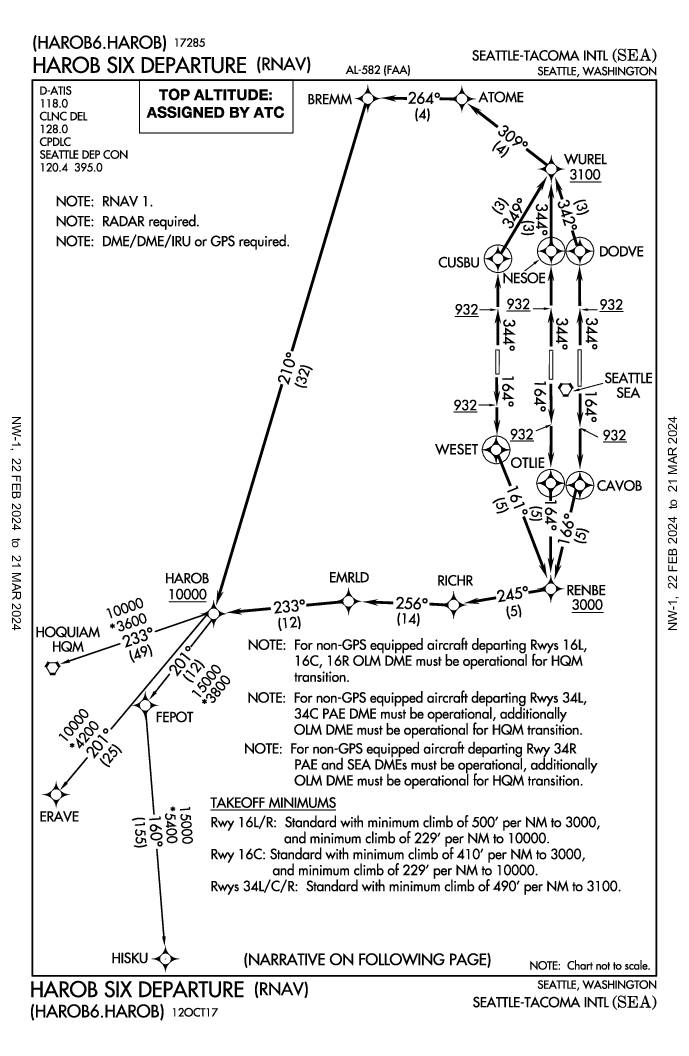
HAROB Six Departure (RNAV) — Seattle-Tacoma International Airport Standard Instrument Departure
The HAROB Six Departure (RNAV) is a standard instrument departure procedure for Seattle-Tacoma International Airport (SEA) that defines specific climbing routes and altitude requirements for aircraft departing on runways 16L, 16C, 16R, 34L, 34C, and 34R. Aircraft must follow prescribed headings, reach minimum altitudes at designated waypoints, and cross the HAROB fix at or above 10,000 feet before proceeding on one of four available transitions toward destinations such as Hoquiam or Hisku. The procedure requires RNAV 1 navigation capability, radar contact, and DME/DME/IRU or GPS equipment, with specific minimum climb gradients designed to manage aircraft noise and obstacle clearance in the Seattle area. -
 2024-02-22
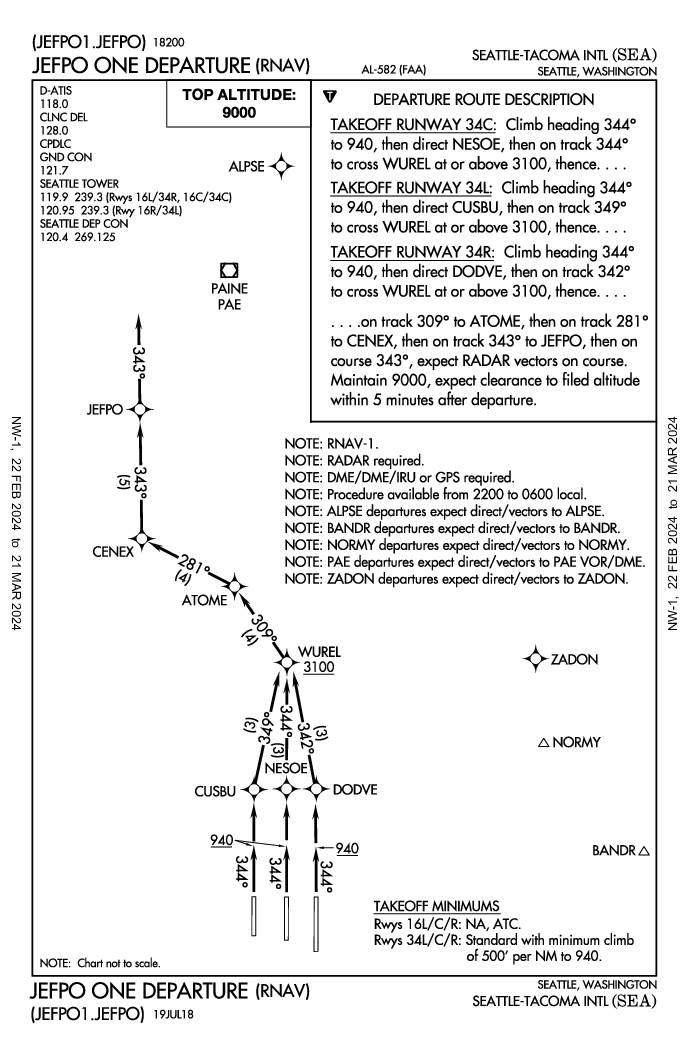
JEFPO One Departure (RNAV) — Seattle-Tacoma International Airport Standard Instrument Departure Procedure
The JEFPO One Departure is an RNAV instrument departure procedure at Seattle-Tacoma International Airport (SEA), available only between 10 PM and 6 AM local time, designed to route departing aircraft northwestward via a series of waypoints toward JEFPO. Aircraft departing runways 34L, 34C, and 34R must climb on a heading of 344° and maintain a minimum climb rate of 500 feet per nautical mile up to 940 feet, then follow specific tracks depending on their runway. Departures from runways 16L, 16C, and 16R are not authorized under this procedure, reflecting noise abatement and air traffic control considerations for the surrounding communities.