TagFAA(687)
-
 2023-12-13
FAA Has Made Progress Verifying Compliance With Aviation Fuel Tax Requirements, but Challenges Remain With Testing and Enforcement
A 2023 federal audit found that the FAA has made progress confirming whether state and local governments comply with rules governing how aviation fuel tax revenue must be used, but has not yet verified that compliant jurisdictions are actually spending those funds on aviation-related purposes. Five jurisdictions remain out of compliance and have not faced enforcement action, largely due to congressional guidance encouraging the FAA to delay penalties. The audit resulted in three recommendations to strengthen FAA oversight and prevent airport revenue from being diverted to non-aviation purposes. -
 2023-12-07
FAA DOT Air Carrier Incentive Program Regs FAA-20220-1204 2023-26809
The FAA issued an updated policy statement in December 2023 governing Air Carrier Incentive Programs (ACIPs), which are programs used by airports to attract new airline service through fee waivers, reduced landing fees, and marketing support. The policy replaces a 2010 guidebook and establishes clearer rules to ensure incentive programs comply with federal grant requirements, including prohibitions on using airport revenue to directly subsidize airlines and requirements for public transparency. While focused on commercial airports nationwide, the policy is relevant to any airport operator seeking to understand the boundaries of legally permissible incentives for attracting or retaining air service. -
 2023-09-28
Comment letter on FAA review of civil aviation noise policy (FAA–2023–0855)
The Port of Seattle and six neighboring cities (SeaTac, Burien, Des Moines, Normandy Park, Tukwila, and Federal Way) submitted comments to the FAA in September 2023, urging updates to federal aviation noise policy in response to growing community concerns around Seattle-Tacoma International Airport. The letter highlights collaborative efforts already underway, including a Fly Quiet Program and Late-Night Noise Limitation Program, which have significantly reduced overnight flight activity on the runway closest to residential areas. The signatories call on the FAA to modernize its noise metrics, lower noise thresholds, and take a broader approach to reducing aircraft noise and emissions rather than simply measuring and disclosing them. -
 2023-09-27
Comments on the FAA’s Noise Policy Review
Written comments submitted by Vashon Island Fair Skies to the FAA regarding noise policy review, focusing on ambient noise considerations and challenges in modeling airframe noise generation for aircraft arrivals. The document criticizes the current DNL metric and discusses technical issues with Sound Exposure Level calculations and airframe noise modeling. -
Senator wants to reroute flights away from Southwest Boise, where he lives
By KEVIN FIXLER McClatchy Washington Bureau WASHINGTON — Twice each decade, Congress approves a bill to fund and set the policies for the federal agency that oversees the nation’s air travel. This year, one airport was singled out in a standalone section marked “miscellaneous” in the Senate version of the Federal Aviation Administration Reauthorization Act. -
Biden nominates a former Obama official to run the Federal Aviation Administration
By DAVID KOENIGThe Associated Press President Joe Biden on Thursday nominated a former Obama administration official to lead the Federal Aviation Administration after his first choice withdrew in March after running into opposition from Republican senators. The White House said Biden nominated Michael G. Whitaker, a former deputy administrator at the FAA. He is currently -
 2023-09-01
Aviation Activity Forecast Update: Seattle-Tacoma International Airport (2023)
This technical memorandum, prepared by Leigh Fisher for the Port of Seattle in September 2023, presents an updated aviation activity forecast for Seattle-Tacoma International Airport. It includes constrained operating growth scenarios, FAA-approved forecast data, and airside simulation modeling documentation used to support environmental review planning at Sea-Tac. -
 2023-09-01
Aviation Activity Forecast Update: Seattle-Tacoma International Airport (2023)
This technical memorandum, prepared by Leigh Fisher for the Port of Seattle in September 2023, presents an updated aviation activity forecast for Seattle-Tacoma International Airport. It includes constrained operating growth scenarios (COGS), FAA approval documentation, and airside modeling data used to support environmental review planning. The forecast serves as a foundational planning tool for understanding future airport capacity and operational assumptions. -
 2023-08-22
F.A.A. density guidelines: North Sea-Tac Park
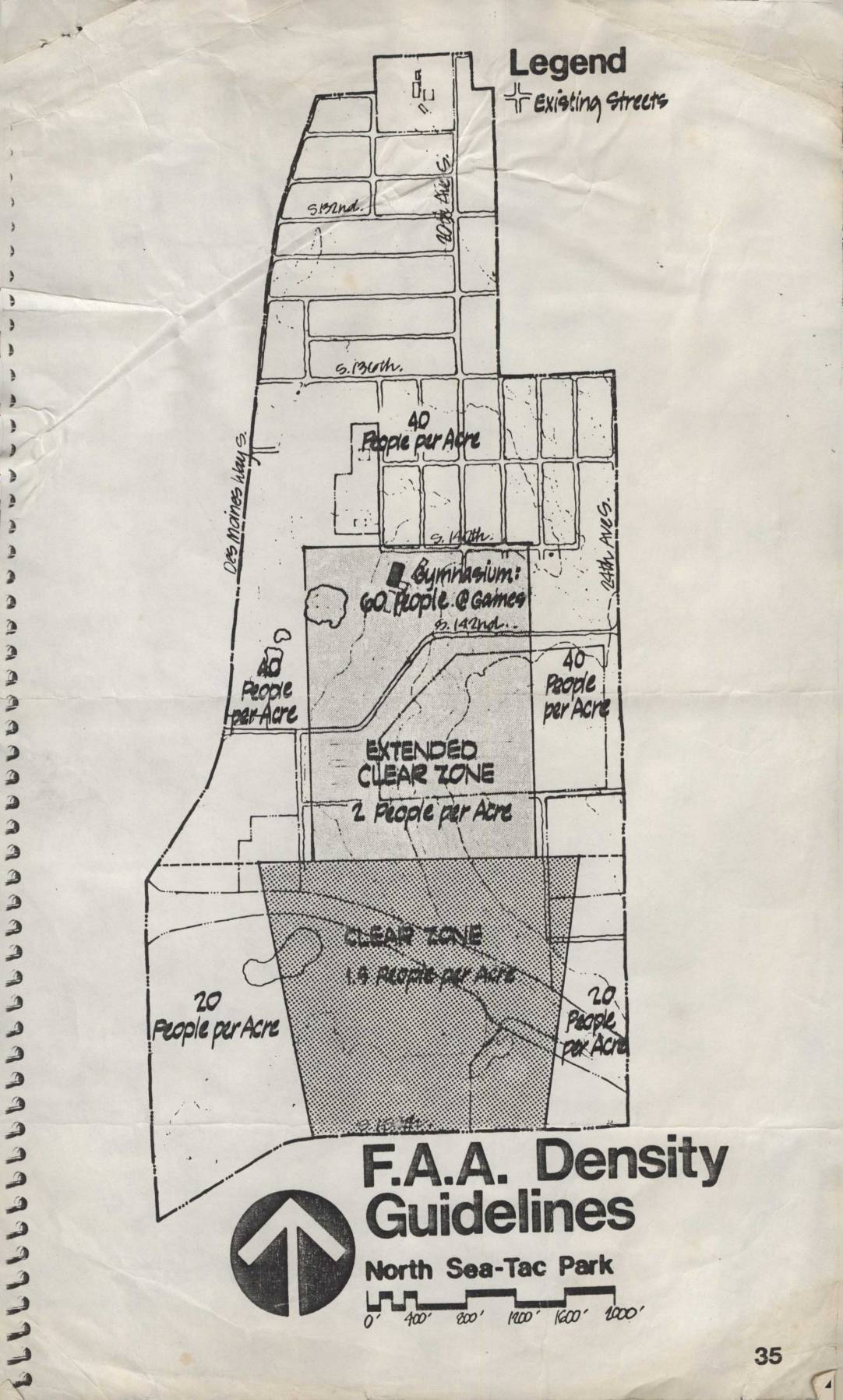
This document presents FAA density guidelines for the North Sea-Tac Park area near Seattle-Tacoma International Airport, showing recommended population limits per acre across different zones. Areas closest to the runway are designated as a 'Clear Zone' allowing only 1.5 people per acre, while an 'Extended Clear Zone' permits 2 people per acre, and surrounding residential areas are limited to 20–40 people per acre. A gymnasium on the map is noted as accommodating 60 people during games, illustrating how the guidelines account for concentrated gatherings near airport flight paths. -
 2023-08-22
Sea-Tac/Communities Plan work program: Project overview and inventory
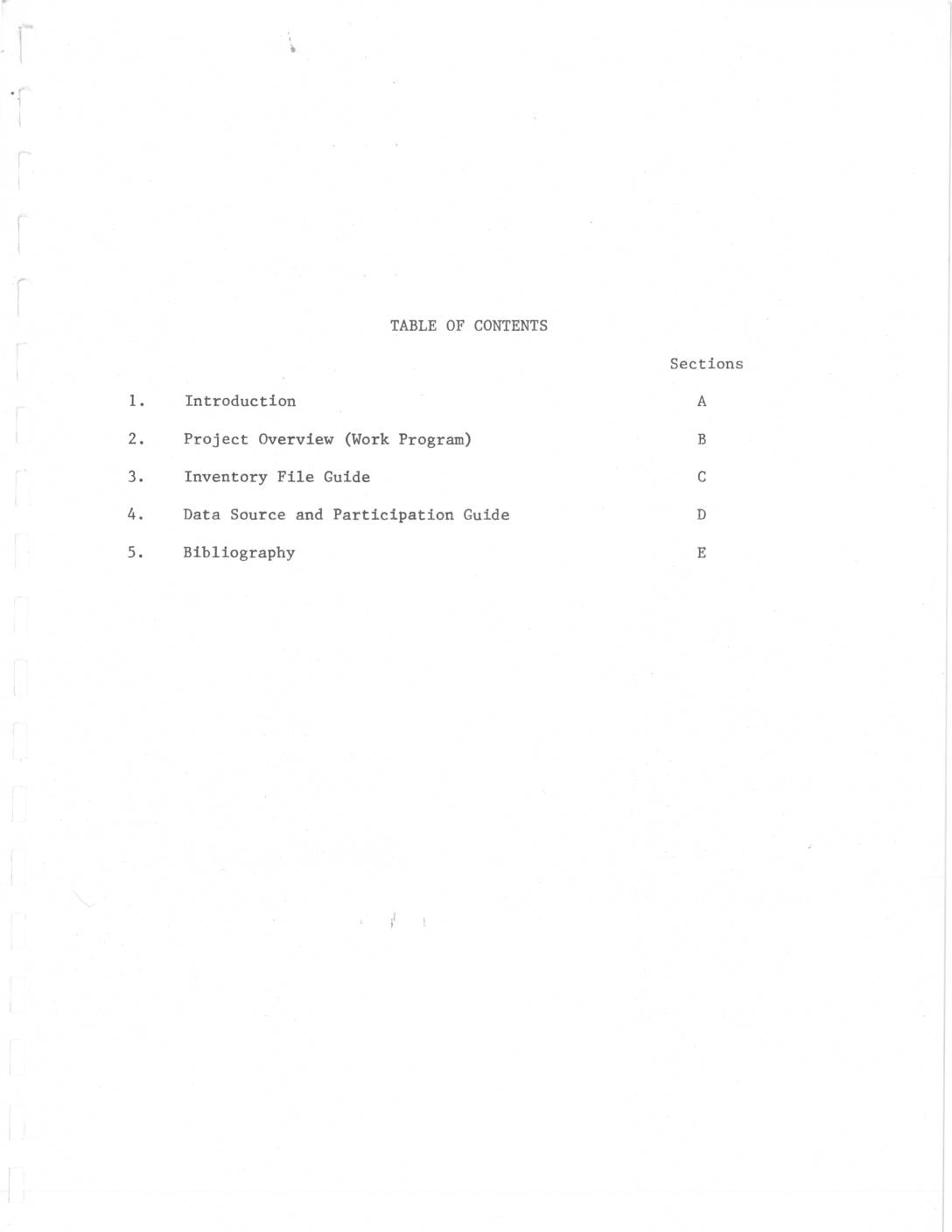
This document outlines the Sea-Tac/Communities Plan, a collaborative airport master planning study conducted by the Port of Seattle and King County with FAA funding, covering environmental, demographic, economic, and land-use impacts of Seattle-Tacoma International Airport on surrounding communities. The $642,000 study, two-thirds funded by a $427,978 FAA planning grant, hired multiple consultants to examine issues including noise exposure, air quality, water quality, and public opinion. The inventory phase aimed to compile comprehensive existing-conditions data within the first six months of the project, starting March 19, 1972.