TagEnvironmental Justice(100)
-
 2020-05-27
South King County Fund update
In November 2018, the Port of Seattle Commission set aside $10 million over five years (2019–2023) to benefit near-airport communities in South King County, with funds intended to address airport noise and support environmental health and sustainability projects. In June 2019, the Commission adopted eight guiding principles to govern the fund, emphasizing community input, equity, innovation, and matching funds where possible. This May 2020 presentation to the Highline Forum provided an update on the fund's progress and priorities. -
 2020-04-01
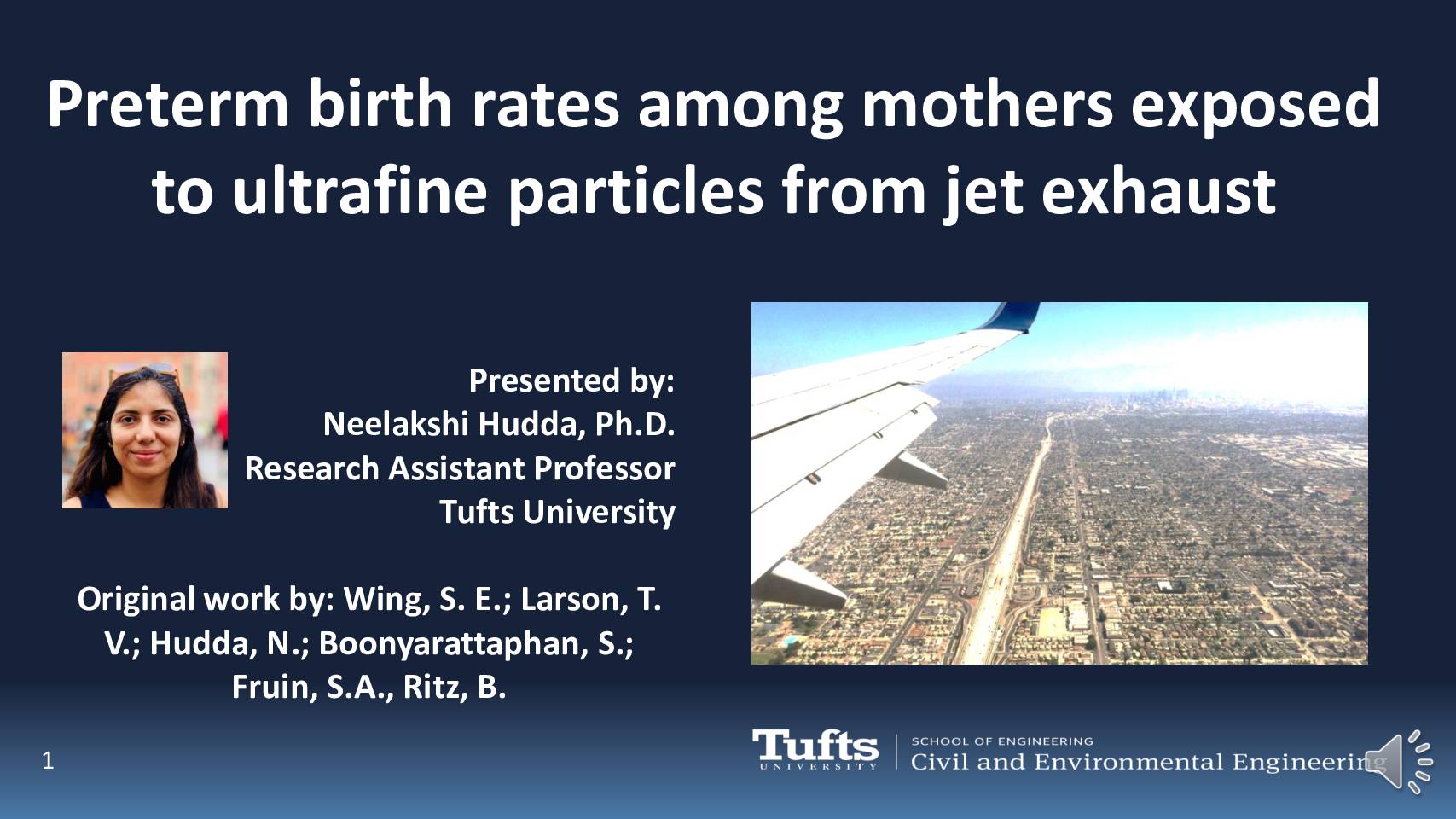
Preterm birth rates among mothers exposed to ultrafine particles from jet exhaust
A peer-reviewed study by researchers from Tufts, UCLA, USC, and the University of Washington found that mothers living near airports and exposed to ultrafine particles from jet exhaust face elevated rates of preterm birth. The research, published in Environmental Health Perspectives in 2020, is particularly relevant to communities near large airports like Sea-Tac, where millions of residents live within the impact zone of aircraft emissions. The findings carry significant environmental justice implications, as near-airport communities with high pollution exposure are often among the most vulnerable populations. -
 2020-01-17
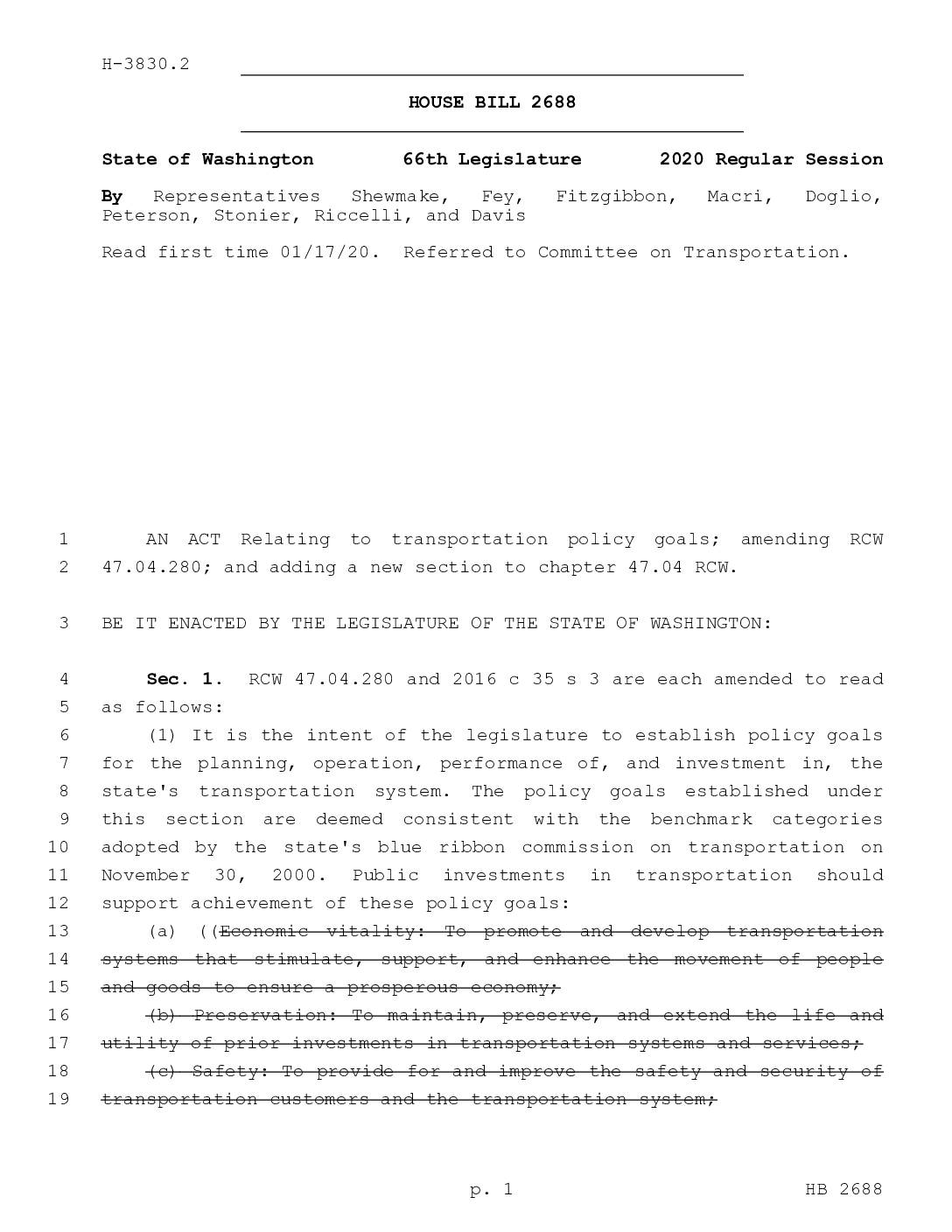
House Bill 2688: Relating to transportation policy goals
Washington House Bill 2688, introduced in the 2020 legislative session, proposes updating the state's transportation policy goals to prioritize accessibility, environmental justice, public health, and climate by replacing older goals focused primarily on economic vitality and mobility. The bill would require transportation projects to undergo a multi-agency evaluation—including input from vulnerable and impacted communities—before receiving budget authorization. Projects that do not meet a minimum score based on the new policy goals would generally be excluded from funding. -
 2019-12-10
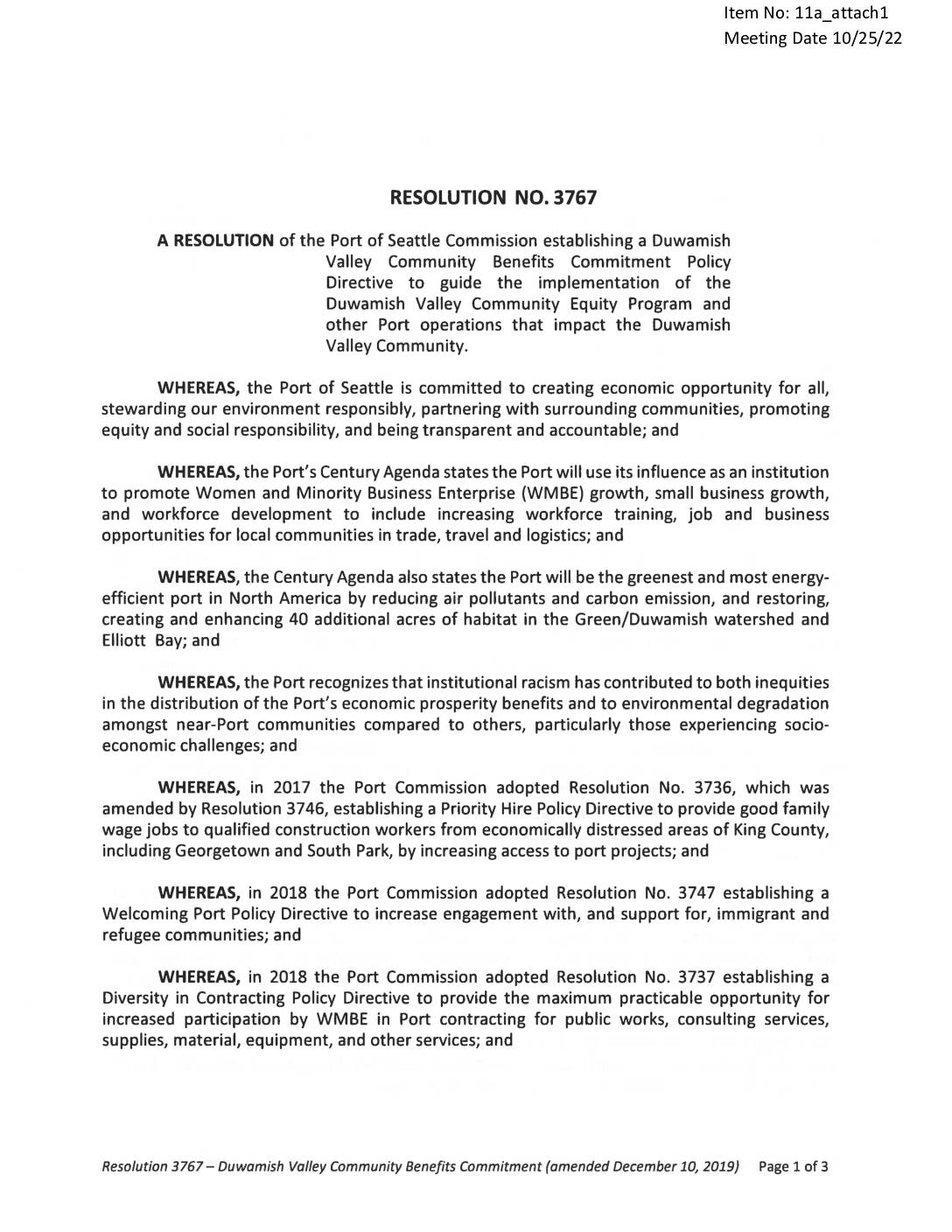
Resolution No. 3767: Duwamish Valley Community Benefits Commitment Policy Directive
Port of Seattle Commission Resolution No. 3767, adopted December 10, 2019 (presented at meeting October 25, 2022), establishing the Duwamish Valley Community Benefits Commitment Policy Directive to guide implementation of the Duwamish Valley Community Equity Program. The resolution references prior resolutions 3736, 3746 (Priority Hire Policy Directive), 3747 (Welcoming Port Policy Directive), and 3737 (Diversity -
2019-12-10
Resolution No. 3767: Duwamish Valley Community Benefits Commitment Policy Directive
Port of Seattle Commission Resolution No. 3767, adopted December 10, 2019 (presented at meeting October 25, 2022), establishing the Duwamish Valley Community Benefits Commitment Policy Directive to guide implementation of the Duwamish Valley Community Equity Program. The resolution references prior resolutions 3736, 3746 (Priority Hire Policy Directive), 3747 (Welcoming Port Policy Directive), and 3737 (Diversity -
 2019-11-07
EPA Region 10 response to Debi Wagner regarding Sea-Tac Airport environmental impacts and SAMP Near-Term Projects
These two letters from 2019 address community concerns about noise and environmental impacts from Seattle-Tacoma International Airport (Sea-Tac). The EPA's Region 10 Regional Administrator responds to a Burien resident, explaining the agency's limited role in the NEPA review process and directing her to engage with the FAA regarding the Sustainable Airport Master Plan (SAMP) Environmental Assessment. Separately, the Port of Seattle's Executive Director responds to Burien's mayor, acknowledging community concerns about aircraft noise and emphasizing the Port's commitment to collaboration through forums such as the Sea-Tac Stakeholder Advisory Round Table (StART). -
 2019-09-23
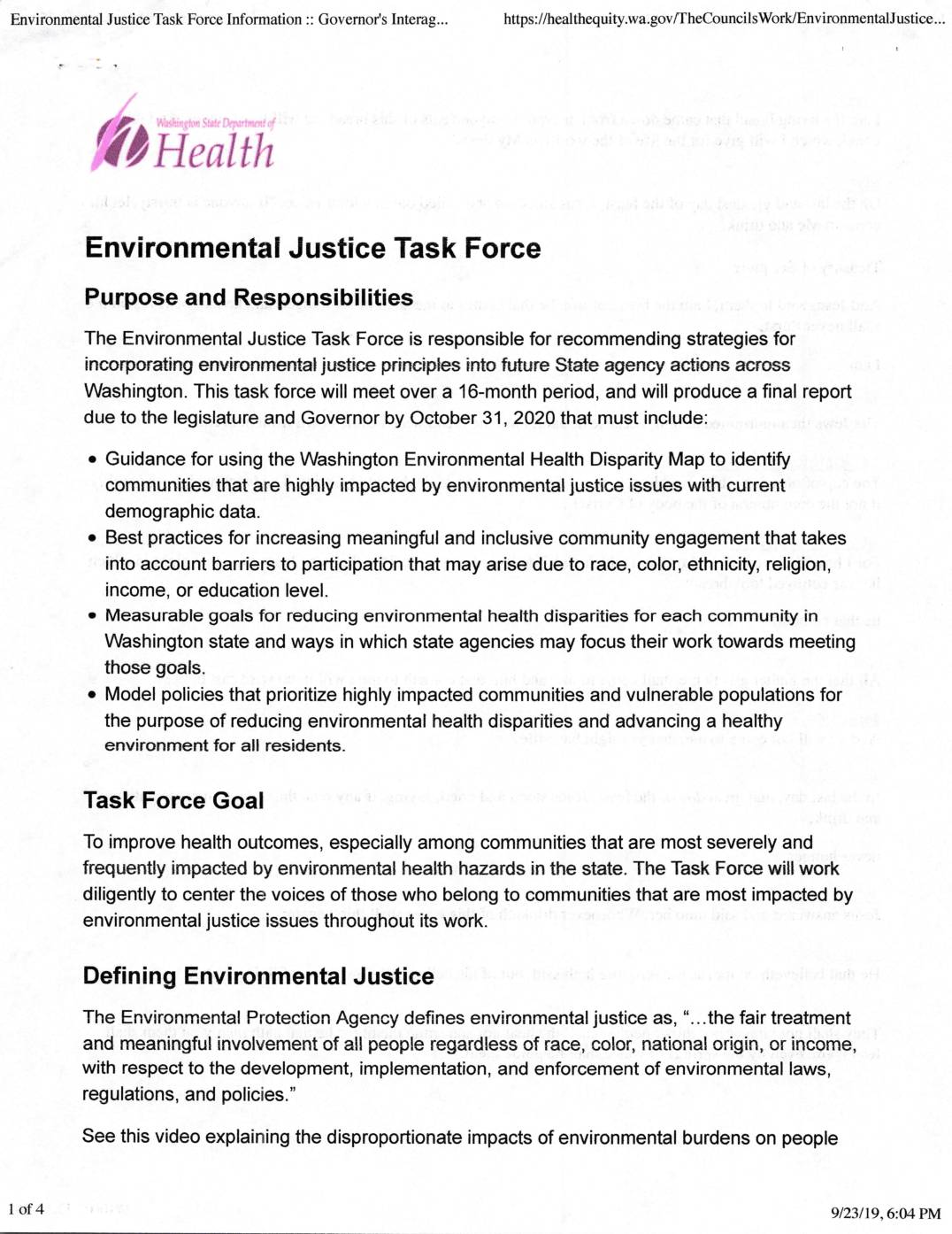
Environmental Justice Task Force information
Washington State's Environmental Justice Task Force, convened by the Governor's Interagency Council on Health Disparities, was established to recommend strategies for reducing environmental health disparities across the state, with a final report due to the legislature and Governor by October 31, 2020. The Task Force focuses on improving health outcomes for communities most severely impacted by environmental hazards, including low-income populations and communities of color. Its work includes developing guidance on community engagement, measurable health disparity goals, and model policies prioritizing vulnerable populations. -
 2019-05-30
SR 509 NEPA Re-evaluation: Traffic, Emissions, and Noise Impacts on Burien and Environmental Justice Communities
A community analysis of the SR 509 highway extension near Sea-Tac Airport warns that the project will significantly increase truck and vehicle traffic through Burien, worsening air quality and noise for nearby residents. Critics argue that neither WSDOT nor the FAA has conducted adequate site-specific or cumulative impact studies, despite actual emissions being nearly three times higher than 1996 projections and the area already being identified as an environmental justice community. The document calls for a comprehensive cumulative analysis of combined highway traffic and airport operations to properly assess public health risks. -
2019-05-30
SR 509 NEPA Re-evaluation: Traffic, Emissions, and Noise Impacts on Burien and Environmental Justice Communities
Analysis citing the WSDOT SR 509 Phase 1 Environmental Re-evaluation (May 2019) comparing 2003 FEIS forecasts of 7,900 vph against re-evaluation forecasts of 4,700 vph on the SR 509 extension between I-5 and 24th Avenue S/28th Avenue S interchange, with tolling assumed. Documents that the 2045 Build condition adds 500–1,400 vph on existing SR 509 -
 2019-05-07
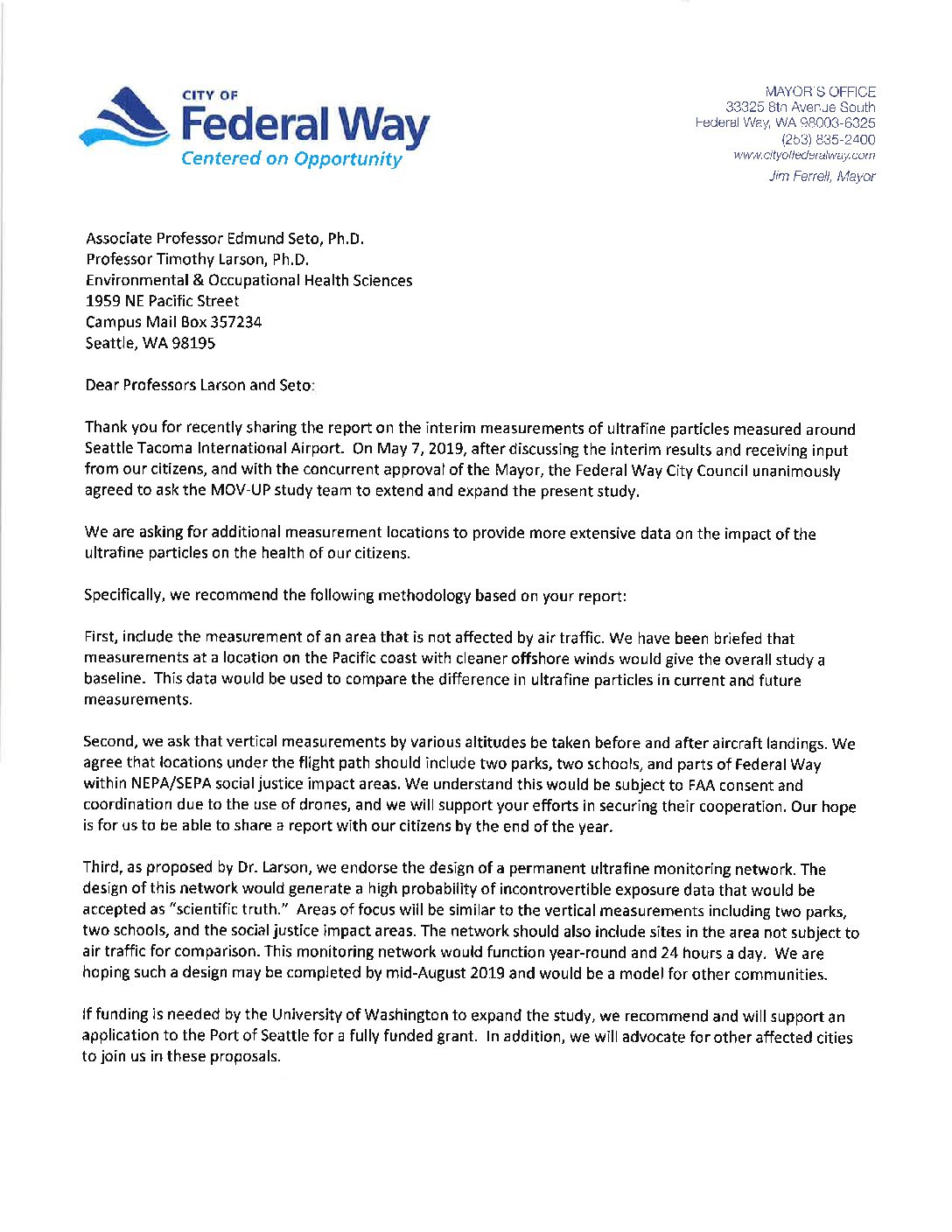
Federal Way Mayor and City Council Letter to UW Professors Larson and Seto Requesting Expansion of MOV-UP Ultrafine Particle Study Near Sea-Tac Airport
In May 2019, Federal Way Mayor Jim Ferrell and the unanimous City Council wrote to University of Washington researchers requesting an expansion of the MOV-UP study measuring ultrafine particle pollution around Seattle-Tacoma International Airport. The letter calls for three key additions: a baseline measurement site unaffected by air traffic, drone-based vertical air sampling before and after aircraft landings at parks, schools, and social justice impact areas, and the design of a permanent 24/7 ultrafine particle monitoring network. The city also offered to support a Port of Seattle grant application to fund the expanded research and pledged to encourage other affected communities to join the effort.