TagEcology(788)
-
 2023-03-01
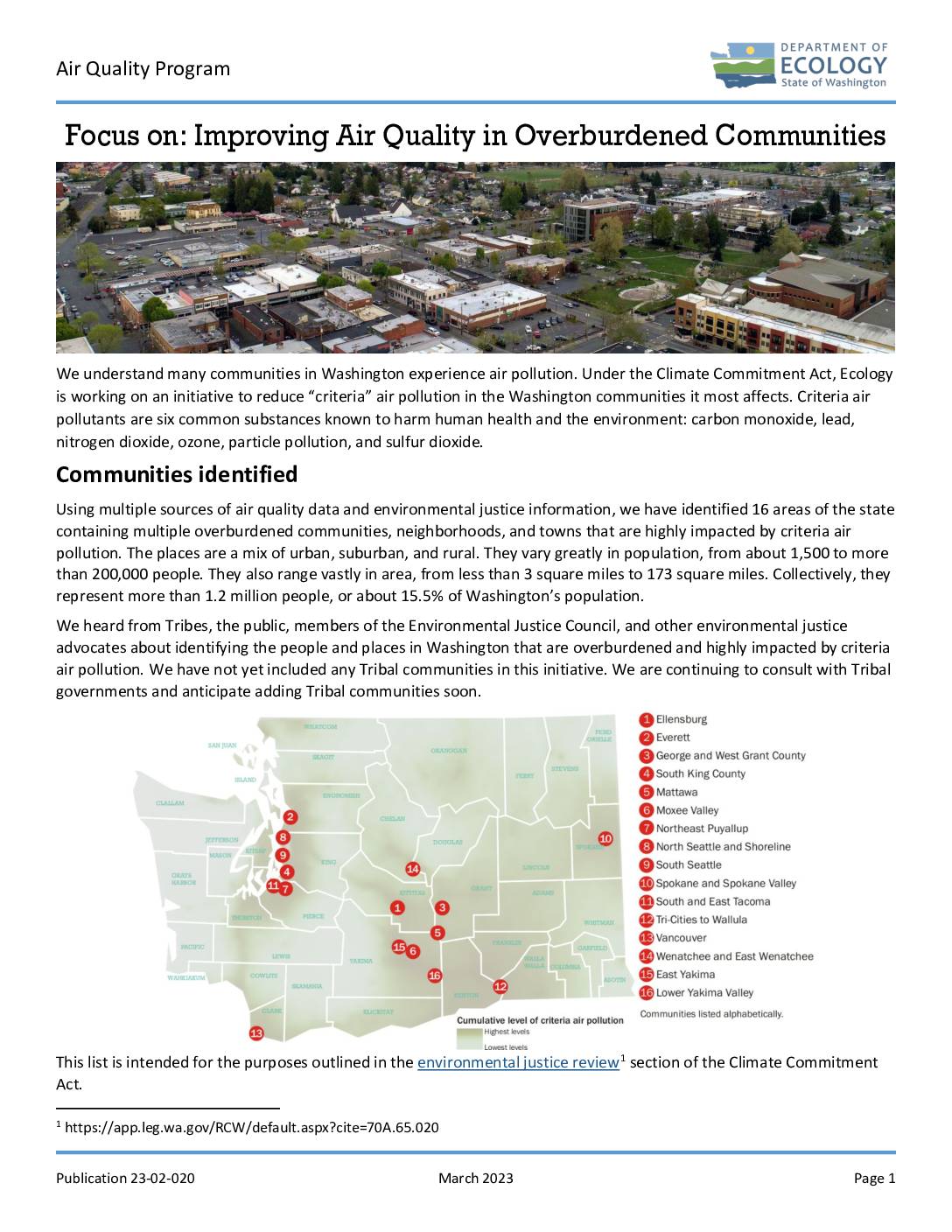
Focus on: Improving Air Quality in Overburdened Communities
Washington State's Department of Ecology has identified 16 overburdened communities across the state that are highly impacted by criteria air pollution, collectively representing over 1.2 million residents. Using air quality data and environmental justice tools, the agency is working under the Climate Commitment Act to reduce six key pollutants — including particle pollution, ozone, and nitrogen dioxide — in areas ranging from South Seattle and South King County to rural communities like Mattawa and the Lower Yakima Valley. Next steps include expanding air monitoring, engaging affected communities, and working with Tribal governments to address pollution impacts over multiple years. -
 2023-03-01
Identifying Overburdened Communities Highly Impacted by Air Pollution: Technical Support Document
This March 2023 technical support document from the Washington State Department of Ecology's Air Quality Program outlines methods for identifying communities that are disproportionately burdened by air pollution across Washington State. It provides regional office contact information and maps showing the four Ecology regions covering all 39 Washington counties. Note: this document focuses on statewide air quality and environmental justice topics and does not contain information specific to Sea-Tac Airport noise policy. -
Identifying Overburdened Communities
Introduction The Climate Commitment Act requires Ecology to create a Cap & Invest program to lower greenhouse gas emissions across the state. Additionally, the Climate Commitment Act requires us to identify “ overburdened communities highly impacted by air pollution,” and make sure that this program reduces a class of pollutants called “criteria” air pollutants , as well -
 2022-09-16
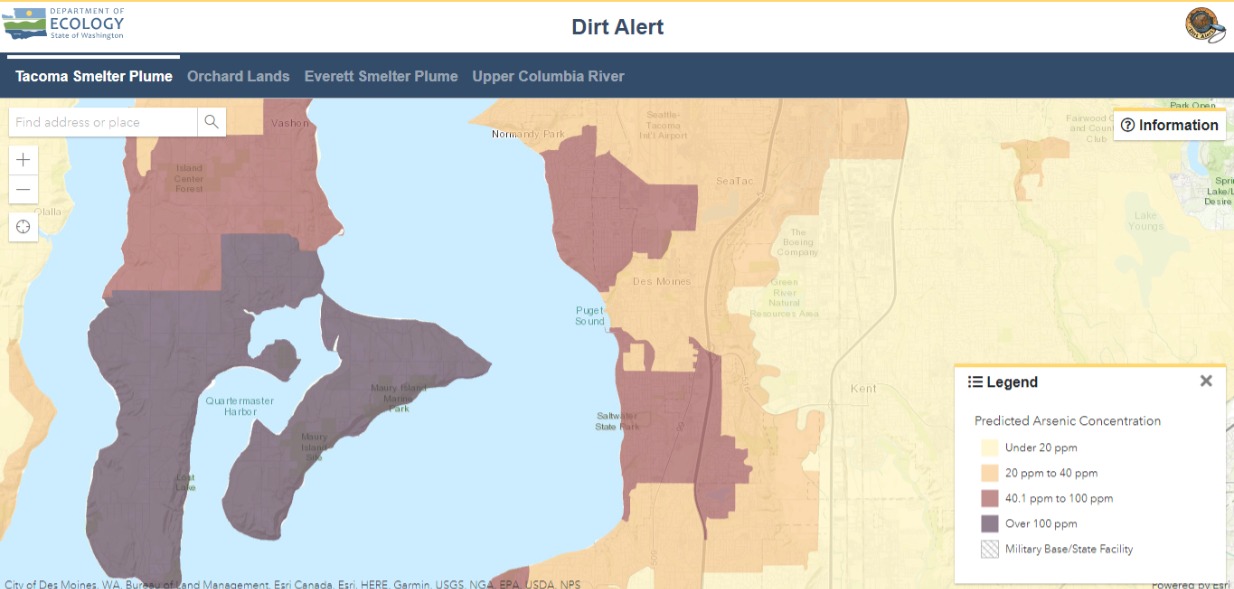
Washington State Ecology Dirt Alert Map: Tacoma Smelter Plume Arsenic Concentrations Near Sea-Tac Airport
A screenshot of the Washington State Department of Ecology's 'Dirt Alert' web mapping application showing the Tacoma Smelter Plume tab, displaying predicted arsenic soil concentrations across the south King County / Pierce County area including SeaTac, Des Moines, Vashon Island, and Maury Island. The legend indicates concentration zones ranging from under 20 ppm (light yellow) to over 100 ppm (dark purple), with SeaTac Airport and surrounding communities falling within the 40.1–100 ppm range. -
 2022-09-12
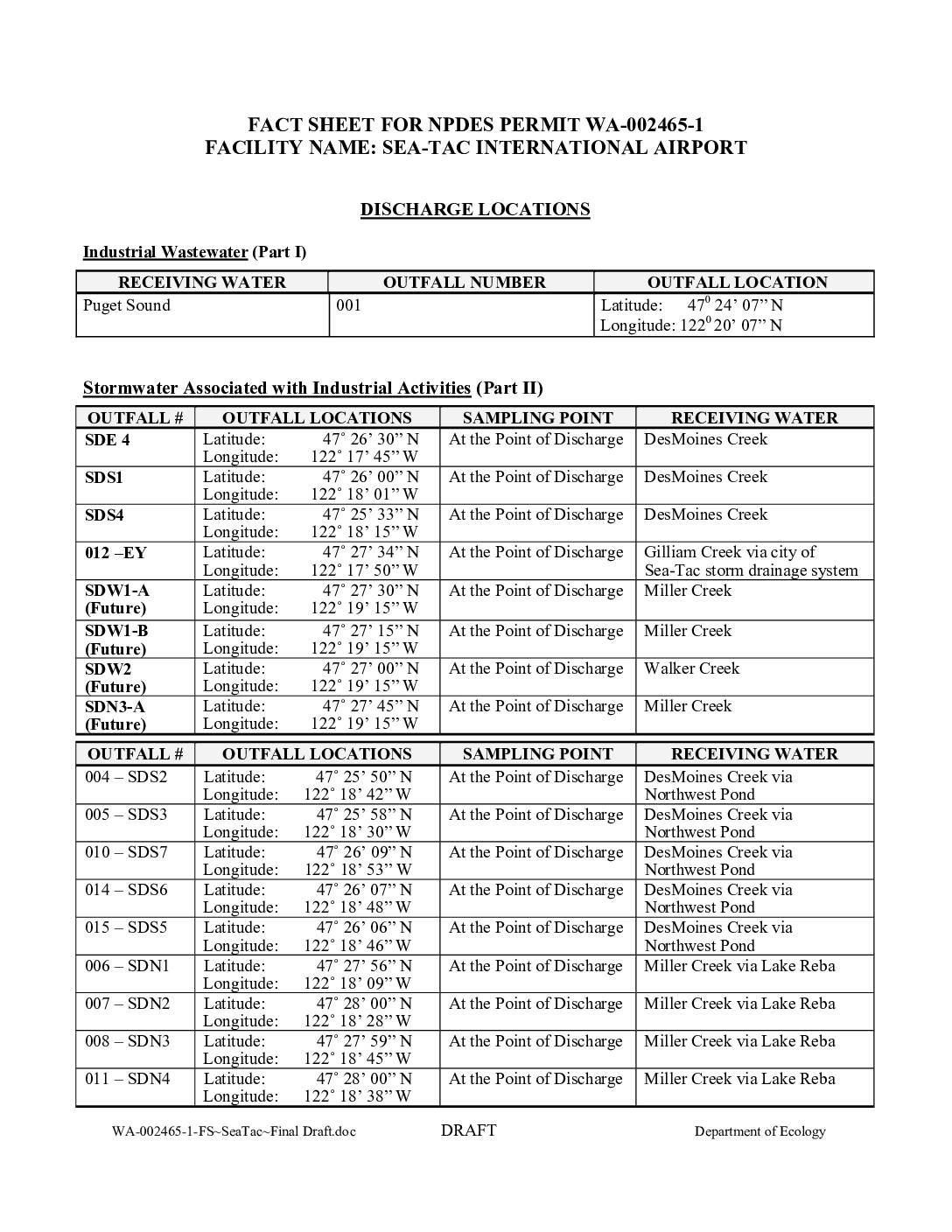
Fact sheet for NPDES permit WA-002465-1, Sea-Tac International Airport
This document is an NPDES (National Pollutant Discharge Elimination System) permit fact sheet for Sea-Tac International Airport, issued by the Washington State Department of Ecology. It details the locations of numerous water discharge outfalls across the airport property, covering industrial wastewater, stormwater from industrial activities, and stormwater from construction activities. The discharges flow into several local waterways including Des Moines Creek, Miller Creek, Walker Creek, Gilliam Creek, and Puget Sound. -
 2022-09-12
Filling wetlands: The approval process
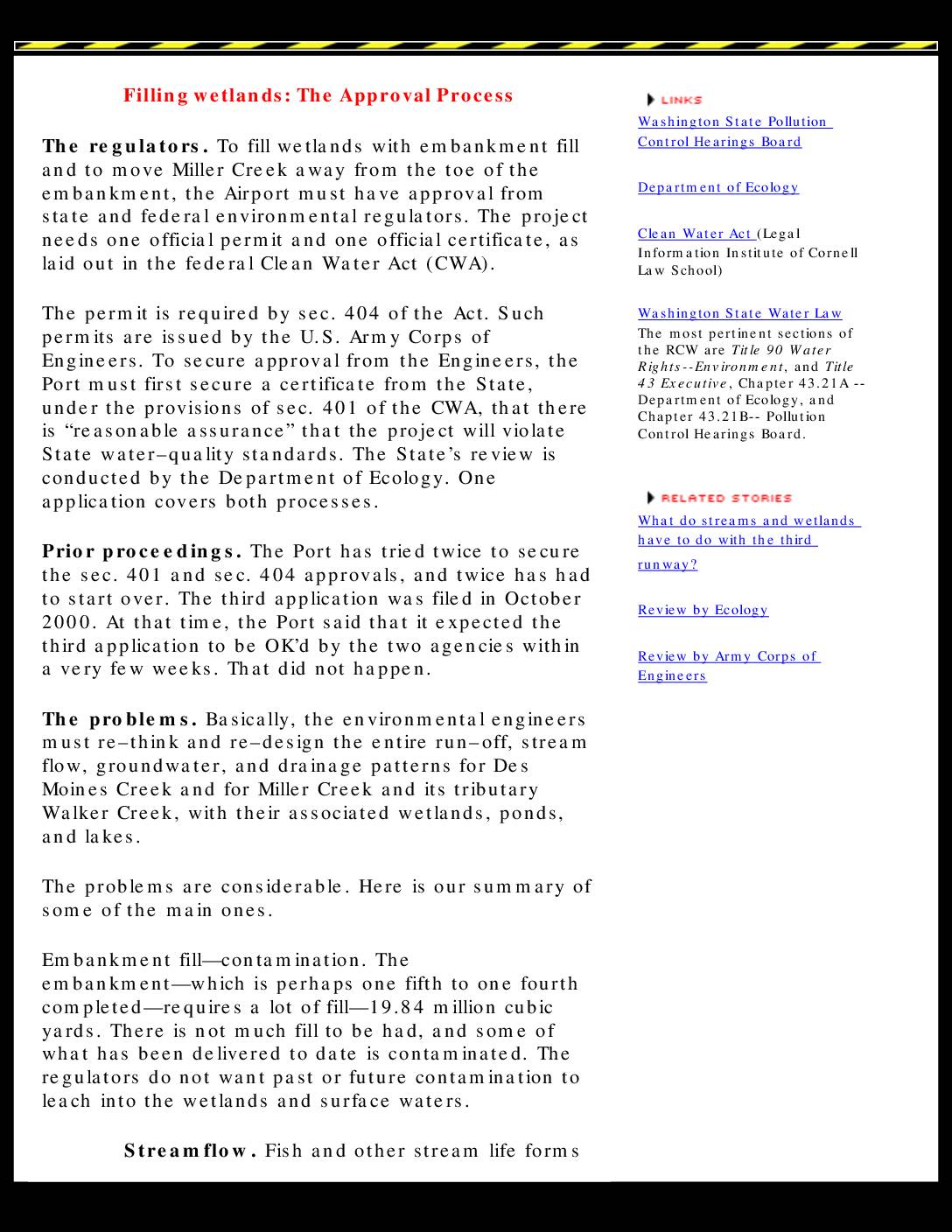
This document explains the regulatory approval process required for filling wetlands as part of Sea-Tac Airport's third runway expansion, which requires both a federal permit under Section 404 of the Clean Water Act and a state certificate under Section 401. The Port of Seattle filed its third application in October 2000 after two previous attempts failed, facing significant environmental obstacles including contaminated fill material, threats to stream flow and salmon habitat, destruction of nearly 20 acres of wetlands, flooding risks, embankment stability concerns in an earthquake-prone area, and existing pollution levels that already exceed allowable limits. The U.S. Army Corps of Engineers must also weigh the public need for the project against these environmental harms, raising broader questions about whether the expansion is justified at all. -
 2022-09-12
Review by Ecology
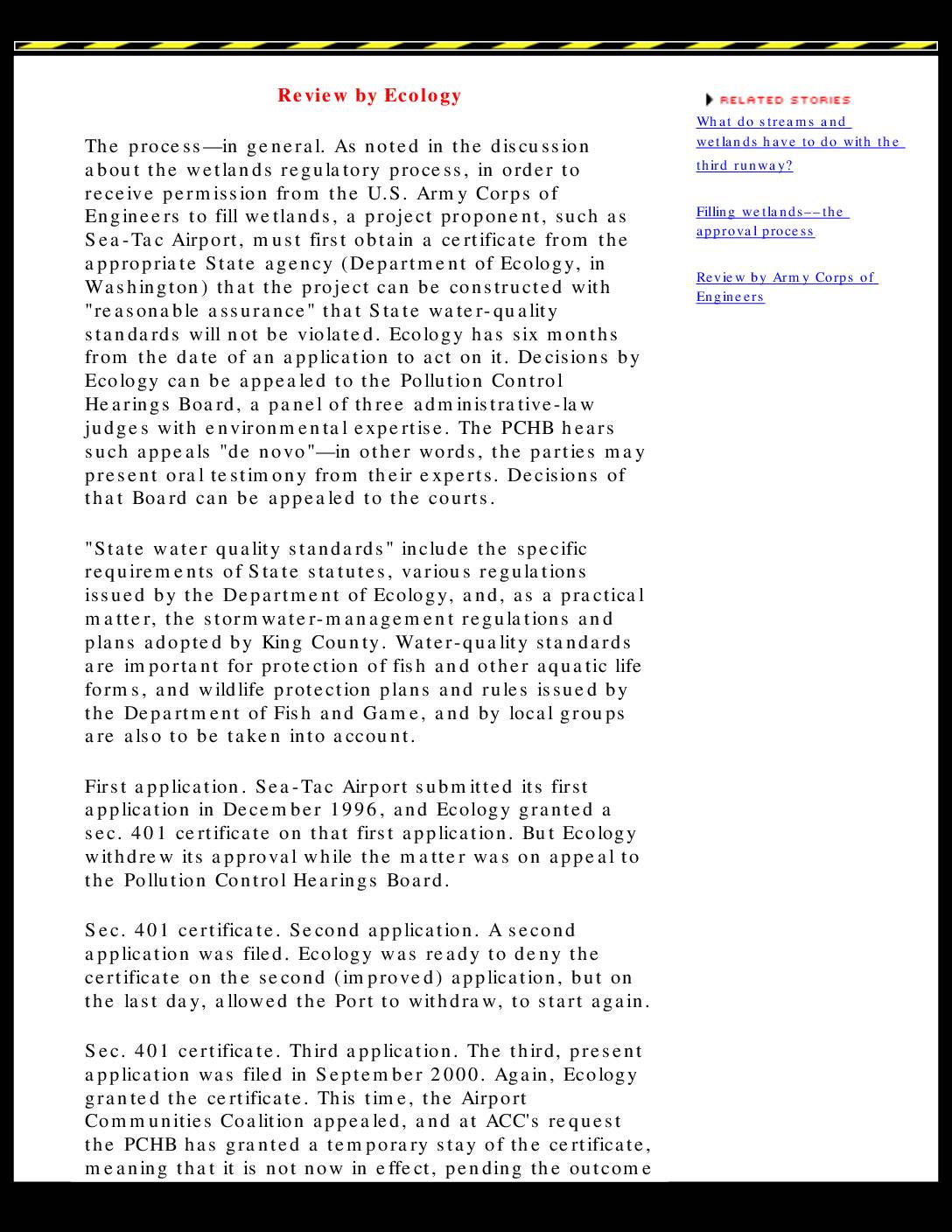
This document explains the Washington State Department of Ecology's review process for Sea-Tac Airport's applications to fill wetlands as part of its third runway project. Sea-Tac submitted three separate applications between 1996 and 2000, with the third ultimately receiving a Section 401 water-quality certificate that was later put on hold after the Airport Communities Coalition appealed. The Pollution Control Hearings Board identified three key concerns driving the stay: contaminated fill material, insufficient water rights for dry-season stream flow, and inadequate wetlands mitigation plans. -
Washington Air Monitoring Network: Air Quality Program
Washington State Department of Ecology -
Washington State Department of Ecology – Air Quality Index Map, Seattle/Sea-Tac Region
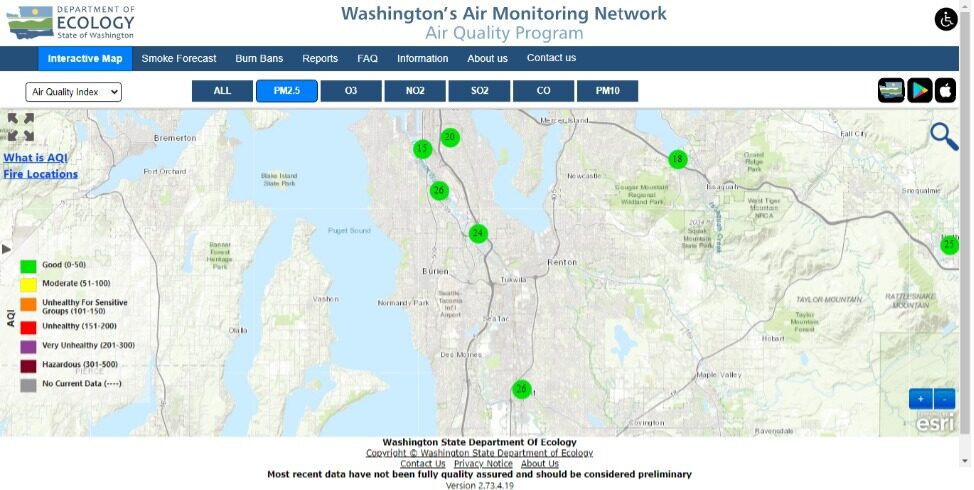
Screenshot of Washington's Air Monitoring Network interactive map (Air Quality Program, WDOE, version 2.73.4.19) showing PM2.5 Air Quality Index readings across the greater Seattle–Sea-Tac–Puget Sound area. All visible monitoring stations display green indicators (Good, AQI 0–50). -
Habitat Restoration and Mitigation Banking
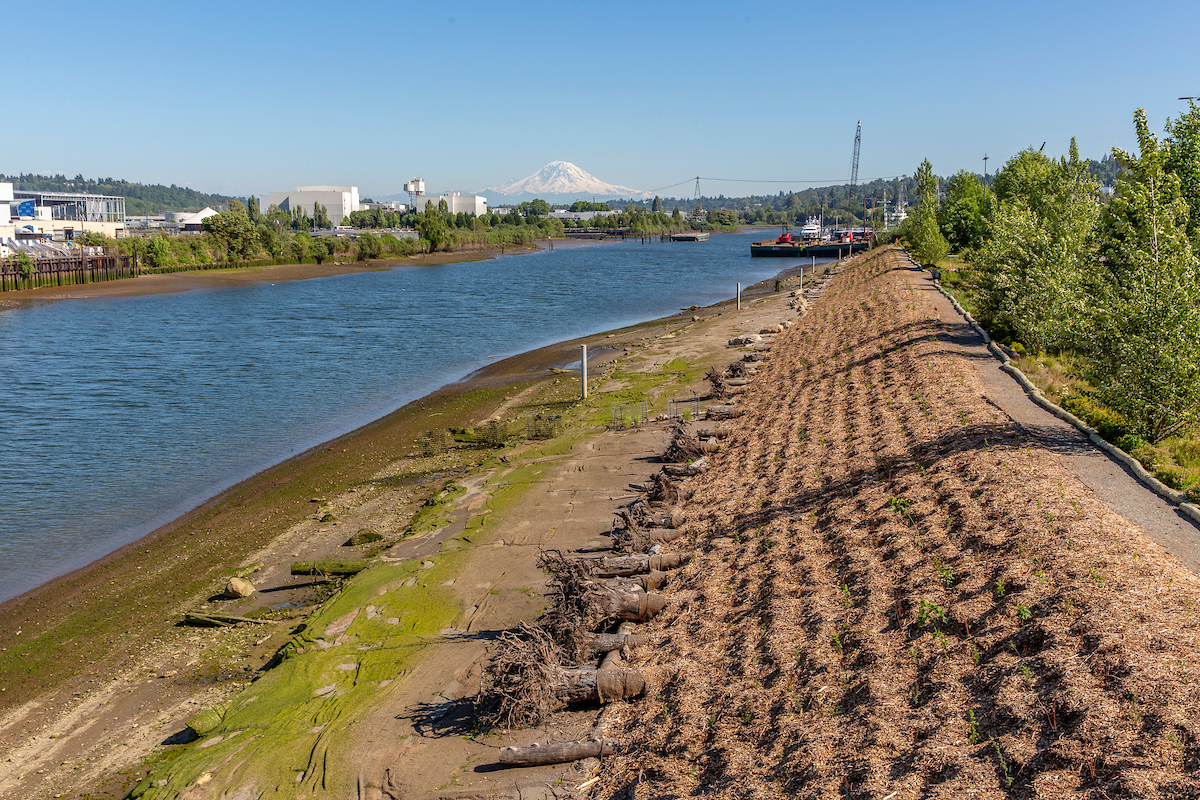
The **Auburn Wetlands** represent an important component of the Port of Seattle's broader habitat restoration and mitigation banking program within the **Green-Duwamish Watershed. As part of the Port's **multi-site wetland mitigation and habitat conservation bank**, the Auburn Wetlands serve as one of the restoration sites that contributes to the overall ledger of credits generated by the program. This aligns with the Port's **Century Agenda** goal of restoring, creating, and enhancing **40 additional acres** of Green-Duwamish habitat.