TagDes Moines Creek(162)
-
 2023-08-12
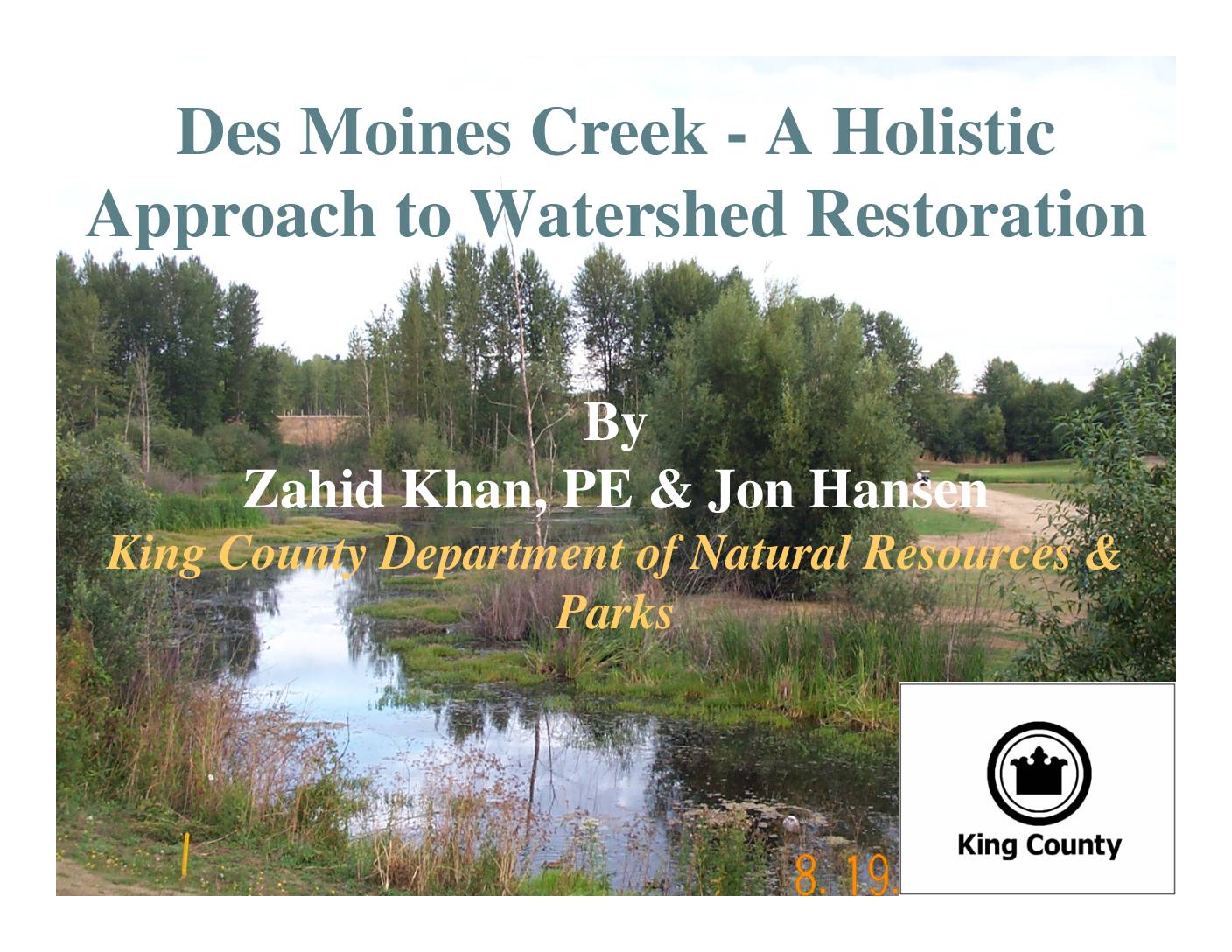
Des Moines Creek – A holistic approach to watershed restoration
This presentation by King County Department of Natural Resources & Parks outlines a holistic approach to restoring Des Moines Creek and its surrounding watershed, located in King County, Washington. It covers basin planning, environmental modeling, regulatory considerations, and project costs and scheduling. The project aims to address watershed health through comprehensive assessment and coordinated restoration strategies. -
 2023-04-05
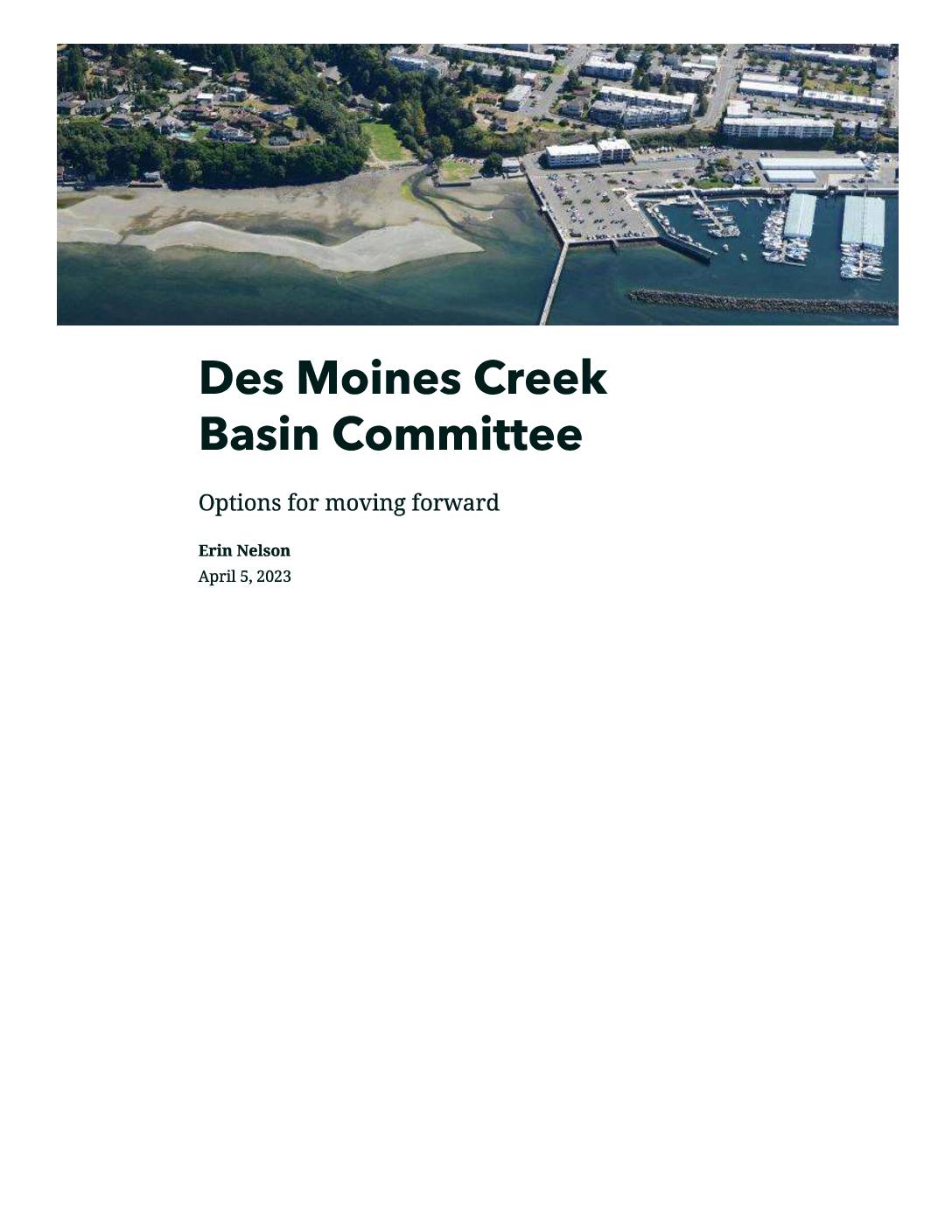
Des Moines Creek Basin Committee: Options for Moving Forward
This April 2023 presentation by Erin Nelson outlines options for the Des Moines Creek Basin Committee moving forward, focusing on decisions to be included in the next Interlocal Agreement (ILA). The meeting agenda covers a review of past studies and committee accomplishments, discussion of what has worked and what needs improvement, and selection of workable options for the basin's future management. The document includes maps and imagery related to infrastructure features such as the Northwest Ponds, Tyee Pond, sediment traps, and flow bypass pipes within the Des Moines Creek watershed. -
 2022-09-12
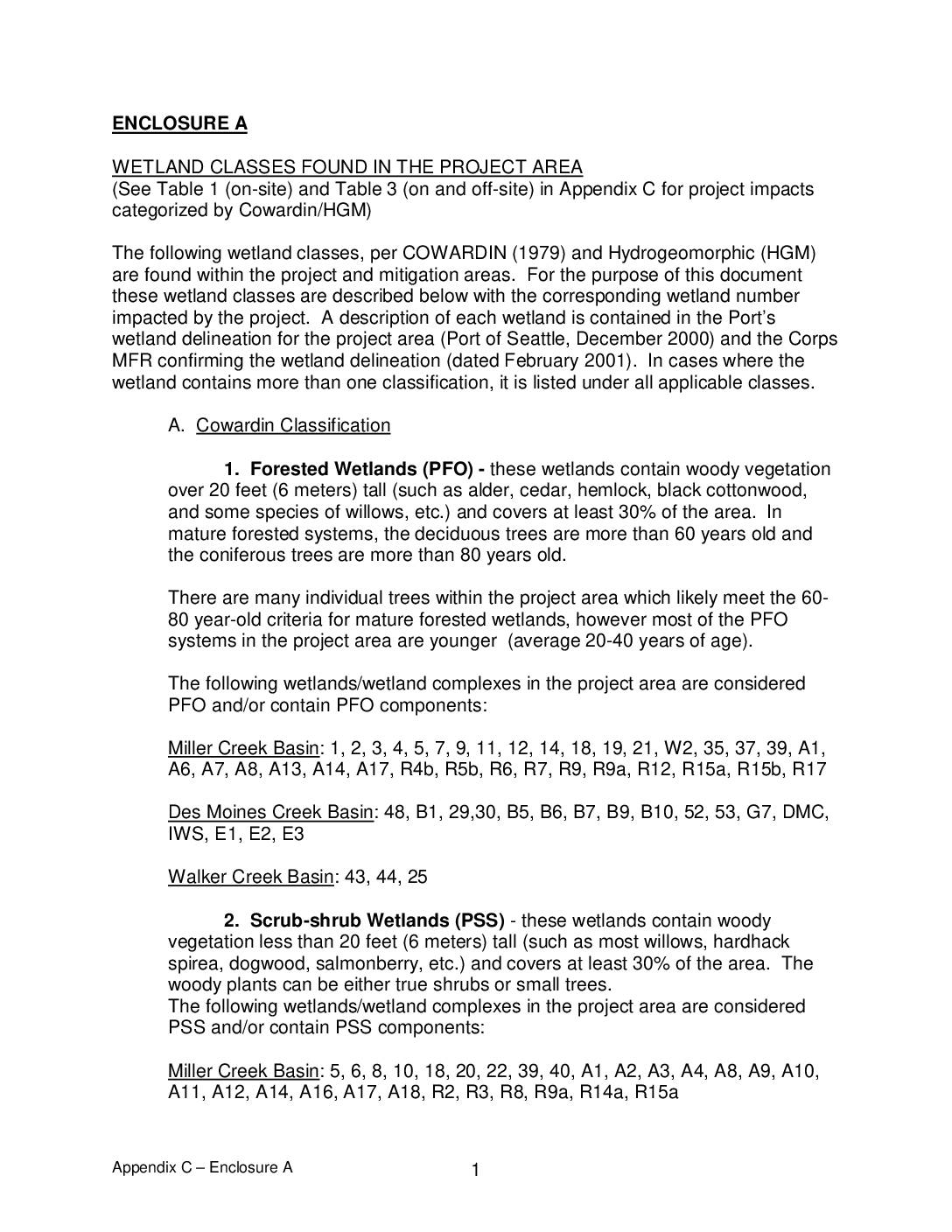
Wetland classes found in the project area
This document classifies and describes the various wetland types found within the Sea-Tac Airport project area, using both the Cowardin (1979) and Hydrogeomorphic (HGM) classification systems. It identifies forested, scrub-shrub, emergent, aquatic bed, and riverine wetlands across three drainage basins — Miller Creek, Des Moines Creek, and Walker Creek — listing the specific wetland units belonging to each category. The classifications support environmental impact assessment and mitigation planning associated with airport development activities. -
 2022-09-12
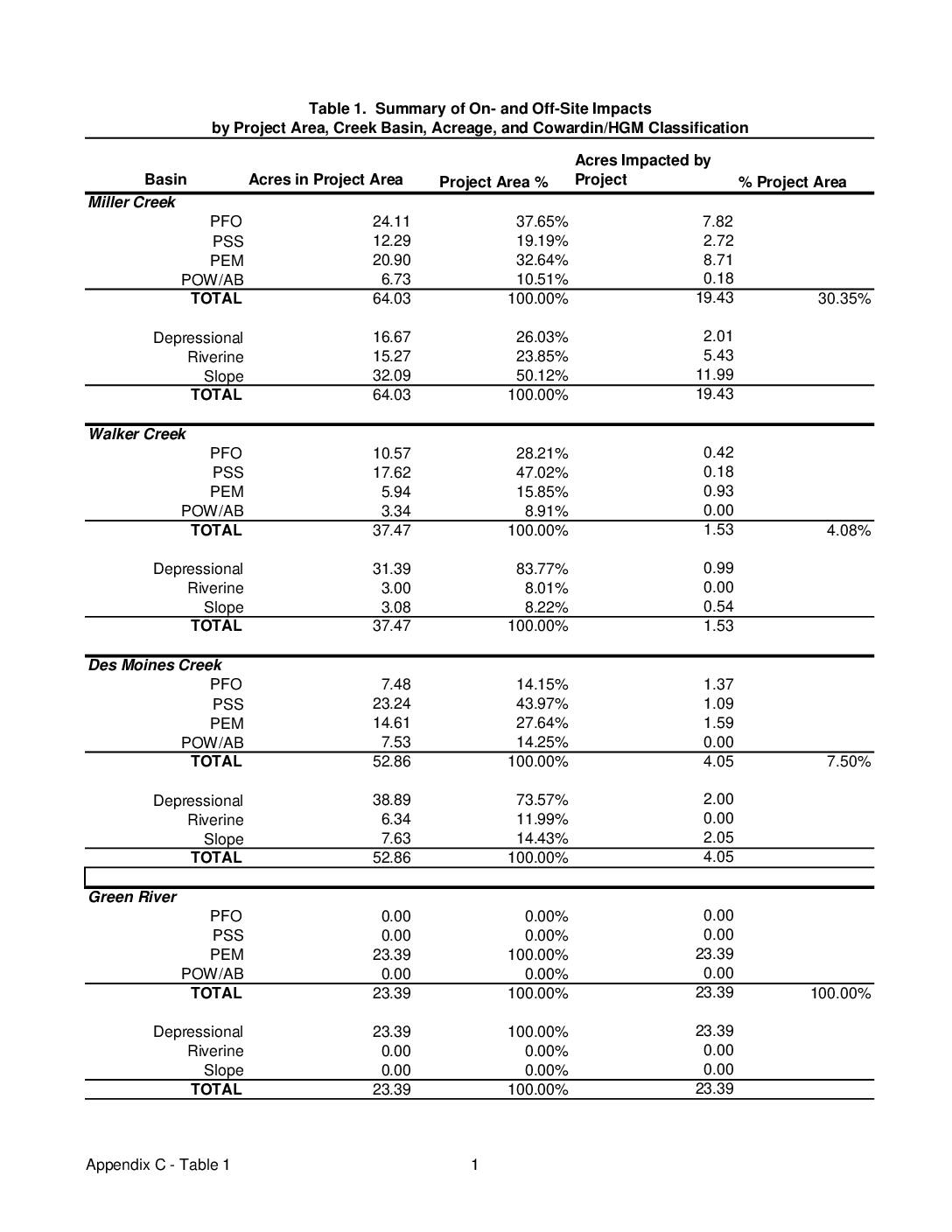
Summary of on- and off-site impacts by project area, creek basin, acreage, and Cowardin/HGM classification
This document summarizes the environmental wetland impacts associated with airport expansion projects near Sea-Tac Airport, detailing acreage affected across four creek basins — Miller Creek, Walker Creek, Des Moines Creek, and Green River. It breaks down impacts by wetland vegetation type (forested, shrub, emergent, and open water) and hydrological classification (depressional, riverine, and slope), with total impacts ranging from 4% of the Walker Creek project area to 100% of the Green River area. The tables also distinguish between temporary and permanent wetland impacts as determined by the U.S. Army Corps of Engineers, covering features such as the Third Runway and Runway Safety Area extensions. -
 2022-09-12
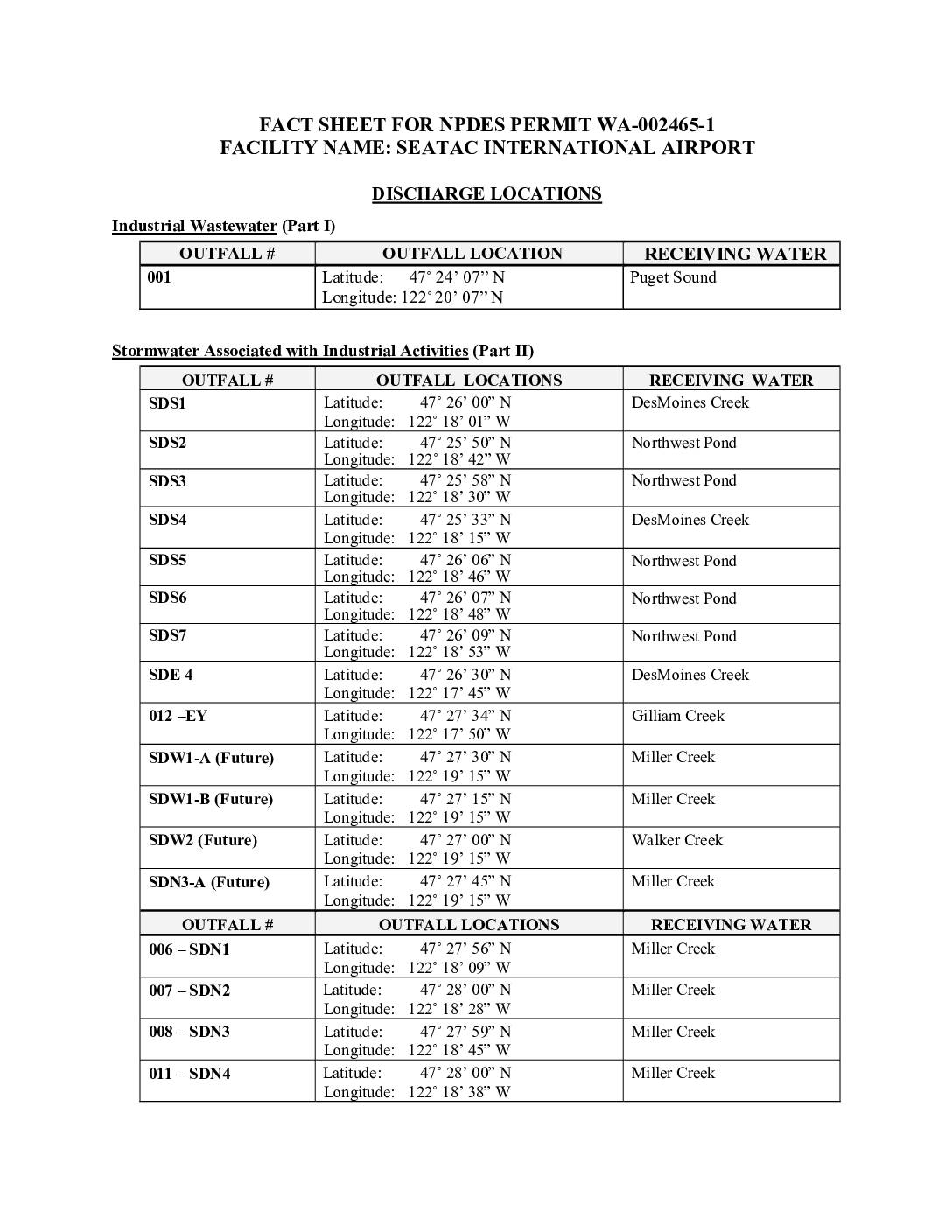
Fact sheet for NPDES permit WA-002465-1: SeaTac International Airport
This NPDES permit fact sheet for Seattle-Tacoma International Airport details the locations and receiving waterways for all stormwater and industrial wastewater discharge outfalls at the facility. It covers three categories of discharge: industrial wastewater flowing to Puget Sound, stormwater from industrial activities flowing to local waterways such as Des Moines Creek, Miller Creek, and Northwest Pond, and stormwater from construction activities discharged to Des Moines Creek, Miller Creek, Walker Creek, and Gilliam Creek. The document lists both existing and future planned outfall locations with precise latitude and longitude coordinates for each discharge point. -
 2021-11-04
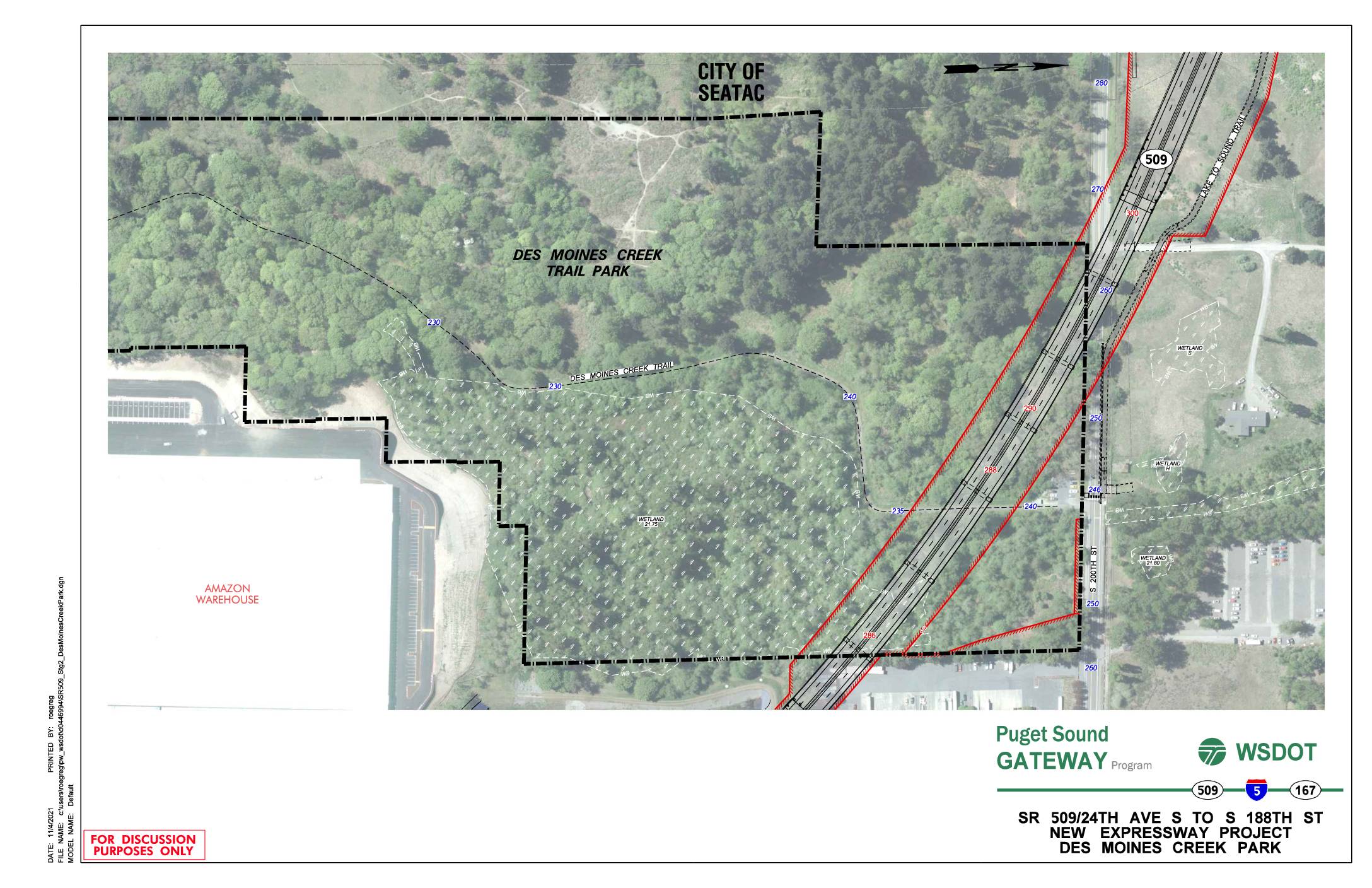
SR 509/24th Ave S to S 188th St new expressway project: Des Moines Creek Park
This WSDOT discussion document from November 2021 shows a planning map for the SR 509 Puget Sound Gateway Program's new expressway project, spanning from 24th Ave S to S 188th St near Des Moines Creek Park in the City of SeaTac. The map highlights the proposed highway alignment (shown in red) running adjacent to Des Moines Creek Trail Park, identifying wetland areas, contour elevations, and nearby features such as an Amazon warehouse and the Lake to Sound Trail. The project represents a major infrastructure expansion in the SeaTac area that would affect the Des Moines Creek Park corridor and surrounding natural resources. -
 2021-03-09
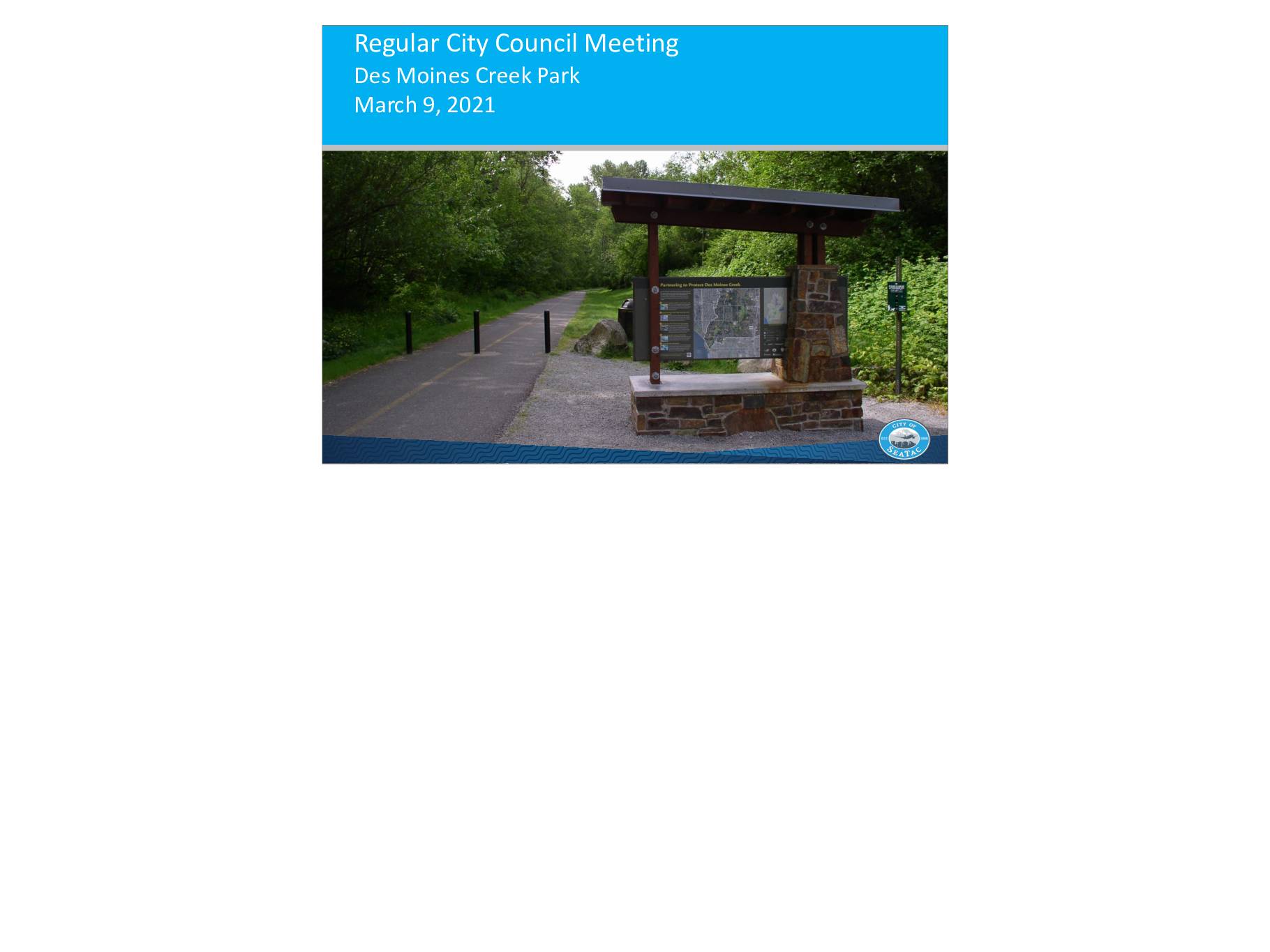
Des Moines Creek Park: Interlocal Agreement Amendment with King County for Conservation Future Tax Levy Grant
At a March 9, 2021 City Council meeting, the City of SeaTac considered a motion to authorize an amendment to an Interlocal Agreement with King County to receive a $500,000 Conservation Future Tax Levy grant, matched equally by the City, for acquiring approximately 8 acres of surplus Washington State Department of Transportation land adjacent to Des Moines Creek Park. The acquisition aims to expand open space, improve trail access, add a new trailhead with educational amenities, and preserve forested land along a salmon-bearing stream. The City has been pursuing this land purchase since 2018 as part of its Parks, Recreation, and Open Space (PROS) Plan. -
 2021-03-01
Lake to Sound Trail – Segment C: 100% alignment
This King County map document shows the planned alignment for Segment C of the Lake to Sound Trail, a recreational trail corridor connecting Burien and SeaTac. The 100% alignment, dated March 2021, traces the trail route along Des Moines Memorial Drive and through residential areas near Des Moines Creek, terminating near Des Moines Creek Park at S 200th Street. The map was produced by King County's Department of Natural Resources and Parks, Parks and Recreation Division. -
 2021-02-10
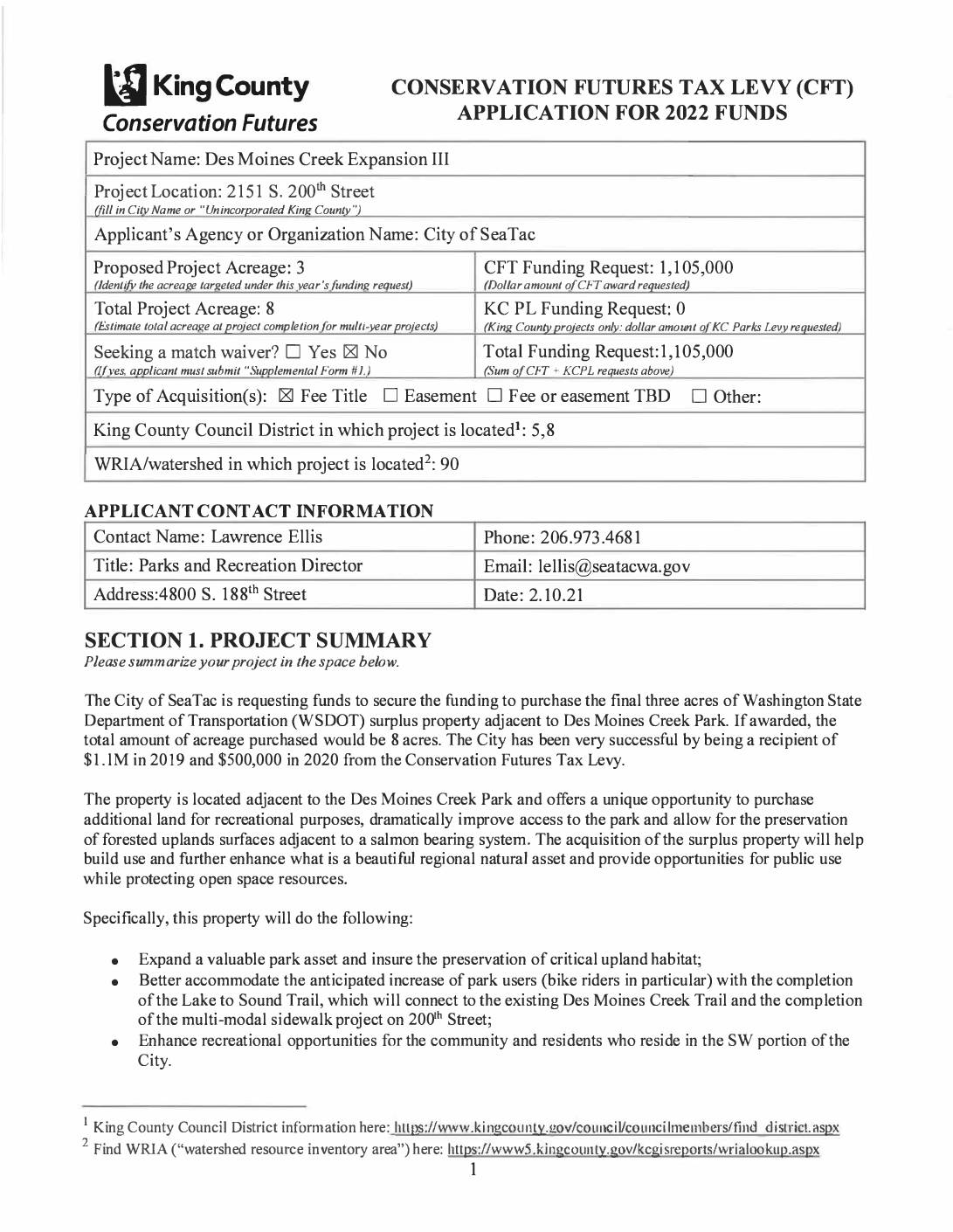
Conservation Futures Tax Levy (CFT) application for 2022 funds: Des Moines Creek Expansion III
The City of SeaTac applied for $1,105,000 in King County Conservation Futures Tax Levy funds in 2022 to purchase the final three acres of surplus Washington State Department of Transportation land adjacent to Des Moines Creek Park, bringing the total acquired acreage to eight acres. The project aims to preserve forested upland habitat along a salmon-bearing stream, improve public park access from the west side via 18th Avenue South, and support trail connectivity including the Lake to Sound Trail. This was the third phase of a multi-year acquisition effort, following prior CFT awards of $1.1 million in 2019 and $500,000 in 2020. -
 2020-10-01
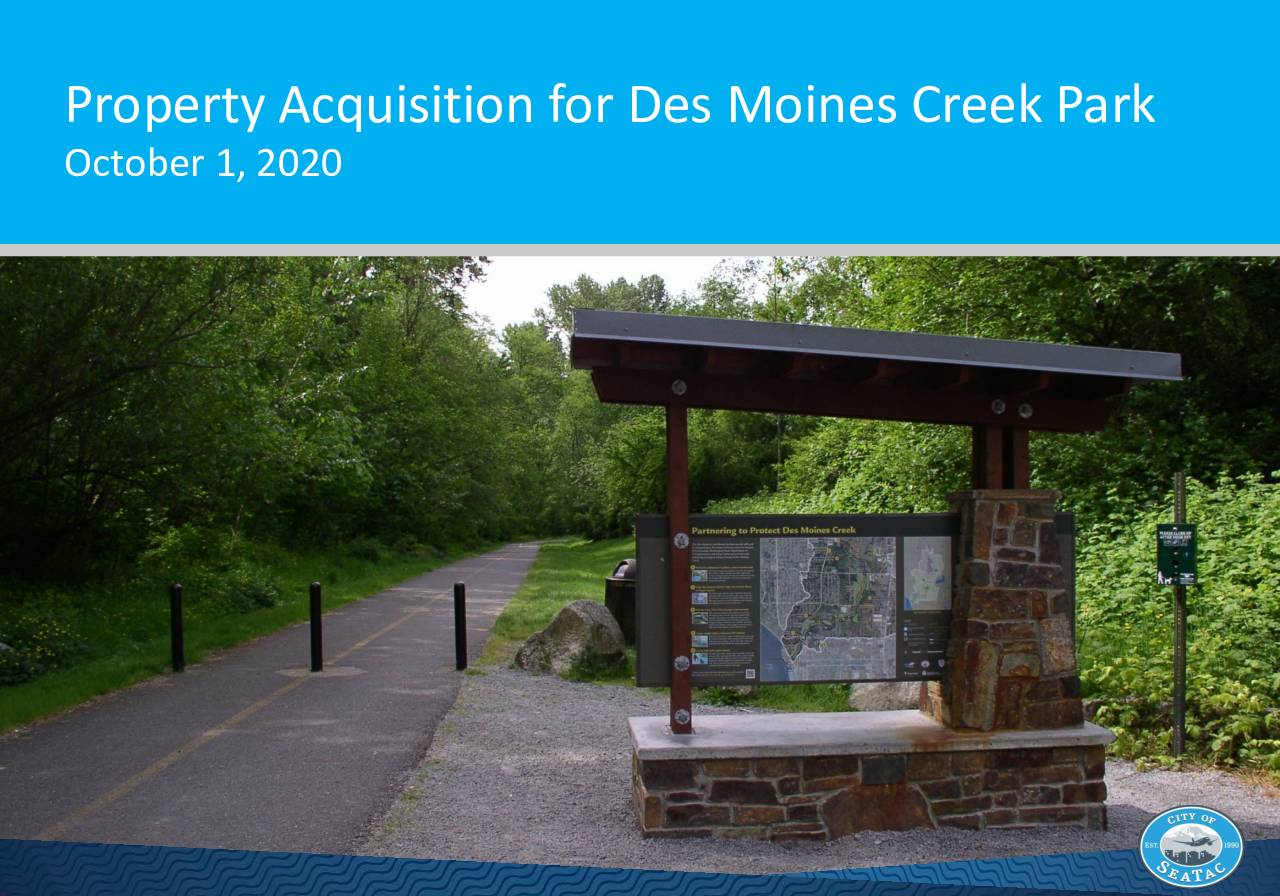
Property Acquisition for Des Moines Creek Park
The City of SeaTac has been working since 2018 to acquire approximately 8 acres of surplus forested land from the Washington State Department of Transportation (WSDOT) adjacent to Des Moines Creek Park. The acquisition aims to expand open space, improve trail access, and preserve a conservation area along one of the city's salmon-bearing streams. As of October 2020, the city had secured $2.29 million in grant funding for the purchase, with an additional $1 million under consideration in the 2021-2022 budget process.