TagAirports(140)
-
 2016-07-20
Washington Aviation System Plan (WASP) Update
This July 2016 presentation by WSDOT's Aviation Division outlines an update to the Washington Aviation System Plan (WASP), covering the state's network of public-use airports. It reviews aviation system goals, airport classifications, and performance metrics across Washington State. The document does not specifically address Sea-Tac Airport noise policy. -
 2015-08-17
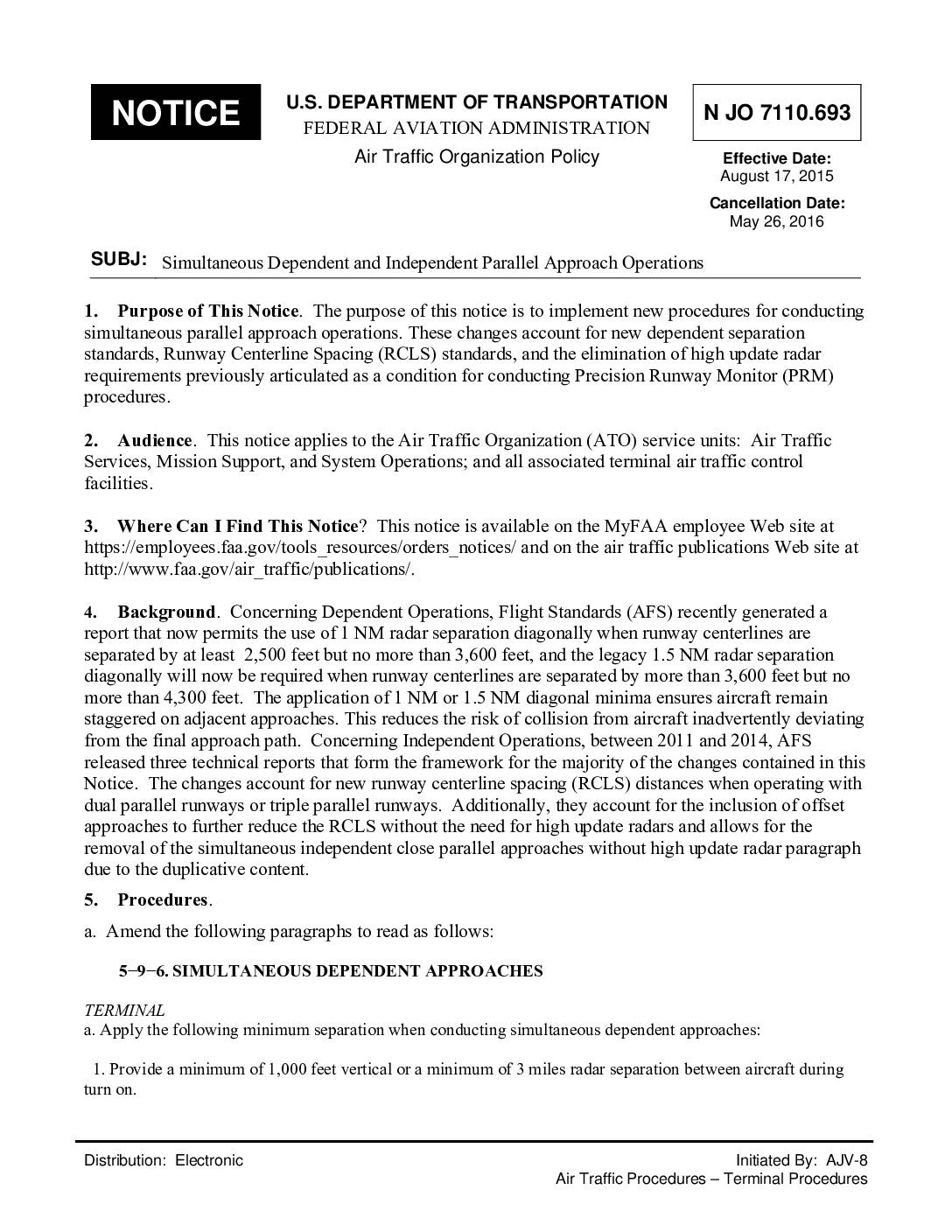
JO7110.693 Simultaneous dependent and independent parallel approach operations
This FAA notice (effective August 2015) updates the rules for how air traffic controllers manage aircraft making simultaneous approaches to parallel runways. It introduces new diagonal radar separation distances between aircraft based on how far apart the runway centerlines are, ranging from 1 mile of separation for runways 2,500–3,600 feet apart to 2 miles for runways 4,301–9,000 feet apart. While focused on controller procedures rather than noise policy directly, these standards govern how closely aircraft can be spaced during parallel runway approaches, which is relevant to arrival patterns affecting communities near airports like Sea-Tac. -
 2009-07-01
Washington Aviation System Plan: Chapter 8 — Capacity Analysis
A 2009 Washington Aviation System Plan capacity analysis found that Sea-Tac International Airport is expected to approach or exceed 100% capacity by 2030, facing constraints in aircraft operations, passenger facilities, and aircraft storage. The study examined five types of airport capacity statewide, including airfield capacity, commercial airline passengers, air cargo, aircraft storage, and airspace, measuring existing infrastructure against both current and forecast aviation demand. Exceeding airfield capacity can lead to increased delays, higher costs for airlines and airports, and greater air and noise pollution. -
 2009-07-01
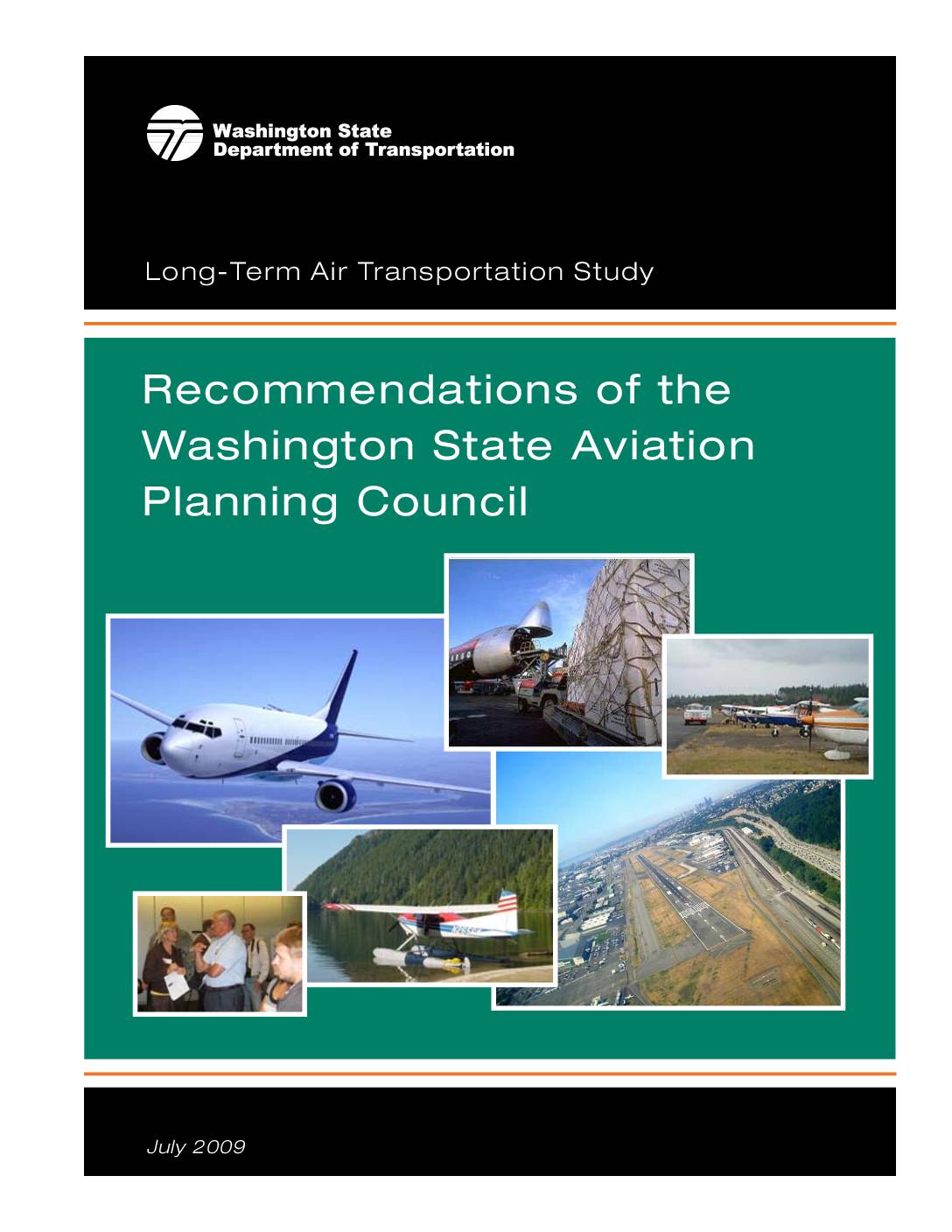
Recommendations of the Washington State Aviation Planning Council: Long-Term Air Transportation Study
The Washington State Aviation Planning Council's 2009 Long-Term Air Transportation Study (LATS) presents recommendations to Governor Gregoire on the future of Washington's aviation system, which had shrunk from 141 to 138 public-use airports with at least two more at risk of closing. The study warns that over the next decade, 12 airports will approach or exceed capacity limits, while land use encroachment and limited resources threaten the system's viability. Public outreach showed strong support for investing in advanced technology and safety improvements, and greater efficiency in existing airports rather than building new ones. -
 2009-07-01
Appendix A: Detailed table of the Washington State airports
This document is an appendix from Washington State's 2009 Aviation System Plan, listing detailed information about airports across the state. It catalogs each airport by site number, name, city, and service level classifications under both federal (NPIAS) and state systems, covering facilities ranging from major commercial airports like Seattle's Boeing Field to small rural seaplane bases. The table includes nearly 100 airports of varying types and service levels throughout Washington State. -
2009-07-01
Recommendations of the Washington State Aviation Planning Council: Long-Term Air Transportation Study
July 2009 report of the Washington State Aviation Planning Council (WAPC) to Governor Gregoire presenting recommendations from the Long-Term Air Transportation Study (LATS), mandated by ESSB 5121. Covers Washington State’s aviation system of 138 public-use airports (down from 141 in 2005), capacity thresholds at 12 airports, terminal capacity shortfalls at six airports, hangar and tie-down -
 2009-01-01
Airport Governance and Ownership
Report by Daniel S. Reimer and John E. Putnam of Kaplan Kirsch & Rockwell LLP, published by the Airport Cooperative Research Program, Transportation Research Board, and National Academies of Sciences, Engineering, and Medicine. Covers airport governance structures in the United States as of 2008, including general-purpose governments (city, county, state) and special-purpose entities (airport authorities, -
2009-01-01
Airport Governance and Ownership
This 2009 report from the National Academies examines how publicly-owned airports in the United States are governed and owned, covering the range of entities—from city governments to special airport authorities—that oversee the country's approximately 4,150 public-use airports. It analyzes the legal principles and state and federal laws that shape airport governance structures, and evaluates the advantages and disadvantages of different models, including privatization. The findings are intended to help communities assess whether their current airport governance arrangements are working effectively or could benefit from change. -
 2008-08-01
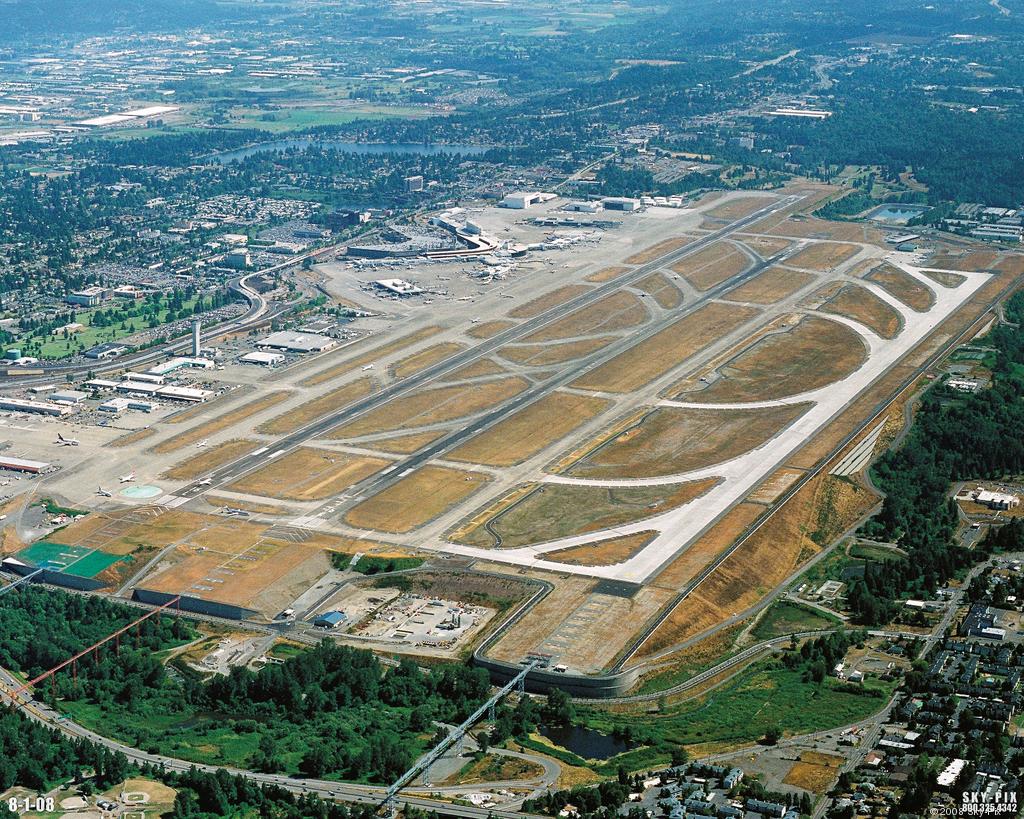
Sea-Tac Airport Aerial Photo, August 2008
Aerial photograph of Seattle-Tacoma International Airport (Sea-Tac) taken on August 1, 2008, showing the airport's parallel runway configuration, terminal complex, and surrounding communities. Image is watermarked 'SKY-PIX 800.325.4342 © 2008' and dated '8-1-08' in the lower corners. -
 2001-07-01
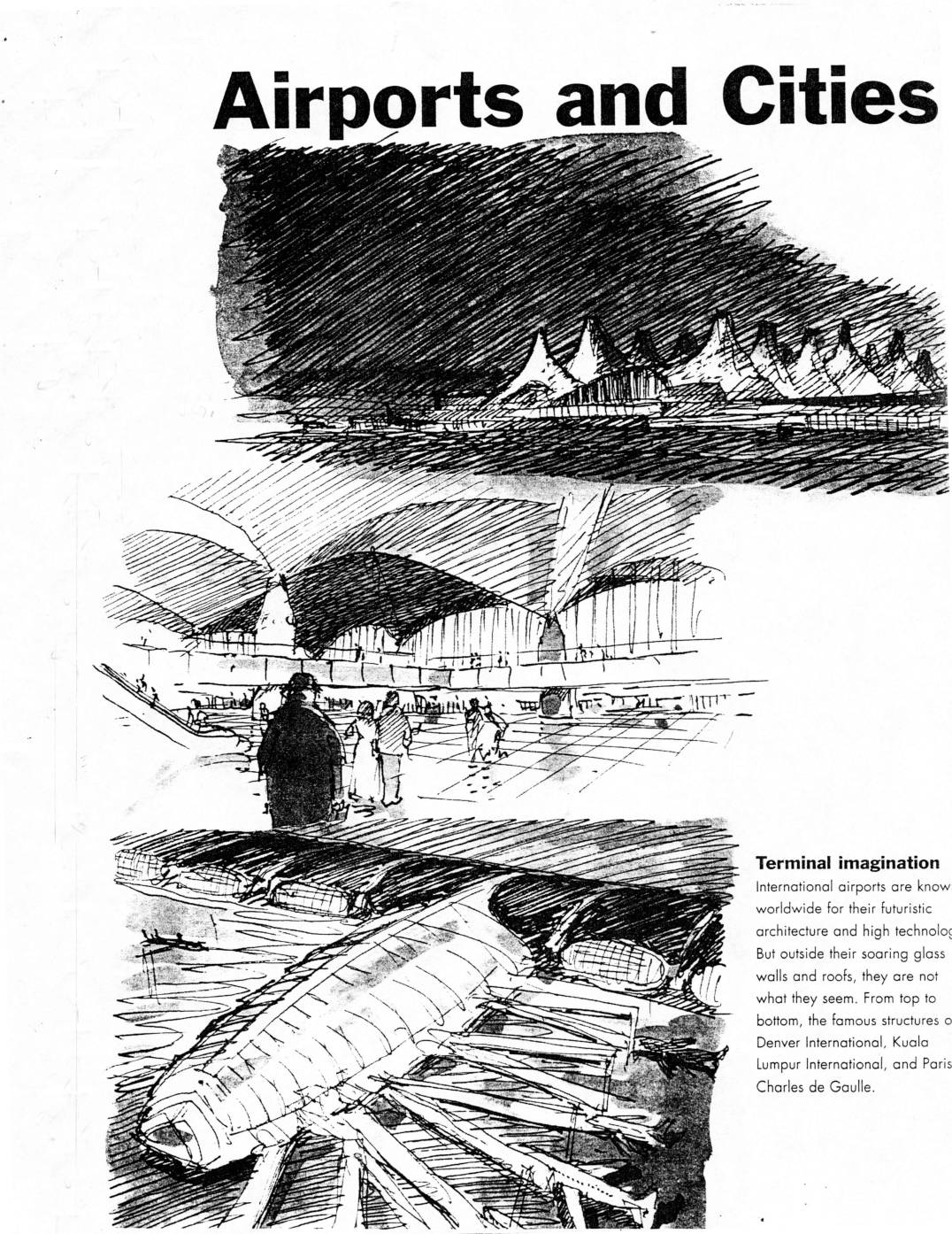
Airports and cities: Can they coexist?
This 2001 World Watch article by Ed Ayres examines the growing conflict between expanding airports and the cities surrounding them, highlighting the serious health, environmental, and noise impacts on nearby residents. It challenges the conventional mindset of simply building more airport capacity, noting that a 747 takeoff produces as much air pollution in two minutes as 3,000 cars, and that people living near airports face higher rates of illness and psychological harm. The article explores innovative design alternatives, such as inclined runways and energy-recovering landing systems, as more sustainable solutions to meeting rising air travel demand.