TagAirports(140)
-
 2022-10-17
NASAO comments on draft FAA policy regarding processing land use changes on federally acquired or federally conveyed airport land
The National Association of State Aviation Officials (NASAO) submitted comments to the FAA in October 2022 regarding a draft policy on land use changes at federally acquired or conveyed airport land. NASAO raised concerns about lengthy lease review processes, the lack of defined timelines for approvals, and unclear procedures for lease renewals and extensions. The letter also questioned how the policy would affect existing leases and called for greater consistency across FAA regions. -
 2022-09-16
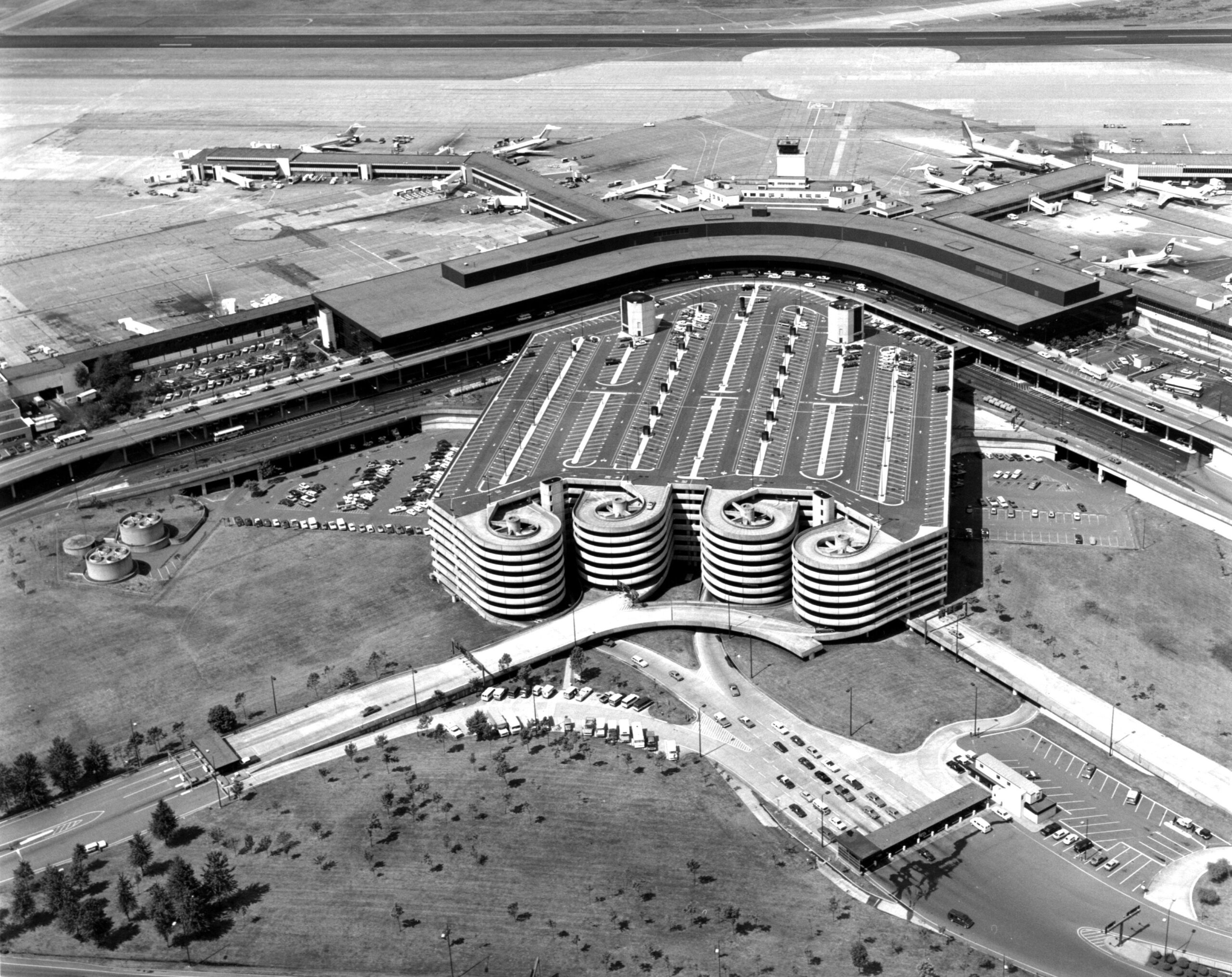
Sea-Tac Airport Parking Lots Aerial
Black-and-white aerial photograph showing a large commercial airport with a curved terminal building, a multi-level parking garage featuring distinctive circular ramp towers, taxiways, and numerous commercial jet aircraft at gates. The architectural style and aircraft visible suggest a photograph from the late 1960s or early 1970s, consistent with the era of Sea-Tac Airport's early expansion, though no visible text or markings in the image confirm the specific location or date. -
 2022-08-30
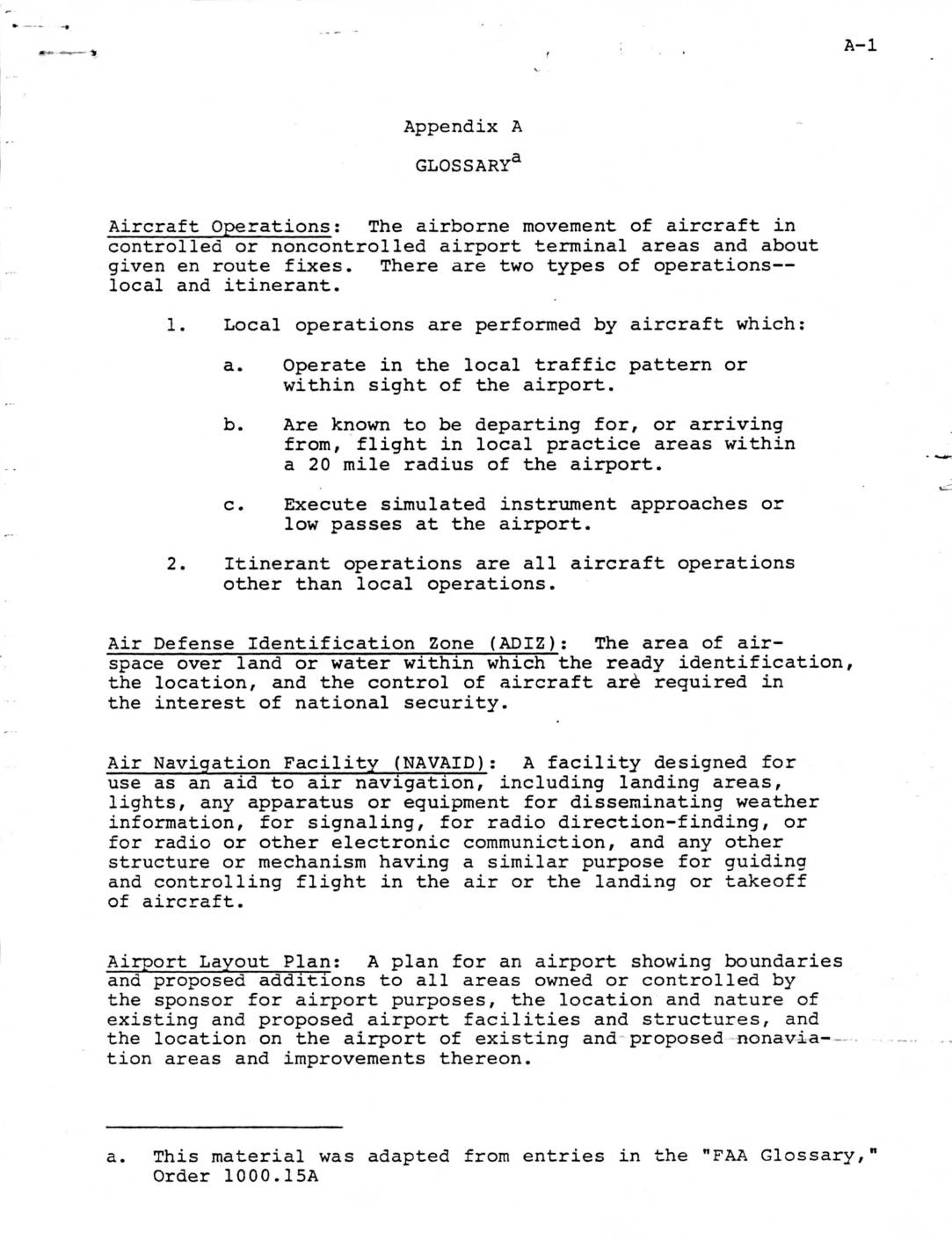
Glossary
This glossary from an FAA planning document defines key aviation terms used in airport operations and air traffic control, including types of aircraft operations (local and itinerant), radar systems, and airspace classifications. It covers planning concepts such as the Airport Master Plan, Airport Layout Plan, and Airport System Planning, as well as operational facilities like the Airport Traffic Control Tower and Air Route Traffic Control Center. These definitions provide a standardized reference for understanding airport development, airspace management, and noise-related policy discussions at facilities like Sea-Tac Airport. -
 2022-01-26
Port & community provisions of the Infrastructure Investment & Jobs Act (IIJA)
This January 2022 briefing by Port of Seattle staff outlines how the federal Infrastructure Investment and Jobs Act (IIJA), signed by President Biden in November 2021, allocates $1.2 trillion across transportation and infrastructure priorities. Of particular relevance to the Port of Seattle, the law includes $20 billion for airports, $5 billion for FAA facilities and equipment, and $5.225 billion for seaports, alongside billions more in competitive grant programs that ports can apply for. The briefing was presented to the Highline Forum, a community body focused on issues related to Sea-Tac Airport and surrounding neighborhoods. -
 2021-12-24
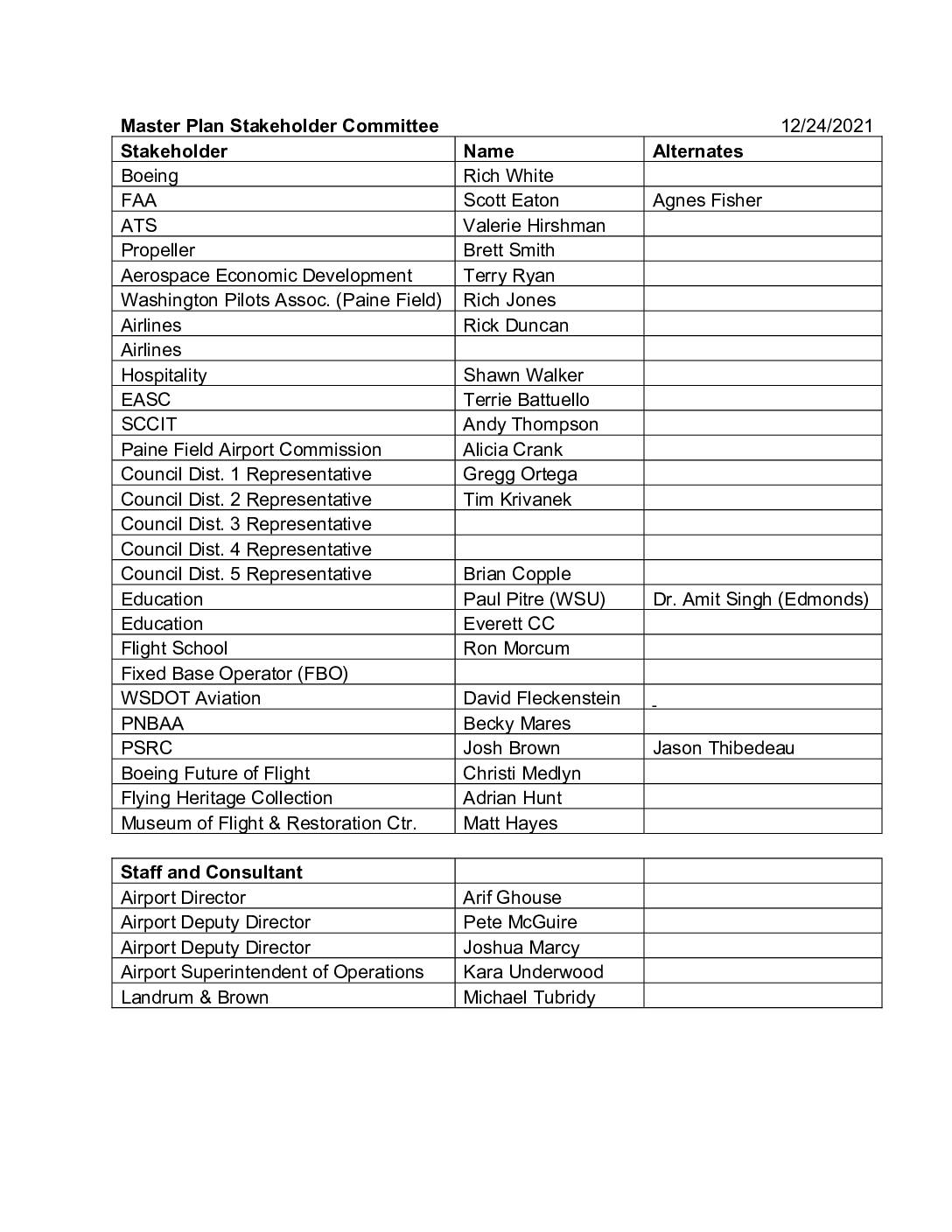
Paine Field Master Plan Stakeholder Committee
A comprehensive list of stakeholders and their representatives for a Master Plan Stakeholder Committee, including representatives from Boeing, FAA, airlines, local government districts, education institutions, and aviation organizations. The document also includes staff and consultant information with airport directors and operations personnel. -
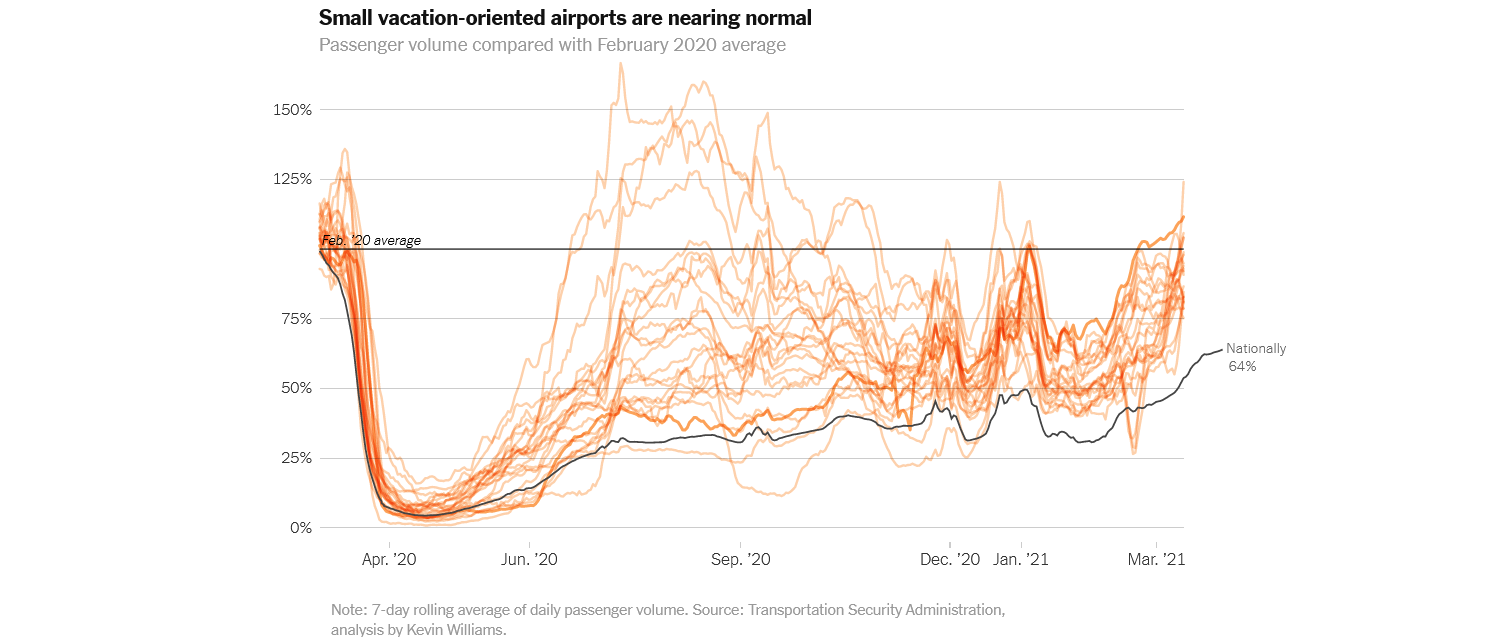
TSA Passenger Volume at Small Vacation Airports vs. National Average, Apr 2020–Mar 2021
Chart from Transportation Security Administration data, analyzed by Kevin Williams, showing 7-day rolling average daily passenger volume at small vacation-oriented airports compared to the February 2020 baseline. As of approximately March 2021, the national average stood at 64% of pre-pandemic levels, while many small vacation airports had recovered to or above the February 2020 average. -
 2021-03-13
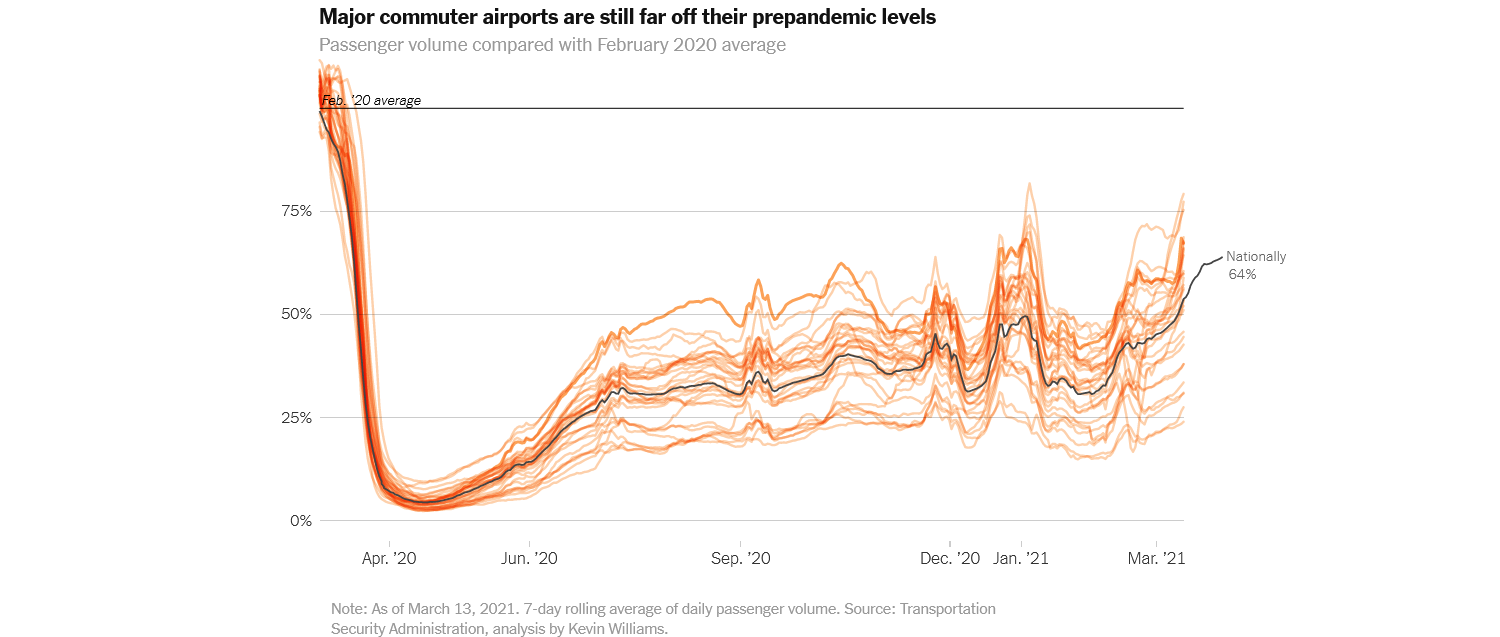
TSA Passenger Volume at Major Commuter Airports vs. Pre-Pandemic Levels, March 2021
Chart from Transportation Security Administration data (analyzed by Kevin Williams, as of March 13, 2021) showing 7-day rolling average of daily passenger volume at major commuter airports compared to February 2020 average. National passenger volume reached 64% of pre-pandemic levels by mid-March 2021, with individual airports shown as orange lines ranging from approximately 25% to 75% of pre-pandemic levels. -
 2020-09-30
National Plan of Integrated Airport Systems (NPIAS) 2021–2025
The National Plan of Integrated Airport Systems (NPIAS) 2021–2025 is a federal planning document published by the U.S. Department of Transportation's Federal Aviation Administration on September 30, 2020. It outlines the nation's airport infrastructure needs and investment priorities for a five-year period under Title 49 U.S. Code, Section 47103. While it covers the broader national airport system, it provides context for understanding federal aviation policy that can influence noise management decisions at airports like Sea-Tac. -
 2020-06-09
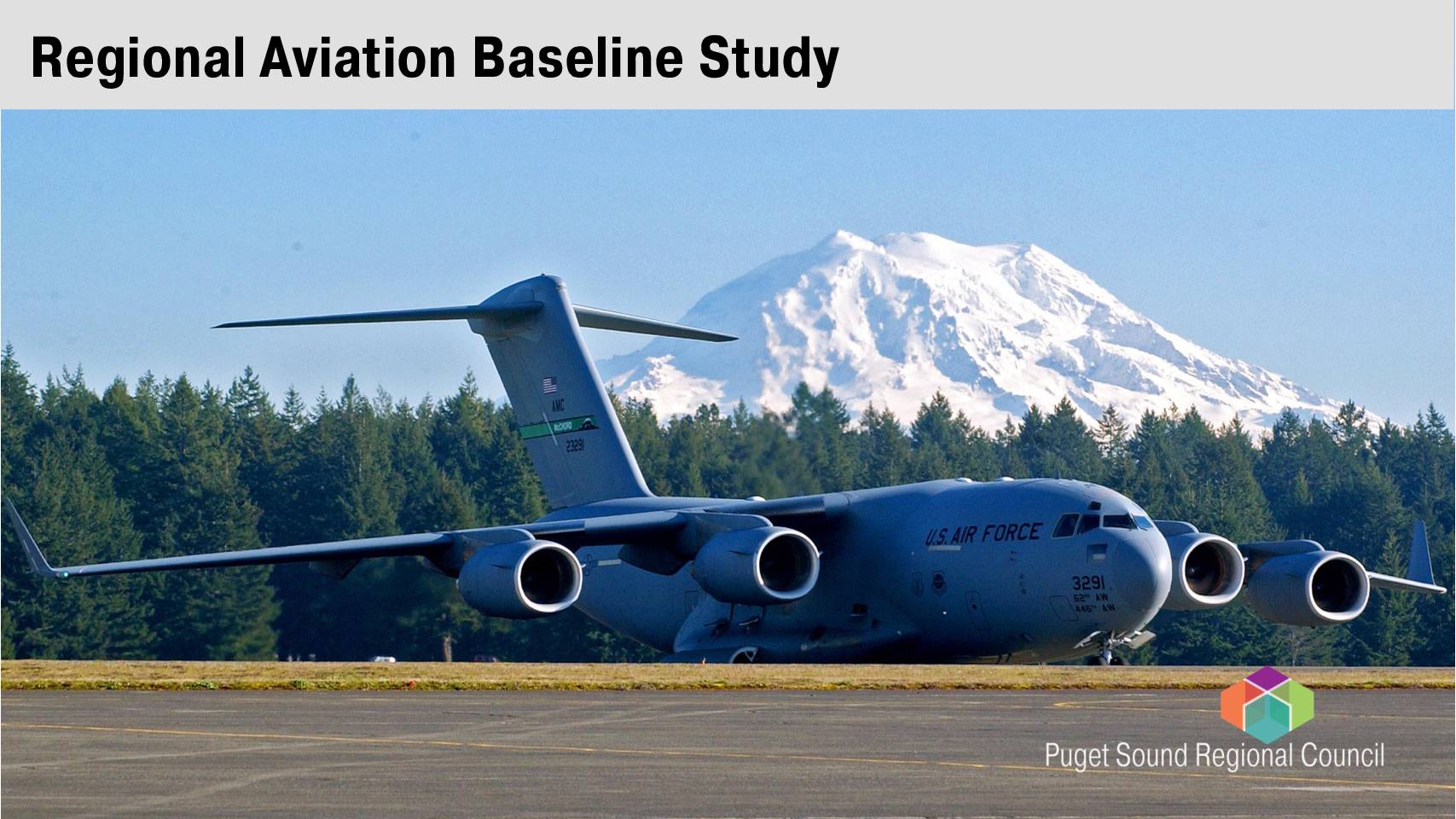
Regional Aviation Baseline Study
The Regional Aviation Baseline Study, conducted by the Puget Sound Regional Council, examines 29 airports across King, Snohomish, Kitsap, and Pierce counties to understand how aviation activities interact with communities and the broader regional economy. The study identifies each airport's role, gathers stakeholder input on aviation and airspace constraints, and establishes a foundation for future regional aviation planning. Sea-Tac Airport is the region's primary large hub, and the study provides context for understanding the broader network of aviation activity that shapes noise and land-use policy decisions across the central Puget Sound area. -
Why Airports Die
The distinctive design of the Pan-Am Worldport at JFK International Airport, built in 1960, wasn’t enough to save it from the wrecking ball. Dmitri Kessel/The LIFE Picture Collection via Getty Images Anthony Paletta 12:07 PM ET Expensive to build, hard to adapt to other uses, and now facing massive pandemic-related challenges, airport terminals often live