TagState of Washington(113)
-
 2020-05-29
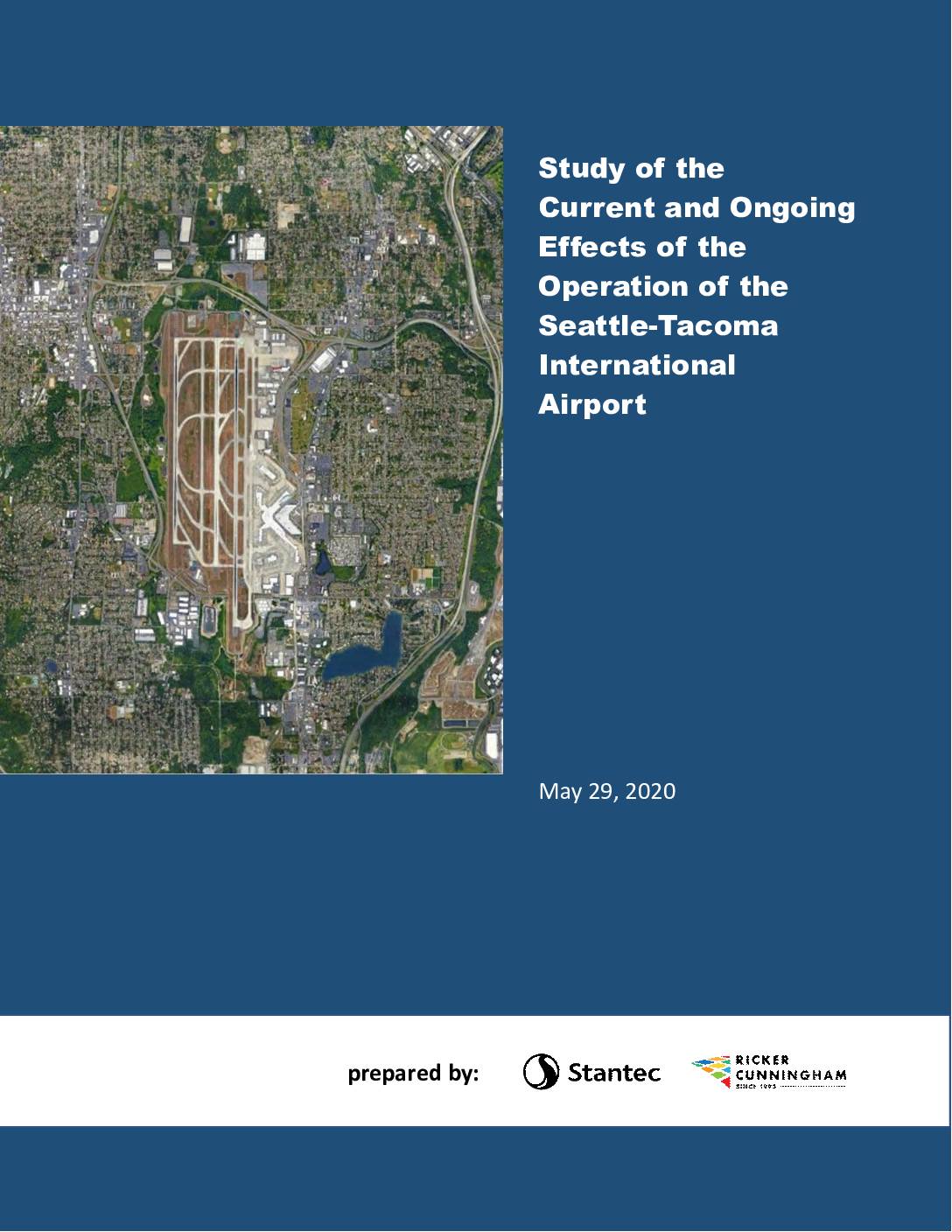
Study of the Current and Ongoing Effects of the Operation of the Seattle-Tacoma International Airport
A comprehensive study examining the current and ongoing effects of Seattle-Tacoma International Airport operations. The study was prepared for the Washington State Department of Commerce as authorized by ESSB 6032 and conducted by Stantec consulting firm. -
 2020-01-17
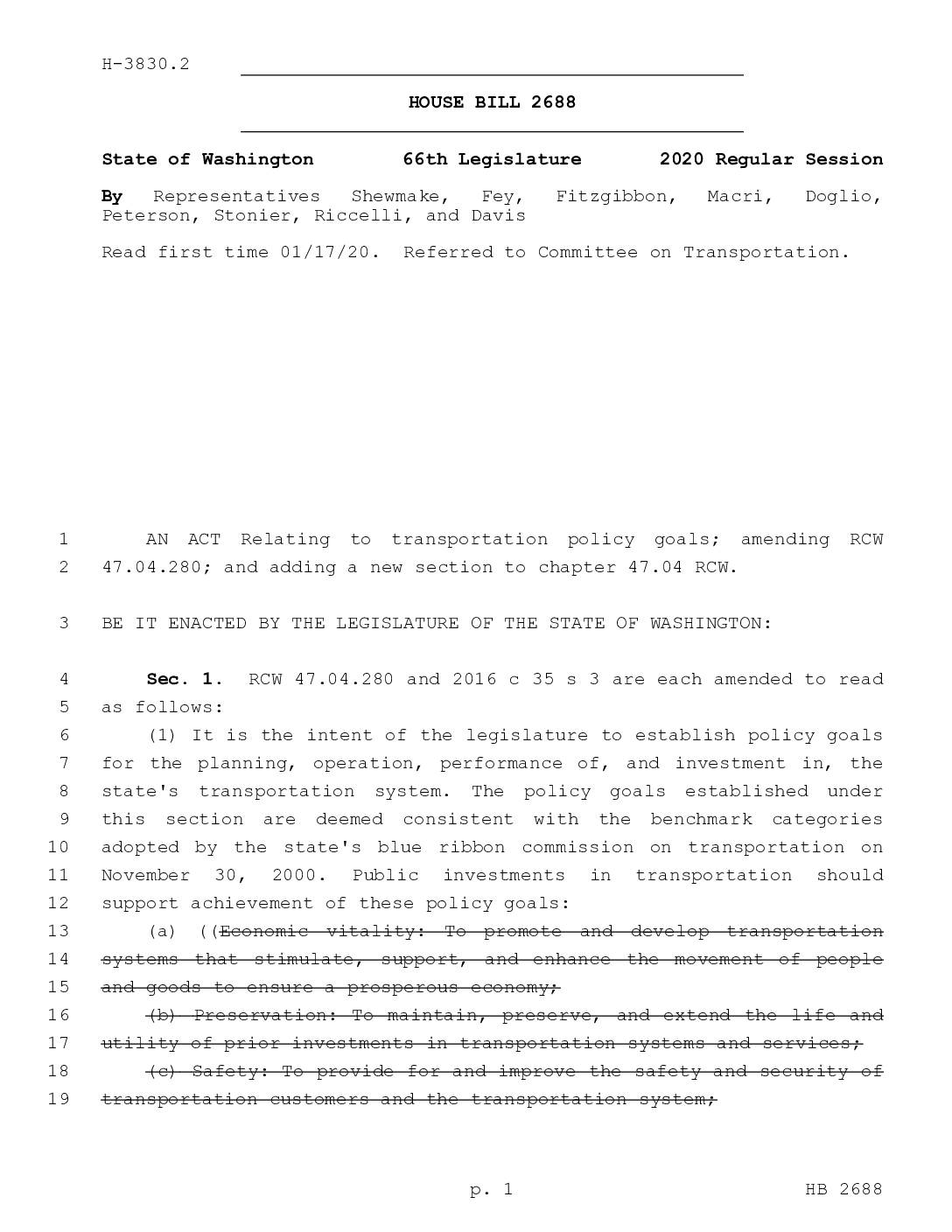
House Bill 2688: Relating to transportation policy goals
Washington House Bill 2688, introduced in the 2020 legislative session, proposes updating the state's transportation policy goals to prioritize accessibility, environmental justice, public health, and climate by replacing older goals focused primarily on economic vitality and mobility. The bill would require transportation projects to undergo a multi-agency evaluation—including input from vulnerable and impacted communities—before receiving budget authorization. Projects that do not meet a minimum score based on the new policy goals would generally be excluded from funding. -
 2019-09-30
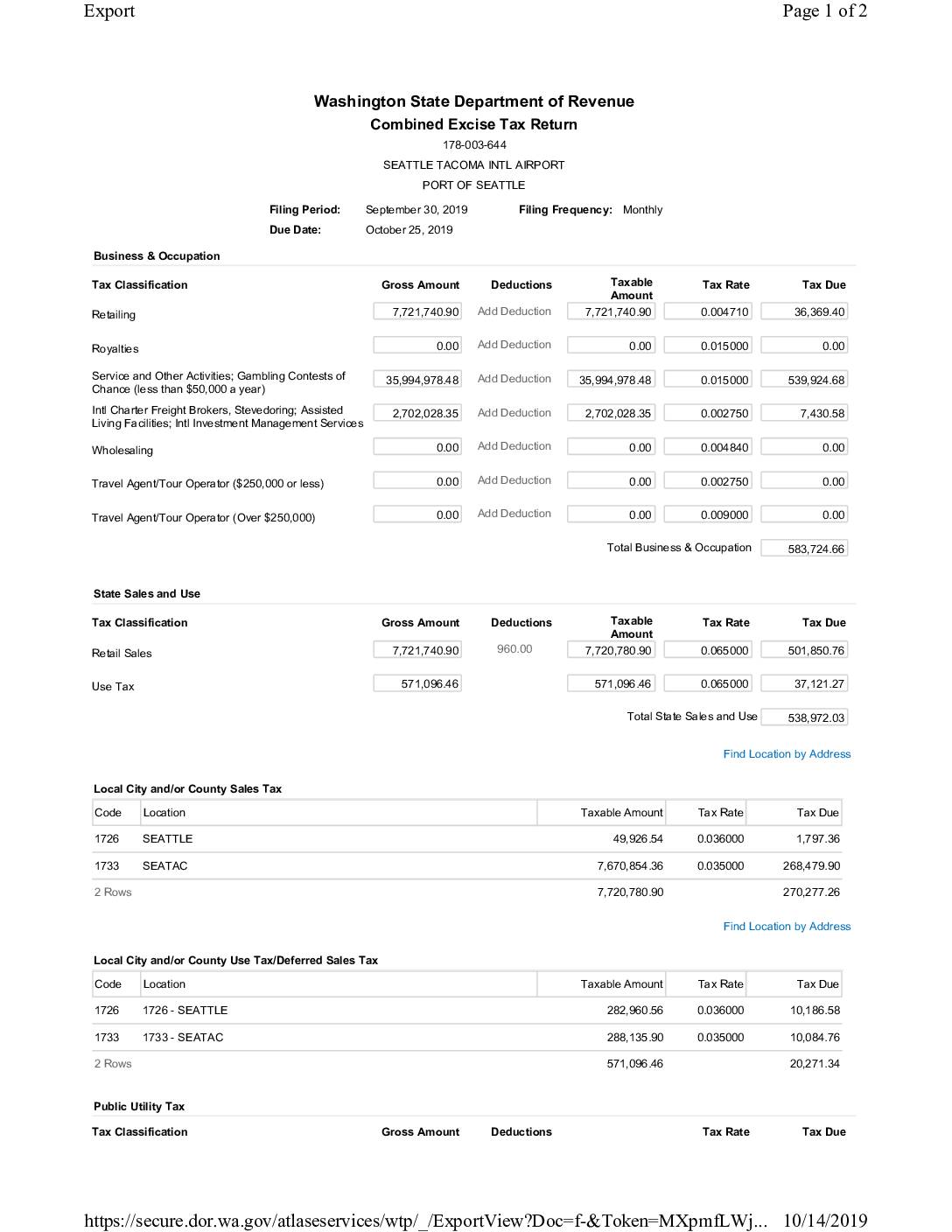
Combined Excise Tax Return: Seattle Tacoma Intl Airport, Port Of Seattle — September 2019
This document is a Washington State Combined Excise Tax Return filed by the Port of Seattle for Seattle-Tacoma International Airport, covering the period ending September 30, 2019. It details Business & Occupation taxes, state and local sales and use taxes, and public utility taxes across multiple classifications, resulting in a total tax liability of $1,439,820.52. The return was prepared by Bonnie McArthur and submitted on October 14, 2019, with payment scheduled via ACH debit on October 25, 2019. -
 2019-09-23
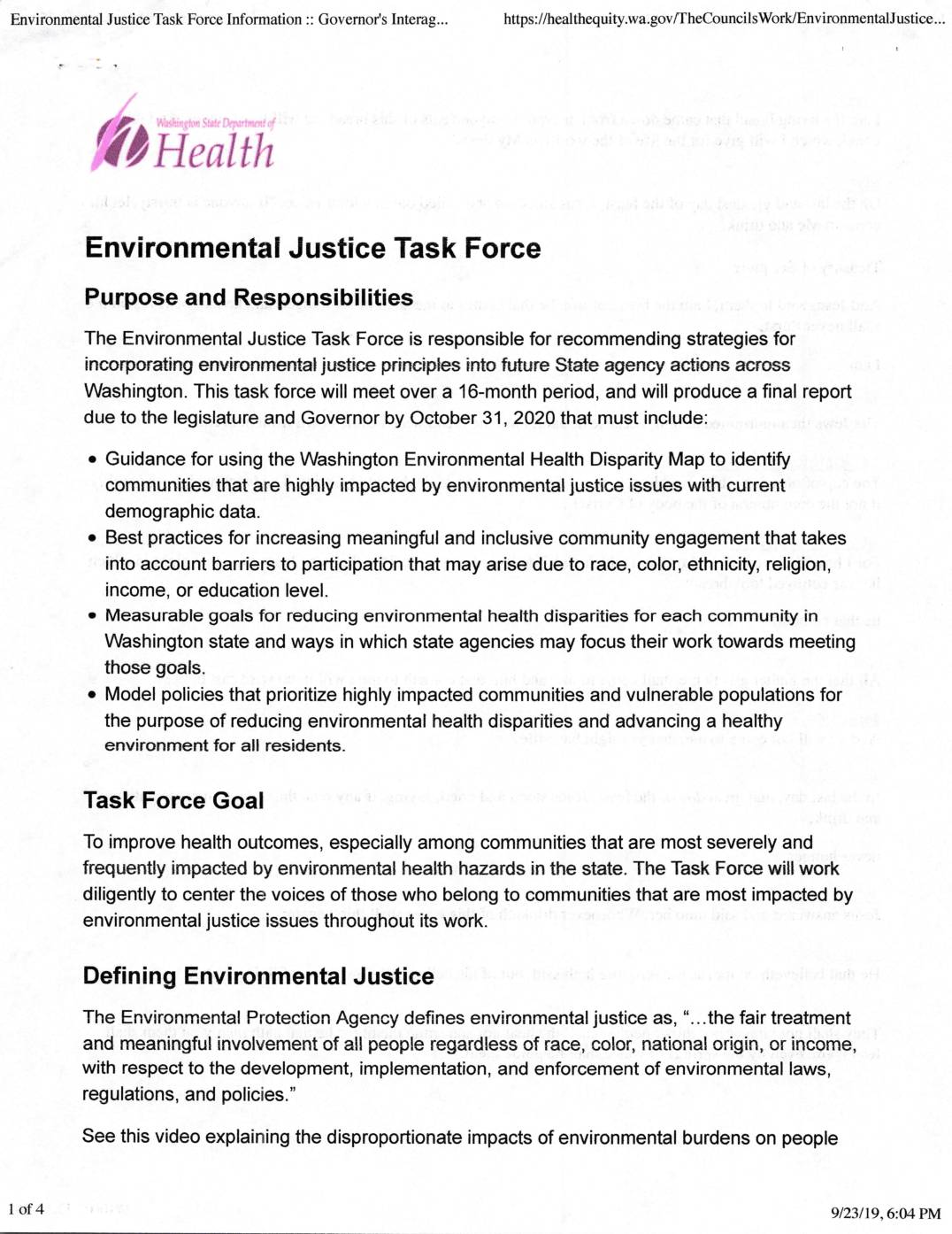
Environmental Justice Task Force information
Washington State's Environmental Justice Task Force, convened by the Governor's Interagency Council on Health Disparities, was established to recommend strategies for reducing environmental health disparities across the state, with a final report due to the legislature and Governor by October 31, 2020. The Task Force focuses on improving health outcomes for communities most severely impacted by environmental hazards, including low-income populations and communities of color. Its work includes developing guidance on community engagement, measurable health disparity goals, and model policies prioritizing vulnerable populations. -
 2019-09-17
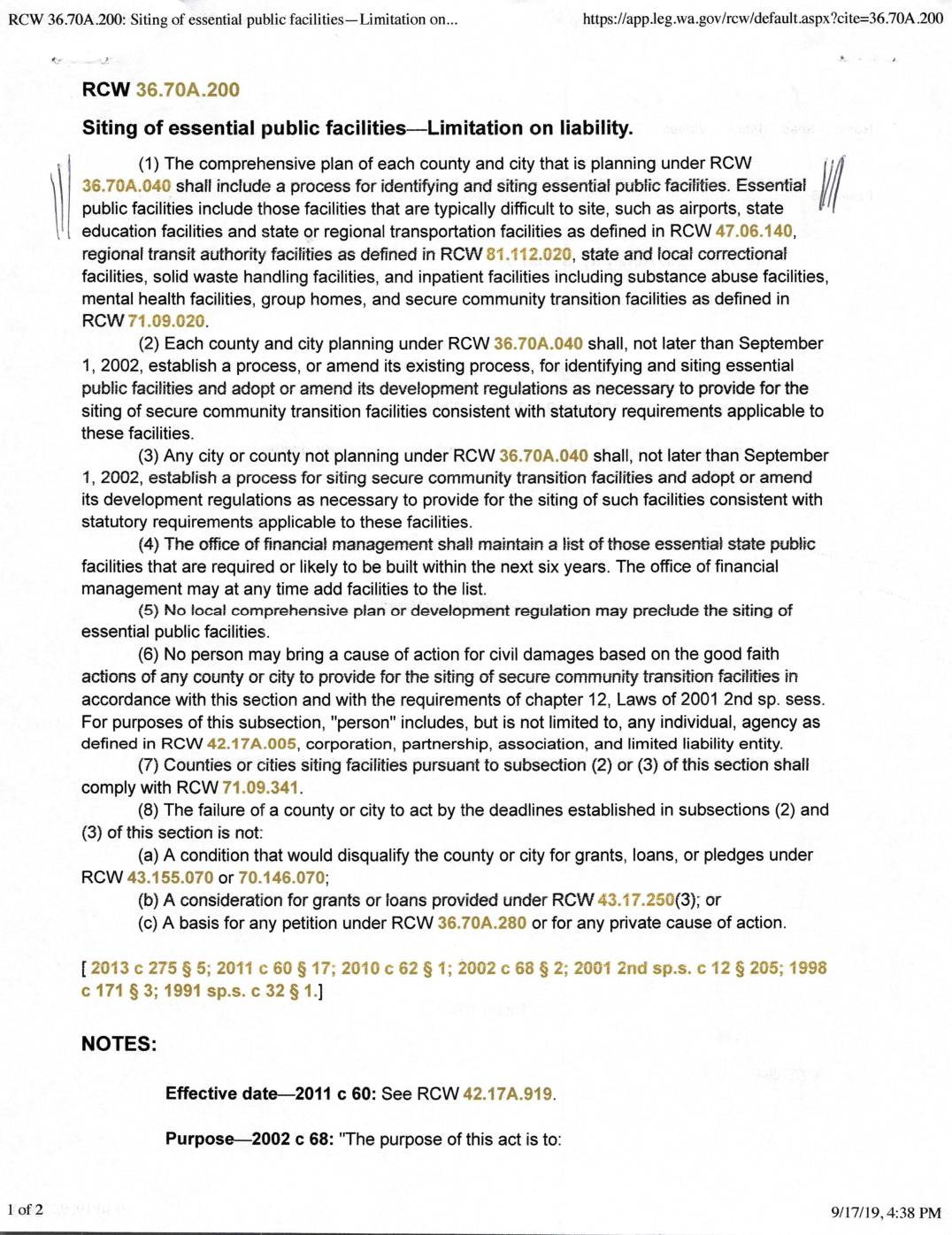
RCW 36.70A.200: Siting of essential public facilities—Limitation on liability
RCW 36.70A.200 requires counties and cities planning under Washington's Growth Management Act to include a process in their comprehensive plans for identifying and siting 'essential public facilities' — those typically difficult to site, such as airports, state education facilities, regional transportation facilities, correctional facilities, solid waste handling facilities, and inpatient care facilities. No local comprehensive plan or development regulation may outright prohibit the siting of these essential public facilities. The Office of Financial Management maintains a list of essential state public facilities likely to be built within the next six years. -
 2019-08-02
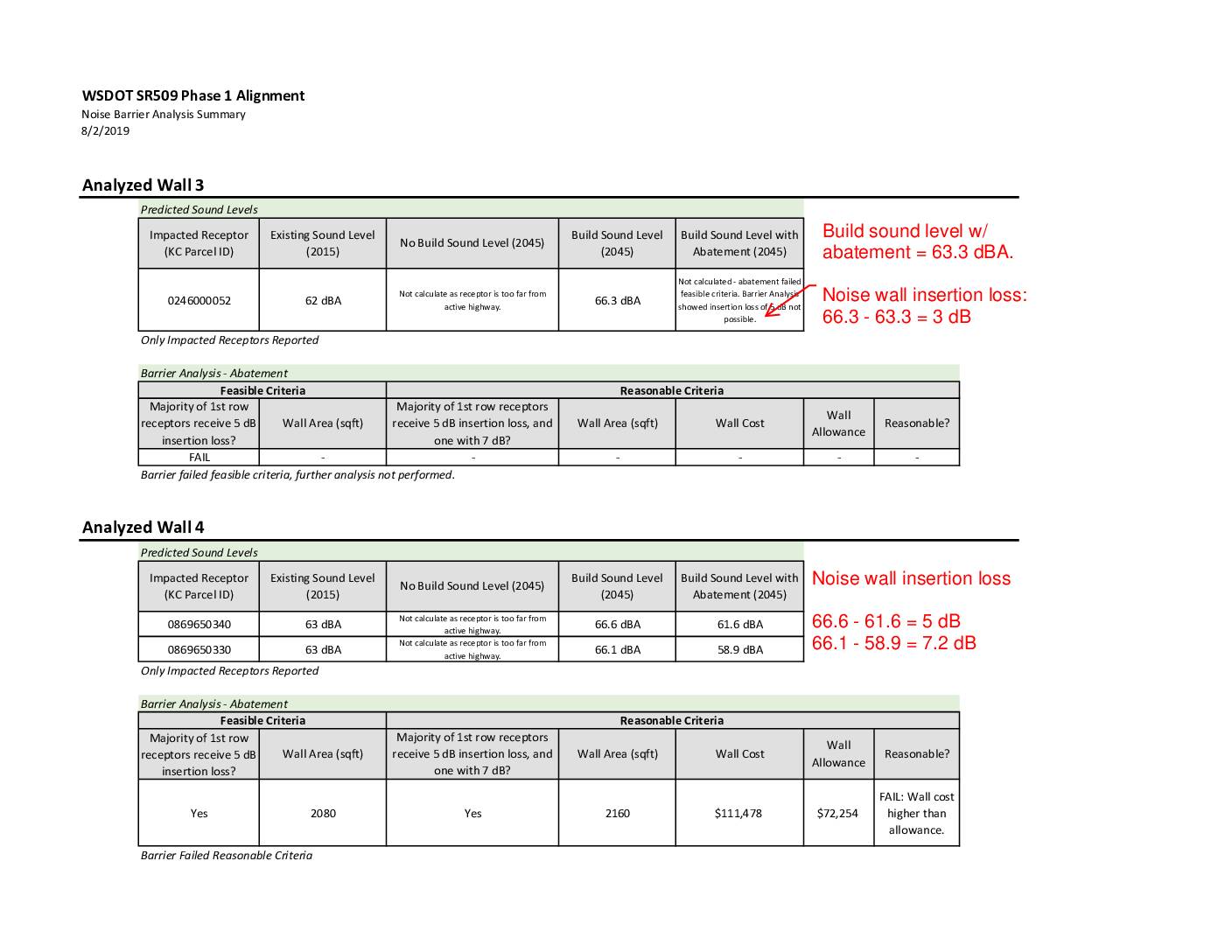
WSDOT SR509 Phase 1 alignment noise barrier analysis summary
This 2019 WSDOT report analyzes noise barriers along the SR509 Phase 1 highway alignment near the Sea-Tac area, evaluating whether proposed sound walls meet feasibility and cost-reasonableness standards. Wall 3 was rejected because it could not achieve the required 5 dB noise reduction for nearby residents. Wall 4 met the technical noise-reduction threshold but was ultimately rejected because its estimated cost of $111,478 exceeded the allowable budget of $72,254. -
 2019-01-01
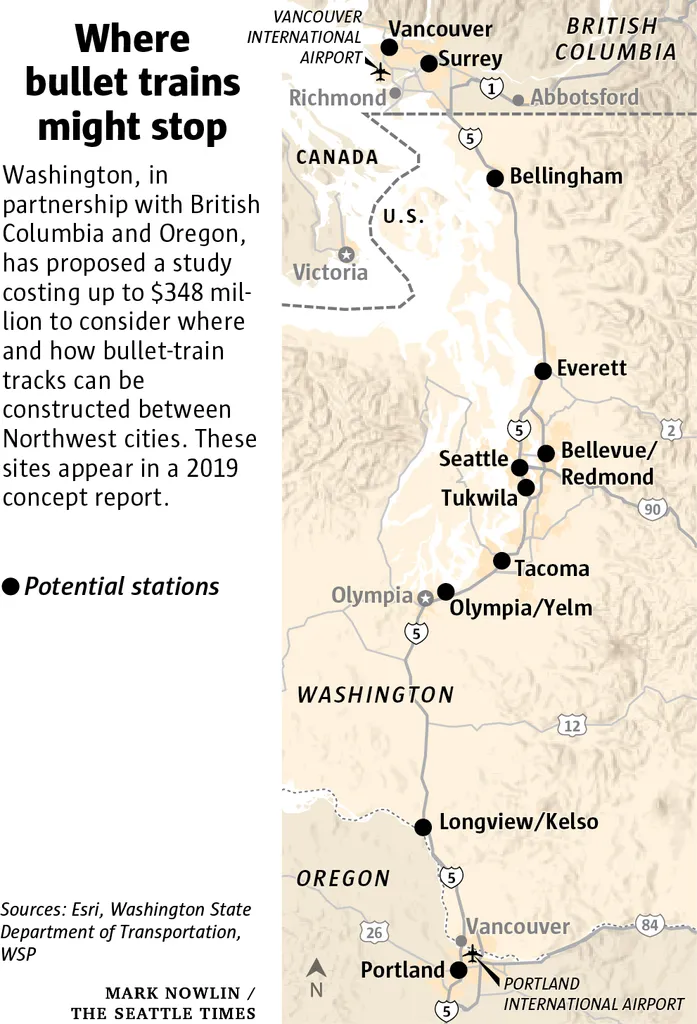
Seattle Times 2019 Concept Map of Pacific Northwest High-Speed Rail Stations
A 2019 concept map published by The Seattle Times (credit: Mark Nowlin) showing potential bullet train stations between Portland, Oregon and Vancouver, British Columbia, including stops at Seattle, Tacoma, Everett, Bellevue/Redmond, and other Northwest cities. The accompanying text notes Washington, in partnership with British Columbia and Oregon, proposed a study costing up to $348 million to plan high-speed rail infrastructure; sources cited are Esri, Washington State Department of Transportation, and WSP. -
 2018-12-31
Comprehensive annual financial report
The Port of Seattle's 2018 Comprehensive Annual Financial Report covers the port's financial position and activity as of and for the years ending December 31, 2016–2018, including Seattle-Tacoma International Airport and maritime operations. Prepared by the Port's Accounting and Financial Reporting Department, it includes audited financial statements, management analysis, pension fund disclosures, and ten-year statistical trends. While focused on overall port finances, it serves as a key public record for understanding the economic context of Port operations, including airport-related activities that intersect with noise policy decisions. -
 2018-12-21
Washington State air cargo movement study: Final report
This December 2018 final report, prepared by WSP and KPA for Washington State's Joint Transportation Committee, examines air cargo movement across Washington State, including operations at major facilities such as Seattle-Tacoma International Airport (Sea-Tac), Boeing Field, Paine Field, Spokane International, and the Port of Moses Lake. The study involved a broad stakeholder panel of legislators, port representatives, airlines, freight forwarders, and transportation agencies to assess the state's air cargo infrastructure and needs. It serves as a planning resource for understanding freight aviation activity in the region, though it is not primarily focused on airport noise policy. -
 2018-03-27
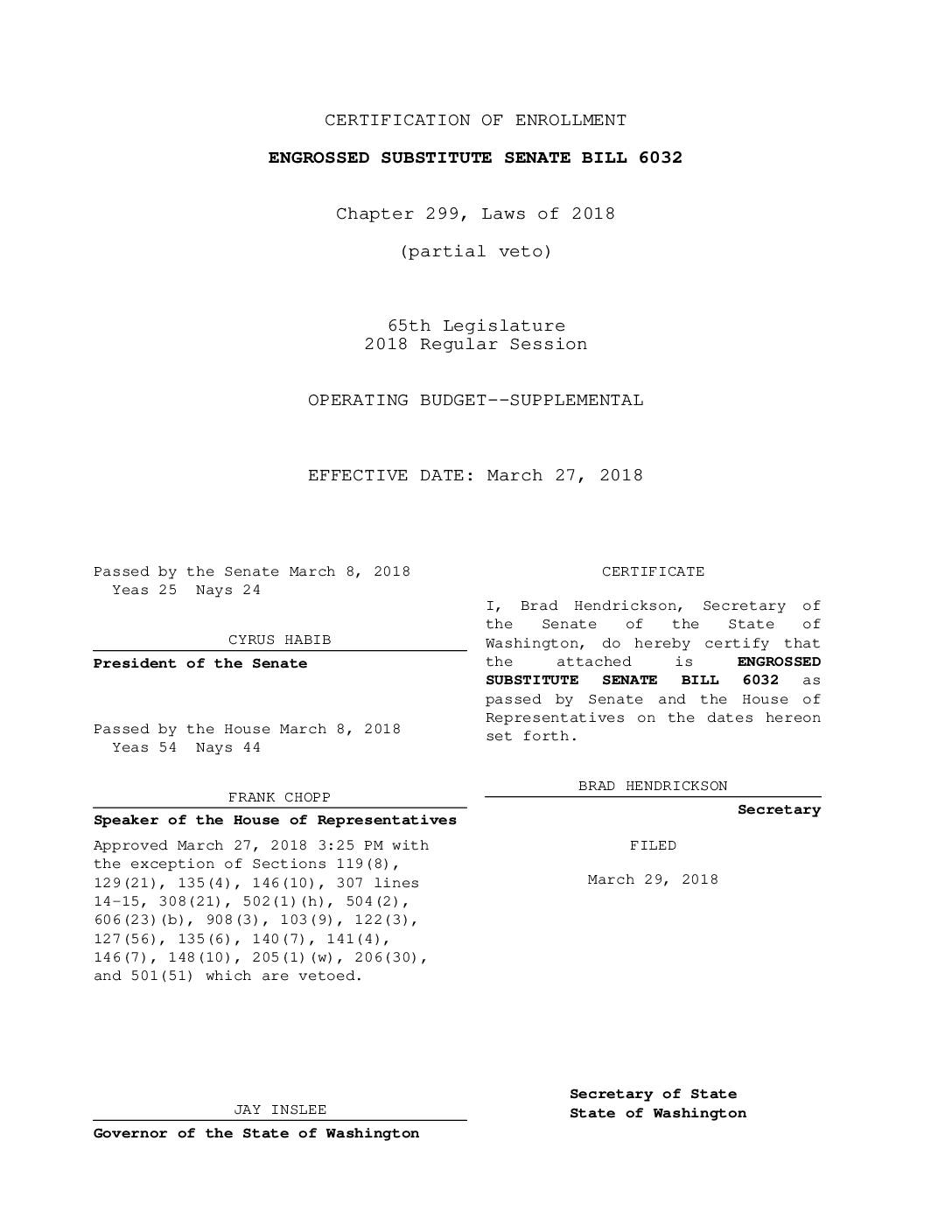
Engrossed Substitute Senate Bill 6032: Washington State 2018 Supplemental Operating Budget (Chapter 299, Laws of 2018)
Engrossed Substitute Senate Bill 6032, passed by the Washington State Legislature on March 8, 2018, and signed by Governor Jay Inslee on March 27, 2018, is a supplemental operating budget bill making appropriations and amendments to various state funds for the 2017-2019 fiscal biennium. The bill covers a wide range of general government expenditures, including funding for the House of Representatives, tax structure reform discussions, and rural health care planning. Governor Inslee approved the bill with a partial veto, striking down more than 20 specific sections.