TagState of Washington(113)
-
 2017-12-31
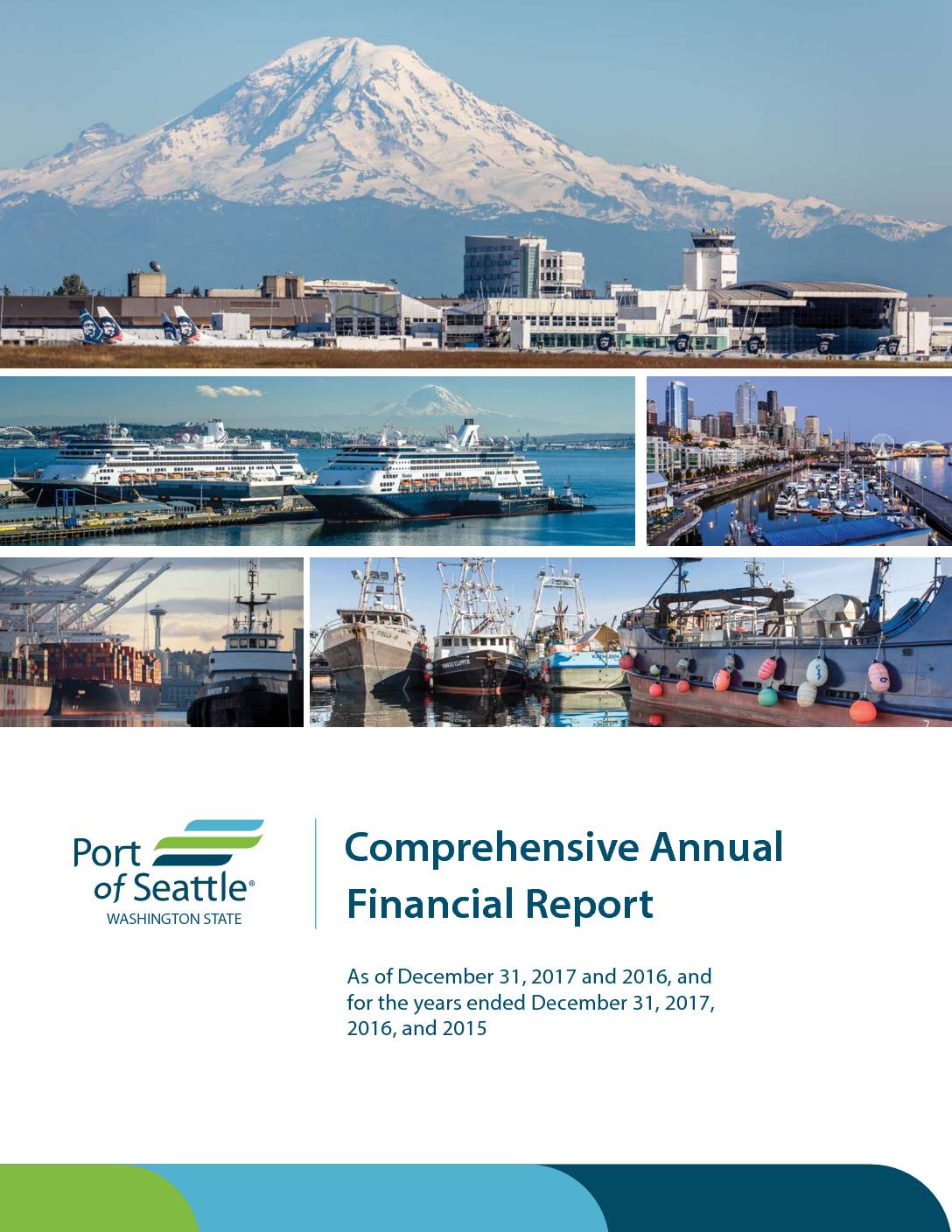
Comprehensive annual financial report
This is the Port of Seattle's Comprehensive Annual Financial Report covering financial data as of December 31, 2017 and 2016, and for the fiscal years ended December 31, 2017, 2016, and 2015. Prepared by the Port's Accounting and Financial Reporting Department, the report provides a detailed overview of the Port's financial position and results of operations across its facilities, including Seattle-Tacoma International Airport. It serves as an official public financial disclosure document for the Port of Seattle, a Washington State government entity. -
 2017-12-01
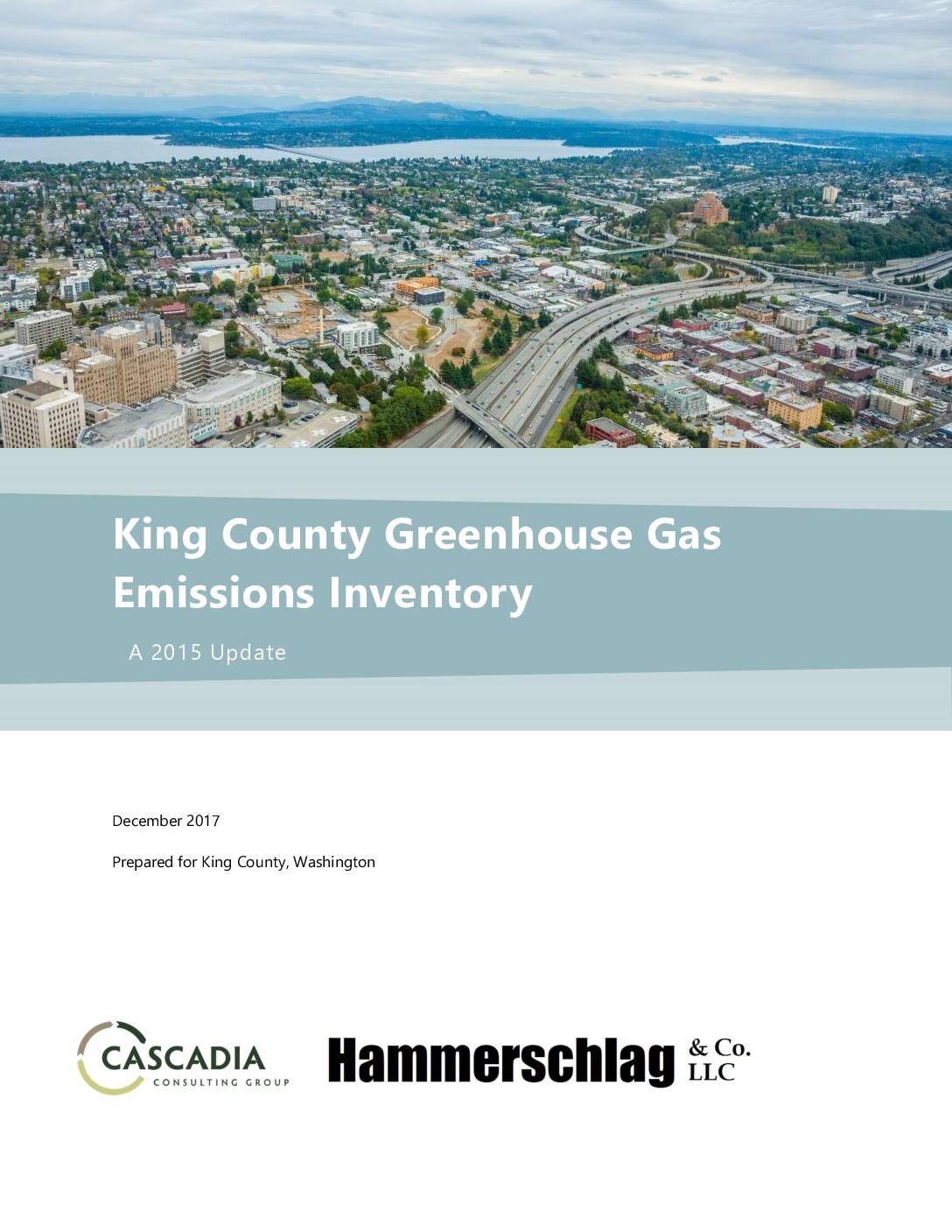
King County Greenhouse Gas Emissions Inventory: A 2015 Update
★ 32This December 2017 report inventories greenhouse gas emissions across King County, Washington, providing a comprehensive 2015 update that examines emissions by sector using geographic-based and consumption-based methodologies. It was prepared by Cascadia Consulting Group and Hammerschlag & Co. LLC, covering sources such as transportation, buildings, waste, and energy use. The report tracks changes in emissions over time and analyzes key data sources to help inform county-level climate and environmental policy decisions. -
 2017-07-01
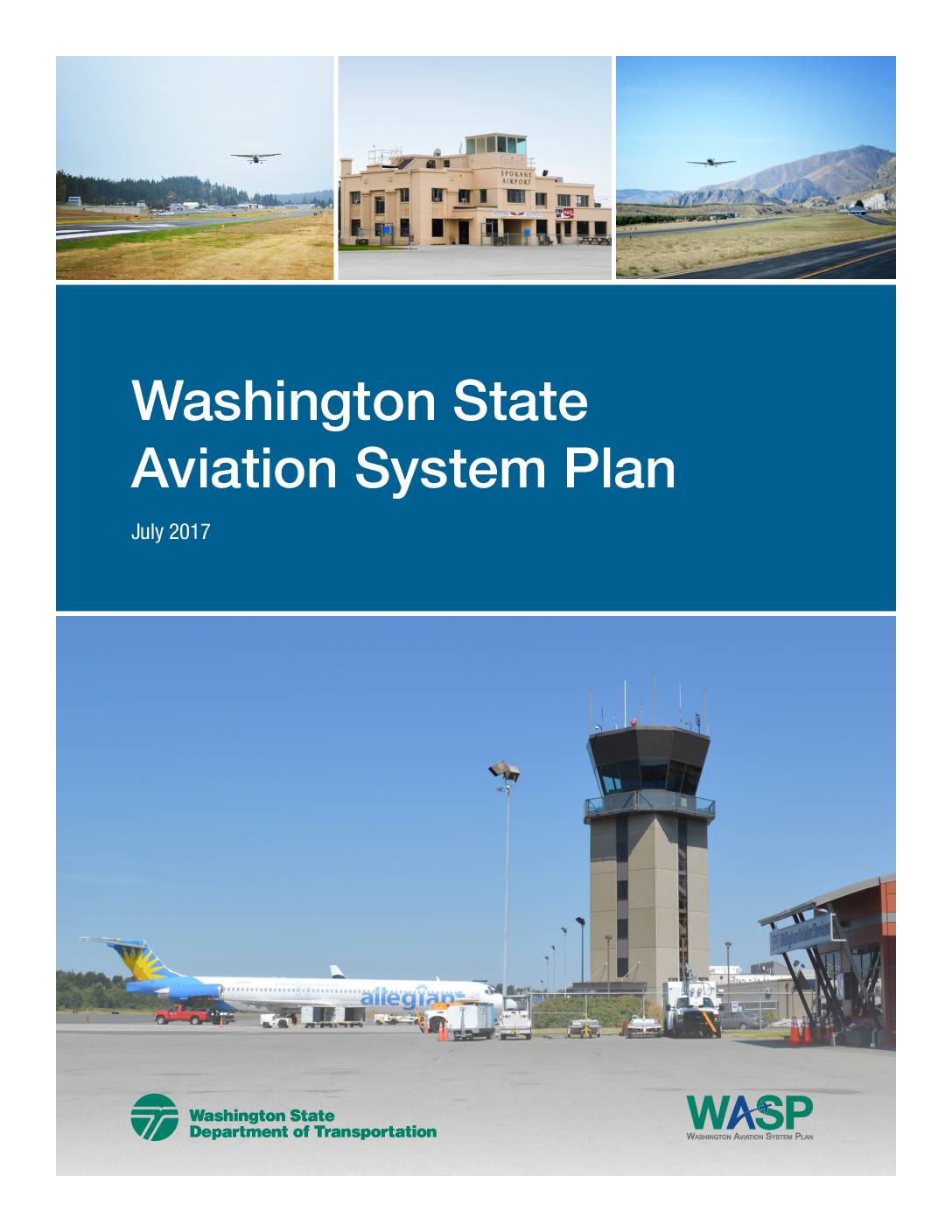
Washington State Aviation System Plan
The Washington State Aviation System Plan (WASP), published in July 2017 by the Washington State Department of Transportation (WSDOT), provides a comprehensive assessment of the state's airport system, covering infrastructure inventory, safety, economic development, and long-term planning goals. The plan examines runways, taxiways, landside facilities, and aviation services across both federally recognized and non-NPIAS airports throughout Washington State. Funded in part by a Federal Aviation Administration planning grant, it serves as a guiding framework for aviation investment and policy decisions statewide. -
 2015-12-31
Port of Seattle CAFR 2013, 2014, 2015
This is the Port of Seattle's Comprehensive Annual Financial Report covering financial data as of December 31, 2015 and 2014, and for the fiscal years ending December 31, 2015, 2014, and 2013. Prepared by the Port's Accounting and Financial Reporting Department, the report provides a detailed overview of the Port's financial position and performance across its operations, which include Seattle-Tacoma International Airport and maritime facilities. It serves as an official public record of the Port of Seattle's financial activities under Washington State authority. -
 2014-12-31
Comprehensive annual financial report: Port Of Seattle
This is the Port of Seattle's Comprehensive Annual Financial Report covering financial data as of December 31, 2014 and 2013, and for the years ended December 31, 2014, 2013, and 2012. Prepared by the Port's Accounting and Financial Reporting Department, the report provides a detailed account of the Port's financial position and activities, which include operations at Seattle-Tacoma International Airport and the regional seaport. It serves as an official public record of the Port of Seattle's financial performance during those fiscal years. -
 2013-12-31
Comprehensive annual financial report: As of December 31, 2013 and 2012, and for the years ended December 31, 2013, 2012 and 2011
This is the Port of Seattle's Comprehensive Annual Financial Report covering financial data as of December 31, 2013 and 2012, and for the fiscal years ended December 31, 2013, 2012, and 2011. Prepared by the Port's Accounting and Financial Reporting Department, the report provides a detailed overview of the Port's financial position and performance, encompassing operations at Seattle-Tacoma International Airport and other Port facilities in Washington State. -
 2013-01-01
Model Toxics Control Act Regulation and Statute
A compilation document containing Washington State’s Model Toxics Control Act regulation (Chapter 173-340 WAC), the Model Toxics Control Act statute (Chapter 70.105D RCW), and the Uniform Environmental Covenants Act (Chapter 64.70 RCW). Published by the Washington State Department of Ecology’s Toxics Cleanup Program as Publication No. 94-06, revised in 2013. -
 2012-12-31
Comprehensive annual financial report for the year ended December 31, 2012
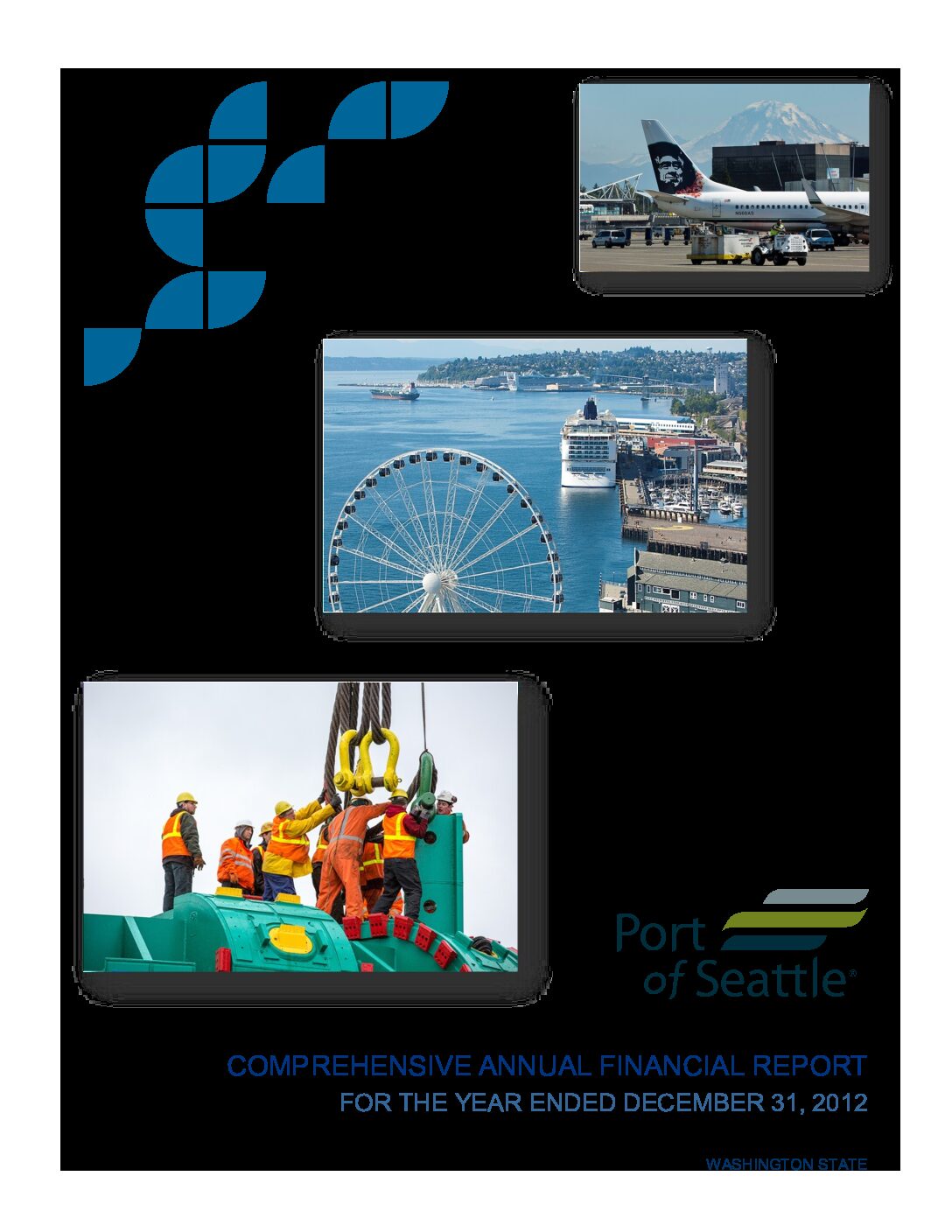
This is the Port of Seattle's Comprehensive Annual Financial Report for the fiscal year ended December 31, 2012, covering the financial activities of the port authority that operates Seattle-Tacoma International Airport and Seattle's seaport facilities. The report was prepared by the Port's Accounting and Financial Reporting Department and provides a detailed accounting of the organization's revenues, expenditures, and overall financial position. While primarily a financial document, it reflects the broader operations of the Port of Seattle, which administers infrastructure and policies—including noise mitigation programs—affecting the Sea-Tac Airport region. -
 2011-12-31
Comprehensive annual financial report for the year ended December 31, 2011
This is the Port of Seattle's Comprehensive Annual Financial Report for the fiscal year ended December 31, 2011, prepared by the Port's Accounting and Financial Reporting Department. The report covers the financial activities of the Port of Seattle, a Washington State public agency that oversees Seattle-Tacoma International Airport, seaport operations, and marinas. It marks the Port's centennial year, commemorating 100 years of operations from 1911 to 2011. -
 2011-12-08
2008 King County Community Greenhouse Gas Emissions Inventory: “Geographic Plus” Methodology
This 2011 report by the Stockholm Environment Institute estimates King County, Washington's greenhouse gas emissions for 2008 using a 'geographic plus' methodology, covering sources such as transportation, buildings, industry, and waste. Total emissions reached approximately 23.4 million metric tons of CO2 equivalent in 2008, a 5% increase from 2003, with transportation accounting for roughly half of all emissions. The findings were used by King County and its partners to identify major emission sources and develop strategies to meet community greenhouse gas reduction goals.