TagPort Of Seattle(2349)
-
 2021-11-16
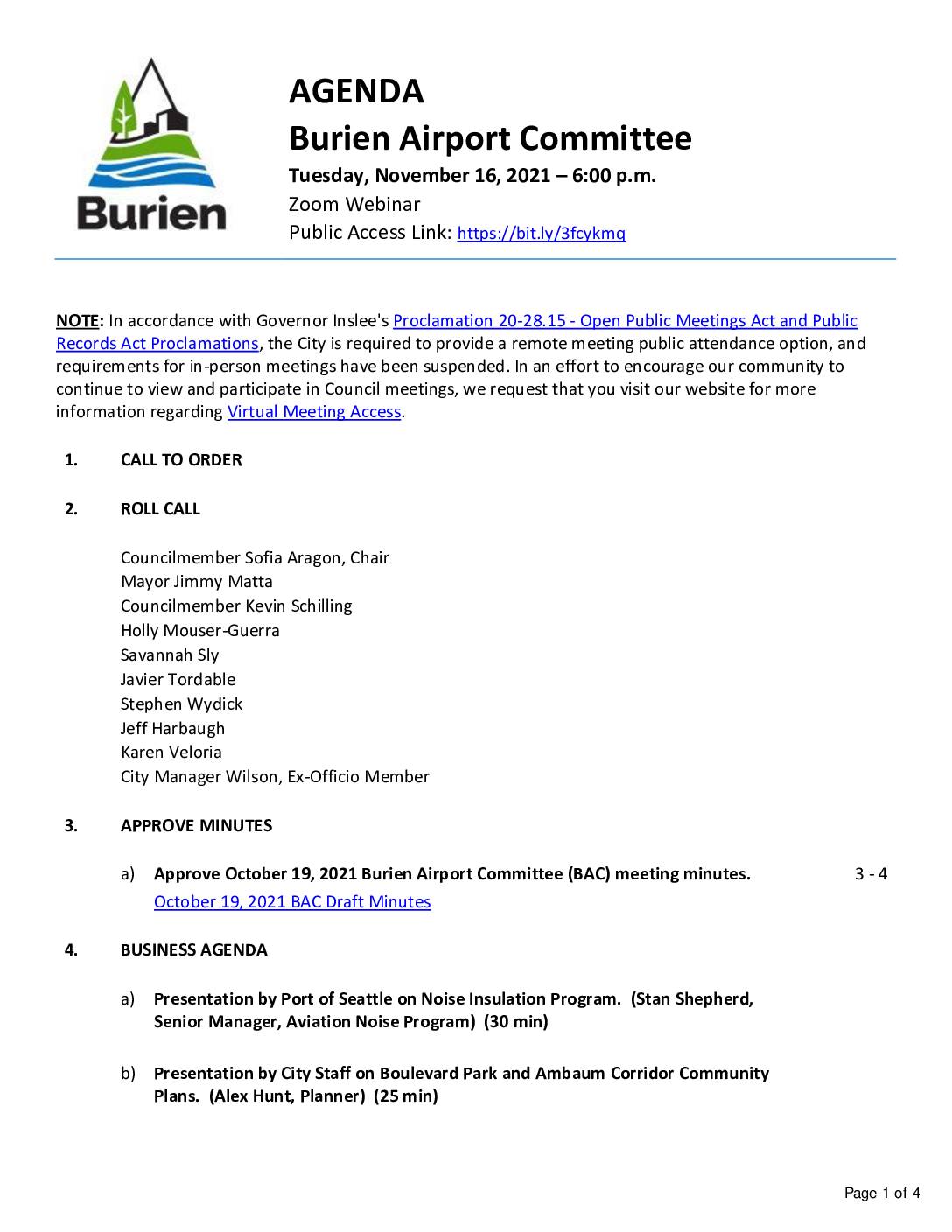
Burien Airport Committee agenda, November 16, 2021
The Burien Airport Committee met on October 19, 2021 and November 16, 2021 to discuss airport noise-related issues affecting the community near Sea-Tac Airport. Key topics included a review of Burien's 2022 Federal Legislative Priorities supporting bills HR 6038 and HR 4068 aimed at reducing airport noise and particle emissions, along with a presentation by the Port of Seattle on its Noise Insulation Program. The committee also discussed community planning efforts for the Boulevard Park and Ambaum Corridor areas and received updates on the SEA Stakeholder Advisory Round Table (StART). -
Hamdi Mohamed, Toshiko Grace Hasegawa and Ryan Calkins win Port of Seattle Commission elections
Port of Seattle Commission Position No. 1 incumbent Ryan Calkins, left, Position No. 4. winner Toshiko Grace Hasegawa, center, Position No. 3 winner Hamdi Mohamed. (Courtesy the campaigns)By Akash Pasricha Seattle Times business reporter Two newcomers will be joining the Port of Seattle Commission. Hamdi Mohamed, 31, will win the race for Position No. 3 -
 2021-09-22
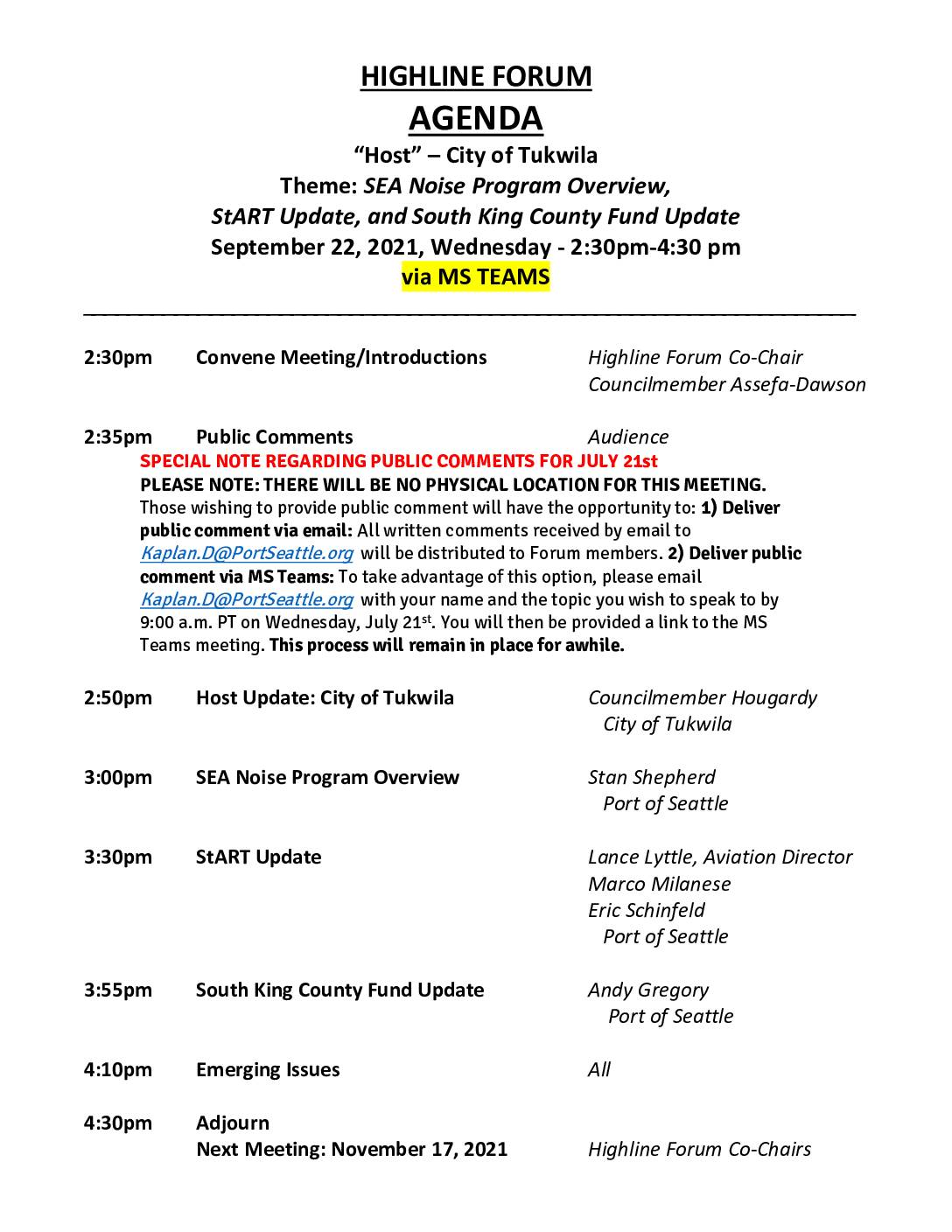
Highline Forum agenda: SEA Noise Program Overview, StART Update, and South King County Fund Update
The Highline Forum held a meeting on September 22, 2021, hosted by the City of Tukwila, focused on three main topics: an overview of Seattle-Tacoma International Airport's noise reduction program, an update on the Stakeholder Advisory Round Table (StART), and a status report on the South King County Fund. The virtual meeting, conducted via Microsoft Teams, featured presentations by Port of Seattle staff including Aviation Director Lance Lyttle. The forum is a recurring regional body that meets bimonthly, bringing together South King County communities affected by Sea-Tac Airport operations. -
 2021-09-22
South King County Fund update: Highline Forum
The Port of Seattle's South King County Fund (SKCF), launched in 2019, provides grants to build equity-based partnerships in communities near Sea-Tac Airport. In 2020, the fund distributed $1.5 million across Environmental, Economic Recovery, and WMBE (Women and Minority Business Enterprise) programs, supporting 27 projects; funding increased to $2 million in 2021. The program aims to address environmental and economic impacts on South King County residents through targeted community investment. -
 2021-09-20
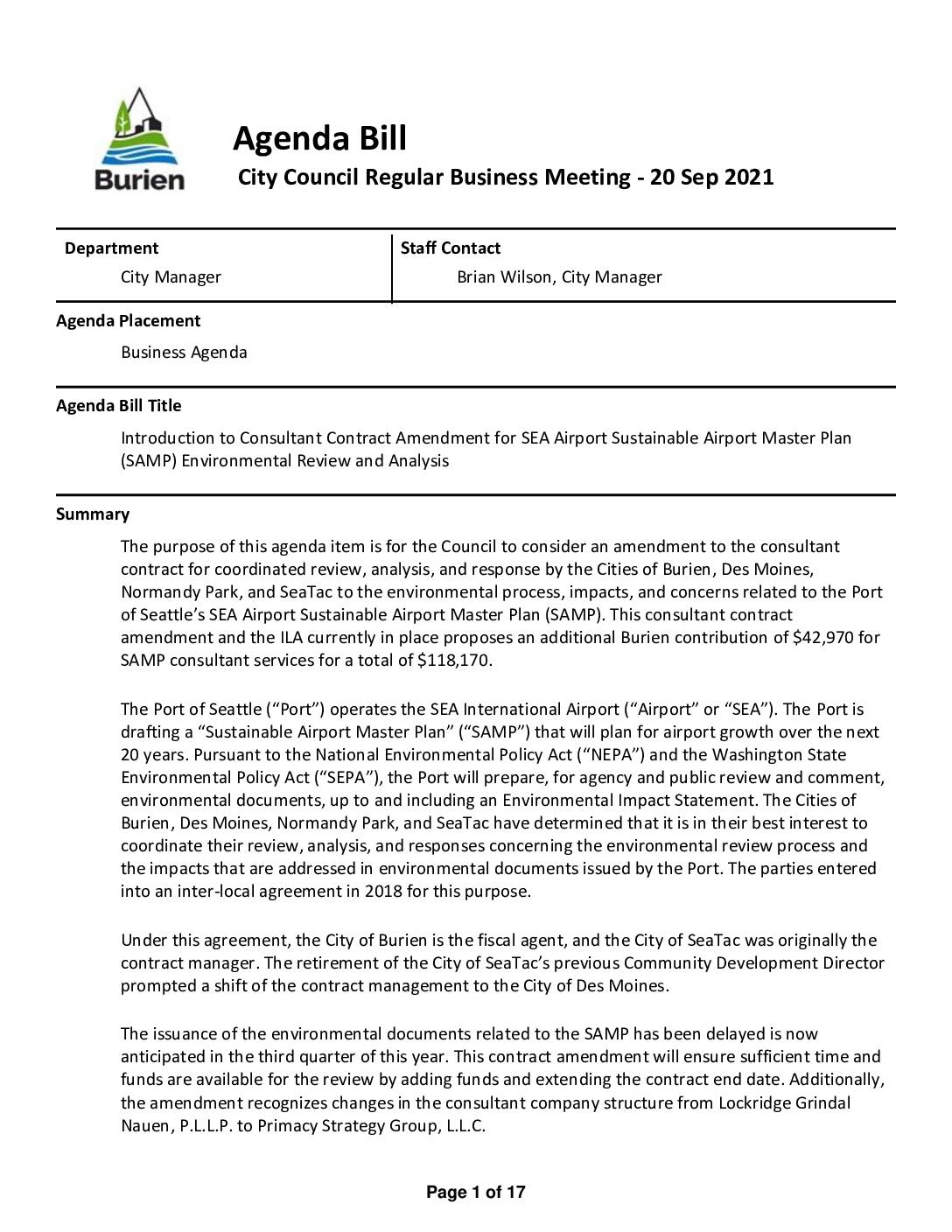
Burien consultant contract amendment for sustainable airport master plan (SAMP) environmental review and analysis
In September 2021, the City of Burien considered approving an additional $42,970 contribution to a shared consultant contract with the cities of Des Moines, Normandy Park, and SeaTac to review and respond to the Port of Seattle's Sustainable Airport Master Plan (SAMP), which outlines airport growth over the next 20 years. The four cities entered into an inter-local agreement in 2018 to coordinate their environmental review and formal comments on noise and other impacts associated with SEA International Airport expansion. The contract amendment also extended the agreement's end date from 2021 to 2023 and recognized a change in the consulting firm from Lockridge Grindal Nauen to Primacy Strategy Group. -
 2021-09-09
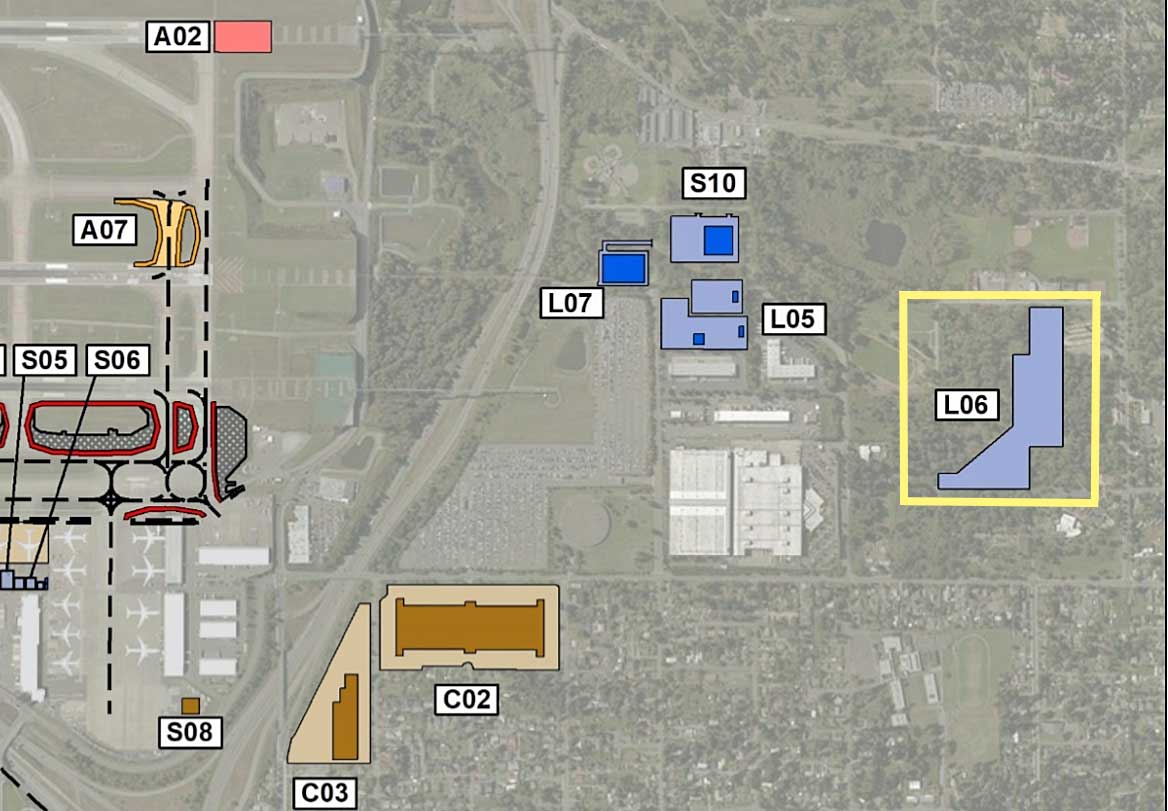
Sea-Tac Airport Parking Lot L06 Site Map
An aerial map overlay showing labeled parcels or project zones (A02, A07, S05, S06, S08, S10, L05, L06, L07, C02, C03) near what appears to be a major airport, with color-coded polygons indicating different land use or development categories. Zone L06 is highlighted with a yellow border, suggesting it is a focus area in this planning or noise-policy document. -
 2021-08-01
Port Of Seattle 2020 real estate strategic plan
The Port of Seattle's 2020 Real Estate Strategic Plan, published in August 2021, outlines strategies for managing and growing the Port's portfolio of industrial and office properties, including sites such as Fishermen's Terminal, Pier 69, and World Trade Center West. Developed by consulting firm Heartland in collaboration with Port staff and an external advisory committee, the plan updates a similar 2016 strategy and provides a framework for evaluating future real estate investments and acquisitions. Note that this document focuses on maritime and commercial real estate operations and does not address Sea-Tac Airport noise policy. -
 2021-07-21
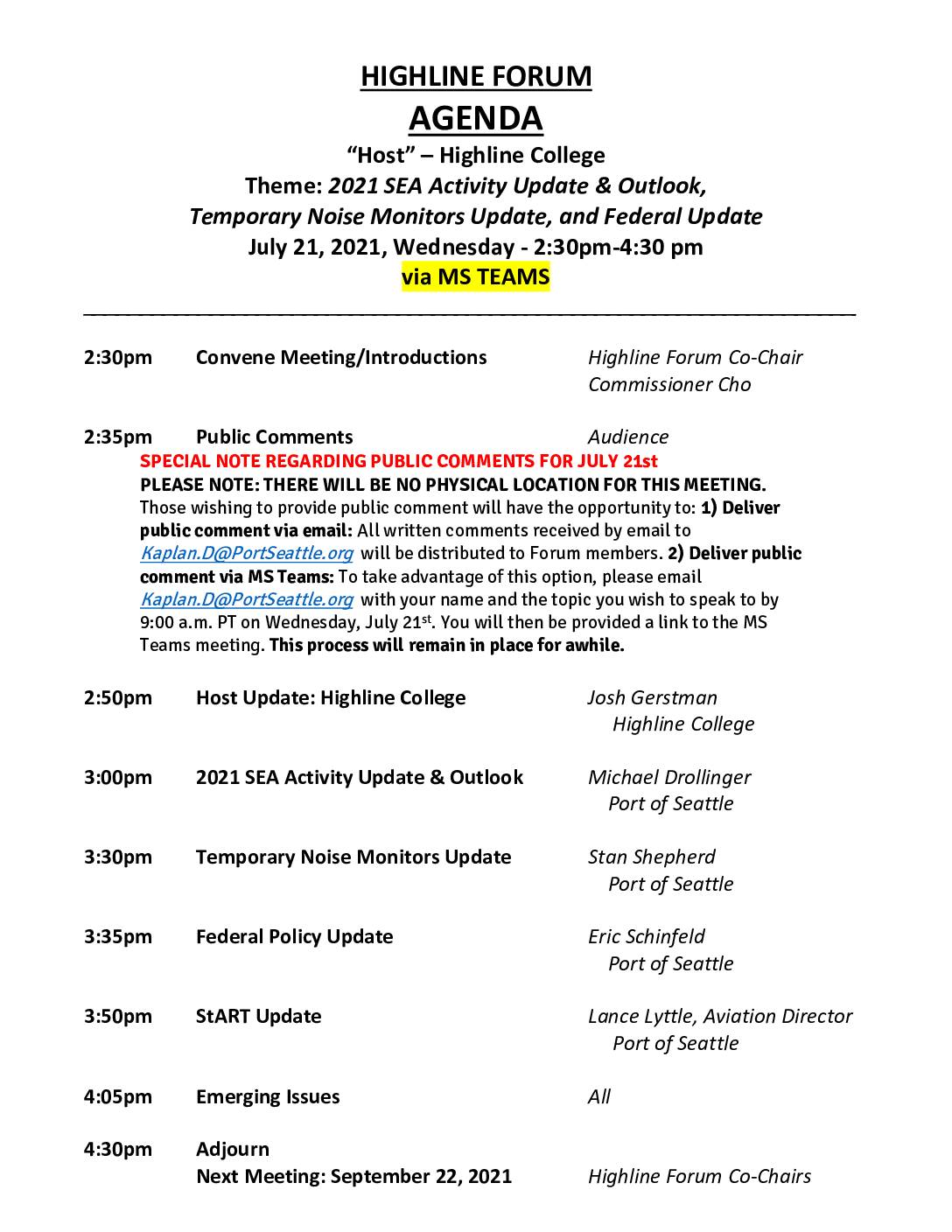
Highline Forum agenda, July 21, 2021
The Highline Forum held a virtual meeting on July 21, 2021, hosted by Highline College, covering updates on 2021 Seattle-Tacoma International Airport (SEA) flight activity, temporary noise monitor installations, and federal aviation policy. The meeting, conducted via Microsoft Teams, featured presentations by Port of Seattle staff and Aviation Director Lance Lyttle, with public comments accepted by email or live video link. The document also lists all six Highline Forum meeting dates for 2021, with hosts rotating among local entities including the cities of Burien, Federal Way, Tukwila, and SeaTac. -
 2021-07-21
Activity update & outlook: Highline Forum
A July 2021 presentation to the Highline Forum reported that Seattle-Tacoma International Airport (SEA) was steadily recovering from pandemic-related declines, with passenger traffic reaching 71% and scheduled seat capacity reaching 83% of 2019 levels as of June 2021. By August 2021, the flight schedule had climbed to 85% of pre-pandemic capacity, with Alaska Airlines leading the recovery at 97% of its 2019 schedule, while United Airlines lagged at 66%. The document highlights that airlines had largely restored operations to meet rebounding traveler demand. -
 2021-07-19
Flight Corridor Safety Program On-line Open House
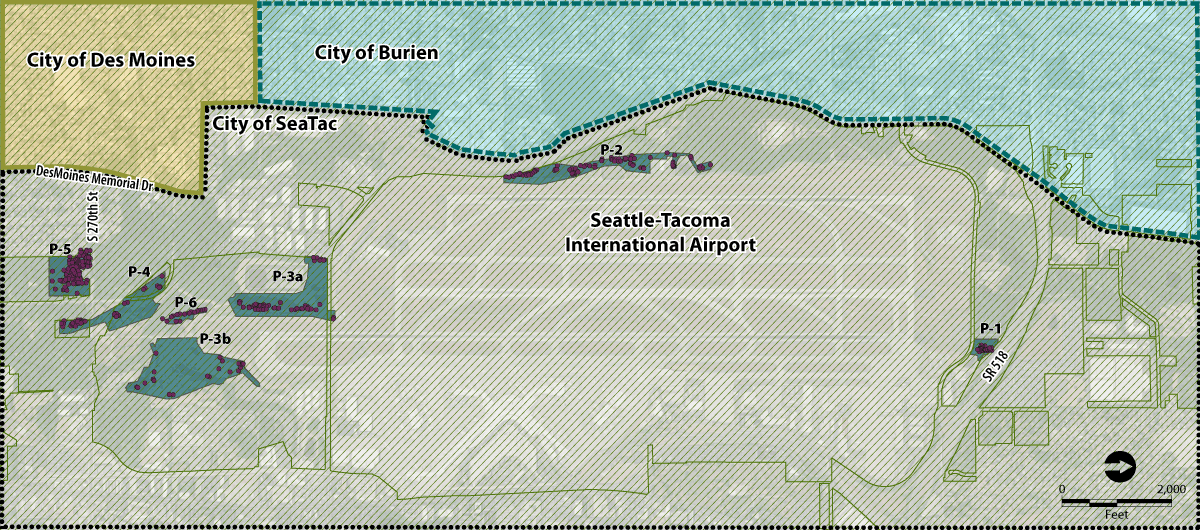
The Port of Seattle has an ongoing program to remove trees around SEA to improve safety during takeoffs and landings and replant in their place, native, low-growing trees. The first phase of work, completed in 2019, centered around removing and replanting trees on Port property. During this phase, the Port established low-growing native forests onsite